The MCP Registry
The MCP Registry is the official centralized metadata repository for publicly accessible MCP servers, backed by major contributors such as Anthropic, GitHub, PulseMCP and Microsoft.
Adapted from The MCP Registry. Status: preview — breaking changes or data resets may occur before GA.
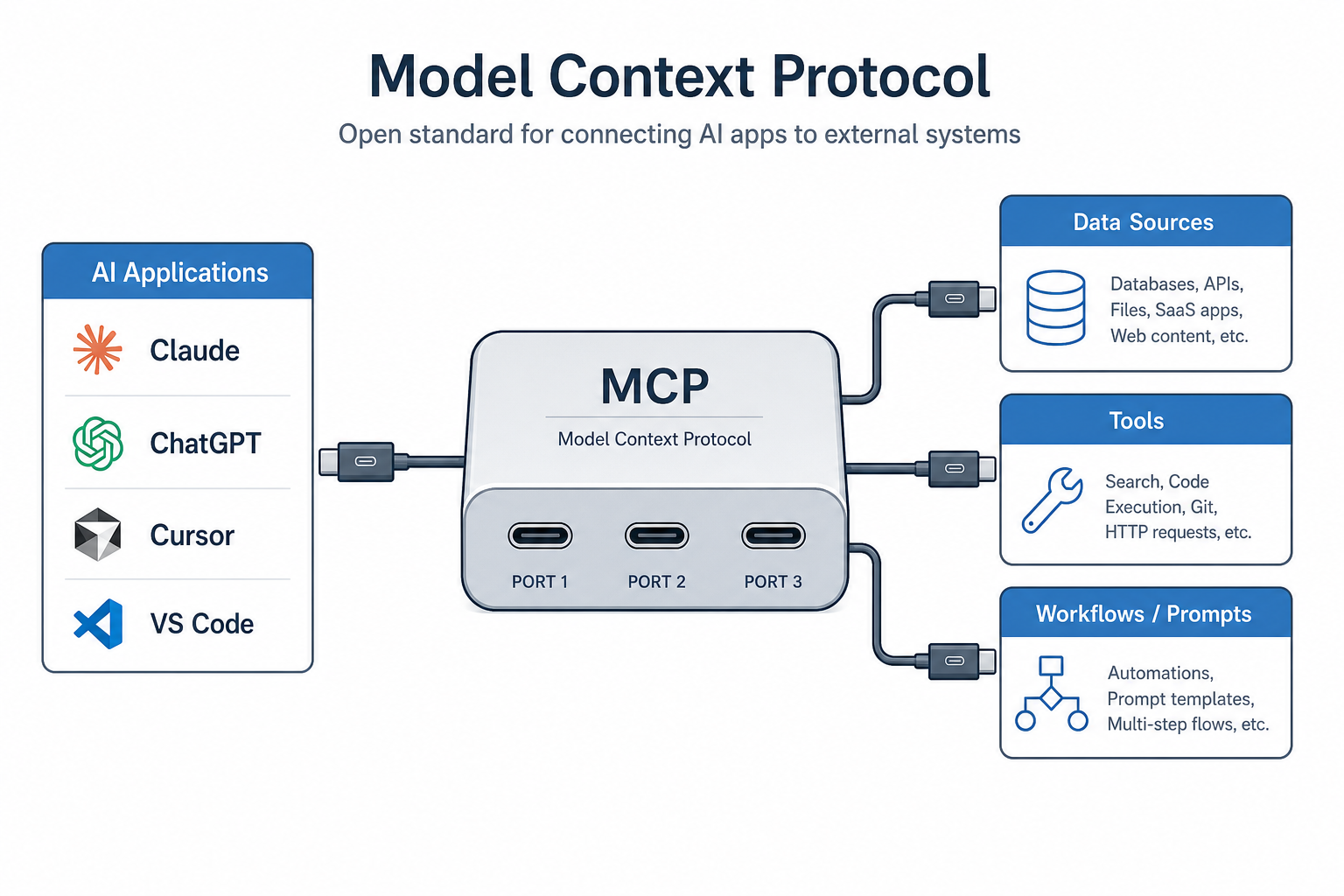
The Registry points hosts and marketplaces at installable or reachable servers.
What it provides
- Single place to publish server metadata
- Namespace management via DNS / GitHub verification
- REST API for clients and aggregators
- Standardised installation and configuration information
Metadata follows server.json: unique name (io.github.user/server-name), location, execution instructions, description and capabilities.
Ecosystem relationships
| Actor | Relationship |
|---|---|
| Package registries | Host code/binaries; MCP Registry stores pointers |
| Server developers | Publish public install methods or public remote URLs |
| Aggregators / marketplaces | Pull metadata periodically; add curation/ratings |
| Other registries | May implement the same OpenAPI for host compatibility |
| Host apps | Prefer consuming marketplaces/aggregators, not scraping the official registry directly |
Private servers are out of scope — run a private registry instead.
Trust and security
- Namespace authentication ties names to verified GitHub accounts or domains
- Security scanning is delegated to underlying package registries and aggregators
- Spam controls: namespace auth, field validation, moderation/takedown (policy)
Related official guides
| Topic | Official link |
|---|---|
| Quickstart publish | Quickstart |
| Authentication | Publishing auth |
| GitHub Actions | Automate publishing |
| Package types | Supported packages |
| Remote servers | Publishing remotes |
| Versioning | Versioning published servers |
| Aggregators | Registry aggregators |
| FAQ | FAQ |
| Terms | Terms of Service |
Negative cases
- Publishing private Artifactory-only packages → rejected model; use private registry.
- Impersonating a namespace → blocked by DNS/GitHub verification.
- Treating Registry listing as a security review → still vet code and scopes.
Discussion
Comments
Share feedback or questions about this page. No account required.
Loading comments…