Most MBA value is not the diploma—it is a shared visual language for decisions: 2×2s, process flows, simple equations, and rules of thumb you can sketch on a whiteboard under time pressure. Jason Barron’s The Visual MBA compresses that language from a full MBA experience into picture-first notes. This article turns those course chapters into practitioner frameworks you can reuse in consulting, product, and general management.
Source note: This article is an original practitioner synthesis of themes from Jason Barron’s The Visual MBA . It is not a reprint of the book’s illustrations. Support the original work if visual MBA notes help you learn or teach.
Executive summary
Barron’s arc runs from how leaders mobilise people , through the language of money (financial reporting, managerial accounting, business and entrepreneurial finance), into go-to-market and operations , then people systems, negotiation, strategy, ethics , and finally judgement, GM craft, creativity, incentives, and global management . Treat each section as a sketchable tool: a 2×2, a flow, an equation, or a decision rule. The closing move is integration—using the right tool for the decision in front of you, not collecting frameworks as trophies.
When to use this page
Rapid MBA-style refreshers before client workshops, board packs, or startup reviews.
Teaching teams a common visual vocabulary (2×2s, contribution margins, strategy cascades).
Pair with The Personal MBA for mental models and AI-Focused MBA curriculum for a study path.
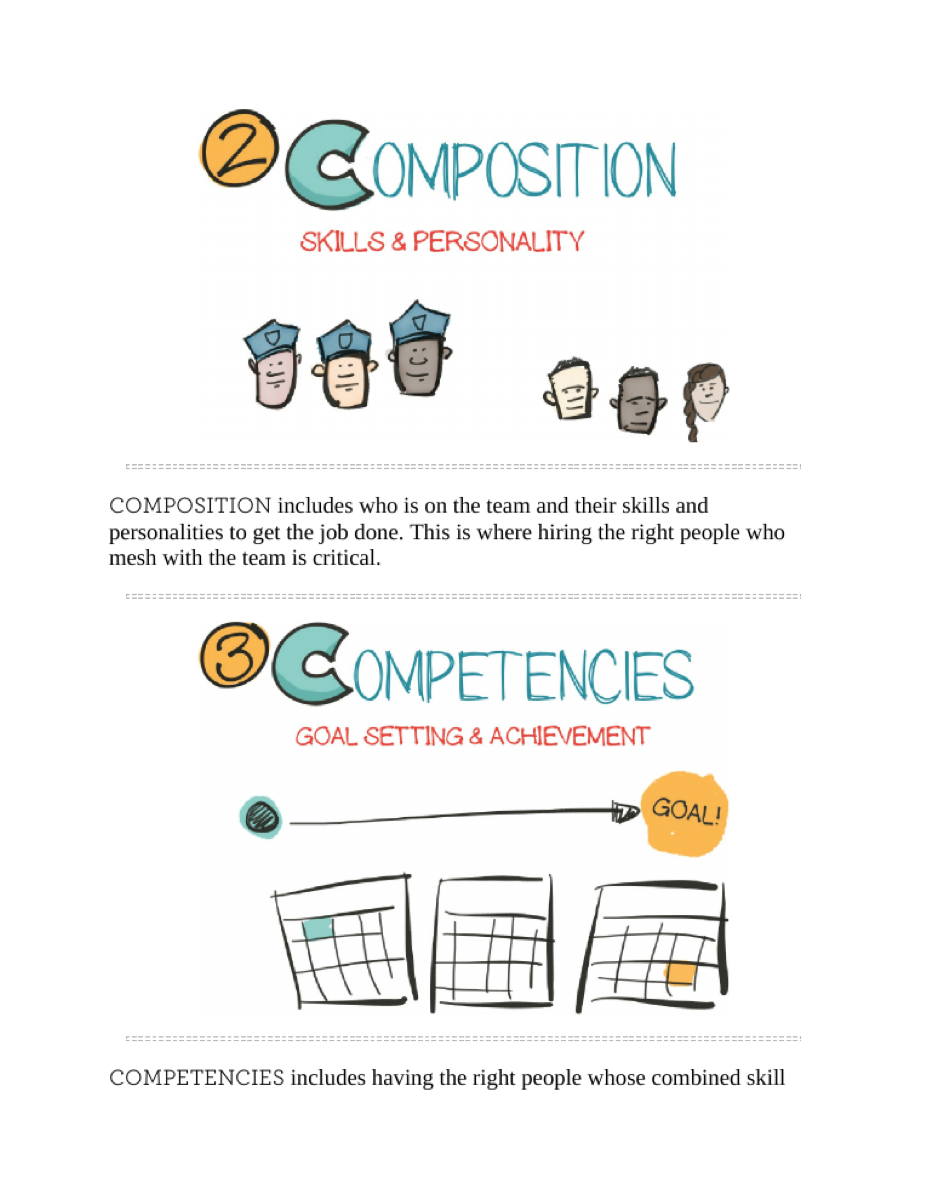
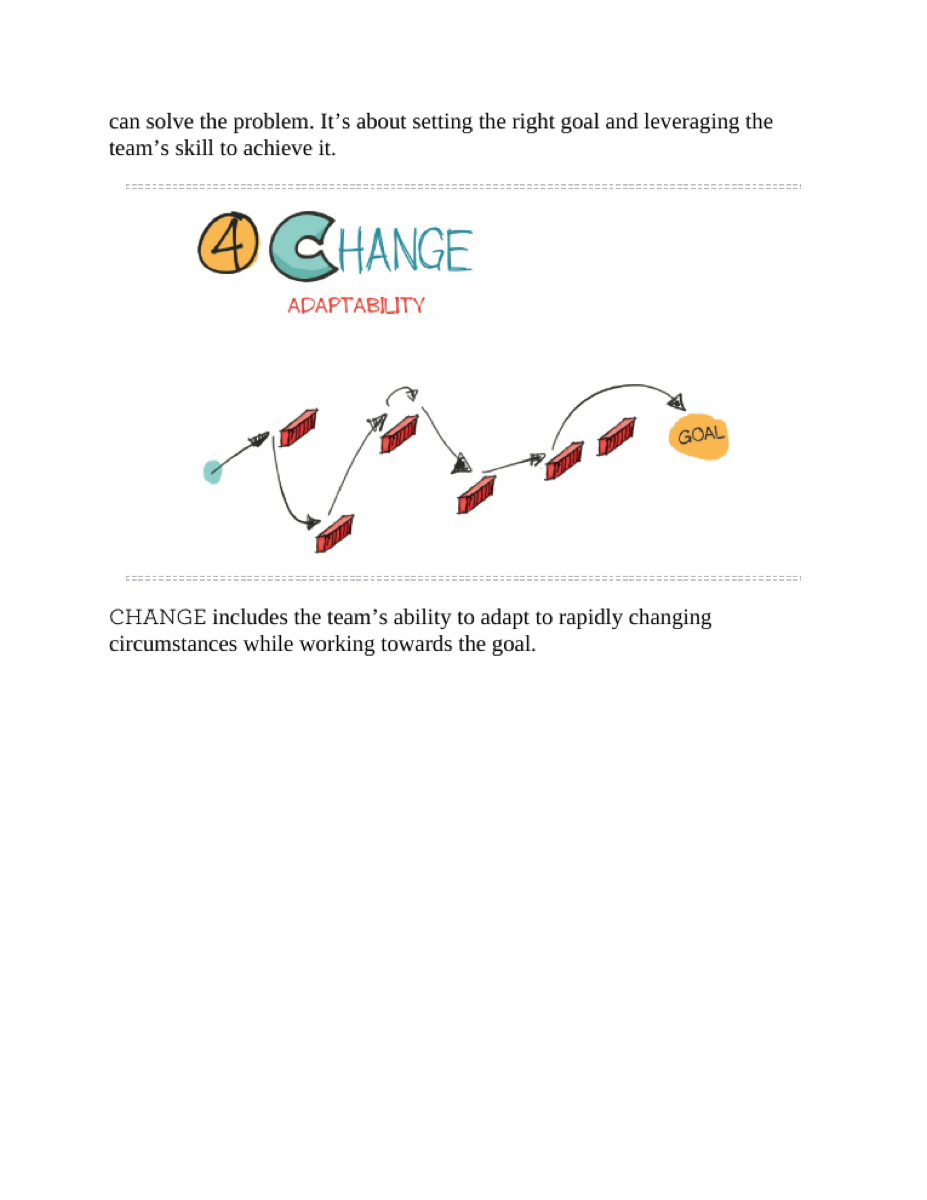
Figure: educational illustrations from Jason Barron’s The Visual MBA .
0. How to read this Visual MBA
Visual form Use it for Example 2×2 matrix Prioritise / segment Urgency × Importance; Attractiveness × Feasibility Process flow (table) Align handoffs Lead → Qualify → Propose → Close → Deliver Core equation Shared math Profit = Revenue − Cost; ROI = Gain / Cost Decision rule Speed under uncertainty “If contribution < 0 after avoidable costs, stop”
Rule: If you cannot sketch it in 60 seconds, you do not own it yet.
1. Leadership
1.1 What leadership is (vs management)
Management Leadership Focus Plans, processes, control Direction, meaning, mobilisation Time horizon Near-term delivery Adaptive change Primary artefact Schedule, budget Narrative + priorities Failure mode Bureaucracy Vision without execution
Decision rule: When the problem is ambiguity of where to go , lead first; when the problem is reliability of how we get there , manage first. Most roles need both in weekly rhythm.
1.2 Leadership 2×2 — Task vs Relationship
Low relationship High relationship High task Directive / crisis mode Coaching performance Low task Neglect Clubby underperformance
Move cells deliberately: crisis may require temporary High-task/Low-relationship intensity; sustainable teams live in High/High.
1.3 Influence process flow
Step Leader move Signal it worked 1 Clarify purpose (why) Team can repeat intent 2 Set few priorities WIP actually drops 3 Model behaviour Norms shift without memos 4 Create accountability Named owners + dates 5 Develop people Succession depth rises
1.4 Consulting when-to-use
Use leadership frames when transformations stall despite “good plans”: usually a meaning, priority, or behaviour gap—not a missing slide.
2. Corporate Financial Reporting
2.1 The three statements (visual stack)
Statement Question it answers Core identity Income statement Did we earn? Revenue − Expenses = Profit Balance sheet What do we own/owe? Assets = Liabilities + Equity Cash flow statement Did cash move? Operating + Investing + Financing
2.2 Core equations
Assets = Liabilities + Equity Gross Profit = Revenue − COGS Operating Income ≈ Gross Profit − Operating Expenses Net Income after interest & taxEnding Cash = Beginning Cash + Net Cash Flow
2.3 Accrual vs cash decision rule
If you see… Ask… Rising profit, falling cash Receivables? Inventory? Capex? Rising cash, flat profit Financing inflow? Deferred revenue? Big non-cash charges Quality of earnings?
Rule: Never brief a board on profit alone—pair with cash and balance-sheet risk.
2.4 Ratio dashboard (sketchable)
Ratio Formula idea Reads as Current ratio Current assets / current liabilities Short-term liquidity Leverage Debt / equity Solvency risk ROE Net income / equity Owner return Asset turnover Revenue / assets Capital productivity Gross margin % Gross profit / revenue Unit economics shape
3. Entrepreneurial Management
3.1 Entrepreneur vs administrator 2×2
Low uncertainty High uncertainty Exploit known model Efficient operator Premature scaling risk Explore new model Innovation theatre True entrepreneurship
3.2 Startup process flow
Stage Job Kill test Problem discovery Pain is real & frequent No one will talk twice Offer test Someone pays (or deposits) Only polite interest Repeatability Second sale without heroics Founder-only magic Scale Channels + delivery hold Unit economics break
3.3 Decision rules
Evidence over eloquence — anecdotes < paid pilots.Runway is strategy — cash months dictate option set.Focus beats optionality theatre — one beachhead market first.
4. Managerial Accounting
4.1 Financial vs managerial accounting
Financial reporting Managerial accounting Audience External Internal decision-makers Rules GAAP/IFRS-heavy Fitness for decision Cadence Periodic Continuous / ad hoc Key question What happened? What should we do?
4.2 Cost behaviour
Cost type Behaviour Decision use Fixed Flat in range Capacity bets Variable Moves with volume Unit margin Mixed Both Split before deciding Sunk Already spent Ignore for forward choice Opportunity Next-best alternative Always include
4.3 Core equations
Contribution Margin (CM) = Price − Variable Cost per unit CM Ratio = CM / Price Breakeven Units = Fixed Costs / CM per unit Target Profit Units = (Fixed Costs + Target Profit) / CM
4.4 Decision rule — keep / drop / make / buy
Decision Rule of thumb Drop a product If CM > avoidable fixed costs, dropping may hurt Special order Accept if price > relevant variable cost + opportunity cost Make vs buy Compare relevant costs; include quality/risk
5. Business Finance
5.1 Time value of money
Idea Visual Rule PV Future cash “shrunk” to today Discount at opportunity rate FV Today’s cash grown forward Compounding matters NPV PV(inflows) − PV(outflows) NPV > 0 → value-creating (given assumptions) IRR Rate that sets NPV = 0 Compare to hurdle rate carefully
5.2 Capital structure 2×2
Low debt High debt Stable cash flows Conservative Efficient leverage possible Volatile cash flows Safe but maybe slow Distress risk
5.3 Working capital flow
Lever Improve by Watch Receivables Faster collection Customer conflict Inventory Leaner stock Stockouts Payables Negotiated terms Supplier trust Cash conversion cycle Shorten Growth traps
Equation sketch: CCC ≈ DIO + DSO − DPO.
6. Marketing
6.1 Marketing process flow
Step Question Artefact Segment Who is alike in need? Segment cards Target Who do we serve first? ICP Position Why us? Positioning statement Mix Product/Price/Place/Promo Campaign + offer design Measure What moved? Funnel metrics
6.2 Positioning 2×2 (classic)
Low price High price Low differentiation Commodity trap Unsustainable skim High differentiation Value disruption Premium franchise
6.3 Funnel equations (practical)
CAC = Sales & Marketing Cost / New Customers LTV ≈ CM per period × periods × retention factor (simplified)Rule: LTV/CAC healthy only if cash timing and retention hold—not just a slide ratio.
6.4 Message hierarchy
Layer Content Attention Hook / problem Interest Mechanism / proof Desire Outcomes + social proof Action Single CTA
7. Operations Management
Input Process Output Materials / data / requests Transform under constraints Goods / services / experiences
Metric Meaning Tension Throughput Rate of output vs inventory Inventory / WIP Stuff waiting vs responsiveness Cycle time Elapsed per unit vs utilisation Quality Conformance / fitness vs speed if unmanaged Utilisation Busy % High util → long queues
7.3 Decision rules
Identify the bottleneck before adding resources elsewhere.Little’s Law intuition: WIP ≈ Throughput × Cycle Time — cut WIP to cut time.Variation kills plans — buffers and standard work beat heroic firefighting.Quality at source cheaper than inspection theatre.
7.4 Capacity 2×2
Low demand variability High demand variability Flexible capacity Efficient enough Ideal resilient design Rigid capacity Cost-efficient Queue / stockout pain
8. Strategic HR
8.1 HR as strategy execution system
HR lever Business link Hiring Capability portfolio Design of work Throughput & meaning Performance system What gets amplified Rewards Behaviour you can afford Development Future option value Culture mechanisms Informal control
Low potential High potential High performance Expert core — retain Future leaders — invest Low performance Exit / reassign Coach with timebox
8.3 Decision rules
Hire for learning agility in uncertain roles; hire for reliability in compliance-critical roles.
Align incentives with leading behaviours , not only lagging outcomes (see Performance & Incentives).
Culture is what you tolerate , not what you poster.
9. Business Negotiations
9.1 Negotiation process flow
Step Action Output 1 Prepare interests & BATNA Walk-away clarity 2 Open & explore Information map 3 Bargain trades Package deals 4 Commit Clear agreement 5 Implement / repair Relationship residual
9.2 Claiming vs creating value 2×2
Low inventiveness High inventiveness Hard claiming Distributive fight Missed joint gains Problem-solving Soft & exploited risk Integrative negotiation
9.3 Core ideas
Term Meaning Rule BATNA Best Alternative To Negotiated Agreement Strengthen before you sit Reservation price Walk-away point Never reveal casually ZOPA Overlap of reservation prices No ZOPA → walk or change game Anchoring First number shapes range Anchor with justification
Equation mindset: Total value created ≥ sum of claimed pieces; expand pie before splitting.
10. Strategy
10.1 Strategy cascade (table flow)
Level Question Where to play Which arenas / segments? How to win Relative advantage logic Capabilities What must we be world-class at? Management systems What reinforces the choice?
10.2 Attractiveness × Advantage 2×2
Weak advantage Strong advantage Attractive market Fix advantage or partner Double down Unattractive market Exit / harvest Reallocate carefully
10.3 Five forces (sketch checklist)
Force High when… Strategic response Rivalry Many equals, slow growth Differentiate / niche New entrants Low barriers Raise switching costs Substitutes Easy alternative Improve unique value Buyer power Concentrated buyers Diversify accounts Supplier power Concentrated inputs Dual source / redesign
10.4 Decision rule
Strategy is choice under scarcity . If everything is a priority, you do not have a strategy—you have a wish list.
11. Business Ethics
11.1 Ethics lenses 2×2
Short-term gain Long-term trust Compliant only Legalism Fragile reputation Principled Costly courage Durable franchise
11.2 Process for ethical decisions
Step Question 1 Who is affected? 2 What rights / duties apply? 3 What consequences follow (including second-order)? 4 What would we accept on the front page? 5 What system change prevents recurrence?
11.3 Decision rules
Do not outsource conscience to “everyone does it.” Incentives that reward only numbers will eventually buy unethical numbers.
Disclose conflicts early; silence is a choice stakeholders will price later.
12. Entrepreneurial Finance
12.1 Funding ladder
Source Best for Cost Customers Validation Delivery load Founders / friends Early bridge Relationship risk Angels First institutional step Dilution + advice VC High-scale bets Growth pressure Debt / revenue-based Predictable cash businesses Covenants / APR
12.2 Cap table & dilution intuition
Round What happens Issue new shares Ownership % dilutes Valuation Price of that dilution Option pool Dilutes to fund talent Preference terms Change who gets paid when
Rule: Percentage is not the only story—payoff waterfalls and control rights matter.
12.3 Runway equation
Runway months ≈ Cash / Net monthly burn
If runway < 6 months Act Cut burn Extend oxygen Accelerate revenue Preferable if real Raise Start earlier than comfort
12.4 Unit economics gate
Do not scale paid acquisition until contribution after variable costs and retention support payback within a cash-feasible window.
13. Judgment & Decision Making
13.1 Decision process flow
Step Guard against Frame the problem Solving the wrong problem Generate options Narrow framing Evaluate with criteria Hidden preferences Choose under uncertainty False precision Review & learn Outcome bias
13.2 Bias cheat-sheet
Bias Sketch Counter Anchoring First number sticks Multiple anchors / base rates Confirmation See what you believe Red team Sunk cost Past spend justifies more Forward costs only Overconfidence Too tight ranges Wider intervals + premortem Availability Vivid ≠ likely Base rates Framing Gain/loss wording Reframe both ways
13.3 Decision rule — reversible vs irreversible
Type Speed Process Two-way door Fast Lightweight experiment One-way door Slow Deeper analysis + dissent
14. General Manager’s Role
14.1 GM job on one page
Domain GM question Direction What game are we playing? Integration How do functions fit? Resource allocation Where does scarce capital/talent go? People Who thrives in which seat? External What do customers/competitors do next? Risk What could kill us?
14.2 Attention allocation 2×2
Urgent Not urgent Important Crises & deadlines Strategy, talent, systems Not important Interruptions Noise — delete
Rule: GMs who live only in Urgent/Important never build the Not-urgent/Important assets that prevent future crises.
14.3 Operating cadence
Cadence Purpose Daily Flow / blockers Weekly Priorities & commitments Monthly Financial & leading KPIs Quarterly Strategy refresh & talent Annual Capital & portfolio choices
15. Strategic Thinking
15.1 Strategic thinking vs planning
Planning Strategic thinking Calendar & budget Insight under change Detail Selection & trade-offs Comfort of completeness Comfort with uncertainty
15.2 Thinking moves (table)
Move Prompt Contrast Relative to whom? Time shift What changes in 3 years? System map What loops reinforce? Constraint What truly limits us? Option value What doors stay open? Irreversibility What can’t we undo?
15.3 Strategy test questions
What will we stop doing?
Where are we differently right ?
What capability is hard to copy in 24 months ?
How does money still work if we are only 60% right ?
16. Creativity & Innovation
16.1 Innovation types 2×2
Existing customers New customers Existing offer Incremental improve New market development New offer Adjacent innovation Diversification / breakthrough
16.2 Creative process flow
Stage Mode Trap Diverge Many options Premature critique Converge Select & test Endless ideation Prototype Make tangible Polish too early Learn Measure Vanity metrics Scale / kill Decide Sunk-cost clinging
16.3 Decision rules
Separate idea generation from idea selection in time.
Innovate on a constraint (cost, channel, regulation)—constraints focus creativity.
Portfolio: mostly incremental, some adjacent, few bets—balanced by runway.
17. Startup Marketing
17.1 Startup vs enterprise marketing
Startup Enterprise Goal Learning + first traction Share & efficiency Budget Scarce Allocated Brand Promise + proof Asset to protect Channels Concentrated experiments Mix optimisation
17.2 Beachhead flow
Step Output Pick narrow ICP Segment of one beachhead Craft sharp offer End-result promise Find one channel that works Repeatable acquisition path Instrument activation “Aha” event defined Only then scale spend Guard unit economics
17.3 Growth equation (sketch)
Growth ≈ Acquisition × Activation × Retention × Referral × Revenue expansion (multiplicative—weakest link dominates).
Rule: Fix retention before scaling acquisition.
18.1 Incentive design chain
Link Failure if broken Strategy goals Incentives point elsewhere Metrics Goodhart gaming Rewards Wrong behaviour pays Culture Informal norms override Review No learning loop
18.2 Measurement 2×2
| | Easy to measure | Hard to measure |
| --- | --- |
| Important | Manage carefully (gaming risk) | Use proxies + judgement |
| Unimportant | Stop measuring | Ignore |
18.3 Decision rules
Reward teams for shared outcomes when collaboration matters.
Include quality / risk guardrails beside revenue metrics.
Short-term bonuses without long-term equity/reputation create extraction.
What you celebrate in public is the real incentive system.
19. Global Management
19.1 Globalisation tensions 2×2
Local responsiveness high Local responsiveness low Global integration high Transnational challenge Global standardisation Global integration low Multidomestic International / export
19.2 Cross-border checklist
Domain Questions Customers Same job-to-be-done? Regulation Data, labour, product rules? Talent Local leadership depth? Supply Logistics & FX exposure? Brand Universal vs local meaning? Partners Who owns distribution trust?
19.3 Decision rule
Do not copy-paste a domestic playbook. Re-validate unit economics and trust mechanics per market; adapt the offer before adapting the org chart.
20. Putting It All Together
20.1 The GM’s integrated dashboard
Lens Weekly ask Tool from this guide Customers Are we creating valued outcomes? Marketing / Startup Marketing Money Is cash and margin healthy? Reporting / Managerial / Finance Operations Is the constraint improving? Operations People Are incentives and talent aligned? HR / Incentives / Leadership Direction Are trade-offs still right? Strategy / Strategic Thinking Judgement Are we deciding under the right frame? JDM / Ethics / Negotiation
Situation Reach for Ambiguous direction Leadership narrative + strategy cascade Soft margins Managerial accounting + pricing Scale without collapse Operations bottleneck + incentives Fundraising Entrepreneurial finance + runway math Deal stuck Negotiation BATNA + ZOPA New market entry Global 2×2 + beachhead marketing Culture drift Ethics process + what you tolerate Innovation stall Creativity diverge/converge + portfolio
20.3 One-page weekly operating ritual
Block (30–45 min) Questions Outcomes What customer/financial needle moved? Constraint What limited throughput most? Decisions Which one-way doors this week? People Who needs coaching / clarity? Experiments What did we learn that changes next week?
20.4 Closing synthesis
The Visual MBA works when frameworks stay visual, few, and used . Sketch the 2×2, write the equation, run the decision rule, then put the marker down and act. Integration is the real exam: choosing the smallest useful model for this decision—not displaying every model you own.
Key takeaways
MBA craft compresses into sketchable forms: 2×2s, flows, equations, decision rules.
Money literacy (reporting, managerial accounting, finance) pairs with people systems (leadership, HR, incentives, negotiation).
Strategy is trade-offs; operations is constraints; marketing is focused demand creation.
Judgement under bias and ethics under pressure separate durable GMs from lucky ones.
“Putting it all together” means a weekly integrated dashboard—not a framework museum.
What to do next
Pick one live decision; sketch a single 2×2 and one equation that clarify it.
Build a one-page GM dashboard from section 20 for your team or client.
Run a negotiation prep using BATNA / reservation / ZOPA before your next commercial meeting.
Deepen mental-model coverage with The Personal MBA .
Build a longer study path via AI-Focused MBA curriculum .
Discussion
Comments
Share feedback or questions about this page. No account required.
Loading comments…