The Outsiders: Unconventional CEOs and the Capital Allocation Blueprint
Most CEO scorecards still celebrate growth theatre: bigger revenue, bigger headcount, bigger deal announcements, bigger headquarters. William Thorndike’s The Outsiders tells a different story. The best long-term value creators were often unfashionable capital allocators—operators who treated the CEO job less like a celebrity general and more like an investor with operating control. They obsessively asked one question: What action most increases per-share intrinsic value? Everything else was noise.
Source note: This article is an original practitioner synthesis of themes from William N. Thorndike Jr.’s The Outsiders: Eight Unconventional CEOs and Their Radically Rational Blueprint for Success. It is not a reprint of the book. Historical examples are summarised for practitioner learning; support the original work for full case detail, returns data, and narrative texture.
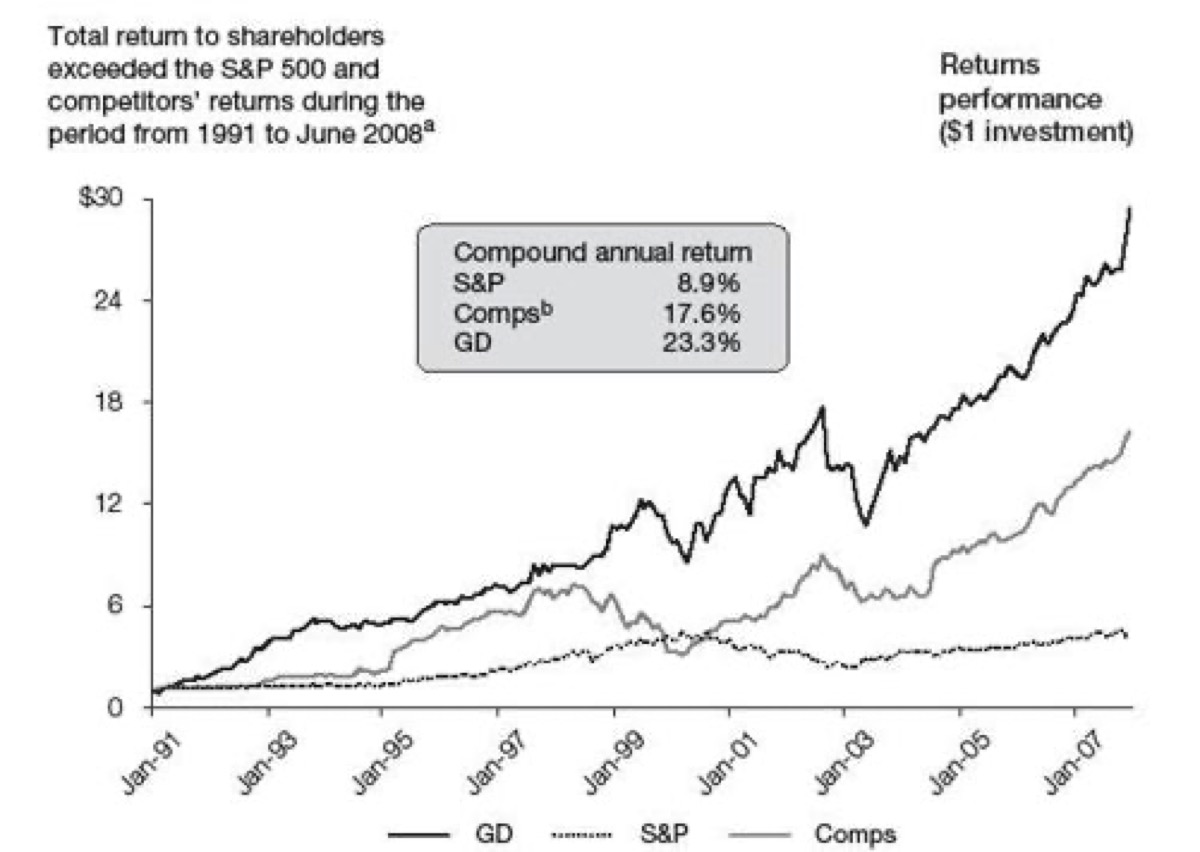
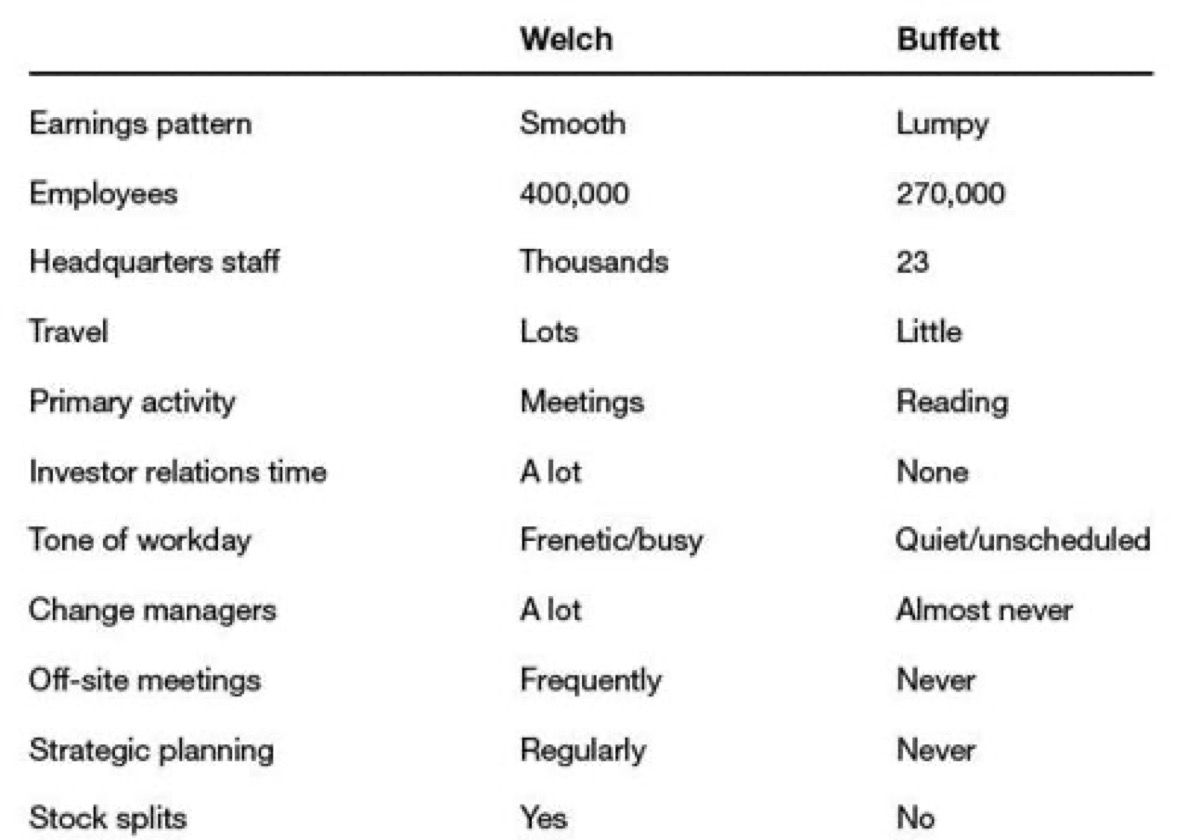
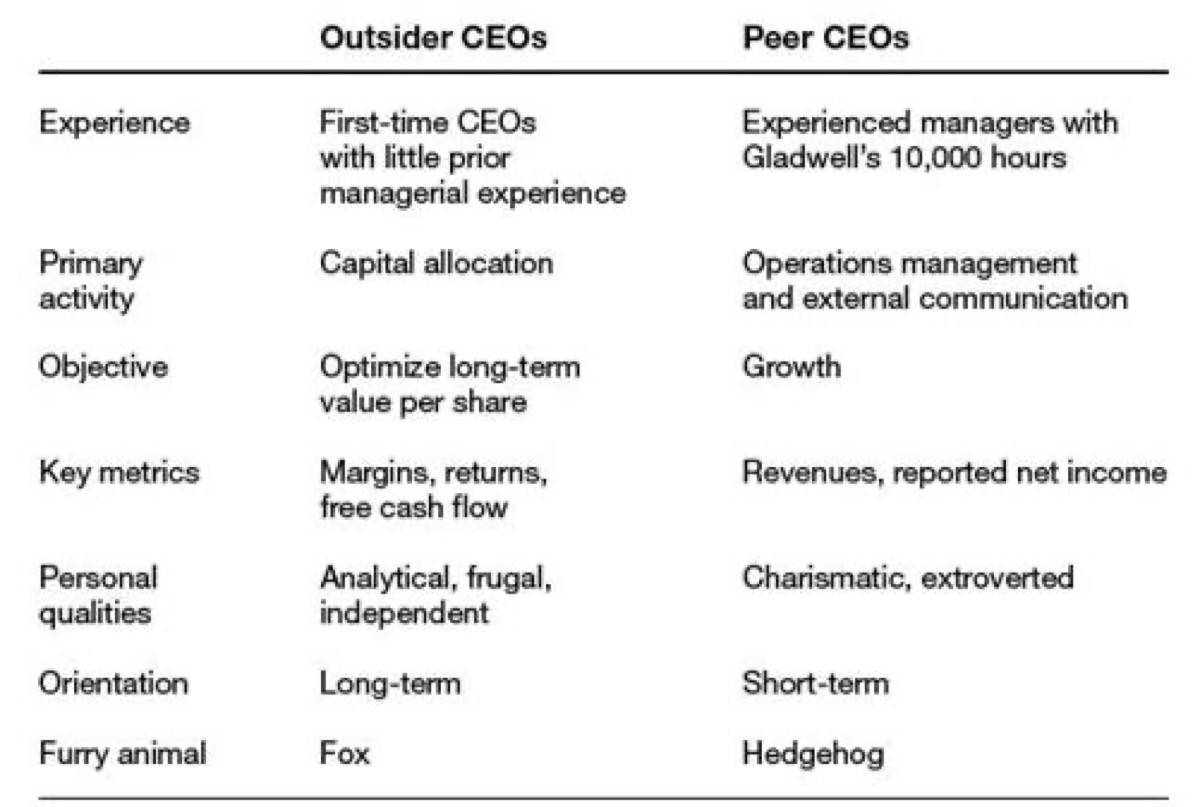
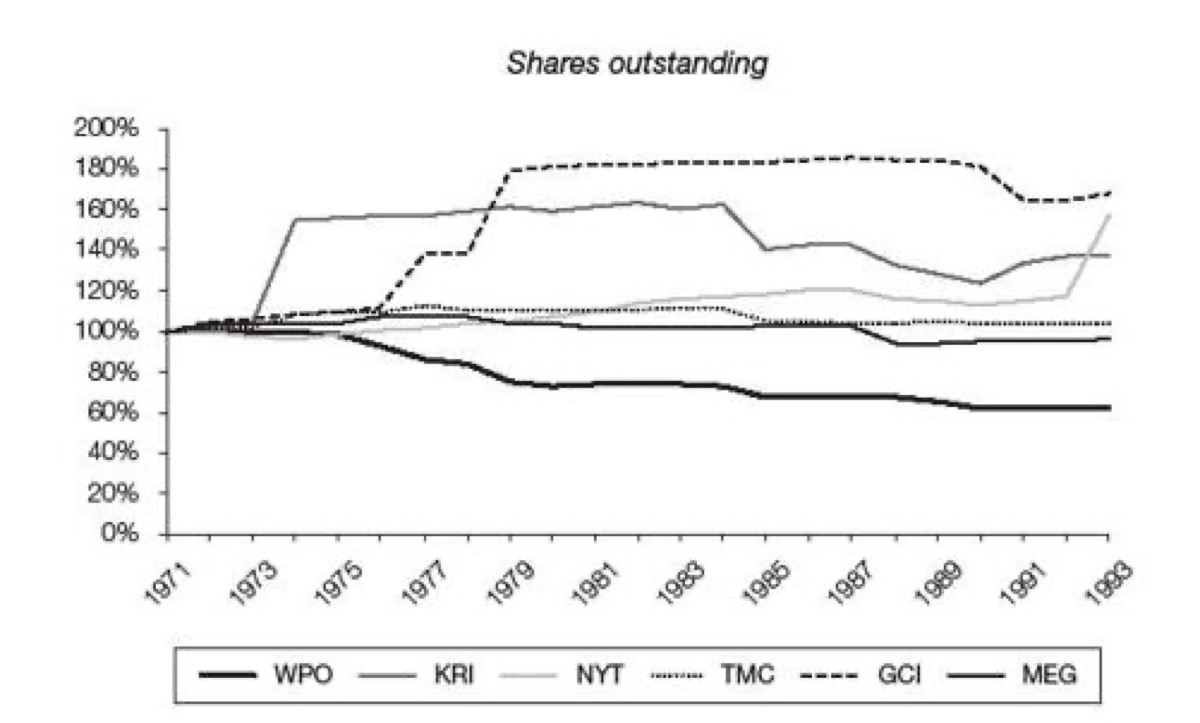
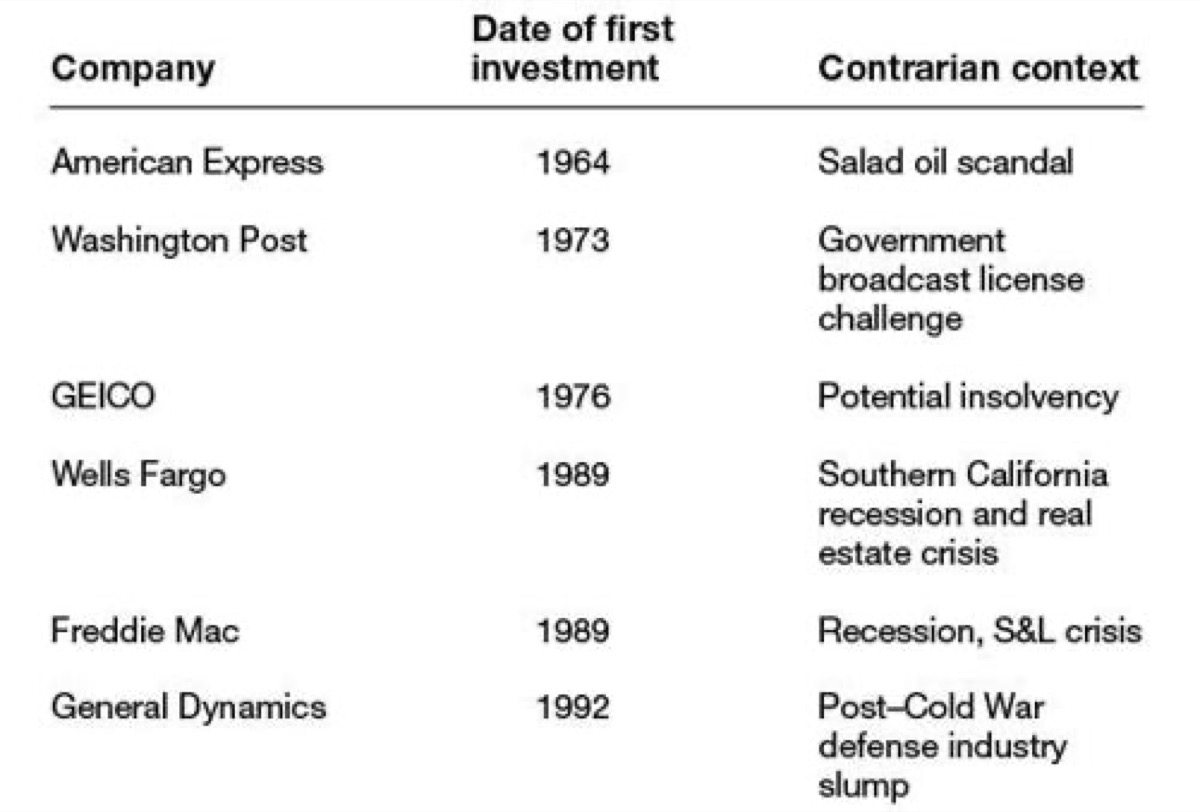
Figure: educational illustrations from William Thorndike’s The Outsiders EPUB.
0. Introduction: the outsider pattern
0.1 What “outsider” means
Thorndike’s outsiders were not always social outsiders. They were intellectual outsiders relative to CEO fashion:
| Conventional CEO habit | Outsider habit |
|---|---|
| Grow revenue and headlines | Grow per-share intrinsic value |
| Centralise and control | Decentralise operations; centralise capital allocation |
| Chase adjacent empires | Buy undervalued cash flows; sell overvalued assets |
| Ignore buybacks (or use them cosmetically) | Buy back aggressively when price < value |
| Elaborate HQ and staff | Frugal HQ; operators closest to the work |
| Imitate peer strategy | Independent analysis; ignore peer theatre |
| Smooth earnings narratives | Prefer cash and long-term value over optics |
0.2 Why capital allocation is the CEO’s real job
After a company generates cash, the CEO must choose among five primary uses:
- Invest in existing operations
- Acquire other businesses
- Pay down debt
- Pay dividends
- Repurchase shares
(Plus variants: special dividends, spin-offs, joint ventures, etc.)
Strategy slides without capital allocation discipline are incomplete. The outsiders treated allocation as the craft.
0.3 The returns claim (why the book matters)
Thorndike’s cases show extraordinary long-term outperformance versus peers and markets—driven less by charismatic product visions alone and more by repeated, rational capital decisions under uncertainty. The practitioner lesson is transferable even if your industry differs: install an outsider capital OS.
0.4 How to read this guide
- Extract the shared blueprint first (Section 1).
- Study each CEO as a variation on the theme (Sections 2–9).
- Internalise radical rationality (Section 10).
- Use the checklists and Buffett test (Sections 11–13).
1. The capital allocation blueprint (shared DNA)
1.1 Independent thinking
Outsiders ignored the crowd when the crowd was wrong. They did not confuse consensus with truth.
Practices:
- Build your own valuation models.
- Distrust peer benchmarking as strategy.
- Welcome being temporarily misunderstood by markets and media.
- Separate accounting optics from economic reality.
1.2 Cash flow focus
Reported earnings can be managed; cash is harder to fake over time. Outsiders oriented around free cash flow and the cash yield on capital deployed.
| Earnings theatre | Cash reality |
|---|---|
| Smooth EPS | Durable free cash flow |
| Revenue growth at any margin | Cash return on incremental capital |
| One-time accounting boosts | Sustainable cash generation |
1.3 Decentralised operations
Operate with lean central staff. Push P&L ownership to local managers. Keep HQ focused on capital allocation, key talent, and a few non-negotiables.
Why it works:
- Speed and accountability improve near customers.
- Politics shrink when empires are harder to build centrally.
- CEO attention stays on high-leverage capital decisions.
1.4 Bold occasional bets
Outsiders were not timid. They waited patiently, then acted decisively when odds and prices were favourable—large acquisitions, major buyback programmes, portfolio reshaping.
Patience ≠ passivity. Patience = dry powder + conviction threshold.
1.5 Buybacks when undervalued
Share repurchase was not a mechanical EPS toy. It was an investment decision: buying the company’s own shares when market price sat below intrinsic value, especially when alternative deployments were inferior.
1.6 Humility and frugality metrics
Outsiders often disliked corporate extravagance. Frugality was cultural signal and economic policy: waste is a tax on owners.
1.7 Per-share value over empire size
The master metric: long-term intrinsic value per share. Headcount, revenue rank, and deal count are vanity unless they raise per-share value.
1.8 Blueprint checklist (enterprise)
- Do we have an explicit capital allocation policy owned by CEO/board?
- Are free cash flow and ROIC first-class metrics in operating reviews?
- Is HQ lean relative to peers?
- Do we repurchase opportunistically (valuation-based), not only mechanically?
- Are acquisitions judged by cash returns and opportunity cost?
- Do incentives reward per-share value, not size?
- Can managers say “no” to growth that destroys value?
- Is independence from peer fashion culturally safe?
2. Tom Murphy — Capital Cities
2.1 The story in practitioner terms
Tom Murphy (with Dan Burke as operating partner) built Capital Cities into one of the great media compounding machines—crowned by the disciplined acquisition of ABC—through extreme frugality, decentralisation, and shrewd deal-making.
2.2 Signature moves
| Theme | Murphy pattern |
|---|---|
| Frugality | Obsessive cost discipline; lean corporate centre |
| Operators | Local managers empowered; HQ small |
| Deals | Patient, then bold when price and fit aligned |
| Partnership | CEO–COO complementarity (allocation + operations) |
| Culture | Understatement; results over glamour |
2.3 Lessons for today’s leaders
- A great COO can free the CEO to allocate capital.
- Cost discipline is a strategy if reinvested intelligently.
- Decentralisation requires hiring adults and measuring cash.
- One transformative deal can be worth a decade of mediocre tuck-ins—if priced and integrated with discipline.
2.4 Murphy assessment checklist
- Is our HQ cost base a competitive advantage or a vanity drag?
- Do unit leaders truly own results?
- Are we capable of a once-in-a-decade bold deal—and of walking away?
- Is leadership understated enough to keep focus on owners?
3. Henry Singleton — Teledyne
3.1 The story in practitioner terms
Henry Singleton, a brilliant technologist-CEO, ran Teledyne with an investor’s mind: aggressive diversification when acquisitions were cheap, then a historic shift into buybacks and rationalisation when the market regime changed. He treated the company as a portfolio of capital decisions over time.
3.2 Signature moves
| Era pattern | Capital behaviour |
|---|---|
| Cheap acquisition markets | Issue shares / acquire opportunistically |
| Expensive markets / undervalued own shares | Repurchase aggressively |
| Conglomerate complexity | Focus on economic value over narrative neatness |
| Analytical intensity | Independent models; ignore fashion |
3.3 Lessons
- Capital allocation is regime-dependent: the right tool changes with price and opportunity.
- Buybacks can be the highest-ROI “acquisition” available.
- Scientific intelligence applied to capital markets is a CEO edge.
- Complexity is acceptable if cash economics are understood; complexity without understanding is fatal.
3.4 Singleton assessment checklist
- Do we change capital tools as market regimes change?
- Have we ever bought our own shares with true undervaluation conviction?
- Do we understand cash economics of every major segment?
- Are we clinging to a conglomerate form that no longer earns its keep?
4. Bill Anders — General Dynamics
4.1 The story in practitioner terms
Bill Anders (astronaut turned CEO) inherited a sprawling defence contractor and chose radical focus: exit non-core businesses, return capital, tighten operations, and refuse the empire instinct common in industrial America.
4.2 Signature moves
| Move type | Outsider logic |
|---|---|
| Divestitures | Unlock value trapped in conglomerate discount and distraction |
| Focus | Compete where you can win economically |
| Capital return | Give owners cash when reinvestment spreads are poor |
| Cultural reset | From bureaucracy and bulk to performance and clarity |
4.3 Lessons
- Shrinking the empire can enrich shareholders.
- Strategy sometimes means subtraction.
- Defence/industrial complexity rewards focus and cash discipline.
- Leadership courage includes disappointing constituencies that preferred size.
4.4 Anders assessment checklist
- Which businesses would we not buy today at current implied value?
- What should we exit in the next 24 months?
- Are we returning capital when incremental ROIC is weak?
- Is “strategic” being used as a euphemism for “low return”?
5. John Malone — TCI
5.1 The story in practitioner terms
John Malone rebuilt cable economics around cash flow, leverage used intelligently, operational decentralisation, and a willingness to be misunderstood by earnings-focused markets. The famous orientation: maximise cash flow and long-term equity value, not cosmetic EPS.
5.2 Signature moves
| Theme | Malone pattern |
|---|---|
| Cash flow | Primary performance truth |
| Leverage | Tool when asset cash flows support it |
| Tax / structure awareness | Economic substance over naive optics |
| Acquisitions & swaps | Portfolio shaping in a consolidating industry |
| Independence | Ignore Wall Street’s preferred narrative when it conflicts with value |
5.3 Lessons
- If your industry’s accounting poorly matches economics, educate owners—or attract the right owners.
- Leverage is neither virtue nor sin; it is a priced tool.
- Scale advantages must convert into cash, not only subscribers.
- Being misunderstood can be a moat if your cash compounding continues.
5.4 Malone assessment checklist
- Do our KPIs match economic reality or accounting fashion?
- Is leverage policy explicit, stress-tested, and board-owned?
- Are we consolidating for cash returns—or for size bragging rights?
- Can we tolerate temporary market misunderstanding?
6. Katharine Graham — Washington Post
6.1 The story in practitioner terms
Katharine Graham, thrust into leadership after tragedy, combined institutional courage (journalistic independence under pressure) with increasingly sophisticated business and capital discipline—aided by counsel from investors like Buffett—and produced outstanding long-term shareholder results in a family-influenced media enterprise.
6.2 Signature moves
| Theme | Graham pattern |
|---|---|
| Courage | Protect editorial independence as a long-term asset |
| Learning posture | Grew into capital allocation excellence |
| Share repurchases / discipline | Owner-oriented financial policy over time |
| People | Trusted operators and wise outside voices |
| Stewardship | Family enterprise run with professional seriousness |
6.3 Lessons
- Outsider excellence is learnable; you can grow into the craft.
- Values (integrity, independence) can be economically rational long-term assets.
- Boards and mentors matter when a leader is scaling capability quickly.
- Media/brand franchises still require cash and capital discipline.
6.4 Graham assessment checklist
- Are we investing in trust assets that compound (brand, integrity, talent)?
- Do we have mentors/directors who raise our capital IQ?
- Is stewardship language matched by owner-like financial decisions?
- Can we hold long-term principles under short-term pressure?
7. Bill Stiritz — Ralston Purina
7.1 The story in practitioner terms
Bill Stiritz transformed Ralston through portfolio reshaping, focus on higher-return consumer businesses, aggressive financial discipline, and a dispassionate willingness to exit sacred cows—behaviour more like a private-equity allocator than a traditional packaged-goods empire builder.
7.2 Signature moves
| Theme | Stiritz pattern |
|---|---|
| Portfolio surgery | Keep where returns justify capital |
| Brand economics | Focus on advantaged consumer cash generators |
| Financial engineering with purpose | Structure in service of per-share value |
| Anti-sentimentality | Sell what does not earn cost of capital |
7.3 Lessons
- Consumer conglomerates often hide poor capital sinks behind famous brands.
- Focus can beat nostalgia.
- CEO as portfolio manager is a legitimate—and powerful—identity.
- Selling a business is sometimes the highest-ROI decision available.
7.4 Stiritz assessment checklist
- Which brands/units earn below cost of capital on honest fully-loaded economics?
- Is our portfolio logic clearer than our history?
- Do we have a repeatable exit muscle, not only an acquisition muscle?
- Are incentives tied to returns or to keeping the empire intact?
8. Dick Smith — General Cinema
8.1 The story in practitioner terms
Dick Smith evolved General Cinema from a theatre business into a diversified capital allocator—most notably through beverage bottling and other moves—demonstrating outsider flexibility: the company identity followed value opportunities more than legacy industry romance.
8.2 Signature moves
| Theme | Smith pattern |
|---|---|
| Reinvention | Willing to change the business mix |
| Opportunism with discipline | Enter where cash economics work |
| Owner mindset | Long-term family/operator capitalism |
| Pragmatism | Industry nostalgia does not set strategy |
8.3 Lessons
- “Who we are” should not imprison capital.
- Multi-decade compounding often requires business-model migration.
- Family/long-horizon ownership can support outsider rationality—if governance is serious.
- Optionality has value when paired with ruthless sorting of opportunities.
8.4 Smith assessment checklist
- Are we trapped by founding industry identity?
- What adjacent cash-flow domains are we competent to enter?
- Do we kill legacy romance quickly when numbers demand it?
- Is our horizon long enough to migrate the portfolio intelligently?
9. Warren Buffett — Berkshire Hathaway
9.1 The story in practitioner terms
Buffett is the archetype outsider: a capital allocator who built a sprawling collection of operating businesses and securities under a holding company known for decentralisation, freer cash flow compounding, rare but large bets, and an almost religious focus on intrinsic value per share.
9.2 Signature moves
| Theme | Buffett pattern |
|---|---|
| Opportunity cost | Every yes is a no to something else |
| Float / durable capital | Understand specialised funding advantages |
| Managers | Trust excellent operators; minimal interference |
| Price vs value | Buy bargains; ignore activity for its own sake |
| Communication | Educate owners; attract patient capital |
| Humility about forecasts | Circle of competence; avoid fashionable stupidity |
9.3 The Buffett test for CEOs
Ask of any major initiative:
- Does this increase per-share intrinsic value over time?
- Relative to buybacks, is this the best use of cash?
- Relative to doing nothing / waiting, is the expected value superior?
- Are we growing owner wealth or managerial empire?
- Would we act the same if the company were private with one intelligent owner?
If leadership cannot answer clearly, pause.
9.4 Lessons
- The CEO as chief capital allocator is a complete job description.
- Culture can enforce decentralisation at enormous scale.
- Patient owners are a strategic asset; cultivate them deliberately.
- Saying no is a core competence.
9.5 Buffett assessment checklist
- Do we report and manage to per-share value drivers?
- Is opportunity cost explicit in capital committee papers?
- Are operating managers free within a clear capital regime?
- Do we attract long-horizon owners—or train short-term ones?
- Is “activity” culturally rewarded more than “right decisions”?
10. Radical rationality: the meta-chapter
10.1 What radical rationality is
Radical rationality is not coldness. It is refusal to let ego, fashion, and peer pressure allocate capital.
| Irrational driver | Rational replacement |
|---|---|
| Empire desire | Per-share value |
| Peer imitation | Independent models |
| Earnings cosmetics | Cash economics |
| Sunk-cost loyalty | Forward returns only |
| Deal excitement | Price discipline |
| HQ prestige | Frugality and focus |
| Fear of inactivity | Patience as policy |
10.2 Habits of radically rational CEOs
- Write capital principles down; socialise with the board.
- Run a real capital committee with kill rights.
- Compare every proposal to repurchase and to waiting.
- Decentralise operations; centralise allocation authority.
- Keep a lean centre.
- Measure managers on returns and cash, not size.
- Communicate uniquely to attract the right shareholders.
- Review mistakes without narrative defence.
10.3 Board implications
Directors should evaluate CEOs on:
- Quality of capital allocation process
- Honesty about returns
- Willingness to shrink or repurchase
- Resistance to fashion
- Alignment of incentives with per-share value
Not only on:
- Revenue growth
- Media profile
- Volume of deals
- Peer imitation
10.4 Consultant implications
When advising “strategy,” include:
- Capital allocation tree
- Divestiture candidates
- Buyback policy under valuation bands
- Incentive redesign
- HQ cost benchmarking
- Portfolio ROIC transparency
Strategy without these is incomplete theatre.
11. Operating playbooks
11.1 Annual capital allocation policy (template)
- Objective: Maximise long-term intrinsic value per share.
- Sources of cash: Operations, divestitures, financing capacity.
- Uses ranked by expected risk-adjusted return:
- High-ROI organic reinvestment
- Value-creating M&A
- Debt reduction (if balance sheet requires)
- Repurchases when price < conservatively estimated value
- Dividends when other uses are inferior and owners prefer cash
- Guardrails: Leverage limits, acquisition IRR hurdles, related-party rules.
- Reporting: Quarterly capital deployment vs policy.
11.2 Acquisition filter
| Question | Pass criteria |
|---|---|
| Strategic logic | Clear capability/market advantage |
| Cash returns | Meets hurdle on conservative assumptions |
| People | Operators we trust or can attract |
| Price | Margin of safety vs intrinsic value |
| Opportunity cost | Beats buybacks and organic alternatives |
| Complexity tax | Integration load justified |
| Ego check | Would we buy if unnamed / unfashionable? |
11.3 Divestiture filter
- Would we buy this unit today at implied value?
- Is management attention scarce relative to opportunity?
- Is there a better owner?
- Does sale fund higher-ROI uses (including buybacks)?
- Are we holding for nostalgia, politics, or optics?
11.4 Buyback operating rules
- Estimate conservative intrinsic value ranges.
- Authorise repurchases when market price is meaningfully below range.
- Avoid buybacks that merely offset dilution without value logic—or be honest if that is the goal.
- Do not leverage recklessly only to repurchase.
- Communicate policy so owners understand rationality, not cosmetics.
11.5 Decentralisation operating rules
| Centre owns | Units own |
|---|---|
| Capital allocation | Day-to-day operations |
| Key talent standards | Local hiring within standards |
| Ethics / risk non-negotiables | Customer execution |
| Major M&A | Pricing and local product tactics |
| Performance transparency | Continuous improvement |
12. Master assessment — are you running an outsider company?
Score 1–3 (rare → habitual):
- Per-share intrinsic value is the master objective.
- Free cash flow and ROIC dominate operating reviews.
- HQ is lean and respected for allocation, not empire.
- Operations are decentralised with real P&L ownership.
- We compare projects to buybacks and waiting.
- We divest without sentimental drama.
- We repurchase when undervalued with conviction.
- Incentives reward returns, not size.
- We tolerate being misunderstood by fashion.
- Board evaluates capital allocation quality explicitly.
- Managers can kill low-return growth safely.
- Frugality is cultural, not performative.
Interpretation
| Score | Meaning |
|---|---|
| 30–36 | Outsider OS in force |
| 22–29 | Mixed; tighten policy and incentives |
| 14–21 | Conventional empire risk |
| ≤13 | Capital allocation malpractice likely |
13. Negative cases and anti-patterns
- Buyback theatre: Repurchasing at highs to prop EPS while calling it “owner-friendly.”
- Decentralisation as neglect: No standards, no talent bar, no ethics spine.
- Frugality as underinvestment: Starving high-ROI organic opportunities.
- Conglomerate romance: Diversification without capital skill.
- Focus fanaticism: Selling gems to look “pure play” for the wrong audience.
- Leverage bravado: Confusing Malone-like sophistication with reckless debt.
- Copying Buffett aesthetics: Quoting letters without doing the math.
- Independence as arrogance: Ignoring all outside input, including disconfirming data.
Defence: Every capital principle needs a counter-principle (e.g., frugality ≠ underinvestment; independence ≠ closed-mindedness).
14. Comparing the eight: one-page synthesis
| CEO | Company | Distinctive outsider edge |
|---|---|---|
| Tom Murphy | Capital Cities | Frugality + decentralisation + bold media deal craft |
| Henry Singleton | Teledyne | Regime-shifting allocation; legendary buybacks |
| Bill Anders | General Dynamics | Radical focus; empire reduction as value creation |
| John Malone | TCI | Cash-flow economics over earnings fashion |
| Katharine Graham | Washington Post | Stewardship + learning into owner capitalism |
| Bill Stiritz | Ralston Purina | Portfolio surgery in consumer brands |
| Dick Smith | General Cinema | Identity flexibility toward cash opportunities |
| Warren Buffett | Berkshire | Purest allocator archetype; per-share compounding |
Shared core: rational capital deployment + decentralised operations + independence from vanity metrics.
15. Integrating with modern CEO excellence
Thorndike’s outsiders complement frameworks like CEO Excellence:
| CEO Excellence mindset | Outsider reinforcement |
|---|---|
| Be Bold | Bold bets when price and odds warrant; otherwise patience |
| Treat soft as hard | Culture of frugality, candour, and returns discipline |
| Solve for team psychology | Decentralised operators as the team that matters |
| Help directors help | Board as capital allocation partner |
| Start with Why | Owner capitalism as purpose for public companies |
| Do what only you can | Capital allocation is uniquely CEO work |
If you only adopt outsider finance without leadership mindsets, you get spreadsheets without mobilisation. If you only adopt leadership theatre without outsider capital discipline, you get inspired empires that destroy owner value.
16. Ninety-day outsider installation plan
Days 1–30
- Publish a one-page capital allocation policy draft.
- Map last five years of cash uses and ex-post returns.
- Identify top three divestiture or buyback candidates.
- Benchmark HQ cost and decision rights.
Days 31–60
- Install opportunity-cost section in every investment paper.
- Reset incentives for top leaders toward ROIC / per-share drivers.
- Run a board deep-dive on capital allocation quality.
- Kill or shrink one low-return initiative publicly.
Days 61–90
- Authorise valuation-based repurchase bands (if appropriate).
- Finalise decentralisation rules (centre vs units).
- Communicate policy to employees and owners.
- Schedule semi-annual “outsider audit” of capital decisions.
17. Closing: the unfashionable path to excellence
The Outsiders endures because it attacks a sacred CEO myth: that greatness equals growth and visibility. Thorndike’s eight leaders show another path—radically rational ownership behaviour inside the CEO seat.
Independent thinking. Cash flow. Decentralised ops. Occasional bold bets. Buybacks when undervalued. Humility and frugality. Per-share value above empire.
Apply the Buffett test to your next major initiative. If it fails, you already know what an outsider would do: wait, repurchase, divest, or walk away—without needing the crowd’s applause.
Discussion
Comments
Share feedback or questions about this page. No account required.
Loading comments…