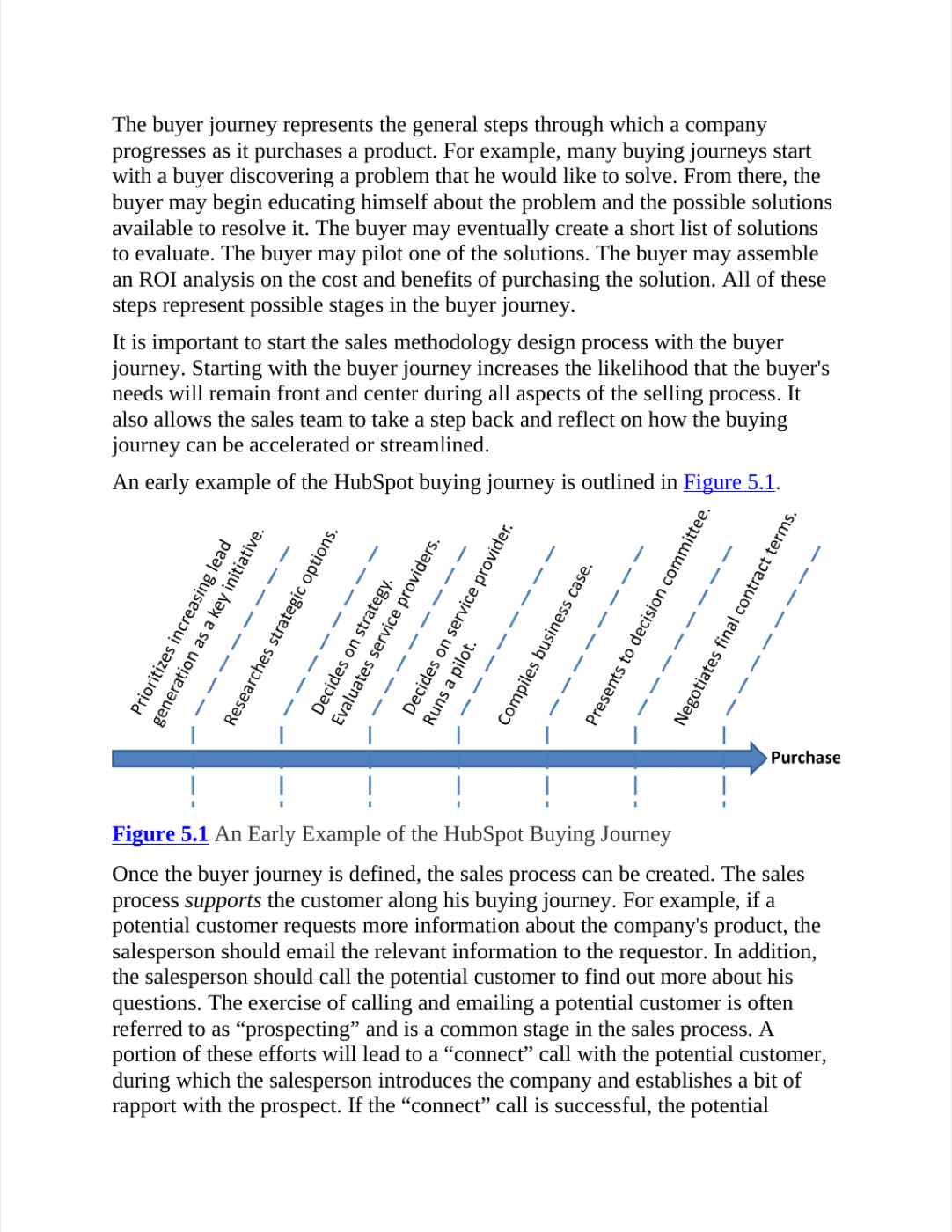
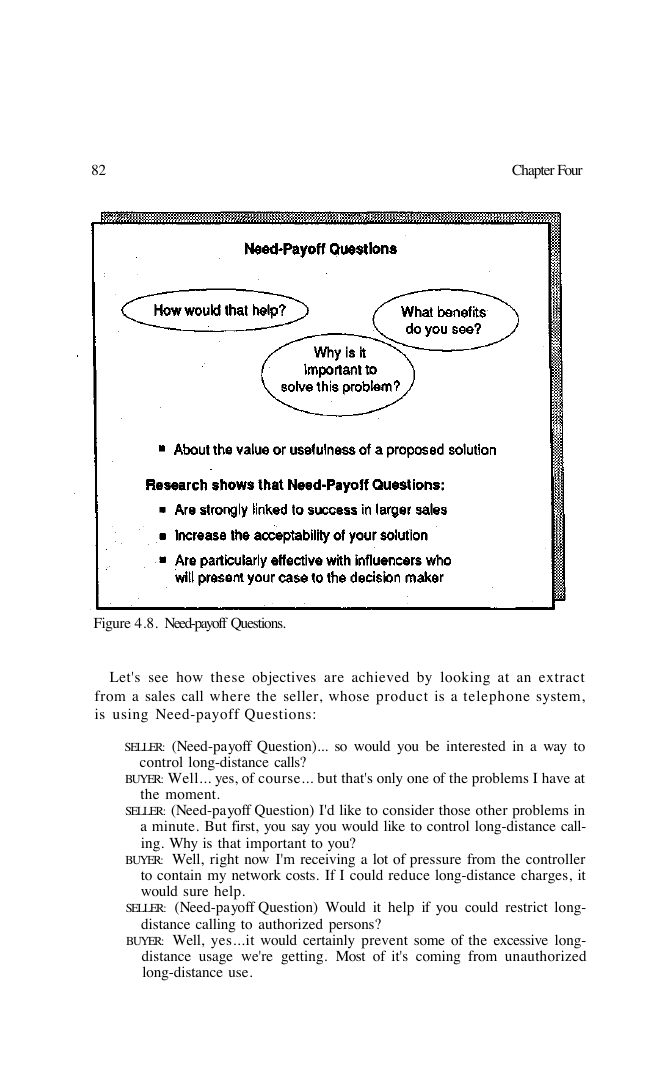
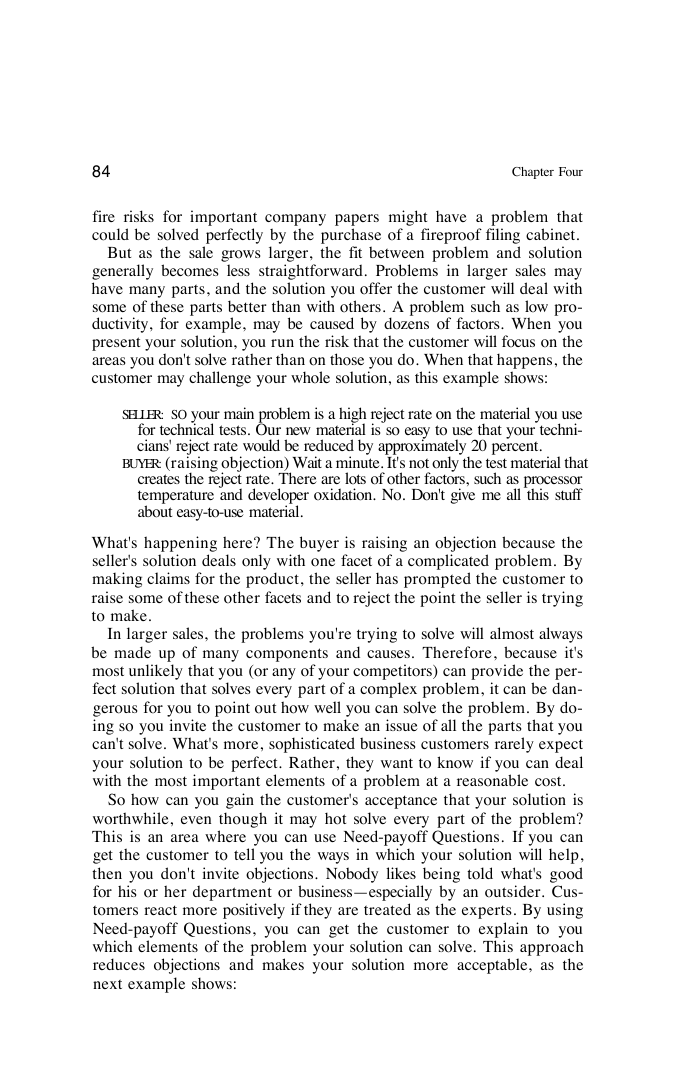
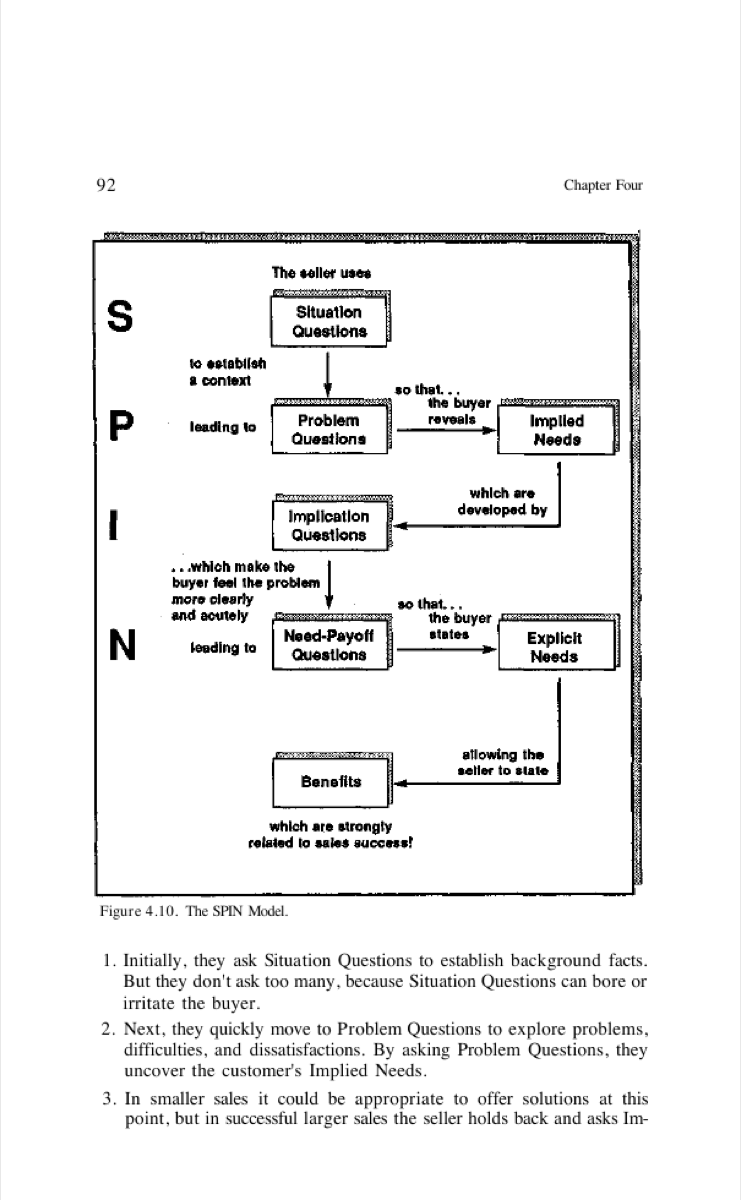
<?xml version="1.0" encoding="utf-8"?><?xml-stylesheet type="text/xsl" href="atom.xsl"?>
<feed xmlns="http://www.w3.org/2005/Atom">
    <id>https://sudip-ai-playbook.pages.dev/articles</id>
    <title>AI Playbook Blog</title>
    <updated>2026-08-02T00:00:00.000Z</updated>
    <generator>https://github.com/jpmonette/feed</generator>
    <link rel="alternate" href="https://sudip-ai-playbook.pages.dev/articles"/>
    <subtitle>AI Playbook Blog</subtitle>
    <icon>https://sudip-ai-playbook.pages.dev/img/favicon.ico</icon>
    <entry>
        <title type="html"><![CDATA[$100M Leads: Alex Hormozi’s Core Four System for Getting Strangers to Want Your Stuff]]></title>
        <id>https://sudip-ai-playbook.pages.dev/articles/100m-leads-hormozi</id>
        <link href="https://sudip-ai-playbook.pages.dev/articles/100m-leads-hormozi"/>
        <updated>2026-08-02T00:00:00.000Z</updated>
        <summary type="html"><![CDATA[A practitioner synthesis of Alex Hormozi’s $100M Leads—engaged leads, lead magnets, the Core Four advertising methods, More-Better-New scaling, and Lead Getters (referrals, employees, agencies, affiliates)—for consulting practices and AI go-to-market.]]></summary>
        <content type="html"><![CDATA[<p>Leads are not the goal. <strong>Engaged leads</strong>—people who raise their hand because something valuable made your offer relevant—are the goal. <em>$100M Leads</em> is Hormozi’s operating manual for advertising without mystique: there are only four core ways to let anyone know about anything, then four ways to get <em>other people</em> to do it for you. Master the Core Four at enough skill and volume, and lead scarcity becomes a choice, not a sentence.</p>
<!-- -->
<blockquote>
<p><strong>Source note:</strong> This article is an original practitioner synthesis of themes from Alex Hormozi’s <em>$100M Leads</em> (Acquisition.com). It is not a reprint. Figures are educational illustrations from the work; buy the original for full scripts, examples and the one-page plan worksheets.</p>
</blockquote>
<p><img decoding="async" loading="lazy" alt="$100M Leads cover" src="https://sudip-ai-playbook.pages.dev/assets/images/cover-d073ac02790a01024a786635f570695a.png" width="1082" height="1400" class="img_ev3q"></p>
<aside class="callout_wR8p exec_mFZL" aria-label="Executive summary"><p class="label_r65P">Executive summary</p><div class="body_qzh2"><p>Leads alone are vanity; you need <strong>engaged leads</strong> via strong offers and lead magnets. Advertising collapses into the <strong>Core Four</strong>: Warm Outreach, Post Free Content, Cold Outreach, Paid Ads (warm/cold × one-to-one/one-to-many). Scale with <strong>More, Better, New</strong>. Then recruit <strong>Lead Getters</strong>—customers, employees, agencies, affiliates—so others advertise for you. Pair with a Grand Slam Offer from <a class="" href="https://sudip-ai-playbook.pages.dev/articles/100m-offers-hormozi">$100M Offers</a> or you will scale noise.</p></div></aside>
<aside class="callout_wR8p when_L_AZ" aria-label="When to use this page"><p class="label_r65P">When to use this page</p><div class="body_qzh2"><ul>
<li class="">Founders and partners who “need more pipeline” but cannot name their channel system.</li>
<li class="">Practices stuck on referrals-only or ads-only with no ladder.</li>
<li class="">Building a repeatable GTM for AI products or consulting offers.</li>
<li class="">Pair with <a class="" href="https://sudip-ai-playbook.pages.dev/articles/100m-offers-hormozi">$100M Offers</a>, <a class="" href="https://sudip-ai-playbook.pages.dev/articles/sales-acceleration-formula-roberge">Sales Acceleration Formula</a>, <a class="" href="https://sudip-ai-playbook.pages.dev/articles/spin-selling-rackham">SPIN Selling</a>, <a class="" href="https://sudip-ai-playbook.pages.dev/articles/consulting-lead-generation-practical-guide">Consulting lead generation guide</a>, and the <a class="" href="https://sudip-ai-playbook.pages.dev/articles/mba-reading-map-ten-core-books">Business Administration reading map</a>.</li>
</ul></div></aside>
<hr>
<h2 class="anchor anchorTargetStickyNavbar_Vzrq" id="0-why-this-book-still-matters">0. Why this book still matters<a href="https://sudip-ai-playbook.pages.dev/articles/100m-leads-hormozi#0-why-this-book-still-matters" class="hash-link" aria-label="Direct link to 0. Why this book still matters" title="Direct link to 0. Why this book still matters" translate="no">​</a></h2>
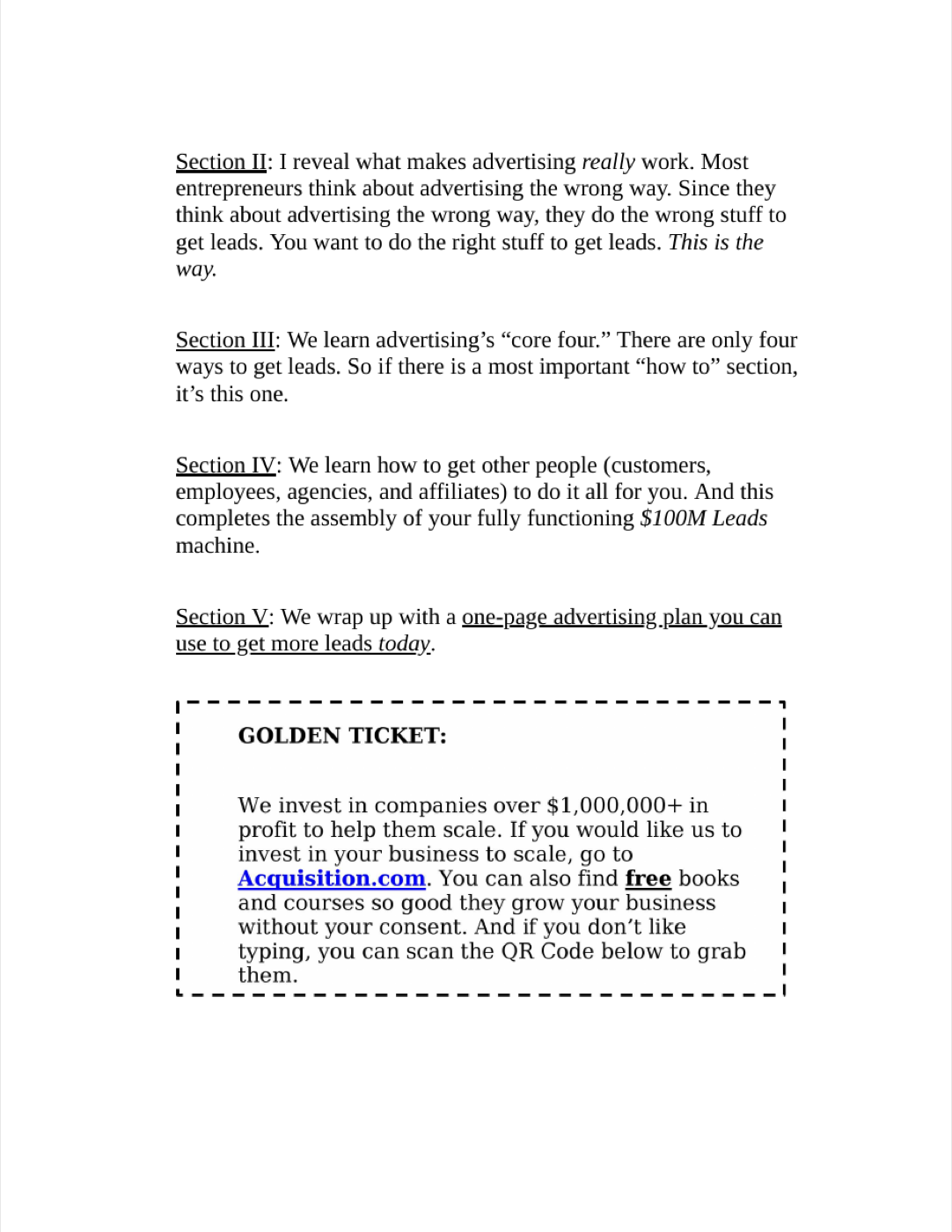
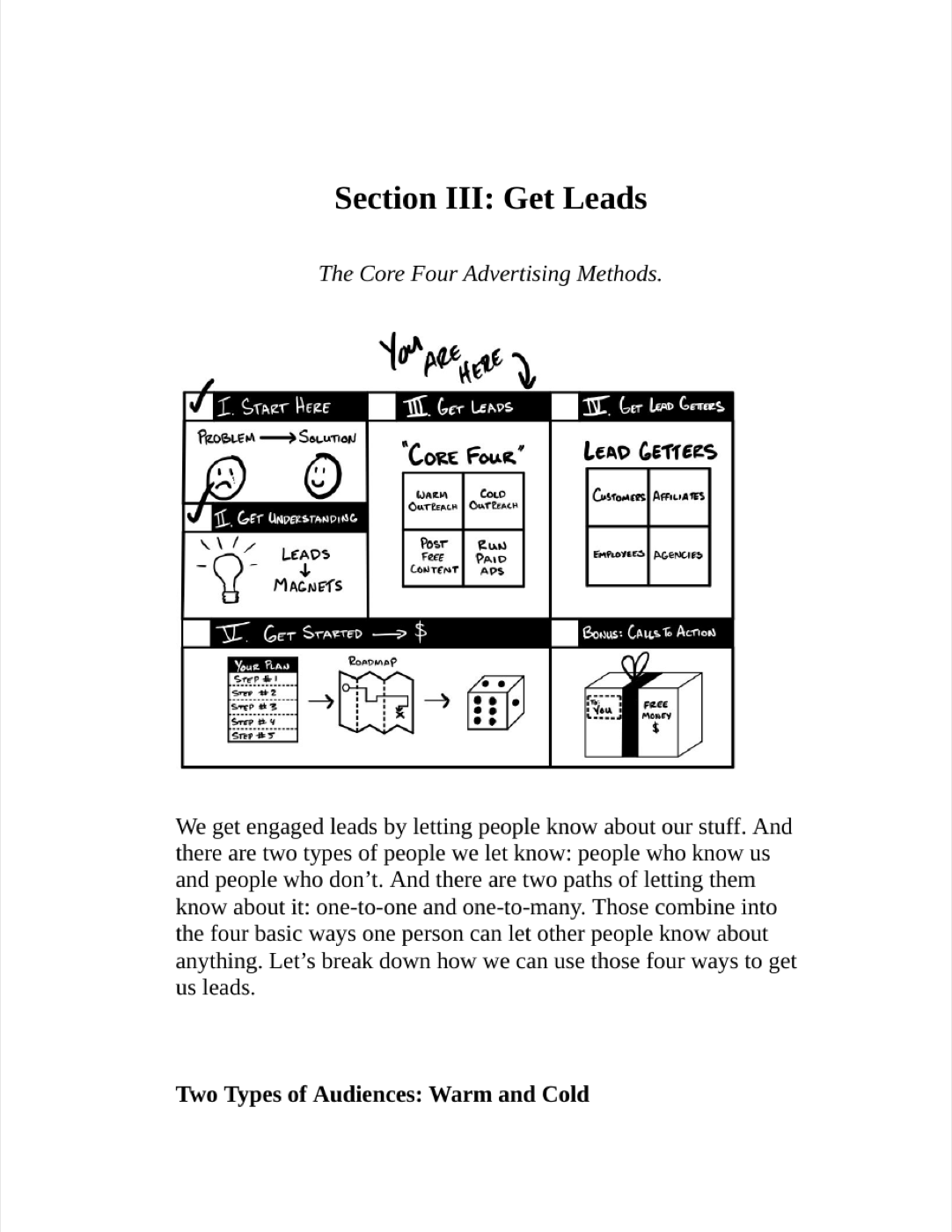
<p>Marketing discourse explodes into dozens of tactics. Hormozi compresses advertising into a map you can run weekly: understand engagement, execute the Core Four, then multiply through Lead Getters.</p>
<p><img decoding="async" loading="lazy" alt="Book roadmap" src="https://sudip-ai-playbook.pages.dev/assets/images/figure-book-roadmap-9b614d8ca5472cd9e7a45cb971eb46c3.png" width="1082" height="1400" class="img_ev3q"></p>
<p><em>Figure: educational roadmap of the book’s sections—understanding → leads → lead getters → start.</em></p>
<p>Three commitments:</p>
<ol>
<li class=""><strong>Engagement precedes volume vanity.</strong></li>
<li class=""><strong>Only four core actions get strangers’ attention</strong>—skill and volume are the variables.</li>
<li class=""><strong>Lead Getters are how you escape personal hustle</strong> without abandoning the Core Four logic.</li>
</ol>
<hr>
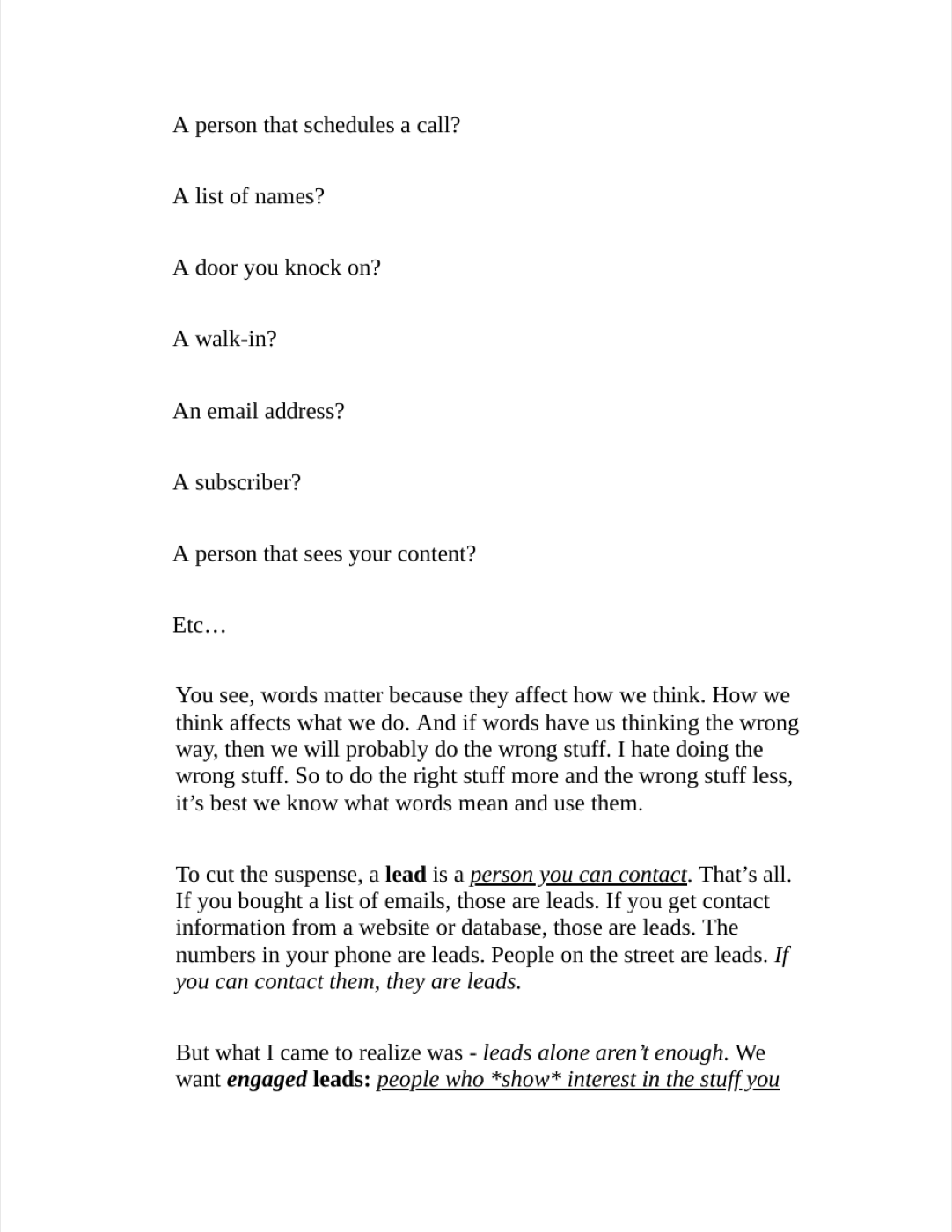
<h2 class="anchor anchorTargetStickyNavbar_Vzrq" id="1-leads-alone-are-not-enough">1. Leads alone are not enough<a href="https://sudip-ai-playbook.pages.dev/articles/100m-leads-hormozi#1-leads-alone-are-not-enough" class="hash-link" aria-label="Direct link to 1. Leads alone are not enough" title="Direct link to 1. Leads alone are not enough" translate="no">​</a></h2>
<p><img decoding="async" loading="lazy" alt="Leads alone aren’t enough" src="https://sudip-ai-playbook.pages.dev/assets/images/figure-leads-alone-96dc20bf8b658d01c3b1594e320a98b3.png" width="1082" height="1400" class="img_ev3q"></p>
<p><em>Figure: educational page on why raw lead count misleads.</em></p>
<h3 class="anchor anchorTargetStickyNavbar_Vzrq" id="11-the-vanity-metric-trap">1.1 The vanity metric trap<a href="https://sudip-ai-playbook.pages.dev/articles/100m-leads-hormozi#11-the-vanity-metric-trap" class="hash-link" aria-label="Direct link to 1.1 The vanity metric trap" title="Direct link to 1.1 The vanity metric trap" translate="no">​</a></h3>
<table><thead><tr><th>Metric</th><th>Looks good</th><th>Often means</th></tr></thead><tbody><tr><td>MQLs / form fills</td><td>Pipeline dashboards green</td><td>Unqualified curiosity</td></tr><tr><td>Follower count</td><td>Social proof</td><td>Cold audience with no intent</td></tr><tr><td>Ad impressions</td><td>“Brand awareness”</td><td>No engaged conversation</td></tr></tbody></table>
<p>A lead without a path to engagement is an expense with a name attached.</p>
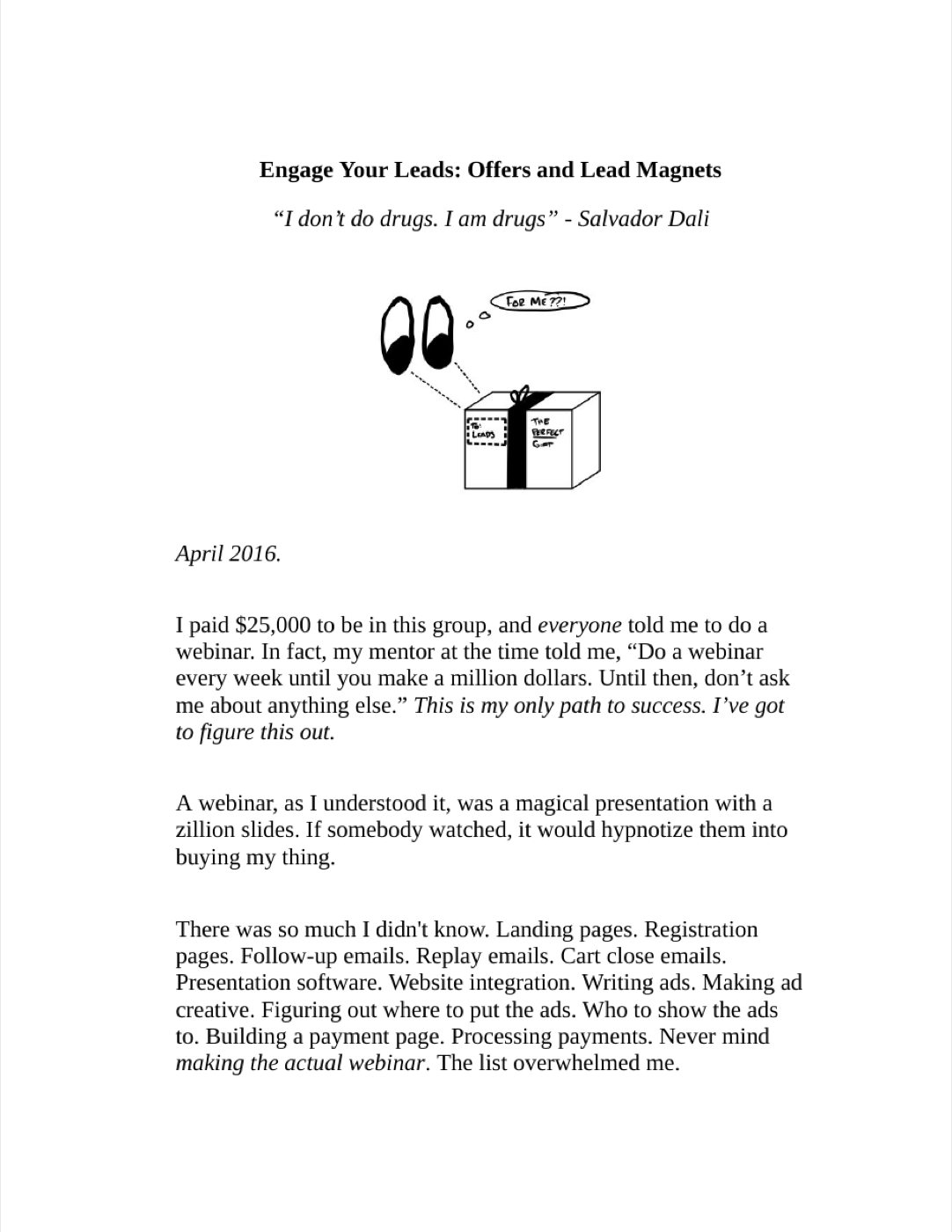
<h3 class="anchor anchorTargetStickyNavbar_Vzrq" id="12-engaged-leads">1.2 Engaged leads<a href="https://sudip-ai-playbook.pages.dev/articles/100m-leads-hormozi#12-engaged-leads" class="hash-link" aria-label="Direct link to 1.2 Engaged leads" title="Direct link to 1.2 Engaged leads" translate="no">​</a></h3>
<p><img decoding="async" loading="lazy" alt="Engaged leads" src="https://sudip-ai-playbook.pages.dev/assets/images/figure-engaged-leads-ffdaa241db389969761fa32ed680bb74.png" width="1082" height="1400" class="img_ev3q"></p>
<p><em>Figure: educational framing of engaged leads.</em></p>
<p>Engaged leads have consumed value and indicated interest—downloaded the magnet, replied to outreach, booked a call, commented with intent. Advertising’s job is not to “get emails”; it is to <strong>start commercial conversations with the right people</strong>.</p>
<hr>
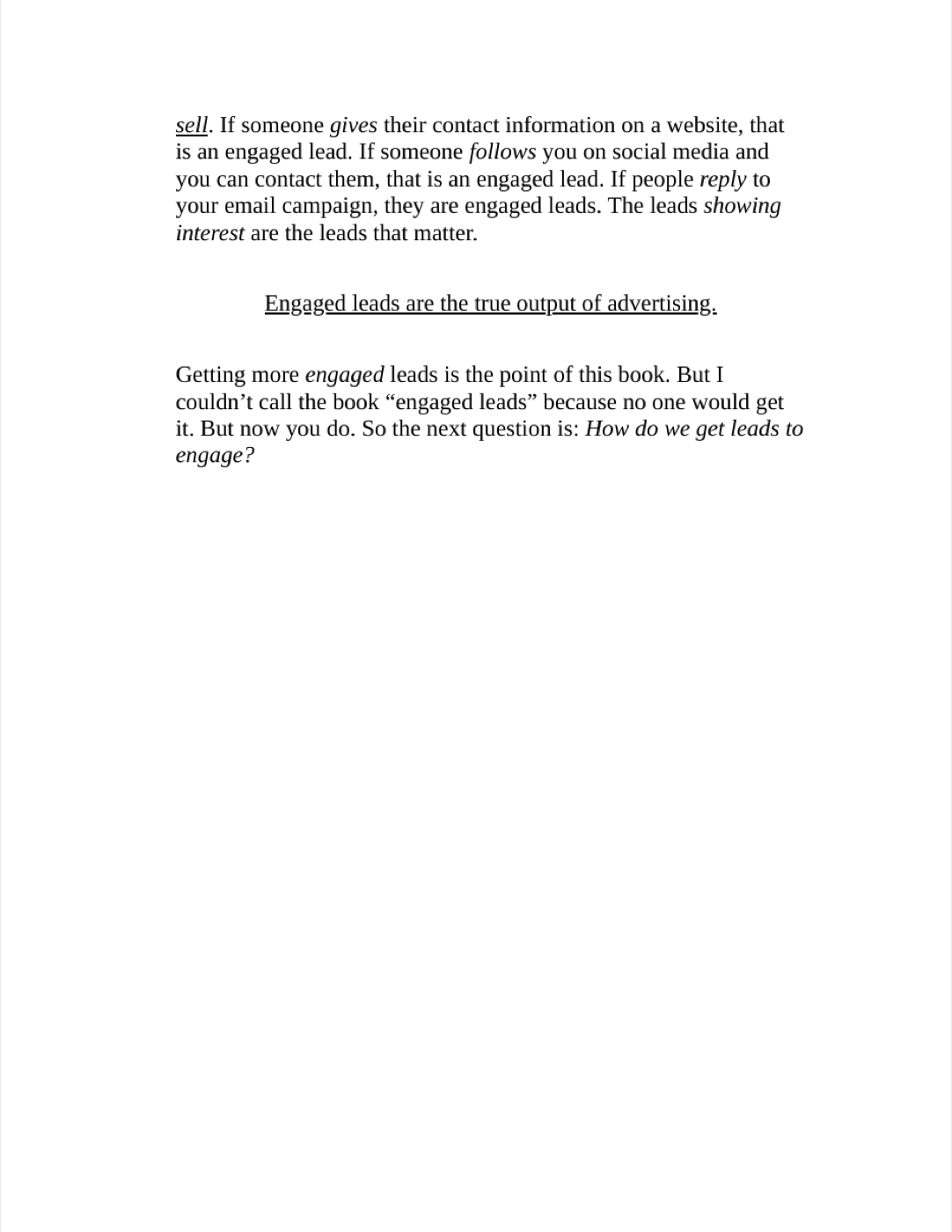
<h2 class="anchor anchorTargetStickyNavbar_Vzrq" id="2-offers-and-lead-magnets">2. Offers and lead magnets<a href="https://sudip-ai-playbook.pages.dev/articles/100m-leads-hormozi#2-offers-and-lead-magnets" class="hash-link" aria-label="Direct link to 2. Offers and lead magnets" title="Direct link to 2. Offers and lead magnets" translate="no">​</a></h2>
<p><img decoding="async" loading="lazy" alt="Lead magnets" src="https://sudip-ai-playbook.pages.dev/assets/images/figure-lead-magnets-b455f9434d5221c05a66857789c96d26.png" width="1082" height="1400" class="img_ev3q"></p>
<p><em>Figure: educational page on offers and lead magnets as engagement tools.</em></p>
<h3 class="anchor anchorTargetStickyNavbar_Vzrq" id="21-two-things-you-advertise">2.1 Two things you advertise<a href="https://sudip-ai-playbook.pages.dev/articles/100m-leads-hormozi#21-two-things-you-advertise" class="hash-link" aria-label="Direct link to 2.1 Two things you advertise" title="Direct link to 2.1 Two things you advertise" translate="no">​</a></h3>
<ol>
<li class=""><strong>Core offer</strong> — the thing you sell (ideally a Grand Slam Offer).</li>
<li class=""><strong>Lead magnet</strong> — something free and valuable that earns the right to continue the conversation.</li>
</ol>
<p>Without a strong core offer, magnets collect tyre-kickers. Without magnets, cold audiences rarely jump straight to high-ticket yeses.</p>
<h3 class="anchor anchorTargetStickyNavbar_Vzrq" id="22-lead-magnet-design-tests">2.2 Lead magnet design tests<a href="https://sudip-ai-playbook.pages.dev/articles/100m-leads-hormozi#22-lead-magnet-design-tests" class="hash-link" aria-label="Direct link to 2.2 Lead magnet design tests" title="Direct link to 2.2 Lead magnet design tests" translate="no">​</a></h3>
<table><thead><tr><th>Test</th><th>Question</th></tr></thead><tbody><tr><td>Specificity</td><td>Is it for a clear avatar problem?</td></tr><tr><td>Speed</td><td>Can they get a win in &lt;30 minutes?</td></tr><tr><td>Bridge</td><td>Does it naturally lead to the paid offer?</td></tr><tr><td>Cost to you</td><td>Can you deliver it at near-zero marginal cost?</td></tr></tbody></table>
<p><strong>Consulting examples:</strong> ROI calculator, pursuit checklist, sample eval harness, “board one-pager” template, anonymised case teardown.</p>
<hr>
<h2 class="anchor anchorTargetStickyNavbar_Vzrq" id="3-the-core-four">3. The Core Four<a href="https://sudip-ai-playbook.pages.dev/articles/100m-leads-hormozi#3-the-core-four" class="hash-link" aria-label="Direct link to 3. The Core Four" title="Direct link to 3. The Core Four" translate="no">​</a></h2>
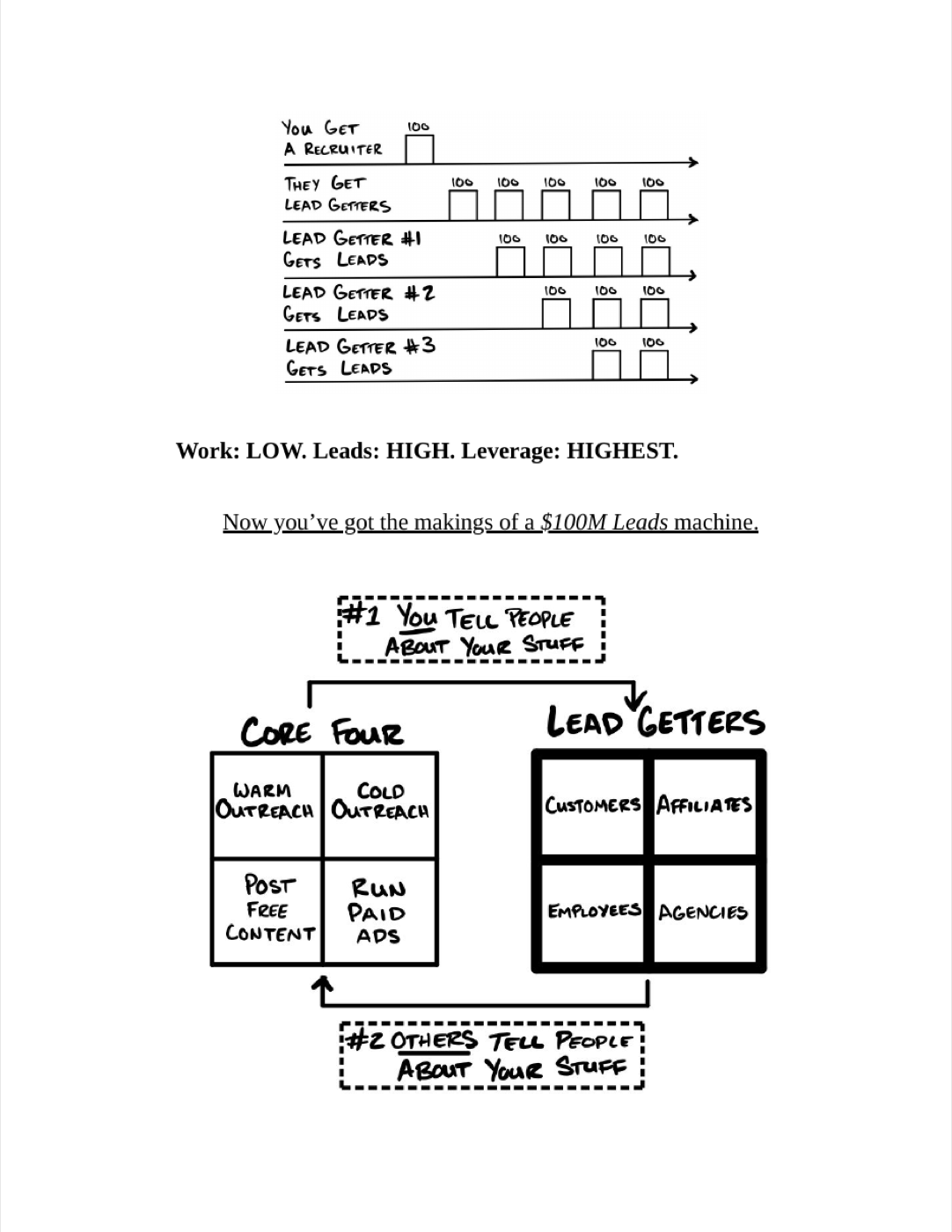
<p><img decoding="async" loading="lazy" alt="Core Four map" src="https://sudip-ai-playbook.pages.dev/assets/images/figure-core-four-map-ac1d995ba5fa3f519b60a4048b612ea1.png" width="1082" height="1400" class="img_ev3q"></p>
<p><em>Figure: Core Four 2×2 inside the broader get-leads / get-lead-getters map.</em></p>
<h3 class="anchor anchorTargetStickyNavbar_Vzrq" id="31-the-only-four-ways">3.1 The only four ways<a href="https://sudip-ai-playbook.pages.dev/articles/100m-leads-hormozi#31-the-only-four-ways" class="hash-link" aria-label="Direct link to 3.1 The only four ways" title="Direct link to 3.1 The only four ways" translate="no">​</a></h3>
<table><thead><tr><th></th><th>Warm audience (knows you)</th><th>Cold audience (doesn’t)</th></tr></thead><tbody><tr><td><strong>One-to-one</strong></td><td>Warm Outreach</td><td>Cold Outreach</td></tr><tr><td><strong>One-to-many</strong></td><td>Post Free Content</td><td>Paid Ads</td></tr></tbody></table>
<p>Hormozi’s diagnostic: if you are not getting enough leads, you are not doing the Core Four with enough <strong>skill</strong> or enough <strong>volume</strong>.</p>
<h3 class="anchor anchorTargetStickyNavbar_Vzrq" id="32-1-warm-outreach">3.2 #1 Warm Outreach<a href="https://sudip-ai-playbook.pages.dev/articles/100m-leads-hormozi#32-1-warm-outreach" class="hash-link" aria-label="Direct link to 3.2 #1 Warm Outreach" title="Direct link to 3.2 #1 Warm Outreach" translate="no">​</a></h3>
<p>Reach people who already know you—calls, texts, DMs, emails—with a lead magnet or core offer.</p>
<table><thead><tr><th>Why it works</th><th>How to start</th><th>Scale note</th></tr></thead><tbody><tr><td>Trust already exists</td><td>List 100 contacts; personalised ask</td><td>Works at 100 or 1,000,000 warm contacts</td></tr><tr><td>Cheap and reliable</td><td>Lead with give (free training, audit)</td><td>Systematise follow-ups; don’t spam</td></tr></tbody></table>
<p><strong>Hormozi origin story (compressed):</strong> early personal training clients came from asking people he knew—then referrals. Warm outreach is often how real businesses actually start, even when founders later mythologise “content.”</p>
<p><strong>Negative case:</strong> Mass-blasting your LinkedIn network with a pitch deck and no magnet. Burns warm trust permanently.</p>
<h3 class="anchor anchorTargetStickyNavbar_Vzrq" id="33-2-post-free-content">3.3 #2 Post Free Content<a href="https://sudip-ai-playbook.pages.dev/articles/100m-leads-hormozi#33-2-post-free-content" class="hash-link" aria-label="Direct link to 3.3 #2 Post Free Content" title="Direct link to 3.3 #2 Post Free Content" translate="no">​</a></h3>
<p>One-to-many to a warm (and warming) audience. Content compounds: people who find it valuable join the warm list; shares recruit new warm contacts.</p>
<table><thead><tr><th>Element</th><th>Practice</th></tr></thead><tbody><tr><td>Hook</td><td>First line earns the next</td></tr><tr><td>Value unit</td><td>One clear lesson per piece</td></tr><tr><td>CTA</td><td>Soft path to magnet or offer</td></tr><tr><td>Cadence</td><td>Consistent &gt; viral lottery</td></tr></tbody></table>
<p>Part II of Hormozi’s content chapters focuses on <strong>monetising</strong> content—bridging attention to offers—not creating art for its own sake.</p>
<h3 class="anchor anchorTargetStickyNavbar_Vzrq" id="34-3-cold-outreach">3.4 #3 Cold Outreach<a href="https://sudip-ai-playbook.pages.dev/articles/100m-leads-hormozi#34-3-cold-outreach" class="hash-link" aria-label="Direct link to 3.4 #3 Cold Outreach" title="Direct link to 3.4 #3 Cold Outreach" translate="no">​</a></h3>
<p>One-to-one to strangers. Harder than warm; still a Core Four pillar. Personalisation, list quality and offer clarity dominate volume.</p>
<table><thead><tr><th>Rule</th><th>Why</th></tr></thead><tbody><tr><td>Small personalised batches beat huge sprays</td><td>Platforms punish spam; humans ignore it</td></tr><tr><td>Lead with value</td><td>Magnet &gt; pitch</td></tr><tr><td>Track reply→meeting→close</td><td>Without unit economics, “more sends” is theatre</td></tr></tbody></table>
<h3 class="anchor anchorTargetStickyNavbar_Vzrq" id="35-4-paid-ads">3.5 #4 Paid Ads<a href="https://sudip-ai-playbook.pages.dev/articles/100m-leads-hormozi#35-4-paid-ads" class="hash-link" aria-label="Direct link to 3.5 #4 Paid Ads" title="Direct link to 3.5 #4 Paid Ads" translate="no">​</a></h3>
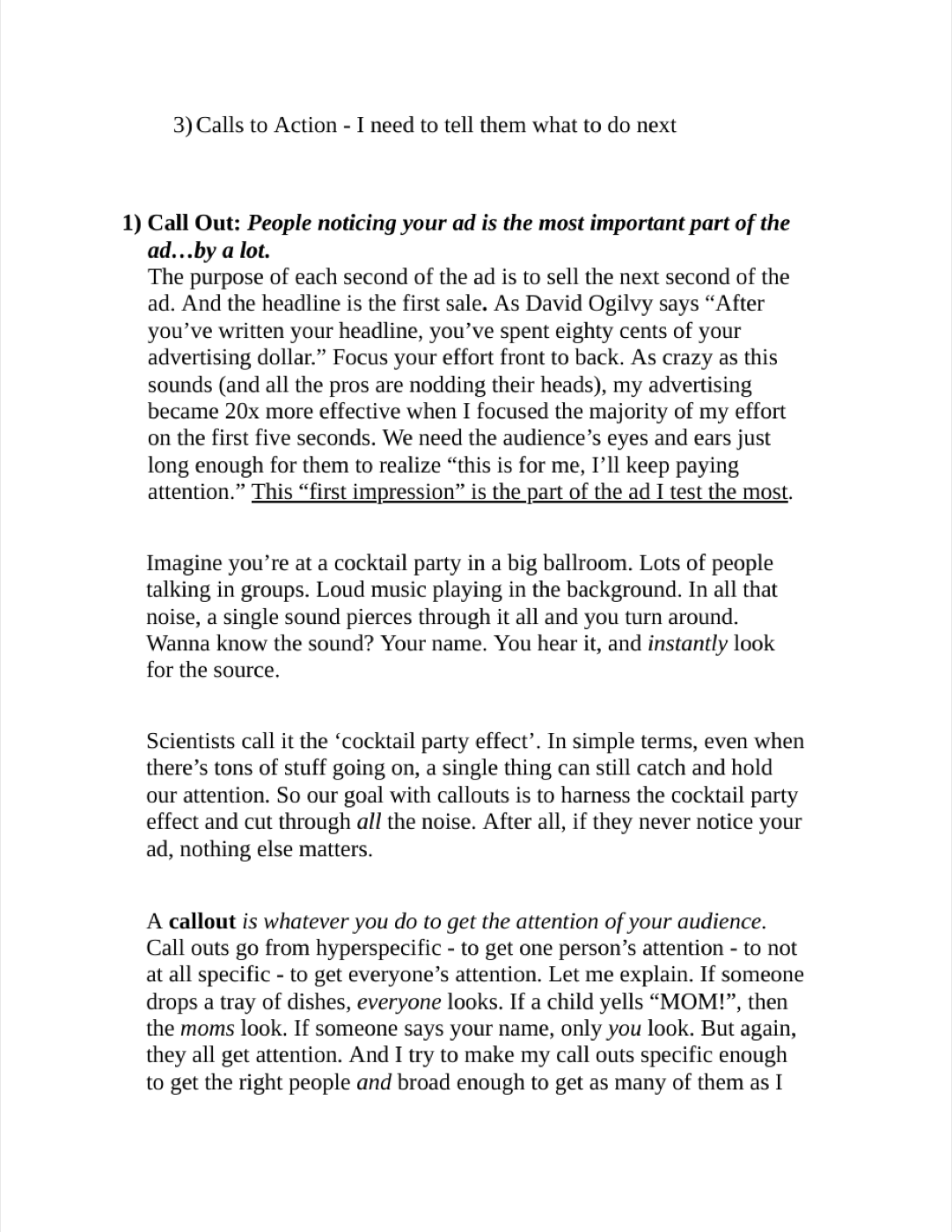
<p><img decoding="async" loading="lazy" alt="Call-out and ad craft" src="https://sudip-ai-playbook.pages.dev/assets/images/figure-call-out-ads-ff22f2c6c04c8ec6f7644c24f0f511d5.png" width="1082" height="1400" class="img_ev3q"></p>
<p><em>Figure: educational page on paid ads and call-out craft.</em></p>
<p>One-to-many to cold audiences. Hormozi splits craft (making the ad) from money maths (efficiency, budgets, constraints).</p>
<p><strong>Call Out</strong> is the first job: if they do not notice the ad, nothing else matters. Test first impressions hardest.</p>
<table><thead><tr><th>Paid ads fail when…</th><th>Fix</th></tr></thead><tbody><tr><td>Offer is commodity</td><td>Fix offer first (<a class="" href="https://sudip-ai-playbook.pages.dev/articles/100m-offers-hormozi">$100M Offers</a>)</td></tr><tr><td>Creative never tested</td><td>Iterate call-outs before scaling spend</td></tr><tr><td>No engagement path</td><td>Magnet → nurture → sales</td></tr><tr><td>Tracking vanity CPC only</td><td>Track cost per engaged lead and per sale</td></tr></tbody></table>
<hr>
<h2 class="anchor anchorTargetStickyNavbar_Vzrq" id="4-core-four-on-steroids--more-better-new">4. Core Four on steroids — More, Better, New<a href="https://sudip-ai-playbook.pages.dev/articles/100m-leads-hormozi#4-core-four-on-steroids--more-better-new" class="hash-link" aria-label="Direct link to 4. Core Four on steroids — More, Better, New" title="Direct link to 4. Core Four on steroids — More, Better, New" translate="no">​</a></h2>
<p>When a channel works, do not abandon it for novelty. Expand in order:</p>
<ol>
<li class=""><strong>More</strong> — increase volume of what works.</li>
<li class=""><strong>Better</strong> — improve conversion skill (hooks, scripts, creative, targeting).</li>
<li class=""><strong>New</strong> — new placements → new platforms → eventually apply Core Four in new arenas.</li>
</ol>
<p><strong>Negative case:</strong> Chasing every new social platform while under-investing in a warm outreach machine that already converts.</p>
<hr>
<h2 class="anchor anchorTargetStickyNavbar_Vzrq" id="5-lead-getters--get-others-to-advertise">5. Lead Getters — get others to advertise<a href="https://sudip-ai-playbook.pages.dev/articles/100m-leads-hormozi#5-lead-getters--get-others-to-advertise" class="hash-link" aria-label="Direct link to 5. Lead Getters — get others to advertise" title="Direct link to 5. Lead Getters — get others to advertise" translate="no">​</a></h2>
<p><img decoding="async" loading="lazy" alt="Lead Getters overview" src="https://sudip-ai-playbook.pages.dev/assets/images/figure-lead-getters-93f2a6b7b8f57e4f97d5fad861a2d759.png" width="1082" height="1400" class="img_ev3q"></p>
<p><em>Figure: Lead Getters quadrant—customers, employees, agencies, affiliates.</em></p>
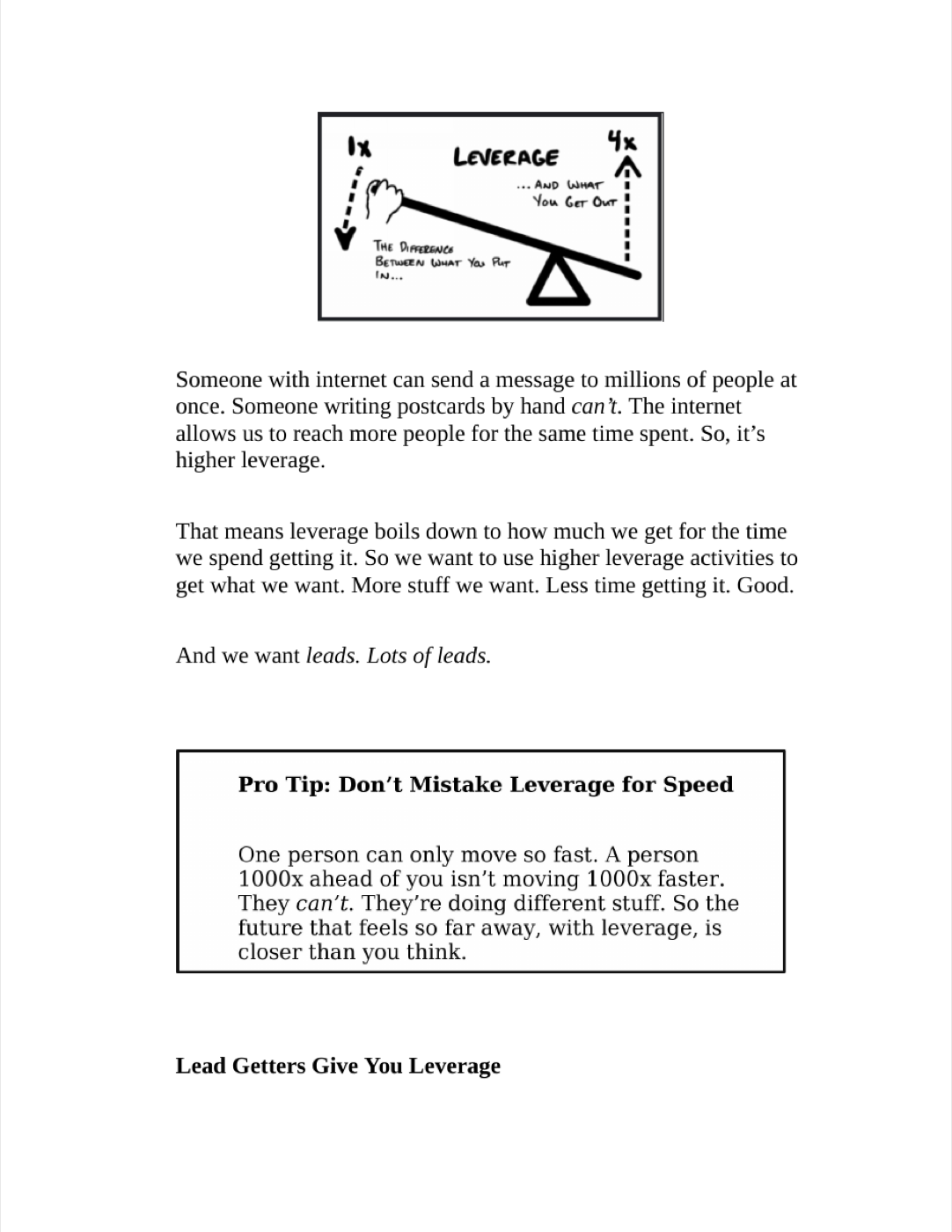
<p>Lead Getters are how you scale beyond personal calendar limits. Same advertising logic—applied through other people’s trust and distribution.</p>
<h3 class="anchor anchorTargetStickyNavbar_Vzrq" id="51-1-customer-referrals-word-of-mouth">5.1 #1 Customer referrals (word of mouth)<a href="https://sudip-ai-playbook.pages.dev/articles/100m-leads-hormozi#51-1-customer-referrals-word-of-mouth" class="hash-link" aria-label="Direct link to 5.1 #1 Customer referrals (word of mouth)" title="Direct link to 5.1 #1 Customer referrals (word of mouth)" translate="no">​</a></h3>
<p><img decoding="async" loading="lazy" alt="Referrals" src="https://sudip-ai-playbook.pages.dev/assets/images/figure-referrals-33e755a658f03ad627c2440e662b7bf4.png" width="1082" height="1400" class="img_ev3q"></p>
<p><em>Figure: educational page on customer referrals.</em></p>
<table><thead><tr><th>Lever</th><th>Practice</th></tr></thead><tbody><tr><td>Ask</td><td>Systematically request referrals after wins</td></tr><tr><td>Make it easy</td><td>Forwardable blurb, intro template</td></tr><tr><td>Incentivise</td><td>Align reward with economics (without looking desperate)</td></tr><tr><td>Showcase</td><td>Public proof that makes sharing status-positive</td></tr></tbody></table>
<p>Referrals are not a “culture vibe”; they are a process.</p>
<h3 class="anchor anchorTargetStickyNavbar_Vzrq" id="52-2-employees">5.2 #2 Employees<a href="https://sudip-ai-playbook.pages.dev/articles/100m-leads-hormozi#52-2-employees" class="hash-link" aria-label="Direct link to 5.2 #2 Employees" title="Direct link to 5.2 #2 Employees" translate="no">​</a></h3>
<p>Hire and train people to run Core Four activities. Hormozi’s training model: <strong>Document → Demonstrate → Duplicate</strong> (checklist, you do it in front of them, they do it in front of you).</p>
<p>The Internal Core Four: the same four actions recruit talent (ask network, post jobs, cold recruit, promote job ads).</p>
<h3 class="anchor anchorTargetStickyNavbar_Vzrq" id="53-3-agencies">5.3 #3 Agencies<a href="https://sudip-ai-playbook.pages.dev/articles/100m-leads-hormozi#53-3-agencies" class="hash-link" aria-label="Direct link to 5.3 #3 Agencies" title="Direct link to 5.3 #3 Agencies" translate="no">​</a></h3>
<p>Pay specialised firms to run lead-getting motions you do not want to own yet. Manage them like a channel: clear KPIs on engaged leads and revenue, not activity reports.</p>
<h3 class="anchor anchorTargetStickyNavbar_Vzrq" id="54-4-affiliates-and-partners">5.4 #4 Affiliates and partners<a href="https://sudip-ai-playbook.pages.dev/articles/100m-leads-hormozi#54-4-affiliates-and-partners" class="hash-link" aria-label="Direct link to 5.4 #4 Affiliates and partners" title="Direct link to 5.4 #4 Affiliates and partners" translate="no">​</a></h3>
<p>Other businesses with overlapping audiences promote your magnet/offer. Structure must be clear: what they promote, how they get paid, what “good lead” means.</p>
<p><strong>Consulting translation:</strong> alliance partners, technology partners, complementary boutiques, alumni networks.</p>
<hr>
<h2 class="anchor anchorTargetStickyNavbar_Vzrq" id="6-get-started--roadmap-and-one-page-plan">6. Get started — roadmap and one-page plan<a href="https://sudip-ai-playbook.pages.dev/articles/100m-leads-hormozi#6-get-started--roadmap-and-one-page-plan" class="hash-link" aria-label="Direct link to 6. Get started — roadmap and one-page plan" title="Direct link to 6. Get started — roadmap and one-page plan" translate="no">​</a></h2>
<p><img decoding="async" loading="lazy" alt="Roadmap" src="https://sudip-ai-playbook.pages.dev/assets/images/figure-roadmap-283db715934d8f0f72c32b19787031c5.png" width="1082" height="1400" class="img_ev3q"></p>
<p><em>Figure: educational roadmap for putting the system together.</em></p>
<p><img decoding="async" loading="lazy" alt="One-page advertising plan" src="https://sudip-ai-playbook.pages.dev/assets/images/figure-one-page-plan-ff80fc17a057a3b58beda9ec5bcaeab1.png" width="1082" height="1400" class="img_ev3q"></p>
<p><em>Figure: educational “decade in a page” / one-page plan style summary.</em></p>
<h3 class="anchor anchorTargetStickyNavbar_Vzrq" id="61-suggested-sequence-for-a-new-practice">6.1 Suggested sequence for a new practice<a href="https://sudip-ai-playbook.pages.dev/articles/100m-leads-hormozi#61-suggested-sequence-for-a-new-practice" class="hash-link" aria-label="Direct link to 6.1 Suggested sequence for a new practice" title="Direct link to 6.1 Suggested sequence for a new practice" translate="no">​</a></h3>
<table><thead><tr><th>Phase</th><th>Focus</th><th>Exit criterion</th></tr></thead><tbody><tr><td>0</td><td>Grand Slam Offer locked</td><td>Clear yes reason without discounting</td></tr><tr><td>1</td><td>Warm outreach + magnet</td><td>First 5–10 engaged conversations</td></tr><tr><td>2</td><td>Content cadence</td><td>Weekly engaged inbound</td></tr><tr><td>3</td><td>Cold or paid (pick one)</td><td>Repeatable unit economics</td></tr><tr><td>4</td><td>Referral machine</td><td>% of revenue from referrals rising</td></tr><tr><td>5</td><td>Employees / partners</td><td>Core Four runs without founder doing 100%</td></tr></tbody></table>
<h3 class="anchor anchorTargetStickyNavbar_Vzrq" id="62-one-page-plan-fields">6.2 One-page plan fields<a href="https://sudip-ai-playbook.pages.dev/articles/100m-leads-hormozi#62-one-page-plan-fields" class="hash-link" aria-label="Direct link to 6.2 One-page plan fields" title="Direct link to 6.2 One-page plan fields" translate="no">​</a></h3>
<ul>
<li class="">Avatar + starving problem</li>
<li class="">Core offer + lead magnet</li>
<li class="">Primary Core Four bet this month</li>
<li class="">Volume targets (sends, posts, spend)</li>
<li class="">Engaged-lead definition</li>
<li class="">Lead Getter experiment</li>
<li class="">Weekly review metric</li>
</ul>
<hr>
<h2 class="anchor anchorTargetStickyNavbar_Vzrq" id="7-consulting-and-ai-gtm-translation">7. Consulting and AI GTM translation<a href="https://sudip-ai-playbook.pages.dev/articles/100m-leads-hormozi#7-consulting-and-ai-gtm-translation" class="hash-link" aria-label="Direct link to 7. Consulting and AI GTM translation" title="Direct link to 7. Consulting and AI GTM translation" translate="no">​</a></h2>
<table><thead><tr><th>Situation</th><th>Core Four move</th></tr></thead><tbody><tr><td>New boutique, no brand</td><td>Warm outreach to past colleagues + free teardown magnet</td></tr><tr><td>Known expert, low pipeline</td><td>Content system + referral ask process</td></tr><tr><td>Product-led AI tool</td><td>Paid ads to magnet (ROI calc) + partner affiliates</td></tr><tr><td>Enterprise pursuit firm</td><td>Warm multi-threading + thought leadership content; paid later</td></tr><tr><td>Delivery team idle</td><td>Employees run outbound playbooks (Document–Demonstrate–Duplicate)</td></tr></tbody></table>
<p>Align engaged-lead conversations with <a class="" href="https://sudip-ai-playbook.pages.dev/articles/spin-selling-rackham">SPIN Selling</a>. Scale the human machine with <a class="" href="https://sudip-ai-playbook.pages.dev/articles/sales-acceleration-formula-roberge">Sales Acceleration Formula</a>.</p>
<hr>
<h2 class="anchor anchorTargetStickyNavbar_Vzrq" id="8-failure-modes">8. Failure modes<a href="https://sudip-ai-playbook.pages.dev/articles/100m-leads-hormozi#8-failure-modes" class="hash-link" aria-label="Direct link to 8. Failure modes" title="Direct link to 8. Failure modes" translate="no">​</a></h2>
<table><thead><tr><th>Failure</th><th>Symptom</th><th>Fix</th></tr></thead><tbody><tr><td>Magnet without offer</td><td>Busy, broke</td><td>Build Grand Slam Offer</td></tr><tr><td>Ads without call-out tests</td><td>High spend, low notice</td><td>Test first impressions</td></tr><tr><td>Cold spam</td><td>Bans, shame</td><td>Personalisation + value first</td></tr><tr><td>Content without CTA</td><td>Applause, no pipeline</td><td>Bridge to magnet</td></tr><tr><td>Referral hope</td><td>Random spikes</td><td>Scheduled ask process</td></tr><tr><td>Agency theatre</td><td>Pretty reports</td><td>Pay for engaged leads / revenue</td></tr></tbody></table>
<hr>
<h2 class="anchor anchorTargetStickyNavbar_Vzrq" id="9-weekly-operating-checklist">9. Weekly operating checklist<a href="https://sudip-ai-playbook.pages.dev/articles/100m-leads-hormozi#9-weekly-operating-checklist" class="hash-link" aria-label="Direct link to 9. Weekly operating checklist" title="Direct link to 9. Weekly operating checklist" translate="no">​</a></h2>
<ul class="contains-task-list containsTaskList_mC6p">
<li class="task-list-item"><input type="checkbox" disabled=""> <!-- -->Engaged-lead definition written</li>
<li class="task-list-item"><input type="checkbox" disabled=""> <!-- -->Magnet live and measured</li>
<li class="task-list-item"><input type="checkbox" disabled=""> <!-- -->One Core Four channel with volume target</li>
<li class="task-list-item"><input type="checkbox" disabled=""> <!-- -->One skill improvement (script/creative)</li>
<li class="task-list-item"><input type="checkbox" disabled=""> <!-- -->Referral asks after each win</li>
<li class="task-list-item"><input type="checkbox" disabled=""> <!-- -->Cost per engaged lead reviewed</li>
<li class="task-list-item"><input type="checkbox" disabled=""> <!-- -->Founder hours shifting toward Lead Getters over time</li>
</ul>
<hr>
<h2 class="anchor anchorTargetStickyNavbar_Vzrq" id="10-warm-outreach--practical-cadence">10. Warm outreach — practical cadence<a href="https://sudip-ai-playbook.pages.dev/articles/100m-leads-hormozi#10-warm-outreach--practical-cadence" class="hash-link" aria-label="Direct link to 10. Warm outreach — practical cadence" title="Direct link to 10. Warm outreach — practical cadence" translate="no">​</a></h2>
<table><thead><tr><th>Day</th><th>Action</th></tr></thead><tbody><tr><td>1</td><td>Personal note + magnet link (why them, why now)</td></tr><tr><td>3</td><td>Value bump (mini insight, not “bumping this”)</td></tr><tr><td>7</td><td>Soft CTA (15-min teardown / office hours)</td></tr><tr><td>14</td><td>Breakup / permission close</td></tr></tbody></table>
<p><strong>Rule:</strong> every touch gives something. Pitch-only sequences train people to ignore you.</p>
<p><strong>Script skeleton (ethical):</strong></p>
<ol>
<li class="">Context — how you know them / why relevant</li>
<li class="">Gift — magnet or specific observation</li>
<li class="">Ask — one clear next step</li>
<li class="">Easy no — respect the relationship</li>
</ol>
<hr>
<h2 class="anchor anchorTargetStickyNavbar_Vzrq" id="11-content-monetisation-bridge">11. Content monetisation bridge<a href="https://sudip-ai-playbook.pages.dev/articles/100m-leads-hormozi#11-content-monetisation-bridge" class="hash-link" aria-label="Direct link to 11. Content monetisation bridge" title="Direct link to 11. Content monetisation bridge" translate="no">​</a></h2>
<p>Attention without a bridge is a hobby. Hormozi’s content chapters push toward monetisation:</p>
<table><thead><tr><th>Content type</th><th>Bridge</th></tr></thead><tbody><tr><td>How-to post</td><td>CTA to checklist magnet</td></tr><tr><td>Case story</td><td>CTA to teardown call</td></tr><tr><td>Myth-busting</td><td>CTA to diagnostic quiz</td></tr><tr><td>Livestream</td><td>CTA to cohort waitlist</td></tr></tbody></table>
<p>Measure <strong>engaged actions</strong>, not likes. Pair topics with <a class="" href="https://sudip-ai-playbook.pages.dev/articles/obviously-awesome-dunford">Obviously Awesome</a> positioning so you attract the right category of stranger.</p>
<hr>
<h2 class="anchor anchorTargetStickyNavbar_Vzrq" id="12-cold-outreach-and-paid-ads--unit-economics-sheet">12. Cold outreach and paid ads — unit economics sheet<a href="https://sudip-ai-playbook.pages.dev/articles/100m-leads-hormozi#12-cold-outreach-and-paid-ads--unit-economics-sheet" class="hash-link" aria-label="Direct link to 12. Cold outreach and paid ads — unit economics sheet" title="Direct link to 12. Cold outreach and paid ads — unit economics sheet" translate="no">​</a></h2>
<table><thead><tr><th>Metric</th><th>Definition</th><th>Target discipline</th></tr></thead><tbody><tr><td>Cost per engaged lead</td><td>Spend or hours → qualified hand-raisers</td><td>Trend down with Better</td></tr><tr><td>Engaged → meeting</td><td>Reply/book rate</td><td>Script/skill lever</td></tr><tr><td>Meeting → close</td><td>Offer + discovery quality</td><td>Fix offer before scaling More</td></tr><tr><td>Payback</td><td>CAC vs LTV / gross profit</td><td>Gate on New channels</td></tr></tbody></table>
<p><strong>Rule:</strong> do not scale <strong>More</strong> on a channel with broken engaged→close maths. Fix <strong>Better</strong> (or the offer) first.</p>
<hr>
<h2 class="anchor anchorTargetStickyNavbar_Vzrq" id="13-referral-machine-design">13. Referral machine design<a href="https://sudip-ai-playbook.pages.dev/articles/100m-leads-hormozi#13-referral-machine-design" class="hash-link" aria-label="Direct link to 13. Referral machine design" title="Direct link to 13. Referral machine design" translate="no">​</a></h2>
<table><thead><tr><th>Component</th><th>Example</th></tr></thead><tbody><tr><td>Trigger</td><td>After quantified win review</td></tr><tr><td>Ask</td><td>“Who else has the same claims backlog problem?”</td></tr><tr><td>Asset</td><td>Forwardable 6-bullet blurb + calendar link</td></tr><tr><td>Reward</td><td>Charitable donation, reciprocal intros, partner credits</td></tr><tr><td>Loop</td><td>Track referral source in CRM; thank publicly when appropriate</td></tr></tbody></table>
<p><strong>Negative case:</strong> waiting for “delight” to create referrals spontaneously with no ask and no forwardable artefact.</p>
<hr>
<h2 class="anchor anchorTargetStickyNavbar_Vzrq" id="14-agencies-and-affiliates--control-points">14. Agencies and affiliates — control points<a href="https://sudip-ai-playbook.pages.dev/articles/100m-leads-hormozi#14-agencies-and-affiliates--control-points" class="hash-link" aria-label="Direct link to 14. Agencies and affiliates — control points" title="Direct link to 14. Agencies and affiliates — control points" translate="no">​</a></h2>
<table><thead><tr><th>Risk</th><th>Control</th></tr></thead><tbody><tr><td>Activity theatre</td><td>Pay on engaged leads or revenue share with audit</td></tr><tr><td>Brand damage</td><td>Approve scripts/creatives; revoke fast</td></tr><tr><td>Lead quality drift</td><td>Written ICP + disqualification rules</td></tr><tr><td>Channel conflict</td><td>Clear ownership of accounts</td></tr></tbody></table>
<p>Employees running Core Four need the same controls plus Document→Demonstrate→Duplicate training so quality survives founder absence.</p>
<hr>
<h2 class="anchor anchorTargetStickyNavbar_Vzrq" id="15-ninety-day-lead-system-build">15. Ninety-day lead system build<a href="https://sudip-ai-playbook.pages.dev/articles/100m-leads-hormozi#15-ninety-day-lead-system-build" class="hash-link" aria-label="Direct link to 15. Ninety-day lead system build" title="Direct link to 15. Ninety-day lead system build" translate="no">​</a></h2>
<table><thead><tr><th>Month</th><th>Primary bet</th><th>Secondary bet</th></tr></thead><tbody><tr><td>1</td><td>Warm outreach + magnet</td><td>Referral ask process</td></tr><tr><td>2</td><td>Weekly content bridge</td><td>One cold or paid experiment</td></tr><tr><td>3</td><td>Employee/partner Lead Getter</td><td>More→Better on winning channel</td></tr></tbody></table>
<p>KPI stack: engaged leads / week, cost per engaged lead, meetings, closed revenue from new leads.</p>
<hr>
<h2 class="anchor anchorTargetStickyNavbar_Vzrq" id="16-cross-stack-map">16. Cross-stack map<a href="https://sudip-ai-playbook.pages.dev/articles/100m-leads-hormozi#16-cross-stack-map" class="hash-link" aria-label="Direct link to 16. Cross-stack map" title="Direct link to 16. Cross-stack map" translate="no">​</a></h2>
<table><thead><tr><th>Job</th><th>Book</th></tr></thead><tbody><tr><td>Offer to advertise</td><td><a class="" href="https://sudip-ai-playbook.pages.dev/articles/100m-offers-hormozi">$100M Offers</a></td></tr><tr><td>Discovery on engaged leads</td><td><a class="" href="https://sudip-ai-playbook.pages.dev/articles/spin-selling-rackham">SPIN Selling</a></td></tr><tr><td>Hire/coach sellers on inbound</td><td><a class="" href="https://sudip-ai-playbook.pages.dev/articles/sales-acceleration-formula-roberge">Sales Acceleration Formula</a></td></tr><tr><td>Consulting-specific tactics</td><td><a class="" href="https://sudip-ai-playbook.pages.dev/articles/consulting-lead-generation-practical-guide">Lead generation guide</a></td></tr></tbody></table>
<aside class="callout_wR8p takeaways_MUJn" aria-label="Key takeaways"><p class="label_r65P">Key takeaways</p><div class="body_qzh2"><ul>
<li class="">Chase engaged leads, not vanity lead counts.</li>
<li class="">Advertising is the Core Four—warm/cold × one-to-one/one-to-many.</li>
<li class="">Underperformance is usually insufficient skill or volume, not “missing a secret channel.”</li>
<li class="">Scale with More → Better → New; then Lead Getters.</li>
<li class="">Train employees with Document → Demonstrate → Duplicate.</li>
<li class="">Offers and leads are a system: fix <a class="" href="https://sudip-ai-playbook.pages.dev/articles/100m-offers-hormozi">$100M Offers</a> before scaling spend.</li>
</ul></div></aside>
<aside class="callout_wR8p next_DGRY" aria-label="What to do next"><p class="label_r65P">What to do next</p><div class="body_qzh2"><ol>
<li class="">Write your one-page advertising plan for the next 30 days.</li>
<li class="">Ship one lead magnet that bridges to your Grand Slam Offer.</li>
<li class="">Run warm outreach to 50 contacts before buying ads.</li>
<li class="">Read <a class="" href="https://sudip-ai-playbook.pages.dev/articles/sales-acceleration-formula-roberge">Sales Acceleration Formula</a> to hire/coach a team on the conversations you create.</li>
<li class="">Return to the <a class="" href="https://sudip-ai-playbook.pages.dev/articles/mba-reading-map-ten-core-books">Business Administration reading map</a>.</li>
</ol></div></aside>]]></content>
        <author>
            <name>Sudip</name>
        </author>
        <category label="Business Administration" term="Business Administration"/>
        <category label="Business" term="Business"/>
        <category label="Entrepreneurship" term="Entrepreneurship"/>
        <category label="Consulting" term="Consulting"/>
        <category label="Playbook" term="Playbook"/>
    </entry>
    <entry>
        <title type="html"><![CDATA[$100M Offers: Alex Hormozi’s Grand Slam Offer Operating System]]></title>
        <id>https://sudip-ai-playbook.pages.dev/articles/100m-offers-hormozi</id>
        <link href="https://sudip-ai-playbook.pages.dev/articles/100m-offers-hormozi"/>
        <updated>2026-08-02T00:00:00.000Z</updated>
        <summary type="html"><![CDATA[A practitioner synthesis of Alex Hormozi’s $100M Offers—Grand Slam Offers, the starving crowd, the Value Equation, trim-and-stack packaging, scarcity, urgency, bonuses, guarantees and MAGIC naming—for consulting packages, AI products and high-ticket services.]]></summary>
        <content type="html"><![CDATA[<p>Most acquisition problems are misdiagnosed as “marketing” or “sales” problems. Hormozi’s blunt thesis in <em>$100M Offers</em>: if strangers do not feel stupid saying no, your <strong>offer</strong> is weak—and no amount of clever ads, CRM sequences or closing scripts will save a commodity package. The book is Volume I of an acquisition stack: before leads and money models, engineer an offer so differentiated that price comparison becomes irrational.</p>
<!-- -->
<blockquote>
<p><strong>Source note:</strong> This article is an original practitioner synthesis of themes from Alex Hormozi’s <em>$100M Offers</em> (Acquisition.com). It is not a reprint. Figures are educational illustrations from the work; buy the original for full stories, worksheets and bonus tutorials.</p>
</blockquote>
<p><img decoding="async" loading="lazy" alt="$100M Offers cover" src="https://sudip-ai-playbook.pages.dev/assets/images/cover-8dc4b7a233d2957dc39af07c39fb5ce2.png" width="1082" height="1400" class="img_ev3q"></p>
<aside class="callout_wR8p exec_mFZL" aria-label="Executive summary"><p class="label_r65P">Executive summary</p><div class="body_qzh2"><p>A <strong>Grand Slam Offer</strong> combines a starved market, premium pricing, a Value Equation that maximises dream outcome and certainty while minimising delay and effort, a trim-and-stack delivery design, and enhancers (scarcity, urgency, bonuses, guarantees, MAGIC naming). Market quality beats persuasion skill: <strong>Starving Crowd &gt; Offer Strength &gt; Persuasion</strong>. Create demand flow first, monetise it, then add friction. For consulting and AI offerings, sell outcomes with proof and risk-reversal—not undifferentiated day rates.</p></div></aside>
<aside class="callout_wR8p when_L_AZ" aria-label="When to use this page"><p class="label_r65P">When to use this page</p><div class="body_qzh2"><ul>
<li class="">Packaging consulting, coaching or SaaS offers that lose on price comparison.</li>
<li class="">Raising prices without losing close rates (or raising close rates at the same price).</li>
<li class="">Designing outcome-based AI accelerators, pilots and retainers.</li>
<li class="">Pair with <a class="" href="https://sudip-ai-playbook.pages.dev/articles/100m-leads-hormozi">$100M Leads</a> for acquisition channels, <a class="" href="https://sudip-ai-playbook.pages.dev/articles/obviously-awesome-dunford">Obviously Awesome</a> for category context, <a class="" href="https://sudip-ai-playbook.pages.dev/articles/spin-selling-rackham">SPIN Selling</a> for discovery, <a class="" href="https://sudip-ai-playbook.pages.dev/articles/sales-acceleration-formula-roberge">Sales Acceleration Formula</a> for scaling the sales machine, and the <a class="" href="https://sudip-ai-playbook.pages.dev/articles/mba-reading-map-ten-core-books">Business Administration reading map</a>.</li>
</ul></div></aside>
<hr>
<h2 class="anchor anchorTargetStickyNavbar_Vzrq" id="0-why-this-book-still-matters">0. Why this book still matters<a href="https://sudip-ai-playbook.pages.dev/articles/100m-offers-hormozi#0-why-this-book-still-matters" class="hash-link" aria-label="Direct link to 0. Why this book still matters" title="Direct link to 0. Why this book still matters" translate="no">​</a></h2>
<p>Offer design is usually treated as a pricing slide and a feature list. Hormozi treats it as the <strong>unit of commerce</strong>: the literal exchange proposition that ads, sales and fulfilment all orbit.</p>
<p>Three commitments organise the work:</p>
<ol>
<li class=""><strong>Acquisition starts at the offer</strong>—not at the ad account.</li>
<li class=""><strong>Value is a equation you can design</strong>, not a vibe.</li>
<li class=""><strong>Enhancers multiply a strong core</strong>; they cannot rescue a weak one.</li>
</ol>
<p>If your pursuit process cannot state the dream outcome, proof of likelihood, time-to-first-win and effort removed—on one page—you do not yet have a Grand Slam Offer.</p>
<hr>
<h2 class="anchor anchorTargetStickyNavbar_Vzrq" id="1-grand-slam-offers--definition-and-economics">1. Grand Slam Offers — definition and economics<a href="https://sudip-ai-playbook.pages.dev/articles/100m-offers-hormozi#1-grand-slam-offers--definition-and-economics" class="hash-link" aria-label="Direct link to 1. Grand Slam Offers — definition and economics" title="Direct link to 1. Grand Slam Offers — definition and economics" translate="no">​</a></h2>
<p><img decoding="async" loading="lazy" alt="Grand Slam Offer framing" src="https://sudip-ai-playbook.pages.dev/assets/images/figure-grand-slam-459095e192371f81efaa9599421b9077.png" width="1082" height="1400" class="img_ev3q"></p>
<p><em>Figure: educational illustration introducing Grand Slam Offers from <em>$100M Offers</em>.</em></p>
<h3 class="anchor anchorTargetStickyNavbar_Vzrq" id="11-commodity-vs-grand-slam">1.1 Commodity vs Grand Slam<a href="https://sudip-ai-playbook.pages.dev/articles/100m-offers-hormozi#11-commodity-vs-grand-slam" class="hash-link" aria-label="Direct link to 1.1 Commodity vs Grand Slam" title="Direct link to 1.1 Commodity vs Grand Slam" translate="no">​</a></h3>
<table><thead><tr><th>Dimension</th><th>Commodity offer</th><th>Grand Slam Offer</th></tr></thead><tbody><tr><td>Comparison</td><td>Easy to price-shop</td><td>Hard to compare apples-to-apples</td></tr><tr><td>Purchase driver</td><td>Price</td><td>Value / risk-adjusted outcome</td></tr><tr><td>Response to ads</td><td>Low CTR / low close</td><td>Higher response at higher price</td></tr><tr><td>Fulfilment identity</td><td>“Hours / features”</td><td>“Outcome + stack + guarantee”</td></tr></tbody></table>
<p>A Grand Slam Offer is not “charge more.” It is <strong>charge more while increasing the buyer’s reason to say yes</strong>—through differentiation, packaging, guarantee and payment terms.</p>
<h3 class="anchor anchorTargetStickyNavbar_Vzrq" id="12-the-beforeafter-money-math">1.2 The before/after money math<a href="https://sudip-ai-playbook.pages.dev/articles/100m-offers-hormozi#12-the-beforeafter-money-math" class="hash-link" aria-label="Direct link to 1.2 The before/after money math" title="Direct link to 1.2 The before/after money math" translate="no">​</a></h3>
<p>Hormozi’s gym software example (illustrative): move from undifferentiated SaaS fees to a pay-for-performance style Grand Slam framing—pay once, no retainer, pay if people show up, guarantee first-cohort attendance. Same underlying capability; radically different commercial story and margin structure.</p>
<p><strong>Negative case:</strong> Raising price 3× on the same undifferentiated “AI advisory days” without changing value drivers. Close rate collapses; team concludes “market won’t pay,” when the market correctly refused a commodity.</p>
<h3 class="anchor anchorTargetStickyNavbar_Vzrq" id="13-why-grand-slam-offers-win-acquisition">1.3 Why Grand Slam Offers win acquisition<a href="https://sudip-ai-playbook.pages.dev/articles/100m-offers-hormozi#13-why-grand-slam-offers-win-acquisition" class="hash-link" aria-label="Direct link to 1.3 Why Grand Slam Offers win acquisition" title="Direct link to 1.3 Why Grand Slam Offers win acquisition" translate="no">​</a></h3>
<ul>
<li class="">Higher response rates to the same media spend</li>
<li class="">Higher prices and margins (room to acquire)</li>
<li class="">Less price negotiation theatre</li>
<li class="">Clearer sales narrative (outcome + proof + risk reversal)</li>
</ul>
<hr>
<h2 class="anchor anchorTargetStickyNavbar_Vzrq" id="2-the-starving-crowd--market-before-offer">2. The starving crowd — market before offer<a href="https://sudip-ai-playbook.pages.dev/articles/100m-offers-hormozi#2-the-starving-crowd--market-before-offer" class="hash-link" aria-label="Direct link to 2. The starving crowd — market before offer" title="Direct link to 2. The starving crowd — market before offer" translate="no">​</a></h2>
<p><img decoding="async" loading="lazy" alt="Starving crowd / market selection" src="https://sudip-ai-playbook.pages.dev/assets/images/figure-starving-crowd-f46ba4819995322796932fea1ea035c3.png" width="1082" height="1400" class="img_ev3q"></p>
<p><em>Figure: educational page on market selection and the starving crowd.</em></p>
<h3 class="anchor anchorTargetStickyNavbar_Vzrq" id="21-the-hierarchy-that-breaks-egos">2.1 The hierarchy that breaks egos<a href="https://sudip-ai-playbook.pages.dev/articles/100m-offers-hormozi#21-the-hierarchy-that-breaks-egos" class="hash-link" aria-label="Direct link to 2.1 The hierarchy that breaks egos" title="Direct link to 2.1 The hierarchy that breaks egos" translate="no">​</a></h3>
<p>Hormozi’s ordering:</p>
<p><strong>Starving Crowd (market) &gt; Offer Strength &gt; Persuasion Skills</strong></p>
<p>A mediocre offer in a desperate market beats a clever offer in a satiated one. Persuasion skills matter least when the first two are strong—and matter most when you wrongly try to compensate for a dead market.</p>
<h3 class="anchor anchorTargetStickyNavbar_Vzrq" id="22-what-makes-a-market-starving">2.2 What makes a market “starving”<a href="https://sudip-ai-playbook.pages.dev/articles/100m-offers-hormozi#22-what-makes-a-market-starving" class="hash-link" aria-label="Direct link to 2.2 What makes a market “starving”" title="Direct link to 2.2 What makes a market “starving”" translate="no">​</a></h3>
<table><thead><tr><th>Signal</th><th>Strong market</th><th>Weak market</th></tr></thead><tbody><tr><td>Pain urgency</td><td>Acute, time-bound</td><td>Vague aspiration</td></tr><tr><td>Purchasing power</td><td>Can pay premium</td><td>Wants discounts by default</td></tr><tr><td>Ease of targeting</td><td>Clear channels / avatars</td><td>“Everyone”</td></tr><tr><td>Growth / need</td><td>Expanding need</td><td>Shrinking or trendy noise</td></tr></tbody></table>
<p><strong>Consulting translation:</strong> “All banks need GenAI” is not a starving crowd. “Claims ops leaders missing statutory SLAs with rising adjuster attrition” is closer.</p>
<h3 class="anchor anchorTargetStickyNavbar_Vzrq" id="23-avatar-ruthlessness">2.3 Avatar ruthlessness<a href="https://sudip-ai-playbook.pages.dev/articles/100m-offers-hormozi#23-avatar-ruthlessness" class="hash-link" aria-label="Direct link to 2.3 Avatar ruthlessness" title="Direct link to 2.3 Avatar ruthlessness" translate="no">​</a></h3>
<p>If you cannot describe who is <em>not</em> for the offer, you will attract tyre-kickers and train your sales team to discount.</p>
<hr>
<h2 class="anchor anchorTargetStickyNavbar_Vzrq" id="3-pricing--charge-what-it-is-worth">3. Pricing — charge what it is worth<a href="https://sudip-ai-playbook.pages.dev/articles/100m-offers-hormozi#3-pricing--charge-what-it-is-worth" class="hash-link" aria-label="Direct link to 3. Pricing — charge what it is worth" title="Direct link to 3. Pricing — charge what it is worth" translate="no">​</a></h2>
<h3 class="anchor anchorTargetStickyNavbar_Vzrq" id="31-abandon-fair">3.1 Abandon “fair”<a href="https://sudip-ai-playbook.pages.dev/articles/100m-offers-hormozi#31-abandon-fair" class="hash-link" aria-label="Direct link to 3.1 Abandon “fair”" title="Direct link to 3.1 Abandon “fair”" translate="no">​</a></h3>
<p>Hormozi’s provocation: successful products create a large gap between fulfilment cost and price <strong>while remaining a steal relative to value received</strong>. “Fair cost-plus” thinking caps upside and invites commoditisation.</p>
<h3 class="anchor anchorTargetStickyNavbar_Vzrq" id="32-price-as-a-value-signal">3.2 Price as a value signal<a href="https://sudip-ai-playbook.pages.dev/articles/100m-offers-hormozi#32-price-as-a-value-signal" class="hash-link" aria-label="Direct link to 3.2 Price as a value signal" title="Direct link to 3.2 Price as a value signal" translate="no">​</a></h3>
<p>Underpricing can reduce perceived likelihood of achievement (“if it is cheap, it probably does not work”). Premium pricing, paired with proof and guarantees, can increase conversion for outcome-seeking buyers.</p>
<h3 class="anchor anchorTargetStickyNavbar_Vzrq" id="33-practical-pricing-tests">3.3 Practical pricing tests<a href="https://sudip-ai-playbook.pages.dev/articles/100m-offers-hormozi#33-practical-pricing-tests" class="hash-link" aria-label="Direct link to 3.3 Practical pricing tests" title="Direct link to 3.3 Practical pricing tests" translate="no">​</a></h3>
<table><thead><tr><th>Test</th><th>Question</th></tr></thead><tbody><tr><td>Outcome multiple</td><td>Is price a small fraction of quantified dream outcome?</td></tr><tr><td>Alternative cost</td><td>Cheaper than DIY time, agency, or failure cost?</td></tr><tr><td>Sales friction</td><td>Are you discounting to close, or clarifying value?</td></tr><tr><td>Fulfilment margin</td><td>Can you still deliver delight at this price?</td></tr></tbody></table>
<p><strong>Negative case:</strong> Winning a pursuit by undercutting day rates, then discovering delivery cannot fund senior review—quality collapses and referrals die.</p>
<hr>
<h2 class="anchor anchorTargetStickyNavbar_Vzrq" id="4-the-value-equation">4. The Value Equation<a href="https://sudip-ai-playbook.pages.dev/articles/100m-offers-hormozi#4-the-value-equation" class="hash-link" aria-label="Direct link to 4. The Value Equation" title="Direct link to 4. The Value Equation" translate="no">​</a></h2>
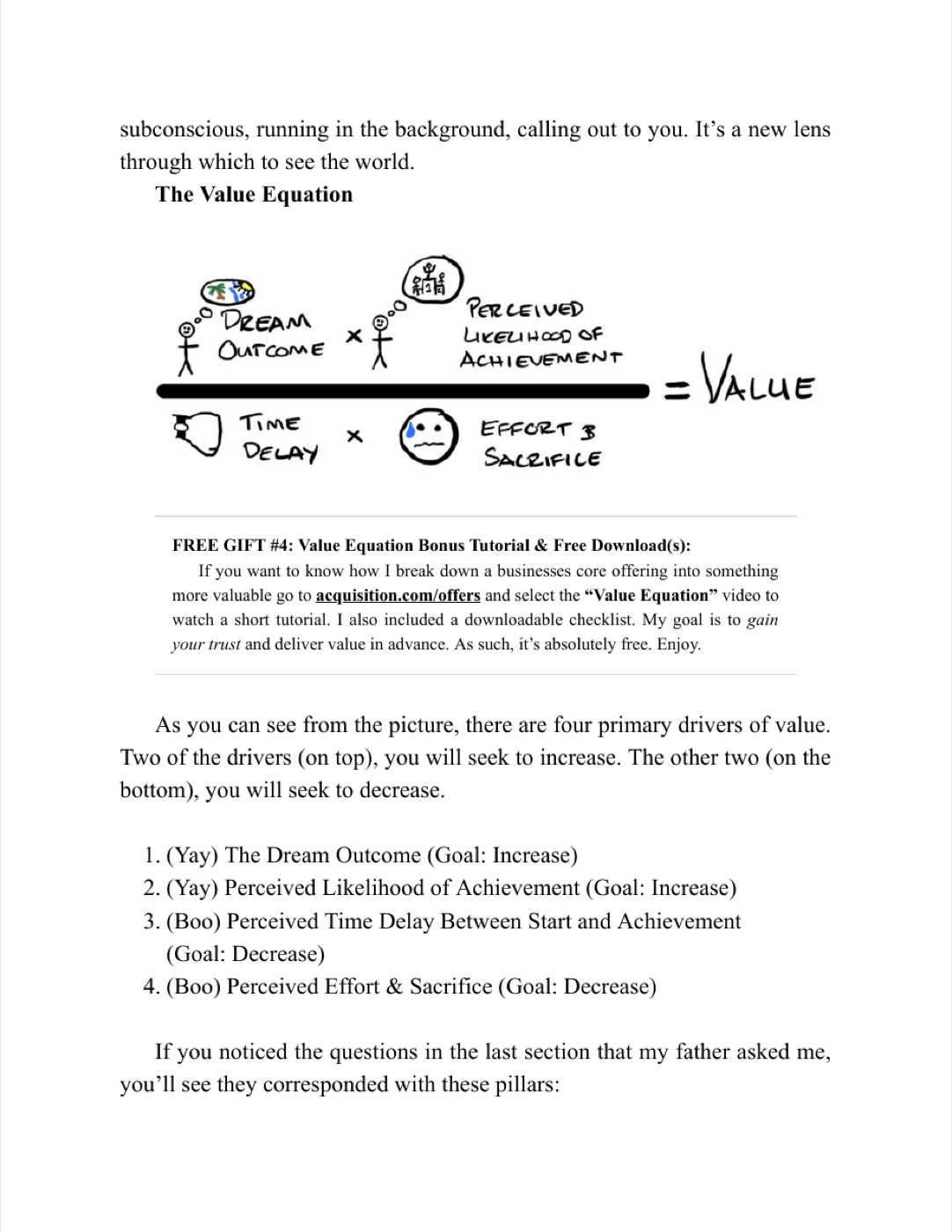
<p><img decoding="async" loading="lazy" alt="The Value Equation" src="https://sudip-ai-playbook.pages.dev/assets/images/figure-value-equation-ebf8839e34293a7cca00c0b72d2bd8c6.png" width="1082" height="1400" class="img_ev3q"></p>
<p><em>Figure: Hormozi’s Value Equation—increase the top, decrease the bottom.</em></p>
<h3 class="anchor anchorTargetStickyNavbar_Vzrq" id="41-the-formula">4.1 The formula<a href="https://sudip-ai-playbook.pages.dev/articles/100m-offers-hormozi#41-the-formula" class="hash-link" aria-label="Direct link to 4.1 The formula" title="Direct link to 4.1 The formula" translate="no">​</a></h3>
<p><strong>Value ≈ (Dream Outcome × Perceived Likelihood of Achievement) ÷ (Time Delay × Effort &amp; Sacrifice)</strong></p>
<table><thead><tr><th>Driver</th><th>Goal</th><th>Levers</th></tr></thead><tbody><tr><td>Dream Outcome</td><td>↑</td><td>Status-linked outcomes; specific tangible results</td></tr><tr><td>Perceived Likelihood</td><td>↑</td><td>Proof, track record, demos, guarantees, case studies</td></tr><tr><td>Time Delay</td><td>↓</td><td>Fast wins; shorter path to first value</td></tr><tr><td>Effort &amp; Sacrifice</td><td>↓</td><td>Done-for-you, templates, concierge, remove homework</td></tr></tbody></table>
<p>Division matters rhetorically: if the denominator approaches zero (immediate, effortless realisation), value becomes “infinite” in the buyer’s felt experience.</p>
<h3 class="anchor anchorTargetStickyNavbar_Vzrq" id="42-perception-is-the-product">4.2 Perception is the product<a href="https://sudip-ai-playbook.pages.dev/articles/100m-offers-hormozi#42-perception-is-the-product" class="hash-link" aria-label="Direct link to 4.2 Perception is the product" title="Direct link to 4.2 Perception is the product" translate="no">​</a></h3>
<p>The London Underground example: rider satisfaction jumped more from <strong>knowing when the next train arrives</strong> than from making trains faster. Psychological solutions often beat expensive logical ones.</p>
<h3 class="anchor anchorTargetStickyNavbar_Vzrq" id="43-fast-beats-free">4.3 Fast beats free<a href="https://sudip-ai-playbook.pages.dev/articles/100m-offers-hormozi#43-fast-beats-free" class="hash-link" aria-label="Direct link to 4.3 Fast beats free" title="Direct link to 4.3 Fast beats free" translate="no">​</a></h3>
<p>Speed can defeat free alternatives. If you compete with free internal tools or open-source, compete on <strong>time-to-value</strong>, not feature parity.</p>
<h3 class="anchor anchorTargetStickyNavbar_Vzrq" id="44-fast-wins-keep-people-long-enough-to-get-the-dream">4.4 Fast wins keep people long enough to get the dream<a href="https://sudip-ai-playbook.pages.dev/articles/100m-offers-hormozi#44-fast-wins-keep-people-long-enough-to-get-the-dream" class="hash-link" aria-label="Direct link to 4.4 Fast wins keep people long enough to get the dream" title="Direct link to 4.4 Fast wins keep people long enough to get the dream" translate="no">​</a></h3>
<p>Buyers purchase the long-term dream; they stay for short-term reinforcement. Design a visible win in days, not quarters.</p>
<p><strong>AI consulting example:</strong></p>
<table><thead><tr><th>Driver</th><th>Weak packaging</th><th>Strong packaging</th></tr></thead><tbody><tr><td>Dream</td><td>“GenAI transformation”</td><td>“Cut Tier-1 handle time 25% on top 3 intents”</td></tr><tr><td>Likelihood</td><td>Logo slide</td><td>Named insurer pilot + eval harness metrics</td></tr><tr><td>Delay</td><td>“Phase 1 in Q3”</td><td>Live shadow mode in 14 days</td></tr><tr><td>Effort</td><td>Client supplies all data engineering</td><td>Joint data sprint + playbooks + office hours</td></tr></tbody></table>
<hr>
<h2 class="anchor anchorTargetStickyNavbar_Vzrq" id="5-creating-the-grand-slam-offer--problems-solutions-trim--stack">5. Creating the Grand Slam Offer — problems, solutions, trim &amp; stack<a href="https://sudip-ai-playbook.pages.dev/articles/100m-offers-hormozi#5-creating-the-grand-slam-offer--problems-solutions-trim--stack" class="hash-link" aria-label="Direct link to 5. Creating the Grand Slam Offer — problems, solutions, trim &amp; stack" title="Direct link to 5. Creating the Grand Slam Offer — problems, solutions, trim &amp; stack" translate="no">​</a></h2>
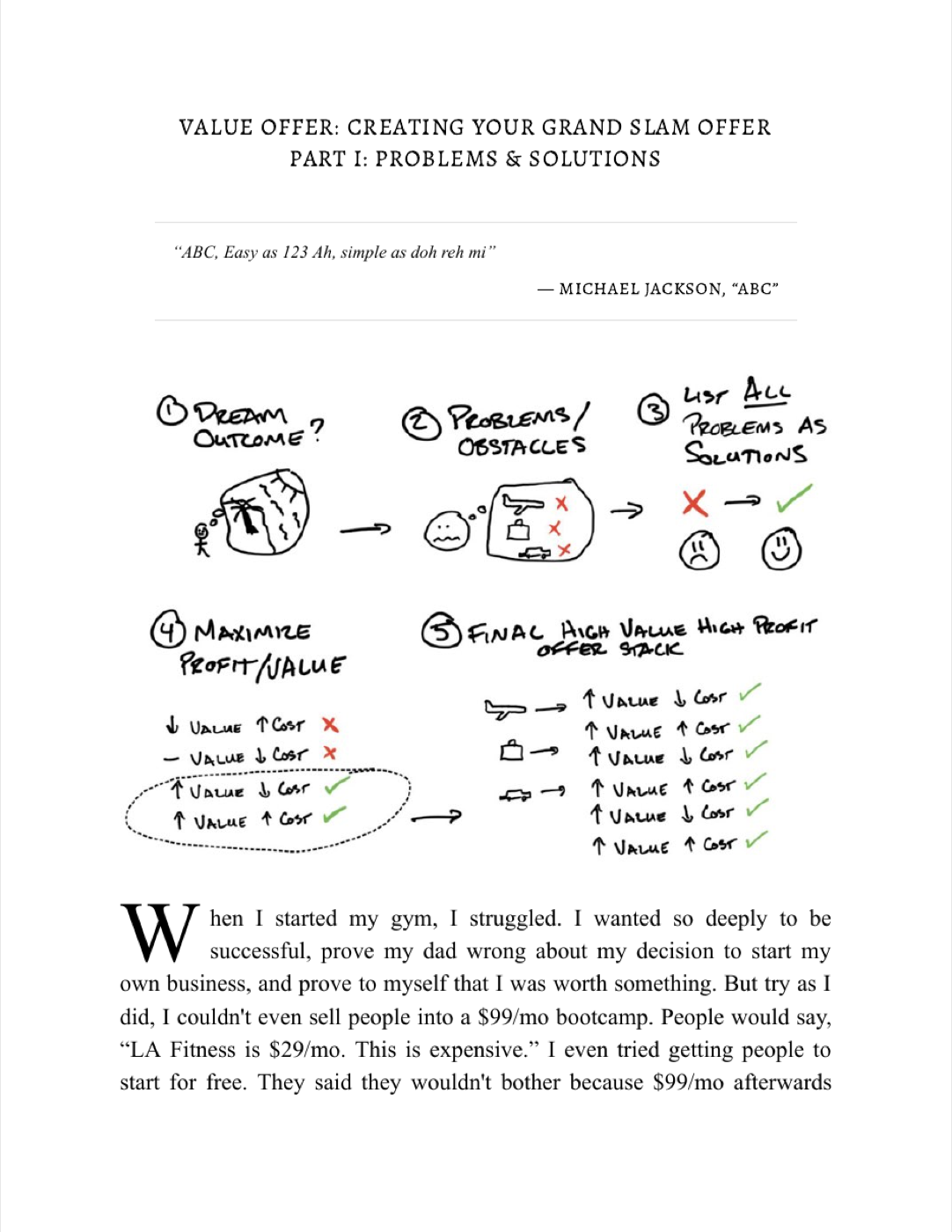
<p><img decoding="async" loading="lazy" alt="Problems to solutions mapping" src="https://sudip-ai-playbook.pages.dev/assets/images/figure-problems-solutions-261d27b60aa1849b7a885eb78e13cab6.png" width="1082" height="1400" class="img_ev3q"></p>
<p><em>Figure: educational page on problem/solution offer construction.</em></p>
<h3 class="anchor anchorTargetStickyNavbar_Vzrq" id="51-part-i--problems--solutions">5.1 Part I — Problems &amp; solutions<a href="https://sudip-ai-playbook.pages.dev/articles/100m-offers-hormozi#51-part-i--problems--solutions" class="hash-link" aria-label="Direct link to 5.1 Part I — Problems &amp; solutions" title="Direct link to 5.1 Part I — Problems &amp; solutions" translate="no">​</a></h3>
<p>Process (compressed):</p>
<ol>
<li class="">List every problem the avatar hits on the journey to the dream outcome.</li>
<li class="">Translate each problem into a solution vehicle (product, service, asset, access).</li>
<li class="">Do not start from your existing SKU list—start from their friction list.</li>
</ol>
<h3 class="anchor anchorTargetStickyNavbar_Vzrq" id="52-part-ii--trim--stack">5.2 Part II — Trim &amp; stack<a href="https://sudip-ai-playbook.pages.dev/articles/100m-offers-hormozi#52-part-ii--trim--stack" class="hash-link" aria-label="Direct link to 5.2 Part II — Trim &amp; stack" title="Direct link to 5.2 Part II — Trim &amp; stack" translate="no">​</a></h3>
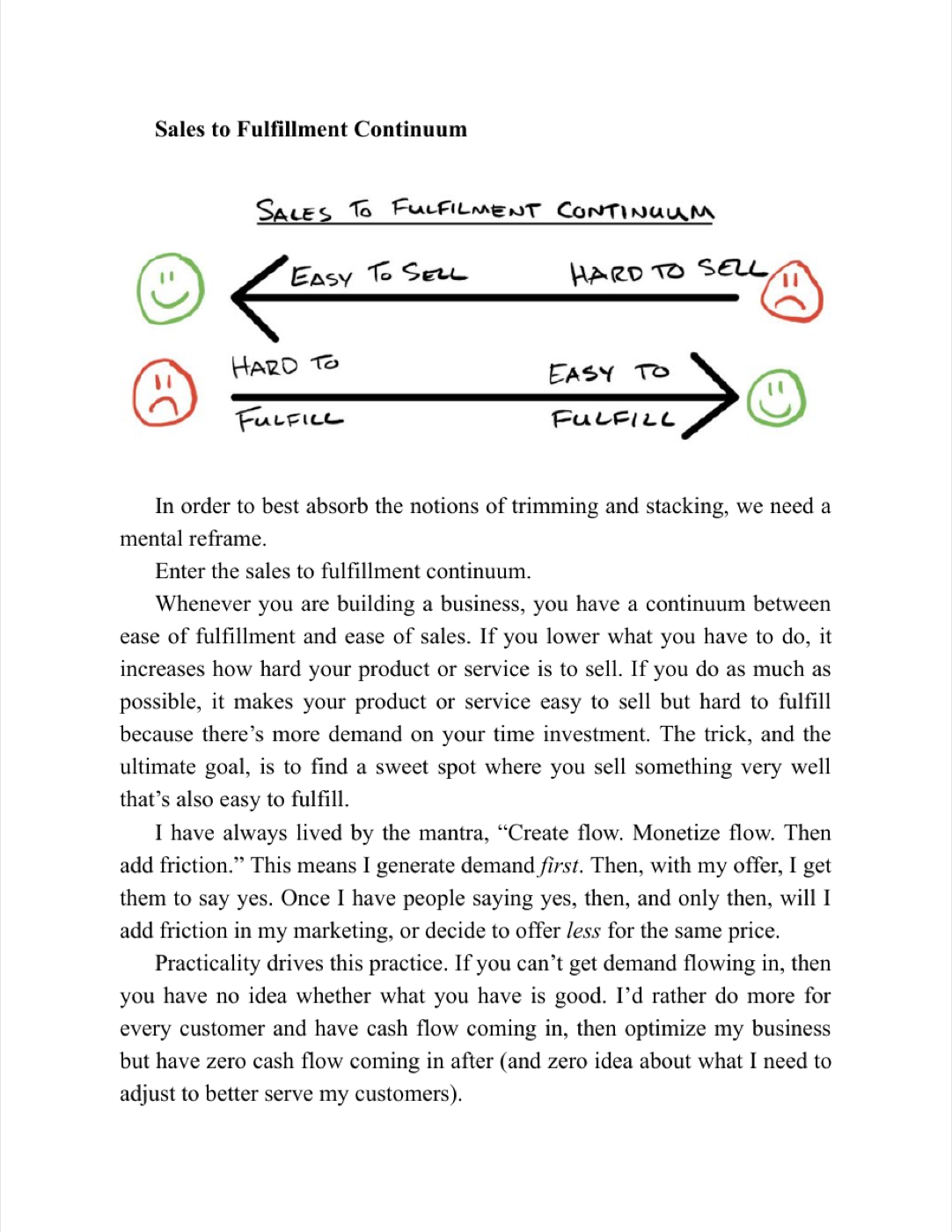
<p><img decoding="async" loading="lazy" alt="Sales to fulfilment continuum" src="https://sudip-ai-playbook.pages.dev/assets/images/figure-sales-fulfillment-continuum-fac6c15ee455cd05c0664c129583a19e.png" width="1082" height="1400" class="img_ev3q"></p>
<p><em>Figure: Sales-to-Fulfilment continuum—easy to sell vs easy to fulfil.</em></p>
<p><strong>Continuum insight:</strong> Maximise ease of sale and you often maximise fulfilment burden. Maximise ease of fulfilment and you often make sales harder. The craft is finding a sweet spot you can deliver profitably.</p>
<p>Hormozi’s sequencing mantra:</p>
<blockquote>
<p><strong>Create flow. Monetise flow. Then add friction.</strong></p>
</blockquote>
<p>Prove people will buy a high-touch, high-value version before you strip delivery to scale.</p>
<table><thead><tr><th>Stage</th><th>Action</th><th>Risk if skipped</th></tr></thead><tbody><tr><td>Create flow</td><td>Over-deliver to get yeses</td><td>Optimising a product nobody buys</td></tr><tr><td>Monetise flow</td><td>Capture cash at premium</td><td>Building audience without revenue</td></tr><tr><td>Add friction</td><td>Remove costly extras later</td><td>Scaling unprofitable heroics forever</td></tr></tbody></table>
<h3 class="anchor anchorTargetStickyNavbar_Vzrq" id="53-stack-presentation">5.3 Stack presentation<a href="https://sudip-ai-playbook.pages.dev/articles/100m-offers-hormozi#53-stack-presentation" class="hash-link" aria-label="Direct link to 5.3 Stack presentation" title="Direct link to 5.3 Stack presentation" translate="no">​</a></h3>
<p>Present the core offer, then layer bonuses so the <strong>bonus stack appears to eclipse the core price</strong>—while the core remains the real engine of results.</p>
<hr>
<h2 class="anchor anchorTargetStickyNavbar_Vzrq" id="6-enhancing-the-offer">6. Enhancing the offer<a href="https://sudip-ai-playbook.pages.dev/articles/100m-offers-hormozi#6-enhancing-the-offer" class="hash-link" aria-label="Direct link to 6. Enhancing the offer" title="Direct link to 6. Enhancing the offer" translate="no">​</a></h2>
<p><img decoding="async" loading="lazy" alt="Enhancing the offer overview" src="https://sudip-ai-playbook.pages.dev/assets/images/figure-enhance-offer-508c014022d4490208f64b5000f97824.png" width="1082" height="1400" class="img_ev3q"></p>
<p><em>Figure: overview of scarcity, urgency, bonuses, guarantees and naming.</em></p>
<p>Enhancers multiply demand <strong>after</strong> the core value is real. Using them on a weak offer is decoration on a commodity.</p>
<h3 class="anchor anchorTargetStickyNavbar_Vzrq" id="61-scarcity">6.1 Scarcity<a href="https://sudip-ai-playbook.pages.dev/articles/100m-offers-hormozi#61-scarcity" class="hash-link" aria-label="Direct link to 6.1 Scarcity" title="Direct link to 6.1 Scarcity" translate="no">​</a></h3>
<p><img decoding="async" loading="lazy" alt="Scarcity enhancers" src="https://sudip-ai-playbook.pages.dev/assets/images/figure-scarcity-818aaff9b0fcfa2c42112f23ad89d2e4.png" width="1082" height="1400" class="img_ev3q"></p>
<p><em>Figure: educational page on scarcity mechanics.</em></p>
<table><thead><tr><th>Type</th><th>Example</th><th>Honesty requirement</th></tr></thead><tbody><tr><td>Limited supply</td><td>Cohort caps, seat limits</td><td>Real capacity constraints</td></tr><tr><td>Limited bonuses</td><td>Only N onboarding intensives</td><td>Truly limited</td></tr><tr><td>Implied demand</td><td>Waitlists, application filters</td><td>Not fake counters</td></tr></tbody></table>
<p><strong>Negative case:</strong> Fake “only 2 seats left” timers. Destroys trust; kills referrals.</p>
<h3 class="anchor anchorTargetStickyNavbar_Vzrq" id="62-urgency">6.2 Urgency<a href="https://sudip-ai-playbook.pages.dev/articles/100m-offers-hormozi#62-urgency" class="hash-link" aria-label="Direct link to 6.2 Urgency" title="Direct link to 6.2 Urgency" translate="no">​</a></h3>
<p><img decoding="async" loading="lazy" alt="Urgency enhancers" src="https://sudip-ai-playbook.pages.dev/assets/images/figure-urgency-7d663fdafb536890c47d491959576687.png" width="1082" height="1400" class="img_ev3q"></p>
<p><em>Figure: educational page on urgency mechanics.</em></p>
<p>Urgency is time-based action pressure: cohort start dates, seasonal deadlines, expiring bonuses. Honest urgency aligns with real calendars (regulatory deadlines, board dates, budget cycles).</p>
<h3 class="anchor anchorTargetStickyNavbar_Vzrq" id="63-bonuses">6.3 Bonuses<a href="https://sudip-ai-playbook.pages.dev/articles/100m-offers-hormozi#63-bonuses" class="hash-link" aria-label="Direct link to 6.3 Bonuses" title="Direct link to 6.3 Bonuses" translate="no">​</a></h3>
<p><img decoding="async" loading="lazy" alt="Bonuses and stacking" src="https://sudip-ai-playbook.pages.dev/assets/images/figure-bonuses-cd7bf52e61825cb70fcbb8b1bd2b2269.png" width="1082" height="1400" class="img_ev3q"></p>
<p><em>Figure: educational page on bonus design and stacking.</em></p>
<p>Bonus rules of thumb from the book’s practice:</p>
<ul>
<li class="">Match bonuses to specific objections (“I’m worried about implementation” → implementation bonus).</li>
<li class="">Name and price bonuses distinctly.</li>
<li class="">Bonus value should <em>appear</em> to eclipse the core price.</li>
<li class="">Add scarcity/urgency to bonuses themselves when true.</li>
<li class="">In 1:1 sales, reveal bonuses after commitment to create a wow—or use objection-matched bonuses before the ask.</li>
</ul>
<h3 class="anchor anchorTargetStickyNavbar_Vzrq" id="64-guarantees">6.4 Guarantees<a href="https://sudip-ai-playbook.pages.dev/articles/100m-offers-hormozi#64-guarantees" class="hash-link" aria-label="Direct link to 6.4 Guarantees" title="Direct link to 6.4 Guarantees" translate="no">​</a></h3>
<p><img decoding="async" loading="lazy" alt="Guarantees overview" src="https://sudip-ai-playbook.pages.dev/assets/images/figure-guarantees-1b12a3aa863c884a849b47c2fa79343b.png" width="1082" height="1400" class="img_ev3q"></p>
<p><em>Figure: educational introduction to guarantee design.</em></p>
<p><img decoding="async" loading="lazy" alt="Guarantee types" src="https://sudip-ai-playbook.pages.dev/assets/images/figure-guarantees-types-b2eda2f7f1a67404eb34fb0e1b98509c.png" width="1082" height="1400" class="img_ev3q"></p>
<p><em>Figure: educational page expanding guarantee structures.</em></p>
<table><thead><tr><th>Style</th><th>Idea</th><th>When it fits</th></tr></thead><tbody><tr><td>Unconditional</td><td>Money-back for any reason in window</td><td>High trust products; low abuse risk</td></tr><tr><td>Conditional</td><td>“Do the work, get the result or…”</td><td>High-touch programmes with compliance</td></tr><tr><td>Anti-guarantee</td><td>All sales final (status / scarcity)</td><td>Ultra-premium, application-only</td></tr><tr><td>Implied</td><td>Reputation / brand as safety</td><td>Strong brand; still weaker than explicit</td></tr></tbody></table>
<p><strong>Consulting caution:</strong> Outcome guarantees on AI programmes need precise definitions (metric, window, client obligations). Vague “ROI guaranteed” is a legal and delivery trap.</p>
<h3 class="anchor anchorTargetStickyNavbar_Vzrq" id="65-naming--the-magic-formula">6.5 Naming — the MAGIC formula<a href="https://sudip-ai-playbook.pages.dev/articles/100m-offers-hormozi#65-naming--the-magic-formula" class="hash-link" aria-label="Direct link to 6.5 Naming — the MAGIC formula" title="Direct link to 6.5 Naming — the MAGIC formula" translate="no">​</a></h3>
<p>Hormozi’s naming components (use 3–5, keep punchy):</p>
<table><thead><tr><th>Letter</th><th>Component</th><th>Role</th></tr></thead><tbody><tr><td><strong>M</strong></td><td>Magnetic reason why</td><td>Why this promotion exists now</td></tr><tr><td><strong>A</strong></td><td>Avatar</td><td>Who it is for (hyper-specific)</td></tr><tr><td><strong>G</strong></td><td>Goal</td><td>Dream outcome in plain language</td></tr><tr><td><strong>I</strong></td><td>Interval</td><td>Timeframe to result (compliance-aware)</td></tr><tr><td><strong>C</strong></td><td>Container</td><td>Challenge, Bootcamp, Intensive, System…</td></tr></tbody></table>
<p>Example shape: “Free 6-Week Claims Copilot Sprint for Mid-Market Insurers” beats “AI Advisory Retainer.”</p>
<p>Rename the wrapper when creative fatigues; keep the underlying stack stable.</p>
<hr>
<h2 class="anchor anchorTargetStickyNavbar_Vzrq" id="7-consulting-and-ai-offer-patterns">7. Consulting and AI offer patterns<a href="https://sudip-ai-playbook.pages.dev/articles/100m-offers-hormozi#7-consulting-and-ai-offer-patterns" class="hash-link" aria-label="Direct link to 7. Consulting and AI offer patterns" title="Direct link to 7. Consulting and AI offer patterns" translate="no">​</a></h2>
<table><thead><tr><th>Weak offer</th><th>Grand Slam direction</th></tr></thead><tbody><tr><td>“20 days of GenAI consulting”</td><td>“90-day Production Copilot: 3 intents live, eval harness, runbook, 30-day hypercare”</td></tr><tr><td>“RAG workshop”</td><td>“From pilot purgatory to audit-ready answers in 6 weeks—or we extend hypercare free”</td></tr><tr><td>“Strategy deck”</td><td>“Board-ready VALUE case + bid/no-bid memo in 10 business days”</td></tr></tbody></table>
<p>Stack with <a class="" href="https://sudip-ai-playbook.pages.dev/articles/obviously-awesome-dunford">Obviously Awesome</a> so the category makes the value obvious, and <a class="" href="https://sudip-ai-playbook.pages.dev/articles/spin-selling-rackham">SPIN Selling</a> so discovery produces explicit needs the offer maps to.</p>
<hr>
<h2 class="anchor anchorTargetStickyNavbar_Vzrq" id="8-failure-modes">8. Failure modes<a href="https://sudip-ai-playbook.pages.dev/articles/100m-offers-hormozi#8-failure-modes" class="hash-link" aria-label="Direct link to 8. Failure modes" title="Direct link to 8. Failure modes" translate="no">​</a></h2>
<table><thead><tr><th>Failure</th><th>Symptom</th><th>Fix</th></tr></thead><tbody><tr><td>Great ads, weak offer</td><td>Clicks, no closes</td><td>Rebuild Value Equation</td></tr><tr><td>Wrong market</td><td>Endless education</td><td>Find starving crowd</td></tr><tr><td>Enhancer theatre</td><td>Fake urgency</td><td>Honest constraints only</td></tr><tr><td>Over-trim too early</td><td>Easy to fulfil, impossible to sell</td><td>Create flow first</td></tr><tr><td>Guarantee vagueness</td><td>Disputes</td><td>Metric + obligations + window</td></tr><tr><td>Feature naming</td><td>Sounds like everyone</td><td>MAGIC rename</td></tr></tbody></table>
<hr>
<h2 class="anchor anchorTargetStickyNavbar_Vzrq" id="9-practitioner-checklist--grand-slam-offer-one-pager">9. Practitioner checklist — Grand Slam Offer one-pager<a href="https://sudip-ai-playbook.pages.dev/articles/100m-offers-hormozi#9-practitioner-checklist--grand-slam-offer-one-pager" class="hash-link" aria-label="Direct link to 9. Practitioner checklist — Grand Slam Offer one-pager" title="Direct link to 9. Practitioner checklist — Grand Slam Offer one-pager" translate="no">​</a></h2>
<ul class="contains-task-list containsTaskList_mC6p">
<li class="task-list-item"><input type="checkbox" disabled=""> <!-- -->Avatar named; exclusions clear</li>
<li class="task-list-item"><input type="checkbox" disabled=""> <!-- -->Dream outcome in buyer language (status-aware)</li>
<li class="task-list-item"><input type="checkbox" disabled=""> <!-- -->Proof assets for likelihood (cases, metrics, demos)</li>
<li class="task-list-item"><input type="checkbox" disabled=""> <!-- -->Time-to-first-win &lt; 14 days where possible</li>
<li class="task-list-item"><input type="checkbox" disabled=""> <!-- -->Effort removed listed (what you do vs client)</li>
<li class="task-list-item"><input type="checkbox" disabled=""> <!-- -->Problem→solution map complete; trimmed to profitable stack</li>
<li class="task-list-item"><input type="checkbox" disabled=""> <!-- -->Bonuses mapped to top objections</li>
<li class="task-list-item"><input type="checkbox" disabled=""> <!-- -->Guarantee terms precise</li>
<li class="task-list-item"><input type="checkbox" disabled=""> <!-- -->MAGIC name tested in 5 variants</li>
<li class="task-list-item"><input type="checkbox" disabled=""> <!-- -->Price set from value, not cost-plus alone</li>
</ul>
<hr>
<h2 class="anchor anchorTargetStickyNavbar_Vzrq" id="10-capstone--rewrite-one-live-offer">10. Capstone — rewrite one live offer<a href="https://sudip-ai-playbook.pages.dev/articles/100m-offers-hormozi#10-capstone--rewrite-one-live-offer" class="hash-link" aria-label="Direct link to 10. Capstone — rewrite one live offer" title="Direct link to 10. Capstone — rewrite one live offer" translate="no">​</a></h2>
<p>Take one live SKU and rewrite:</p>
<ol>
<li class="">Market one-liner (starving crowd)</li>
<li class="">Value Equation scores (1–10) before/after redesign</li>
<li class="">Stack (core + 3 bonuses)</li>
<li class="">Guarantee paragraph</li>
<li class="">MAGIC name A/B</li>
<li class="">Sales script bridge from <a class="" href="https://sudip-ai-playbook.pages.dev/articles/spin-selling-rackham">SPIN</a> explicit needs → offer</li>
</ol>
<hr>
<h2 class="anchor anchorTargetStickyNavbar_Vzrq" id="11-worked-example--ai-claims-copilot-package">11. Worked example — AI claims copilot package<a href="https://sudip-ai-playbook.pages.dev/articles/100m-offers-hormozi#11-worked-example--ai-claims-copilot-package" class="hash-link" aria-label="Direct link to 11. Worked example — AI claims copilot package" title="Direct link to 11. Worked example — AI claims copilot package" translate="no">​</a></h2>
<table><thead><tr><th>Element</th><th>Draft</th></tr></thead><tbody><tr><td>Avatar</td><td>Mid-market P&amp;C claims ops leaders (100–800 adjusters)</td></tr><tr><td>Starving problem</td><td>Cycle time + leakage while hiring freeze blocks headcount</td></tr><tr><td>Dream outcome</td><td>20% faster straight-through on top 5 FNOL intents without increasing leakage</td></tr><tr><td>Likelihood proof</td><td>6-week shadow-mode pilot metrics + named reference</td></tr><tr><td>Time delay</td><td>Shadow answers in week 2; production intents by week 6</td></tr><tr><td>Effort removed</td><td>We bring prompts, eval harness, policy chunking playbook; client provides SME hours</td></tr><tr><td>Core stack</td><td>Discovery workshop · data readiness sprint · 5-intent build · eval gate · hypercare</td></tr><tr><td>Bonuses</td><td>CISO questionnaire pack · adjuster change kit · weekly office hours (30 days)</td></tr><tr><td>Guarantee</td><td>If eval gate metrics miss agreed thresholds after client obligations met, we extend hypercare 30 days at no fee</td></tr><tr><td>MAGIC name</td><td>“6-Week Claims Copilot Sprint for Mid-Market P&amp;C Insurers”</td></tr><tr><td>Price logic</td><td>Fraction of leakage + overtime cost over 12 months</td></tr></tbody></table>
<p><strong>SPIN bridge:</strong> Implication questions quantify leakage and overtime; Need-payoff gets the economic buyer to say the outcome in their words; the Grand Slam name and stack mirror those words in the proposal governing thought (<a class="" href="https://sudip-ai-playbook.pages.dev/articles/minto-pyramid-principle">Minto</a>).</p>
<hr>
<h2 class="anchor anchorTargetStickyNavbar_Vzrq" id="12-offer-fatigue-and-creative-refresh">12. Offer fatigue and creative refresh<a href="https://sudip-ai-playbook.pages.dev/articles/100m-offers-hormozi#12-offer-fatigue-and-creative-refresh" class="hash-link" aria-label="Direct link to 12. Offer fatigue and creative refresh" title="Direct link to 12. Offer fatigue and creative refresh" translate="no">​</a></h2>
<p>Local and niche markets fatigue faster because you can reach the addressable audience cheaply. Hormozi’s fix is usually <strong>wrapper refresh</strong>, not tearing down the stack:</p>
<table><thead><tr><th>Keep</th><th>Change</th></tr></thead><tbody><tr><td>Fulfilment stack</td><td>Hooks, stories, creative</td></tr><tr><td>Core promise</td><td>MAGIC name components</td></tr><tr><td>Proof assets</td><td>Angle (season, regulation, event)</td></tr></tbody></table>
<p><strong>Negative case:</strong> Rebuilding the entire delivery model every quarter because ads stopped converting—when only the creative and call-outs were tired.</p>
<hr>
<h2 class="anchor anchorTargetStickyNavbar_Vzrq" id="13-virtual-vs-physical-products--value-equation-emphasis">13. Virtual vs physical products — Value Equation emphasis<a href="https://sudip-ai-playbook.pages.dev/articles/100m-offers-hormozi#13-virtual-vs-physical-products--value-equation-emphasis" class="hash-link" aria-label="Direct link to 13. Virtual vs physical products — Value Equation emphasis" title="Direct link to 13. Virtual vs physical products — Value Equation emphasis" translate="no">​</a></h2>
<table><thead><tr><th>Offer type</th><th>Often over-indexes on…</th><th>Often under-invests in…</th></tr></thead><tbody><tr><td>Coaching / consulting</td><td>Dream outcome claims</td><td>Effort removal and fast wins</td></tr><tr><td>Software</td><td>Features (false likelihood)</td><td>Time-to-first-value</td></tr><tr><td>Done-for-you services</td><td>Speed</td><td>Proof and guarantee clarity</td></tr><tr><td>Info products</td><td>Dream outcome</td><td>Perceived likelihood (proof)</td></tr></tbody></table>
<p>Apple / Amazon / Netflix-style winners obsess over the <strong>denominator</strong>—make it immediate and effortless—after the dream is clear.</p>
<hr>
<h2 class="anchor anchorTargetStickyNavbar_Vzrq" id="14-pricing-conversation-scripts-ethical">14. Pricing conversation scripts (ethical)<a href="https://sudip-ai-playbook.pages.dev/articles/100m-offers-hormozi#14-pricing-conversation-scripts-ethical" class="hash-link" aria-label="Direct link to 14. Pricing conversation scripts (ethical)" title="Direct link to 14. Pricing conversation scripts (ethical)" translate="no">​</a></h2>
<table><thead><tr><th>Buyer line</th><th>Weak response</th><th>Stronger response</th></tr></thead><tbody><tr><td>“Can you do it cheaper?”</td><td>Immediate discount</td><td>“Which outcome should we remove to hit that number?”</td></tr><tr><td>“Competitor is half”</td><td>Feature war</td><td>“Are you comparing the same stack, proof and risk reversal?”</td></tr><tr><td>“We need to think”</td><td>Fake urgency</td><td>Honest cohort date + offer to answer one unresolved risk</td></tr></tbody></table>
<p>Enhancers support truth; they do not replace discovery.</p>
<hr>
<h2 class="anchor anchorTargetStickyNavbar_Vzrq" id="15-ninety-day-offer-upgrade-programme">15. Ninety-day offer upgrade programme<a href="https://sudip-ai-playbook.pages.dev/articles/100m-offers-hormozi#15-ninety-day-offer-upgrade-programme" class="hash-link" aria-label="Direct link to 15. Ninety-day offer upgrade programme" title="Direct link to 15. Ninety-day offer upgrade programme" translate="no">​</a></h2>
<table><thead><tr><th>Month</th><th>Focus</th><th>Artefact</th></tr></thead><tbody><tr><td>1</td><td>Avatar + Value Equation baseline</td><td>One-pager scores</td></tr><tr><td>2</td><td>Problem→solution→stack + guarantee</td><td>Sales deck v2</td></tr><tr><td>3</td><td>MAGIC names + creative tests</td><td>5 name variants live</td></tr></tbody></table>
<p>KPI: close rate × average price (revenue per qualified conversation), not vanity demo count.</p>
<hr>
<h2 class="anchor anchorTargetStickyNavbar_Vzrq" id="16-cross-stack-map">16. Cross-stack map<a href="https://sudip-ai-playbook.pages.dev/articles/100m-offers-hormozi#16-cross-stack-map" class="hash-link" aria-label="Direct link to 16. Cross-stack map" title="Direct link to 16. Cross-stack map" translate="no">​</a></h2>
<table><thead><tr><th>Job</th><th>Book</th></tr></thead><tbody><tr><td>Category context</td><td><a class="" href="https://sudip-ai-playbook.pages.dev/articles/obviously-awesome-dunford">Obviously Awesome</a></td></tr><tr><td>Beachhead &amp; persona</td><td><a class="" href="https://sudip-ai-playbook.pages.dev/articles/disciplined-entrepreneurship-aulet">Disciplined Entrepreneurship</a></td></tr><tr><td>Discovery questions</td><td><a class="" href="https://sudip-ai-playbook.pages.dev/articles/spin-selling-rackham">SPIN Selling</a></td></tr><tr><td>Lead channels</td><td><a class="" href="https://sudip-ai-playbook.pages.dev/articles/100m-leads-hormozi">$100M Leads</a></td></tr><tr><td>Sales org scale</td><td><a class="" href="https://sudip-ai-playbook.pages.dev/articles/sales-acceleration-formula-roberge">Sales Acceleration Formula</a></td></tr></tbody></table>
<aside class="callout_wR8p takeaways_MUJn" aria-label="Key takeaways"><p class="label_r65P">Key takeaways</p><div class="body_qzh2"><ul>
<li class="">Acquisition begins with the offer; ads and closers cannot rescue a commodity.</li>
<li class="">Starving Crowd beats offer cleverness; offer cleverness beats persuasion tricks.</li>
<li class="">The Value Equation is the design surface: raise outcome and certainty; cut delay and effort.</li>
<li class="">Trim and stack after problem mapping; create flow before adding friction.</li>
<li class="">Scarcity, urgency, bonuses, guarantees and MAGIC naming multiply a strong core—they do not create one.</li>
<li class="">Consulting/AI offers win when packaged as auditable outcomes with risk reversal, not day-rate bundles.</li>
</ul></div></aside>
<aside class="callout_wR8p next_DGRY" aria-label="What to do next"><p class="label_r65P">What to do next</p><div class="body_qzh2"><ol>
<li class="">Score your current flagship offer on all four Value Equation drivers.</li>
<li class="">Rewrite one package with problem→solution→stack→guarantee→MAGIC name.</li>
<li class="">Read <a class="" href="https://sudip-ai-playbook.pages.dev/articles/100m-leads-hormozi">$100M Leads</a> to plug acquisition channels into the offer.</li>
<li class="">Align discovery with <a class="" href="https://sudip-ai-playbook.pages.dev/articles/spin-selling-rackham">SPIN Selling</a> so explicit needs match the stack.</li>
<li class="">See the <a class="" href="https://sudip-ai-playbook.pages.dev/articles/mba-reading-map-ten-core-books">Business Administration reading map</a>.</li>
</ol></div></aside>]]></content>
        <author>
            <name>Sudip</name>
        </author>
        <category label="Business Administration" term="Business Administration"/>
        <category label="Business" term="Business"/>
        <category label="Entrepreneurship" term="Entrepreneurship"/>
        <category label="Consulting" term="Consulting"/>
        <category label="Playbook" term="Playbook"/>
    </entry>
    <entry>
        <title type="html"><![CDATA[The Sales Acceleration Formula: Mark Roberge’s Data-Driven Playbook from $0 to $100M]]></title>
        <id>https://sudip-ai-playbook.pages.dev/articles/sales-acceleration-formula-roberge</id>
        <link href="https://sudip-ai-playbook.pages.dev/articles/sales-acceleration-formula-roberge"/>
        <updated>2026-08-02T00:00:00.000Z</updated>
        <summary type="html"><![CDATA[A practitioner synthesis of Mark Roberge’s The Sales Acceleration Formula—Sales Hiring, Training, Management and Demand Generation formulas, SMarketing SLAs, metrics-driven coaching, inbound conversion and GPCT—for scaling consulting and SaaS sales organisations.]]></summary>
        <content type="html"><![CDATA[<p>Most sales advice is folklore: hire “hunters,” run motivational Monday, blame marketing for lead quality. Mark Roberge—MIT-trained engineer turned HubSpot’s first head of sales—built a <strong>formulaic, inspectable system</strong> that helped take HubSpot from early startup to roughly $100M: hire with a scorecard, train to a methodology, coach from metrics, generate demand inbound, align sales and marketing with SLAs, and run experiments like an engineering org. <em>The Sales Acceleration Formula</em> is the field manual for that machine.</p>
<!-- -->
<blockquote>
<p><strong>Source note:</strong> This article is an original practitioner synthesis of themes from Mark Roberge’s <em>The Sales Acceleration Formula</em> (Wiley / HubSpot). It is not a reprint. Figures are educational illustrations from the work; buy the original for full HubSpot cases, scorecards and experiment narratives.</p>
</blockquote>
<p><img decoding="async" loading="lazy" alt="The Sales Acceleration Formula cover" src="https://sudip-ai-playbook.pages.dev/assets/images/cover-6c430ba79d235f526f0cb102e7872d13.png" width="1082" height="1400" class="img_ev3q"></p>
<aside class="callout_wR8p exec_mFZL" aria-label="Executive summary"><p class="label_r65P">Executive summary</p><div class="body_qzh2"><p>Roberge’s system has five linked formulas: <strong>Hire</strong> (Interview Scorecard; coachability first), <strong>Train</strong> (buyer journey + sales process + qualifying matrix), <strong>Manage</strong> (metrics-driven coaching, compensation, promote-from-within leaders), <strong>Demand</strong> (inbound content → conversion → SMarketing SLA with implied lead dollar value), and <strong>Experiment</strong> (cheap tests; GPCT as a methodology win). Ideal traits differ by company; the engineering process does not. Pair with <a class="" href="https://sudip-ai-playbook.pages.dev/articles/spin-selling-rackham">SPIN</a> for discovery behaviours and Hormozi for offer/lead force-multipliers.</p></div></aside>
<aside class="callout_wR8p when_L_AZ" aria-label="When to use this page"><p class="label_r65P">When to use this page</p><div class="body_qzh2"><ul>
<li class="">Building or professionalising a sales team for SaaS, AI products or consulting.</li>
<li class="">Replacing gut-feel hiring and “pipeline review only” management.</li>
<li class="">Aligning marketing and sales on lead quality with economic SLAs.</li>
<li class="">Pair with <a class="" href="https://sudip-ai-playbook.pages.dev/articles/spin-selling-rackham">SPIN Selling</a>, <a class="" href="https://sudip-ai-playbook.pages.dev/articles/100m-offers-hormozi">$100M Offers</a>, <a class="" href="https://sudip-ai-playbook.pages.dev/articles/100m-leads-hormozi">$100M Leads</a>, <a class="" href="https://sudip-ai-playbook.pages.dev/articles/high-output-management-grove">High Output Management</a>, and the <a class="" href="https://sudip-ai-playbook.pages.dev/articles/mba-reading-map-ten-core-books">Business Administration reading map</a>.</li>
</ul></div></aside>
<hr>
<h2 class="anchor anchorTargetStickyNavbar_Vzrq" id="0-why-this-book-still-matters">0. Why this book still matters<a href="https://sudip-ai-playbook.pages.dev/articles/sales-acceleration-formula-roberge#0-why-this-book-still-matters" class="hash-link" aria-label="Direct link to 0. Why this book still matters" title="Direct link to 0. Why this book still matters" translate="no">​</a></h2>
<p>Organic growth strategies fail when sales cannot outsell competitors. Roberge’s contribution is not a clever close—it is an <strong>operating system</strong>: data to hire, curriculum to train, coaching to improve, inbound to scale demand, SLAs to align functions, experiments to evolve.</p>
<p>Buyer power shifted online; aggressive pitch culture underperforms. Statistics (and HubSpot’s experience) favoured <strong>intelligent, helpful</strong> sellers over high-pressure ones. The formulas operationalise that reality.</p>
<hr>
<h2 class="anchor anchorTargetStickyNavbar_Vzrq" id="part-i--the-sales-hiring-formula">Part I — The Sales Hiring Formula<a href="https://sudip-ai-playbook.pages.dev/articles/sales-acceleration-formula-roberge#part-i--the-sales-hiring-formula" class="hash-link" aria-label="Direct link to Part I — The Sales Hiring Formula" title="Direct link to Part I — The Sales Hiring Formula" translate="no">​</a></h2>
<p><img decoding="async" loading="lazy" alt="Sales hiring formula" src="https://sudip-ai-playbook.pages.dev/assets/images/figure-hiring-formula-5bf1f0f515ed837c8baca7aef695af61.png" width="1082" height="1400" class="img_ev3q"></p>
<p><em>Figure: educational framing of the Sales Hiring Formula.</em></p>
<p><img decoding="async" loading="lazy" alt="Hiring formula continued" src="https://sudip-ai-playbook.pages.dev/assets/images/figure-hiring-formula-2-2187577d86e7ed9039b4f1086ef0e72b.png" width="1082" height="1400" class="img_ev3q"></p>
<p><em>Figure: continued educational page on engineering the hire.</em></p>
<h3 class="anchor anchorTargetStickyNavbar_Vzrq" id="11-engineer-the-hire-do-not-mythologise-it">1.1 Engineer the hire; do not mythologise it<a href="https://sudip-ai-playbook.pages.dev/articles/sales-acceleration-formula-roberge#11-engineer-the-hire-do-not-mythologise-it" class="hash-link" aria-label="Direct link to 1.1 Engineer the hire; do not mythologise it" title="Direct link to 1.1 Engineer the hire; do not mythologise it" translate="no">​</a></h3>
<p><strong>The ideal sales hiring formula differs by company. The process to engineer it is the same.</strong></p>
<ol>
<li class="">Define the sales context (buyer, motion, ACV, cycle).</li>
<li class="">Interview with a structured <strong>Interview Scorecard</strong>.</li>
<li class="">Correlate scorecard traits with later performance.</li>
<li class="">Reweight the scorecard; iterate slowly with data.</li>
</ol>
<h3 class="anchor anchorTargetStickyNavbar_Vzrq" id="12-hubspots-five-traits-context-bound-widely-useful">1.2 HubSpot’s five traits (context-bound, widely useful)<a href="https://sudip-ai-playbook.pages.dev/articles/sales-acceleration-formula-roberge#12-hubspots-five-traits-context-bound-widely-useful" class="hash-link" aria-label="Direct link to 1.2 HubSpot’s five traits (context-bound, widely useful)" title="Direct link to 1.2 HubSpot’s five traits (context-bound, widely useful)" translate="no">​</a></h3>
<p><img decoding="async" loading="lazy" alt="Interview scorecard" src="https://sudip-ai-playbook.pages.dev/assets/images/figure-scorecard-a0ef706fdfbf137c0985ba5cea7a5583.png" width="1082" height="1400" class="img_ev3q"></p>
<p><em>Figure: HubSpot-style sales candidate assessment / scorecard concept.</em></p>
<table><thead><tr><th>Trait</th><th>Definition</th><th>Why it mattered</th></tr></thead><tbody><tr><td><strong>Coachability</strong></td><td>Absorb and apply coaching</td><td>Strongest hiring signal in Roberge’s analysis</td></tr><tr><td><strong>Curiosity</strong></td><td>Question and listen without interrogation</td><td>Matches empowered buyers</td></tr><tr><td><strong>Prior success</strong></td><td>Evidence of excellence in prior domains</td><td>Pattern of high performance</td></tr><tr><td><strong>Intelligence</strong></td><td>Learn complex product/buyer context fast</td><td>Inbound + consultative motion</td></tr><tr><td><strong>Work ethic</strong></td><td>Sustained outbound/inbound discipline</td><td>Predictable activity → pipeline</td></tr></tbody></table>
<p>Do <strong>not</strong> copy HubSpot’s weights blindly. Copy the engineering loop.</p>
<h3 class="anchor anchorTargetStickyNavbar_Vzrq" id="13-interviewing-for-coachability-three-steps">1.3 Interviewing for coachability (three steps)<a href="https://sudip-ai-playbook.pages.dev/articles/sales-acceleration-formula-roberge#13-interviewing-for-coachability-three-steps" class="hash-link" aria-label="Direct link to 1.3 Interviewing for coachability (three steps)" title="Direct link to 1.3 Interviewing for coachability (three steps)" translate="no">​</a></h3>
<p><img decoding="async" loading="lazy" alt="Coachability interview design" src="https://sudip-ai-playbook.pages.dev/assets/images/figure-coachability-44587ec080227320b1c8c8f7b2d44ea9.png" width="1082" height="1400" class="img_ev3q"></p>
<p><em>Figure: educational page on evaluating coachability via role-play.</em></p>
<ol>
<li class=""><strong>Role-play</strong> a realistic buyer context (inbound lead, light discovery, book next step).</li>
<li class=""><strong>Self-diagnose</strong> — ask how they did; look for analytical reflection, not “I crushed it.”</li>
<li class=""><strong>Coach → re-run</strong> — give one praise + one improvement; watch absorb-and-apply. Seek effortful improvement, not perfection. Rare perfect second passes are hire-at-all-costs signals.</li>
</ol>
<h3 class="anchor anchorTargetStickyNavbar_Vzrq" id="14-interviewing-for-curiosity">1.4 Interviewing for curiosity<a href="https://sudip-ai-playbook.pages.dev/articles/sales-acceleration-formula-roberge#14-interviewing-for-curiosity" class="hash-link" aria-label="Direct link to 1.4 Interviewing for curiosity" title="Direct link to 1.4 Interviewing for curiosity" translate="no">​</a></h3>
<ul>
<li class="">Lobby test: do they ask thoughtful questions immediately?</li>
<li class="">Role-play test: do they diagnose with open, non-interrogative questions?</li>
<li class="">Party test (Roberge’s advice to students): can you question a stranger without talking about yourself—and leave them feeling interested, not grilled?</li>
</ul>
<p><strong>Negative case:</strong> Hiring a charismatic presenter who fails coachability. They peak in month one demo theatre and plateau forever.</p>
<hr>
<h2 class="anchor anchorTargetStickyNavbar_Vzrq" id="part-ii--the-sales-training-formula">Part II — The Sales Training Formula<a href="https://sudip-ai-playbook.pages.dev/articles/sales-acceleration-formula-roberge#part-ii--the-sales-training-formula" class="hash-link" aria-label="Direct link to Part II — The Sales Training Formula" title="Direct link to Part II — The Sales Training Formula" translate="no">​</a></h2>
<h3 class="anchor anchorTargetStickyNavbar_Vzrq" id="21-three-elements-of-methodology">2.1 Three elements of methodology<a href="https://sudip-ai-playbook.pages.dev/articles/sales-acceleration-formula-roberge#21-three-elements-of-methodology" class="hash-link" aria-label="Direct link to 2.1 Three elements of methodology" title="Direct link to 2.1 Three elements of methodology" translate="no">​</a></h3>
<p><img decoding="async" loading="lazy" alt="Buyer journey" src="https://sudip-ai-playbook.pages.dev/assets/images/figure-buyer-journey-18721834f8bbfbcef3d6f71cc4f29930.png" width="1082" height="1400" class="img_ev3q"></p>
<p><em>Figure: buyer journey framing for training design.</em></p>
<p><img decoding="async" loading="lazy" alt="Sales process" src="https://sudip-ai-playbook.pages.dev/assets/images/figure-sales-process-3d7e1c10253d667ad139ebfbf9a9cc38.png" width="1082" height="1400" class="img_ev3q"></p>
<p><em>Figure: sales process element of the training formula.</em></p>
<p><img decoding="async" loading="lazy" alt="Qualifying matrix" src="https://sudip-ai-playbook.pages.dev/assets/images/figure-qualifying-matrix-86ce6f7059e08c7e26c355151ae84a1e.png" width="1082" height="1400" class="img_ev3q"></p>
<p><em>Figure: qualifying matrix element of the training formula.</em></p>
<table><thead><tr><th>Element</th><th>Question it answers</th></tr></thead><tbody><tr><td>Buyer journey</td><td>How buyers educate, research and select</td></tr><tr><td>Sales process</td><td>Stages and advances your team runs</td></tr><tr><td>Qualifying matrix</td><td>Who is worth scarce seller time</td></tr></tbody></table>
<p>Build a <strong>curriculum</strong> around these three; iterate as the market teaches you. Predictability comes from repeating a taught process—not from heroics.</p>
<h3 class="anchor anchorTargetStickyNavbar_Vzrq" id="22-helpful-sellers-buyers-trust">2.2 Helpful sellers buyers trust<a href="https://sudip-ai-playbook.pages.dev/articles/sales-acceleration-formula-roberge#22-helpful-sellers-buyers-trust" class="hash-link" aria-label="Direct link to 2.2 Helpful sellers buyers trust" title="Direct link to 2.2 Helpful sellers buyers trust" translate="no">​</a></h3>
<ul>
<li class="">Have sellers experience the day-to-day job of the customer (empathy as skill, not poster).</li>
<li class="">Enable personal brand building on social so inbound trust starts before the first call.</li>
</ul>
<p><strong>Consulting translation:</strong> put new associates through a day-in-the-life of a claims adjuster or contact-centre lead before they sell “AI transformation.”</p>
<hr>
<h2 class="anchor anchorTargetStickyNavbar_Vzrq" id="part-iii--the-sales-management-formula">Part III — The Sales Management Formula<a href="https://sudip-ai-playbook.pages.dev/articles/sales-acceleration-formula-roberge#part-iii--the-sales-management-formula" class="hash-link" aria-label="Direct link to Part III — The Sales Management Formula" title="Direct link to Part III — The Sales Management Formula" translate="no">​</a></h2>
<h3 class="anchor anchorTargetStickyNavbar_Vzrq" id="31-metrics-driven-sales-coaching">3.1 Metrics-driven sales coaching<a href="https://sudip-ai-playbook.pages.dev/articles/sales-acceleration-formula-roberge#31-metrics-driven-sales-coaching" class="hash-link" aria-label="Direct link to 3.1 Metrics-driven sales coaching" title="Direct link to 3.1 Metrics-driven sales coaching" translate="no">​</a></h3>
<p><img decoding="async" loading="lazy" alt="Metrics-driven coaching" src="https://sudip-ai-playbook.pages.dev/assets/images/figure-metrics-coaching-cc811707179a115ea9692b1550157721.png" width="1082" height="1400" class="img_ev3q"></p>
<p><em>Figure: educational page on metrics-driven coaching culture.</em></p>
<p><img decoding="async" loading="lazy" alt="Coaching plan" src="https://sudip-ai-playbook.pages.dev/assets/images/figure-coaching-plan-4b28fa2574d4fa3e2efffac9cdac8f45.png" width="1082" height="1400" class="img_ev3q"></p>
<p><em>Figure: creating a coaching plan with the salesperson.</em></p>
<p>Roberge preferred “sales coaches” over classic managers. Coaching time is the scarce managerial lever—see also Grove’s leverage ideas in <a class="" href="https://sudip-ai-playbook.pages.dev/articles/high-output-management-grove">High Output Management</a>.</p>
<table><thead><tr><th>Coaching practice</th><th>Underperformer pattern</th></tr></thead><tbody><tr><td>Diagnose skill from metrics</td><td>Generic “try harder” speeches</td></tr><tr><td>Co-create a coaching plan</td><td>Top-down mandates without buy-in</td></tr><tr><td>Peel the onion on root cause</td><td>Treating symptoms (e.g. low demos) only</td></tr><tr><td>Measure coaching success</td><td>No before/after skill metric</td></tr></tbody></table>
<p><img decoding="async" loading="lazy" alt="Peeling back the onion" src="https://sudip-ai-playbook.pages.dev/assets/images/figure-coaching-onion-1c74c4cf93e21c9834a46b5b50abaae9.png" width="1082" height="1400" class="img_ev3q"></p>
<p><em>Figure: “peel back the onion” diagnostic coaching metaphor.</em></p>
<p><strong>Example diagnostic chain:</strong> Low close rate → weak discovery → shallow goal understanding → train GPCT/SPIN depth → re-measure.</p>
<h3 class="anchor anchorTargetStickyNavbar_Vzrq" id="32-compensation-contests-promotions">3.2 Compensation, contests, promotions<a href="https://sudip-ai-playbook.pages.dev/articles/sales-acceleration-formula-roberge#32-compensation-contests-promotions" class="hash-link" aria-label="Direct link to 3.2 Compensation, contests, promotions" title="Direct link to 3.2 Compensation, contests, promotions" translate="no">​</a></h3>
<ul>
<li class="">Evaluate commission plans against clear criteria; involve the team in design.</li>
<li class="">Use promotion tiers to remove subjectivity from compensation changes.</li>
<li class="">Contests motivate when fair, short and aligned with long-term behaviour (not sandbagging).</li>
</ul>
<h3 class="anchor anchorTargetStickyNavbar_Vzrq" id="33-promote-from-within-leaders">3.3 Promote-from-within leaders<a href="https://sudip-ai-playbook.pages.dev/articles/sales-acceleration-formula-roberge#33-promote-from-within-leaders" class="hash-link" aria-label="Direct link to 3.3 Promote-from-within leaders" title="Direct link to 3.3 Promote-from-within leaders" translate="no">​</a></h3>
<p>Prerequisites for leadership consideration; classroom ≠ real world. New managers commonly fail by overselling as “super rep” instead of coaching capacity into the team.</p>
<hr>
<h2 class="anchor anchorTargetStickyNavbar_Vzrq" id="part-iv--the-demand-generation-formula">Part IV — The Demand Generation Formula<a href="https://sudip-ai-playbook.pages.dev/articles/sales-acceleration-formula-roberge#part-iv--the-demand-generation-formula" class="hash-link" aria-label="Direct link to Part IV — The Demand Generation Formula" title="Direct link to Part IV — The Demand Generation Formula" translate="no">​</a></h2>
<h3 class="anchor anchorTargetStickyNavbar_Vzrq" id="41-flip-the-formula--get-buyers-to-find-you">4.1 Flip the formula — get buyers to find you<a href="https://sudip-ai-playbook.pages.dev/articles/sales-acceleration-formula-roberge#41-flip-the-formula--get-buyers-to-find-you" class="hash-link" aria-label="Direct link to 4.1 Flip the formula — get buyers to find you" title="Direct link to 4.1 Flip the formula — get buyers to find you" translate="no">​</a></h3>
<p><img decoding="async" loading="lazy" alt="Inbound content engine" src="https://sudip-ai-playbook.pages.dev/assets/images/figure-inbound-content-73210a8e814456fd7f9eebc807a5dd3e.png" width="1082" height="1400" class="img_ev3q"></p>
<p><em>Figure: educational page on inbound / content-led demand generation.</em></p>
<p>Inbound is not “free leads.” It is a production system: content process, social participation, long-tail theory, patience for compounding search/authority.</p>
<p>Complement with Hormozi’s Core Four for a fuller channel map: <a class="" href="https://sudip-ai-playbook.pages.dev/articles/100m-leads-hormozi">$100M Leads</a>.</p>
<h3 class="anchor anchorTargetStickyNavbar_Vzrq" id="42-converting-inbound-interest-into-revenue">4.2 Converting inbound interest into revenue<a href="https://sudip-ai-playbook.pages.dev/articles/sales-acceleration-formula-roberge#42-converting-inbound-interest-into-revenue" class="hash-link" aria-label="Direct link to 4.2 Converting inbound interest into revenue" title="Direct link to 4.2 Converting inbound interest into revenue" translate="no">​</a></h3>
<p><img decoding="async" loading="lazy" alt="Converting inbound" src="https://sudip-ai-playbook.pages.dev/assets/images/figure-convert-inbound-fd9fe541af6e7a717988c67284d70f75.png" width="1082" height="1400" class="img_ev3q"></p>
<p><em>Figure: marketing and sales roles in converting inbound interest.</em></p>
<p><img decoding="async" loading="lazy" alt="Lead response" src="https://sudip-ai-playbook.pages.dev/assets/images/figure-lead-response-5367617e4701bcfbec60bfb416dde4cf.png" width="1082" height="1400" class="img_ev3q"></p>
<p><em>Figure: educational page on lead engagement / response discipline.</em></p>
<table><thead><tr><th>Function</th><th>Conversion job</th></tr></thead><tbody><tr><td>Marketing</td><td>Nurture, educate, score, route by buyer stage</td></tr><tr><td>Sales</td><td>Fast, helpful engagement; diagnose; advance</td></tr></tbody></table>
<p>Speed-to-lead and helpful first touches matter more than clever cadences on cold spam.</p>
<h3 class="anchor anchorTargetStickyNavbar_Vzrq" id="43-smarketing-sla--implied-lead-dollar-value">4.3 SMarketing SLA — implied lead dollar value<a href="https://sudip-ai-playbook.pages.dev/articles/sales-acceleration-formula-roberge#43-smarketing-sla--implied-lead-dollar-value" class="hash-link" aria-label="Direct link to 4.3 SMarketing SLA — implied lead dollar value" title="Direct link to 4.3 SMarketing SLA — implied lead dollar value" translate="no">​</a></h3>
<p><img decoding="async" loading="lazy" alt="Marketing SLA foundation" src="https://sudip-ai-playbook.pages.dev/assets/images/figure-marketing-sla-ba57b866c79932f368b32e3d326e8216.png" width="1082" height="1400" class="img_ev3q"></p>
<p><em>Figure: Foundation for the Marketing SLA—lead value by persona × buyer journey stage.</em></p>
<p><img decoding="async" loading="lazy" alt="SMarketing SLA" src="https://sudip-ai-playbook.pages.dev/assets/images/figure-smarketing-sla-59ff836768d3a77290be7c9f2973c593.png" width="1082" height="1400" class="img_ev3q"></p>
<p><em>Figure: educational SMarketing SLA alignment page.</em></p>
<p><img decoding="async" loading="lazy" alt="Sales SLA" src="https://sudip-ai-playbook.pages.dev/assets/images/figure-sales-sla-08a003ac76c5523f654beb486e9c2904.png" width="1082" height="1400" class="img_ev3q"></p>
<p><em>Figure: Sales SLA side of the alignment contract.</em></p>
<p><strong>Marketing SLA insight:</strong> stop committing to “1,500 mid-market leads.” Commit to <strong>aggregate implied lead dollar value</strong>.</p>
<p>Method:</p>
<ol>
<li class="">Conversion rate by persona × buyer-journey state → customer</li>
<li class="">Average revenue per customer in that segment</li>
<li class="">Lead value = conversion rate × average revenue</li>
</ol>
<p>Illustrative pattern from the book’s tables (educational numbers):</p>
<table><thead><tr><th>Persona</th><th>Journey state</th><th>Example lead value logic</th></tr></thead><tbody><tr><td>SMB</td><td>Problem education</td><td>Low conversion × lower ACV → smaller $</td></tr><tr><td>Mid-market</td><td>Solution research</td><td>Medium conversion × medium ACV</td></tr><tr><td>Enterprise</td><td>Solution selection</td><td>High conversion × high ACV → large $</td></tr></tbody></table>
<p>Marketing can mix many cheap early-stage leads or fewer late-stage leads to hit the <strong>same dollar SLA</strong>. Sales SLA commits to speed, acceptance criteria and feedback loops on quality.</p>
<hr>
<h2 class="anchor anchorTargetStickyNavbar_Vzrq" id="part-v--technology-and-experimentation">Part V — Technology and experimentation<a href="https://sudip-ai-playbook.pages.dev/articles/sales-acceleration-formula-roberge#part-v--technology-and-experimentation" class="hash-link" aria-label="Direct link to Part V — Technology and experimentation" title="Direct link to Part V — Technology and experimentation" translate="no">​</a></h2>
<h3 class="anchor anchorTargetStickyNavbar_Vzrq" id="51-technology-to-sell-better-faster">5.1 Technology to sell better, faster<a href="https://sudip-ai-playbook.pages.dev/articles/sales-acceleration-formula-roberge#51-technology-to-sell-better-faster" class="hash-link" aria-label="Direct link to 5.1 Technology to sell better, faster" title="Direct link to 5.1 Technology to sell better, faster" translate="no">​</a></h3>
<p>Use tech to accelerate sourcing, prospecting, engagement and reporting—not to automate bad process. Crudely: automate inspection and speed; keep human curiosity in discovery.</p>
<h3 class="anchor anchorTargetStickyNavbar_Vzrq" id="52-experiment-execution-formula">5.2 Experiment execution formula<a href="https://sudip-ai-playbook.pages.dev/articles/sales-acceleration-formula-roberge#52-experiment-execution-formula" class="hash-link" aria-label="Direct link to 5.2 Experiment execution formula" title="Direct link to 5.2 Experiment execution formula" translate="no">​</a></h3>
<ol>
<li class="">Clear goal and success metric (thesis)</li>
<li class="">Lowest-cost, shortest path to learn</li>
<li class="">Passionate, skilled experiment leader</li>
<li class="">Team of <strong>top performers</strong> (seek true negatives)</li>
<li class="">Routine executive check-ins; fund or kill</li>
</ol>
<p><strong>Negative case:</strong> Assigning a weak rep to a new motion, watching it fail, and concluding the motion is dead—when you only learned that weak reps fail.</p>
<h3 class="anchor anchorTargetStickyNavbar_Vzrq" id="53-gpct--a-methodology-experiment-that-stuck">5.3 GPCT — a methodology experiment that stuck<a href="https://sudip-ai-playbook.pages.dev/articles/sales-acceleration-formula-roberge#53-gpct--a-methodology-experiment-that-stuck" class="hash-link" aria-label="Direct link to 5.3 GPCT — a methodology experiment that stuck" title="Direct link to 5.3 GPCT — a methodology experiment that stuck" translate="no">​</a></h3>
<p><img decoding="async" loading="lazy" alt="GPCT" src="https://sudip-ai-playbook.pages.dev/assets/images/figure-gpct-634ddd0cf9eec392ff164c7a779fa7b1.png" width="1082" height="1400" class="img_ev3q"></p>
<p><em>Figure: educational introduction of GPCT qualifying.</em></p>
<p><img decoding="async" loading="lazy" alt="GPCT detail" src="https://sudip-ai-playbook.pages.dev/assets/images/figure-gpct-detail-e9e29bcb36ab859c1b46e8cc0caa7cce.png" width="1082" height="1400" class="img_ev3q"></p>
<p><em>Figure: educational detail on GPCT adoption.</em></p>
<p><strong>GPCT</strong> = Goals, Plans, Challenges, Timeline.</p>
<p>HubSpot did not announce GPCT to the whole team on day one. They:</p>
<ul>
<li class="">Pilot with top performers + best coach</li>
<li class="">Define success (e.g. ~10% improvement in a discovery metric)</li>
<li class="">Film reviews and evening practice</li>
<li class="">Let organic demand pull adoption before company-wide rollout</li>
</ul>
<p>Pair GPCT with <a class="" href="https://sudip-ai-playbook.pages.dev/articles/spin-selling-rackham">SPIN Selling</a>: SPIN develops explicit needs; GPCT structures qualification depth around goals/plans/challenges/time.</p>
<hr>
<h2 class="anchor anchorTargetStickyNavbar_Vzrq" id="6-consulting--ai-organisation-translation">6. Consulting / AI organisation translation<a href="https://sudip-ai-playbook.pages.dev/articles/sales-acceleration-formula-roberge#6-consulting--ai-organisation-translation" class="hash-link" aria-label="Direct link to 6. Consulting / AI organisation translation" title="Direct link to 6. Consulting / AI organisation translation" translate="no">​</a></h2>
<table><thead><tr><th>Roberge formula</th><th>Consulting application</th></tr></thead><tbody><tr><td>Hiring scorecard</td><td>Score partners/managers on coachability + curiosity, not only pedigree</td></tr><tr><td>Training triad</td><td>Buyer journey of CIO/CFO/CISO; pursuit process; bid qualification matrix</td></tr><tr><td>Metrics coaching</td><td>Win-rate by stage, discovery quality scores, cycle time</td></tr><tr><td>Inbound</td><td>Publish eval/architecture artefacts that attract engaged leads</td></tr><tr><td>SMarketing SLA</td><td>Agree “qualified pursuit value” not raw RFP count</td></tr><tr><td>Experiments</td><td>Pilot a new industry offer with two top sellers before firm-wide launch</td></tr></tbody></table>
<p>Offer quality still gates everything—use <a class="" href="https://sudip-ai-playbook.pages.dev/articles/100m-offers-hormozi">$100M Offers</a>. Channel volume uses <a class="" href="https://sudip-ai-playbook.pages.dev/articles/100m-leads-hormozi">$100M Leads</a>.</p>
<hr>
<h2 class="anchor anchorTargetStickyNavbar_Vzrq" id="7-failure-modes">7. Failure modes<a href="https://sudip-ai-playbook.pages.dev/articles/sales-acceleration-formula-roberge#7-failure-modes" class="hash-link" aria-label="Direct link to 7. Failure modes" title="Direct link to 7. Failure modes" translate="no">​</a></h2>
<table><thead><tr><th>Failure</th><th>Symptom</th><th>Fix</th></tr></thead><tbody><tr><td>Hero hiring</td><td>Inconsistent ramp</td><td>Scorecard + trait correlation</td></tr><tr><td>Training as onboarding dump</td><td>Reps freestyle by week 3</td><td>Curriculum tied to methodology triad</td></tr><tr><td>Pipeline theatre</td><td>Forecast lies</td><td>Metrics-driven skill coaching</td></tr><tr><td>Lead-count SLA</td><td>Sales-marketing war</td><td>Implied dollar value SLA</td></tr><tr><td>Big-bang process change</td><td>Quiet non-adoption</td><td>Top-performer experiment first</td></tr><tr><td>Tool sprawl</td><td>Busywork CRM</td><td>Tech follows process</td></tr></tbody></table>
<hr>
<h2 class="anchor anchorTargetStickyNavbar_Vzrq" id="8-90-day-adoption-programme">8. 90-day adoption programme<a href="https://sudip-ai-playbook.pages.dev/articles/sales-acceleration-formula-roberge#8-90-day-adoption-programme" class="hash-link" aria-label="Direct link to 8. 90-day adoption programme" title="Direct link to 8. 90-day adoption programme" translate="no">​</a></h2>
<table><thead><tr><th>Month</th><th>Focus</th><th>KPI</th></tr></thead><tbody><tr><td>1</td><td>Scorecard + coachability interview</td><td>Ramp quality of new hires</td></tr><tr><td>2</td><td>Coaching plans from metrics</td><td>Skill metric movement</td></tr><tr><td>3</td><td>SMarketing dollar SLA + one experiment</td><td>SLA hit rate; experiment learnings</td></tr></tbody></table>
<hr>
<h2 class="anchor anchorTargetStickyNavbar_Vzrq" id="9-practitioner-checklist">9. Practitioner checklist<a href="https://sudip-ai-playbook.pages.dev/articles/sales-acceleration-formula-roberge#9-practitioner-checklist" class="hash-link" aria-label="Direct link to 9. Practitioner checklist" title="Direct link to 9. Practitioner checklist" translate="no">​</a></h2>
<ul class="contains-task-list containsTaskList_mC6p">
<li class="task-list-item"><input type="checkbox" disabled=""> <!-- -->Interview Scorecard exists and is used every hire</li>
<li class="task-list-item"><input type="checkbox" disabled=""> <!-- -->Coachability tested via role-play + re-run</li>
<li class="task-list-item"><input type="checkbox" disabled=""> <!-- -->Buyer journey / process / qualifier documented</li>
<li class="task-list-item"><input type="checkbox" disabled=""> <!-- -->Managers have weekly coaching time on calendar</li>
<li class="task-list-item"><input type="checkbox" disabled=""> <!-- -->Marketing measured on implied lead $ not vanity volume</li>
<li class="task-list-item"><input type="checkbox" disabled=""> <!-- -->Sales SLA on speed-to-lead and feedback</li>
<li class="task-list-item"><input type="checkbox" disabled=""> <!-- -->At least one live experiment with top performers</li>
<li class="task-list-item"><input type="checkbox" disabled=""> <!-- -->Qualifying matrix taught (GPCT or equivalent)</li>
</ul>
<hr>
<h2 class="anchor anchorTargetStickyNavbar_Vzrq" id="10-building-your-first-interview-scorecard">10. Building your first Interview Scorecard<a href="https://sudip-ai-playbook.pages.dev/articles/sales-acceleration-formula-roberge#10-building-your-first-interview-scorecard" class="hash-link" aria-label="Direct link to 10. Building your first Interview Scorecard" title="Direct link to 10. Building your first Interview Scorecard" translate="no">​</a></h2>
<table><thead><tr><th>Step</th><th>Action</th></tr></thead><tbody><tr><td>1</td><td>List 5–8 traits hypothesised to matter in <em>your</em> motion</td></tr><tr><td>2</td><td>Weight them (force-rank; avoid equal weights)</td></tr><tr><td>3</td><td>Define behavioural evidence for each (questions, exercises)</td></tr><tr><td>4</td><td>Score every candidate the same way for 90 days</td></tr><tr><td>5</td><td>Correlate scores with ramp attainment / quota</td></tr><tr><td>6</td><td>Reweight; drop traits that do not predict</td></tr></tbody></table>
<p><strong>Consulting variant traits to consider:</strong> written communication, comfort with ambiguity, stakeholder mapping, ethical independence, coachability, curiosity about industry operations.</p>
<hr>
<h2 class="anchor anchorTargetStickyNavbar_Vzrq" id="11-metrics-dictionary-for-coaching">11. Metrics dictionary for coaching<a href="https://sudip-ai-playbook.pages.dev/articles/sales-acceleration-formula-roberge#11-metrics-dictionary-for-coaching" class="hash-link" aria-label="Direct link to 11. Metrics dictionary for coaching" title="Direct link to 11. Metrics dictionary for coaching" translate="no">​</a></h2>
<table><thead><tr><th>Metric</th><th>Skill hypothesis if weak</th></tr></thead><tbody><tr><td>Connect / conversation rate</td><td>Targeting, opener, personalisation</td></tr><tr><td>Meeting set rate</td><td>Discovery depth, CTA clarity</td></tr><tr><td>Stage advance rate</td><td>Qualifying honesty, multi-threading</td></tr><tr><td>Win rate</td><td>Value articulation, champion enablement</td></tr><tr><td>Cycle time</td><td>Stakeholder map, mutual action plan</td></tr><tr><td>Discount rate</td><td>Offer strength / negotiation skill</td></tr></tbody></table>
<p>Peel the onion: never coach “win rate” in the abstract—find the upstream broken skill.</p>
<hr>
<h2 class="anchor anchorTargetStickyNavbar_Vzrq" id="12-smarketing-dollar-sla--worked-mini-example">12. SMarketing dollar SLA — worked mini-example<a href="https://sudip-ai-playbook.pages.dev/articles/sales-acceleration-formula-roberge#12-smarketing-dollar-sla--worked-mini-example" class="hash-link" aria-label="Direct link to 12. SMarketing dollar SLA — worked mini-example" title="Direct link to 12. SMarketing dollar SLA — worked mini-example" translate="no">​</a></h2>
<p>Assume mid-market average revenue £200k.</p>
<table><thead><tr><th>Journey state</th><th>Conv. to customer</th><th>Implied lead value</th></tr></thead><tbody><tr><td>Problem education</td><td>2%</td><td>£4k</td></tr><tr><td>Solution research</td><td>6%</td><td>£12k</td></tr><tr><td>Solution selection</td><td>25%</td><td>£50k</td></tr></tbody></table>
<p>Marketing monthly SLA example: <strong>£600k implied lead value</strong>. Combinations that all hit the SLA:</p>
<ul>
<li class="">150 solution-research leads, or</li>
<li class="">50 problem-education + 40 solution-research + 4 solution-selection, or</li>
<li class="">other mixes summing to ≥ £600k</li>
</ul>
<p>Sales SLA companions: accept/reject within X hours; reason codes; weekly quality forum.</p>
<hr>
<h2 class="anchor anchorTargetStickyNavbar_Vzrq" id="13-gpct-question-bank-consulting">13. GPCT question bank (consulting)<a href="https://sudip-ai-playbook.pages.dev/articles/sales-acceleration-formula-roberge#13-gpct-question-bank-consulting" class="hash-link" aria-label="Direct link to 13. GPCT question bank (consulting)" title="Direct link to 13. GPCT question bank (consulting)" translate="no">​</a></h2>
<table><thead><tr><th>Letter</th><th>Example questions</th></tr></thead><tbody><tr><td><strong>G</strong>oals</td><td>What does good look like for claims cycle time by year-end?</td></tr><tr><td><strong>P</strong>lans</td><td>What initiatives are already funded to get there?</td></tr><tr><td><strong>C</strong>hallenges</td><td>Where have prior automation attempts stalled?</td></tr><tr><td><strong>T</strong>imeline</td><td>What makes this urgent in this quarter vs next fiscal?</td></tr></tbody></table>
<p>Use with <a class="" href="https://sudip-ai-playbook.pages.dev/articles/spin-selling-rackham">SPIN</a>: GPCT structures the map; SPIN develops emotional and economic urgency inside Challenges.</p>
<hr>
<h2 class="anchor anchorTargetStickyNavbar_Vzrq" id="14-experiment-backlog-ideas-for-ai--consulting-firms">14. Experiment backlog ideas for AI / consulting firms<a href="https://sudip-ai-playbook.pages.dev/articles/sales-acceleration-formula-roberge#14-experiment-backlog-ideas-for-ai--consulting-firms" class="hash-link" aria-label="Direct link to 14. Experiment backlog ideas for AI / consulting firms" title="Direct link to 14. Experiment backlog ideas for AI / consulting firms" translate="no">​</a></h2>
<table><thead><tr><th>Experiment</th><th>Success metric</th><th>True-negative design</th></tr></thead><tbody><tr><td>Industry-specific landing + magnet</td><td>Engaged leads / week</td><td>Two top sellers work inbound only</td></tr><tr><td>Partner co-webinar channel</td><td>Meetings from partner</td><td>Top performers staff booth/follow-up</td></tr><tr><td>Fixed-scope accelerator SKU</td><td>Win rate vs bespoke</td><td>Same sellers, split opportunities</td></tr><tr><td>GPCT / SPIN call scoring</td><td>Discovery score ↑ 10%</td><td>Film review with best coach</td></tr></tbody></table>
<hr>
<h2 class="anchor anchorTargetStickyNavbar_Vzrq" id="15-technology-principles-without-tool-worship">15. Technology principles (without tool worship)<a href="https://sudip-ai-playbook.pages.dev/articles/sales-acceleration-formula-roberge#15-technology-principles-without-tool-worship" class="hash-link" aria-label="Direct link to 15. Technology principles (without tool worship)" title="Direct link to 15. Technology principles (without tool worship)" translate="no">​</a></h2>
<table><thead><tr><th>Accelerate…</th><th>With…</th><th>Avoid…</th></tr></thead><tbody><tr><td>Lead sourcing</td><td>Enrichment + intent</td><td>Buying junk lists at scale</td></tr><tr><td>Prospecting</td><td>Sequencing after personalisation</td><td>Fully automated spam</td></tr><tr><td>Engagement</td><td>Instant routing + snippets</td><td>Script prisons</td></tr><tr><td>Reporting</td><td>Auto dashboards for coaching metrics</td><td>Vanity activity boards</td></tr></tbody></table>
<p>Process first; software second. Grove’s production thinking still applies: <a class="" href="https://sudip-ai-playbook.pages.dev/articles/high-output-management-grove">High Output Management</a>.</p>
<hr>
<h2 class="anchor anchorTargetStickyNavbar_Vzrq" id="16-cross-stack-map">16. Cross-stack map<a href="https://sudip-ai-playbook.pages.dev/articles/sales-acceleration-formula-roberge#16-cross-stack-map" class="hash-link" aria-label="Direct link to 16. Cross-stack map" title="Direct link to 16. Cross-stack map" translate="no">​</a></h2>
<table><thead><tr><th>Job</th><th>Book</th></tr></thead><tbody><tr><td>Offer force-multiplier</td><td><a class="" href="https://sudip-ai-playbook.pages.dev/articles/100m-offers-hormozi">$100M Offers</a></td></tr><tr><td>Channel force-multiplier</td><td><a class="" href="https://sudip-ai-playbook.pages.dev/articles/100m-leads-hormozi">$100M Leads</a></td></tr><tr><td>Call-level discovery</td><td><a class="" href="https://sudip-ai-playbook.pages.dev/articles/spin-selling-rackham">SPIN Selling</a></td></tr><tr><td>Positioning for inbound topics</td><td><a class="" href="https://sudip-ai-playbook.pages.dev/articles/obviously-awesome-dunford">Obviously Awesome</a></td></tr></tbody></table>
<aside class="callout_wR8p takeaways_MUJn" aria-label="Key takeaways"><p class="label_r65P">Key takeaways</p><div class="body_qzh2"><ul>
<li class="">Scalable revenue is engineered: hire, train, coach, demand, experiment.</li>
<li class="">Coachability is often the highest-signal hiring trait for modern buyers.</li>
<li class="">Managers should be coaches with metrics, not only forecast auditors.</li>
<li class="">Inbound compounds; conversion requires sales-marketing service levels.</li>
<li class="">Implied lead dollar value ends the “leads vs quality” food fight.</li>
<li class="">Roll out methodology via experiments with top performers, not memos.</li>
</ul></div></aside>
<aside class="callout_wR8p next_DGRY" aria-label="What to do next"><p class="label_r65P">What to do next</p><div class="body_qzh2"><ol>
<li class="">Draft a one-page Interview Scorecard for your next seller or pursuit hire.</li>
<li class="">Replace one pipeline review with a metrics-driven coaching plan.</li>
<li class="">Propose a SMarketing SLA using implied lead dollar value.</li>
<li class="">Align discovery with <a class="" href="https://sudip-ai-playbook.pages.dev/articles/spin-selling-rackham">SPIN</a> and offers with <a class="" href="https://sudip-ai-playbook.pages.dev/articles/100m-offers-hormozi">$100M Offers</a>.</li>
<li class="">See the <a class="" href="https://sudip-ai-playbook.pages.dev/articles/mba-reading-map-ten-core-books">Business Administration reading map</a>.</li>
</ol></div></aside>]]></content>
        <author>
            <name>Sudip</name>
        </author>
        <category label="Business Administration" term="Business Administration"/>
        <category label="Business" term="Business"/>
        <category label="Consulting" term="Consulting"/>
        <category label="Entrepreneurship" term="Entrepreneurship"/>
        <category label="Playbook" term="Playbook"/>
    </entry>
    <entry>
        <title type="html"><![CDATA[Difficult Conversations: The Three Conversations Framework — A Complete Practitioner Guide]]></title>
        <id>https://sudip-ai-playbook.pages.dev/articles/difficult-conversations-stone-patton-heen</id>
        <link href="https://sudip-ai-playbook.pages.dev/articles/difficult-conversations-stone-patton-heen"/>
        <updated>2026-08-01T00:00:00.000Z</updated>
        <summary type="html"><![CDATA[A practitioner synthesis of Stone, Patton and Heen’s Difficult Conversations—What Happened, Feelings and Identity; contribution systems; third story; listening and problem-solving—for leadership, consulting feedback and sponsorship talks.]]></summary>
        <content type="html"><![CDATA[<p>Most “hard talks” fail because people argue inside the wrong conversation. Stone, Patton and Heen’s <em>Difficult Conversations</em> (third edition) shows that every tough exchange is actually <strong>three conversations at once</strong>: What Happened?, Feelings, and Identity. Shift from a battle stance to a <strong>learning stance</strong>, begin from the <strong>third story</strong>, and jointly map contribution—not blame. This guide walks the full book structure for practitioners in consulting, leadership and complex delivery.</p>
<!-- -->
<blockquote>
<p><strong>Source note:</strong> This article is an original practitioner synthesis of themes from Douglas Stone, Bruce Patton and Sheila Heen’s <em>Difficult Conversations</em> (third edition, Penguin Books). It is not a reprint. Buy the original for full case stories, workplace adaptations, the “Ten Questions People Ask” appendix and the Harvard Negotiation Project lineage. Patton co-authored both this work and <a class="" href="https://sudip-ai-playbook.pages.dev/articles/getting-to-yes-fisher-ury-patton">Getting to Yes</a>—the books are designed to stack.</p>
</blockquote>
<p><img decoding="async" loading="lazy" alt="Difficult Conversations cover" src="https://sudip-ai-playbook.pages.dev/assets/images/cover-629f986b55b42d4c152ad93699921772.jpg" width="1512" height="2314" class="img_ev3q"></p>
<aside class="callout_wR8p exec_mFZL" aria-label="Executive summary"><p class="label_r65P">Executive summary</p><div class="body_qzh2"><p>Difficult conversations are difficult because they threaten our story of what happened, our feelings, and our identity (competence, goodness, worth). The method: sort the three conversations; stop arguing who is right—explore stories; disentangle intent from impact; replace blame with a <strong>contribution system</strong>; have feelings without being had by them; ground identity; clarify purpose; start from the <strong>third story</strong>; listen from the inside out; speak with clarity; and lead joint problem-solving. The goal is not to win the argument—it is to learn enough to make a better decision together. Pair with principled negotiation (<a class="" href="https://sudip-ai-playbook.pages.dev/articles/getting-to-yes-fisher-ury-patton">Getting to Yes</a>), analytic dealcraft (<a class="" href="https://sudip-ai-playbook.pages.dev/articles/negotiation-genius-malhotra-bazerman">Negotiation Genius</a>), tactical empathy (<a class="" href="https://sudip-ai-playbook.pages.dev/articles/never-split-the-difference-voss">Never Split the Difference</a>), and cultural calibration (<a class="" href="https://sudip-ai-playbook.pages.dev/articles/culture-map-global-business">The Culture Map</a>).</p></div></aside>
<aside class="callout_wR8p when_L_AZ" aria-label="When to use this page"><p class="label_r65P">When to use this page</p><div class="body_qzh2"><ul>
<li class="">Performance feedback, missed commitments and trust repairs on delivery teams.</li>
<li class="">Sponsor / partner conversations where blame and politics are rising.</li>
<li class="">Cross-cultural conflict (pair with <a class="" href="https://sudip-ai-playbook.pages.dev/articles/culture-map-global-business">The Culture Map</a>).</li>
<li class="">Negotiation aftermaths when the relationship—not only the contract—is damaged.</li>
<li class="">Preparing for steering committees, escalation calls and “we need to talk” moments you have been avoiding.</li>
<li class="">Pair with <a class="" href="https://sudip-ai-playbook.pages.dev/articles/getting-to-yes-fisher-ury-patton">Getting to Yes</a>, <a class="" href="https://sudip-ai-playbook.pages.dev/articles/negotiation-genius-malhotra-bazerman">Negotiation Genius</a>, <a class="" href="https://sudip-ai-playbook.pages.dev/articles/never-split-the-difference-voss">Never Split the Difference</a>, <a class="" href="https://sudip-ai-playbook.pages.dev/learning-map/business-learning/business-communication">Business Communication</a>, and the <a class="" href="https://sudip-ai-playbook.pages.dev/articles/mba-reading-map-ten-core-books">Business Administration reading map</a>.</li>
</ul></div></aside>
<hr>
<h2 class="anchor anchorTargetStickyNavbar_Vzrq" id="0-introduction--what-counts-as-difficult-and-why-we-avoid-them">0. Introduction — what counts as difficult, and why we avoid them<a href="https://sudip-ai-playbook.pages.dev/articles/difficult-conversations-stone-patton-heen#0-introduction--what-counts-as-difficult-and-why-we-avoid-them" class="hash-link" aria-label="Direct link to 0. Introduction — what counts as difficult, and why we avoid them" title="Direct link to 0. Introduction — what counts as difficult, and why we avoid them" translate="no">​</a></h2>
<h3 class="anchor anchorTargetStickyNavbar_Vzrq" id="01-a-difficult-conversation-is-anything-you-find-hard-to-talk-about">0.1 A difficult conversation is anything you find hard to talk about<a href="https://sudip-ai-playbook.pages.dev/articles/difficult-conversations-stone-patton-heen#01-a-difficult-conversation-is-anything-you-find-hard-to-talk-about" class="hash-link" aria-label="Direct link to 0.1 A difficult conversation is anything you find hard to talk about" title="Direct link to 0.1 A difficult conversation is anything you find hard to talk about" translate="no">​</a></h3>
<p>The book’s definition is deliberately personal: <strong>difficult</strong> means <em>you</em> find it hard—not a universal catalogue of “serious topics.” Asking for a raise. Ending a relationship. Giving critical performance feedback. Saying no to someone in need. Confronting disrespect. Disagreeing with the majority. Apologising. At work, at home and across organisational boundaries, these talks are attempted or avoided every day.</p>
<p>For consultants and leaders, the list expands:</p>
<table><thead><tr><th>Situation</th><th>Why it feels difficult</th></tr></thead><tbody><tr><td>Telling a sponsor the programme is off track</td><td>Threatens competence and commercial relationship</td></tr><tr><td>Challenging a senior SME in front of the team</td><td>Threatens authority and identity</td></tr><tr><td>Naming passive-aggressive behaviour on a blended team</td><td>Threatens harmony and future collaboration</td></tr><tr><td>Admitting you contributed to a failed go-live</td><td>Threatens goodness and professional self-image</td></tr><tr><td>Pushing back on scope creep from a powerful client</td><td>Threatens worthiness and career safety</td></tr></tbody></table>
<p>The common thread is not the topic—it is the <strong>emotional load</strong> and the risk that the conversation will go badly.</p>
<h3 class="anchor anchorTargetStickyNavbar_Vzrq" id="02-why-we-avoid-them-and-what-avoidance-costs">0.2 Why we avoid them (and what avoidance costs)<a href="https://sudip-ai-playbook.pages.dev/articles/difficult-conversations-stone-patton-heen#02-why-we-avoid-them-and-what-avoidance-costs" class="hash-link" aria-label="Direct link to 0.2 Why we avoid them (and what avoidance costs)" title="Direct link to 0.2 Why we avoid them (and what avoidance costs)" translate="no">​</a></h3>
<p>We avoid difficult conversations because we predict pain:</p>
<ol>
<li class=""><strong>They might get angry</strong> — and we will not know what to do.</li>
<li class=""><strong>We might make it worse</strong> — so silence feels safer.</li>
<li class=""><strong>It might damage the relationship</strong> — and we need that relationship tomorrow.</li>
<li class=""><strong>We might discover we are wrong</strong> — and identity cannot tolerate that yet.</li>
<li class=""><strong>We might not get what we want</strong> — so why open the door?</li>
</ol>
<p>Avoidance has a short-term reward and a long-term tax. Unsaid issues compound: resentment leaks into tone, decisions get made in hallway conversations, and the eventual explosion is <strong>harder</strong> than the conversation you skipped three weeks ago. In delivery programmes, avoidance shows up as “green status / red reality,” surprise escalations and partners who stop returning calls.</p>
<h3 class="anchor anchorTargetStickyNavbar_Vzrq" id="03-battle-stance-vs-learning-stance">0.3 Battle stance vs learning stance<a href="https://sudip-ai-playbook.pages.dev/articles/difficult-conversations-stone-patton-heen#03-battle-stance-vs-learning-stance" class="hash-link" aria-label="Direct link to 0.3 Battle stance vs learning stance" title="Direct link to 0.3 Battle stance vs learning stance" translate="no">​</a></h3>
<p><img decoding="async" loading="lazy" alt="Three layers framework" src="https://sudip-ai-playbook.pages.dev/assets/images/framework-three-layers-49faba638007b1f421be9d9fb285d195.png" width="1536" height="1024" class="img_ev3q"></p>
<p><em>Figure: What Happened / Feelings / Identity—shift from battle to learning.</em></p>
<table><thead><tr><th>Battle stance</th><th>Learning stance</th></tr></thead><tbody><tr><td>Deliver a message</td><td>Explore each other’s stories</td></tr><tr><td>Prove I am right</td><td>Understand how we each make sense</td></tr><tr><td>Assign blame</td><td>Map joint contribution</td></tr><tr><td>Control or suppress emotions</td><td>Acknowledge and work with feelings</td></tr><tr><td>Protect a fragile identity</td><td>Accept that I am complex (and so are they)</td></tr><tr><td>Win the argument</td><td>Learn enough to decide well together</td></tr></tbody></table>
<p>The battle stance feels powerful in the first five minutes. The learning stance produces <strong>better decisions, fewer repeats and relationships that survive the talk</strong>.</p>
<h3 class="anchor anchorTargetStickyNavbar_Vzrq" id="04-this-books-promise-third-edition">0.4 This book’s promise (third edition)<a href="https://sudip-ai-playbook.pages.dev/articles/difficult-conversations-stone-patton-heen#04-this-books-promise-third-edition" class="hash-link" aria-label="Direct link to 0.4 This book’s promise (third edition)" title="Direct link to 0.4 This book’s promise (third edition)" translate="no">​</a></h3>
<p>The third edition retains the core Harvard Negotiation Project method and adds workplace adaptations, remote-media guidance and refreshed examples. The authors—Stone, Patton and Heen—have taught this material to executives, mediators, diplomats and couples for decades. Their claim is modest and testable: <strong>structure beats charisma</strong>. If you can sort the three conversations, you can prepare for talks that currently feel impossible.</p>
<h3 class="anchor anchorTargetStickyNavbar_Vzrq" id="05-where-this-guide-sits-in-your-stack">0.5 Where this guide sits in your stack<a href="https://sudip-ai-playbook.pages.dev/articles/difficult-conversations-stone-patton-heen#05-where-this-guide-sits-in-your-stack" class="hash-link" aria-label="Direct link to 0.5 Where this guide sits in your stack" title="Direct link to 0.5 Where this guide sits in your stack" translate="no">​</a></h3>
<table><thead><tr><th>Book</th><th>Layer</th></tr></thead><tbody><tr><td><a class="" href="https://sudip-ai-playbook.pages.dev/articles/getting-to-yes-fisher-ury-patton">Getting to Yes</a></td><td>Interests, options, criteria, BATNA</td></tr><tr><td><a class="" href="https://sudip-ai-playbook.pages.dev/articles/difficult-conversations-stone-patton-heen">Difficult Conversations</a></td><td>Stories, feelings, identity, contribution</td></tr><tr><td><a class="" href="https://sudip-ai-playbook.pages.dev/articles/negotiation-genius-malhotra-bazerman">Negotiation Genius</a></td><td>Biases, claiming/creating value, investigative negotiation</td></tr><tr><td><a class="" href="https://sudip-ai-playbook.pages.dev/articles/never-split-the-difference-voss">Never Split the Difference</a></td><td>Tactical empathy, labels, calibrated questions under stress</td></tr><tr><td><a class="" href="https://sudip-ai-playbook.pages.dev/articles/culture-map-global-business">The Culture Map</a></td><td>How directness, emotion and hierarchy vary by culture</td></tr></tbody></table>
<p>Use Difficult Conversations when the <strong>relationship and meaning</strong> layer is as important as the substance—often <em>before</em> or <em>alongside</em> formal negotiation.</p>
<hr>
<h2 class="anchor anchorTargetStickyNavbar_Vzrq" id="1-sort-out-the-three-conversations">1. Sort out the three conversations<a href="https://sudip-ai-playbook.pages.dev/articles/difficult-conversations-stone-patton-heen#1-sort-out-the-three-conversations" class="hash-link" aria-label="Direct link to 1. Sort out the three conversations" title="Direct link to 1. Sort out the three conversations" translate="no">​</a></h2>
<p>Every difficult conversation contains three strands. Most people argue in one while the other two run silently—and derail the talk.</p>
<h3 class="anchor anchorTargetStickyNavbar_Vzrq" id="11-the-what-happened-conversation">1.1 The “What Happened?” conversation<a href="https://sudip-ai-playbook.pages.dev/articles/difficult-conversations-stone-patton-heen#11-the-what-happened-conversation" class="hash-link" aria-label="Direct link to 1.1 The “What Happened?” conversation" title="Direct link to 1.1 The “What Happened?” conversation" translate="no">​</a></h3>
<p>This is the <strong>story</strong> each person tells about events: who said what, who did what, who is to blame, who should apologise, who had the right facts. It feels like a debate about truth. It is usually a debate about <strong>different stories built from different data</strong>.</p>
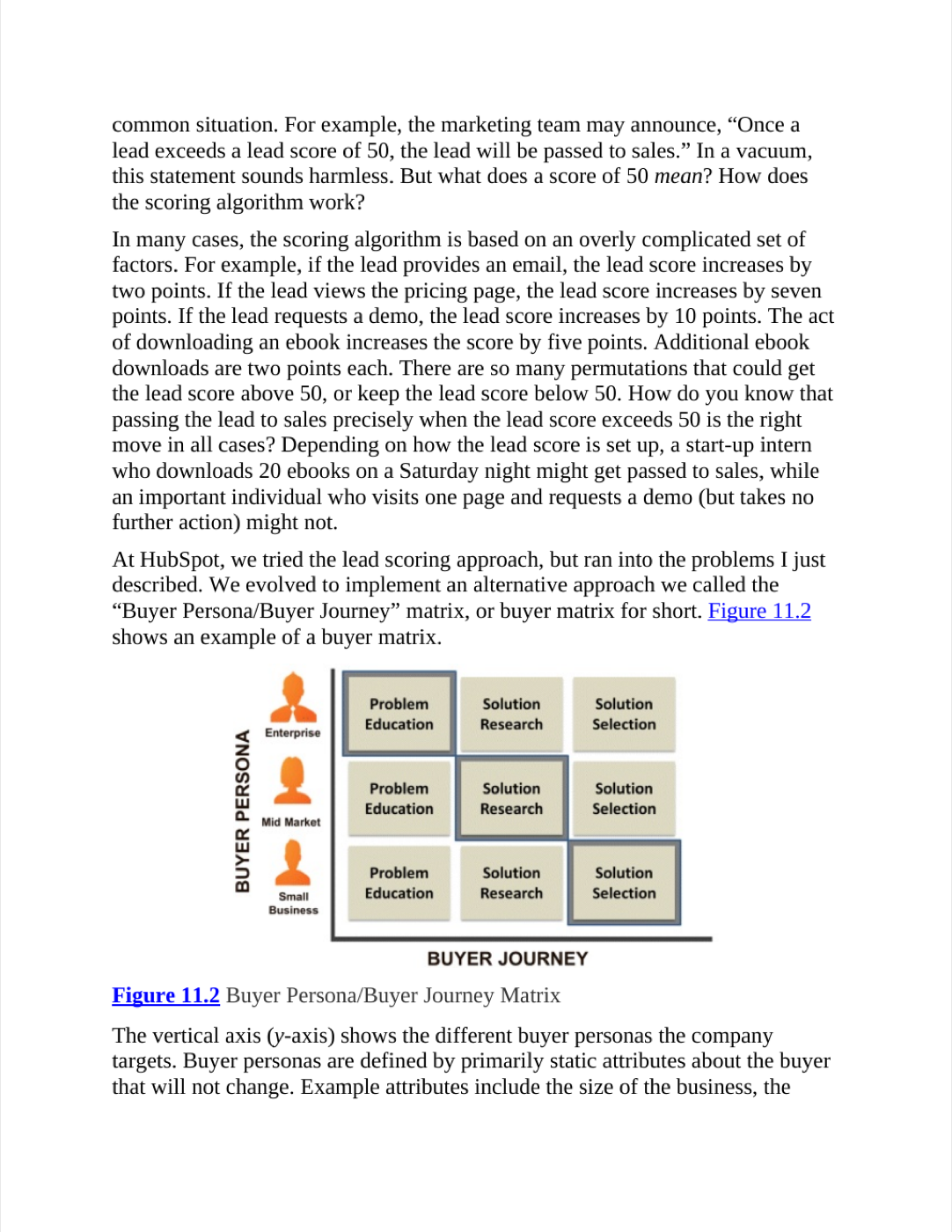
<p>Questions in this layer:</p>
<ul>
<li class="">What happened? (events)</li>
<li class="">Who is right?</li>
<li class="">Who is to blame?</li>
<li class="">Who should change?</li>
</ul>
<h3 class="anchor anchorTargetStickyNavbar_Vzrq" id="12-the-feelings-conversation">1.2 The Feelings conversation<a href="https://sudip-ai-playbook.pages.dev/articles/difficult-conversations-stone-patton-heen#12-the-feelings-conversation" class="hash-link" aria-label="Direct link to 1.2 The Feelings conversation" title="Direct link to 1.2 The Feelings conversation" translate="no">​</a></h3>
<p>Every difficult conversation also has an <strong>emotional footprint</strong>—often unspoken. Anger, hurt, embarrassment, fear, betrayal, disappointment. When feelings are ignored, they do not disappear; they <strong>drive</strong> the What Happened conversation (sarcasm, rigidity, sudden escalation).</p>
<p>Questions in this layer:</p>
<ul>
<li class="">What am I feeling? What are they feeling?</li>
<li class="">Are these feelings valid? Should I express them?</li>
<li class="">What if they dismiss my feelings?</li>
</ul>
<h3 class="anchor anchorTargetStickyNavbar_Vzrq" id="13-the-identity-conversation">1.3 The Identity conversation<a href="https://sudip-ai-playbook.pages.dev/articles/difficult-conversations-stone-patton-heen#13-the-identity-conversation" class="hash-link" aria-label="Direct link to 1.3 The Identity conversation" title="Direct link to 1.3 The Identity conversation" translate="no">​</a></h3>
<p>Underneath both strands, something is at stake about <strong>who we are</strong>:</p>
<table><thead><tr><th>Identity axis</th><th>Internal question</th></tr></thead><tbody><tr><td>Competence</td><td>“Am I capable? Did I fail?”</td></tr><tr><td>Goodness</td><td>“Am I a good person? Am I unfair or cruel?”</td></tr><tr><td>Worthiness</td><td>“Am I deserving of respect, love, belonging?”</td></tr></tbody></table>
<p>When identity feels all-or-nothing, feedback becomes unbearable and we either attack or collapse.</p>
<h3 class="anchor anchorTargetStickyNavbar_Vzrq" id="14-jack-and-michael--a-brief-illustration-prospectus-pattern">1.4 Jack and Michael — a brief illustration (prospectus pattern)<a href="https://sudip-ai-playbook.pages.dev/articles/difficult-conversations-stone-patton-heen#14-jack-and-michael--a-brief-illustration-prospectus-pattern" class="hash-link" aria-label="Direct link to 1.4 Jack and Michael — a brief illustration (prospectus pattern)" title="Direct link to 1.4 Jack and Michael — a brief illustration (prospectus pattern)" translate="no">​</a></h3>
<p>The book opens with Jack and Michael—a designer and a client/friend—trapped in a recurring fight about a rushed prospectus job. Jack’s story: Michael called late, demanded impossible turnaround, then criticised the work. Michael’s story: he has helped Jack repeatedly; Jack argues instead of assuming the client is right; trust is eroding.</p>
<p>Decode the three layers:</p>
<table><thead><tr><th>Layer</th><th>Jack</th><th>Michael</th></tr></thead><tbody><tr><td>What Happened</td><td>“Unreasonable deadline; unfair criticism”</td><td>“I help him; he doesn’t deliver; he argues with me”</td></tr><tr><td>Feelings</td><td>Resentment, unappreciated</td><td>Frustration, let down</td></tr><tr><td>Identity</td><td>“Am I a competent professional?”</td><td>“Am I a good friend / reasonable client?”</td></tr></tbody></table>
<p>Neither needs a long quote to recognise the pattern: <strong>same history, different stories, unspoken feelings, threatened identity</strong>. Months later they are still awkward because they never repaired the conversation—only the document.</p>
<h3 class="anchor anchorTargetStickyNavbar_Vzrq" id="15-moving-toward-a-learning-conversation">1.5 Moving toward a learning conversation<a href="https://sudip-ai-playbook.pages.dev/articles/difficult-conversations-stone-patton-heen#15-moving-toward-a-learning-conversation" class="hash-link" aria-label="Direct link to 1.5 Moving toward a learning conversation" title="Direct link to 1.5 Moving toward a learning conversation" translate="no">​</a></h3>
<p>Sorting is not a paperwork exercise. It tells you <strong>what to stop doing</strong>:</p>
<ul>
<li class="">Stop trying to win the What Happened debate while feelings are flooding.</li>
<li class="">Stop treating emotions as irrational noise.</li>
<li class="">Stop pretending identity is not in the room.</li>
</ul>
<p>Once sorted, you can choose a learning purpose (Section 7) and a structured arc (Sections 8–12).</p>
<hr>
<h2 class="anchor anchorTargetStickyNavbar_Vzrq" id="2-stop-arguing-about-whos-right--explore-each-others-stories">2. Stop arguing about who’s right — explore each other’s stories<a href="https://sudip-ai-playbook.pages.dev/articles/difficult-conversations-stone-patton-heen#2-stop-arguing-about-whos-right--explore-each-others-stories" class="hash-link" aria-label="Direct link to 2. Stop arguing about who’s right — explore each other’s stories" title="Direct link to 2. Stop arguing about who’s right — explore each other’s stories" translate="no">​</a></h2>
<h3 class="anchor anchorTargetStickyNavbar_Vzrq" id="21-why-we-argue-and-why-it-doesnt-help">2.1 Why we argue, and why it doesn’t help<a href="https://sudip-ai-playbook.pages.dev/articles/difficult-conversations-stone-patton-heen#21-why-we-argue-and-why-it-doesnt-help" class="hash-link" aria-label="Direct link to 2.1 Why we argue, and why it doesn’t help" title="Direct link to 2.1 Why we argue, and why it doesn’t help" translate="no">​</a></h3>
<p>Arguing about who is right feels necessary because each of us <strong>experiences our story as reality</strong>. We have the facts. We were there. We know what we intended.</p>
<p>The problem: the other person also has facts, was also there, and knows what they intended. Arguing “truth” as if only one story fits the data escalates conflict and closes learning.</p>
<table><thead><tr><th>Arguing move</th><th>Hidden effect</th></tr></thead><tbody><tr><td>“That’s not what happened”</td><td>They hear: my experience is invalid</td></tr><tr><td>“You always / you never”</td><td>Global labels trigger identity threat</td></tr><tr><td>“Let me prove it”</td><td>Debate replaces understanding</td></tr><tr><td>“The data is clear”</td><td>You collapse observations with conclusions</td></tr></tbody></table>
<h3 class="anchor anchorTargetStickyNavbar_Vzrq" id="22-where-our-stories-come-from--the-ladder">2.2 Where our stories come from — the ladder<a href="https://sudip-ai-playbook.pages.dev/articles/difficult-conversations-stone-patton-heen#22-where-our-stories-come-from--the-ladder" class="hash-link" aria-label="Direct link to 2.2 Where our stories come from — the ladder" title="Direct link to 2.2 Where our stories come from — the ladder" translate="no">​</a></h3>
<p><img decoding="async" loading="lazy" alt="Where our stories come from" src="https://sudip-ai-playbook.pages.dev/assets/images/figure-three-conversations-67bbd86d22e78699600a9b089f532bf4.jpg" width="1985" height="1762" class="img_ev3q"></p>
<p><em>Figure: Where Our Stories Come From ladder — available information → observations → interpretations → conclusions. Different people climb different ladders from the same pool of data.</em></p>
<p>We climb a mental ladder:</p>
<ol>
<li class=""><strong>Available information</strong> — what we noticed, what we were told, what we did not see.</li>
<li class=""><strong>Observations</strong> — selected facts from that pool.</li>
<li class=""><strong>Interpretations</strong> — meaning we assign (“they don’t respect me”).</li>
<li class=""><strong>Conclusions</strong> — judgments and decisions (“I can’t trust them”).</li>
</ol>
<p>Two people on the same project can share a pool of information and climb <strong>different ladders</strong> because they noticed different details, hold different past experiences and protect different identity stakes.</p>
<p><strong>Consulting example:</strong> A client says the SI “doesn’t care about quality.” The SI says the client “changes requirements daily.” Shared pool: missed dates, defect counts, tense stand-ups. Different observations (who missed which gate). Different interpretations (malice vs chaos). Different conclusions (replace the partner vs escalate to exec).</p>
<h3 class="anchor anchorTargetStickyNavbar_Vzrq" id="23-move-from-certainty-to-curiosity">2.3 Move from certainty to curiosity<a href="https://sudip-ai-playbook.pages.dev/articles/difficult-conversations-stone-patton-heen#23-move-from-certainty-to-curiosity" class="hash-link" aria-label="Direct link to 2.3 Move from certainty to curiosity" title="Direct link to 2.3 Move from certainty to curiosity" translate="no">​</a></h3>
<p>Certainty closes learning; curiosity opens it.</p>
<table><thead><tr><th>Certainty stance</th><th>Curiosity stance</th></tr></thead><tbody><tr><td>“I know why they did that”</td><td>“I wonder what led them to that choice”</td></tr><tr><td>“They’re wrong”</td><td>“Help me see what I’m missing”</td></tr><tr><td>“Case closed”</td><td>“What else could be true?”</td></tr></tbody></table>
<p>Curiosity is not weakness. It is <strong>epistemic discipline</strong>—especially for leaders who must decide under incomplete information.</p>
<h3 class="anchor anchorTargetStickyNavbar_Vzrq" id="24-embrace-both-stories--adopt-the-and-stance">2.4 Embrace both stories — adopt the “And Stance”<a href="https://sudip-ai-playbook.pages.dev/articles/difficult-conversations-stone-patton-heen#24-embrace-both-stories--adopt-the-and-stance" class="hash-link" aria-label="Direct link to 2.4 Embrace both stories — adopt the “And Stance”" title="Direct link to 2.4 Embrace both stories — adopt the “And Stance”" translate="no">​</a></h3>
<p>The <strong>And Stance</strong> holds two truths at once:</p>
<ul>
<li class="">“I felt blindsided by the change request <strong>and</strong> I can see you were reacting to regulator pressure.”</li>
<li class="">“I believe we missed the gate <strong>and</strong> I accept that ownership was unclear on both sides.”</li>
<li class="">“I’m angry about the tone in that meeting <strong>and</strong> I know you were exhausted from the go-live.”</li>
</ul>
<p>“But” erases the first clause. “And” keeps both stories in play long enough to learn.</p>
<h3 class="anchor anchorTargetStickyNavbar_Vzrq" id="25-two-exceptions-that-arent">2.5 Two exceptions that aren’t<a href="https://sudip-ai-playbook.pages.dev/articles/difficult-conversations-stone-patton-heen#25-two-exceptions-that-arent" class="hash-link" aria-label="Direct link to 2.5 Two exceptions that aren’t" title="Direct link to 2.5 Two exceptions that aren’t" translate="no">​</a></h3>
<p>Practitioners sometimes ask: “Surely sometimes one person is just wrong?” Stone, Patton and Heen acknowledge:</p>
<ol>
<li class=""><strong>Facts exist</strong> — but our <em>access</em> to facts differs, and we still attach different meanings to shared facts.</li>
<li class=""><strong>Some behaviour is unacceptable</strong> — exploring story does not mean tolerating abuse; it means understanding <em>and</em> setting boundaries (Sections 3, 11, 13).</li>
</ol>
<p>Exploring stories is not moral relativism. It is how adults update maps before changing territory.</p>
<h3 class="anchor anchorTargetStickyNavbar_Vzrq" id="26-to-move-forward-first-understand-where-you-are">2.6 To move forward, first understand where you are<a href="https://sudip-ai-playbook.pages.dev/articles/difficult-conversations-stone-patton-heen#26-to-move-forward-first-understand-where-you-are" class="hash-link" aria-label="Direct link to 2.6 To move forward, first understand where you are" title="Direct link to 2.6 To move forward, first understand where you are" translate="no">​</a></h3>
<p>Before problem-solving, locate yourself:</p>
<table><thead><tr><th>Question</th><th>Purpose</th></tr></thead><tbody><tr><td>What is my story (data → interpretations → conclusions)?</td><td>Own your ladder</td></tr><tr><td>What is their likely story?</td><td>Hypothesis, not verdict</td></tr><tr><td>Where do stories overlap? Where do they diverge?</td><td>Find shared ground</td></tr><tr><td>What do I genuinely not know?</td><td>Design inquiry</td></tr></tbody></table>
<p>Pair this with <a class="" href="https://sudip-ai-playbook.pages.dev/articles/negotiation-genius-malhotra-bazerman">Negotiation Genius</a> <strong>investigative negotiation</strong>: treat their story as data worth fetching before you claim value or assign fault.</p>
<hr>
<h2 class="anchor anchorTargetStickyNavbar_Vzrq" id="3-dont-assume-they-meant-it--disentangle-intent-from-impact">3. Don’t assume they meant it — disentangle intent from impact<a href="https://sudip-ai-playbook.pages.dev/articles/difficult-conversations-stone-patton-heen#3-dont-assume-they-meant-it--disentangle-intent-from-impact" class="hash-link" aria-label="Direct link to 3. Don’t assume they meant it — disentangle intent from impact" title="Direct link to 3. Don’t assume they meant it — disentangle intent from impact" translate="no">​</a></h2>
<h3 class="anchor anchorTargetStickyNavbar_Vzrq" id="31-the-battle-over-intentions">3.1 The battle over intentions<a href="https://sudip-ai-playbook.pages.dev/articles/difficult-conversations-stone-patton-heen#31-the-battle-over-intentions" class="hash-link" aria-label="Direct link to 3.1 The battle over intentions" title="Direct link to 3.1 The battle over intentions" translate="no">​</a></h3>
<p>Intentions dominate our moral judgments. If they <strong>meant</strong> to hurt us, we judge harshly. If harm was accidental, we soften—sometimes too much.</p>
<p>In difficult conversations, intent becomes a battlefield:</p>
<ul>
<li class="">“You undermined me in the steering committee.” (impact + assumed intent)</li>
<li class="">“I was trying to help.” (good intent, impact ignored)</li>
</ul>
<p>Both sides feel righteous. Both feel unheard.</p>
<h3 class="anchor anchorTargetStickyNavbar_Vzrq" id="32-two-key-mistakes">3.2 Two key mistakes<a href="https://sudip-ai-playbook.pages.dev/articles/difficult-conversations-stone-patton-heen#32-two-key-mistakes" class="hash-link" aria-label="Direct link to 3.2 Two key mistakes" title="Direct link to 3.2 Two key mistakes" translate="no">​</a></h3>
<p><strong>Mistake 1 — We assume intent from impact</strong></p>
<p>We experience something painful → we infer they intended that pain. Mind-reading replaces inquiry.</p>
<table><thead><tr><th>Impact observed</th><th>Intent assumed (often wrongly)</th></tr></thead><tbody><tr><td>Not copied on an email</td><td>“They wanted to exclude me”</td></tr><tr><td>Short reply in chat</td><td>“They disrespect me”</td></tr><tr><td>Changed decision without consultation</td><td>“They’re power-playing”</td></tr></tbody></table>
<p><strong>Mistake 2 — We ignore the impact of good intent</strong></p>
<p>We judge ourselves by intent (“I meant well”) and dismiss legitimate impact on others (“They’re too sensitive”). Good intentions do not erase harm—and repeating harm with good intentions erodes trust.</p>
<h3 class="anchor anchorTargetStickyNavbar_Vzrq" id="33-avoiding-the-two-mistakes--disentanglement-moves">3.3 Avoiding the two mistakes — disentanglement moves<a href="https://sudip-ai-playbook.pages.dev/articles/difficult-conversations-stone-patton-heen#33-avoiding-the-two-mistakes--disentanglement-moves" class="hash-link" aria-label="Direct link to 3.3 Avoiding the two mistakes — disentanglement moves" title="Direct link to 3.3 Avoiding the two mistakes — disentanglement moves" translate="no">​</a></h3>
<p><strong>Step 1 — Separate impact from intent in your own head</strong></p>
<ul>
<li class="">Impact: what happened to me (observable).</li>
<li class="">Assumed intent: what I think they meant (hypothesis).</li>
</ul>
<p><strong>Step 2 — Describe impact without mind-reading</strong></p>
<p>Weak: “You tried to humiliate me in front of the client.”<br>
<!-- -->Stronger: “When my estimate was challenged in front of the client, I felt publicly undermined.”</p>
<p><strong>Step 3 — Ask about intent; share assumptions as hypotheses</strong></p>
<p>“I’ve been telling myself you wanted to make me look unprepared. Is that what was going on for you?”</p>
<p><strong>Step 4 — Hold accountability for impact and patterns</strong></p>
<p>Even with good intent, repeated negative impact requires change. “I believe you meant to help <strong>and</strong> we need a different approach in exec forums.”</p>
<h3 class="anchor anchorTargetStickyNavbar_Vzrq" id="34-consulting-field-patterns">3.4 Consulting field patterns<a href="https://sudip-ai-playbook.pages.dev/articles/difficult-conversations-stone-patton-heen#34-consulting-field-patterns" class="hash-link" aria-label="Direct link to 3.4 Consulting field patterns" title="Direct link to 3.4 Consulting field patterns" translate="no">​</a></h3>
<table><thead><tr><th>Scenario</th><th>Intent/impact trap</th><th>Disentangled move</th></tr></thead><tbody><tr><td>Partner reassigns your lead without notice</td><td>“They’re sidelining me”</td><td>“Impact: I lost visibility; Intent: ask; Problem-solve: succession protocol”</td></tr><tr><td>Client exec skips your section in the deck review</td><td>“They don’t value our work”</td><td>“Impact: team demoralised; Intent: ask; Data: time pressure vs preference”</td></tr><tr><td>Offshore lead pushes back on stories</td><td>“They’re not committed”</td><td>“Impact: delay; Intent: ask; System: timezone + definition of done”</td></tr></tbody></table>
<p>When emotions run hot in live calls, pair disentanglement with Voss-style <strong>labels</strong> (<a class="" href="https://sudip-ai-playbook.pages.dev/articles/never-split-the-difference-voss">Never Split the Difference</a>): “It sounds like this landed as a trust issue, not just a schedule issue.”</p>
<hr>
<h2 class="anchor anchorTargetStickyNavbar_Vzrq" id="4-abandon-blame--map-the-contribution-system">4. Abandon blame — map the contribution system<a href="https://sudip-ai-playbook.pages.dev/articles/difficult-conversations-stone-patton-heen#4-abandon-blame--map-the-contribution-system" class="hash-link" aria-label="Direct link to 4. Abandon blame — map the contribution system" title="Direct link to 4. Abandon blame — map the contribution system" translate="no">​</a></h2>
<h3 class="anchor anchorTargetStickyNavbar_Vzrq" id="41-in-our-story-blame-seems-clear">4.1 In our story, blame seems clear<a href="https://sudip-ai-playbook.pages.dev/articles/difficult-conversations-stone-patton-heen#41-in-our-story-blame-seems-clear" class="hash-link" aria-label="Direct link to 4.1 In our story, blame seems clear" title="Direct link to 4.1 In our story, blame seems clear" translate="no">​</a></h3>
<p>Blame is seductive because it is <strong>simple</strong>: identify the villain, assign fault, punish or extract apology. Our brains prefer single-cause explanations for painful events.</p>
<p>The book’s ad-agency pitch story illustrates the trap: wrong slide version, shaky presentation, potentially lost client. The assistant “obviously” failed. Dig deeper and the system appears: versioning chaos, no dry-run rule, unclear handoffs, leader who never wanted rehearsal feedback.</p>
<h3 class="anchor anchorTargetStickyNavbar_Vzrq" id="42-were-caught-in-blames-web">4.2 We’re caught in blame’s web<a href="https://sudip-ai-playbook.pages.dev/articles/difficult-conversations-stone-patton-heen#42-were-caught-in-blames-web" class="hash-link" aria-label="Direct link to 4.2 We’re caught in blame’s web" title="Direct link to 4.2 We’re caught in blame’s web" translate="no">​</a></h3>
<p>Blame conversations loop:</p>
<ol>
<li class="">Person A accuses Person B.</li>
<li class="">Person B defends or counter-accuses.</li>
<li class="">Identity threat spikes.</li>
<li class="">Everyone spends energy protecting self-image instead of fixing the system.</li>
</ol>
<p>In programmes, blame web language is familiar: “Vendor dropped the ball.” “Business never decided.” “Architecture was ivory tower.” Each statement may contain <strong>truth</strong> and still be <strong>useless</strong> for prevention.</p>
<h3 class="anchor anchorTargetStickyNavbar_Vzrq" id="43-distinguish-blame-from-contribution">4.3 Distinguish blame from contribution<a href="https://sudip-ai-playbook.pages.dev/articles/difficult-conversations-stone-patton-heen#43-distinguish-blame-from-contribution" class="hash-link" aria-label="Direct link to 4.3 Distinguish blame from contribution" title="Direct link to 4.3 Distinguish blame from contribution" translate="no">​</a></h3>
<table><thead><tr><th>Blame frame</th><th>Contribution frame</th></tr></thead><tbody><tr><td>Backward-looking</td><td>Forward-looking</td></tr><tr><td>“Whose fault?”</td><td>“How did we get here?”</td></tr><tr><td>Seeks punishment</td><td>Seeks change</td></tr><tr><td>Single villain</td><td>Multiple actors + system</td></tr><tr><td>Closes learning</td><td>Opens learning</td></tr></tbody></table>
<p><strong>Contribution</strong> asks: what did each person <strong>and</strong> the system do that helped create this outcome? Contribution is not equal guilt—it is <strong>joint causality</strong>.</p>
<h3 class="anchor anchorTargetStickyNavbar_Vzrq" id="44-the-costs-of-the-blame-frame">4.4 The costs of the blame frame<a href="https://sudip-ai-playbook.pages.dev/articles/difficult-conversations-stone-patton-heen#44-the-costs-of-the-blame-frame" class="hash-link" aria-label="Direct link to 4.4 The costs of the blame frame" title="Direct link to 4.4 The costs of the blame frame" translate="no">​</a></h3>
<ul>
<li class=""><strong>Defensiveness</strong> — people hide information you need for root cause.</li>
<li class=""><strong>Repeat incidents</strong> — system flaws stay untouched.</li>
<li class=""><strong>Relationship damage</strong> — winners and losers in a team that must collaborate tomorrow.</li>
<li class=""><strong>Slow decisions</strong> — energy spent on adjudication instead of design.</li>
</ul>
<h3 class="anchor anchorTargetStickyNavbar_Vzrq" id="45-the-benefits-of-understanding-contribution">4.5 The benefits of understanding contribution<a href="https://sudip-ai-playbook.pages.dev/articles/difficult-conversations-stone-patton-heen#45-the-benefits-of-understanding-contribution" class="hash-link" aria-label="Direct link to 4.5 The benefits of understanding contribution" title="Direct link to 4.5 The benefits of understanding contribution" translate="no">​</a></h3>
<ul>
<li class="">Shared picture of how we got here.</li>
<li class="">Actionable levers for each party.</li>
<li class="">Identity relief: “I contributed <strong>and</strong> I can help fix it.”</li>
<li class="">Better steering narratives: honest without scapegoating.</li>
</ul>
<h3 class="anchor anchorTargetStickyNavbar_Vzrq" id="46-three-misconceptions-about-contribution">4.6 Three misconceptions about contribution<a href="https://sudip-ai-playbook.pages.dev/articles/difficult-conversations-stone-patton-heen#46-three-misconceptions-about-contribution" class="hash-link" aria-label="Direct link to 4.6 Three misconceptions about contribution" title="Direct link to 4.6 Three misconceptions about contribution" translate="no">​</a></h3>
<p><strong>Misconception 1 — “Contribution means no accountability”</strong><br>
<!-- -->False. You can map contribution <strong>and</strong> decide someone must change role, process or behaviour.</p>
<p><strong>Misconception 2 — “If I admit contribution, I lose in politics”</strong><br>
<!-- -->Strategic silence sometimes wins battles and loses wars. Selective contribution (“Here’s what I could have done differently”) often <strong>increases</strong> credibility.</p>
<p><strong>Misconception 3 — “They must admit first”</strong><br>
<!-- -->Waiting for the other side to go first freezes progress. Lead with your slice of contribution when you want learning.</p>
<h3 class="anchor anchorTargetStickyNavbar_Vzrq" id="47-two-tools-for-spotting-contribution">4.7 Two tools for spotting contribution<a href="https://sudip-ai-playbook.pages.dev/articles/difficult-conversations-stone-patton-heen#47-two-tools-for-spotting-contribution" class="hash-link" aria-label="Direct link to 4.7 Two tools for spotting contribution" title="Direct link to 4.7 Two tools for spotting contribution" translate="no">​</a></h3>
<p><strong>Tool 1 — The “how did we get here?” timeline</strong></p>
<p>Plot decisions, handoffs, incentives, assumptions, near-misses ignored. Include:</p>
<ul>
<li class="">What each person did / did not do</li>
<li class="">What the <strong>system</strong> rewarded or punished</li>
<li class="">What information was missing or siloed</li>
</ul>
<p><strong>Tool 2 — Role reversal</strong></p>
<p>Ask: “If I were in their role with their constraints, what might I have done similarly?” Not to excise accountability—to see the full graph.</p>
<h3 class="anchor anchorTargetStickyNavbar_Vzrq" id="48-moving-from-blame-to-contribution--language-shifts">4.8 Moving from blame to contribution — language shifts<a href="https://sudip-ai-playbook.pages.dev/articles/difficult-conversations-stone-patton-heen#48-moving-from-blame-to-contribution--language-shifts" class="hash-link" aria-label="Direct link to 4.8 Moving from blame to contribution — language shifts" title="Direct link to 4.8 Moving from blame to contribution — language shifts" translate="no">​</a></h3>
<table><thead><tr><th>Blame language</th><th>Contribution language</th></tr></thead><tbody><tr><td>“You screwed up the cutover”</td><td>“Our cutover checklist didn’t catch X; I didn’t escalate Y early enough”</td></tr><tr><td>“They never engage”</td><td>“We haven’t created a forum where engagement is safe and rewarded”</td></tr><tr><td>“Architecture blocked us”</td><td>“We didn’t align decision rights before build started”</td></tr></tbody></table>
<p>Invisible contributors to include: incentives, unclear ownership, tooling debt, workload, prior silence, ambiguous RACI, mixed messages from leadership.</p>
<hr>
<h2 class="anchor anchorTargetStickyNavbar_Vzrq" id="5-have-your-feelings-or-they-will-have-you">5. Have your feelings (or they will have you)<a href="https://sudip-ai-playbook.pages.dev/articles/difficult-conversations-stone-patton-heen#5-have-your-feelings-or-they-will-have-you" class="hash-link" aria-label="Direct link to 5. Have your feelings (or they will have you)" title="Direct link to 5. Have your feelings (or they will have you)" translate="no">​</a></h2>
<h3 class="anchor anchorTargetStickyNavbar_Vzrq" id="51-we-try-to-frame-feelings-out-of-the-problem">5.1 We try to frame feelings out of the problem<a href="https://sudip-ai-playbook.pages.dev/articles/difficult-conversations-stone-patton-heen#51-we-try-to-frame-feelings-out-of-the-problem" class="hash-link" aria-label="Direct link to 5.1 We try to frame feelings out of the problem" title="Direct link to 5.1 We try to frame feelings out of the problem" translate="no">​</a></h3>
<p>Professional culture often treats feelings as noise: “Let’s be rational.” “Emotions aren’t productive.” The book’s image: a child with a baseball bat and a shattered vase answering “Nothing” when asked what happened. Denial does not restore the vase.</p>
<p>Unexpressed feelings leak as:</p>
<ul>
<li class="">Sarcastic compliance</li>
<li class="">Withdrawal and slow responses</li>
<li class="">Stubborn re-litigation of old facts</li>
<li class="">Sudden explosions in unrelated meetings</li>
</ul>
<h3 class="anchor anchorTargetStickyNavbar_Vzrq" id="52-sometimes-feelings-are-best-left-out">5.2 Sometimes feelings are best left out<a href="https://sudip-ai-playbook.pages.dev/articles/difficult-conversations-stone-patton-heen#52-sometimes-feelings-are-best-left-out" class="hash-link" aria-label="Direct link to 5.2 Sometimes feelings are best left out" title="Direct link to 5.2 Sometimes feelings are best left out" translate="no">​</a></h3>
<p>Not every feeling belongs in every conversation. The method is not “total emotional disclosure.” It is <strong>conscious choice</strong>:</p>
<table><thead><tr><th>Include now</th><th>Defer or process elsewhere</th></tr></thead><tbody><tr><td>Feelings blocking listening</td><td>Raw rage you cannot yet describe cleanly</td></tr><tr><td>Feelings central to the issue</td><td>Feelings better handled with a coach or friend</td></tr><tr><td>Feelings they need to understand impact</td><td>Feelings that would purely punish</td></tr></tbody></table>
<h3 class="anchor anchorTargetStickyNavbar_Vzrq" id="53-a-way-out-of-the-feelings-bind">5.3 A way out of the feelings bind<a href="https://sudip-ai-playbook.pages.dev/articles/difficult-conversations-stone-patton-heen#53-a-way-out-of-the-feelings-bind" class="hash-link" aria-label="Direct link to 5.3 A way out of the feelings bind" title="Direct link to 5.3 A way out of the feelings bind" translate="no">​</a></h3>
<p>Negotiate with yourself first:</p>
<ol>
<li class="">What am I feeling? (Name more than anger.)</li>
<li class="">Why now?</li>
<li class="">What happens if I don’t express this?</li>
<li class="">What happens if I express this poorly?</li>
<li class="">What would <strong>skillful</strong> expression look like?</li>
</ol>
<h3 class="anchor anchorTargetStickyNavbar_Vzrq" id="54-learn-where-feelings-hide">5.4 Learn where feelings hide<a href="https://sudip-ai-playbook.pages.dev/articles/difficult-conversations-stone-patton-heen#54-learn-where-feelings-hide" class="hash-link" aria-label="Direct link to 5.4 Learn where feelings hide" title="Direct link to 5.4 Learn where feelings hide" translate="no">​</a></h3>
<p>Feelings often masquerade as:</p>
<table><thead><tr><th>Mask</th><th>Possible feeling underneath</th></tr></thead><tbody><tr><td>“I’m fine”</td><td>Hurt, fear</td></tr><tr><td>“It’s just business”</td><td>Betrayal, disappointment</td></tr><tr><td>“They’re incompetent”</td><td>Fear of failure, shame</td></tr><tr><td>“Whatever, do what you want”</td><td>Powerlessness, resentment</td></tr></tbody></table>
<p>Anger is frequently a <strong>secondary</strong> emotion—easier to show than hurt or fear.</p>
<h3 class="anchor anchorTargetStickyNavbar_Vzrq" id="55-dont-vent--describe-feelings-clearly">5.5 Don’t vent — describe feelings clearly<a href="https://sudip-ai-playbook.pages.dev/articles/difficult-conversations-stone-patton-heen#55-dont-vent--describe-feelings-clearly" class="hash-link" aria-label="Direct link to 5.5 Don’t vent — describe feelings clearly" title="Direct link to 5.5 Don’t vent — describe feelings clearly" translate="no">​</a></h3>
<p>Venting dumps emotion without structure and triggers defensiveness. <strong>Description</strong> connects feeling to meaning:</p>
<p>Weak vent: “You always make me furious!”<br>
<!-- -->Clear description: “When the decision changed without telling me, I felt angry and embarrassed—like my role didn’t matter.”</p>
<p>Guidelines:</p>
<ul>
<li class="">Use “I feel …” not “You make me …”</li>
<li class="">Be specific about the trigger behaviour</li>
<li class="">One feeling at a time when possible</li>
<li class="">Avoid global character labels</li>
</ul>
<h3 class="anchor anchorTargetStickyNavbar_Vzrq" id="56-the-importance-of-acknowledgment">5.6 The importance of acknowledgment<a href="https://sudip-ai-playbook.pages.dev/articles/difficult-conversations-stone-patton-heen#56-the-importance-of-acknowledgment" class="hash-link" aria-label="Direct link to 5.6 The importance of acknowledgment" title="Direct link to 5.6 The importance of acknowledgment" translate="no">​</a></h3>
<p>On the listening side, <strong>acknowledgment is not agreement</strong>. It is proof you heard:</p>
<ul>
<li class="">“I can see why you’d feel blindsided.”</li>
<li class="">“It makes sense that you’re frustrated given the deadline shift.”</li>
<li class="">“I hear that you felt alone carrying that risk.”</li>
</ul>
<p>Skipping acknowledgment sends people back to amplification loops. Pair with <a class="" href="https://sudip-ai-playbook.pages.dev/learning-map/business-learning/business-communication">Business Communication</a> active-listening drills.</p>
<h3 class="anchor anchorTargetStickyNavbar_Vzrq" id="57-sometimes-feelings-are-all-that-matter">5.7 Sometimes feelings are all that matter<a href="https://sudip-ai-playbook.pages.dev/articles/difficult-conversations-stone-patton-heen#57-sometimes-feelings-are-all-that-matter" class="hash-link" aria-label="Direct link to 5.7 Sometimes feelings are all that matter" title="Direct link to 5.7 Sometimes feelings are all that matter" translate="no">​</a></h3>
<p>Some conversations are not about facts—they are about <strong>relationship repair</strong>. A sponsor who feels disrespected may not care about your Gantt chart until the feeling is named and acknowledged. Decide whether this is a facts conversation, a feelings conversation, or both (Section 7).</p>
<hr>
<h2 class="anchor anchorTargetStickyNavbar_Vzrq" id="6-ground-your-identity--ask-yourself-whats-at-stake">6. Ground your identity — ask yourself what’s at stake<a href="https://sudip-ai-playbook.pages.dev/articles/difficult-conversations-stone-patton-heen#6-ground-your-identity--ask-yourself-whats-at-stake" class="hash-link" aria-label="Direct link to 6. Ground your identity — ask yourself what’s at stake" title="Direct link to 6. Ground your identity — ask yourself what’s at stake" translate="no">​</a></h2>
<h3 class="anchor anchorTargetStickyNavbar_Vzrq" id="61-difficult-conversations-threaten-our-identity">6.1 Difficult conversations threaten our identity<a href="https://sudip-ai-playbook.pages.dev/articles/difficult-conversations-stone-patton-heen#61-difficult-conversations-threaten-our-identity" class="hash-link" aria-label="Direct link to 6.1 Difficult conversations threaten our identity" title="Direct link to 6.1 Difficult conversations threaten our identity" translate="no">​</a></h3>
<p>Intellectually, Ben knows he can leave his job without needing references. Emotionally, telling his boss terrifies him. Identity—not economics—drives the fear.</p>
<p>Difficult conversations implicate:</p>
<ul>
<li class=""><strong>Am I competent?</strong></li>
<li class=""><strong>Am I a good person?</strong></li>
<li class=""><strong>Am I worthy of respect and belonging?</strong></li>
</ul>
<p>When these feel on the line, we attack, avoid, cry, or over-apologise—anything to restore identity equilibrium.</p>
<h3 class="anchor anchorTargetStickyNavbar_Vzrq" id="62-vulnerable-identities--the-all-or-nothing-syndrome">6.2 Vulnerable identities — the all-or-nothing syndrome<a href="https://sudip-ai-playbook.pages.dev/articles/difficult-conversations-stone-patton-heen#62-vulnerable-identities--the-all-or-nothing-syndrome" class="hash-link" aria-label="Direct link to 6.2 Vulnerable identities — the all-or-nothing syndrome" title="Direct link to 6.2 Vulnerable identities — the all-or-nothing syndrome" translate="no">​</a></h3>
<p>All-or-nothing identity turns feedback into catastrophe:</p>
<table><thead><tr><th>All-or-nothing thought</th><th>Grounded alternative</th></tr></thead><tbody><tr><td>“One mistake = I’m a fraud”</td><td>“I’m skilled in X and still learning Y”</td></tr><tr><td>“If they’re upset, I’m cruel”</td><td>“I can act with good intent and still cause impact”</td></tr><tr><td>“If I lose this deal, I’m worthless”</td><td>“My worth is not identical to this outcome”</td></tr></tbody></table>
<p>Consulting amplifies competence identity threat because <strong>expertise is the product</strong>.</p>
<h3 class="anchor anchorTargetStickyNavbar_Vzrq" id="63-ground-your-identity--practices">6.3 Ground your identity — practices<a href="https://sudip-ai-playbook.pages.dev/articles/difficult-conversations-stone-patton-heen#63-ground-your-identity--practices" class="hash-link" aria-label="Direct link to 6.3 Ground your identity — practices" title="Direct link to 6.3 Ground your identity — practices" translate="no">​</a></h3>
<ol>
<li class=""><strong>Accept complexity</strong> — you are not only your last mistake or triumph.</li>
<li class=""><strong>Prepare identity triggers</strong> — before the meeting, write: “What might I hear that will sting? What will I tell myself instead?”</li>
<li class=""><strong>Separate behaviour from global self</strong> — “That decision was weak” ≠ “I am weak.”</li>
<li class=""><strong>Remember past resilience</strong> — you have recovered before.</li>
<li class=""><strong>Let go of controlling their view</strong> — you cannot fully manage their story of you.</li>
</ol>
<h3 class="anchor anchorTargetStickyNavbar_Vzrq" id="64-their-identity-is-also-implicated">6.4 Their identity is also implicated<a href="https://sudip-ai-playbook.pages.dev/articles/difficult-conversations-stone-patton-heen#64-their-identity-is-also-implicated" class="hash-link" aria-label="Direct link to 6.4 Their identity is also implicated" title="Direct link to 6.4 Their identity is also implicated" translate="no">​</a></h3>
<p>When you deliver hard feedback, <strong>their</strong> competence/goodness/worthiness may feel attacked. Expect defensiveness—not as proof they are hopeless, but as identity protection.</p>
<p>Moves:</p>
<ul>
<li class="">Describe behaviour and impact, not character.</li>
<li class="">Acknowledge their strengths where genuine.</li>
<li class="">Invite their story before concluding.</li>
<li class="">Offer a path to restore identity (“Here’s how we recover together”).</li>
</ul>
<h3 class="anchor anchorTargetStickyNavbar_Vzrq" id="65-raising-identity-issues-explicitly">6.5 Raising identity issues explicitly<a href="https://sudip-ai-playbook.pages.dev/articles/difficult-conversations-stone-patton-heen#65-raising-identity-issues-explicitly" class="hash-link" aria-label="Direct link to 6.5 Raising identity issues explicitly" title="Direct link to 6.5 Raising identity issues explicitly" translate="no">​</a></h3>
<p>When identity is the elephant:</p>
<ul>
<li class="">“I want to be direct and I also want you to know I respect what you’ve built here.”</li>
<li class="">“I’m worried this will land as a judgment on your leadership—it’s about the process, not your worth.”</li>
</ul>
<p>Explicit naming reduces guessing games.</p>
<h3 class="anchor anchorTargetStickyNavbar_Vzrq" id="66-find-the-courage-to-ask-for-help">6.6 Find the courage to ask for help<a href="https://sudip-ai-playbook.pages.dev/articles/difficult-conversations-stone-patton-heen#66-find-the-courage-to-ask-for-help" class="hash-link" aria-label="Direct link to 6.6 Find the courage to ask for help" title="Direct link to 6.6 Find the courage to ask for help" translate="no">​</a></h3>
<p>Identity-threatened leaders often isolate. Asking a peer, coach or mentor to rehearse the third-story opening is not weakness—it is <strong>preparation</strong> (Section 14 capstone).</p>
<hr>
<h2 class="anchor anchorTargetStickyNavbar_Vzrq" id="7-whats-your-purpose-when-to-raise-it-and-when-to-let-go">7. What’s your purpose? When to raise it and when to let go<a href="https://sudip-ai-playbook.pages.dev/articles/difficult-conversations-stone-patton-heen#7-whats-your-purpose-when-to-raise-it-and-when-to-let-go" class="hash-link" aria-label="Direct link to 7. What’s your purpose? When to raise it and when to let go" title="Direct link to 7. What’s your purpose? When to raise it and when to let go" translate="no">​</a></h2>
<h3 class="anchor anchorTargetStickyNavbar_Vzrq" id="71-you-cant-have-every-difficult-conversation">7.1 You can’t have every difficult conversation<a href="https://sudip-ai-playbook.pages.dev/articles/difficult-conversations-stone-patton-heen#71-you-cant-have-every-difficult-conversation" class="hash-link" aria-label="Direct link to 7.1 You can’t have every difficult conversation" title="Direct link to 7.1 You can’t have every difficult conversation" translate="no">​</a></h3>
<p>Life and programme bandwidth are finite. Not every irritation deserves a summit. The art is <strong>selection</strong>.</p>
<h3 class="anchor anchorTargetStickyNavbar_Vzrq" id="72-to-raise-or-not-to-raise--how-to-decide">7.2 To raise or not to raise — how to decide?<a href="https://sudip-ai-playbook.pages.dev/articles/difficult-conversations-stone-patton-heen#72-to-raise-or-not-to-raise--how-to-decide" class="hash-link" aria-label="Direct link to 7.2 To raise or not to raise — how to decide?" title="Direct link to 7.2 To raise or not to raise — how to decide?" translate="no">​</a></h3>
<p>Ask:</p>
<table><thead><tr><th>Filter question</th><th>If “no” repeatedly …</th></tr></thead><tbody><tr><td>Does this pattern affect work or relationship materially?</td><td>Consider letting go</td></tr><tr><td>Am I willing to work toward learning, not just venting?</td><td>Delay until you are</td></tr><tr><td>Is there a realistic path to change?</td><td>Adjust purpose or audience</td></tr><tr><td>Is timing survivable for both sides?</td><td>Schedule, don’t ambush</td></tr><tr><td>Am I the right person to raise it?</td><td>Involve sponsor, HR, or peer</td></tr></tbody></table>
<h3 class="anchor anchorTargetStickyNavbar_Vzrq" id="73-three-kinds-of-conversations-that-dont-make-sense">7.3 Three kinds of conversations that don’t make sense<a href="https://sudip-ai-playbook.pages.dev/articles/difficult-conversations-stone-patton-heen#73-three-kinds-of-conversations-that-dont-make-sense" class="hash-link" aria-label="Direct link to 7.3 Three kinds of conversations that don’t make sense" title="Direct link to 7.3 Three kinds of conversations that don’t make sense" translate="no">​</a></h3>
<ol>
<li class=""><strong>Pure venting without change goal</strong> — call a friend instead.</li>
<li class=""><strong>Repeated conversation with no new information or leverage</strong> — changes strategy, not volume.</li>
<li class=""><strong>Conversation whose only purpose is to prove superiority</strong> — battle stance; expect damage.</li>
</ol>
<h3 class="anchor anchorTargetStickyNavbar_Vzrq" id="74-letting-go">7.4 Letting go<a href="https://sudip-ai-playbook.pages.dev/articles/difficult-conversations-stone-patton-heen#74-letting-go" class="hash-link" aria-label="Direct link to 7.4 Letting go" title="Direct link to 7.4 Letting go" translate="no">​</a></h3>
<p>Letting go is not “I was wrong to care.” It is “I choose not to invest more here.” Practices:</p>
<ul>
<li class="">Write the unsent email; extract lessons; delete.</li>
<li class="">Shift from changing them to changing your boundaries or role.</li>
<li class="">Use <a class="" href="https://sudip-ai-playbook.pages.dev/articles/getting-to-yes-fisher-ury-patton">Getting to Yes</a> <strong>BATNA</strong> thinking: if the relationship cannot improve, what is your best alternative?</li>
</ul>
<h3 class="anchor anchorTargetStickyNavbar_Vzrq" id="75-if-you-raise-it--three-purposes-that-work">7.5 If you raise it — three purposes that work<a href="https://sudip-ai-playbook.pages.dev/articles/difficult-conversations-stone-patton-heen#75-if-you-raise-it--three-purposes-that-work" class="hash-link" aria-label="Direct link to 7.5 If you raise it — three purposes that work" title="Direct link to 7.5 If you raise it — three purposes that work" translate="no">​</a></h3>
<ol>
<li class=""><strong>Learning</strong> — understand stories, feelings, contribution.</li>
<li class=""><strong>Relationship</strong> — repair trust, reset expectations.</li>
<li class=""><strong>Problem-solving</strong> — agree on actions, standards, follow-up.</li>
</ol>
<p>State purpose internally before opening. If you cannot name one of these, pause.</p>
<hr>
<h2 class="anchor anchorTargetStickyNavbar_Vzrq" id="8-getting-started--begin-from-the-third-story">8. Getting started — begin from the third story<a href="https://sudip-ai-playbook.pages.dev/articles/difficult-conversations-stone-patton-heen#8-getting-started--begin-from-the-third-story" class="hash-link" aria-label="Direct link to 8. Getting started — begin from the third story" title="Direct link to 8. Getting started — begin from the third story" translate="no">​</a></h2>
<h3 class="anchor anchorTargetStickyNavbar_Vzrq" id="81-why-our-typical-openings-dont-help">8.1 Why our typical openings don’t help<a href="https://sudip-ai-playbook.pages.dev/articles/difficult-conversations-stone-patton-heen#81-why-our-typical-openings-dont-help" class="hash-link" aria-label="Direct link to 8.1 Why our typical openings don’t help" title="Direct link to 8.1 Why our typical openings don’t help" translate="no">​</a></h3>
<p>Typical openings launch <strong>your</strong> first story as if it were obvious truth:</p>
<ul>
<li class="">“We need to talk about your attitude.”</li>
<li class="">“You screwed up the release.”</li>
<li class="">“I’m tired of carrying this programme alone.”</li>
</ul>
<p>They trigger defensiveness in seconds because identity and blame alarms fire immediately.</p>
<h3 class="anchor anchorTargetStickyNavbar_Vzrq" id="82-step-one--begin-from-the-third-story">8.2 Step one — begin from the third story<a href="https://sudip-ai-playbook.pages.dev/articles/difficult-conversations-stone-patton-heen#82-step-one--begin-from-the-third-story" class="hash-link" aria-label="Direct link to 8.2 Step one — begin from the third story" title="Direct link to 8.2 Step one — begin from the third story" translate="no">​</a></h3>
<p>The <strong>third story</strong> is how a neutral, fair observer would describe the <strong>difference</strong> between your stories—without picking a winner.</p>
<table><thead><tr><th>First story (you)</th><th>Second story (them)</th><th>Third story</th></tr></thead><tbody><tr><td>“They are careless about quality.”</td><td>“You are micromanaging.”</td><td>“We seem to have different standards and unclear ownership on quality gates.”</td></tr><tr><td>“They politicised the decision.”</td><td>“You didn’t consult stakeholders.”</td><td>“We have different views on who needed to be in the decision and when.”</td></tr><tr><td>“They’re not committed.”</td><td>“You keep moving the goalposts.”</td><td>“We’re misaligned on priorities and what ‘done’ means this sprint.”</td></tr></tbody></table>
<p>Third-story openings describe <strong>patterns</strong> and <strong>differences</strong>, not verdicts.</p>
<p>Templates:</p>
<ul>
<li class="">“I think we see X differently, and I’d like to understand your view.”</li>
<li class="">“Something feels off in how we’re working together on Y—can we talk it through?”</li>
<li class="">“I have an impact I want to share, and I’m also curious about your experience.”</li>
</ul>
<h3 class="anchor anchorTargetStickyNavbar_Vzrq" id="83-step-two--extend-an-invitation">8.3 Step two — extend an invitation<a href="https://sudip-ai-playbook.pages.dev/articles/difficult-conversations-stone-patton-heen#83-step-two--extend-an-invitation" class="hash-link" aria-label="Direct link to 8.3 Step two — extend an invitation" title="Direct link to 8.3 Step two — extend an invitation" translate="no">​</a></h3>
<p>Invite joint exploration:</p>
<ul>
<li class="">“Would you be open to a conversation about this?”</li>
<li class="">“I’d like about twenty minutes—does now work or should we schedule?”</li>
</ul>
<p>Invitation signals learning stance and reduces ambush trauma.</p>
<h3 class="anchor anchorTargetStickyNavbar_Vzrq" id="84-some-specific-kinds-of-conversations">8.4 Some specific kinds of conversations<a href="https://sudip-ai-playbook.pages.dev/articles/difficult-conversations-stone-patton-heen#84-some-specific-kinds-of-conversations" class="hash-link" aria-label="Direct link to 8.4 Some specific kinds of conversations" title="Direct link to 8.4 Some specific kinds of conversations" translate="no">​</a></h3>
<table><thead><tr><th>Type</th><th>Third-story angle</th></tr></thead><tbody><tr><td>Feedback</td><td>Difference between your experience of their behaviour and their likely intent</td></tr><tr><td>Disappointment</td><td>Gap between expectations and what happened—both sides’</td></tr><tr><td>Request</td><td>Shared problem you want to solve together</td></tr><tr><td>Apology</td><td>Impact acknowledged without drowning in self-flagellation</td></tr><tr><td>Boundary</td><td>Pattern that isn’t working for you—not their character</td></tr></tbody></table>
<hr>
<h2 class="anchor anchorTargetStickyNavbar_Vzrq" id="9-learning--listen-from-the-inside-out">9. Learning — listen from the inside out<a href="https://sudip-ai-playbook.pages.dev/articles/difficult-conversations-stone-patton-heen#9-learning--listen-from-the-inside-out" class="hash-link" aria-label="Direct link to 9. Learning — listen from the inside out" title="Direct link to 9. Learning — listen from the inside out" translate="no">​</a></h2>
<p><img decoding="async" loading="lazy" alt="Learning conversation" src="https://sudip-ai-playbook.pages.dev/assets/images/figure-learning-conversation-a0e12414085b757c7ff97e80373e01f1.jpg" width="804" height="403" class="img_ev3q"></p>
<p><em>Figure: putting the pieces together into a learning conversation.</em></p>
<h3 class="anchor anchorTargetStickyNavbar_Vzrq" id="91-listening-transforms-the-conversation">9.1 Listening transforms the conversation<a href="https://sudip-ai-playbook.pages.dev/articles/difficult-conversations-stone-patton-heen#91-listening-transforms-the-conversation" class="hash-link" aria-label="Direct link to 9.1 Listening transforms the conversation" title="Direct link to 9.1 Listening transforms the conversation" translate="no">​</a></h3>
<p>Most people listen to <strong>reload</strong>—planning rebuttal while the other speaks. Inside-out listening listens to <strong>learn</strong> their story, feelings and identity stakes.</p>
<p>The uncle-and-child phone call vignette in the book is trivial and familiar: Andrew wants to go outside; Doug is on the phone; both repeat louder. Neither inquires. Neither paraphrases. Neither acknowledges. Replace either skill and the loop breaks.</p>
<h3 class="anchor anchorTargetStickyNavbar_Vzrq" id="92-inquire-to-learn">9.2 Inquire to learn<a href="https://sudip-ai-playbook.pages.dev/articles/difficult-conversations-stone-patton-heen#92-inquire-to-learn" class="hash-link" aria-label="Direct link to 9.2 Inquire to learn" title="Direct link to 9.2 Inquire to learn" translate="no">​</a></h3>
<p>Inquiry is genuine curiosity, not cross-examination.</p>
<table><thead><tr><th>Cross-exam</th><th>Inquiry</th></tr></thead><tbody><tr><td>“Why did you do that?” (accusatory tone)</td><td>“What was going on for you when that decision got made?”</td></tr><tr><td>“Isn’t it true that…?”</td><td>“How did you see it at the time?”</td></tr><tr><td>Leading questions</td><td>Open questions that expand the story</td></tr></tbody></table>
<p>Stop when you can paraphrase their view accurately and they say “yes, that’s it.”</p>
<h3 class="anchor anchorTargetStickyNavbar_Vzrq" id="93-paraphrase-for-clarity">9.3 Paraphrase for clarity<a href="https://sudip-ai-playbook.pages.dev/articles/difficult-conversations-stone-patton-heen#93-paraphrase-for-clarity" class="hash-link" aria-label="Direct link to 9.3 Paraphrase for clarity" title="Direct link to 9.3 Paraphrase for clarity" translate="no">​</a></h3>
<p>Paraphrase <strong>content and emotion</strong>:</p>
<ul>
<li class="">“So from your side, the deadline felt non-negotiable because investors were waiting, and you felt you had no backup—did I get that?”</li>
<li class="">“It sounds like my pushback in the meeting felt like disloyalty, not technical concern.”</li>
</ul>
<p>Paraphrase until they feel understood—not until you feel vindicated.</p>
<h3 class="anchor anchorTargetStickyNavbar_Vzrq" id="94-acknowledge-their-feelings">9.4 Acknowledge their feelings<a href="https://sudip-ai-playbook.pages.dev/articles/difficult-conversations-stone-patton-heen#94-acknowledge-their-feelings" class="hash-link" aria-label="Direct link to 9.4 Acknowledge their feelings" title="Direct link to 9.4 Acknowledge their feelings" translate="no">​</a></h3>
<p>Acknowledgment phrases:</p>
<ul>
<li class="">“That must have been frustrating.”</li>
<li class="">“I can see why you’d feel unappreciated.”</li>
<li class="">“Given what you knew then, your reaction makes sense.”</li>
</ul>
<p>If you skip feelings, they will return to facts louder.</p>
<h3 class="anchor anchorTargetStickyNavbar_Vzrq" id="95-deciding-to-listen--or-not">9.5 Deciding to listen — or not<a href="https://sudip-ai-playbook.pages.dev/articles/difficult-conversations-stone-patton-heen#95-deciding-to-listen--or-not" class="hash-link" aria-label="Direct link to 9.5 Deciding to listen — or not" title="Direct link to 9.5 Deciding to listen — or not" translate="no">​</a></h3>
<p>Listening is not infinite patience for abuse. You may decide:</p>
<ul>
<li class="">“I’m willing to listen after we agree on basic respect.”</li>
<li class="">“I need a break; let’s continue tomorrow.”</li>
<li class="">“This needs a facilitator or manager present.”</li>
</ul>
<p>Listening is a <strong>choice</strong>, not a surrender.</p>
<hr>
<h2 class="anchor anchorTargetStickyNavbar_Vzrq" id="10-expression--speak-for-yourself-with-clarity-and-power">10. Expression — speak for yourself with clarity and power<a href="https://sudip-ai-playbook.pages.dev/articles/difficult-conversations-stone-patton-heen#10-expression--speak-for-yourself-with-clarity-and-power" class="hash-link" aria-label="Direct link to 10. Expression — speak for yourself with clarity and power" title="Direct link to 10. Expression — speak for yourself with clarity and power" translate="no">​</a></h2>
<h3 class="anchor anchorTargetStickyNavbar_Vzrq" id="101-orators-need-not-apply">10.1 Orators need not apply<a href="https://sudip-ai-playbook.pages.dev/articles/difficult-conversations-stone-patton-heen#101-orators-need-not-apply" class="hash-link" aria-label="Direct link to 10.1 Orators need not apply" title="Direct link to 10.1 Orators need not apply" translate="no">​</a></h3>
<p>Expression is not performance. You do not need eloquence—you need <strong>clarity and ownership</strong>.</p>
<h3 class="anchor anchorTargetStickyNavbar_Vzrq" id="102-youre-entitled-yes-you">10.2 You’re entitled (yes, you)<a href="https://sudip-ai-playbook.pages.dev/articles/difficult-conversations-stone-patton-heen#102-youre-entitled-yes-you" class="hash-link" aria-label="Direct link to 10.2 You’re entitled (yes, you)" title="Direct link to 10.2 You’re entitled (yes, you)" translate="no">​</a></h3>
<p>Your story matters too. Learning stance is not self-erasure. After inquiry, share:</p>
<ul>
<li class="">Your observations (not absolutes)</li>
<li class="">Your interpretations (labelled as yours)</li>
<li class="">Your feelings</li>
<li class="">Your identity stakes (when helpful)</li>
<li class="">Your requests</li>
</ul>
<h3 class="anchor anchorTargetStickyNavbar_Vzrq" id="103-speak-the-heart-of-the-matter">10.3 Speak the heart of the matter<a href="https://sudip-ai-playbook.pages.dev/articles/difficult-conversations-stone-patton-heen#103-speak-the-heart-of-the-matter" class="hash-link" aria-label="Direct link to 10.3 Speak the heart of the matter" title="Direct link to 10.3 Speak the heart of the matter" translate="no">​</a></h3>
<p>Do not bury the lead in context dumps. Say what is most important:</p>
<ul>
<li class="">“The heart of it for me is trust on escalation—I don’t feel safe raising risks early.”</li>
</ul>
<h3 class="anchor anchorTargetStickyNavbar_Vzrq" id="104-telling-your-story-with-clarity--three-guidelines">10.4 Telling your story with clarity — three guidelines<a href="https://sudip-ai-playbook.pages.dev/articles/difficult-conversations-stone-patton-heen#104-telling-your-story-with-clarity--three-guidelines" class="hash-link" aria-label="Direct link to 10.4 Telling your story with clarity — three guidelines" title="Direct link to 10.4 Telling your story with clarity — three guidelines" translate="no">​</a></h3>
<ol>
<li class="">
<p><strong>Don’t present your conclusions as the only possible reading of facts.</strong><br>
<!-- -->Weak: “You clearly don’t care about quality.”<br>
<!-- -->Strong: “When defects returned twice, I concluded quality wasn’t a shared priority—I want to test that.”</p>
</li>
<li class="">
<p><strong>Share the impact on you.</strong><br>
<!-- -->“I felt exposed in front of the client when the slide didn’t match the narrative.”</p>
</li>
<li class="">
<p><strong>Avoid character attacks.</strong><br>
<!-- -->Behaviour + impact, not global labels.</p>
</li>
</ol>
<h3 class="anchor anchorTargetStickyNavbar_Vzrq" id="105-help-them-understand-you">10.5 Help them understand you<a href="https://sudip-ai-playbook.pages.dev/articles/difficult-conversations-stone-patton-heen#105-help-them-understand-you" class="hash-link" aria-label="Direct link to 10.5 Help them understand you" title="Direct link to 10.5 Help them understand you" translate="no">​</a></h3>
<p>Invite correction:</p>
<ul>
<li class="">“What part of that doesn’t fit your experience?”</li>
<li class="">“Is there something I’m not seeing?”</li>
</ul>
<p>Expression completes the loop opened by listening.</p>
<hr>
<h2 class="anchor anchorTargetStickyNavbar_Vzrq" id="11-problem-solving--take-the-lead">11. Problem-solving — take the lead<a href="https://sudip-ai-playbook.pages.dev/articles/difficult-conversations-stone-patton-heen#11-problem-solving--take-the-lead" class="hash-link" aria-label="Direct link to 11. Problem-solving — take the lead" title="Direct link to 11. Problem-solving — take the lead" translate="no">​</a></h2>
<h3 class="anchor anchorTargetStickyNavbar_Vzrq" id="111-dont-count-on-them-having-read-the-book">11.1 Don’t count on them having read the book<a href="https://sudip-ai-playbook.pages.dev/articles/difficult-conversations-stone-patton-heen#111-dont-count-on-them-having-read-the-book" class="hash-link" aria-label="Direct link to 11.1 Don’t count on them having read the book" title="Direct link to 11.1 Don’t count on them having read the book" translate="no">​</a></h3>
<p>You may listen beautifully while they blame. <strong>Take the lead</strong> in reframing—without condescension.</p>
<h3 class="anchor anchorTargetStickyNavbar_Vzrq" id="112-skills-for-leading-the-conversation">11.2 Skills for leading the conversation<a href="https://sudip-ai-playbook.pages.dev/articles/difficult-conversations-stone-patton-heen#112-skills-for-leading-the-conversation" class="hash-link" aria-label="Direct link to 11.2 Skills for leading the conversation" title="Direct link to 11.2 Skills for leading the conversation" translate="no">​</a></h3>
<table><thead><tr><th>They do</th><th>You lead with</th></tr></thead><tbody><tr><td>Argue who’s right</td><td>“Can we share how each of us saw it?”</td></tr><tr><td>Blame</td><td>“How did we each contribute to this?”</td></tr><tr><td>Deny feelings</td><td>“Feelings seem strong here—can we name them?”</td></tr><tr><td>Jump to solutions</td><td>“Before we fix, are we aligned on what happened and why it matters?”</td></tr></tbody></table>
<h3 class="anchor anchorTargetStickyNavbar_Vzrq" id="113-reframe-reframe-reframe">11.3 Reframe, reframe, reframe<a href="https://sudip-ai-playbook.pages.dev/articles/difficult-conversations-stone-patton-heen#113-reframe-reframe-reframe" class="hash-link" aria-label="Direct link to 11.3 Reframe, reframe, reframe" title="Direct link to 11.3 Reframe, reframe, reframe" translate="no">​</a></h3>
<p>Reframing translates battle language into learning language <strong>in real time</strong>. It is exhausting—and high leverage.</p>
<h3 class="anchor anchorTargetStickyNavbar_Vzrq" id="114-its-always-the-right-time-to-listen">11.4 It’s always the right time to listen<a href="https://sudip-ai-playbook.pages.dev/articles/difficult-conversations-stone-patton-heen#114-its-always-the-right-time-to-listen" class="hash-link" aria-label="Direct link to 11.4 It’s always the right time to listen" title="Direct link to 11.4 It’s always the right time to listen" translate="no">​</a></h3>
<p>Even while leading problem-solving, return to inquiry when temperature rises. <a class="" href="https://sudip-ai-playbook.pages.dev/articles/getting-to-yes-fisher-ury-patton">Getting to Yes</a> separates people from the problem; Difficult Conversations shows <strong>how</strong> on the ground.</p>
<h3 class="anchor anchorTargetStickyNavbar_Vzrq" id="115-name-the-dynamic--make-the-trouble-explicit">11.5 Name the dynamic — make the trouble explicit<a href="https://sudip-ai-playbook.pages.dev/articles/difficult-conversations-stone-patton-heen#115-name-the-dynamic--make-the-trouble-explicit" class="hash-link" aria-label="Direct link to 11.5 Name the dynamic — make the trouble explicit" title="Direct link to 11.5 Name the dynamic — make the trouble explicit" translate="no">​</a></h3>
<p>When stuck:</p>
<ul>
<li class="">“We’re both repeating our positions—can we step back?”</li>
<li class="">“I notice we’re arguing intent; can we separate impact first?”</li>
<li class="">“It feels like identity is getting hit—can we slow down?”</li>
</ul>
<h3 class="anchor anchorTargetStickyNavbar_Vzrq" id="116-now-what-begin-to-problem-solve">11.6 Now what? Begin to problem-solve<a href="https://sudip-ai-playbook.pages.dev/articles/difficult-conversations-stone-patton-heen#116-now-what-begin-to-problem-solve" class="hash-link" aria-label="Direct link to 11.6 Now what? Begin to problem-solve" title="Direct link to 11.6 Now what? Begin to problem-solve" translate="no">​</a></h3>
<p>After sufficient understanding:</p>
<ol>
<li class=""><strong>Reframe to interests and contribution</strong> — what each person needs; what each will change.</li>
<li class=""><strong>Invent options</strong> — brainstorm before evaluate (<a class="" href="https://sudip-ai-playbook.pages.dev/articles/getting-to-yes-fisher-ury-patton">Getting to Yes</a>).</li>
<li class=""><strong>Agree standards</strong> — objective criteria where possible; tests for ambiguous areas.</li>
<li class=""><strong>Document next steps</strong> — owners, dates, check-in.</li>
<li class=""><strong>Schedule follow-up</strong> — difficult conversations rarely finish in one sitting.</li>
</ol>
<h3 class="anchor anchorTargetStickyNavbar_Vzrq" id="117-it-takes-time">11.7 It takes time<a href="https://sudip-ai-playbook.pages.dev/articles/difficult-conversations-stone-patton-heen#117-it-takes-time" class="hash-link" aria-label="Direct link to 11.7 It takes time" title="Direct link to 11.7 It takes time" translate="no">​</a></h3>
<p>Problem-solving under identity threat is slow. A 15-minute “quick chat” fantasy often creates a second difficult conversation. Plan time and medium accordingly.</p>
<hr>
<h2 class="anchor anchorTargetStickyNavbar_Vzrq" id="12-putting-it-all-together--full-conversation-arc">12. Putting it all together — full conversation arc<a href="https://sudip-ai-playbook.pages.dev/articles/difficult-conversations-stone-patton-heen#12-putting-it-all-together--full-conversation-arc" class="hash-link" aria-label="Direct link to 12. Putting it all together — full conversation arc" title="Direct link to 12. Putting it all together — full conversation arc" translate="no">​</a></h2>
<p>Jack returns to Michael months after the prospectus incident—friendship strained, business awkward. A full arc might look like:</p>
<h3 class="anchor anchorTargetStickyNavbar_Vzrq" id="step-1--clarify-purpose">Step 1 — Clarify purpose<a href="https://sudip-ai-playbook.pages.dev/articles/difficult-conversations-stone-patton-heen#step-1--clarify-purpose" class="hash-link" aria-label="Direct link to Step 1 — Clarify purpose" title="Direct link to Step 1 — Clarify purpose" translate="no">​</a></h3>
<p>Learning + relationship repair (not re-litigating every past job).</p>
<h3 class="anchor anchorTargetStickyNavbar_Vzrq" id="step-2--third-story-opening">Step 2 — Third-story opening<a href="https://sudip-ai-playbook.pages.dev/articles/difficult-conversations-stone-patton-heen#step-2--third-story-opening" class="hash-link" aria-label="Direct link to Step 2 — Third-story opening" title="Direct link to Step 2 — Third-story opening" translate="no">​</a></h3>
<p>“I think we’ve been stuck since the prospectus rush—we see what happened differently, and I’d like to understand your experience and share mine.”</p>
<h3 class="anchor anchorTargetStickyNavbar_Vzrq" id="step-3--listen-inside-out">Step 3 — Listen (inside out)<a href="https://sudip-ai-playbook.pages.dev/articles/difficult-conversations-stone-patton-heen#step-3--listen-inside-out" class="hash-link" aria-label="Direct link to Step 3 — Listen (inside out)" title="Direct link to Step 3 — Listen (inside out)" translate="no">​</a></h3>
<p>Inquire into Michael’s story; paraphrase; acknowledge frustration and disappointment.</p>
<h3 class="anchor anchorTargetStickyNavbar_Vzrq" id="step-4--express-with-clarity">Step 4 — Express with clarity<a href="https://sudip-ai-playbook.pages.dev/articles/difficult-conversations-stone-patton-heen#step-4--express-with-clarity" class="hash-link" aria-label="Direct link to Step 4 — Express with clarity" title="Direct link to Step 4 — Express with clarity" translate="no">​</a></h3>
<p>Jack shares impact (felt unappreciated, argued with in front of pressure), his interpretations, his regret where real.</p>
<h3 class="anchor anchorTargetStickyNavbar_Vzrq" id="step-5--map-contribution">Step 5 — Map contribution<a href="https://sudip-ai-playbook.pages.dev/articles/difficult-conversations-stone-patton-heen#step-5--map-contribution" class="hash-link" aria-label="Direct link to Step 5 — Map contribution" title="Direct link to Step 5 — Map contribution" translate="no">​</a></h3>
<p>Late call + unclear specs + no pushback protocol + friendship blur + stress on both sides.</p>
<h3 class="anchor anchorTargetStickyNavbar_Vzrq" id="step-6--problem-solve">Step 6 — Problem-solve<a href="https://sudip-ai-playbook.pages.dev/articles/difficult-conversations-stone-patton-heen#step-6--problem-solve" class="hash-link" aria-label="Direct link to Step 6 — Problem-solve" title="Direct link to Step 6 — Problem-solve" translate="no">​</a></h3>
<p>Agreements: lead times, when to say no, how to flag quality concerns early, separate “friend” vs “client” hats when needed.</p>
<h3 class="anchor anchorTargetStickyNavbar_Vzrq" id="step-7--follow-up">Step 7 — Follow up<a href="https://sudip-ai-playbook.pages.dev/articles/difficult-conversations-stone-patton-heen#step-7--follow-up" class="hash-link" aria-label="Direct link to Step 7 — Follow up" title="Direct link to Step 7 — Follow up" translate="no">​</a></h3>
<p>Check in after the next engagement—one conversation rarely resets years of pattern.</p>
<p><strong>Arc template for practitioners</strong></p>
<table><thead><tr><th>Phase</th><th>Time share (guide)</th><th>Success signal</th></tr></thead><tbody><tr><td>Opening + invitation</td><td>5–10%</td><td>They stay in the room</td></tr><tr><td>Their story</td><td>30–40%</td><td>They say “you understand”</td></tr><tr><td>Your story</td><td>20–30%</td><td>They don’t feel ambushed</td></tr><tr><td>Contribution map</td><td>10–20%</td><td>Forward-looking language</td></tr><tr><td>Problem-solving</td><td>20–30%</td><td>Named actions + date</td></tr></tbody></table>
<p>Adjust for power dynamics and culture (<a class="" href="https://sudip-ai-playbook.pages.dev/articles/culture-map-global-business">The Culture Map</a>).</p>
<hr>
<h2 class="anchor anchorTargetStickyNavbar_Vzrq" id="13-ten-questions-people-ask--expanded-practitioner-answers">13. Ten questions people ask — expanded practitioner answers<a href="https://sudip-ai-playbook.pages.dev/articles/difficult-conversations-stone-patton-heen#13-ten-questions-people-ask--expanded-practitioner-answers" class="hash-link" aria-label="Direct link to 13. Ten questions people ask — expanded practitioner answers" title="Direct link to 13. Ten questions people ask — expanded practitioner answers" translate="no">​</a></h2>
<p>The book’s appendix addresses predictable objections. Below are expanded field answers for consulting and leadership.</p>
<h3 class="anchor anchorTargetStickyNavbar_Vzrq" id="131-isnt-some-stuff-just-true-arent-some-things-relative">13.1 Isn’t some stuff just true? Aren’t some things relative?<a href="https://sudip-ai-playbook.pages.dev/articles/difficult-conversations-stone-patton-heen#131-isnt-some-stuff-just-true-arent-some-things-relative" class="hash-link" aria-label="Direct link to 13.1 Isn’t some stuff just true? Aren’t some things relative?" title="Direct link to 13.1 Isn’t some stuff just true? Aren’t some things relative?" translate="no">​</a></h3>
<p><strong>Short answer:</strong> Facts matter; stories about facts still differ—test both.</p>
<p><strong>Expanded:</strong> Gravity doesn’t care about your story; most organisational conflicts are not gravity. Two people can agree on emails sent and still disagree on meaning, priority and blame. “Relative” does not mean “anything goes.” It means <strong>humility about your ladder</strong> before you impose conclusions. Where facts are disputed, agree on how to verify (logs, timelines, witnesses). Where facts are shared, shift to impact, contribution and next steps.</p>
<h3 class="anchor anchorTargetStickyNavbar_Vzrq" id="132-what-if-the-other-person-really-does-have-bad-intentions">13.2 What if the other person really does have bad intentions?<a href="https://sudip-ai-playbook.pages.dev/articles/difficult-conversations-stone-patton-heen#132-what-if-the-other-person-really-does-have-bad-intentions" class="hash-link" aria-label="Direct link to 13.2 What if the other person really does have bad intentions?" title="Direct link to 13.2 What if the other person really does have bad intentions?" translate="no">​</a></h3>
<p><strong>Short answer:</strong> Still start with impact + evidence; protect yourself; escalate patterns.</p>
<p><strong>Expanded:</strong> Some people bully, lie or manipulate. Exploring story is not handing them a weapon. Sequence matters: describe impact, request change, set boundaries, involve third parties, document. If bad intent is <strong>confirmed by pattern</strong>, shift from learning to <strong>protection and decision</strong>: HR, legal, exit, re-contracting. <a class="" href="https://sudip-ai-playbook.pages.dev/articles/negotiation-genius-malhotra-bazerman">Negotiation Genius</a> covers lies and ethics; Difficult Conversations keeps the human door open until evidence closes it.</p>
<h3 class="anchor anchorTargetStickyNavbar_Vzrq" id="133-what-if-theyre-genuinely-difficult--personality-trauma-volatility">13.3 What if they’re genuinely difficult — personality, trauma, volatility?<a href="https://sudip-ai-playbook.pages.dev/articles/difficult-conversations-stone-patton-heen#133-what-if-theyre-genuinely-difficult--personality-trauma-volatility" class="hash-link" aria-label="Direct link to 13.3 What if they’re genuinely difficult — personality, trauma, volatility?" title="Direct link to 13.3 What if they’re genuinely difficult — personality, trauma, volatility?" translate="no">​</a></h3>
<p><strong>Short answer:</strong> Boundaries, process, witnesses; don’t convert method into revenge.</p>
<p><strong>Expanded:</strong> Not everyone will co-create a learning conversation. Your job is to <strong>control your side</strong>: shorter meetings, written summaries, clear agendas, escalation paths, emotional regulation (see Voss). Avoid amateur diagnosis. Ask: “Is this a skill gap, a incentives gap, or a fit gap?” Fit gaps may not be fixable with dialogue alone.</p>
<h3 class="anchor anchorTargetStickyNavbar_Vzrq" id="134-what-if-theres-a-power-imbalance">13.4 What if there’s a power imbalance?<a href="https://sudip-ai-playbook.pages.dev/articles/difficult-conversations-stone-patton-heen#134-what-if-theres-a-power-imbalance" class="hash-link" aria-label="Direct link to 13.4 What if there’s a power imbalance?" title="Direct link to 13.4 What if there’s a power imbalance?" translate="no">​</a></h3>
<p><strong>Short answer:</strong> Purpose clarity; allies; document; improve BATNA; choose timing.</p>
<p><strong>Expanded:</strong> Junior to boss, vendor to client, offshore to onshore lead—power shapes who can speak safely. Tactics: rehearse third-story opening; bring data not drama; align with sponsors; use “we” problem-solving; know your walk-away (<a class="" href="https://sudip-ai-playbook.pages.dev/articles/getting-to-yes-fisher-ury-patton">Getting to Yes</a> BATNA). Sometimes the learning conversation must include a <strong>power-holder</strong> as facilitator.</p>
<h3 class="anchor anchorTargetStickyNavbar_Vzrq" id="135-im-the-boss--parent--cant-i-just-tell-them">13.5 I’m the boss / parent — can’t I just tell them?<a href="https://sudip-ai-playbook.pages.dev/articles/difficult-conversations-stone-patton-heen#135-im-the-boss--parent--cant-i-just-tell-them" class="hash-link" aria-label="Direct link to 13.5 I’m the boss / parent — can’t I just tell them?" title="Direct link to 13.5 I’m the boss / parent — can’t I just tell them?" translate="no">​</a></h3>
<p><strong>Short answer:</strong> You can decide—and still learn faster with contribution mapping.</p>
<p><strong>Expanded:</strong> Authority lets you end debate. It does not let you end <strong>consequences</strong>—quiet quitting, sabotage, compliance without commitment. Even directives land better when people feel heard first. “I’ve decided X; I want to explain why and hear what this means for you” preserves dignity.</p>
<h3 class="anchor anchorTargetStickyNavbar_Vzrq" id="136-isnt-this-too-american--direct--soft-for-our-culture">13.6 Isn’t this too American / direct / soft for our culture?<a href="https://sudip-ai-playbook.pages.dev/articles/difficult-conversations-stone-patton-heen#136-isnt-this-too-american--direct--soft-for-our-culture" class="hash-link" aria-label="Direct link to 13.6 Isn’t this too American / direct / soft for our culture?" title="Direct link to 13.6 Isn’t this too American / direct / soft for our culture?" translate="no">​</a></h3>
<p><strong>Short answer:</strong> Adapt expression to culture; keep learning purpose.</p>
<p><strong>Expanded:</strong> <a class="" href="https://sudip-ai-playbook.pages.dev/articles/culture-map-global-business">The Culture Map</a> scales—direct vs indirect feedback, emotional expressiveness, hierarchical deference—change <strong>how</strong> you speak, not <strong>whether</strong> understanding matters. High-context cultures may require more private settings, more relational preamble, more third-party facilitation. The three conversations still run underneath; they are just voiced differently.</p>
<h3 class="anchor anchorTargetStickyNavbar_Vzrq" id="137-what-about-email-chat-and-remote-media">13.7 What about email, chat and remote media?<a href="https://sudip-ai-playbook.pages.dev/articles/difficult-conversations-stone-patton-heen#137-what-about-email-chat-and-remote-media" class="hash-link" aria-label="Direct link to 13.7 What about email, chat and remote media?" title="Direct link to 13.7 What about email, chat and remote media?" translate="no">​</a></h3>
<p><strong>Short answer:</strong> Higher misunderstanding risk; move identity-heavy topics to richer media.</p>
<p><strong>Expanded:</strong> Text strips tone and multiplies intent/impact errors. Use async for scheduling and factual summaries; use voice/video for identity-heavy or feelings-heavy talks. After live conversation, confirm agreements in writing. Remote work increased “difficult conversations by Slack”—budget the upgrade to phone or camera.</p>
<h3 class="anchor anchorTargetStickyNavbar_Vzrq" id="138-should-feelings-be-part-of-work-conversations">13.8 Should feelings be part of work conversations?<a href="https://sudip-ai-playbook.pages.dev/articles/difficult-conversations-stone-patton-heen#138-should-feelings-be-part-of-work-conversations" class="hash-link" aria-label="Direct link to 13.8 Should feelings be part of work conversations?" title="Direct link to 13.8 Should feelings be part of work conversations?" translate="no">​</a></h3>
<p><strong>Short answer:</strong> Feelings already are at work—unacknowledged ones manage you.</p>
<p><strong>Expanded:</strong> Professionalism is not emotional nullity. The standard is <strong>appropriate expression</strong>: describe feelings tied to work impact; avoid venting at scale; choose forum. Teams that never acknowledge feelings get unpredictable escalation—especially before go-lives and exec readouts.</p>
<h3 class="anchor anchorTargetStickyNavbar_Vzrq" id="139-who-has-time-for-this">13.9 Who has time for this?<a href="https://sudip-ai-playbook.pages.dev/articles/difficult-conversations-stone-patton-heen#139-who-has-time-for-this" class="hash-link" aria-label="Direct link to 13.9 Who has time for this?" title="Direct link to 13.9 Who has time for this?" translate="no">​</a></h3>
<p><strong>Short answer:</strong> Unfinished difficult conversations consume more time later.</p>
<p><strong>Expanded:</strong> A 40-minute learning conversation prevents weeks of rework, politics and re-meetings. If you truly have no time, you are choosing <strong>delayed pain</strong>. Minimum viable version: third-story opening + one paraphrase + one agreed next step.</p>
<h3 class="anchor anchorTargetStickyNavbar_Vzrq" id="1310-what-if-identity-feels-either-or--i-cant-shake-im-perfect-or-horrible">13.10 What if identity feels either-or — I can’t shake “I’m perfect or horrible”?<a href="https://sudip-ai-playbook.pages.dev/articles/difficult-conversations-stone-patton-heen#1310-what-if-identity-feels-either-or--i-cant-shake-im-perfect-or-horrible" class="hash-link" aria-label="Direct link to 13.10 What if identity feels either-or — I can’t shake “I’m perfect or horrible”?" title="Direct link to 13.10 What if identity feels either-or — I can’t shake “I’m perfect or horrible”?" translate="no">​</a></h3>
<p><strong>Short answer:</strong> Practise complex identity statements before the talk.</p>
<p><strong>Expanded:</strong> Write grounding sentences: “I am a strong architect <strong>and</strong> I missed a dependency.” “I am a caring manager <strong>and</strong> I need to give hard feedback.” Rehearse with a trusted peer. Identity work is <strong>pre-work</strong>, not in-meeting improvisation. Therapy and coaching belong here when stakes are chronic.</p>
<hr>
<h2 class="anchor anchorTargetStickyNavbar_Vzrq" id="14-consulting-and-leadership-playbook">14. Consulting and leadership playbook<a href="https://sudip-ai-playbook.pages.dev/articles/difficult-conversations-stone-patton-heen#14-consulting-and-leadership-playbook" class="hash-link" aria-label="Direct link to 14. Consulting and leadership playbook" title="Direct link to 14. Consulting and leadership playbook" translate="no">​</a></h2>
<h3 class="anchor anchorTargetStickyNavbar_Vzrq" id="141-situation--move-matrix">14.1 Situation → move matrix<a href="https://sudip-ai-playbook.pages.dev/articles/difficult-conversations-stone-patton-heen#141-situation--move-matrix" class="hash-link" aria-label="Direct link to 14.1 Situation → move matrix" title="Direct link to 14.1 Situation → move matrix" translate="no">​</a></h3>
<table><thead><tr><th>Situation</th><th>Difficult Conversations move</th></tr></thead><tbody><tr><td>Missed milestone blame storm</td><td>Contribution map across client, SI, vendor, tooling; third-story steering opening</td></tr><tr><td>Feedback to senior SME</td><td>Identity grounding for both; behaviour + impact; private forum</td></tr><tr><td>Scope fight with sponsor</td><td>Interests under positions (<a class="" href="https://sudip-ai-playbook.pages.dev/articles/getting-to-yes-fisher-ury-patton">Getting to Yes</a>); feelings about risk named</td></tr><tr><td>Offshore / onshore friction</td><td>Stories + culture scales; avoid intent accusations; clarify “definition of done”</td></tr><tr><td>Partnership distrust after incident</td><td>Impact without assumed malice; joint prevention design; dated follow-up</td></tr><tr><td>Client exec bypassing your PM</td><td>Third story on decision rights; inquire their constraints; agree protocol</td></tr><tr><td>Internal resource conflict</td><td>Separate identity (“not a verdict on talent”) from allocation decision</td></tr><tr><td>Post-mortem after failed pursuit</td><td>Contribution before blame; feelings about loss acknowledged</td></tr><tr><td>Toxic high performer</td><td>Boundaries + documented impact; don’t confuse genius with licence</td></tr><tr><td>Apology to client after outage</td><td>Impact first; contribution; standards; not grovelling that invites pile-on</td></tr></tbody></table>
<h3 class="anchor anchorTargetStickyNavbar_Vzrq" id="142-sequencing-with-negotiation-and-sales-methods">14.2 Sequencing with negotiation and sales methods<a href="https://sudip-ai-playbook.pages.dev/articles/difficult-conversations-stone-patton-heen#142-sequencing-with-negotiation-and-sales-methods" class="hash-link" aria-label="Direct link to 14.2 Sequencing with negotiation and sales methods" title="Direct link to 14.2 Sequencing with negotiation and sales methods" translate="no">​</a></h3>
<table><thead><tr><th>Phase</th><th>Tool</th></tr></thead><tbody><tr><td>Relationship repair after bad news</td><td>Difficult Conversations</td></tr><tr><td>Commercial re-trade</td><td><a class="" href="https://sudip-ai-playbook.pages.dev/articles/getting-to-yes-fisher-ury-patton">Getting to Yes</a> + <a class="" href="https://sudip-ai-playbook.pages.dev/articles/negotiation-genius-malhotra-bazerman">Negotiation Genius</a></td></tr><tr><td>Live high-stress call</td><td><a class="" href="https://sudip-ai-playbook.pages.dev/articles/never-split-the-difference-voss">Never Split the Difference</a> labels and calibrated questions</td></tr><tr><td>Discovery before proposal</td><td>SPIN / investigative questions</td></tr><tr><td>Cross-border team setup</td><td><a class="" href="https://sudip-ai-playbook.pages.dev/articles/culture-map-global-business">The Culture Map</a></td></tr></tbody></table>
<h3 class="anchor anchorTargetStickyNavbar_Vzrq" id="143-negative-cases--method-misuse">14.3 Negative cases — method misuse<a href="https://sudip-ai-playbook.pages.dev/articles/difficult-conversations-stone-patton-heen#143-negative-cases--method-misuse" class="hash-link" aria-label="Direct link to 14.3 Negative cases — method misuse" title="Direct link to 14.3 Negative cases — method misuse" translate="no">​</a></h3>
<table><thead><tr><th>Misuse</th><th>Why it fails</th></tr></thead><tbody><tr><td>“Learning conversation” to avoid accountability</td><td>Becomes manipulation; trust dies</td></tr><tr><td>Endless empathy, no problem-solving close</td><td>People leave without clarity</td></tr><tr><td>Public identity shaming</td><td>Triggers all-or-nothing defence</td></tr><tr><td>Starting with first story disguised as third story</td><td>“I’m not blaming you but you always …”</td></tr><tr><td>Skipping feelings until steering committee explosion</td><td>Maximum audience, minimum repair</td></tr><tr><td>Contribution as forced confession in power imbalance</td><td>Feels like trap; use facilitation</td></tr><tr><td>Over-indexing on intent (“they meant well”)</td><td>Ignores repeated harm</td></tr><tr><td>Single marathon meeting</td><td>Fatigue breaks learning stance</td></tr></tbody></table>
<h3 class="anchor anchorTargetStickyNavbar_Vzrq" id="144-positive-cases--what-good-looks-like">14.4 Positive cases — what good looks like<a href="https://sudip-ai-playbook.pages.dev/articles/difficult-conversations-stone-patton-heen#144-positive-cases--what-good-looks-like" class="hash-link" aria-label="Direct link to 14.4 Positive cases — what good looks like" title="Direct link to 14.4 Positive cases — what good looks like" translate="no">​</a></h3>
<ul>
<li class="">Programme director names contribution <strong>including self</strong> before asking client for behaviour change—credibility rises.</li>
<li class="">Sponsor conversation ends with <strong>one</strong> agreed experiment and a 2-week check-in—not a manifesto.</li>
<li class="">Offshore lead paraphrases onshore frustration before proposing process fix—velocity improves.</li>
<li class="">Leader separates “you are valued” from “this behaviour must change”—report stays engaged.</li>
</ul>
<h3 class="anchor anchorTargetStickyNavbar_Vzrq" id="145-capstone--difficult-conversation-prep-sheet">14.5 Capstone — difficult conversation prep sheet<a href="https://sudip-ai-playbook.pages.dev/articles/difficult-conversations-stone-patton-heen#145-capstone--difficult-conversation-prep-sheet" class="hash-link" aria-label="Direct link to 14.5 Capstone — difficult conversation prep sheet" title="Direct link to 14.5 Capstone — difficult conversation prep sheet" translate="no">​</a></h3>
<p>Copy before your next hard talk:</p>
<p><strong>1. Purpose</strong><br>
<!-- -->Learning / relationship / problem-solving—and whether to raise now.</p>
<p><strong>2. My first story</strong><br>
<!-- -->Data → interpretations → conclusions (ladder explicit).</p>
<p><strong>3. Their likely story</strong><br>
<!-- -->Hypothesis only; what identity is threatened for them?</p>
<p><strong>4. Third-story opening sentence</strong><br>
<!-- -->Neutral difference frame + invitation.</p>
<p><strong>5. Intent / impact separations</strong><br>
<!-- -->Where am I mind-reading? What impact must I name?</p>
<p><strong>6. Contribution map</strong><br>
<!-- -->Me / them / system—forward-looking.</p>
<p><strong>7. Feelings</strong><br>
<!-- -->What I will name; what I will hold for later; what I need acknowledged.</p>
<p><strong>8. Identity prep</strong><br>
<!-- -->Grounding sentences for my triggers; anticipate theirs.</p>
<p><strong>9. Understanding goals</strong><br>
<!-- -->What I want to learn; what I need them to understand about me.</p>
<p><strong>10. Problem-solving</strong><br>
<!-- -->Options (brainstorm first); standards; owners; follow-up date and medium.</p>
<p><strong>11. Safety and power</strong><br>
<!-- -->Witness needed? BATNA? Escalation path if talk fails?</p>
<p><strong>12. Culture and medium</strong><br>
<!-- -->Direct vs indirect norms; live vs async; language choices.</p>
<hr>
<h2 class="anchor anchorTargetStickyNavbar_Vzrq" id="15-closing--a-final-thought-from-the-practitioner-stack">15. Closing — a final thought from the practitioner stack<a href="https://sudip-ai-playbook.pages.dev/articles/difficult-conversations-stone-patton-heen#15-closing--a-final-thought-from-the-practitioner-stack" class="hash-link" aria-label="Direct link to 15. Closing — a final thought from the practitioner stack" title="Direct link to 15. Closing — a final thought from the practitioner stack" translate="no">​</a></h2>
<p>Difficult conversations are not a detour from “real work.” They <strong>are</strong> the work of leadership, delivery and partnership. The third edition’s enduring insight is structural: when you feel stuck, ask which of the three conversations you are accidentally fighting in—and switch stance before you switch volume.</p>
<p>You will not execute this perfectly. You will revert to battle stance under stress. The practice is to <strong>notice faster</strong>, repair sooner, and build teams where third-story openings are normal—not rare heroic events.</p>
<aside class="callout_wR8p takeaways_MUJn" aria-label="Key takeaways"><p class="label_r65P">Key takeaways</p><div class="body_qzh2"><ul>
<li class="">Every difficult conversation contains What Happened, Feelings and Identity—sort them before you speak.</li>
<li class="">Shift from battle to learning; explore stories with curiosity and the And Stance, not certainty contests.</li>
<li class="">Disentangle intent from impact; replace blame with contribution across people and systems.</li>
<li class="">Feelings ignored leak into facts; describe cleanly and acknowledge without agreeing.</li>
<li class="">Ground identity as complex—not all-or-nothing—yours and theirs.</li>
<li class="">Clarify purpose; begin from the third story; listen inside out; express with clarity; lead problem-solving.</li>
<li class="">The ten appendix questions have practical answers: truth vs story, bad intent, power, culture, remote media, time and identity.</li>
<li class="">In consulting, stack with Getting to Yes, Negotiation Genius, Voss and Culture Map; misuse of “learning” language erodes trust fast.</li>
</ul></div></aside>
<aside class="callout_wR8p next_DGRY" aria-label="What to do next"><p class="label_r65P">What to do next</p><div class="body_qzh2"><ol>
<li class="">Write a third-story opening for one conversation you have been avoiding—and schedule the talk.</li>
<li class="">Map contribution (not blame) for your last delivery incident; bring it to the next retrospective.</li>
<li class="">Complete the capstone prep sheet (Section 14.5) before your next sponsor or feedback conversation.</li>
<li class="">Pair with <a class="" href="https://sudip-ai-playbook.pages.dev/articles/getting-to-yes-fisher-ury-patton">Getting to Yes</a> for option invention once understanding exists.</li>
<li class="">Pair with <a class="" href="https://sudip-ai-playbook.pages.dev/articles/negotiation-genius-malhotra-bazerman">Negotiation Genius</a> when biases and deal structure dominate.</li>
<li class="">Pair with <a class="" href="https://sudip-ai-playbook.pages.dev/articles/never-split-the-difference-voss">Never Split the Difference</a> when emotions dominate the room in real time.</li>
<li class="">Calibrate delivery with <a class="" href="https://sudip-ai-playbook.pages.dev/articles/culture-map-global-business">The Culture Map</a> for cross-border teams.</li>
<li class="">Drill listening and expression via <a class="" href="https://sudip-ai-playbook.pages.dev/learning-map/business-learning/business-communication">Business Communication</a>.</li>
<li class="">Return to the <a class="" href="https://sudip-ai-playbook.pages.dev/articles/mba-reading-map-ten-core-books">Business Administration reading map</a> to sequence your negotiation and communication stack.</li>
</ol></div></aside>]]></content>
        <author>
            <name>Sudip</name>
        </author>
        <category label="Business Administration" term="Business Administration"/>
        <category label="Business" term="Business"/>
        <category label="Consulting" term="Consulting"/>
        <category label="Leadership" term="Leadership"/>
        <category label="Communication" term="Communication"/>
        <category label="Playbook" term="Playbook"/>
    </entry>
    <entry>
        <title type="html"><![CDATA[Getting to Yes: Principled Negotiation Without Giving In — A Complete Practitioner Guide]]></title>
        <id>https://sudip-ai-playbook.pages.dev/articles/getting-to-yes-fisher-ury-patton</id>
        <link href="https://sudip-ai-playbook.pages.dev/articles/getting-to-yes-fisher-ury-patton"/>
        <updated>2026-08-01T00:00:00.000Z</updated>
        <summary type="html"><![CDATA[A practitioner synthesis of Fisher, Ury and Patton’s Getting to Yes—positions vs interests, the four pillars of principled negotiation, BATNA, negotiation jujitsu and taming dirty tricks—for consulting pursuits, commercial deals and internal sponsorship.]]></summary>
        <content type="html"><![CDATA[<p>Like it or not, you are a negotiator. You discuss fees with procurement, align sponsors on AI programme scope, settle vendor SLAs, and navigate internal priority fights that look like zero-sum battles but rarely are. Most people default to <strong>positional bargaining</strong>: take a stance, defend it, concede in small steps, split the difference. Fisher, Ury and Patton’s <em>Getting to Yes</em>—developed at the Harvard Negotiation Project and refined across decades of diplomacy, law, labour and business—offers a third path: <strong>principled negotiation</strong>. Decide issues on their merits, not through a contest of wills. Be soft on people, hard on the problem. Focus on interests, invent options, insist on objective criteria, and protect yourself with a real <strong>BATNA</strong>.</p>
<!-- -->
<blockquote>
<p><strong>Source note:</strong> This article is an original practitioner synthesis of themes from Roger Fisher, William Ury and Bruce Patton’s <em>Getting to Yes: Negotiating Agreement Without Giving In</em> (Harvard Negotiation Project). It is not a reprint. Figures are educational illustrations from the work’s diagram tradition; buy the original for full cases, dialogue transcripts and the Ten Questions appendix.</p>
</blockquote>
<p><img decoding="async" loading="lazy" alt="Getting to Yes cover" src="https://sudip-ai-playbook.pages.dev/assets/images/cover-d37299e87b53c11524c740d2aaa7f987.jpg" width="575" height="880" class="img_ev3q"></p>
<aside class="callout_wR8p exec_mFZL" aria-label="Executive summary"><p class="label_r65P">Executive summary</p><div class="body_qzh2"><p>Principled negotiation is a <strong>method</strong>, not a soft personality. Soft bargainers concede relationship capital; hard bargainers escalate willpower contests—and hard beats soft. The four pillars—<strong>separate people from the problem</strong>, <strong>focus on interests not positions</strong>, <strong>invent options for mutual gain</strong>, <strong>insist on objective criteria</strong>—produce agreements that are wise, efficient and durable. When power is asymmetric, improve your <strong>BATNA</strong> (not a bluff, not a rigid bottom line). When counterparts won’t play, use <strong>negotiation jujitsu</strong> and the <strong>one-text procedure</strong>. When they use dirty tricks, negotiate the <strong>rules of the game</strong>. Layer <a class="" href="https://sudip-ai-playbook.pages.dev/articles/negotiation-genius-malhotra-bazerman">Negotiation Genius</a> for claiming/creating value and bias correction; <a class="" href="https://sudip-ai-playbook.pages.dev/articles/never-split-the-difference-voss">Never Split the Difference</a> for tactical empathy under pressure; <a class="" href="https://sudip-ai-playbook.pages.dev/articles/difficult-conversations-stone-patton-heen">Difficult Conversations</a> for the people layer Patton later codified with Stone and Heen.</p></div></aside>
<aside class="callout_wR8p when_L_AZ" aria-label="When to use this page"><p class="label_r65P">When to use this page</p><div class="body_qzh2"><ul>
<li class="">Scope, fee, SLA, IP and partnership negotiations where relationship continuity matters.</li>
<li class="">Multi-stakeholder pursuits (buyer, security, legal, procurement, architecture review) that collapse into positional fights.</li>
<li class="">Internal priority fights that look like “us vs them” but hide incompatible interests and shared ones.</li>
<li class="">Any deal where splitting the difference would produce an arbitrary, unwise or unimplementable outcome.</li>
<li class="">Pair with <a class="" href="https://sudip-ai-playbook.pages.dev/articles/never-split-the-difference-voss">Never Split the Difference</a>, <a class="" href="https://sudip-ai-playbook.pages.dev/articles/negotiation-genius-malhotra-bazerman">Negotiation Genius</a>, <a class="" href="https://sudip-ai-playbook.pages.dev/articles/difficult-conversations-stone-patton-heen">Difficult Conversations</a>, <a class="" href="https://sudip-ai-playbook.pages.dev/articles/spin-selling-rackham">SPIN Selling</a>, and the <a class="" href="https://sudip-ai-playbook.pages.dev/articles/mba-reading-map-ten-core-books">Business Administration reading map</a>.</li>
</ul></div></aside>
<hr>
<h2 class="anchor anchorTargetStickyNavbar_Vzrq" id="0-why-this-book-still-matters">0. Why this book still matters<a href="https://sudip-ai-playbook.pages.dev/articles/getting-to-yes-fisher-ury-patton#0-why-this-book-still-matters" class="hash-link" aria-label="Direct link to 0. Why this book still matters" title="Direct link to 0. Why this book still matters" translate="no">​</a></h2>
<p>Negotiation writing splits into two camps: <strong>tactical</strong> (anchors, labels, calibrated questions) and <strong>structural</strong> (interests, options, standards). <em>Getting to Yes</em> is the structural foundation. It answers a question most deal decks skip: <em>What game are we playing?</em></p>
<p>Three ideas organise the whole work:</p>
<ol>
<li class=""><strong>Any negotiation method should be judged by three criteria:</strong> Does it produce a <strong>wise</strong> agreement (meeting legitimate interests, durable, fair)? Is it <strong>efficient</strong>? Does it <strong>improve or at least not damage</strong> the relationship?</li>
<li class=""><strong>Positional bargaining fails all three</strong>—especially when many parties, complex issues, or ongoing relationships are involved.</li>
<li class=""><strong>Principled negotiation is an all-purpose strategy</strong>—and unlike most tactics, it gets <em>easier</em> when the other side knows it too.</li>
</ol>
<p>The book’s structure mirrors practitioner needs:</p>
<table><thead><tr><th>Part</th><th>Chapters</th><th>Question answered</th></tr></thead><tbody><tr><td>I — The problem</td><td>Ch. 1</td><td>Why positions fail</td></tr><tr><td>II — The method</td><td>Ch. 2–5</td><td>The four pillars</td></tr><tr><td>III — Yes, but…</td><td>Ch. 6–8</td><td>Power, non-cooperation, dirty tricks</td></tr><tr><td>IV — Conclusion</td><td>—</td><td>Process over “winning”</td></tr><tr><td>V — Ten Questions</td><td>Appendix</td><td>Fairness, tactics, power, culture</td></tr></tbody></table>
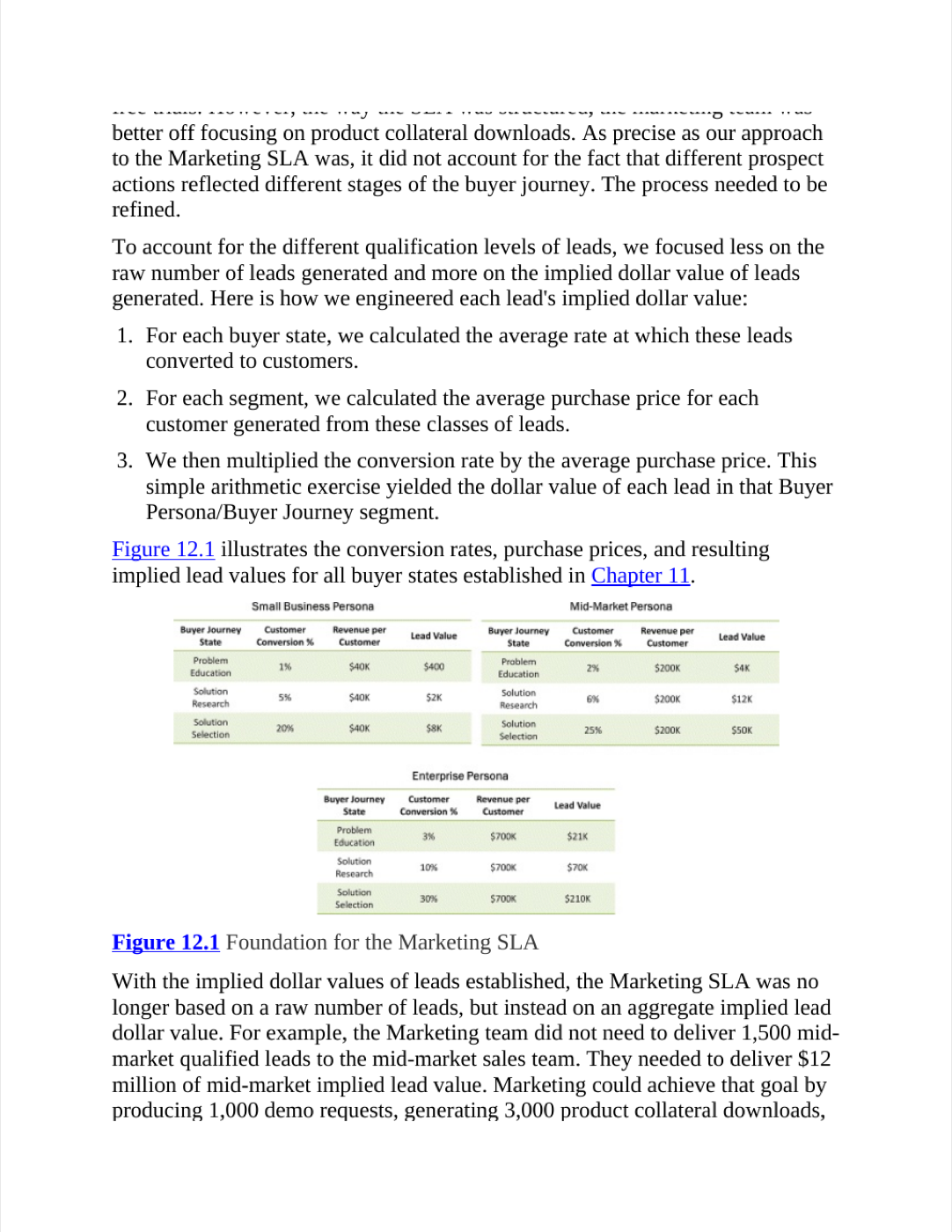
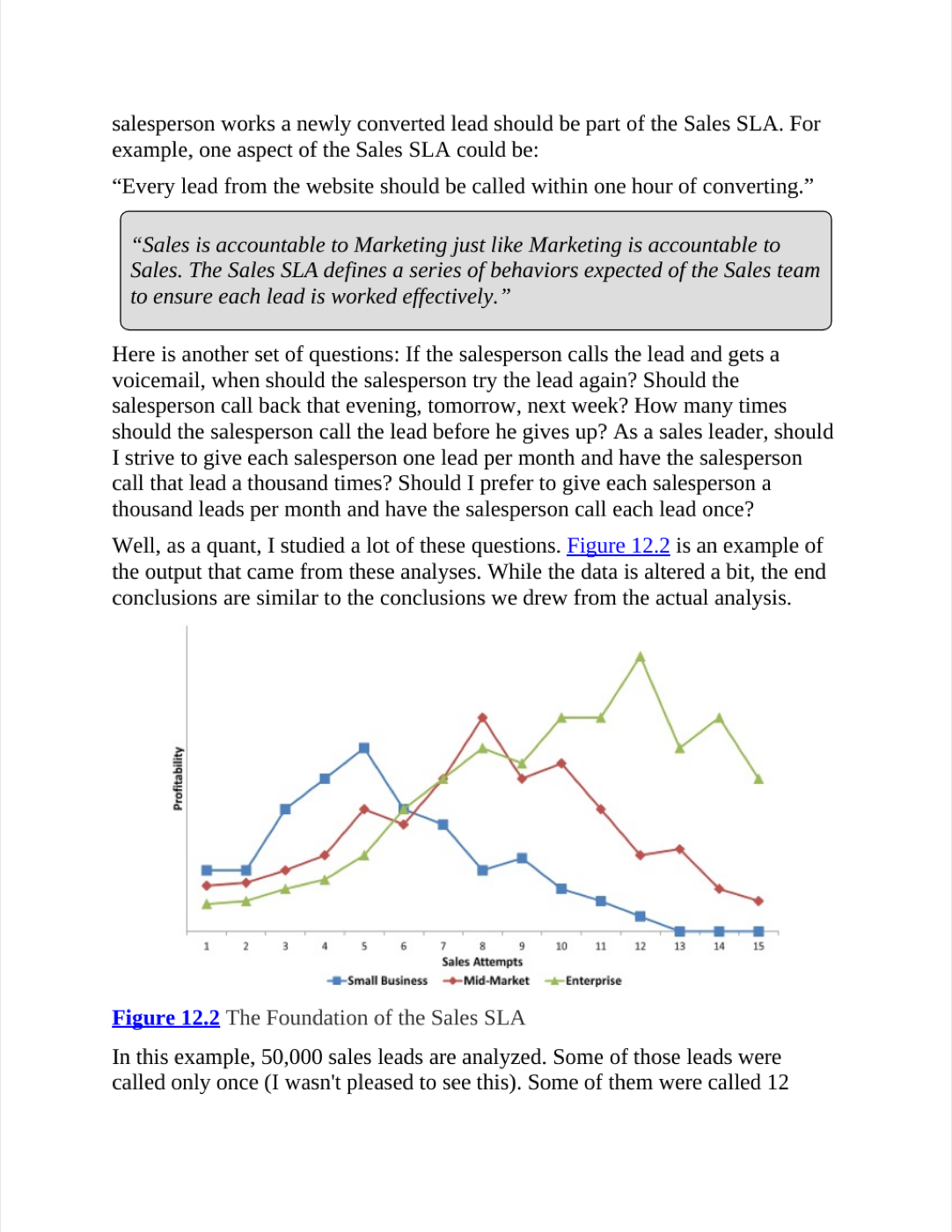
<p>If your last commercial call felt like tug-of-war over a number, you were playing positional bargaining. This guide walks chapter-by-chapter through the alternative—and translates each pillar into consulting and AI pursuit work.</p>
<hr>
<h2 class="anchor anchorTargetStickyNavbar_Vzrq" id="1-introduction-the-third-way-neither-soft-nor-hard">1. Introduction: the third way (neither soft nor hard)<a href="https://sudip-ai-playbook.pages.dev/articles/getting-to-yes-fisher-ury-patton#1-introduction-the-third-way-neither-soft-nor-hard" class="hash-link" aria-label="Direct link to 1. Introduction: the third way (neither soft nor hard)" title="Direct link to 1. Introduction: the third way (neither soft nor hard)" translate="no">​</a></h2>
<h3 class="anchor anchorTargetStickyNavbar_Vzrq" id="11-the-dilemma-everyone-recognises">1.1 The dilemma everyone recognises<a href="https://sudip-ai-playbook.pages.dev/articles/getting-to-yes-fisher-ury-patton#11-the-dilemma-everyone-recognises" class="hash-link" aria-label="Direct link to 1.1 The dilemma everyone recognises" title="Direct link to 1.1 The dilemma everyone recognises" translate="no">​</a></h3>
<p>People see two styles:</p>
<table><thead><tr><th>Style</th><th>Moves</th><th>Typical outcome</th></tr></thead><tbody><tr><td><strong>Soft</strong></td><td>Avoid conflict; trust; yield to reach agreement</td><td>Fast deal—often unwise; feels exploited</td></tr><tr><td><strong>Hard</strong></td><td>Distrust; dig in; threats; hold out</td><td>May “win”—often at relationship cost</td></tr></tbody></table>
<p>Soft negotiators want amicable resolution; hard negotiators want victory. Both are <strong>positional</strong> games. Fisher, Ury and Patton propose a third way: <strong>principled negotiation</strong>—decide on merits using interests, options and objective criteria; be decent without being a pushover.</p>
<h3 class="anchor anchorTargetStickyNavbar_Vzrq" id="12-the-meta-game">1.2 The meta-game<a href="https://sudip-ai-playbook.pages.dev/articles/getting-to-yes-fisher-ury-patton#12-the-meta-game" class="hash-link" aria-label="Direct link to 1.2 The meta-game" title="Direct link to 1.2 The meta-game" translate="no">​</a></h3>
<p>Every negotiation has two levels:</p>
<ol>
<li class=""><strong>Substance</strong> — price, scope, timeline, risk allocation.</li>
<li class=""><strong>Procedure</strong> — <em>how</em> you will negotiate substance (soft positional, hard positional, or principled).</li>
</ol>
<p>Each move at level 1 also signals rules at level 2. When procurement opens with “take it or leave it,” they are negotiating procedure as much as fee. Your response either accepts their game or changes it.</p>
<p><strong>Practitioner rule:</strong> Before debating numbers, decide whether you will bargain over positions or problem-solve on merits. Name the meta-game internally—even if you do not say it aloud yet.</p>
<h3 class="anchor anchorTargetStickyNavbar_Vzrq" id="13-what-wise-agreement-means">1.3 What “wise agreement” means<a href="https://sudip-ai-playbook.pages.dev/articles/getting-to-yes-fisher-ury-patton#13-what-wise-agreement-means" class="hash-link" aria-label="Direct link to 1.3 What “wise agreement” means" title="Direct link to 1.3 What “wise agreement” means" translate="no">​</a></h3>
<p>A wise agreement (Fisher/Ury/Patton):</p>
<ul>
<li class="">Meets <strong>legitimate interests</strong> of each side as far as possible.</li>
<li class="">Resolves conflicting interests <strong>fairly</strong>.</li>
<li class="">Is <strong>durable</strong>—parties implement without sabotage.</li>
<li class="">Takes <strong>community / precedent</strong> interests into account where relevant.</li>
</ul>
<p>“Winning” the substantive point while destroying implementation is not winning. In consulting, a signed SOW that the delivery team cannot honour is a failed negotiation regardless of margin.</p>
<hr>
<h2 class="anchor anchorTargetStickyNavbar_Vzrq" id="2-chapter-1--dont-bargain-over-positions">2. Chapter 1 — Don’t bargain over positions<a href="https://sudip-ai-playbook.pages.dev/articles/getting-to-yes-fisher-ury-patton#2-chapter-1--dont-bargain-over-positions" class="hash-link" aria-label="Direct link to 2. Chapter 1 — Don’t bargain over positions" title="Direct link to 2. Chapter 1 — Don’t bargain over positions" translate="no">​</a></h2>
<p><img decoding="async" loading="lazy" alt="Four pillars of principled negotiation" src="https://sudip-ai-playbook.pages.dev/assets/images/framework-four-pillars-8a42b01005a666c6323eab8f133ce16c.png" width="1536" height="1024" class="img_ev3q"></p>
<p><em>Figure: the four pillars—people, interests, options, criteria—replace positional tug-of-war.</em></p>
<h3 class="anchor anchorTargetStickyNavbar_Vzrq" id="21-how-positional-bargaining-works-and-why-it-persists">2.1 How positional bargaining works (and why it persists)<a href="https://sudip-ai-playbook.pages.dev/articles/getting-to-yes-fisher-ury-patton#21-how-positional-bargaining-works-and-why-it-persists" class="hash-link" aria-label="Direct link to 2.1 How positional bargaining works (and why it persists)" title="Direct link to 2.1 How positional bargaining works (and why it persists)" translate="no">​</a></h3>
<p>Positional bargaining is familiar: each side states a demand, argues, makes concessions toward a compromise. It requires little preparation, works across language barriers (even finger-counting haggling), and is expected in some markets.</p>
<p>It also:</p>
<ul>
<li class=""><strong>Locks ego to positions</strong> — the more you defend a number, the harder it is to move without “losing face.”</li>
<li class=""><strong>Hides interests</strong> — attention goes to stated demands, not underlying needs.</li>
<li class=""><strong>Produces arbitrary splits</strong> — “meet in the middle” may satisfy neither side’s real concerns.</li>
<li class=""><strong>Incentivises delay and deception</strong> — extreme openings, small concessions, stonewalling.</li>
</ul>
<p>Classic failure: nuclear test-ban talks stalled over <strong>how many on-site inspections</strong> (positions) while neither side had defined what an “inspection” actually entailed (interests + standards).</p>
<h3 class="anchor anchorTargetStickyNavbar_Vzrq" id="22-three-tests-positional-bargaining-fails">2.2 Three tests positional bargaining fails<a href="https://sudip-ai-playbook.pages.dev/articles/getting-to-yes-fisher-ury-patton#22-three-tests-positional-bargaining-fails" class="hash-link" aria-label="Direct link to 2.2 Three tests positional bargaining fails" title="Direct link to 2.2 Three tests positional bargaining fails" translate="no">​</a></h3>
<table><thead><tr><th>Test</th><th>Positional failure mode</th></tr></thead><tbody><tr><td><strong>Wise agreement</strong></td><td>Split-the-difference ignores merits; egos drive outcomes</td></tr><tr><td><strong>Efficiency</strong></td><td>Many rounds of offer/counter-offer; each concession feels costly</td></tr><tr><td><strong>Relationship</strong></td><td>Contest of will breeds anger, resentment, broken partnerships</td></tr></tbody></table>
<h3 class="anchor anchorTargetStickyNavbar_Vzrq" id="23-soft-vs-hard--the-trap">2.3 Soft vs hard — the trap<a href="https://sudip-ai-playbook.pages.dev/articles/getting-to-yes-fisher-ury-patton#23-soft-vs-hard--the-trap" class="hash-link" aria-label="Direct link to 2.3 Soft vs hard — the trap" title="Direct link to 2.3 Soft vs hard — the trap" translate="no">​</a></h3>
<table><thead><tr><th></th><th>Soft positional</th><th>Hard positional</th></tr></thead><tbody><tr><td>Goal</td><td>Agreement</td><td>Victory</td></tr><tr><td>Relationship</td><td>High priority</td><td>Subordinate to outcome</td></tr><tr><td>Typical moves</td><td>Concede readily; trust</td><td>Demand concessions; threaten</td></tr><tr><td>Risk</td><td>Exploitation</td><td>Escalation; damaged trust</td></tr><tr><td><strong>Head-to-head</strong></td><td>—</td><td><strong>Hard beats soft</strong></td></tr></tbody></table>
<p>Being “nice” is not principled negotiation. Soft positional bargainers get crushed by hard ones. Principled negotiation is <strong>both</strong> hard and soft: <strong>hard on the problem, soft on the people.</strong></p>
<h3 class="anchor anchorTargetStickyNavbar_Vzrq" id="24-multi-party-collapse">2.4 Multi-party collapse<a href="https://sudip-ai-playbook.pages.dev/articles/getting-to-yes-fisher-ury-patton#24-multi-party-collapse" class="hash-link" aria-label="Direct link to 2.4 Multi-party collapse" title="Direct link to 2.4 Multi-party collapse" translate="no">​</a></h3>
<p>With many parties (150 countries, enterprise buying committees, programme boards):</p>
<ul>
<li class="">Positions become <strong>coalitions</strong> (“North vs South,” “business vs IT”).</li>
<li class="">Changing a group position is harder than changing one person’s.</li>
<li class="">Absent approvers (legal, finance, board) freeze positions further.</li>
</ul>
<p>Principled negotiation scales better because interests can be unpacked without forcing a public coalition line to move.</p>
<h3 class="anchor anchorTargetStickyNavbar_Vzrq" id="25-when-positional-bargaining-might-suffice">2.5 When positional bargaining might suffice<a href="https://sudip-ai-playbook.pages.dev/articles/getting-to-yes-fisher-ury-patton#25-when-positional-bargaining-might-suffice" class="hash-link" aria-label="Direct link to 2.5 When positional bargaining might suffice" title="Direct link to 2.5 When positional bargaining might suffice" translate="no">​</a></h3>
<p>The Ten Questions appendix admits positional haggling can work when:</p>
<ul>
<li class="">Stakes are low and arbitrary outcomes acceptable.</li>
<li class="">Issues are simple, single-issue, strangers, competitive alternatives exist.</li>
<li class="">Transaction cost of interest exploration exceeds benefit.</li>
</ul>
<p><strong>But:</strong> if talks bog down, change gears—clarify interests before more haggling. In consulting pursuits, complexity and relationship duration almost always favour principled negotiation.</p>
<h3 class="anchor anchorTargetStickyNavbar_Vzrq" id="26-the-four-pillars-preview">2.6 The four pillars (preview)<a href="https://sudip-ai-playbook.pages.dev/articles/getting-to-yes-fisher-ury-patton#26-the-four-pillars-preview" class="hash-link" aria-label="Direct link to 2.6 The four pillars (preview)" title="Direct link to 2.6 The four pillars (preview)" translate="no">​</a></h3>
<table><thead><tr><th>Pillar</th><th>One-line job</th></tr></thead><tbody><tr><td><strong>People</strong></td><td>Disentangle relationship from substance</td></tr><tr><td><strong>Interests</strong></td><td>Reconcile needs, not slogans</td></tr><tr><td><strong>Options</strong></td><td>Invent before you decide</td></tr><tr><td><strong>Criteria</strong></td><td>Insist on fair standards, not willpower</td></tr></tbody></table>
<p>The next four chapters unpack each pillar. Chapters 6–8 address power and bad behaviour.</p>
<p><strong>Negative case — consulting:</strong> Account team treats procurement’s opening discount demand as “the deal” and trades scope quietly. Delivery inherits an unwise SOW; client relationship erodes at first missed milestone. Positions were negotiated; interests (risk, capability proof, time-to-value) were not.</p>
<hr>
<h2 class="anchor anchorTargetStickyNavbar_Vzrq" id="3-chapter-2--separate-the-people-from-the-problem">3. Chapter 2 — Separate the people from the problem<a href="https://sudip-ai-playbook.pages.dev/articles/getting-to-yes-fisher-ury-patton#3-chapter-2--separate-the-people-from-the-problem" class="hash-link" aria-label="Direct link to 3. Chapter 2 — Separate the people from the problem" title="Direct link to 3. Chapter 2 — Separate the people from the problem" translate="no">​</a></h2>
<p><img decoding="async" loading="lazy" alt="People vs problem framing" src="https://sudip-ai-playbook.pages.dev/assets/images/figure-positions-vs-interests-e106d833b13382a88d78effbf1c436a8.jpg" width="379" height="751" class="img_ev3q"></p>
<p><em>Figure: negotiators are people first—perception, emotion and communication sit beside substance.</em></p>
<h3 class="anchor anchorTargetStickyNavbar_Vzrq" id="31-negotiators-are-people-first">3.1 Negotiators are people first<a href="https://sudip-ai-playbook.pages.dev/articles/getting-to-yes-fisher-ury-patton#31-negotiators-are-people-first" class="hash-link" aria-label="Direct link to 3.1 Negotiators are people first" title="Direct link to 3.1 Negotiators are people first" translate="no">​</a></h3>
<p>Corporate and diplomatic settings encourage us to forget it: counterparts have emotions, values, blind spots and bad days—so do you. The human layer can build commitment to a good outcome—or trigger vicious cycles where the “game” becomes scoring points and assigning blame.</p>
<p><strong>Union foreman vs worker (book case):</strong> Jones thought Campbell “had it in for him” on replacement assignments. Campbell thought he was complimenting Jones by trusting him with hard jobs. Same facts, opposite stories—relationship nearly destroyed over a perception gap.</p>
<p><strong>Insurance lawyer vs regulator (book case):</strong> A technical regulatory concern was heard as a personal attack on the commissioner’s competence. Relationship risk blocked a wise substantive fix.</p>
<h3 class="anchor anchorTargetStickyNavbar_Vzrq" id="32-two-interests-in-every-negotiation">3.2 Two interests in every negotiation<a href="https://sudip-ai-playbook.pages.dev/articles/getting-to-yes-fisher-ury-patton#32-two-interests-in-every-negotiation" class="hash-link" aria-label="Direct link to 3.2 Two interests in every negotiation" title="Direct link to 3.2 Two interests in every negotiation" translate="no">​</a></h3>
<p>Every negotiator cares about:</p>
<ol>
<li class=""><strong>Substance</strong> — the terms of agreement.</li>
<li class=""><strong>Relationship</strong> — future dealings, reputation, self-image.</li>
</ol>
<p>Positional bargaining <strong>forces a trade-off</strong>: yield on substance to save relationship, or damage relationship to “win.” Principled negotiation treats people concerns <strong>alongside</strong> substance, not instead of it.</p>
<h3 class="anchor anchorTargetStickyNavbar_Vzrq" id="33-three-people-problems">3.3 Three people problems<a href="https://sudip-ai-playbook.pages.dev/articles/getting-to-yes-fisher-ury-patton#33-three-people-problems" class="hash-link" aria-label="Direct link to 3.3 Three people problems" title="Direct link to 3.3 Three people problems" translate="no">​</a></h3>
<table><thead><tr><th>Domain</th><th>What goes wrong</th><th>Method response</th></tr></thead><tbody><tr><td><strong>Perception</strong></td><td>Each side sees a different “movie”; confirms bias</td><td>Discuss perceptions explicitly; don’t assume yours is reality</td></tr><tr><td><strong>Emotion</strong></td><td>Fear, anger, frustration drive tactics</td><td>Acknowledge feelings; allow venting without conceding substance</td></tr><tr><td><strong>Communication</strong></td><td>You talk past each other; listen to reply, not understand</td><td>Listen actively; speak to be understood; use “I” not “you” attacks</td></tr></tbody></table>
<h3 class="anchor anchorTargetStickyNavbar_Vzrq" id="34-perception-tactics">3.4 Perception tactics<a href="https://sudip-ai-playbook.pages.dev/articles/getting-to-yes-fisher-ury-patton#34-perception-tactics" class="hash-link" aria-label="Direct link to 3.4 Perception tactics" title="Direct link to 3.4 Perception tactics" translate="no">​</a></h3>
<table><thead><tr><th>Tactic</th><th>Application</th></tr></thead><tbody><tr><td><strong>Don’t blame them for your problem</strong></td><td>“You’re unreasonable on price” → “We’re under board pressure on margin; help me understand your constraints.”</td></tr><tr><td><strong>Discuss each other’s perceptions</strong></td><td>“Here’s how this landed on our side—what did you intend?”</td></tr><tr><td><strong>Give them a stake in the outcome</strong></td><td>Co-design evaluation criteria, pilot success metrics</td></tr><tr><td><strong>Involve them in the process</strong></td><td>Joint working sessions beat emailed ultimatums</td></tr><tr><td><strong>Face-saving</strong></td><td>Offer a principled reason they can cite upward for movement</td></tr><tr><td><strong>Put yourself in their shoes</strong></td><td>Role-map their internal approvers before the call</td></tr></tbody></table>
<h3 class="anchor anchorTargetStickyNavbar_Vzrq" id="35-emotion-tactics">3.5 Emotion tactics<a href="https://sudip-ai-playbook.pages.dev/articles/getting-to-yes-fisher-ury-patton#35-emotion-tactics" class="hash-link" aria-label="Direct link to 3.5 Emotion tactics" title="Direct link to 3.5 Emotion tactics" translate="no">​</a></h3>
<table><thead><tr><th>Tactic</th><th>Application</th></tr></thead><tbody><tr><td><strong>Make emotions explicit</strong></td><td>“It sounds like the last RFP left scar tissue on security review.”</td></tr><tr><td><strong>Allow let-off-steam</strong></td><td>Hear the rant; don’t respond point-for-point; return to interests</td></tr><tr><td><strong>Symbolic gestures</strong></td><td>Small acknowledgments (timeline apology, credit for their framework) unlock substance</td></tr><tr><td><strong>Listen before inoculating</strong></td><td>Premature “we hear you” without listening inflames</td></tr></tbody></table>
<p>Emotion is not weakness to exploit—it is data about interests and identity at stake.</p>
<h3 class="anchor anchorTargetStickyNavbar_Vzrq" id="36-communication-tactics">3.6 Communication tactics<a href="https://sudip-ai-playbook.pages.dev/articles/getting-to-yes-fisher-ury-patton#36-communication-tactics" class="hash-link" aria-label="Direct link to 3.6 Communication tactics" title="Direct link to 3.6 Communication tactics" translate="no">​</a></h3>
<table><thead><tr><th>Tactic</th><th>Application</th></tr></thead><tbody><tr><td><strong>Speak to be understood</strong></td><td>One idea at a time; check comprehension</td></tr><tr><td><strong>Listen actively</strong></td><td>Paraphrase; ask follow-ups</td></tr><tr><td><strong>Speak about yourself, not them</strong></td><td>“We’re worried about model drift in production” beats “You don’t understand ML ops.”</td></tr><tr><td><strong>Prevention works best</strong></td><td>Build relationship before the hard issue; don’t cold-open with price</td></tr></tbody></table>
<h3 class="anchor anchorTargetStickyNavbar_Vzrq" id="37-sit-side-by-side-attack-the-problem">3.7 Sit side by side, attack the problem<a href="https://sudip-ai-playbook.pages.dev/articles/getting-to-yes-fisher-ury-patton#37-sit-side-by-side-attack-the-problem" class="hash-link" aria-label="Direct link to 3.7 Sit side by side, attack the problem" title="Direct link to 3.7 Sit side by side, attack the problem" translate="no">​</a></h3>
<p>Figuratively (often literally in mediation): move from <strong>face-to-face opposition</strong> to <strong>side-by-side</strong> problem-solving. Whiteboard the problem—cost of delay, risk of failed AI pilot, audit findings—not the people.</p>
<p><strong>Consulting translation:</strong> Security is not “blocking the deal”; they are protecting an interest (data residency, model governance). Procurement is not “attacking the team”; they are protecting budget credibility. Separate the person from the problem label.</p>
<h3 class="anchor anchorTargetStickyNavbar_Vzrq" id="38-negative-cases">3.8 Negative cases<a href="https://sudip-ai-playbook.pages.dev/articles/getting-to-yes-fisher-ury-patton#38-negative-cases" class="hash-link" aria-label="Direct link to 3.8 Negative cases" title="Direct link to 3.8 Negative cases" translate="no">​</a></h3>
<table><thead><tr><th>Failure</th><th>Symptom</th><th>Fix</th></tr></thead><tbody><tr><td><strong>Personalisation</strong></td><td>“Legal always kills deals”</td><td>Map legal’s interests; pre-wire with standards</td></tr><tr><td><strong>Emotional concession</strong></td><td>Yield on fee to stop hostility</td><td>Acknowledge emotion; hold criteria on merits</td></tr><tr><td><strong>Premature substance</strong></td><td>Open on price before rapport</td><td>Sequence: people → interests → options</td></tr><tr><td><strong>Face neglect</strong></td><td>“That’s irrational”</td><td>Offer face-saving path tied to objective criteria</td></tr></tbody></table>
<p>Pair people skills with <a class="" href="https://sudip-ai-playbook.pages.dev/articles/difficult-conversations-stone-patton-heen">Difficult Conversations</a> when identity, blame and feelings dominate—the three-conversation model (what happened, feelings, identity) deepens this chapter’s people work.</p>
<hr>
<h2 class="anchor anchorTargetStickyNavbar_Vzrq" id="4-chapter-3--focus-on-interests-not-positions">4. Chapter 3 — Focus on interests, not positions<a href="https://sudip-ai-playbook.pages.dev/articles/getting-to-yes-fisher-ury-patton#4-chapter-3--focus-on-interests-not-positions" class="hash-link" aria-label="Direct link to 4. Chapter 3 — Focus on interests, not positions" title="Direct link to 4. Chapter 3 — Focus on interests, not positions" translate="no">​</a></h2>
<h3 class="anchor anchorTargetStickyNavbar_Vzrq" id="41-positions-vs-interests--the-library-window">4.1 Positions vs interests — the library window<a href="https://sudip-ai-playbook.pages.dev/articles/getting-to-yes-fisher-ury-patton#41-positions-vs-interests--the-library-window" class="hash-link" aria-label="Direct link to 4.1 Positions vs interests — the library window" title="Direct link to 4.1 Positions vs interests — the library window" translate="no">​</a></h3>
<p>Two people quarrel in a library: one wants the window <strong>open</strong>, one <strong>closed</strong>. They compromise—half open. Still wrong.</p>
<p>The librarian asks <strong>why</strong>. Fresh air vs avoid draft. She opens a window in the <strong>next room</strong>—air without draft.</p>
<table><thead><tr><th>Concept</th><th>Definition</th><th>Example</th></tr></thead><tbody><tr><td><strong>Position</strong></td><td>Stated demand</td><td>“$2M fixed fee” / “20% discount”</td></tr><tr><td><strong>Interest</strong></td><td>Underlying need, hope, fear, desire</td><td>Predictable cost; proof of value; career risk if pilot fails</td></tr></tbody></table>
<p><strong>Interests define the problem.</strong> Positions are chosen strategies to satisfy interests—often not the only possible strategies.</p>
<h3 class="anchor anchorTargetStickyNavbar_Vzrq" id="42-camp-david--interests-behind-incompatible-positions">4.2 Camp David — interests behind incompatible positions<a href="https://sudip-ai-playbook.pages.dev/articles/getting-to-yes-fisher-ury-patton#42-camp-david--interests-behind-incompatible-positions" class="hash-link" aria-label="Direct link to 4.2 Camp David — interests behind incompatible positions" title="Direct link to 4.2 Camp David — interests behind incompatible positions" translate="no">​</a></h3>
<p>Egypt: <strong>every inch of Sinai</strong> returned (sovereignty). Israel: <strong>keep part of Sinai</strong> (security). Map-splitting failed repeatedly.</p>
<p>Interests: Egypt—sovereignty after centuries of foreign rule. Israel—security against tank invasion. Solution: full Egyptian sovereignty + <strong>demilitarized zones</strong>—flag everywhere, tanks nowhere near Israel.</p>
<p><strong>Lesson:</strong> For every interest, multiple positions may work. Compromising <strong>between</strong> positions (50% of Sinai) may be worse than inventing a new option.</p>
<h3 class="anchor anchorTargetStickyNavbar_Vzrq" id="43-shared-differing-and-conflicting-interests">4.3 Shared, differing, and conflicting interests<a href="https://sudip-ai-playbook.pages.dev/articles/getting-to-yes-fisher-ury-patton#43-shared-differing-and-conflicting-interests" class="hash-link" aria-label="Direct link to 4.3 Shared, differing, and conflicting interests" title="Direct link to 4.3 Shared, differing, and conflicting interests" translate="no">​</a></h3>
<p>Behind opposed positions lie <strong>more compatible interests than you assume</strong>.</p>
<p><strong>Tenant–landlord shared interests:</strong> stability, well-maintained property, good working relationship.</p>
<p><strong>Differing (not conflicting) interests:</strong> tenant allergic to paint vs landlord repainting whole building; timing of deposit vs indifference on date.</p>
<p><strong>Conflicting interests:</strong> minimize rent vs maximize return—often smaller once shared/differing interests are traded.</p>
<p><strong>Shoe seller logic:</strong> You value shoes more than money; seller values money more than shoes—trade becomes possible because interests <strong>differ</strong>.</p>
<h3 class="anchor anchorTargetStickyNavbar_Vzrq" id="44-how-to-identify-interests">4.4 How to identify interests<a href="https://sudip-ai-playbook.pages.dev/articles/getting-to-yes-fisher-ury-patton#44-how-to-identify-interests" class="hash-link" aria-label="Direct link to 4.4 How to identify interests" title="Direct link to 4.4 How to identify interests" translate="no">​</a></h3>
<table><thead><tr><th>Technique</th><th>Question / move</th></tr></thead><tbody><tr><td><strong>Ask “Why?”</strong></td><td>Why that position? Why that term?</td></tr><tr><td><strong>Ask “Why not?”</strong></td><td>What’s wrong with our proposal? What concern does it miss?</td></tr><tr><td><strong>Recognise multiple interests</strong></td><td>Each person and organisation has a bundle—economic, security, recognition, control</td></tr><tr><td><strong>Basic human needs</strong></td><td>Security, economic wellbeing, belonging, recognition, autonomy—often drive “irrational” positions</td></tr><tr><td><strong>Make interests come alive</strong></td><td>Specific scenarios beat abstract claims (“If audit fails, my job is…”)</td></tr><tr><td><strong>Acknowledge theirs first</strong></td><td>“You seem to need X—is that right?” before asserting yours</td></tr><tr><td><strong>Be specific on yours</strong></td><td>Vague grievances invite positional bargaining</td></tr></tbody></table>
<h3 class="anchor anchorTargetStickyNavbar_Vzrq" id="45-talking-about-interests">4.5 Talking about interests<a href="https://sudip-ai-playbook.pages.dev/articles/getting-to-yes-fisher-ury-patton#45-talking-about-interests" class="hash-link" aria-label="Direct link to 4.5 Talking about interests" title="Direct link to 4.5 Talking about interests" translate="no">​</a></h3>
<table><thead><tr><th>Do</th><th>Don’t</th></tr></thead><tbody><tr><td>Ask for their interests behind positions</td><td>Debate positions head-on first</td></tr><tr><td>Be specific about consequences</td><td>Attack their interests as illegitimate</td></tr><tr><td>State your interests clearly</td><td>Conceal interests hoping to “win”</td></tr><tr><td>Put it in writing pre-meeting</td><td>Assume they share your priority order</td></tr></tbody></table>
<p><strong>Problem before answer:</strong> Explore the problem jointly before committing to solutions. In AI pursuits: agree what “success” must prove (latency, accuracy band, human-in-loop) before debating licence model.</p>
<p>Use <a class="" href="https://sudip-ai-playbook.pages.dev/articles/spin-selling-rackham">SPIN Selling</a> discovery questions in early phases to surface interests before positions harden in a formal RFP.</p>
<h3 class="anchor anchorTargetStickyNavbar_Vzrq" id="46-negative-cases">4.6 Negative cases<a href="https://sudip-ai-playbook.pages.dev/articles/getting-to-yes-fisher-ury-patton#46-negative-cases" class="hash-link" aria-label="Direct link to 4.6 Negative cases" title="Direct link to 4.6 Negative cases" translate="no">​</a></h3>
<table><thead><tr><th>Failure</th><th>What happened</th><th>Principled move</th></tr></thead><tbody><tr><td><strong>Position lock-in</strong></td><td>Public commitment to “cloud-only”</td><td>Reframe to interests: agility vs control; hybrid options</td></tr><tr><td><strong>Assumed opposition</strong></td><td>“They want to kill AI”</td><td>Test—often fear of reputational risk, not technology</td></tr><tr><td><strong>Single-issue trap</strong></td><td>Fee-only debate</td><td>Expand issues: timeline, risk share, references, training</td></tr><tr><td><strong>Interest leak as weakness</strong></td><td>Revealing desperation</td><td>Share interests, not BATNA/reservation</td></tr></tbody></table>
<hr>
<h2 class="anchor anchorTargetStickyNavbar_Vzrq" id="5-chapter-4--invent-options-for-mutual-gain">5. Chapter 4 — Invent options for mutual gain<a href="https://sudip-ai-playbook.pages.dev/articles/getting-to-yes-fisher-ury-patton#5-chapter-4--invent-options-for-mutual-gain" class="hash-link" aria-label="Direct link to 5. Chapter 4 — Invent options for mutual gain" title="Direct link to 5. Chapter 4 — Invent options for mutual gain" translate="no">​</a></h2>
<p><img decoding="async" loading="lazy" alt="Options for mutual gain" src="https://sudip-ai-playbook.pages.dev/assets/images/figure-options-grid-5a74a09fe2be212d0dba2d41fc83b7ff.gif" width="424" height="651" class="img_ev3q"></p>
<p><em>Figure: expand the pie before dividing it—brainstorm before evaluate.</em></p>
<h3 class="anchor anchorTargetStickyNavbar_Vzrq" id="51-the-orange-peel-parable">5.1 The orange peel parable<a href="https://sudip-ai-playbook.pages.dev/articles/getting-to-yes-fisher-ury-patton#51-the-orange-peel-parable" class="hash-link" aria-label="Direct link to 5.1 The orange peel parable" title="Direct link to 5.1 The orange peel parable" translate="no">​</a></h3>
<p>Two children fight over one orange—split it 50/50. One eats fruit, throws peel away. Other bakes with peel, throws fruit away. Half an orange each; <strong>whole fruit + whole peel</strong> was available if they had asked <strong>why</strong>.</p>
<p>Consulting analogue: fighting over headcount days vs discovering client wanted <strong>knowledge transfer</strong> (training + docs) while you wanted <strong>reference rights</strong>—different slices of the same budget.</p>
<h3 class="anchor anchorTargetStickyNavbar_Vzrq" id="52-diagnosis--four-obstacles-to-inventing">5.2 Diagnosis — four obstacles to inventing<a href="https://sudip-ai-playbook.pages.dev/articles/getting-to-yes-fisher-ury-patton#52-diagnosis--four-obstacles-to-inventing" class="hash-link" aria-label="Direct link to 5.2 Diagnosis — four obstacles to inventing" title="Direct link to 5.2 Diagnosis — four obstacles to inventing" translate="no">​</a></h3>
<table><thead><tr><th>Obstacle</th><th>Mechanism</th><th>Symptom</th></tr></thead><tbody><tr><td><strong>Premature judgment</strong></td><td>Critical mind kills ideas at birth</td><td>“That’ll never pass legal” in brainstorm</td></tr><tr><td><strong>Searching for the single answer</strong></td><td>Narrow to one line too early</td><td>One fee number before packages</td></tr><tr><td><strong>Fixed-pie assumption</strong></td><td>Every gain for them = loss for you</td><td>No creative trades</td></tr><tr><td><strong>“Their problem is their problem”</strong></td><td>Refuse to design for their interests</td><td>One-sided packages</td></tr></tbody></table>
<p>Nothing harms inventing like a <strong>critical sense waiting to pounce</strong>. Under negotiation pressure, creativity drops further—you fear ideas will be treated as commitments or expose weakness.</p>
<h3 class="anchor anchorTargetStickyNavbar_Vzrq" id="53-prescription--four-enabling-moves">5.3 Prescription — four enabling moves<a href="https://sudip-ai-playbook.pages.dev/articles/getting-to-yes-fisher-ury-patton#53-prescription--four-enabling-moves" class="hash-link" aria-label="Direct link to 5.3 Prescription — four enabling moves" title="Direct link to 5.3 Prescription — four enabling moves" translate="no">​</a></h3>
<ol>
<li class=""><strong>Separate inventing from deciding</strong> — brainstorm first, evaluate later.</li>
<li class=""><strong>Broaden options</strong> — multiply possibilities before selecting.</li>
<li class=""><strong>Search for mutual gain</strong> — especially in differences.</li>
<li class=""><strong>Make their decision easy</strong> — yesable proposals they can adopt without losing face.</li>
</ol>
<h3 class="anchor anchorTargetStickyNavbar_Vzrq" id="54-brainstorm-rules-harvard-tradition">5.4 Brainstorm rules (Harvard tradition)<a href="https://sudip-ai-playbook.pages.dev/articles/getting-to-yes-fisher-ury-patton#54-brainstorm-rules-harvard-tradition" class="hash-link" aria-label="Direct link to 5.4 Brainstorm rules (Harvard tradition)" title="Direct link to 5.4 Brainstorm rules (Harvard tradition)" translate="no">​</a></h3>
<p>When brainstorming (alone or jointly):</p>
<table><thead><tr><th>Rule</th><th>Rationale</th></tr></thead><tbody><tr><td>No criticism during inventing</td><td>Judgment inhibits imagination</td></tr><tr><td>Wild ideas welcome</td><td>Often seed practical hybrids</td></tr><tr><td>Go for quantity</td><td>More options → better final package</td></tr><tr><td>Mutate and combine ideas</td><td>Build on partial fits</td></tr><tr><td>Separate session if needed</td><td>Different room, time, facilitator</td></tr></tbody></table>
<p><strong>Do not</strong> treat brainstorm outputs as offers. Label the phase explicitly: “Nothing we say in the next 30 minutes is binding.”</p>
<h3 class="anchor anchorTargetStickyNavbar_Vzrq" id="55-circle-chart--four-steps-to-invent-options">5.5 Circle Chart — four steps to invent options<a href="https://sudip-ai-playbook.pages.dev/articles/getting-to-yes-fisher-ury-patton#55-circle-chart--four-steps-to-invent-options" class="hash-link" aria-label="Direct link to 5.5 Circle Chart — four steps to invent options" title="Direct link to 5.5 Circle Chart — four steps to invent options" translate="no">​</a></h3>
<p><img decoding="async" loading="lazy" alt="Circle chart of shared / differing interests" src="https://sudip-ai-playbook.pages.dev/assets/images/figure-circle-chart-c92337f29a186833acb8c964aa4d03a7.gif" width="400" height="384" class="img_ev3q"></p>
<p><em>Figure: shared interests, differing interests and conflicting interests—all can be designed around.</em></p>
<p>Use the Circle Chart to structure invention:</p>
<table><thead><tr><th>Step</th><th>Action</th></tr></thead><tbody><tr><td><strong>1. State the problem</strong></td><td>In joint problem-solving terms—not “their fault”</td></tr><tr><td><strong>2. Analyse interests</strong></td><td>Yours, theirs, third parties’</td></tr><tr><td><strong>3. Brainstorm options</strong></td><td>Quantity; no evaluation</td></tr><tr><td><strong>4. Refine for mutual gain</strong></td><td>Improve options against interests; prepare criteria for choice</td></tr></tbody></table>
<p>Shared interests → emphasise in proposal framing. Differing interests → <strong>logroll</strong> (give them what they value cheaply; get what you value cheaply). Conflicting interests → objective criteria + fair process.</p>
<h3 class="anchor anchorTargetStickyNavbar_Vzrq" id="56-dovetail-differences">5.6 Dovetail differences<a href="https://sudip-ai-playbook.pages.dev/articles/getting-to-yes-fisher-ury-patton#56-dovetail-differences" class="hash-link" aria-label="Direct link to 5.6 Dovetail differences" title="Direct link to 5.6 Dovetail differences" translate="no">​</a></h3>
<p>Look for differences in:</p>
<table><thead><tr><th>Difference type</th><th>Trade example</th></tr></thead><tbody><tr><td><strong>Preferences</strong></td><td>They want brandable case study; you want faster payment</td></tr><tr><td><strong>Forecasts</strong></td><td>Contingency fee if ROI band hit</td></tr><tr><td><strong>Risk tolerance</strong></td><td>You cap liability; they accept higher fee</td></tr><tr><td><strong>Time preference</strong></td><td>They defer cost; you phase delivery</td></tr><tr><td><strong>Cost structure</strong></td><td>Training online (cheap to you, high value to them)</td></tr></tbody></table>
<p><a class="" href="https://sudip-ai-playbook.pages.dev/articles/negotiation-genius-malhotra-bazerman">Negotiation Genius</a> adds <strong>contingency contracts</strong> and <strong>post-settlement settlements</strong> as advanced dovetail tools.</p>
<h3 class="anchor anchorTargetStickyNavbar_Vzrq" id="57-make-their-decision-easy">5.7 Make their decision easy<a href="https://sudip-ai-playbook.pages.dev/articles/getting-to-yes-fisher-ury-patton#57-make-their-decision-easy" class="hash-link" aria-label="Direct link to 5.7 Make their decision easy" title="Direct link to 5.7 Make their decision easy" translate="no">​</a></h3>
<table><thead><tr><th>Technique</th><th>Detail</th></tr></thead><tbody><tr><td><strong>Draft a yesable proposal</strong></td><td>Complete package they can accept with minimal edit</td></tr><tr><td><strong>Consistent with their interests</strong></td><td>Frame in their language upward</td></tr><tr><td><strong>Face-saving wrapper</strong></td><td>Tie to industry standard, audit requirement, pilot precedent</td></tr><tr><td><strong>Avoid brinkmanship</strong></td><td>Ultimatums force positional response</td></tr></tbody></table>
<p><strong>Negative case:</strong> Sending three incompatible “options” without recommendation forces client to do your work—they pick cheapest by default.</p>
<h3 class="anchor anchorTargetStickyNavbar_Vzrq" id="58-ai-pursuit-option-menu-examples">5.8 AI pursuit option menu (examples)<a href="https://sudip-ai-playbook.pages.dev/articles/getting-to-yes-fisher-ury-patton#58-ai-pursuit-option-menu-examples" class="hash-link" aria-label="Direct link to 5.8 AI pursuit option menu (examples)" title="Direct link to 5.8 AI pursuit option menu (examples)" translate="no">​</a></h3>
<table><thead><tr><th>Option axis</th><th>A</th><th>B</th><th>C</th></tr></thead><tbody><tr><td>Scope</td><td>Discovery + roadmap</td><td>Pilot in one domain</td><td>Enterprise rollout</td></tr><tr><td>Risk</td><td>Time &amp; materials cap</td><td>Fixed pilot; variable scale</td><td>Gain-share band</td></tr><tr><td>Data</td><td>Synthetic + sample</td><td>Prod subset in VPC</td><td>Full prod with DP</td></tr><tr><td>IP</td><td>Client owns prompts/workflows</td><td>Joint reference architecture</td><td>Licence + support</td></tr></tbody></table>
<p>Invent <strong>before</strong> procurement collapses everything to “lowest fixed fee.”</p>
<hr>
<h2 class="anchor anchorTargetStickyNavbar_Vzrq" id="6-chapter-5--insist-on-objective-criteria">6. Chapter 5 — Insist on objective criteria<a href="https://sudip-ai-playbook.pages.dev/articles/getting-to-yes-fisher-ury-patton#6-chapter-5--insist-on-objective-criteria" class="hash-link" aria-label="Direct link to 6. Chapter 5 — Insist on objective criteria" title="Direct link to 6. Chapter 5 — Insist on objective criteria" translate="no">​</a></h2>
<h3 class="anchor anchorTargetStickyNavbar_Vzrq" id="61-will-based-vs-principle-based-decisions">6.1 Will-based vs principle-based decisions<a href="https://sudip-ai-playbook.pages.dev/articles/getting-to-yes-fisher-ury-patton#61-will-based-vs-principle-based-decisions" class="hash-link" aria-label="Direct link to 6.1 Will-based vs principle-based decisions" title="Direct link to 6.1 Will-based vs principle-based decisions" translate="no">​</a></h3>
<p>Some conflicts remain after interests are explored and options invented. Rent up vs down. Delivery tomorrow vs next week. You both want the corner office.</p>
<p><strong>Deciding by will</strong> (who concedes, who threatens, who flatters) is costly— inefficient, relationship-damaging, and often <strong>arbitrary</strong>.</p>
<p><strong>Objective criteria</strong> decide on merits independent of either side’s will: market value, safety codes, industry benchmarks, precedent, expert models, efficiency standards.</p>
<h3 class="anchor anchorTargetStickyNavbar_Vzrq" id="62-foundations-case--dont-horse-trade-safety">6.2 Foundations case — don’t horse-trade safety<a href="https://sudip-ai-playbook.pages.dev/articles/getting-to-yes-fisher-ury-patton#62-foundations-case--dont-horse-trade-safety" class="hash-link" aria-label="Direct link to 6.2 Foundations case — don’t horse-trade safety" title="Direct link to 6.2 Foundations case — don’t horse-trade safety" translate="no">​</a></h3>
<p>Contractor wants <strong>2-foot</strong> foundations; you want <strong>five feet</strong>. Contractor says: “You got steel girders; your turn to yield on foundations.”</p>
<p>You would <strong>not</strong> horse-trade. You would ask: soil specs, seismic risk, building codes, neighbouring foundations—<strong>standards</strong>, not turn-taking.</p>
<p>Same logic applies to fee benchmarks, SLA percentiles, model accuracy bands, and regulatory minimums in AI deals.</p>
<h3 class="anchor anchorTargetStickyNavbar_Vzrq" id="63-fair-standards-and-fair-procedures">6.3 Fair standards and fair procedures<a href="https://sudip-ai-playbook.pages.dev/articles/getting-to-yes-fisher-ury-patton#63-fair-standards-and-fair-procedures" class="hash-link" aria-label="Direct link to 6.3 Fair standards and fair procedures" title="Direct link to 6.3 Fair standards and fair procedures" translate="no">​</a></h3>
<table><thead><tr><th>Type</th><th>Examples</th></tr></thead><tbody><tr><td><strong>Substantive standards</strong></td><td>Market comps; replacement cost; depreciated value; competitive bid results; MIT-style economic models</td></tr><tr><td><strong>Procedural standards</strong></td><td>Who decides; what evidence counts; escalation path; independent expert; arbitration</td></tr></tbody></table>
<p><strong>Joint search for standards</strong> beats invoking “company policy” as a brick wall. Policy is a starting point—ask what principle it reflects and whether it fits this case.</p>
<h3 class="anchor anchorTargetStickyNavbar_Vzrq" id="64-using-criteria-in-negotiation">6.4 Using criteria in negotiation<a href="https://sudip-ai-playbook.pages.dev/articles/getting-to-yes-fisher-ury-patton#64-using-criteria-in-negotiation" class="hash-link" aria-label="Direct link to 6.4 Using criteria in negotiation" title="Direct link to 6.4 Using criteria in negotiation" translate="no">​</a></h3>
<table><thead><tr><th>Move</th><th>Script direction</th></tr></thead><tbody><tr><td><strong>Frame as search</strong></td><td>“What standard should we both use?”</td></tr><tr><td><strong>Be open to reason</strong></td><td>“If industry benchmark is X, we should discuss it.”</td></tr><tr><td><strong>Never yield to pressure alone</strong></td><td>Distinguish threat from principle</td></tr><tr><td><strong>Agree criteria before numbers</strong></td><td>Prevents positional anchoring war</td></tr></tbody></table>
<p><strong>Law of the Sea case (book):</strong> India proposed $60M/site seabed fee; US wanted zero. Stalemate. MIT economic model became accepted <strong>objective</strong> tool—showed India’s fee killed mining economics; showed some fee was feasible. Both moved without “losing”—<strong>reasonable</strong>, not weak.</p>
<h3 class="anchor anchorTargetStickyNavbar_Vzrq" id="65-its-company-policy">6.5 “It’s company policy”<a href="https://sudip-ai-playbook.pages.dev/articles/getting-to-yes-fisher-ury-patton#65-its-company-policy" class="hash-link" aria-label="Direct link to 6.5 “It’s company policy”" title="Direct link to 6.5 “It’s company policy”" translate="no">​</a></h3>
<p>When they hide behind policy:</p>
<ol>
<li class="">Ask what <strong>interest</strong> the policy serves.</li>
<li class="">Ask whether <strong>exceptions</strong> exist on principle.</li>
<li class="">Propose <strong>alternative standards</strong> (market, precedent, risk-adjusted model).</li>
<li class="">Negotiate <strong>procedure</strong> if substance blocked (pilot, phased approval).</li>
</ol>
<h3 class="anchor anchorTargetStickyNavbar_Vzrq" id="66-criteria-catalogue-for-consulting--ai">6.6 Criteria catalogue for consulting / AI<a href="https://sudip-ai-playbook.pages.dev/articles/getting-to-yes-fisher-ury-patton#66-criteria-catalogue-for-consulting--ai" class="hash-link" aria-label="Direct link to 6.6 Criteria catalogue for consulting / AI" title="Direct link to 6.6 Criteria catalogue for consulting / AI" translate="no">​</a></h3>
<table><thead><tr><th>Issue</th><th>Possible objective criteria</th></tr></thead><tbody><tr><td><strong>Price / rate</strong></td><td>Published rate cards; Big Four / SI benchmarks; cost-plus with open book</td></tr><tr><td><strong>SLA</strong></td><td>Industry uptime percentiles; incident severity matrix</td></tr><tr><td><strong>Model quality</strong></td><td>Held-out test metrics; fairness/disparate impact thresholds</td></tr><tr><td><strong>Security</strong></td><td>ISO 27001 / SOC2 mappings; regulatory minimums (GDPR, sector rules)</td></tr><tr><td><strong>Scope</strong></td><td>Reference architecture; defined artefact list; out-of-scope log</td></tr><tr><td><strong>IP</strong></td><td>Who owns what class of work product—market norm by deal type</td></tr></tbody></table>
<h3 class="anchor anchorTargetStickyNavbar_Vzrq" id="67-negative-cases">6.7 Negative cases<a href="https://sudip-ai-playbook.pages.dev/articles/getting-to-yes-fisher-ury-patton#67-negative-cases" class="hash-link" aria-label="Direct link to 6.7 Negative cases" title="Direct link to 6.7 Negative cases" translate="no">​</a></h3>
<table><thead><tr><th>Failure</th><th>Result</th></tr></thead><tbody><tr><td><strong>Criteria-free split</strong></td><td>50/50 on fee and scope—both sides unhappy</td></tr><tr><td><strong>Fake objectivity</strong></td><td>“Industry standard” with no source</td></tr><tr><td><strong>Yielding to pressure</strong></td><td>Accept bad SLA because counterpart yelled</td></tr><tr><td><strong>Criteria after anchor</strong></td><td>Number fight first—standards feel like concessions</td></tr></tbody></table>
<hr>
<h2 class="anchor anchorTargetStickyNavbar_Vzrq" id="7-chapter-6--what-if-they-are-more-powerful-develop-your-batna">7. Chapter 6 — What if they are more powerful? (Develop your BATNA)<a href="https://sudip-ai-playbook.pages.dev/articles/getting-to-yes-fisher-ury-patton#7-chapter-6--what-if-they-are-more-powerful-develop-your-batna" class="hash-link" aria-label="Direct link to 7. Chapter 6 — What if they are more powerful? (Develop your BATNA)" title="Direct link to 7. Chapter 6 — What if they are more powerful? (Develop your BATNA)" translate="no">​</a></h2>
<p><img decoding="async" loading="lazy" alt="BATNA concept" src="https://sudip-ai-playbook.pages.dev/assets/images/figure-batna-117620a4f69a37cc3ff19646dcca34c3.gif" width="434" height="462" class="img_ev3q"></p>
<p><em>Figure: your walk-away alternative sets the floor for what any deal must beat.</em></p>
<h3 class="anchor anchorTargetStickyNavbar_Vzrq" id="71-realities-power-creates">7.1 Realities power creates<a href="https://sudip-ai-playbook.pages.dev/articles/getting-to-yes-fisher-ury-patton#71-realities-power-creates" class="hash-link" aria-label="Direct link to 7.1 Realities power creates" title="Direct link to 7.1 Realities power creates" translate="no">​</a></h3>
<p>No method grows lilies in a desert. If you have $100 and the tea set costs thousands, skill cannot close the gap. Power realities exist: budget caps, monopoly suppliers, regulatory mandate, timeline.</p>
<p>Negotiation under asymmetry can still:</p>
<ol>
<li class=""><strong>Protect you</strong> from accepting a bad agreement.</li>
<li class=""><strong>Help you make the most</strong> of the assets you have.</li>
</ol>
<h3 class="anchor anchorTargetStickyNavbar_Vzrq" id="72-bottom-line-vs-batna">7.2 Bottom line vs BATNA<a href="https://sudip-ai-playbook.pages.dev/articles/getting-to-yes-fisher-ury-patton#72-bottom-line-vs-batna" class="hash-link" aria-label="Direct link to 7.2 Bottom line vs BATNA" title="Direct link to 7.2 Bottom line vs BATNA" translate="no">​</a></h3>
<table><thead><tr><th>Concept</th><th>Definition</th><th>Problem</th></tr></thead><tbody><tr><td><strong>Bottom line</strong></td><td>Worst acceptable deal (max pay / min accept)</td><td>Rigid; set too high/low; blocks learning and invention</td></tr><tr><td><strong>BATNA</strong></td><td>Best Alternative To a Negotiated Agreement—what you <strong>actually do</strong> if no deal</td><td>Dynamic; interest-based; compares whole packages</td></tr></tbody></table>
<p><strong>Bottom line</strong> helps resist momentary pressure—but shuts ears, kills creative packages, and is often chosen arbitrarily (family roundtable picks inflated house minimum).</p>
<p><strong>BATNA</strong> asks: If we don’t sell by March, do we rent, delay, renovate, accept best offer? Compare <strong>real alternatives</strong>, not slogans.</p>
<h3 class="anchor anchorTargetStickyNavbar_Vzrq" id="73-trip-wire">7.3 Trip wire<a href="https://sudip-ai-playbook.pages.dev/articles/getting-to-yes-fisher-ury-patton#73-trip-wire" class="hash-link" aria-label="Direct link to 7.3 Trip wire" title="Direct link to 7.3 Trip wire" translate="no">​</a></h3>
<p>A <strong>trip wire</strong> is an early warning signal—not your final walk-away. Example: if offer falls below X <strong>and</strong> lacks Y safeguards, escalate internally. Gives flexibility between aspiration and BATNA.</p>
<table><thead><tr><th>Term</th><th>Role</th></tr></thead><tbody><tr><td><strong>Aspiration</strong></td><td>Target outcome (ambitious, justifiable)</td></tr><tr><td><strong>Reservation value</strong></td><td>Walk-away point tied to BATNA</td></tr><tr><td><strong>Trip wire</strong></td><td>Review trigger before reservation breached</td></tr><tr><td><strong>BATNA</strong></td><td>Best non-agreement course</td></tr></tbody></table>
<p>Never confuse aspiration with reservation. Never <strong>reveal</strong> reservation/BATNA as a threat—it becomes a position to attack.</p>
<h3 class="anchor anchorTargetStickyNavbar_Vzrq" id="74-develop-batna-in-three-steps">7.4 Develop BATNA in three steps<a href="https://sudip-ai-playbook.pages.dev/articles/getting-to-yes-fisher-ury-patton#74-develop-batna-in-three-steps" class="hash-link" aria-label="Direct link to 7.4 Develop BATNA in three steps" title="Direct link to 7.4 Develop BATNA in three steps" translate="no">​</a></h3>
<table><thead><tr><th>Step</th><th>Action</th></tr></thead><tbody><tr><td><strong>1. Invent alternatives</strong></td><td>List all credible non-agreement paths (other vendors, in-house build, delay, partial scope, partner sub-contract)</td></tr><tr><td><strong>2. Improve best alternatives</strong></td><td>Make them real—get quotes, start parallel POC, formalise internal build approval</td></tr><tr><td><strong>3. Select carefully</strong></td><td>Choose the <strong>best</strong> among alternatives—that is BATNA</td></tr></tbody></table>
<p><strong>Weak BATNA symptoms:</strong> desperate timeline; sole-source acceptance; accepting unfavourable terms “to preserve relationship.”</p>
<p><strong>Strong BATNA symptoms:</strong> calm willingness to walk; packages offered on merits; counterpart engages on criteria.</p>
<h3 class="anchor anchorTargetStickyNavbar_Vzrq" id="75-consider-their-batna">7.5 Consider their BATNA<a href="https://sudip-ai-playbook.pages.dev/articles/getting-to-yes-fisher-ury-patton#75-consider-their-batna" class="hash-link" aria-label="Direct link to 7.5 Consider their BATNA" title="Direct link to 7.5 Consider their BATNA" translate="no">​</a></h3>
<p>Estimate theirs <strong>without assuming everything is bluff</strong>. Ask:</p>
<ul>
<li class="">What happens for them if no deal?</li>
<li class="">How good are their alternatives (incumbent, competitor, status quo)?</li>
<li class="">What would improve <strong>their</strong> BATNA during talks (your exclusivity, delay)?</li>
</ul>
<p>Shape offers so agreement beats <strong>their</strong> BATNA—not just yours.</p>
<h3 class="anchor anchorTargetStickyNavbar_Vzrq" id="76-making-the-most-of-your-assets">7.6 Making the most of your assets<a href="https://sudip-ai-playbook.pages.dev/articles/getting-to-yes-fisher-ury-patton#76-making-the-most-of-your-assets" class="hash-link" aria-label="Direct link to 7.6 Making the most of your assets" title="Direct link to 7.6 Making the most of your assets" translate="no">​</a></h3>
<p>Power is not only alternatives. Also: information, expertise, relationships, legitimacy, coalition, process design, persistence, communication skill. Principled negotiation converts some “power deficits” into <strong>process advantage</strong> (you look reasonable; they look arbitrary).</p>
<h3 class="anchor anchorTargetStickyNavbar_Vzrq" id="77-negative-cases">7.7 Negative cases<a href="https://sudip-ai-playbook.pages.dev/articles/getting-to-yes-fisher-ury-patton#77-negative-cases" class="hash-link" aria-label="Direct link to 7.7 Negative cases" title="Direct link to 7.7 Negative cases" translate="no">​</a></h3>
<table><thead><tr><th>Failure</th><th>Consequence</th></tr></thead><tbody><tr><td><strong>BATNA as bluff</strong></td><td>Called; credibility destroyed</td></tr><tr><td><strong>Aggregate fantasy</strong></td><td>“We could go to California, Texas, Florida…”—no real option</td></tr><tr><td><strong>Ignoring their BATNA</strong></td><td>Surprised when they walk</td></tr><tr><td><strong>Bottom line in email</strong></td><td>Becomes their target</td></tr></tbody></table>
<hr>
<h2 class="anchor anchorTargetStickyNavbar_Vzrq" id="8-chapter-7--what-if-they-wont-play-negotiation-jujitsu">8. Chapter 7 — What if they won’t play? (Negotiation jujitsu)<a href="https://sudip-ai-playbook.pages.dev/articles/getting-to-yes-fisher-ury-patton#8-chapter-7--what-if-they-wont-play-negotiation-jujitsu" class="hash-link" aria-label="Direct link to 8. Chapter 7 — What if they won’t play? (Negotiation jujitsu)" title="Direct link to 8. Chapter 7 — What if they won’t play? (Negotiation jujitsu)" translate="no">​</a></h2>
<p><img decoding="async" loading="lazy" alt="Negotiation jujitsu" src="https://sudip-ai-playbook.pages.dev/assets/images/figure-negotiation-jujitsu-59381df61cf691494a22fc3b4c20e33b.gif" width="433" height="643" class="img_ev3q"></p>
<p><em>Figure: do not push back against a push—deflect force into problem-solving.</em></p>
<h3 class="anchor anchorTargetStickyNavbar_Vzrq" id="81-three-approaches-when-they-stay-positional">8.1 Three approaches when they stay positional<a href="https://sudip-ai-playbook.pages.dev/articles/getting-to-yes-fisher-ury-patton#81-three-approaches-when-they-stay-positional" class="hash-link" aria-label="Direct link to 8.1 Three approaches when they stay positional" title="Direct link to 8.1 Three approaches when they stay positional" translate="no">​</a></h3>
<table><thead><tr><th>#</th><th>Approach</th><th>Mechanism</th></tr></thead><tbody><tr><td>1</td><td><strong>Principled negotiation</strong> (contagion)</td><td>You model interests/options/criteria—they may join</td></tr><tr><td>2</td><td><strong>Negotiation jujitsu</strong></td><td>Deflect positional moves without pushing back</td></tr><tr><td>3</td><td><strong>Third party / one-text</strong></td><td>Mediator holds single draft; parties critique</td></tr></tbody></table>
<h3 class="anchor anchorTargetStickyNavbar_Vzrq" id="82-the-vicious-cycle">8.2 The vicious cycle<a href="https://sudip-ai-playbook.pages.dev/articles/getting-to-yes-fisher-ury-patton#82-the-vicious-cycle" class="hash-link" aria-label="Direct link to 8.2 The vicious cycle" title="Direct link to 8.2 The vicious cycle" translate="no">​</a></h3>
<p>They assert position → you reject → they dig in.
They attack your idea → you defend → you’re locked in.
They attack you → you counterattack → personality war.</p>
<p><strong>Do not push back.</strong> Channel force into the problem.</p>
<h3 class="anchor anchorTargetStickyNavbar_Vzrq" id="83-jujitsu-against-three-attacks">8.3 Jujitsu against three attacks<a href="https://sudip-ai-playbook.pages.dev/articles/getting-to-yes-fisher-ury-patton#83-jujitsu-against-three-attacks" class="hash-link" aria-label="Direct link to 8.3 Jujitsu against three attacks" title="Direct link to 8.3 Jujitsu against three attacks" translate="no">​</a></h3>
<table><thead><tr><th>Their move</th><th>Jujitsu response</th></tr></thead><tbody><tr><td><strong>Assert position forcefully</strong></td><td>Don’t reject/accept; treat as one option; ask interests and principles behind it; hypothetically explore consequences (“What if they accepted your position verbatim—what breaks?”)</td></tr><tr><td><strong>Attack your ideas</strong></td><td>Don’t defend; <strong>invite criticism and advice</strong> — “What’s wrong with this?” “How would you improve it?”</td></tr><tr><td><strong>Attack you personally</strong></td><td>Don’t counterattack; <strong>recast</strong> as attack on shared problem; pause; sit side-by-side</td></tr></tbody></table>
<p><strong>Nasser / Meir hypothetical (book):</strong> Asking what would happen if Israel unilaterally withdrew exposed unrealistic position—opened space for cease-fire discussion.</p>
<p><strong>Teacher strike example (book):</strong> Mine board’s $2k offer for budget theory, competitiveness standard, layoff fairness principles—turn positions into criteria discussion.</p>
<p><a class="" href="https://sudip-ai-playbook.pages.dev/articles/never-split-the-difference-voss">Never Split the Difference</a> adds <strong>calibrated questions</strong> and <strong>labels</strong> when jujitsu needs more emotional granularity—use both layers.</p>
<h3 class="anchor anchorTargetStickyNavbar_Vzrq" id="84-one-text-procedure">8.4 One-text procedure<a href="https://sudip-ai-playbook.pages.dev/articles/getting-to-yes-fisher-ury-patton#84-one-text-procedure" class="hash-link" aria-label="Direct link to 8.4 One-text procedure" title="Direct link to 8.4 One-text procedure" translate="no">​</a></h3>
<p>Developed for Middle East peace talks (Camp David lineage):</p>
<ol>
<li class="">Third party drafts <strong>single text</strong>—proposal addressing issues.</li>
<li class="">Parties critique; <strong>no side owns</strong> the draft.</li>
<li class="">Mediator revises; repeat.</li>
<li class="">When ready, parties seek <strong>approval</strong> from constituents—no one “gave in” to the other; both responded to fair text.</li>
</ol>
<p><strong>Consulting use:</strong> Independent architect or PMO drafts integration blueprint; vendor and client comment; reduces “your paper vs my paper” positional warfare.</p>
<p>Book closes with a landlord–tenant dialogue showing <strong>persistent principled moves</strong>—interest discovery, options, standards, jujitsu. Pattern: <strong>patience + method</strong> beats escalation; matching hardball locks both sides.</p>
<hr>
<h2 class="anchor anchorTargetStickyNavbar_Vzrq" id="9-chapter-8--what-if-they-use-dirty-tricks">9. Chapter 8 — What if they use dirty tricks?<a href="https://sudip-ai-playbook.pages.dev/articles/getting-to-yes-fisher-ury-patton#9-chapter-8--what-if-they-use-dirty-tricks" class="hash-link" aria-label="Direct link to 9. Chapter 8 — What if they use dirty tricks?" title="Direct link to 9. Chapter 8 — What if they use dirty tricks?" translate="no">​</a></h2>
<h3 class="anchor anchorTargetStickyNavbar_Vzrq" id="91-two-wrong-responses">9.1 Two wrong responses<a href="https://sudip-ai-playbook.pages.dev/articles/getting-to-yes-fisher-ury-patton#91-two-wrong-responses" class="hash-link" aria-label="Direct link to 9.1 Two wrong responses" title="Direct link to 9.1 Two wrong responses" translate="no">​</a></h3>
<table><thead><tr><th>Response</th><th>Result</th></tr></thead><tbody><tr><td><strong>Put up with it</strong></td><td>Encourages escalation (Munich pattern—concessions invite new demands)</td></tr><tr><td><strong>Respond in kind</strong></td><td>Trick arms race; agreement or breakoff—both costly</td></tr></tbody></table>
<p>Tricky tactics are <strong>one-sided procedural proposals</strong>. Counter with <strong>principled negotiation about the negotiation process</strong>.</p>
<h3 class="anchor anchorTargetStickyNavbar_Vzrq" id="92-three-steps--negotiate-the-rules">9.2 Three steps — negotiate the rules<a href="https://sudip-ai-playbook.pages.dev/articles/getting-to-yes-fisher-ury-patton#92-three-steps--negotiate-the-rules" class="hash-link" aria-label="Direct link to 9.2 Three steps — negotiate the rules" title="Direct link to 9.2 Three steps — negotiate the rules" translate="no">​</a></h3>
<ol>
<li class=""><strong>Recognise</strong> the tactic (name the pattern).</li>
<li class=""><strong>Raise explicitly</strong> — without personal attack (“I may be wrong, but this feels like good-cop/bad-cop…”).</li>
<li class=""><strong>Question legitimacy and desirability</strong> — propose fair rules; use objective criteria and BATNA if needed.</li>
</ol>
<p>Apply the <strong>four pillars to procedure</strong>:</p>
<table><thead><tr><th>Pillar</th><th>Procedural use</th></tr></thead><tbody><tr><td>People</td><td>Question tactic, not integrity</td></tr><tr><td>Interests</td><td>“Why commit in press before we agree?”</td></tr><tr><td>Options</td><td>“No press statements until deal or break”</td></tr><tr><td>Criteria</td><td>Reciprocity—low chair, sun in eyes, arbitrary deadlines</td></tr></tbody></table>
<p><strong>Last resort:</strong> Walk to BATNA on legitimate grounds (deception, false authority)—leave door open if they return to merits.</p>
<h3 class="anchor anchorTargetStickyNavbar_Vzrq" id="93-common-tricky-tactics-three-categories">9.3 Common tricky tactics (three categories)<a href="https://sudip-ai-playbook.pages.dev/articles/getting-to-yes-fisher-ury-patton#93-common-tricky-tactics-three-categories" class="hash-link" aria-label="Direct link to 9.3 Common tricky tactics (three categories)" title="Direct link to 9.3 Common tricky tactics (three categories)" translate="no">​</a></h3>
<table><thead><tr><th>Category</th><th>Examples</th><th>Counter principle</th></tr></thead><tbody><tr><td><strong>Deliberate deception</strong></td><td>Phony facts; ambiguous authority; dubious intentions</td><td>Verify without calling liar; confirm decision-makers upfront; tie commitments to milestones</td></tr><tr><td><strong>Psychological warfare</strong></td><td>Stressful setting; personal attacks; good-cop/bad-cop; threats</td><td>Name setting; recast to problem; label routine; closed to threats, open to reason</td></tr><tr><td><strong>Positional pressure</strong></td><td>Refusal to meet; take-it-or-leave-it; escalating demands; lock-in</td><td>Improve BATNA visibility; ignore ultimatum format; trip wire; one-text or third party</td></tr></tbody></table>
<p><strong>Never fight trick with trick</strong> if implementation quality matters—you will inherit the relationship you trained.</p>
<hr>
<h2 class="anchor anchorTargetStickyNavbar_Vzrq" id="10-preparation--analysis-planning-discussion">10. Preparation — Analysis, Planning, Discussion<a href="https://sudip-ai-playbook.pages.dev/articles/getting-to-yes-fisher-ury-patton#10-preparation--analysis-planning-discussion" class="hash-link" aria-label="Direct link to 10. Preparation — Analysis, Planning, Discussion" title="Direct link to 10. Preparation — Analysis, Planning, Discussion" translate="no">​</a></h2>
<p><em>Getting Ready to Negotiate</em> (Fisher &amp; Ertel workbook) operationalises preparation:</p>
<table><thead><tr><th>Phase</th><th>Core tasks</th><th>Key outputs</th></tr></thead><tbody><tr><td><strong>Analysis</strong></td><td>Map parties/interests; list issues; invent options; develop BATNA + reservation; estimate their BATNA; select criteria; anticipate tricks</td><td>Interest table; BATNA memo; standards catalogue</td></tr><tr><td><strong>Planning</strong></td><td>Sequence issues; choose forum/attendees; plan face-saving; draft yesable proposal; define trip wires; align internal coalition</td><td>Meeting plan; package A draft</td></tr><tr><td><strong>Discussion</strong></td><td>Open on people/process → explore interests → brainstorm → decide on criteria vs BATNA → close with authority check</td><td>Signed commitments; debrief notes</td></tr></tbody></table>
<p><strong>After every negotiation:</strong> debrief against the four pillars—what interests were missed? Was BATNA real? Relationship state?</p>
<hr>
<h2 class="anchor anchorTargetStickyNavbar_Vzrq" id="11-ten-questions--selected-practitioner-answers">11. Ten Questions — selected practitioner answers<a href="https://sudip-ai-playbook.pages.dev/articles/getting-to-yes-fisher-ury-patton#11-ten-questions--selected-practitioner-answers" class="hash-link" aria-label="Direct link to 11. Ten Questions — selected practitioner answers" title="Direct link to 11. Ten Questions — selected practitioner answers" translate="no">​</a></h2>
<p>The second-edition appendix addresses common objections—condensed here.</p>
<table><thead><tr><th>Question</th><th>Short answer</th></tr></thead><tbody><tr><td><strong>Does positional bargaining ever make sense?</strong></td><td>Sometimes on low-stakes, single-issue, stranger deals—with competitive alternatives. Change gears if stuck.</td></tr><tr><td><strong>Different fairness standards?</strong></td><td>Use external standards to narrow gap; agreement on “best” standard not required; fair procedures (split, arbitrator) remain</td></tr><tr><td><strong>Should I be fair if I don’t have to?</strong></td><td>Book is practical, not sermon; standards protect you from being taken and help justify claims</td></tr><tr><td><strong>People are the problem?</strong></td><td>Negotiate relationship explicitly; <a class="" href="https://sudip-ai-playbook.pages.dev/articles/difficult-conversations-stone-patton-heen">Difficult Conversations</a></td></tr><tr><td><strong>Negotiate with terrorists / Hitler?</strong></td><td>Some parties reject merit-based process; sometimes no negotiation is wise</td></tr><tr><td><strong>Personality, gender, culture?</strong></td><td>Adjust style, not principles; respect; learn their norms</td></tr><tr><td><strong>Where meet? Who offers first? How high?</strong></td><td>Process affects power—negotiate fairly; first offers anchor—prepare reasoned anchor tied to criteria</td></tr><tr><td><strong>Inventing → commitments?</strong></td><td>Separate phases; draft; trial balloons labelled non-binding</td></tr><tr><td><strong>Try ideas without too much risk?</strong></td><td>Pilot principled approach on lower-stakes issue; build skill</td></tr><tr><td><strong>Can method beat power?</strong></td><td>Improves outcomes within constraints; BATNA + preparation = power</td></tr></tbody></table>
<hr>
<h2 class="anchor anchorTargetStickyNavbar_Vzrq" id="12-in-conclusion--winning-the-right-game">12. In conclusion — winning the right game<a href="https://sudip-ai-playbook.pages.dev/articles/getting-to-yes-fisher-ury-patton#12-in-conclusion--winning-the-right-game" class="hash-link" aria-label="Direct link to 12. In conclusion — winning the right game" title="Direct link to 12. In conclusion — winning the right game" translate="no">​</a></h2>
<p>Hyde Park Frisbee story: a passerby asks, “Who’s winning?” In marriage—and many negotiations—that question misses the point. The first game is <strong>what kind of negotiation</strong> you will play.</p>
<p>Principled negotiation aims to win <strong>a better process</strong>—one where you need not choose between getting what you deserve and being decent. You can have both—if you invest preparation, emotional discipline, and skill practice.</p>
<p>Reading alone does not make you fit; <strong>learn from doing</strong>. Debrief every significant negotiation against the four pillars.</p>
<hr>
<h2 class="anchor anchorTargetStickyNavbar_Vzrq" id="13-consulting-and-ai-pursuit-playbook">13. Consulting and AI pursuit playbook<a href="https://sudip-ai-playbook.pages.dev/articles/getting-to-yes-fisher-ury-patton#13-consulting-and-ai-pursuit-playbook" class="hash-link" aria-label="Direct link to 13. Consulting and AI pursuit playbook" title="Direct link to 13. Consulting and AI pursuit playbook" translate="no">​</a></h2>
<h3 class="anchor anchorTargetStickyNavbar_Vzrq" id="131-phase-map">13.1 Phase map<a href="https://sudip-ai-playbook.pages.dev/articles/getting-to-yes-fisher-ury-patton#131-phase-map" class="hash-link" aria-label="Direct link to 13.1 Phase map" title="Direct link to 13.1 Phase map" translate="no">​</a></h3>
<table><thead><tr><th>Phase</th><th>Getting to Yes moves</th><th>Deliverables</th></tr></thead><tbody><tr><td><strong>Discovery</strong></td><td>Interest map (business, IT, security, procurement); SPIN-style why/why not</td><td>Stakeholder table, success criteria draft</td></tr><tr><td><strong>Design</strong></td><td>Invent options; circle chart; no premature fee anchor</td><td>Options A/B/C with trade-offs</td></tr><tr><td><strong>Commercial</strong></td><td>Objective criteria (benchmarks, SLA norms); package not line-item haggle</td><td>Priced packages tied to standards</td></tr><tr><td><strong>Governance</strong></td><td>Separate people from problem in steering spats</td><td>Joint problem statements</td></tr><tr><td><strong>Contract / legal</strong></td><td>Criteria: regulatory, precedent, audit</td><td>Clause map to standards</td></tr><tr><td><strong>Impasse</strong></td><td>BATNA check; jujitsu; one-text via third party</td><td>Escalation with trip wire</td></tr></tbody></table>
<h3 class="anchor anchorTargetStickyNavbar_Vzrq" id="132-ai-specific-translation">13.2 AI-specific translation<a href="https://sudip-ai-playbook.pages.dev/articles/getting-to-yes-fisher-ury-patton#132-ai-specific-translation" class="hash-link" aria-label="Direct link to 13.2 AI-specific translation" title="Direct link to 13.2 AI-specific translation" translate="no">​</a></h3>
<table><thead><tr><th>Topic</th><th>Positional trap</th><th>Principled move</th></tr></thead><tbody><tr><td><strong>Model hosting</strong></td><td>“Must be public cloud”</td><td>Interests: speed vs control → hybrid, data residency schedule</td></tr><tr><td><strong>Accuracy</strong></td><td>“95% or no pay”</td><td>Criteria: held-out set, baseline comparison, human review loop</td></tr><tr><td><strong>Liability</strong></td><td>“Unlimited indemnity”</td><td>Standards: sector norms, cap linked to fee, mutual responsibility</td></tr><tr><td><strong>IP</strong></td><td>“We own everything”</td><td>Package: client owns prompts/data; vendor retains platform IP</td></tr><tr><td><strong>Exit</strong></td><td>“Free transition”</td><td>Criteria: documented artefacts, training hours, escrow</td></tr></tbody></table>
<h3 class="anchor anchorTargetStickyNavbar_Vzrq" id="133-negative-cases--field-guide">13.3 Negative cases — field guide<a href="https://sudip-ai-playbook.pages.dev/articles/getting-to-yes-fisher-ury-patton#133-negative-cases--field-guide" class="hash-link" aria-label="Direct link to 13.3 Negative cases — field guide" title="Direct link to 13.3 Negative cases — field guide" translate="no">​</a></h3>
<table><thead><tr><th>Anti-pattern</th><th>Why it fails</th><th>Fix</th></tr></thead><tbody><tr><td><strong>“Win-win” wallpaper</strong></td><td>No interest analysis</td><td>Circle chart; verify mutual gain</td></tr><tr><td><strong>Early reservation leak</strong></td><td>Becomes target</td><td>Share interests; protect BATNA</td></tr><tr><td><strong>Brainstorm in RFP response</strong></td><td>Evaluation kills invention</td><td>Internal invent; external package</td></tr><tr><td><strong>BATNA bluff</strong></td><td>Destroyed trust</td><td>Build real alternatives</td></tr><tr><td><strong>Soft people + soft problem</strong></td><td>Value destruction</td><td>Hard on criteria, soft on ego</td></tr><tr><td><strong>Criteria after anchor war</strong></td><td>Numbers entrenched</td><td>Criteria first on structural issues</td></tr><tr><td><strong>Ignore procedural tricks</strong></td><td>Normalise abuse</td><td>Negotiate rules</td></tr></tbody></table>
<h3 class="anchor anchorTargetStickyNavbar_Vzrq" id="134-integration-with-the-negotiation-stack">13.4 Integration with the negotiation stack<a href="https://sudip-ai-playbook.pages.dev/articles/getting-to-yes-fisher-ury-patton#134-integration-with-the-negotiation-stack" class="hash-link" aria-label="Direct link to 13.4 Integration with the negotiation stack" title="Direct link to 13.4 Integration with the negotiation stack" translate="no">​</a></h3>
<table><thead><tr><th>Book</th><th>Layer</th><th>Use when</th></tr></thead><tbody><tr><td><strong><a class="" href="https://sudip-ai-playbook.pages.dev/articles/getting-to-yes-fisher-ury-patton">Getting to Yes</a></strong></td><td>Method — interests, options, criteria, BATNA</td><td>Default framework for any negotiation</td></tr><tr><td><strong><a class="" href="https://sudip-ai-playbook.pages.dev/articles/negotiation-genius-malhotra-bazerman">Negotiation Genius</a></strong></td><td>Analytics — claim/create, biases, investigation</td><td>Complex multi-issue commercials</td></tr><tr><td><strong><a class="" href="https://sudip-ai-playbook.pages.dev/articles/never-split-the-difference-voss">Never Split the Difference</a></strong></td><td>Tactical empathy — labels, mirrors, calibrated questions</td><td>Hostile, emotional, high-stakes calls</td></tr><tr><td><strong><a class="" href="https://sudip-ai-playbook.pages.dev/articles/difficult-conversations-stone-patton-heen">Difficult Conversations</a></strong></td><td>Interpersonal — identity, feelings, stories</td><td>Internal conflict, feedback, partnership strain</td></tr><tr><td><strong><a class="" href="https://sudip-ai-playbook.pages.dev/articles/spin-selling-rackham">SPIN Selling</a></strong></td><td>Discovery — Situation, Problem, Implication, Need-payoff</td><td>Early pursuit before positions form</td></tr><tr><td><strong><a class="" href="https://sudip-ai-playbook.pages.dev/articles/mba-reading-map-ten-core-books">MBA reading map</a></strong></td><td>Curriculum order</td><td>Stack sequencing for self-study</td></tr></tbody></table>
<p>Patton co-authored <em>Getting to Yes</em> and later <em>Difficult Conversations</em>—the people pillar connects directly.</p>
<hr>
<h2 class="anchor anchorTargetStickyNavbar_Vzrq" id="14-capstone--principled-negotiation-one-sheet">14. Capstone — principled negotiation one-sheet<a href="https://sudip-ai-playbook.pages.dev/articles/getting-to-yes-fisher-ury-patton#14-capstone--principled-negotiation-one-sheet" class="hash-link" aria-label="Direct link to 14. Capstone — principled negotiation one-sheet" title="Direct link to 14. Capstone — principled negotiation one-sheet" translate="no">​</a></h2>
<p>Copy before your next commercial session:</p>
<ol>
<li class=""><strong>Situation</strong> — deal name; relationship horizon; parties + authority; absent constituents (legal, finance, board).</li>
<li class=""><strong>Positions vs interests</strong> — their stated positions; hypothesised interests (ranked); our interests (ranked).</li>
<li class=""><strong>Interest geometry</strong> — shared interests to emphasise; differing interests to logroll; conflicting interests needing criteria.</li>
<li class=""><strong>Options</strong> — packages A/B/C (invented before evaluation); yesable draft recommendation.</li>
<li class=""><strong>Criteria</strong> — substantive standards (with sources); fair process (who decides, what evidence).</li>
<li class=""><strong>Power</strong> — our BATNA (invent / improve / select); reservation value; trip wire; their likely BATNA.</li>
<li class=""><strong>Process</strong> — dirty-trick watchlist; rules to propose; Analysis / Planning / Discussion checklist complete.</li>
</ol>
<hr>
<h2 class="anchor anchorTargetStickyNavbar_Vzrq" id="15-practitioner-checklist--before-you-close">15. Practitioner checklist — before you close<a href="https://sudip-ai-playbook.pages.dev/articles/getting-to-yes-fisher-ury-patton#15-practitioner-checklist--before-you-close" class="hash-link" aria-label="Direct link to 15. Practitioner checklist — before you close" title="Direct link to 15. Practitioner checklist — before you close" translate="no">​</a></h2>
<ol>
<li class="">Can you state <strong>their interests</strong> better than they can?</li>
<li class="">Did you <strong>invent before deciding</strong>—at least three packages?</li>
<li class="">Are hard numbers tied to <strong>objective criteria</strong>, not will?</li>
<li class="">Is your <strong>BATNA real</strong>—not aspirational aggregate fantasy?</li>
<li class="">Did you <strong>separate people from problem</strong> when it got hot?</li>
<li class="">If they used tricks, did you <strong>negotiate rules</strong>—not mirror tricks?</li>
<li class="">Will this agreement survive <strong>implementation</strong>—who sabotages if not?</li>
<li class="">Did you debrief against the <strong>four pillars</strong> for next time?</li>
</ol>
<hr>
<aside class="callout_wR8p takeaways_MUJn" aria-label="Key takeaways"><p class="label_r65P">Key takeaways</p><div class="body_qzh2"><ul>
<li class="">Positional bargaining fails the tests of wise, efficient, amicable agreement—especially with many parties and complex issues.</li>
<li class="">Principled negotiation: <strong>soft on people, hard on the problem</strong>; interests over positions; invent then decide; insist on objective criteria; protect with <strong>BATNA</strong> not rigid bottom lines.</li>
<li class=""><strong>People:</strong> perception, emotion, communication—side-by-side, face-saving, don’t blame them for your problem.</li>
<li class=""><strong>Options:</strong> separate inventing from judging; Circle Chart; dovetail differences; yesable proposals.</li>
<li class=""><strong>Power:</strong> develop BATNA in three steps (invent, improve, select); consider theirs; trip wires before reservation.</li>
<li class=""><strong>Non-cooperation:</strong> negotiation jujitsu—don’t push back; invite criticism; one-text procedure.</li>
<li class=""><strong>Dirty tricks:</strong> recognise, raise, question legitimacy; negotiate procedure; walk only on principle.</li>
<li class="">Stack with <a class="" href="https://sudip-ai-playbook.pages.dev/articles/negotiation-genius-malhotra-bazerman">Negotiation Genius</a>, <a class="" href="https://sudip-ai-playbook.pages.dev/articles/never-split-the-difference-voss">Never Split the Difference</a>, <a class="" href="https://sudip-ai-playbook.pages.dev/articles/difficult-conversations-stone-patton-heen">Difficult Conversations</a>, and <a class="" href="https://sudip-ai-playbook.pages.dev/articles/spin-selling-rackham">SPIN Selling</a>.</li>
</ul></div></aside>
<aside class="callout_wR8p next_DGRY" aria-label="What to do next"><p class="label_r65P">What to do next</p><div class="body_qzh2"><ol>
<li class="">Rewrite your last fee negotiation as <strong>positions vs interests</strong>—identify at least two interests you never surfaced.</li>
<li class="">Write <strong>BATNA, reservation and trip wire</strong> before the next commercial call—make one BATNA step real (quote, POC, parallel pursuit).</li>
<li class="">Run a <strong>30-minute invent-only</strong> session on a live pursuit—no pricing judgment until the list is long.</li>
<li class="">Study <a class="" href="https://sudip-ai-playbook.pages.dev/articles/negotiation-genius-malhotra-bazerman">Negotiation Genius</a> for claiming/creating value, logrolling and bias traps.</li>
<li class="">Study <a class="" href="https://sudip-ai-playbook.pages.dev/articles/never-split-the-difference-voss">Never Split the Difference</a> for tactical empathy when jujitsu needs emotional precision.</li>
<li class="">Study <a class="" href="https://sudip-ai-playbook.pages.dev/articles/difficult-conversations-stone-patton-heen">Difficult Conversations</a> for identity and feelings when the people problem dominates.</li>
<li class="">Return to the <a class="" href="https://sudip-ai-playbook.pages.dev/articles/mba-reading-map-ten-core-books">Business Administration reading map</a> for full curriculum order.</li>
</ol></div></aside>]]></content>
        <author>
            <name>Sudip</name>
        </author>
        <category label="Business Administration" term="Business Administration"/>
        <category label="Business" term="Business"/>
        <category label="Consulting" term="Consulting"/>
        <category label="Leadership" term="Leadership"/>
        <category label="Playbook" term="Playbook"/>
    </entry>
    <entry>
        <title type="html"><![CDATA[Negotiation Genius: Claiming Value, Creating Value and Beating Bias — A Complete Practitioner Guide]]></title>
        <id>https://sudip-ai-playbook.pages.dev/articles/negotiation-genius-malhotra-bazerman</id>
        <link href="https://sudip-ai-playbook.pages.dev/articles/negotiation-genius-malhotra-bazerman"/>
        <updated>2026-08-01T00:00:00.000Z</updated>
        <summary type="html"><![CDATA[An extremely detailed synthesis of Deepak Malhotra and Max Bazerman’s Negotiation Genius—claiming and creating value, investigative negotiation, mind and heart biases, influence, blind spots, lies, ethics, weakness, ugly talks, when not to negotiate, and the path to genius—for consulting, AI pursuit and commercial work.]]></summary>
        <content type="html"><![CDATA[<p>Most negotiation books teach <em>what to say</em>. Malhotra and Bazerman teach <em>how the mind fails</em>—and how to build a repeatable system that claims value, creates value, survives bias, and knows when to walk away. <em>Negotiation Genius</em> sits between Fisher and Ury’s principled method and Voss’s tactical empathy: analytic rigour plus behavioural science for deals that are complex, emotional, asymmetric, or outright ugly.</p>
<!-- -->
<blockquote>
<p><strong>Source note:</strong> This article is an original practitioner synthesis of themes from Deepak Malhotra and Max H. Bazerman’s <em>Negotiation Genius</em>. It is not a reprint. Support the original for full cases (Roosevelt photograph, UN dues, NHL lockout, Cuban Missile Crisis, Guidant/J&amp;J, and others) and the end-of-book glossary.</p>
</blockquote>
<p><img decoding="async" loading="lazy" alt="Negotiation Genius cover" src="https://sudip-ai-playbook.pages.dev/assets/images/cover-4d53404065fde1277082fcf2695ec44e.jpg" width="500" height="700" class="img_ev3q"></p>
<aside class="callout_wR8p exec_mFZL" aria-label="Executive summary"><p class="label_r65P">Executive summary</p><div class="body_qzh2"><p>Negotiation geniuses systematically <strong>claim</strong> value (aspiration, reservation, ZOPA, anchors, concession patterns, package deals) and <strong>create</strong> value (multi-issue trades, logrolling, differences in priorities/forecasts/risk/time, contingency contracts, post-settlement settlements). They use <strong>investigative negotiation</strong> to uncover hidden interests and constraints—not just stated positions. They correct <strong>biases of the mind</strong> (anchoring, fixed-pie, framing, vividness, egocentric fairness) and <strong>biases of the heart</strong> (competitive arousal, escalation, empathy gaps, fairness rage, overconfidence). They influence ethically, defend against deception, negotiate from weakness by changing the game, de-escalate ugly talks, and know when <strong>not</strong> to negotiate at all. Experience without a strategic framework is expensive; genius is experience plus deliberate conceptualisation, checklists, analogical debriefs, and reputation as a strategic asset.</p></div></aside>
<aside class="callout_wR8p when_L_AZ" aria-label="When to use this page"><p class="label_r65P">When to use this page</p><div class="body_qzh2"><ul>
<li class="">Complex B2B and consulting commercials with multiple issues (price, scope, IP, SLAs, references, risk allocation).</li>
<li class="">AI pursuit and vendor selection where procurement collapses everything into rate cards.</li>
<li class="">Deals where “split the difference” would destroy value or trigger fairness rage.</li>
<li class="">Situations with asymmetric information, weak BATNAs, agent conflicts, or emotionally charged counterparts.</li>
<li class="">Pair with <a class="" href="https://sudip-ai-playbook.pages.dev/articles/getting-to-yes-fisher-ury-patton">Getting to Yes</a> for method, <a class="" href="https://sudip-ai-playbook.pages.dev/articles/never-split-the-difference-voss">Never Split the Difference</a> for emotional control, <a class="" href="https://sudip-ai-playbook.pages.dev/articles/difficult-conversations-stone-patton-heen">Difficult Conversations</a> for hard interpersonal talks, <a class="" href="https://sudip-ai-playbook.pages.dev/articles/spin-selling-rackham">SPIN Selling</a> for discovery in major sales, and the <a class="" href="https://sudip-ai-playbook.pages.dev/articles/mba-reading-map-ten-core-books">Business Administration reading map</a>.</li>
</ul></div></aside>
<hr>
<h2 class="anchor anchorTargetStickyNavbar_Vzrq" id="0-why-this-book-still-matters">0. Why this book still matters<a href="https://sudip-ai-playbook.pages.dev/articles/negotiation-genius-malhotra-bazerman#0-why-this-book-still-matters" class="hash-link" aria-label="Direct link to 0. Why this book still matters" title="Direct link to 0. Why this book still matters" translate="no">​</a></h2>
<p>Negotiation advice is everywhere: “be tough,” “be collaborative,” “never make the first offer,” “always make the first offer.” Malhotra and Bazerman cut through the contradictions with a <strong>closed vocabulary</strong> grounded in decision research: reservation values, ZOPA, logrolling, bounded awareness, bounded ethicality, competitive arousal.</p>
<p>Three commitments organise the whole work:</p>
<ol>
<li class=""><strong>Claiming and creating are both mandatory.</strong> Soft value creation without claiming leaves money on the table; hard claiming without creation shrinks or kills deals.</li>
<li class=""><strong>Bias is predictable.</strong> Mind and heart errors are not random—they are systematic. Genius prepares counters before the table, not after the damage.</li>
<li class=""><strong>Not every situation deserves a negotiation.</strong> Weak BATNAs, reputational traps, and social judgment failures (the manure professor) are first-class strategic inputs.</li>
</ol>
<p>If your prep sheet cannot name aspiration, reservation, BATNA, issue weights, bias risks, and walk-away triggers in one page, you are improvising—not negotiating.</p>
<p><img decoding="async" loading="lazy" alt="Negotiation Genius stack" src="https://sudip-ai-playbook.pages.dev/assets/images/framework-stack-4e46973bb30ea2b47678795138f4d824.png" width="1536" height="1024" class="img_ev3q"></p>
<p><em>Figure: claim → create → investigate → debias → influence—then handle hard cases.</em></p>
<table><thead><tr><th>Part</th><th>Chapters (book)</th><th>Practitioner job</th></tr></thead><tbody><tr><td>I — Core dealcraft</td><td>1 Claiming · 2 Creating · 3 Investigative</td><td>Structure the economics and the information hunt</td></tr><tr><td>II — Rationality under bias</td><td>4 Mind · 5 Heart · 6 Negotiating rationally</td><td>Error correction and expertise-building</td></tr><tr><td>III — Hard cases</td><td>7 Influence · 8 Blind spots · 9 Lies · 10 Ethics · 11 Weakness · 12 Ugly · 13 When not · 14 Path to genius</td><td>Influence, diligence, deception, ethics, power, escalation, judgment</td></tr></tbody></table>
<hr>
<h2 class="anchor anchorTargetStickyNavbar_Vzrq" id="1-introduction--becoming-a-negotiation-genius">1. Introduction — Becoming a negotiation genius<a href="https://sudip-ai-playbook.pages.dev/articles/negotiation-genius-malhotra-bazerman#1-introduction--becoming-a-negotiation-genius" class="hash-link" aria-label="Direct link to 1. Introduction — Becoming a negotiation genius" title="Direct link to 1. Introduction — Becoming a negotiation genius" translate="no">​</a></h2>
<h3 class="anchor anchorTargetStickyNavbar_Vzrq" id="11-what-genius-means-here">1.1 What “genius” means here<a href="https://sudip-ai-playbook.pages.dev/articles/negotiation-genius-malhotra-bazerman#11-what-genius-means-here" class="hash-link" aria-label="Direct link to 1.1 What “genius” means here" title="Direct link to 1.1 What “genius” means here" translate="no">​</a></h3>
<p>A negotiation genius is not someone who wins every haggle. Genius shows up in <strong>preparation architecture</strong>, <strong>reframing hopeless situations</strong>, and <strong>consistent outcomes across deal types</strong>—not charisma alone.</p>
<table><thead><tr><th>Ordinary negotiator</th><th>Negotiation genius</th></tr></thead><tbody><tr><td>Prepares late or not at all</td><td>Uses a repeatable prep framework every time</td></tr><tr><td>Treats “no” as rejection</td><td>Treats “no” as data about constraints</td></tr><tr><td>Splits differences on price</td><td>Packages issues and hunts differences</td></tr><tr><td>Trusts experience and gut</td><td>Builds expertise via conceptual debriefs</td></tr><tr><td>Negotiates whenever challenged</td><td>Knows when talks destroy leverage or reputation</td></tr></tbody></table>
<h3 class="anchor anchorTargetStickyNavbar_Vzrq" id="12-how-this-book-complements-your-stack">1.2 How this book complements your stack<a href="https://sudip-ai-playbook.pages.dev/articles/negotiation-genius-malhotra-bazerman#12-how-this-book-complements-your-stack" class="hash-link" aria-label="Direct link to 1.2 How this book complements your stack" title="Direct link to 1.2 How this book complements your stack" translate="no">​</a></h3>
<table><thead><tr><th>Book</th><th>Layer</th><th>Genius adds</th></tr></thead><tbody><tr><td><a class="" href="https://sudip-ai-playbook.pages.dev/articles/getting-to-yes-fisher-ury-patton">Getting to Yes</a></td><td>Principled method (interests, options, criteria, BATNA)</td><td>Quantitative claiming/creating tools; bias science</td></tr><tr><td><a class="" href="https://sudip-ai-playbook.pages.dev/articles/never-split-the-difference-voss">Never Split the Difference</a></td><td>Tactical empathy, labels, calibrated questions</td><td>When empathy must yield to ZOPA math and deception defence</td></tr><tr><td><a class="" href="https://sudip-ai-playbook.pages.dev/articles/difficult-conversations-stone-patton-heen">Difficult Conversations</a></td><td>Identity, feelings, contribution in hard talks</td><td>Commercial structure for the same emotions at the deal table</td></tr><tr><td><a class="" href="https://sudip-ai-playbook.pages.dev/articles/spin-selling-rackham">SPIN Selling</a></td><td>Discovery in major sales</td><td>Investigative negotiation behind the SPIN questions</td></tr></tbody></table>
<h3 class="anchor anchorTargetStickyNavbar_Vzrq" id="13-the-five-step-prep-skeleton-extended-across-the-book">1.3 The five-step prep skeleton (extended across the book)<a href="https://sudip-ai-playbook.pages.dev/articles/negotiation-genius-malhotra-bazerman#13-the-five-step-prep-skeleton-extended-across-the-book" class="hash-link" aria-label="Direct link to 1.3 The five-step prep skeleton (extended across the book)" title="Direct link to 1.3 The five-step prep skeleton (extended across the book)" translate="no">​</a></h3>
<p>Malhotra and Bazerman open with a five-step framework that grows as negotiations get complex:</p>
<ol>
<li class=""><strong>Assess your BATNA</strong> — identify alternatives, estimate value, select best.</li>
<li class=""><strong>Calculate reservation value</strong> — walk-away linked to BATNA (issue-level or package-level).</li>
<li class=""><strong>Assess their BATNA</strong> — hypothesise; update with investigation.</li>
<li class=""><strong>Set aspiration (target)</strong> — ambitious but justifiable.</li>
<li class=""><strong>Evaluate the ZOPA</strong> — overlap between reservation values; size predicts claiming opportunity.</li>
</ol>
<p>Later chapters add issue lists, weights, contingency ideas, influence plans, bias flags, and deception defences.</p>
<h3 class="anchor anchorTargetStickyNavbar_Vzrq" id="14-what-genius-looks-like-in-practice-book-introduction-themes">1.4 What genius looks like in practice (book introduction themes)<a href="https://sudip-ai-playbook.pages.dev/articles/negotiation-genius-malhotra-bazerman#14-what-genius-looks-like-in-practice-book-introduction-themes" class="hash-link" aria-label="Direct link to 1.4 What genius looks like in practice (book introduction themes)" title="Direct link to 1.4 What genius looks like in practice (book introduction themes)" translate="no">​</a></h3>
<p>The introduction’s running claim: you often <strong>recognise</strong> a negotiation genius after the fact—when someone turns around a hopeless situation, negotiates successful deals consistently, or refuses to negotiate when that is the smart move. Genius is visible in <strong>how they think</strong>, <strong>how they prepare</strong>, and <strong>how they execute</strong>—not in a single clever line.</p>
<table><thead><tr><th>Genius signal</th><th>Observable behaviour</th></tr></thead><tbody><tr><td>Reframe</td><td>Roosevelt manager turned liability into publicity opportunity</td></tr><tr><td>Investigate</td><td>Chris asked “why” once; team had sweetened price for days</td></tr><tr><td>Multi-issue</td><td>Holbrooke split size vs timing across 189 parties</td></tr><tr><td>De-bias</td><td>System 2 prep when stakes are high—not “trust the gut”</td></tr><tr><td>Escalation control</td><td>Kennedy chose blockade over air strike; bought negotiation time</td></tr><tr><td>Judgment</td><td>Manure professor should have apologised—not haggled</td></tr></tbody></table>
<h3 class="anchor anchorTargetStickyNavbar_Vzrq" id="15-failure-mode-no-prep-at-all">1.5 Failure mode: no prep at all<a href="https://sudip-ai-playbook.pages.dev/articles/negotiation-genius-malhotra-bazerman#15-failure-mode-no-prep-at-all" class="hash-link" aria-label="Direct link to 1.5 Failure mode: no prep at all" title="Direct link to 1.5 Failure mode: no prep at all" translate="no">​</a></h3>
<p>The book’s most repeated finding from training tens of thousands of executives: the costliest mistakes happen <strong>before</strong> talks begin. People assume negotiation is “all art,” skip preparation, and treat the real action as starting at the table. Genius inverts this: <strong>the table is where preparation pays off</strong>.</p>
<hr>
<h2 class="anchor anchorTargetStickyNavbar_Vzrq" id="2-chapter-1--claiming-value-in-negotiation">2. Chapter 1 — Claiming value in negotiation<a href="https://sudip-ai-playbook.pages.dev/articles/negotiation-genius-malhotra-bazerman#2-chapter-1--claiming-value-in-negotiation" class="hash-link" aria-label="Direct link to 2. Chapter 1 — Claiming value in negotiation" title="Direct link to 2. Chapter 1 — Claiming value in negotiation" translate="no">​</a></h2>
<p><img decoding="async" loading="lazy" alt="Claiming value" src="https://sudip-ai-playbook.pages.dev/assets/images/figure-claiming-value-6f1d22c32b3920f54439e753dd8f278e.jpg" width="300" height="450" class="img_ev3q"></p>
<p><em>Figure: value claiming is not greed—it is disciplined capture of jointly created surplus.</em></p>
<h3 class="anchor anchorTargetStickyNavbar_Vzrq" id="21-case-anchor-roosevelts-photograph-1912">2.1 Case anchor: Roosevelt’s photograph (1912)<a href="https://sudip-ai-playbook.pages.dev/articles/negotiation-genius-malhotra-bazerman#21-case-anchor-roosevelts-photograph-1912" class="hash-link" aria-label="Direct link to 2.1 Case anchor: Roosevelt’s photograph (1912)" title="Direct link to 2.1 Case anchor: Roosevelt’s photograph (1912)" translate="no">​</a></h3>
<p>During Roosevelt’s 1912 campaign, three million brochures with his photograph had already been printed when managers discovered they lacked the photographer’s permission. Copyright law could have cost <strong>$1 per copy</strong>—roughly <strong>$3 million</strong> (over <strong>$60 million</strong> in today’s terms). Reprinting would be ruinously slow and expensive.</p>
<p>The campaign manager’s telegram reframed the negotiation entirely:</p>
<blockquote>
<p>“Planning to distribute three million copies of campaign speech with photographs. Excellent publicity opportunity for photographers. How much are you willing to pay to use your photographs? Respond immediately.”</p>
</blockquote>
<p>The photographer replied within hours: he would pay <strong>$250</strong> for the privilege.</p>
<p><strong>Lessons (without copying the tactic blindly):</strong></p>
<table><thead><tr><th>Lesson</th><th>Mechanism</th></tr></thead><tbody><tr><td>Reframe the reference point</td><td>Shift from “what we owe you” to “what you gain from us”</td></tr><tr><td>Anchor aggressively but credibly</td><td>First number shapes expectations</td></tr><tr><td>Hide catastrophic weakness when possible</td><td>Photographer did not know brochures were already printed</td></tr><tr><td>Separate information from influence</td><td>Facts about volume were deployed as influence, not confession</td></tr></tbody></table>
<h3 class="anchor anchorTargetStickyNavbar_Vzrq" id="22-core-claiming-vocabulary">2.2 Core claiming vocabulary<a href="https://sudip-ai-playbook.pages.dev/articles/negotiation-genius-malhotra-bazerman#22-core-claiming-vocabulary" class="hash-link" aria-label="Direct link to 2.2 Core claiming vocabulary" title="Direct link to 2.2 Core claiming vocabulary" translate="no">​</a></h3>
<table><thead><tr><th>Term</th><th>Definition</th><th>Practitioner use</th></tr></thead><tbody><tr><td><strong>Value</strong></td><td>Whatever parties find useful (money, time, risk reduction, face)</td><td>Define metrics before opening</td></tr><tr><td><strong>Claiming</strong></td><td>Capturing share of jointly available value</td><td>After or while creating</td></tr><tr><td><strong>Aspiration (target)</strong></td><td>Best realistic outcome you aim for</td><td>Drives opening and package design</td></tr><tr><td><strong>Reservation value (RV)</strong></td><td>Walk-away minimum</td><td>Derived from BATNA</td></tr><tr><td><strong>BATNA</strong></td><td>Best alternative if talks fail</td><td>Must be real, not wishful</td></tr><tr><td><strong>ZOPA</strong></td><td>Set of outcomes both sides prefer to BATNA</td><td>Large ZOPA ≠ automatic fair split</td></tr></tbody></table>
<h3 class="anchor anchorTargetStickyNavbar_Vzrq" id="23-hamilton-real-estate-pattern-one-issue-claiming-lab">2.3 Hamilton Real Estate pattern (one-issue claiming lab)<a href="https://sudip-ai-playbook.pages.dev/articles/negotiation-genius-malhotra-bazerman#23-hamilton-real-estate-pattern-one-issue-claiming-lab" class="hash-link" aria-label="Direct link to 2.3 Hamilton Real Estate pattern (one-issue claiming lab)" title="Direct link to 2.3 Hamilton Real Estate pattern (one-issue claiming lab)" translate="no">​</a></h3>
<p>The Hamilton case (seller vs buyer on land price) teaches that <strong>RV is not your BATNA number alone</strong>—seller’s BATNA might be Quincy at $38M but negotiable upward 10–15%; RV sits in that band. First-offer timing depends on information advantage; haggling should shrink concessions with reciprocity; claiming hard need not mean personal hostility.</p>
<p><strong>Five-step prep applied (seller view):</strong></p>
<table><thead><tr><th>Step</th><th>Hamilton application</th></tr></thead><tbody><tr><td>1. BATNA</td><td>Finalise with Quincy at ~$38M (+10–15% negotiable) if Estate One fails</td></tr><tr><td>2. Reservation value</td><td>Low end ~$41.8M; high end ~$43.7M depending on risk preference</td></tr><tr><td>3. Their BATNA</td><td>Estate One may have other sites; luxury condo use raises willingness to pay</td></tr><tr><td>4. Aspiration</td><td>Push toward luxury-condo premium (~20% above apartment use case)</td></tr><tr><td>5. ZOPA</td><td>Exists if buyer’s RV exceeds seller’s; size unknown until investigation</td></tr></tbody></table>
<h3 class="anchor anchorTargetStickyNavbar_Vzrq" id="24-should-you-make-the-first-offer">2.4 Should you make the first offer?<a href="https://sudip-ai-playbook.pages.dev/articles/negotiation-genius-malhotra-bazerman#24-should-you-make-the-first-offer" class="hash-link" aria-label="Direct link to 2.4 Should you make the first offer?" title="Direct link to 2.4 Should you make the first offer?" translate="no">​</a></h3>
<table><thead><tr><th>Make first offer when</th><th>Let them open when</th></tr></thead><tbody><tr><td>You have strong anchor justification</td><td>They know much more about value</td></tr><tr><td>You want to set expectations</td><td>Your anchor might be wildly off</td></tr><tr><td>Silence would signal weakness</td><td>Their opening educates you cheaply</td></tr><tr><td>Package complexity favours your frame</td><td>You need their priorities first</td></tr></tbody></table>
<p>If you anchor first: make it <strong>assertive but defensible</strong>. If they anchor first: <strong>re-anchor</strong> with analysis—do not negotiate inside their frame without challenge.</p>
<h3 class="anchor anchorTargetStickyNavbar_Vzrq" id="25-anchoring-power-and-peril">2.5 Anchoring: power and peril<a href="https://sudip-ai-playbook.pages.dev/articles/negotiation-genius-malhotra-bazerman#25-anchoring-power-and-peril" class="hash-link" aria-label="Direct link to 2.5 Anchoring: power and peril" title="Direct link to 2.5 Anchoring: power and peril" translate="no">​</a></h3>
<p>Anchoring research (e.g. Northcraft &amp; Neale on real-estate experts) shows even professionals are pulled by arbitrary starting numbers.</p>
<table><thead><tr><th>Do</th><th>Don’t</th></tr></thead><tbody><tr><td>Prepare a reasoned anchor with comps, cost build-ups, or criteria</td><td>Open with a fantasy number that destroys credibility</td></tr><tr><td>Re-anchor with analysis when they anchor first</td><td>Accept their frame silently</td></tr><tr><td>Use package anchors (total deal economics)</td><td>Negotiate issue-by-issue when packaging helps you</td></tr></tbody></table>
<h3 class="anchor anchorTargetStickyNavbar_Vzrq" id="26-concession-patterns">2.6 Concession patterns<a href="https://sudip-ai-playbook.pages.dev/articles/negotiation-genius-malhotra-bazerman#26-concession-patterns" class="hash-link" aria-label="Direct link to 2.6 Concession patterns" title="Direct link to 2.6 Concession patterns" translate="no">​</a></h3>
<table><thead><tr><th>Pattern</th><th>Description</th><th>Risk</th></tr></thead><tbody><tr><td><strong>Diminishing concessions</strong></td><td>Each move smaller than the last</td><td>Signals approaching limit</td></tr><tr><td><strong>Contingent concessions</strong></td><td>“We can do X <em>if</em> you do Y”</td><td>Clarifies quid pro quo</td></tr><tr><td><strong>Reciprocal norm</strong></td><td>Match their moves</td><td>Prevents unilateral giveaways</td></tr><tr><td><strong>Unilateral “goodwill”</strong></td><td>Concede to show spirit</td><td>Trains them to wait you out</td></tr></tbody></table>
<p><strong>Negative case:</strong> Revealing reservation value (“I can go to $X”) before you must—invites them to offer $X minus epsilon.</p>
<h3 class="anchor anchorTargetStickyNavbar_Vzrq" id="27-haggling-satisfaction-and-relationship">2.7 Haggling, satisfaction and relationship<a href="https://sudip-ai-playbook.pages.dev/articles/negotiation-genius-malhotra-bazerman#27-haggling-satisfaction-and-relationship" class="hash-link" aria-label="Direct link to 2.7 Haggling, satisfaction and relationship" title="Direct link to 2.7 Haggling, satisfaction and relationship" translate="no">​</a></h3>
<p><strong>Haggling</strong> is iterative give-and-take after initial offers. Genius haggling:</p>
<ul>
<li class="">Concessions get <strong>smaller</strong> over time.</li>
<li class="">Every concession extracts <strong>something</strong> in return (contingent concessions).</li>
<li class="">Avoid <strong>negotiating against yourself</strong>—never lower your offer because they waited in silence.</li>
<li class="">Manage <strong>satisfaction</strong>: people judge outcomes against aspirations and anchors, not absolute value—a deal they “won” feels better and sticks.</li>
</ul>
<h3 class="anchor anchorTargetStickyNavbar_Vzrq" id="28-package-deals-vs-single-issue-haggling">2.8 Package deals vs single-issue haggling<a href="https://sudip-ai-playbook.pages.dev/articles/negotiation-genius-malhotra-bazerman#28-package-deals-vs-single-issue-haggling" class="hash-link" aria-label="Direct link to 2.8 Package deals vs single-issue haggling" title="Direct link to 2.8 Package deals vs single-issue haggling" translate="no">​</a></h3>
<p>When multiple issues exist, <strong>package reservation value</strong> beats issue-by-issue settlement. Use a scoring system:</p>
<table><thead><tr><th>Issue</th><th>Weight (your side)</th><th>Best</th><th>RV</th><th>Their hypothesised weight</th></tr></thead><tbody><tr><td>Price</td><td>40</td><td>…</td><td>…</td><td>…</td></tr><tr><td>Payment terms</td><td>15</td><td>…</td><td>…</td><td>…</td></tr><tr><td>Scope / IP</td><td>25</td><td>…</td><td>…</td><td>…</td></tr><tr><td>References / exclusivity</td><td>20</td><td>…</td><td>…</td><td>…</td></tr></tbody></table>
<p>Settling “easy” issues first can lock you into a bad package—sequence issues strategically, not emotionally.</p>
<h3 class="anchor anchorTargetStickyNavbar_Vzrq" id="29-failure-modes--claiming">2.9 Failure modes — claiming<a href="https://sudip-ai-playbook.pages.dev/articles/negotiation-genius-malhotra-bazerman#29-failure-modes--claiming" class="hash-link" aria-label="Direct link to 2.9 Failure modes — claiming" title="Direct link to 2.9 Failure modes — claiming" translate="no">​</a></h3>
<table><thead><tr><th>Failure</th><th>Symptom</th><th>Fix</th></tr></thead><tbody><tr><td>No BATNA</td><td>Accept any deal</td><td>Build alternatives before call</td></tr><tr><td>RV leak</td><td>“I can go to $X”</td><td>Share interests; protect walk-away</td></tr><tr><td>Fantasy anchor</td><td>Laughter or instant accept</td><td>Re-ground in criteria</td></tr><tr><td>Unilateral concessions</td><td>“Goodwill” discounts</td><td>Contingent reciprocity only</td></tr><tr><td>Issue-by-issue trap</td><td>Win price, lose IP</td><td>Package score everything</td></tr></tbody></table>
<h3 class="anchor anchorTargetStickyNavbar_Vzrq" id="210-practitioner-checklist--claiming">2.10 Practitioner checklist — claiming<a href="https://sudip-ai-playbook.pages.dev/articles/negotiation-genius-malhotra-bazerman#210-practitioner-checklist--claiming" class="hash-link" aria-label="Direct link to 2.10 Practitioner checklist — claiming" title="Direct link to 2.10 Practitioner checklist — claiming" translate="no">​</a></h3>
<ol>
<li class="">BATNA documented with <strong>evidence</strong> it is executable.</li>
<li class=""><strong>Package RV</strong> computed—not price alone.</li>
<li class=""><strong>Three opening packages</strong> drafted with justification.</li>
<li class=""><strong>Concession ladder</strong> with reciprocity triggers.</li>
<li class="">Weak BATNA <strong>not advertised</strong>; their BATNA hypothesised.</li>
</ol>
<hr>
<h2 class="anchor anchorTargetStickyNavbar_Vzrq" id="3-chapter-2--creating-value-in-negotiation">3. Chapter 2 — Creating value in negotiation<a href="https://sudip-ai-playbook.pages.dev/articles/negotiation-genius-malhotra-bazerman#3-chapter-2--creating-value-in-negotiation" class="hash-link" aria-label="Direct link to 3. Chapter 2 — Creating value in negotiation" title="Direct link to 3. Chapter 2 — Creating value in negotiation" translate="no">​</a></h2>
<p><img decoding="async" loading="lazy" alt="Creating value" src="https://sudip-ai-playbook.pages.dev/assets/images/figure-creating-value-a4161f885c792d3e732938971bb3650f.jpg" width="429" height="304" class="img_ev3q"></p>
<p><em>Figure: expand joint gains before fighting over division.</em></p>
<h3 class="anchor anchorTargetStickyNavbar_Vzrq" id="31-case-anchor-holbrooke-and-un-dues-2000">3.1 Case anchor: Holbrooke and UN dues (2000)<a href="https://sudip-ai-playbook.pages.dev/articles/negotiation-genius-malhotra-bazerman#31-case-anchor-holbrooke-and-un-dues-2000" class="hash-link" aria-label="Direct link to 3.1 Case anchor: Holbrooke and UN dues (2000)" title="Direct link to 3.1 Case anchor: Holbrooke and UN dues (2000)" translate="no">​</a></h3>
<p>Ambassador Richard Holbrooke faced a multi-party nightmare: the U.S. owed <strong>$1B+</strong> in UN arrears but demanded reforms—including cutting the U.S. assessment from <strong>25% to 22%</strong>—before paying. Consensus of <strong>189 member states</strong> was required; <strong>Helms-Biden</strong> funding expired <strong>1 January 2001</strong>.</p>
<p>Initial talks looked <strong>zero-sum</strong>: if the U.S. pays less, someone pays more. Japan and Europe refused. Holbrooke restarted with <strong>investigation</strong>: visiting every delegation to learn <em>why</em> increases were impossible—not just <em>that</em> they refused.</p>
<p>Critical discovery: many countries’ <strong>2001 budgets were already fixed</strong>; they could not absorb higher assessments immediately even if philosophically willing. Holbrooke split the problem into two issues—<strong>assessment size</strong> and <strong>assessment timing</strong>:</p>
<ul>
<li class="">U.S. reduction to 22% <strong>immediately</strong> (meets congressional deadline).</li>
<li class="">Other nations increase contributions starting <strong>2002</strong> (meets their budget cycles).</li>
</ul>
<p>Each side got what it cared about most on the issue it weighted highest. A one-year funding gap was covered by <strong>Ted Turner’s $30M+ donation</strong>—another negotiated layer.</p>
<table><thead><tr><th>Surface frame</th><th>Genius frame</th></tr></thead><tbody><tr><td>One issue: who pays what share</td><td>Two issues: size <strong>and</strong> timing</td></tr><tr><td>Fixed pie of assessments</td><td>Different priorities across time horizons</td></tr><tr><td>Convince 189 parties</td><td>Understand 189 constraint sets</td></tr></tbody></table>
<h3 class="anchor anchorTargetStickyNavbar_Vzrq" id="32-momscom-pattern--multi-issue-syndication">3.2 Moms.com pattern — multi-issue syndication<a href="https://sudip-ai-playbook.pages.dev/articles/negotiation-genius-malhotra-bazerman#32-momscom-pattern--multi-issue-syndication" class="hash-link" aria-label="Direct link to 3.2 Moms.com pattern — multi-issue syndication" title="Direct link to 3.2 Moms.com pattern — multi-issue syndication" translate="no">​</a></h3>
<p>The Moms.com simulation (licensing fee vs runs-per-episode) shows <strong>logrolling</strong>: buyer values extra runs; seller loses residual value on overexposure—trade where marginal value differs. Industry standards (six runs) are anchors, not laws of physics.</p>
<table><thead><tr><th>Issue</th><th>Seller preference</th><th>Buyer preference</th><th>Logroll opportunity</th></tr></thead><tbody><tr><td>Licensing fee</td><td>High (~$7M target)</td><td>Lower</td><td>Trade fee vs runs</td></tr><tr><td>Runs per episode</td><td>4 (protect residual)</td><td>8 (max ad revenue)</td><td>Meet at 6–7 with fee adjustment</td></tr><tr><td>Future show (<em>Juniors</em>)</td><td>Bundle for relationship</td><td>Optional</td><td>Package sweetener</td></tr></tbody></table>
<p><strong>Issue sequencing:</strong> Negotiating easiest issues first can anchor badly on minor points. Genius often <strong>packages</strong> or negotiates <strong>linked</strong> issues so no single issue settles in isolation.</p>
<h3 class="anchor anchorTargetStickyNavbar_Vzrq" id="33-sources-of-value-creation-differences">3.3 Sources of value creation (differences)<a href="https://sudip-ai-playbook.pages.dev/articles/negotiation-genius-malhotra-bazerman#33-sources-of-value-creation-differences" class="hash-link" aria-label="Direct link to 3.3 Sources of value creation (differences)" title="Direct link to 3.3 Sources of value creation (differences)" translate="no">​</a></h3>
<table><thead><tr><th>Difference type</th><th>Example trade</th></tr></thead><tbody><tr><td><strong>Priorities</strong></td><td>You want price; they want payment timing</td></tr><tr><td><strong>Forecasts / beliefs</strong></td><td>You think adoption will be slow; they think fast → contingency</td></tr><tr><td><strong>Risk tolerance</strong></td><td>You fear model drift; they accept → warranty / SLA tier</td></tr><tr><td><strong>Time preference</strong></td><td>You need cash now; they prefer spread → front-loaded fee</td></tr><tr><td><strong>Tax / accounting</strong></td><td>Structure payments for mutual efficiency</td></tr><tr><td><strong>Capabilities</strong></td><td>You provide references; they provide case-study rights</td></tr></tbody></table>
<h3 class="anchor anchorTargetStickyNavbar_Vzrq" id="34-logrolling-mechanics">3.4 Logrolling mechanics<a href="https://sudip-ai-playbook.pages.dev/articles/negotiation-genius-malhotra-bazerman#34-logrolling-mechanics" class="hash-link" aria-label="Direct link to 3.4 Logrolling mechanics" title="Direct link to 3.4 Logrolling mechanics" translate="no">​</a></h3>
<p><strong>Logrolling</strong> = give them more on issues they value relatively more; receive more on issues you value relatively more.</p>
<p>Steps:</p>
<ol>
<li class="">List all issues (including “add issues” candidates: training, pilot scope, data rights, exclusivity carve-outs).</li>
<li class="">Estimate <strong>relative importance weights</strong> for both sides (hypothesise theirs; update via investigation).</li>
<li class="">Never trade issues of <strong>equal</strong> importance without compensation elsewhere.</li>
<li class="">Present <strong>packages</strong>, not sequential concessions.</li>
</ol>
<h3 class="anchor anchorTargetStickyNavbar_Vzrq" id="35-contingency-contracts">3.5 Contingency contracts<a href="https://sudip-ai-playbook.pages.dev/articles/negotiation-genius-malhotra-bazerman#35-contingency-contracts" class="hash-link" aria-label="Direct link to 3.5 Contingency contracts" title="Direct link to 3.5 Contingency contracts" translate="no">​</a></h3>
<p>When beliefs differ and both sides are confident, <strong>bet on the future</strong>:</p>
<table><thead><tr><th>Structure</th><th>When to use</th></tr></thead><tbody><tr><td><strong>Bonus / malus on KPI</strong></td><td>AI model accuracy, uptime, adoption milestones</td></tr><tr><td><strong>Price adjustment clause</strong></td><td>Forecast disagreement on usage volume</td></tr><tr><td><strong>Re-opener triggers</strong></td><td>Regulatory change, cost-of-living beyond threshold</td></tr><tr><td><strong>Escrow / holdback</strong></td><td>Distrust on delivery quality</td></tr></tbody></table>
<p>Contingencies must be <strong>measurable</strong>, <strong>incentive-compatible</strong>, and <strong>cheap to verify</strong>—or they become litigation fuel.</p>
<h3 class="anchor anchorTargetStickyNavbar_Vzrq" id="36-post-settlement-settlements-pss">3.6 Post-settlement settlements (PSS)<a href="https://sudip-ai-playbook.pages.dev/articles/negotiation-genius-malhotra-bazerman#36-post-settlement-settlements-pss" class="hash-link" aria-label="Direct link to 3.6 Post-settlement settlements (PSS)" title="Direct link to 3.6 Post-settlement settlements (PSS)" translate="no">​</a></h3>
<p>After signing, parties often relax—and discover <strong>Pareto improvements</strong> both prefer:</p>
<ul>
<li class="">“We locked price; can we adjust scope slightly to reduce your delivery risk?”</li>
<li class="">“Now that counsel signed, can we simplify the reporting appendix?”</li>
</ul>
<p>PSS requires <strong>trust not to reopen core terms</strong> as a bargaining tactic. Use when relationship capital exists.</p>
<h3 class="anchor anchorTargetStickyNavbar_Vzrq" id="37-failure-modes--creating">3.7 Failure modes — creating<a href="https://sudip-ai-playbook.pages.dev/articles/negotiation-genius-malhotra-bazerman#37-failure-modes--creating" class="hash-link" aria-label="Direct link to 3.7 Failure modes — creating" title="Direct link to 3.7 Failure modes — creating" translate="no">​</a></h3>
<table><thead><tr><th>Failure</th><th>Symptom</th><th>Fix</th></tr></thead><tbody><tr><td>Fixed-pie assumption</td><td>Price-only haggle</td><td>Add issues; hunt differences</td></tr><tr><td>Compromise without analysis</td><td>Split every issue 50/50</td><td>Logroll by weights</td></tr><tr><td>Premature close</td><td>Sign before PSS hunt</td><td>Schedule post-sign improvement pass</td></tr><tr><td>Bad contingency</td><td>Unmeasurable KPI</td><td>Define verification upfront</td></tr></tbody></table>
<h3 class="anchor anchorTargetStickyNavbar_Vzrq" id="38-practitioner-checklist--creating">3.8 Practitioner checklist — creating<a href="https://sudip-ai-playbook.pages.dev/articles/negotiation-genius-malhotra-bazerman#38-practitioner-checklist--creating" class="hash-link" aria-label="Direct link to 3.8 Practitioner checklist — creating" title="Direct link to 3.8 Practitioner checklist — creating" translate="no">​</a></h3>
<ol>
<li class="">Minimum <strong>five issues</strong> on table (add if needed).</li>
<li class=""><strong>Their weights</strong> hypothesised before call one.</li>
<li class=""><strong>Two contingency structures</strong> for biggest belief gap.</li>
<li class=""><strong>PSS review</strong> scheduled at 30 days post-close.</li>
</ol>
<hr>
<h2 class="anchor anchorTargetStickyNavbar_Vzrq" id="4-chapter-3--investigative-negotiation">4. Chapter 3 — Investigative negotiation<a href="https://sudip-ai-playbook.pages.dev/articles/negotiation-genius-malhotra-bazerman#4-chapter-3--investigative-negotiation" class="hash-link" aria-label="Direct link to 4. Chapter 3 — Investigative negotiation" title="Direct link to 4. Chapter 3 — Investigative negotiation" translate="no">​</a></h2>
<p><img decoding="async" loading="lazy" alt="Investigative negotiation" src="https://sudip-ai-playbook.pages.dev/assets/images/figure-investigative-2505bb2a3dbd2b9b77f6c1f094811aa9.jpg" width="300" height="450" class="img_ev3q"></p>
<p><em>Figure: ask why; surface constraints; treat deadlocks as information problems.</em></p>
<h3 class="anchor anchorTargetStickyNavbar_Vzrq" id="41-case-anchor-chris-and-the-exclusivity-deadlock">4.1 Case anchor: Chris and the exclusivity deadlock<a href="https://sudip-ai-playbook.pages.dev/articles/negotiation-genius-malhotra-bazerman#41-case-anchor-chris-and-the-exclusivity-deadlock" class="hash-link" aria-label="Direct link to 4.1 Case anchor: Chris and the exclusivity deadlock" title="Direct link to 4.1 Case anchor: Chris and the exclusivity deadlock" translate="no">​</a></h3>
<p>A Fortune 500 team negotiated a <strong>$18/pound × 1M pounds/year</strong> ingredient deal. Exclusivity stalled: the buyer needed exclusivity to invest in manufacturing; the small European supplier refused—even when offered minimums and higher price.</p>
<p>The team assumed motives: <strong>holding out for money</strong> or <strong>keeping optionality with competitors</strong>. They escalated offers. Still deadlocked.</p>
<p>Negotiation genius <strong>Chris</strong> asked one word: <strong>“Why?”</strong></p>
<p>The supplier’s constraint was unrelated to money: exclusivity would violate a <strong>promise to his cousin</strong>, who bought <strong>250 pounds/year</strong> for a local product. Solution: exclusivity <strong>except</strong> a few hundred pounds for the cousin. Deal closed; no substantive concession required.</p>
<table><thead><tr><th>Failed approach</th><th>Investigative approach</th></tr></thead><tbody><tr><td>Argue positions (exclusivity yes/no)</td><td>Map interests (competitive protection vs family promise)</td></tr><tr><td>Sweeten price</td><td>Remove the actual blocker</td></tr><tr><td>Assume industry-standard motives</td><td>Ask why with genuine curiosity</td></tr></tbody></table>
<h3 class="anchor anchorTargetStickyNavbar_Vzrq" id="42-principles-of-investigative-negotiation">4.2 Principles of investigative negotiation<a href="https://sudip-ai-playbook.pages.dev/articles/negotiation-genius-malhotra-bazerman#42-principles-of-investigative-negotiation" class="hash-link" aria-label="Direct link to 4.2 Principles of investigative negotiation" title="Direct link to 4.2 Principles of investigative negotiation" translate="no">​</a></h3>
<ol>
<li class=""><strong>Ask why—not only what.</strong> Positions hide interests; interests hide constraints.</li>
<li class=""><strong>Seek constraints, not just preferences.</strong> Budget cycles, legal limits, political promises, plant utilisation, internal KPIs.</li>
<li class=""><strong>Treat “no” as data.</strong> Which constraint fired? Timing, authority, risk, face?</li>
<li class=""><strong>Share information strategically</strong> to elicit information—not naive full transparency.</li>
<li class=""><strong>Separate information from influence.</strong> Their deadline may be real or tactical—probe.</li>
<li class=""><strong>When stuck on one issue, zoom out to the package.</strong> “What would make a yes possible overall?”</li>
</ol>
<h3 class="anchor anchorTargetStickyNavbar_Vzrq" id="43-consulting--ai-pursuit-translation">4.3 Consulting / AI pursuit translation<a href="https://sudip-ai-playbook.pages.dev/articles/negotiation-genius-malhotra-bazerman#43-consulting--ai-pursuit-translation" class="hash-link" aria-label="Direct link to 4.3 Consulting / AI pursuit translation" title="Direct link to 4.3 Consulting / AI pursuit translation" translate="no">​</a></h3>
<table><thead><tr><th>Stated blocker</th><th>Investigative questions</th></tr></thead><tbody><tr><td>“Your rate is too high”</td><td>“Which budget line owns this? What comparators are you using? What outcome justifies the spend?”</td></tr><tr><td>“We can’t do exclusivity on data”</td><td>“Is the concern regulatory, competitive, or operational? Who else must agree?”</td></tr><tr><td>“Security won’t approve cloud AI”</td><td>“Which control failed—data residency, model training, logging? What would a pilot need to prove?”</td></tr><tr><td>“Procurement needs three bids”</td><td>“Is this policy or preference? Can incumbent advantage be documented as DVP?”</td></tr></tbody></table>
<p><strong>Plant utilisation pattern (generalised):</strong> A supplier refuses terms that look irrational on volume alone—investigation reveals they need a <strong>second small customer</strong> for factory economics, not a desire to arm your competitor. A volume commitment, take-or-pay, or carve-out may unlock exclusivity.</p>
<h3 class="anchor anchorTargetStickyNavbar_Vzrq" id="44-negative-cases--investigation-failures">4.4 Negative cases — investigation failures<a href="https://sudip-ai-playbook.pages.dev/articles/negotiation-genius-malhotra-bazerman#44-negative-cases--investigation-failures" class="hash-link" aria-label="Direct link to 4.4 Negative cases — investigation failures" title="Direct link to 4.4 Negative cases — investigation failures" translate="no">​</a></h3>
<table><thead><tr><th>Failure</th><th>Cost</th></tr></thead><tbody><tr><td>Assuming price is the only issue</td><td>Overpay without solving blockers</td></tr><tr><td>Asking threatening direct questions (“What’s your bottom line?”)</td><td>Invites lies; destroys trust</td></tr><tr><td>Stopping at first “no”</td><td>Misses multi-issue reformulations</td></tr><tr><td>Ignoring agents’ constraints</td><td>Deal dies in legal/procurement after “yes”</td></tr></tbody></table>
<h3 class="anchor anchorTargetStickyNavbar_Vzrq" id="45-investigative-question-bank">4.5 Investigative question bank<a href="https://sudip-ai-playbook.pages.dev/articles/negotiation-genius-malhotra-bazerman#45-investigative-question-bank" class="hash-link" aria-label="Direct link to 4.5 Investigative question bank" title="Direct link to 4.5 Investigative question bank" translate="no">​</a></h3>
<table><thead><tr><th>Instead of (threatening)</th><th>Ask (investigative)</th></tr></thead><tbody><tr><td>“What’s your bottom line?”</td><td>“What would need to be true for this package to work on your side?”</td></tr><tr><td>“Why won’t you budge on price?”</td><td>“Which constraints—budget, policy, politics—limit movement on fee?”</td></tr><tr><td>“Is that your final offer?”</td><td>“Help me understand what drove that structure.”</td></tr><tr><td>“We need exclusivity.”</td><td>“What would exclusivity prevent you from doing that matters to you?”</td></tr></tbody></table>
<h3 class="anchor anchorTargetStickyNavbar_Vzrq" id="46-failure-modes--investigation">4.6 Failure modes — investigation<a href="https://sudip-ai-playbook.pages.dev/articles/negotiation-genius-malhotra-bazerman#46-failure-modes--investigation" class="hash-link" aria-label="Direct link to 4.6 Failure modes — investigation" title="Direct link to 4.6 Failure modes — investigation" translate="no">​</a></h3>
<table><thead><tr><th>Failure</th><th>Cost</th></tr></thead><tbody><tr><td>Chris team pattern</td><td>Days of price escalation; wrong blocker</td></tr><tr><td>Holbrooke skip</td><td>Would have missed budget-cycle constraint</td></tr><tr><td>Assumed plant utilisation</td><td>Missed carve-out that unlocks exclusivity</td></tr></tbody></table>
<h3 class="anchor anchorTargetStickyNavbar_Vzrq" id="47-practitioner-checklist--investigative">4.7 Practitioner checklist — investigative<a href="https://sudip-ai-playbook.pages.dev/articles/negotiation-genius-malhotra-bazerman#47-practitioner-checklist--investigative" class="hash-link" aria-label="Direct link to 4.7 Practitioner checklist — investigative" title="Direct link to 4.7 Practitioner checklist — investigative" translate="no">​</a></h3>
<ol>
<li class="">Three <strong>constraint hypotheses</strong> before each call.</li>
<li class="">Ask <strong>why</strong> before counter-offering.</li>
<li class="">Log each <strong>no</strong> as constraint data.</li>
<li class="">Never improve offer until <strong>information changes</strong>.</li>
</ol>
<hr>
<h2 class="anchor anchorTargetStickyNavbar_Vzrq" id="5-chapter-4--when-rationality-fails-biases-of-the-mind">5. Chapter 4 — When rationality fails: biases of the mind<a href="https://sudip-ai-playbook.pages.dev/articles/negotiation-genius-malhotra-bazerman#5-chapter-4--when-rationality-fails-biases-of-the-mind" class="hash-link" aria-label="Direct link to 5. Chapter 4 — When rationality fails: biases of the mind" title="Direct link to 5. Chapter 4 — When rationality fails: biases of the mind" translate="no">​</a></h2>
<h3 class="anchor anchorTargetStickyNavbar_Vzrq" id="51-case-anchor-nhl-lockout-200405">5.1 Case anchor: NHL lockout (2004–05)<a href="https://sudip-ai-playbook.pages.dev/articles/negotiation-genius-malhotra-bazerman#51-case-anchor-nhl-lockout-200405" class="hash-link" aria-label="Direct link to 5.1 Case anchor: NHL lockout (2004–05)" title="Direct link to 5.1 Case anchor: NHL lockout (2004–05)" translate="no">​</a></h3>
<p>On <strong>15 September 2004</strong>, the NHL locked out players. Five months later, the league <strong>cancelled the entire season</strong>—the first major U.S. sport to lose a full season to labour dispute.</p>
<p>Under Commissioner Gary Bettman, the NHL expanded aggressively in the 1990s—but <strong>player salaries reached ~75% of revenues</strong> by 2003. Nineteen of thirty franchises lost money in 2003–04; league claimed <strong>$225M</strong> in losses. Both sides framed the fight in <strong>zero-sum wage terms</strong> under public pressure.</p>
<table><thead><tr><th>Mind bias</th><th>NHL manifestation</th></tr></thead><tbody><tr><td><strong>Fixed-pie</strong></td><td>Salary share as the only movable issue</td></tr><tr><td><strong>Anchoring</strong></td><td>Opening positions on historical splits</td></tr><tr><td><strong>Framing (gain vs loss)</strong></td><td>Owners framed as “saving the league”; players as “protecting gains”</td></tr><tr><td><strong>Reference group neglect</strong></td><td>Insufficient weight on fan/revenue destruction</td></tr><tr><td><strong>Overconfidence</strong></td><td>Each side believed the other would blink</td></tr></tbody></table>
<p><strong>Practitioner caution:</strong> Public negotiations amplify mind biases—constituencies punish compromise even when ZOPA exists.</p>
<h3 class="anchor anchorTargetStickyNavbar_Vzrq" id="52-cognitive-bias-field-guide">5.2 Cognitive bias field guide<a href="https://sudip-ai-playbook.pages.dev/articles/negotiation-genius-malhotra-bazerman#52-cognitive-bias-field-guide" class="hash-link" aria-label="Direct link to 5.2 Cognitive bias field guide" title="Direct link to 5.2 Cognitive bias field guide" translate="no">​</a></h3>
<table><thead><tr><th>Bias</th><th>Negotiation damage</th><th>Countermeasure</th></tr></thead><tbody><tr><td><strong>Anchoring</strong></td><td>First number warps judgment</td><td>Prepare your anchor; re-anchor with criteria</td></tr><tr><td><strong>Fixed-pie assumption</strong></td><td>Miss logrolls and added issues</td><td>Explicitly hunt differences; add issues</td></tr><tr><td><strong>Framing (gain/loss)</strong></td><td>Risk-seeking when losses loom</td><td>Reframe; use outsider lens</td></tr><tr><td><strong>Vividness / availability</strong></td><td>Overweight dramatic anecdotes</td><td>Demand base rates, comps, distributions</td></tr><tr><td><strong>Egocentric fairness</strong></td><td>“Fair” = favourable to me</td><td>External standards; role reversal</td></tr><tr><td><strong>Winner’s curse</strong></td><td>Win auction by overpaying</td><td>Adjust for information asymmetry</td></tr><tr><td><strong>Reactive devaluation</strong></td><td>Reject good ideas from adversary</td><td>Evaluate substance blind to source</td></tr></tbody></table>
<h3 class="anchor anchorTargetStickyNavbar_Vzrq" id="53-de-biasing-moves-mind">5.3 De-biasing moves (mind)<a href="https://sudip-ai-playbook.pages.dev/articles/negotiation-genius-malhotra-bazerman#53-de-biasing-moves-mind" class="hash-link" aria-label="Direct link to 5.3 De-biasing moves (mind)" title="Direct link to 5.3 De-biasing moves (mind)" translate="no">​</a></h3>
<ul>
<li class=""><strong>Write the ZOPA and weights before opening</strong>—System 2 before System 1.</li>
<li class=""><strong>Red-team</strong> your anchor: “What would an outsider say?”</li>
<li class=""><strong>Pre-mortem:</strong> “If this deal fails, which bias killed us?”</li>
<li class=""><strong>Criteria first:</strong> Tie numbers to benchmarks (<a class="" href="https://sudip-ai-playbook.pages.dev/articles/getting-to-yes-fisher-ury-patton">Getting to Yes</a> objective standards).</li>
</ul>
<h3 class="anchor anchorTargetStickyNavbar_Vzrq" id="54-failure-modes--mind-biases">5.4 Failure modes — mind biases<a href="https://sudip-ai-playbook.pages.dev/articles/negotiation-genius-malhotra-bazerman#54-failure-modes--mind-biases" class="hash-link" aria-label="Direct link to 5.4 Failure modes — mind biases" title="Direct link to 5.4 Failure modes — mind biases" translate="no">​</a></h3>
<table><thead><tr><th>Context</th><th>Typical bias stack</th><th>Counter</th></tr></thead><tbody><tr><td>RFP / auction</td><td>Anchoring + winner’s curse</td><td>Pre-bid cap; outsider review</td></tr><tr><td>Public labour dispute</td><td>Fixed-pie + reference group neglect</td><td>Expand issues; private channel</td></tr><tr><td>Internal budget fight</td><td>Egocentric fairness</td><td>External benchmark</td></tr><tr><td>AI vendor bake-off</td><td>Vivid demo + availability</td><td>Require eval on your data</td></tr></tbody></table>
<h3 class="anchor anchorTargetStickyNavbar_Vzrq" id="55-practitioner-checklist--mind-biases">5.5 Practitioner checklist — mind biases<a href="https://sudip-ai-playbook.pages.dev/articles/negotiation-genius-malhotra-bazerman#55-practitioner-checklist--mind-biases" class="hash-link" aria-label="Direct link to 5.5 Practitioner checklist — mind biases" title="Direct link to 5.5 Practitioner checklist — mind biases" translate="no">​</a></h3>
<ol>
<li class="">Name <strong>top two</strong> mind biases for this deal type.</li>
<li class="">Assign <strong>bias buddy</strong> in the room.</li>
<li class="">Run <strong>winner’s curse math</strong> before auctions.</li>
<li class=""><strong>Pre-mortem</strong> before signing.</li>
</ol>
<hr>
<h2 class="anchor anchorTargetStickyNavbar_Vzrq" id="6-chapter-5--when-rationality-fails-biases-of-the-heart">6. Chapter 5 — When rationality fails: biases of the heart<a href="https://sudip-ai-playbook.pages.dev/articles/negotiation-genius-malhotra-bazerman#6-chapter-5--when-rationality-fails-biases-of-the-heart" class="hash-link" aria-label="Direct link to 6. Chapter 5 — When rationality fails: biases of the heart" title="Direct link to 6. Chapter 5 — When rationality fails: biases of the heart" translate="no">​</a></h2>
<h3 class="anchor anchorTargetStickyNavbar_Vzrq" id="61-case-anchor-the-909-co-op-window-bars">6.1 Case anchor: the $909 co-op window bars<a href="https://sudip-ai-playbook.pages.dev/articles/negotiation-genius-malhotra-bazerman#61-case-anchor-the-909-co-op-window-bars" class="hash-link" aria-label="Direct link to 6.1 Case anchor: the $909 co-op window bars" title="Direct link to 6.1 Case anchor: the $909 co-op window bars" translate="no">​</a></h3>
<p>Manhattan co-op residents installed <strong>$909</strong> window bars for childproofing. The board argued the unit owners should pay; owners argued building-wide safety. The dispute escalated to court.</p>
<ul>
<li class="">Co-op board <strong>won</strong>—residents owed <strong>$909</strong>.</li>
<li class="">Combined legal fees approached <strong>$20,000</strong>—then <strong>$50,000</strong> on appeal.</li>
<li class="">Final tally: <strong>six years</strong>, <strong>&gt;$100,000</strong> spent fighting over <strong>$909</strong>.</li>
</ul>
<p><strong>Fairness rage</strong> and <strong>escalation of commitment</strong> dominated: each side punished perceived unfairness at enormous cost. Egocentric fairness made “winning” symbolic beyond economics.</p>
<h3 class="anchor anchorTargetStickyNavbar_Vzrq" id="62-motivational--emotional-bias-field-guide">6.2 Motivational / emotional bias field guide<a href="https://sudip-ai-playbook.pages.dev/articles/negotiation-genius-malhotra-bazerman#62-motivational--emotional-bias-field-guide" class="hash-link" aria-label="Direct link to 6.2 Motivational / emotional bias field guide" title="Direct link to 6.2 Motivational / emotional bias field guide" translate="no">​</a></h3>
<table><thead><tr><th>Bias</th><th>Pattern</th><th>Countermeasure</th></tr></thead><tbody><tr><td><strong>Competitive arousal</strong></td><td>Winning the contest beats winning the deal</td><td>Pre-commit walk-away; separate “win” metrics</td></tr><tr><td><strong>Escalation of commitment</strong></td><td>Sunk costs drive continued fight</td><td>Decide on forward value only; use third party</td></tr><tr><td><strong>Empathy gaps</strong></td><td>Underestimate others’ emotion/face needs</td><td>Pre-mortem on their shame, status, fear</td></tr><tr><td><strong>Fairness rage</strong></td><td>Punish unfairness despite net loss</td><td>Process fairness; acknowledge; reframe</td></tr><tr><td><strong>Overconfidence</strong></td><td>Under-prepare; skip investigation</td><td>Checklists; outsider lens</td></tr><tr><td><strong>Illusion of superiority</strong></td><td>“We’re better negotiators”</td><td>Track outcomes; debrief honestly</td></tr><tr><td><strong>Nonrational optimism</strong></td><td>“We’ll definitely win in court”</td><td>Base rates for litigation</td></tr></tbody></table>
<h3 class="anchor anchorTargetStickyNavbar_Vzrq" id="63-heart-vs-mind-interaction">6.3 Heart vs mind interaction<a href="https://sudip-ai-playbook.pages.dev/articles/negotiation-genius-malhotra-bazerman#63-heart-vs-mind-interaction" class="hash-link" aria-label="Direct link to 6.3 Heart vs mind interaction" title="Direct link to 6.3 Heart vs mind interaction" translate="no">​</a></h3>
<p>Heart biases often <strong>trigger</strong> mind biases: anger narrows framing to fixed-pie; arousal accelerates System 1 concessions.</p>
<table><thead><tr><th>Signal you’re in heart bias</th><th>Emergency move</th></tr></thead><tbody><tr><td>Desire to “teach them a lesson”</td><td>Pause 24h; consult non-involved adviser</td></tr><tr><td>Pride in not budging</td><td>Ask “What interest does stubbornness serve?”</td></tr><tr><td>Fear of looking weak</td><td>Separate face from substance (<a class="" href="https://sudip-ai-playbook.pages.dev/articles/getting-to-yes-fisher-ury-patton">Getting to Yes</a>)</td></tr><tr><td>Adrenaline in competitive bid</td><td>Cap bid in writing beforehand</td></tr></tbody></table>
<h3 class="anchor anchorTargetStickyNavbar_Vzrq" id="64-want-self-vs-should-self">6.4 Want-self vs should-self<a href="https://sudip-ai-playbook.pages.dev/articles/negotiation-genius-malhotra-bazerman#64-want-self-vs-should-self" class="hash-link" aria-label="Direct link to 6.4 Want-self vs should-self" title="Direct link to 6.4 Want-self vs should-self" translate="no">​</a></h3>
<p>Negotiators often face internal conflict between what they <strong>want</strong> to do ( retaliate, concede to end pain, win visibly) and what they <strong>should</strong> do (prepare, logroll, walk). Heart biases amplify the want-self. Pre-commit rules before arousal: walk-away numbers, mandatory pause, third-party review.</p>
<h3 class="anchor anchorTargetStickyNavbar_Vzrq" id="65-failure-modes--heart-biases">6.5 Failure modes — heart biases<a href="https://sudip-ai-playbook.pages.dev/articles/negotiation-genius-malhotra-bazerman#65-failure-modes--heart-biases" class="hash-link" aria-label="Direct link to 6.5 Failure modes — heart biases" title="Direct link to 6.5 Failure modes — heart biases" translate="no">​</a></h3>
<table><thead><tr><th>Signal</th><th>Likely bias</th><th>Emergency protocol</th></tr></thead><tbody><tr><td>“We’ll show them”</td><td>Competitive arousal</td><td>24h pause; no email replies</td></tr><tr><td>“We’ve spent too much to stop”</td><td>Escalation</td><td>Forward-value-only decision memo</td></tr><tr><td>“That’s not fair!” at $909 scale</td><td>Fairness rage</td><td>Mediation before counsel</td></tr><tr><td>“They’ll fold”</td><td>Overconfidence</td><td>Red-team their BATNA</td></tr></tbody></table>
<h3 class="anchor anchorTargetStickyNavbar_Vzrq" id="66-practitioner-checklist--heart-biases">6.6 Practitioner checklist — heart biases<a href="https://sudip-ai-playbook.pages.dev/articles/negotiation-genius-malhotra-bazerman#66-practitioner-checklist--heart-biases" class="hash-link" aria-label="Direct link to 6.6 Practitioner checklist — heart biases" title="Direct link to 6.6 Practitioner checklist — heart biases" translate="no">​</a></h3>
<ol>
<li class="">Rate emotional temperature <strong>1–5</strong>; postpone if ≥4 without plan.</li>
<li class="">Offer <strong>process fairness</strong> when substance stuck.</li>
<li class="">Mediation gate for disputes below cost threshold <strong>X</strong>.</li>
<li class="">Log sunk costs—<strong>forbidden</strong> as forward argument.</li>
</ol>
<hr>
<h2 class="anchor anchorTargetStickyNavbar_Vzrq" id="7-chapter-6--negotiating-rationally-in-an-irrational-world">7. Chapter 6 — Negotiating rationally in an irrational world<a href="https://sudip-ai-playbook.pages.dev/articles/negotiation-genius-malhotra-bazerman#7-chapter-6--negotiating-rationally-in-an-irrational-world" class="hash-link" aria-label="Direct link to 7. Chapter 6 — Negotiating rationally in an irrational world" title="Direct link to 7. Chapter 6 — Negotiating rationally in an irrational world" translate="no">​</a></h2>
<h3 class="anchor anchorTargetStickyNavbar_Vzrq" id="71-experience-vs-expertise">7.1 Experience vs expertise<a href="https://sudip-ai-playbook.pages.dev/articles/negotiation-genius-malhotra-bazerman#71-experience-vs-expertise" class="hash-link" aria-label="Direct link to 7.1 Experience vs expertise" title="Direct link to 7.1 Experience vs expertise" translate="no">​</a></h3>
<p>Malhotra and Bazerman follow Neale &amp; Northcraft: <strong>experience</strong> is repetition; <strong>expertise</strong> is a <strong>strategic conceptualisation</strong> of effective negotiation.</p>
<table><thead><tr><th>Experience alone</th><th>Expertise</th></tr></thead><tbody><tr><td>“I’ve done 100 deals”</td><td>“Here’s my framework; here’s where deal 100 fits”</td></tr><tr><td>Overgeneralises from wins</td><td>Extracts principles via analogical reasoning</td></tr><tr><td>Vulnerable to same biases</td><td>Uses checklists and debiasing systems</td></tr><tr><td>Domain-specific luck</td><td>Transfers learning across contexts</td></tr></tbody></table>
<p>You can be brilliant at <strong>sales contracts</strong> and terrible at <strong>partnership dissolutions</strong> if you lack transferable structure.</p>
<h3 class="anchor anchorTargetStickyNavbar_Vzrq" id="72-system-2-in-a-system-1-world">7.2 System 2 in a System 1 world<a href="https://sudip-ai-playbook.pages.dev/articles/negotiation-genius-malhotra-bazerman#72-system-2-in-a-system-1-world" class="hash-link" aria-label="Direct link to 7.2 System 2 in a System 1 world" title="Direct link to 7.2 System 2 in a System 1 world" translate="no">​</a></h3>
<p>System 1 (fast, intuitive) suits low stakes; System 2 (deliberate) is mandatory for complex deals. Habits: monthly <strong>System 2 list</strong> of high-stakes talks; refuse artificial time pressure; <strong>partition</strong> sessions with reflection breaks; <strong>separate information from influence</strong> on urgency claims.</p>
<h3 class="anchor anchorTargetStickyNavbar_Vzrq" id="73-analogical-reasoning">7.3 Analogical reasoning<a href="https://sudip-ai-playbook.pages.dev/articles/negotiation-genius-malhotra-bazerman#73-analogical-reasoning" class="hash-link" aria-label="Direct link to 7.3 Analogical reasoning" title="Direct link to 7.3 Analogical reasoning" translate="no">​</a></h3>
<p>Learning improves when you compare <strong>two episodes</strong> and extract <strong>structural</strong> lessons—not surface details.</p>
<table><thead><tr><th>Weak debrief</th><th>Strong debrief</th></tr></thead><tbody><tr><td>“That supplier was difficult”</td><td>“When exclusivity blocks, ask family/legal/carve-out constraints before price”</td></tr><tr><td>“We should have walked”</td><td>“When BATNA weak <em>and</em> public, don’t haggle—apologise and ask amends”</td></tr></tbody></table>
<p><strong>Technique:</strong> After each deal, write <strong>one principle</strong> that would help in a <em>different</em> industry.</p>
<h3 class="anchor anchorTargetStickyNavbar_Vzrq" id="74-checklists-and-debriefs">7.4 Checklists and debriefs<a href="https://sudip-ai-playbook.pages.dev/articles/negotiation-genius-malhotra-bazerman#74-checklists-and-debriefs" class="hash-link" aria-label="Direct link to 7.4 Checklists and debriefs" title="Direct link to 7.4 Checklists and debriefs" translate="no">​</a></h3>
<p><strong>Pre-negotiation checklist (minimum):</strong></p>
<ol>
<li class="">BATNA / RV / aspiration (both sides hypothesised)</li>
<li class="">Issues + weights</li>
<li class="">Opening packages</li>
<li class="">Bias risks (mind + heart)</li>
<li class="">Influence and ethics red lines</li>
<li class="">Walk-away triggers</li>
</ol>
<p><strong>Post-negotiation debrief:</strong></p>
<ol>
<li class="">What created value? What did we leave on table?</li>
<li class="">Which bias appeared? Did we counter it?</li>
<li class="">What did we learn about <strong>their</strong> constraints?</li>
<li class=""><strong>Analogical principle</strong> for the library.</li>
</ol>
<h3 class="anchor anchorTargetStickyNavbar_Vzrq" id="75-outsider-lens">7.5 Outsider lens<a href="https://sudip-ai-playbook.pages.dev/articles/negotiation-genius-malhotra-bazerman#75-outsider-lens" class="hash-link" aria-label="Direct link to 7.5 Outsider lens" title="Direct link to 7.5 Outsider lens" translate="no">​</a></h3>
<p>Adopt the perspective of an uninvolved adviser: less egocentrism, better generalisation. Pair with a colleague who does <strong>not</strong> carry your sunk costs.</p>
<h3 class="anchor anchorTargetStickyNavbar_Vzrq" id="76-analogical-reasoning-technique-from-the-book">7.6 Analogical reasoning technique (from the book)<a href="https://sudip-ai-playbook.pages.dev/articles/negotiation-genius-malhotra-bazerman#76-analogical-reasoning-technique-from-the-book" class="hash-link" aria-label="Direct link to 7.6 Analogical reasoning technique (from the book)" title="Direct link to 7.6 Analogical reasoning technique (from the book)" translate="no">​</a></h3>
<p>After two similar negotiations (or case studies):</p>
<ol>
<li class="">List <strong>surface similarities</strong> (industry, size, issue).</li>
<li class="">List <strong>structural similarities</strong> (weak BATNA both sides, exclusivity blocker, agent conflict).</li>
<li class="">Extract <strong>principle</strong>: “When structure X, tactic Y before tactic Z.”</li>
<li class="">Apply principle to the <strong>next</strong> deal—not the surface facts.</li>
</ol>
<p>Loewenstein, Thompson and Gentner’s research: comparing two exercises yields far better transfer than debriefing one episode alone.</p>
<h3 class="anchor anchorTargetStickyNavbar_Vzrq" id="77-failure-modes--expertise">7.7 Failure modes — expertise<a href="https://sudip-ai-playbook.pages.dev/articles/negotiation-genius-malhotra-bazerman#77-failure-modes--expertise" class="hash-link" aria-label="Direct link to 7.7 Failure modes — expertise" title="Direct link to 7.7 Failure modes — expertise" translate="no">​</a></h3>
<table><thead><tr><th>Trap</th><th>Symptom</th></tr></thead><tbody><tr><td>Experience illusion</td><td>“I’ve done 100 of these” + repeated bias</td></tr><tr><td>Domain overconfidence</td><td>Great at sales, terrible at partnerships</td></tr><tr><td>No debrief</td><td>Same mistake quarterly</td></tr><tr><td>Intuition under time pressure</td><td>System 1 concessions</td></tr></tbody></table>
<h3 class="anchor anchorTargetStickyNavbar_Vzrq" id="78-practitioner-checklist--rationality-systems">7.8 Practitioner checklist — rationality systems<a href="https://sudip-ai-playbook.pages.dev/articles/negotiation-genius-malhotra-bazerman#78-practitioner-checklist--rationality-systems" class="hash-link" aria-label="Direct link to 7.8 Practitioner checklist — rationality systems" title="Direct link to 7.8 Practitioner checklist — rationality systems" translate="no">​</a></h3>
<ol>
<li class=""><strong>Deal library</strong> of 10 annotated cases.</li>
<li class="">Quarterly: compare two failures for structure.</li>
<li class="">No deal &gt;$X without <strong>written prep</strong>.</li>
<li class="">Track contingency outcomes—calibrate beliefs.</li>
</ol>
<hr>
<h2 class="anchor anchorTargetStickyNavbar_Vzrq" id="8-chapter-7--strategies-of-influence-ethical">8. Chapter 7 — Strategies of influence (ethical)<a href="https://sudip-ai-playbook.pages.dev/articles/negotiation-genius-malhotra-bazerman#8-chapter-7--strategies-of-influence-ethical" class="hash-link" aria-label="Direct link to 8. Chapter 7 — Strategies of influence (ethical)" title="Direct link to 8. Chapter 7 — Strategies of influence (ethical)" translate="no">​</a></h2>
<p><img decoding="async" loading="lazy" alt="Influence" src="https://sudip-ai-playbook.pages.dev/assets/images/figure-influence-53a06e59f8992d8a57c8d96f5e51d2e7.jpg" width="300" height="450" class="img_ev3q"></p>
<p><em>Figure: listening discovers; ethical influence helps good packages get to yes.</em></p>
<p>Investigation first; influence when merit alone stalls. Malhotra and Bazerman draw on Cialdini-style research—<strong>use ethically</strong> (true scarcity, real social proof, honest loss framing).</p>
<h3 class="anchor anchorTargetStickyNavbar_Vzrq" id="81-influence-strategy-catalogue">8.1 Influence strategy catalogue<a href="https://sudip-ai-playbook.pages.dev/articles/negotiation-genius-malhotra-bazerman#81-influence-strategy-catalogue" class="hash-link" aria-label="Direct link to 8.1 Influence strategy catalogue" title="Direct link to 8.1 Influence strategy catalogue" translate="no">​</a></h3>
<table><thead><tr><th>Strategy</th><th>Mechanism</th><th>Ethical guardrail</th></tr></thead><tbody><tr><td><strong>Loss framing</strong></td><td>Losses weigh heavier than gains</td><td>Same facts; don’t fabricate losses</td></tr><tr><td><strong>Disaggregate gains / aggregate losses</strong></td><td>Two $10 wins feel better than one $20; two $10 losses feel worse</td><td>Transparency in totals</td></tr><tr><td><strong>Social proof</strong></td><td>Uncertainty → look to peers</td><td>Cite real references only</td></tr><tr><td><strong>Scarcity / deadline</strong></td><td>Urgency increases compliance</td><td>Deadlines must be credible</td></tr><tr><td><strong>Foot-in-the-door (FITD)</strong></td><td>Small yes → larger yes</td><td>Small ask must be legitimate</td></tr><tr><td><strong>Door-in-the-face (DITF)</strong></td><td>Large ask rejected → smaller seems reasonable</td><td>Not manipulative cruelty</td></tr><tr><td><strong>Yesable draft</strong></td><td>Concrete proposal easy to accept</td><td>Draft is genuinely workable</td></tr></tbody></table>
<h3 class="anchor anchorTargetStickyNavbar_Vzrq" id="82-loss-aversion-in-commercial-pitches">8.2 Loss aversion in commercial pitches<a href="https://sudip-ai-playbook.pages.dev/articles/negotiation-genius-malhotra-bazerman#82-loss-aversion-in-commercial-pitches" class="hash-link" aria-label="Direct link to 8.2 Loss aversion in commercial pitches" title="Direct link to 8.2 Loss aversion in commercial pitches" translate="no">​</a></h3>
<p>Energy audit study: “You <strong>lose</strong> X cents per day without insulation” outperformed “You <strong>save</strong> X”—identical economics. In consulting: frame delayed AI governance as <strong>exposure</strong> to audit and model-drift costs, not only risk reduction. Use loss frames sparingly early in relationships.</p>
<h3 class="anchor anchorTargetStickyNavbar_Vzrq" id="83-defence-against-their-influence">8.3 Defence against their influence<a href="https://sudip-ai-playbook.pages.dev/articles/negotiation-genius-malhotra-bazerman#83-defence-against-their-influence" class="hash-link" aria-label="Direct link to 8.3 Defence against their influence" title="Direct link to 8.3 Defence against their influence" translate="no">​</a></h3>
<table><thead><tr><th>Their tactic</th><th>Your defence</th></tr></thead><tbody><tr><td>Fake deadline</td><td>“Is this firm? What happens if we need one more week?”</td></tr><tr><td>Bogus competitor offer</td><td>Verify; ask for term sheet; walk if false</td></tr><tr><td>DITF extreme first ask</td><td>Reset to criteria; ignore anchor</td></tr><tr><td>Social proof bluff</td><td>“Which similar firms? May we speak with them?”</td></tr></tbody></table>
<h3 class="anchor anchorTargetStickyNavbar_Vzrq" id="84-additional-influence-strategies-book-catalogue">8.4 Additional influence strategies (book catalogue)<a href="https://sudip-ai-playbook.pages.dev/articles/negotiation-genius-malhotra-bazerman#84-additional-influence-strategies-book-catalogue" class="hash-link" aria-label="Direct link to 8.4 Additional influence strategies (book catalogue)" title="Direct link to 8.4 Additional influence strategies (book catalogue)" translate="no">​</a></h3>
<table><thead><tr><th>Strategy</th><th>Application</th><th>Defence</th></tr></thead><tbody><tr><td><strong>Authority / credentials</strong></td><td>Cite expert benchmarks</td><td>Verify source independently</td></tr><tr><td><strong>Commitment / consistency</strong></td><td>FITD: small pilot → enterprise</td><td>Evaluate each step on merits</td></tr><tr><td><strong>Liking</strong></td><td>Rapport before ask</td><td>Separate liking from terms</td></tr><tr><td><strong>Contrast effect</strong></td><td>Absurd first offer makes second seem reasonable</td><td>Evaluate packages in isolation</td></tr></tbody></table>
<h3 class="anchor anchorTargetStickyNavbar_Vzrq" id="85-failure-modes--influence">8.5 Failure modes — influence<a href="https://sudip-ai-playbook.pages.dev/articles/negotiation-genius-malhotra-bazerman#85-failure-modes--influence" class="hash-link" aria-label="Direct link to 8.5 Failure modes — influence" title="Direct link to 8.5 Failure modes — influence" translate="no">​</a></h3>
<p>Over-reliance on loss frames <strong>sours relationships</strong>. Influence changes <strong>compliance likelihood</strong>, not <strong>merit</strong>—never use tactics to sell a bad deal.</p>
<h3 class="anchor anchorTargetStickyNavbar_Vzrq" id="86-practitioner-checklist--influence">8.6 Practitioner checklist — influence<a href="https://sudip-ai-playbook.pages.dev/articles/negotiation-genius-malhotra-bazerman#86-practitioner-checklist--influence" class="hash-link" aria-label="Direct link to 8.6 Practitioner checklist — influence" title="Direct link to 8.6 Practitioner checklist — influence" translate="no">​</a></h3>
<ol>
<li class="">Draft <strong>yesable package</strong> before call.</li>
<li class="">One <strong>loss frame</strong> + one <strong>gain frame</strong> prepared.</li>
<li class="">Log tactics <strong>used on you</strong> in RFPs.</li>
<li class="">Never claim <strong>scarcity</strong> you cannot prove.</li>
</ol>
<hr>
<h2 class="anchor anchorTargetStickyNavbar_Vzrq" id="9-chapter-8--blind-spots-in-negotiation-bounded-awareness">9. Chapter 8 — Blind spots in negotiation (bounded awareness)<a href="https://sudip-ai-playbook.pages.dev/articles/negotiation-genius-malhotra-bazerman#9-chapter-8--blind-spots-in-negotiation-bounded-awareness" class="hash-link" aria-label="Direct link to 9. Chapter 8 — Blind spots in negotiation (bounded awareness)" title="Direct link to 9. Chapter 8 — Blind spots in negotiation (bounded awareness)" translate="no">​</a></h2>
<h3 class="anchor anchorTargetStickyNavbar_Vzrq" id="91-case-anchor-guidant-jj-and-boston-scientific">9.1 Case anchor: Guidant, J&amp;J, and Boston Scientific<a href="https://sudip-ai-playbook.pages.dev/articles/negotiation-genius-malhotra-bazerman#91-case-anchor-guidant-jj-and-boston-scientific" class="hash-link" aria-label="Direct link to 9.1 Case anchor: Guidant, J&amp;J, and Boston Scientific" title="Direct link to 9.1 Case anchor: Guidant, J&amp;J, and Boston Scientific" translate="no">​</a></h3>
<p><strong>December 2004:</strong> J&amp;J agrees to buy Guidant for <strong>$25.4B</strong>. <strong>May 2005:</strong> <em>New York Times</em> reveals Guidant failed for three years to disclose defibrillator flaws affecting thousands of patients. FDA investigation, recalls, lawsuits follow.</p>
<p>J&amp;J seeks to <strong>renegotiate</strong>; Guidant sues to enforce. <strong>Boston Scientific</strong>—a competitor strategically disadvantaged if J&amp;J acquires Guidant—enters bidding. Escalation ends with Boston Scientific buying Guidant for <strong>$27B</strong>—far above J&amp;J’s later bids.</p>
<p><strong>Aftermath:</strong> Boston Scientific’s stock <strong>fell below $17</strong>; Forbes later called the deal among the worst acquisitions ever. J&amp;J’s stock also fell on bid announcements. <strong>Bounded awareness:</strong> focus on price and synergy blinded parties to <strong>competitive dynamics</strong>, <strong>regulatory tail risk</strong>, and <strong>information available but unfocused</strong>.</p>
<table><thead><tr><th>Blind spot</th><th>Who missed what</th></tr></thead><tbody><tr><td><strong>Inattentional blindness</strong></td><td>Product-liability signals during diligence</td></tr><tr><td><strong>Reference group neglect</strong></td><td>Boston Scientific’s strategic BATNA worsening if J&amp;J wins</td></tr><tr><td><strong>Competitive arousal</strong></td><td>Bidding war detached from integration value</td></tr><tr><td><strong>Insider lens</strong></td><td>Deal team momentum vs outsider risk view</td></tr></tbody></table>
<h3 class="anchor anchorTargetStickyNavbar_Vzrq" id="92-bounded-awareness-toolkit">9.2 Bounded awareness toolkit<a href="https://sudip-ai-playbook.pages.dev/articles/negotiation-genius-malhotra-bazerman#92-bounded-awareness-toolkit" class="hash-link" aria-label="Direct link to 9.2 Bounded awareness toolkit" title="Direct link to 9.2 Bounded awareness toolkit" translate="no">​</a></h3>
<p><strong>Bounded awareness</strong> = systematic failure to notice readily available, relevant information outside current focus.</p>
<table><thead><tr><th>Prevention</th><th>Practice</th></tr></thead><tbody><tr><td><strong>Diligence checklist</strong> beyond financials</td><td>Legal, regulatory, reputational, competitive response</td></tr><tr><td><strong>Outsider review</strong></td><td>Uninvolved exec red-teams the deal thesis</td></tr><tr><td><strong>Consider who is NOT at the table</strong></td><td>Competitors, regulators, media, future customers</td></tr><tr><td><strong>Pre-mortem on hidden information</strong></td><td>“What would make us fools in six months?”</td></tr></tbody></table>
<h3 class="anchor anchorTargetStickyNavbar_Vzrq" id="93-who-is-not-at-the-table-guidant-lesson-extended">9.3 Who is not at the table (Guidant lesson extended)<a href="https://sudip-ai-playbook.pages.dev/articles/negotiation-genius-malhotra-bazerman#93-who-is-not-at-the-table-guidant-lesson-extended" class="hash-link" aria-label="Direct link to 9.3 Who is not at the table (Guidant lesson extended)" title="Direct link to 9.3 Who is not at the table (Guidant lesson extended)" translate="no">​</a></h3>
<p>Boston Scientific was <strong>virtually unmentioned</strong> in early reporting—but had the most to lose if J&amp;J acquired Guidant. Their entry transformed a bilateral deal into a <strong>competitive auction</strong> detached from integration value. Genius asks: <strong>Who gains if we sign? Who loses? Who might enter?</strong></p>
<h3 class="anchor anchorTargetStickyNavbar_Vzrq" id="94-failure-modes--blind-spots">9.4 Failure modes — blind spots<a href="https://sudip-ai-playbook.pages.dev/articles/negotiation-genius-malhotra-bazerman#94-failure-modes--blind-spots" class="hash-link" aria-label="Direct link to 9.4 Failure modes — blind spots" title="Direct link to 9.4 Failure modes — blind spots" translate="no">​</a></h3>
<table><thead><tr><th>Blind spot</th><th>Consulting analogue</th></tr></thead><tbody><tr><td>Inattentional blindness</td><td>Missed subprocessor in AI vendor diligence</td></tr><tr><td>Insider lens</td><td>Pursuit team momentum ignores delivery red flags</td></tr><tr><td>Competitive neglect</td><td>Incumbent SI triggers client RFP when you near close</td></tr></tbody></table>
<h3 class="anchor anchorTargetStickyNavbar_Vzrq" id="95-practitioner-checklist--blind-spots">9.5 Practitioner checklist — blind spots<a href="https://sudip-ai-playbook.pages.dev/articles/negotiation-genius-malhotra-bazerman#95-practitioner-checklist--blind-spots" class="hash-link" aria-label="Direct link to 9.5 Practitioner checklist — blind spots" title="Direct link to 9.5 Practitioner checklist — blind spots" translate="no">​</a></h3>
<ol>
<li class=""><strong>Competitor BATNA</strong> column on every M&amp;A/partnership prep.</li>
<li class="">One person hunts <strong>disconfirming</strong> evidence only.</li>
<li class=""><strong>Guidant gate</strong> after price agreement—catastrophic fact check.</li>
<li class="">AI diligence: data lineage, model change logs, subprocessors.</li>
</ol>
<hr>
<h2 class="anchor anchorTargetStickyNavbar_Vzrq" id="10-chapter-9--confronting-lies-and-deception">10. Chapter 9 — Confronting lies and deception<a href="https://sudip-ai-playbook.pages.dev/articles/negotiation-genius-malhotra-bazerman#10-chapter-9--confronting-lies-and-deception" class="hash-link" aria-label="Direct link to 10. Chapter 9 — Confronting lies and deception" title="Direct link to 10. Chapter 9 — Confronting lies and deception" translate="no">​</a></h2>
<p>Most executives admit they have <strong>lied</strong> in negotiation; all report being <strong>lied to</strong>. Genius assumes deception is possible—not that everyone is evil.</p>
<h3 class="anchor anchorTargetStickyNavbar_Vzrq" id="101-three-phases-prevent-detect-respond">10.1 Three phases: prevent, detect, respond<a href="https://sudip-ai-playbook.pages.dev/articles/negotiation-genius-malhotra-bazerman#101-three-phases-prevent-detect-respond" class="hash-link" aria-label="Direct link to 10.1 Three phases: prevent, detect, respond" title="Direct link to 10.1 Three phases: prevent, detect, respond" translate="no">​</a></h3>
<table><thead><tr><th>Phase</th><th>Tactics</th></tr></thead><tbody><tr><td><strong>Prevent</strong></td><td>Look prepared; signal verifiability; contingency clauses; incentive-compatible contracts</td></tr><tr><td><strong>Detect</strong></td><td>Inconsistencies; too-precise claims; reluctance to put terms in writing; indirect question paths</td></tr><tr><td><strong>Respond</strong></td><td>Correct record; renegotiate; escalate; walk—don’t “trap” for sport</td></tr></tbody></table>
<h3 class="anchor anchorTargetStickyNavbar_Vzrq" id="102-prevention-details">10.2 Prevention details<a href="https://sudip-ai-playbook.pages.dev/articles/negotiation-genius-malhotra-bazerman#102-prevention-details" class="hash-link" aria-label="Direct link to 10.2 Prevention details" title="Direct link to 10.2 Prevention details" translate="no">​</a></h3>
<p>Appear prepared (details, notes, industry fluency); signal future verification; ask <strong>indirect questions</strong> about process and suppliers instead of “What’s your bottom line?”; use contingency penalties for misrepresentation.</p>
<h3 class="anchor anchorTargetStickyNavbar_Vzrq" id="103-common-deception-patterns">10.3 Common deception patterns<a href="https://sudip-ai-playbook.pages.dev/articles/negotiation-genius-malhotra-bazerman#103-common-deception-patterns" class="hash-link" aria-label="Direct link to 10.3 Common deception patterns" title="Direct link to 10.3 Common deception patterns" translate="no">​</a></h3>
<table><thead><tr><th>Pattern</th><th>Example</th><th>Response</th></tr></thead><tbody><tr><td><strong>Fake competitor offer</strong></td><td>“Vendor B quoted 20% less”</td><td>Request evidence; call bluff professionally</td></tr><tr><td><strong>False scarcity</strong></td><td>“Offer expires Friday”</td><td>Probe firmness</td></tr><tr><td><strong>Material omission</strong></td><td>Undisclosed defect / dependency</td><td>Due diligence + reps &amp; warranties</td></tr><tr><td><strong>Puffery</strong></td><td>“Best in class”</td><td>Distinguish from falsifiable claims</td></tr></tbody></table>
<h3 class="anchor anchorTargetStickyNavbar_Vzrq" id="104-detection-and-response-expanded">10.4 Detection and response (expanded)<a href="https://sudip-ai-playbook.pages.dev/articles/negotiation-genius-malhotra-bazerman#104-detection-and-response-expanded" class="hash-link" aria-label="Direct link to 10.4 Detection and response (expanded)" title="Direct link to 10.4 Detection and response (expanded)" translate="no">​</a></h3>
<p><strong>Detection signals:</strong> inconsistency across meetings; excessive precision on unverifiable claims; discomfort when asked for written confirmation; answers that dodge indirect questions.</p>
<p><strong>Response ladder:</strong></p>
<ol>
<li class=""><strong>Clarify</strong> on the record—no accusation.</li>
<li class=""><strong>Contingency</strong>—tie payment to verification.</li>
<li class=""><strong>Renegotiate</strong> if material misrepresentation surfaces.</li>
<li class=""><strong>Walk</strong>—preserve reputation; document.</li>
</ol>
<p>Do not run <strong>sting operations</strong> for sport—focus on outcome protection.</p>
<h3 class="anchor anchorTargetStickyNavbar_Vzrq" id="105-failure-modes--deception">10.5 Failure modes — deception<a href="https://sudip-ai-playbook.pages.dev/articles/negotiation-genius-malhotra-bazerman#105-failure-modes--deception" class="hash-link" aria-label="Direct link to 10.5 Failure modes — deception" title="Direct link to 10.5 Failure modes — deception" translate="no">​</a></h3>
<table><thead><tr><th>Failure</th><th>Result</th></tr></thead><tbody><tr><td>Unverified competitor price</td><td>Unilateral discount</td></tr><tr><td>Trusting reservation value stated</td><td>Anchor manipulation</td></tr><tr><td>No reps &amp; warranties</td><td>Material omission undiscovered</td></tr></tbody></table>
<h3 class="anchor anchorTargetStickyNavbar_Vzrq" id="106-practitioner-checklist--deception">10.6 Practitioner checklist — deception<a href="https://sudip-ai-playbook.pages.dev/articles/negotiation-genius-malhotra-bazerman#106-practitioner-checklist--deception" class="hash-link" aria-label="Direct link to 10.6 Practitioner checklist — deception" title="Direct link to 10.6 Practitioner checklist — deception" translate="no">​</a></h3>
<ol>
<li class="">Classify claims: <strong>verifiable / unverifiable / puff</strong>.</li>
<li class=""><strong>Audit rights</strong> and benchmark clauses in contract.</li>
<li class="">Never discount without <strong>changed information</strong>.</li>
</ol>
<hr>
<h2 class="anchor anchorTargetStickyNavbar_Vzrq" id="11-chapter-10--recognizing-and-resolving-ethical-dilemmas">11. Chapter 10 — Recognizing and resolving ethical dilemmas<a href="https://sudip-ai-playbook.pages.dev/articles/negotiation-genius-malhotra-bazerman#11-chapter-10--recognizing-and-resolving-ethical-dilemmas" class="hash-link" aria-label="Direct link to 11. Chapter 10 — Recognizing and resolving ethical dilemmas" title="Direct link to 11. Chapter 10 — Recognizing and resolving ethical dilemmas" translate="no">​</a></h2>
<h3 class="anchor anchorTargetStickyNavbar_Vzrq" id="111-bounded-ethicality">11.1 Bounded ethicality<a href="https://sudip-ai-playbook.pages.dev/articles/negotiation-genius-malhotra-bazerman#111-bounded-ethicality" class="hash-link" aria-label="Direct link to 11.1 Bounded ethicality" title="Direct link to 11.1 Bounded ethicality" translate="no">​</a></h3>
<p>Not all “unethical” behaviour is conscious lying. <strong>Bounded ethicality</strong> (Banaji, Chugh, Bazerman): ordinary psychological processes lead people to harm others while believing they act ethically.</p>
<p>Examples from the book’s opening prompts:</p>
<ul>
<li class="">“I wouldn’t sell this if it weren’t best for you.”</li>
<li class="">“We treat all employees equally.”</li>
<li class="">“We’re expanding the pie for everyone.”</li>
</ul>
<p>These may be <strong>sincere self-deception</strong> driven by conflict of interest—not cartoon villainy.</p>
<h3 class="anchor anchorTargetStickyNavbar_Vzrq" id="112-conflict-of-interest-traps">11.2 Conflict of interest traps<a href="https://sudip-ai-playbook.pages.dev/articles/negotiation-genius-malhotra-bazerman#112-conflict-of-interest-traps" class="hash-link" aria-label="Direct link to 11.2 Conflict of interest traps" title="Direct link to 11.2 Conflict of interest traps" translate="no">​</a></h3>
<table><thead><tr><th>Role</th><th>Bias</th></tr></thead><tbody><tr><td>Hourly lawyer</td><td>Believes long process serves client</td></tr><tr><td>Contingency lawyer</td><td>Believes quick settlement serves client</td></tr><tr><td>Seller</td><td>Genuinely believes own product is best</td></tr><tr><td>Real-estate agent</td><td>Pushes faster close / higher price for commission</td></tr></tbody></table>
<p><strong>Shocking finding:</strong> Disclosure of conflict can <strong>worsen</strong> behaviour—advisers feel licensed to exaggerate; clients feel <strong>more</strong> trust after disclosure.</p>
<table><thead><tr><th>Wrong fix</th><th>Better fix</th></tr></thead><tbody><tr><td>Assume disclosure solves ethics</td><td>Use <strong>disinterested</strong> advisers; outside benchmarks</td></tr><tr><td>Attack counterpart as liar</td><td>Reframe: “Help me verify”</td></tr><tr><td>Trust your moral compass alone</td><td>Structural checks (checklists, second opinions)</td></tr></tbody></table>
<h3 class="anchor anchorTargetStickyNavbar_Vzrq" id="113-stereotypes-and-implicit-bias">11.3 Stereotypes and implicit bias<a href="https://sudip-ai-playbook.pages.dev/articles/negotiation-genius-malhotra-bazerman#113-stereotypes-and-implicit-bias" class="hash-link" aria-label="Direct link to 11.3 Stereotypes and implicit bias" title="Direct link to 11.3 Stereotypes and implicit bias" translate="no">​</a></h3>
<p>Landscaping vendor case: analysis favoured a newer supplier; <strong>gut</strong> chose the legacy firm—implicit bias tax. Use criteria and blind evaluation where possible.</p>
<h3 class="anchor anchorTargetStickyNavbar_Vzrq" id="114-ethical-negotiation-reputation">11.4 Ethical negotiation reputation<a href="https://sudip-ai-playbook.pages.dev/articles/negotiation-genius-malhotra-bazerman#114-ethical-negotiation-reputation" class="hash-link" aria-label="Direct link to 11.4 Ethical negotiation reputation" title="Direct link to 11.4 Ethical negotiation reputation" translate="no">​</a></h3>
<p>Short-term claiming via deception destroys <strong>long-term deal flow</strong>. Ethical genius:</p>
<ul>
<li class="">Distinguish <strong>illegal lies</strong>, <strong>material omissions</strong>, <strong>puffery</strong>.</li>
<li class="">Build reputation for <strong>preparation, honesty on verifiable facts, and process fairness</strong>.</li>
<li class="">Walk when the game requires lying.</li>
</ul>
<h3 class="anchor anchorTargetStickyNavbar_Vzrq" id="115-stereotype-tax-and-evaluation-discipline">11.5 Stereotype tax and evaluation discipline<a href="https://sudip-ai-playbook.pages.dev/articles/negotiation-genius-malhotra-bazerman#115-stereotype-tax-and-evaluation-discipline" class="hash-link" aria-label="Direct link to 11.5 Stereotype tax and evaluation discipline" title="Direct link to 11.5 Stereotype tax and evaluation discipline" translate="no">​</a></h3>
<p>Steve Barrett landscaping case: analytic comparison favoured the newer, innovative firm; <strong>gut</strong> chose the legacy vendor—implicit bias. Genius uses <strong>written criteria</strong>, blind scoring where feasible, and <strong>debate before gut</strong> on vendor selection.</p>
<h3 class="anchor anchorTargetStickyNavbar_Vzrq" id="116-failure-modes--ethics">11.6 Failure modes — ethics<a href="https://sudip-ai-playbook.pages.dev/articles/negotiation-genius-malhotra-bazerman#116-failure-modes--ethics" class="hash-link" aria-label="Direct link to 11.6 Failure modes — ethics" title="Direct link to 11.6 Failure modes — ethics" translate="no">​</a></h3>
<table><thead><tr><th>Situation</th><th>Wrong move</th><th>Better move</th></tr></thead><tbody><tr><td>Seller sincerely oversells</td><td>Call them liar</td><td>Request verification; criteria</td></tr><tr><td>Agent pushes overbid</td><td>Blind trust</td><td>Outside benchmark</td></tr><tr><td>Disclosure signed</td><td>Assume objectivity</td><td>Independent second opinion</td></tr></tbody></table>
<h3 class="anchor anchorTargetStickyNavbar_Vzrq" id="117-practitioner-checklist--ethics">11.7 Practitioner checklist — ethics<a href="https://sudip-ai-playbook.pages.dev/articles/negotiation-genius-malhotra-bazerman#117-practitioner-checklist--ethics" class="hash-link" aria-label="Direct link to 11.7 Practitioner checklist — ethics" title="Direct link to 11.7 Practitioner checklist — ethics" translate="no">​</a></h3>
<ol>
<li class="">List <strong>your</strong> conflicts before advising.</li>
<li class="">Ask <strong>who pays whom for what outcome</strong> on agent deals.</li>
<li class="">Define <strong>red lines</strong> in writing.</li>
</ol>
<hr>
<h2 class="anchor anchorTargetStickyNavbar_Vzrq" id="12-chapter-11--negotiating-from-a-position-of-weakness">12. Chapter 11 — Negotiating from a position of weakness<a href="https://sudip-ai-playbook.pages.dev/articles/negotiation-genius-malhotra-bazerman#12-chapter-11--negotiating-from-a-position-of-weakness" class="hash-link" aria-label="Direct link to 12. Chapter 11 — Negotiating from a position of weakness" title="Direct link to 12. Chapter 11 — Negotiating from a position of weakness" translate="no">​</a></h2>
<p>Weakness = your BATNA is bad <strong>relative to theirs</strong>—not necessarily absolute.</p>
<h3 class="anchor anchorTargetStickyNavbar_Vzrq" id="121-strategies-while-still-weak">12.1 Strategies while still weak<a href="https://sudip-ai-playbook.pages.dev/articles/negotiation-genius-malhotra-bazerman#121-strategies-while-still-weak" class="hash-link" aria-label="Direct link to 12.1 Strategies while still weak" title="Direct link to 12.1 Strategies while still weak" translate="no">​</a></h3>
<table><thead><tr><th>#</th><th>Strategy</th><th>Idea</th></tr></thead><tbody><tr><td>1</td><td><strong>Don’t reveal weakness</strong></td><td>Roosevelt manager hid printed brochures</td></tr><tr><td>2</td><td><strong>Leverage their weakness</strong></td><td>They may need you despite your bad BATNA</td></tr><tr><td>3</td><td><strong>Distinct value proposition (DVP)</strong></td><td>Non-price assets they cannot get elsewhere</td></tr><tr><td>4</td><td><strong>Never negotiate against yourself</strong></td><td>No unilateral price drops without new asks</td></tr><tr><td>5</td><td><strong>Negotiate process</strong></td><td>Information rights, criteria, pilot structure, timing</td></tr></tbody></table>
<p>When <strong>both</strong> BATNAs are weak, <strong>ZOPA is large</strong>—who claims more depends on who understands fundamentals and makes the other’s opportunity cost salient.</p>
<h3 class="anchor anchorTargetStickyNavbar_Vzrq" id="122-change-the-zopa--change-the-game">12.2 Change the ZOPA / change the game<a href="https://sudip-ai-playbook.pages.dev/articles/negotiation-genius-malhotra-bazerman#122-change-the-zopa--change-the-game" class="hash-link" aria-label="Direct link to 12.2 Change the ZOPA / change the game" title="Direct link to 12.2 Change the ZOPA / change the game" translate="no">​</a></h3>
<table><thead><tr><th>Move</th><th>Example</th></tr></thead><tbody><tr><td><strong>Improve your BATNA</strong></td><td>Parallel vendor talks; internal build option</td></tr><tr><td><strong>Weaken their BATNA</strong></td><td>Exclusive pilot; reference dependency</td></tr><tr><td><strong>Add parties</strong></td><td>Coalition with allies; regulator clarity</td></tr><tr><td><strong>Add issues</strong></td><td>Training, IP, success fees, co-marketing</td></tr><tr><td><strong>Change timing</strong></td><td>Align to their budget cycle (Holbrooke timing split)</td></tr></tbody></table>
<h3 class="anchor anchorTargetStickyNavbar_Vzrq" id="123-commodity-auction-trap">12.3 Commodity auction trap<a href="https://sudip-ai-playbook.pages.dev/articles/negotiation-genius-malhotra-bazerman#123-commodity-auction-trap" class="hash-link" aria-label="Direct link to 12.3 Commodity auction trap" title="Direct link to 12.3 Commodity auction trap" translate="no">​</a></h3>
<p>Customers force <strong>single-issue price auctions</strong>. Genius response:</p>
<ol>
<li class="">Articulate <strong>DVP</strong> they actually value (quality, risk, speed, brand, compliance record).</li>
<li class="">Refuse to play pure auction—or play with <strong>package scoring</strong>.</li>
<li class="">Introduce <strong>contingencies</strong> that competitors cannot match.</li>
</ol>
<h3 class="anchor anchorTargetStickyNavbar_Vzrq" id="124-weakness-stories-from-the-book-patterns">12.4 Weakness stories from the book (patterns)<a href="https://sudip-ai-playbook.pages.dev/articles/negotiation-genius-malhotra-bazerman#124-weakness-stories-from-the-book-patterns" class="hash-link" aria-label="Direct link to 12.4 Weakness stories from the book (patterns)" title="Direct link to 12.4 Weakness stories from the book (patterns)" translate="no">​</a></h3>
<table><thead><tr><th>Story type</th><th>Weakness</th><th>Genius move</th></tr></thead><tbody><tr><td>Only buyer for shares</td><td>Seller needs liquidity</td><td>Focus on buyer’s gain from control; anchor high</td></tr><tr><td>Customer price-only</td><td>Commodity auction</td><td>DVP + package scoring</td></tr><tr><td>Frivolous lawsuit threat</td><td>Rich opponent</td><td>Change forum; improve BATNA; process rights</td></tr><tr><td>Small country diplomacy</td><td>Power asymmetry</td><td>Coalitions; multi-issue; timing</td></tr></tbody></table>
<h3 class="anchor anchorTargetStickyNavbar_Vzrq" id="125-never-negotiate-against-yourself">12.5 Never negotiate against yourself<a href="https://sudip-ai-playbook.pages.dev/articles/negotiation-genius-malhotra-bazerman#125-never-negotiate-against-yourself" class="hash-link" aria-label="Direct link to 12.5 Never negotiate against yourself" title="Direct link to 12.5 Never negotiate against yourself" translate="no">​</a></h3>
<p>Unilateral price drops—without a new ask or new information—train counterparts to wait. If you must move, demand <strong>contingent reciprocity</strong>: “We can reduce fee <strong>if</strong> scope phase 2 moves to Q3 and case study rights granted.”</p>
<h3 class="anchor anchorTargetStickyNavbar_Vzrq" id="126-failure-modes--weakness">12.6 Failure modes — weakness<a href="https://sudip-ai-playbook.pages.dev/articles/negotiation-genius-malhotra-bazerman#126-failure-modes--weakness" class="hash-link" aria-label="Direct link to 12.6 Failure modes — weakness" title="Direct link to 12.6 Failure modes — weakness" translate="no">​</a></h3>
<table><thead><tr><th>Failure</th><th>Symptom</th></tr></thead><tbody><tr><td>Desperation leak</td><td>“We really need this deal”</td></tr><tr><td>Price-only defence</td><td>Ignoring DVP</td></tr><tr><td>Accept first offer</td><td>Weak BATNA panic</td></tr></tbody></table>
<h3 class="anchor anchorTargetStickyNavbar_Vzrq" id="127-practitioner-checklist--weakness">12.7 Practitioner checklist — weakness<a href="https://sudip-ai-playbook.pages.dev/articles/negotiation-genius-malhotra-bazerman#127-practitioner-checklist--weakness" class="hash-link" aria-label="Direct link to 12.7 Practitioner checklist — weakness" title="Direct link to 12.7 Practitioner checklist — weakness" translate="no">​</a></h3>
<ol>
<li class=""><strong>Their BATNA</strong> written with same rigour as yours.</li>
<li class="">Three <strong>ZOPA-expanders</strong> before price concession.</li>
<li class=""><strong>Non-desperate</strong> timeline language scripted.</li>
</ol>
<hr>
<h2 class="anchor anchorTargetStickyNavbar_Vzrq" id="13-chapter-12--when-negotiations-get-ugly">13. Chapter 12 — When negotiations get ugly<a href="https://sudip-ai-playbook.pages.dev/articles/negotiation-genius-malhotra-bazerman#13-chapter-12--when-negotiations-get-ugly" class="hash-link" aria-label="Direct link to 13. Chapter 12 — When negotiations get ugly" title="Direct link to 13. Chapter 12 — When negotiations get ugly" translate="no">​</a></h2>
<h3 class="anchor anchorTargetStickyNavbar_Vzrq" id="131-case-anchor-cuban-missile-crisis-1962">13.1 Case anchor: Cuban Missile Crisis (1962)<a href="https://sudip-ai-playbook.pages.dev/articles/negotiation-genius-malhotra-bazerman#131-case-anchor-cuban-missile-crisis-1962" class="hash-link" aria-label="Direct link to 13.1 Case anchor: Cuban Missile Crisis (1962)" title="Direct link to 13.1 Case anchor: Cuban Missile Crisis (1962)" translate="no">​</a></h3>
<p>Thirteen days brought the U.S. and USSR closer to nuclear war than before or since. Kennedy rejected air-strike advice in favour of a <strong>naval blockade</strong>—buying time for back-channel negotiation. Critical insight: understand <strong>Khrushchev’s needs</strong> (face, security, removal of Jupiter missiles in Turkey)—not only U.S. dominance displays.</p>
<p>Years later, intelligence revealed Cuba had <strong>operational nuclear warheads</strong> authorised for use if attacked—Kennedy’s restraint avoided catastrophe miscalculation.</p>
<table><thead><tr><th>Ugly force</th><th>Crisis lesson</th></tr></thead><tbody><tr><td><strong>Escalation ladder</strong></td><td>Each step narrows options—design off-ramps early</td></tr><tr><td><strong>Misread capabilities</strong></td><td>Assume worst plausible, verify</td></tr><tr><td><strong>Ego / audience costs</strong></td><td>Public threats lock positions</td></tr><tr><td><strong>Time pressure</strong></td><td>Slow down when stakes are existential</td></tr></tbody></table>
<h3 class="anchor anchorTargetStickyNavbar_Vzrq" id="132-ugly-talk-toolkit">13.2 Ugly talk toolkit<a href="https://sudip-ai-playbook.pages.dev/articles/negotiation-genius-malhotra-bazerman#132-ugly-talk-toolkit" class="hash-link" aria-label="Direct link to 13.2 Ugly talk toolkit" title="Direct link to 13.2 Ugly talk toolkit" translate="no">​</a></h3>
<table><thead><tr><th>Element</th><th>Response</th></tr></thead><tbody><tr><td><strong>Anger</strong></td><td>Label; pause; separate people from problem (<a class="" href="https://sudip-ai-playbook.pages.dev/articles/getting-to-yes-fisher-ury-patton">Getting to Yes</a>, <a class="" href="https://sudip-ai-playbook.pages.dev/articles/never-split-the-difference-voss">Voss</a>)</td></tr><tr><td><strong>Threats</strong></td><td>Take seriously; don’t mirror; document; improve BATNA</td></tr><tr><td><strong>Distrust</strong></td><td>Small commitments; contingent structure; third parties</td></tr><tr><td><strong>Irrationality</strong></td><td>Don’t argue sanity—change process or walk</td></tr><tr><td><strong>Ego</strong></td><td>Face-saving packages; private vs public channels</td></tr></tbody></table>
<h3 class="anchor anchorTargetStickyNavbar_Vzrq" id="133-escalation-control">13.3 Escalation control<a href="https://sudip-ai-playbook.pages.dev/articles/negotiation-genius-malhotra-bazerman#133-escalation-control" class="hash-link" aria-label="Direct link to 13.3 Escalation control" title="Direct link to 13.3 Escalation control" translate="no">​</a></h3>
<ul>
<li class="">Define <strong>sixth step before taking fifth</strong>—what happens after your next escalation?</li>
<li class="">Use <strong>graduated reciprocation in tension reduction (GRIT)</strong>-style unilateral small moves when safe.</li>
<li class="">Prefer <strong>process resets</strong> (“Let’s agree on agenda”) over substantive concessions under heat.</li>
</ul>
<h3 class="anchor anchorTargetStickyNavbar_Vzrq" id="134-cuban-missile-crisis--negotiation-mechanics-synthesis">13.4 Cuban Missile Crisis — negotiation mechanics (synthesis)<a href="https://sudip-ai-playbook.pages.dev/articles/negotiation-genius-malhotra-bazerman#134-cuban-missile-crisis--negotiation-mechanics-synthesis" class="hash-link" aria-label="Direct link to 13.4 Cuban Missile Crisis — negotiation mechanics (synthesis)" title="Direct link to 13.4 Cuban Missile Crisis — negotiation mechanics (synthesis)" translate="no">​</a></h3>
<p>Kennedy’s team used <strong>multiple channels</strong>, <strong>face-saving</strong> for Khrushchev (secret Turkey missile withdrawal), and <strong>time</strong> (blockade vs strike) to avoid nuclear miscalculation. Intelligence later showed Cuba had operational warheads—<strong>restraint</strong> was not weakness but accurate escalation control.</p>
<p>Pair ugly-talk tactics with <a class="" href="https://sudip-ai-playbook.pages.dev/articles/difficult-conversations-stone-patton-heen">Difficult Conversations</a> for identity and feelings; with <a class="" href="https://sudip-ai-playbook.pages.dev/articles/never-split-the-difference-voss">Voss</a> for labels and calibrated questions under stress.</p>
<h3 class="anchor anchorTargetStickyNavbar_Vzrq" id="135-failure-modes--ugly-talks">13.5 Failure modes — ugly talks<a href="https://sudip-ai-playbook.pages.dev/articles/negotiation-genius-malhotra-bazerman#135-failure-modes--ugly-talks" class="hash-link" aria-label="Direct link to 13.5 Failure modes — ugly talks" title="Direct link to 13.5 Failure modes — ugly talks" translate="no">​</a></h3>
<table><thead><tr><th>Failure</th><th>Result</th></tr></thead><tbody><tr><td>Mirror threats</td><td>Escalation spiral</td></tr><tr><td>Argue rationality</td><td>Ego lock</td></tr><tr><td>Concede under heat</td><td>Bad deal + lost respect</td></tr></tbody></table>
<h3 class="anchor anchorTargetStickyNavbar_Vzrq" id="136-practitioner-checklist--ugly-talks">13.6 Practitioner checklist — ugly talks<a href="https://sudip-ai-playbook.pages.dev/articles/negotiation-genius-malhotra-bazerman#136-practitioner-checklist--ugly-talks" class="hash-link" aria-label="Direct link to 13.6 Practitioner checklist — ugly talks" title="Direct link to 13.6 Practitioner checklist — ugly talks" translate="no">​</a></h3>
<ol>
<li class="">No <strong>substantive</strong> concessions in session one if temperature ≥4/5.</li>
<li class=""><strong>Face-saving</strong> story prepared for their internal audience.</li>
<li class=""><strong>Sixth step</strong> defined before fifth escalation.</li>
</ol>
<hr>
<h2 class="anchor anchorTargetStickyNavbar_Vzrq" id="14-chapter-13--when-not-to-negotiate">14. Chapter 13 — When <em>not</em> to negotiate<a href="https://sudip-ai-playbook.pages.dev/articles/negotiation-genius-malhotra-bazerman#14-chapter-13--when-not-to-negotiate" class="hash-link" aria-label="Direct link to 14-chapter-13--when-not-to-negotiate" title="Direct link to 14-chapter-13--when-not-to-negotiate" translate="no">​</a></h2>
<h3 class="anchor anchorTargetStickyNavbar_Vzrq" id="141-case-anchor-the-manure-professor-april-2005">14.1 Case anchor: the manure professor (April 2005)<a href="https://sudip-ai-playbook.pages.dev/articles/negotiation-genius-malhotra-bazerman#141-case-anchor-the-manure-professor-april-2005" class="hash-link" aria-label="Direct link to 14.1 Case anchor: the manure professor (April 2005)" title="Direct link to 14.1 Case anchor: the manure professor (April 2005)" translate="no">​</a></h3>
<p>A Harvard economics professor habitually took manure from a farm without permission. One night, caught by the farmhand (owner’s nephew), he tried to <strong>negotiate</strong>—offering <strong>$20</strong>, then <strong>$40</strong> for manure worth at most <strong>$20</strong>.</p>
<p>The farmhand called police. Charges: trespass, larceny, malicious destruction. Media frenzy followed. The professor’s errors:</p>
<table><thead><tr><th>Error</th><th>Why fatal</th></tr></thead><tbody><tr><td><strong>Misread BATNA asymmetry</strong></td><td>His weak BATNA (criminal + reputational ruin) vs their strong BATNA (lawful enforcement)</td></tr><tr><td><strong>Negotiated when apology was required</strong></td><td>Offers looked like <strong>bribes</strong>, inflaming moral outrage</td></tr><tr><td><strong>Ignored social judgment</strong></td><td>Some transgressions demand amends, not haggling</td></tr><tr><td><strong>Lowball under high stakes</strong></td><td>Insult compounded harm</td></tr></tbody></table>
<h3 class="anchor anchorTargetStickyNavbar_Vzrq" id="142-when-negotiation-hurts-you">14.2 When negotiation hurts you<a href="https://sudip-ai-playbook.pages.dev/articles/negotiation-genius-malhotra-bazerman#142-when-negotiation-hurts-you" class="hash-link" aria-label="Direct link to 14.2 When negotiation hurts you" title="Direct link to 14.2 When negotiation hurts you" translate="no">​</a></h3>
<table><thead><tr><th>Condition</th><th>Action</th></tr></thead><tbody><tr><td>Your BATNA is catastrophic and <strong>public</strong></td><td>Apologise; ask what amends are required—don’t haggle</td></tr><tr><td>Counterparty lacks authority or good faith</td><td>Don’t treat talks as real</td></tr><tr><td>Talks <strong>destroy leverage</strong> (exclusive lock-in while stalling)</td><td>Delay or walk</td></tr><tr><td>Deal legitimises bad actor with no upside</td><td>Refuse</td></tr><tr><td>Symbolic “split the difference” on ethics</td><td>Refuse</td></tr><tr><td>Negotiation appears to <strong>reward</strong> prior bad behaviour</td><td>Change process or exit</td></tr></tbody></table>
<h3 class="anchor anchorTargetStickyNavbar_Vzrq" id="143-consulting--pursuit-applications">14.3 Consulting / pursuit applications<a href="https://sudip-ai-playbook.pages.dev/articles/negotiation-genius-malhotra-bazerman#143-consulting--pursuit-applications" class="hash-link" aria-label="Direct link to 14.3 Consulting / pursuit applications" title="Direct link to 14.3 Consulting / pursuit applications" translate="no">​</a></h3>
<ul>
<li class=""><strong>Don’t</strong> renegotiate scope downward unilaterally to “save” a doomed pursuit—fix the thesis or walk.</li>
<li class=""><strong>Don’t</strong> enter <strong>fake bake-offs</strong> when incumbent has already decided—improve BATNA (different entry point) or decline.</li>
<li class=""><strong>Don’t</strong> negotiate with <strong>bad-faith IP grabs</strong>—legal response may beat table talk.</li>
</ul>
<h3 class="anchor anchorTargetStickyNavbar_Vzrq" id="144-social-judgment-vs-economic-negotiation">14.4 Social judgment vs economic negotiation<a href="https://sudip-ai-playbook.pages.dev/articles/negotiation-genius-malhotra-bazerman#144-social-judgment-vs-economic-negotiation" class="hash-link" aria-label="Direct link to 14.4 Social judgment vs economic negotiation" title="Direct link to 14.4 Social judgment vs economic negotiation" translate="no">​</a></h3>
<p>The manure professor conflated <strong>economic haggling</strong> (appropriate for manure worth $20) with <strong>moral transgression</strong> (theft, trespass). When the other party seeks <strong>justice and reputation repair</strong>, not economic surplus, negotiation signals disrespect. <strong>Ask what amends are required</strong>—do not bid incrementally.</p>
<h3 class="anchor anchorTargetStickyNavbar_Vzrq" id="145-failure-modes--when-not-to-negotiate">14.5 Failure modes — when not to negotiate<a href="https://sudip-ai-playbook.pages.dev/articles/negotiation-genius-malhotra-bazerman#145-failure-modes--when-not-to-negotiate" class="hash-link" aria-label="Direct link to 14.5 Failure modes — when not to negotiate" title="Direct link to 14.5 Failure modes — when not to negotiate" translate="no">​</a></h3>
<table><thead><tr><th>Situation</th><th>Risk of talking</th></tr></thead><tbody><tr><td>Criminal / ethical breach caught</td><td>Offers read as bribes</td></tr><tr><td>Bad-faith counterpart</td><td>Legitimises abuse</td></tr><tr><td>Better BATNA outside table</td><td>Talks destroy leverage</td></tr></tbody></table>
<h3 class="anchor anchorTargetStickyNavbar_Vzrq" id="146-practitioner-checklist--when-not">14.6 Practitioner checklist — when not<a href="https://sudip-ai-playbook.pages.dev/articles/negotiation-genius-malhotra-bazerman#146-practitioner-checklist--when-not" class="hash-link" aria-label="Direct link to 14.6 Practitioner checklist — when not" title="Direct link to 14.6 Practitioner checklist — when not" translate="no">​</a></h3>
<ol>
<li class="">Score <strong>BATNA asymmetry + reputational exposure</strong>.</li>
<li class=""><strong>Newspaper headline test</strong> before sitting down.</li>
<li class="">If amends required: <strong>open-ended</strong> “What would make this right?”</li>
</ol>
<hr>
<h2 class="anchor anchorTargetStickyNavbar_Vzrq" id="15-chapter-14--the-path-to-genius">15. Chapter 14 — The path to genius<a href="https://sudip-ai-playbook.pages.dev/articles/negotiation-genius-malhotra-bazerman#15-chapter-14--the-path-to-genius" class="hash-link" aria-label="Direct link to 15. Chapter 14 — The path to genius" title="Direct link to 15. Chapter 14 — The path to genius" translate="no">​</a></h2>
<h3 class="anchor anchorTargetStickyNavbar_Vzrq" id="151-you-are-not-an-expert-on-day-one">15.1 You are not an expert on day one<a href="https://sudip-ai-playbook.pages.dev/articles/negotiation-genius-malhotra-bazerman#151-you-are-not-an-expert-on-day-one" class="hash-link" aria-label="Direct link to 15.1 You are not an expert on day one" title="Direct link to 15.1 You are not an expert on day one" translate="no">​</a></h3>
<p>Malhotra sat in an MBA class where the professor called students “negotiation experts” on the last day—premature. Genius is <strong>lifelong deliberate practice</strong> with feedback.</p>
<h3 class="anchor anchorTargetStickyNavbar_Vzrq" id="152-mastery-loop">15.2 Mastery loop<a href="https://sudip-ai-playbook.pages.dev/articles/negotiation-genius-malhotra-bazerman#152-mastery-loop" class="hash-link" aria-label="Direct link to 15.2 Mastery loop" title="Direct link to 15.2 Mastery loop" translate="no">​</a></h3>
<div class="language-text codeBlockContainer_Ckt0 theme-code-block" style="--prism-color:#393A34;--prism-background-color:#f6f8fa"><div class="codeBlockContent_QJqH"><pre tabindex="0" class="prism-code language-text codeBlock_bY9V thin-scrollbar" style="color:#393A34;background-color:#f6f8fa"><code class="codeBlockLines_e6Vv"><div class="token-line" style="color:#393A34"><span class="token plain">Prepare (claim + create + investigate + bias + ethics)</span><br></div><div class="token-line" style="color:#393A34"><span class="token plain">    → Execute (System 2 where stakes demand)</span><br></div><div class="token-line" style="color:#393A34"><span class="token plain">        → Debrief (analogical principle)</span><br></div><div class="token-line" style="color:#393A34"><span class="token plain">            → Update checklists &amp; deal library</span><br></div><div class="token-line" style="color:#393A34"><span class="token plain">                → Repeat</span><br></div></code></pre></div></div>
<h3 class="anchor anchorTargetStickyNavbar_Vzrq" id="153-glossary--core-terms-book-aligned">15.3 Glossary — core terms (book-aligned)<a href="https://sudip-ai-playbook.pages.dev/articles/negotiation-genius-malhotra-bazerman#153-glossary--core-terms-book-aligned" class="hash-link" aria-label="Direct link to 15.3 Glossary — core terms (book-aligned)" title="Direct link to 15.3 Glossary — core terms (book-aligned)" translate="no">​</a></h3>
<table><thead><tr><th>Term</th><th>Meaning</th></tr></thead><tbody><tr><td><strong>Anchor</strong></td><td>First number that focuses attention and expectations</td></tr><tr><td><strong>BATNA</strong></td><td>Best Alternative To a Negotiated Agreement</td></tr><tr><td><strong>ZOPA</strong></td><td>Outcomes both prefer to their BATNAs</td></tr><tr><td><strong>Reservation value</strong></td><td>Walk-away; indifferent vs BATNA</td></tr><tr><td><strong>Package reservation value</strong></td><td>Walk-away across weighted issues</td></tr><tr><td><strong>Logrolling</strong></td><td>Trades across unequally valued issues</td></tr><tr><td><strong>Contingency contract</strong></td><td>Terms resolving after future uncertainty</td></tr><tr><td><strong>Post-settlement settlement</strong></td><td>Pareto improvements after signing</td></tr><tr><td><strong>Investigative negotiation</strong></td><td>Hunt hidden interests, priorities, constraints</td></tr><tr><td><strong>Bounded awareness</strong></td><td>Missing available information outside focus</td></tr><tr><td><strong>Bounded ethicality</strong></td><td>Unconscious ethical drift, not cartoon villainy</td></tr><tr><td><strong>Analogical reasoning</strong></td><td>Structural lessons from comparing episodes</td></tr><tr><td><strong>Distinct value proposition (DVP)</strong></td><td>Assets you deliver better than alternatives</td></tr><tr><td><strong>Fixed-pie bias</strong></td><td>Their gain = your loss assumption</td></tr><tr><td><strong>Competitive arousal</strong></td><td>“Win at any cost” rivalry state</td></tr><tr><td><strong>Nonrational escalation</strong></td><td>Persisting in failing course to justify sunk costs</td></tr><tr><td><strong>Loss aversion</strong></td><td>Losses loom larger than equivalent gains</td></tr><tr><td><strong>Reactive devaluation</strong></td><td>Devaluing adversary’s offers automatically</td></tr><tr><td><strong>Co-opetition</strong></td><td>Cooperate on some fronts, compete on others</td></tr><tr><td><strong>Behavioral decision research</strong></td><td>Systematic study of rationality deviations</td></tr><tr><td><strong>Winner’s curse</strong></td><td>Winning auction by overpaying vs true value</td></tr><tr><td><strong>Incentive compatible</strong></td><td>Clauses aligning behaviour with agreement spirit</td></tr><tr><td><strong>Negotiauction</strong></td><td>Auction narrowing field → bilateral negotiation</td></tr><tr><td><strong>Parasitic value creation</strong></td><td>Gains extracted from parties not at table</td></tr><tr><td><strong>Pareto-efficient agreement</strong></td><td>No improvement without hurting someone</td></tr><tr><td><strong>Stereotype tax</strong></td><td>Cost of decisions based on stereotypes vs individual data</td></tr></tbody></table>
<hr>
<h2 class="anchor anchorTargetStickyNavbar_Vzrq" id="16-consulting-and-ai-pursuit-playbook">16. Consulting and AI pursuit playbook<a href="https://sudip-ai-playbook.pages.dev/articles/negotiation-genius-malhotra-bazerman#16-consulting-and-ai-pursuit-playbook" class="hash-link" aria-label="Direct link to 16. Consulting and AI pursuit playbook" title="Direct link to 16. Consulting and AI pursuit playbook" translate="no">​</a></h2>
<h3 class="anchor anchorTargetStickyNavbar_Vzrq" id="161-pursuit-phase-negotiation-map">16.1 Pursuit-phase negotiation map<a href="https://sudip-ai-playbook.pages.dev/articles/negotiation-genius-malhotra-bazerman#161-pursuit-phase-negotiation-map" class="hash-link" aria-label="Direct link to 16.1 Pursuit-phase negotiation map" title="Direct link to 16.1 Pursuit-phase negotiation map" translate="no">​</a></h3>
<table><thead><tr><th>Phase</th><th>Genius focus</th><th>SPIN / GTY / Voss complement</th></tr></thead><tbody><tr><td><strong>Qualification</strong></td><td>Willingness to investigate constraints; avoid fake pursuits</td><td>SPIN Implication / Need-payoff</td></tr><tr><td><strong>Discovery</strong></td><td>Investigative “why”; map stakeholders &amp; BATNAs</td><td>SPIN Situation / Problem</td></tr><tr><td><strong>Proposal</strong></td><td>Package anchor; DVP; contingency on outcomes</td><td>GTY objective criteria</td></tr><tr><td><strong>Commercial</strong></td><td>Logroll scope, IP, liability, payment, references</td><td>Claim + create tables</td></tr><tr><td><strong>Close</strong></td><td>PSS on delivery friction; no unilateral discounts</td><td>Voss calibrated questions for blockers</td></tr></tbody></table>
<h3 class="anchor anchorTargetStickyNavbar_Vzrq" id="162-multi-issue-consulting-package-template">16.2 Multi-issue consulting package (template)<a href="https://sudip-ai-playbook.pages.dev/articles/negotiation-genius-malhotra-bazerman#162-multi-issue-consulting-package-template" class="hash-link" aria-label="Direct link to 16.2 Multi-issue consulting package (template)" title="Direct link to 16.2 Multi-issue consulting package (template)" translate="no">​</a></h3>
<table><thead><tr><th>Issue</th><th>Typical buyer weight</th><th>Typical seller weight</th><th>Logroll ideas</th></tr></thead><tbody><tr><td>Fixed fee vs T&amp;M</td><td>Budget certainty</td><td>Risk coverage</td><td>Hybrid + cap</td></tr><tr><td>IP / model weights</td><td>Ownership</td><td>Reuse rights</td><td>Licensed background IP</td></tr><tr><td>Data use / retention</td><td>Privacy</td><td>Training restriction</td><td>Tiered data handling</td></tr><tr><td>SLAs / acceptance</td><td>Uptime</td><td>Scope creep protection</td><td>Contingent fee on KPI</td></tr><tr><td>Subcontracting / staffing</td><td>Named experts</td><td>Flexibility</td><td>Key-person clause</td></tr><tr><td>Case study / reference</td><td>Marketing</td><td>Confidentiality</td><td>Delayed public reference</td></tr><tr><td>Exit / termination</td><td>Flexibility</td><td>sunk cost recovery</td><td>Wind-down fee schedule</td></tr></tbody></table>
<h3 class="anchor anchorTargetStickyNavbar_Vzrq" id="163-ai-specific-and-agent-dynamics">16.3 AI-specific and agent dynamics<a href="https://sudip-ai-playbook.pages.dev/articles/negotiation-genius-malhotra-bazerman#163-ai-specific-and-agent-dynamics" class="hash-link" aria-label="Direct link to 16.3 AI-specific and agent dynamics" title="Direct link to 16.3 AI-specific and agent dynamics" translate="no">​</a></h3>
<table><thead><tr><th>Topic</th><th>Create</th><th>Claim</th></tr></thead><tbody><tr><td>Model performance</td><td>Contingency on eval benchmarks</td><td>Holdback until acceptance tests</td></tr><tr><td>Hallucination risk</td><td>Human-in-loop tiers</td><td>Liability cap with carve-outs</td></tr><tr><td>Vendor lock-in</td><td>Export formats, API standards</td><td>Multi-year discount without exclusivity</td></tr><tr><td>Regulatory change</td><td>Re-opener clause</td><td>Price tied to compliance cost index</td></tr></tbody></table>
<p>Agents (procurement, legal, SI) often suffer <strong>bounded ethicality</strong>—sincerely believing process rules serve fairness while killing value. Investigate <strong>why</strong> the process exists; negotiate <strong>process</strong> (pilot, phased MSAs, criteria) before substance concessions.</p>
<h3 class="anchor anchorTargetStickyNavbar_Vzrq" id="164-anti-patterns--consulting-commercials">16.4 Anti-patterns — consulting commercials<a href="https://sudip-ai-playbook.pages.dev/articles/negotiation-genius-malhotra-bazerman#164-anti-patterns--consulting-commercials" class="hash-link" aria-label="Direct link to 16.4 Anti-patterns — consulting commercials" title="Direct link to 16.4 Anti-patterns — consulting commercials" translate="no">​</a></h3>
<table><thead><tr><th>Anti-pattern</th><th>Genius correction</th></tr></thead><tbody><tr><td>“Win-win” without issue map</td><td>Logroll table with weights</td></tr><tr><td>Discount to save doomed pursuit</td><td>Fix thesis or walk</td></tr><tr><td>Ignore procurement agent incentives</td><td>Process negotiation first</td></tr><tr><td>Single-issue rate card</td><td>Package scope, IP, SLA, references</td></tr><tr><td>Skip post-sign PSS</td><td>Schedule 30-day friction review</td></tr></tbody></table>
<hr>
<h2 class="anchor anchorTargetStickyNavbar_Vzrq" id="17-negative-cases-compendium-field-guide">17. Negative cases compendium (field guide)<a href="https://sudip-ai-playbook.pages.dev/articles/negotiation-genius-malhotra-bazerman#17-negative-cases-compendium-field-guide" class="hash-link" aria-label="Direct link to 17. Negative cases compendium (field guide)" title="Direct link to 17. Negative cases compendium (field guide)" translate="no">​</a></h2>
<table><thead><tr><th>Case</th><th>Bias / failure</th><th>Lesson</th></tr></thead><tbody><tr><td>Roosevelt (reverse)</td><td>If photographer knew brochures printed, anchor flips</td><td>Information asymmetry drives claiming</td></tr><tr><td>NHL lockout</td><td>Fixed-pie + public arousal</td><td>Expand issues; manage audience</td></tr><tr><td>$909 co-op</td><td>Fairness rage + escalation</td><td>Process fairness early; mediation gates</td></tr><tr><td>Guidant / J&amp;J / Boston Scientific</td><td>Bounded awareness + competitive arousal</td><td>Competitor BATNA + diligence depth</td></tr><tr><td>Manure professor</td><td>Negotiated when amends required</td><td>Know when not to negotiate</td></tr><tr><td>Cuban Missile Crisis (counterfactual)</td><td>Escalation without off-ramps</td><td>Slow down; verify capabilities</td></tr><tr><td>Fake competitor offer (book stories)</td><td>Deception + weak verification</td><td>Never unilateral discount</td></tr><tr><td>Chris exclusivity (inverse)</td><td>Would have overpaid without “why”</td><td>Investigation before sweetening</td></tr></tbody></table>
<hr>
<h2 class="anchor anchorTargetStickyNavbar_Vzrq" id="18-worked-mini-cases-synthetic-for-practice">18. Worked mini-cases (synthetic, for practice)<a href="https://sudip-ai-playbook.pages.dev/articles/negotiation-genius-malhotra-bazerman#18-worked-mini-cases-synthetic-for-practice" class="hash-link" aria-label="Direct link to 18. Worked mini-cases (synthetic, for practice)" title="Direct link to 18. Worked mini-cases (synthetic, for practice)" translate="no">​</a></h2>
<h3 class="anchor anchorTargetStickyNavbar_Vzrq" id="181-ai-governance-pursuit--procurement-price-only">18.1 AI governance pursuit — procurement price-only<a href="https://sudip-ai-playbook.pages.dev/articles/negotiation-genius-malhotra-bazerman#181-ai-governance-pursuit--procurement-price-only" class="hash-link" aria-label="Direct link to 18.1 AI governance pursuit — procurement price-only" title="Direct link to 18.1 AI governance pursuit — procurement price-only" translate="no">​</a></h3>
<ul>
<li class=""><strong>Setup:</strong> Client procurement opens with “Your day rate is 30% above incumbent SI.”</li>
<li class=""><strong>Fixed-pie trap:</strong> Team prepares discount ladder.</li>
<li class=""><strong>Genius move:</strong> Investigate—discover security mandate new <strong>model audit</strong> requirement; add issue: <strong>audit artefact delivery</strong> + <strong>regulator-ready documentation</strong> (your DVP). Package: fee holds; scope includes audit pack; <strong>contingency</strong> on regulatory approval timeline.</li>
<li class=""><strong>Principle:</strong> When price-only, add issues where you logroll.</li>
</ul>
<h3 class="anchor anchorTargetStickyNavbar_Vzrq" id="182-exclusivity-on-training-data">18.2 Exclusivity on training data<a href="https://sudip-ai-playbook.pages.dev/articles/negotiation-genius-malhotra-bazerman#182-exclusivity-on-training-data" class="hash-link" aria-label="Direct link to 18.2 Exclusivity on training data" title="Direct link to 18.2 Exclusivity on training data" translate="no">​</a></h3>
<ul>
<li class=""><strong>Setup:</strong> Client demands exclusive use of fine-tuned model; vendor refuses.</li>
<li class=""><strong>Assumption:</strong> Vendor wants higher price.</li>
<li class=""><strong>Investigation:</strong> Vendor’s constraint—<strong>open-source licence</strong> on base model prevents exclusivity.</li>
<li class=""><strong>Solution:</strong> Exclusivity on <strong>client data + fine-tune weights</strong>; shared base model carve-out; <strong>contingency</strong> if base model licence changes.</li>
</ul>
<h3 class="anchor anchorTargetStickyNavbar_Vzrq" id="183-partnership-dissolution-under-arousal">18.3 Partnership dissolution under arousal<a href="https://sudip-ai-playbook.pages.dev/articles/negotiation-genius-malhotra-bazerman#183-partnership-dissolution-under-arousal" class="hash-link" aria-label="Direct link to 18.3 Partnership dissolution under arousal" title="Direct link to 18.3 Partnership dissolution under arousal" translate="no">​</a></h3>
<ul>
<li class=""><strong>Setup:</strong> Co-founders splitting; lawyers engaged; both sides “winning.”</li>
<li class=""><strong>Heart bias:</strong> Escalation + fairness rage ($909 pattern at scale).</li>
<li class=""><strong>Genius move:</strong> Third-party mediator; <strong>forward-value-only</strong> memo; separate <strong>people</strong> (<a class="" href="https://sudip-ai-playbook.pages.dev/articles/difficult-conversations-stone-patton-heen">Difficult Conversations</a>) from <strong>economics</strong> (this book’s package RV).</li>
</ul>
<h3 class="anchor anchorTargetStickyNavbar_Vzrq" id="184-vendor-bake-off-with-fake-competitor">18.4 Vendor bake-off with fake competitor<a href="https://sudip-ai-playbook.pages.dev/articles/negotiation-genius-malhotra-bazerman#184-vendor-bake-off-with-fake-competitor" class="hash-link" aria-label="Direct link to 18.4 Vendor bake-off with fake competitor" title="Direct link to 18.4 Vendor bake-off with fake competitor" translate="no">​</a></h3>
<ul>
<li class=""><strong>Setup:</strong> Client claims “Vendor B at −20%.”</li>
<li class=""><strong>Deception defence:</strong> Request term sheet; note you <strong>benchmark quarterly</strong>; signal verification.</li>
<li class=""><strong>Response:</strong> No unilateral discount; offer <strong>pilot</strong> with <strong>acceptance criteria</strong>—changes information, not just price.</li>
</ul>
<hr>
<h2 class="anchor anchorTargetStickyNavbar_Vzrq" id="19-capstone--negotiation-genius-prep-sheet">19. Capstone — Negotiation Genius prep sheet<a href="https://sudip-ai-playbook.pages.dev/articles/negotiation-genius-malhotra-bazerman#19-capstone--negotiation-genius-prep-sheet" class="hash-link" aria-label="Direct link to 19. Capstone — Negotiation Genius prep sheet" title="Direct link to 19. Capstone — Negotiation Genius prep sheet" translate="no">​</a></h2>
<table><thead><tr><th>#</th><th>Block</th><th>Item</th></tr></thead><tbody><tr><td>1–5</td><td>Economics</td><td>BATNAs · aspiration/RV (package-scored) · ZOPA · issue weights · their weights/unknowns</td></tr><tr><td>6–10</td><td>Strategy</td><td>Anchor + justification · three packages · contingencies · concession ladder · DVP</td></tr><tr><td>11–14</td><td>Behaviour</td><td>Mind bias + counter · heart bias + counter · influence plan · deception defences</td></tr><tr><td>15–18</td><td>Power</td><td>Weakness plan · ugly-talk plan · walk-away triggers · “do not negotiate” flags</td></tr><tr><td>19–20</td><td>After</td><td>48h debrief (analogical principle) · PSS calendar if closed</td></tr></tbody></table>
<hr>
<h2 class="anchor anchorTargetStickyNavbar_Vzrq" id="20-integration-and-closing-checklist">20. Integration and closing checklist<a href="https://sudip-ai-playbook.pages.dev/articles/negotiation-genius-malhotra-bazerman#20-integration-and-closing-checklist" class="hash-link" aria-label="Direct link to 20. Integration and closing checklist" title="Direct link to 20. Integration and closing checklist" translate="no">​</a></h2>
<table><thead><tr><th>Need</th><th>Pair with</th></tr></thead><tbody><tr><td>Principled method</td><td><a class="" href="https://sudip-ai-playbook.pages.dev/articles/getting-to-yes-fisher-ury-patton">Getting to Yes</a></td></tr><tr><td>Pressure and empathy</td><td><a class="" href="https://sudip-ai-playbook.pages.dev/articles/never-split-the-difference-voss">Never Split the Difference</a></td></tr><tr><td>Identity and feelings</td><td><a class="" href="https://sudip-ai-playbook.pages.dev/articles/difficult-conversations-stone-patton-heen">Difficult Conversations</a></td></tr><tr><td>Major-sale discovery</td><td><a class="" href="https://sudip-ai-playbook.pages.dev/articles/spin-selling-rackham">SPIN Selling</a></td></tr><tr><td>Full MBA stack</td><td><a class="" href="https://sudip-ai-playbook.pages.dev/articles/mba-reading-map-ten-core-books">Business Administration reading map</a></td></tr></tbody></table>
<p><strong>Sequence:</strong> SPIN → Getting to Yes → <strong>Negotiation Genius</strong> → Voss → Difficult Conversations.</p>
<p><strong>Closing checklist:</strong> (1) prep beats personality; (2) package by default; (3) ask <strong>why</strong> again; (4) debias yourself first; (5) investigate → create → claim; (6) reputation for verifiable honesty; (7) when weak, change the game; when ugly, slow down; when wrong, don’t negotiate.</p>
<p>Malhotra and Bazerman’s gift is rigorous language for the hardest commercial question: not “how do I win this haggle?” but “how do I prepare for negotiations that matter—and recognise those that must not happen?”</p>
<aside class="callout_wR8p takeaways_MUJn" aria-label="Key takeaways"><p class="label_r65P">Key takeaways</p><div class="body_qzh2"><ul>
<li class="">Claim value with aspiration, reservation, ZOPA discipline, credible anchors, contingent diminishing concessions, and package scoring—Roosevelt’s photograph shows reframing and information asymmetry.</li>
<li class="">Create value via multi-issue logrolling, differences in priorities/forecasts/risk/time, contingency contracts, and post-settlement settlements—Holbrooke’s UN dues split size vs timing.</li>
<li class="">Investigative negotiation asks <strong>why</strong>, surfaces constraints, treats <strong>no</strong> as data—Chris’s exclusivity carve-out.</li>
<li class="">Biases of <strong>mind</strong> (anchoring, fixed-pie, framing) and <strong>heart</strong> (fairness rage, escalation, arousal) are predictable—NHL and $909 co-op cautionary patterns.</li>
<li class=""><strong>Experience ≠ expertise</strong>; use System 2 lists, checklists, outsider lens, and <strong>analogical debriefs</strong>.</li>
<li class="">Influence ethically; defend against deception; recognise <strong>bounded awareness</strong> (Guidant) and <strong>bounded ethicality</strong>.</li>
<li class="">From weakness: hide desperation, leverage their weakness, DVP, process rights—<strong>never negotiate against yourself</strong>.</li>
<li class="">Ugly talks need escalation control (Cuban Missile Crisis); some situations require <strong>not</strong> negotiating (manure professor).</li>
<li class="">Genius is deliberate practice plus glossary fluency: BATNA, ZOPA, logrolling, bounded awareness, analogical reasoning.</li>
</ul></div></aside>
<aside class="callout_wR8p next_DGRY" aria-label="What to do next"><p class="label_r65P">What to do next</p><div class="body_qzh2"><ol>
<li class="">Complete the <strong>Capstone prep sheet</strong> (Section 19) for your next live commercial before opening price.</li>
<li class="">Debrief your last three deals—extract <strong>one analogical principle</strong> each for your deal library.</li>
<li class="">Read <a class="" href="https://sudip-ai-playbook.pages.dev/articles/getting-to-yes-fisher-ury-patton">Getting to Yes</a> for four-pillar method; layer <a class="" href="https://sudip-ai-playbook.pages.dev/articles/never-split-the-difference-voss">Never Split the Difference</a> for pressure conversations.</li>
<li class="">For stakeholder conflict inside the deal, pair with <a class="" href="https://sudip-ai-playbook.pages.dev/articles/difficult-conversations-stone-patton-heen">Difficult Conversations</a>.</li>
<li class="">Return to the <a class="" href="https://sudip-ai-playbook.pages.dev/articles/mba-reading-map-ten-core-books">Business Administration reading map</a> for the full negotiation and leadership stack.</li>
</ol></div></aside>]]></content>
        <author>
            <name>Sudip</name>
        </author>
        <category label="Business Administration" term="Business Administration"/>
        <category label="Business" term="Business"/>
        <category label="Consulting" term="Consulting"/>
        <category label="Leadership" term="Leadership"/>
        <category label="Playbook" term="Playbook"/>
    </entry>
    <entry>
        <title type="html"><![CDATA[The Diary of a CEO: Steven Bartlett’s 33 Laws as a Personal Operating System]]></title>
        <id>https://sudip-ai-playbook.pages.dev/articles/diary-of-a-ceo-bartlett</id>
        <link href="https://sudip-ai-playbook.pages.dev/articles/diary-of-a-ceo-bartlett"/>
        <updated>2026-07-31T00:00:00.000Z</updated>
        <summary type="html"><![CDATA[A practitioner synthesis of Steven Bartlett’s The Diary of a CEO—the five buckets, professional earthquakes, and laws across Self, Story, Philosophy and Team—for founders, consultants and career resilience.]]></summary>
        <content type="html"><![CDATA[<p>Careers and companies are not destroyed only by bad strategy—they are destroyed by <strong>fragile personal operating systems</strong>. Steven Bartlett’s <em>The Diary of a CEO: The 33 Laws of Business &amp; Life</em> packages hard-won founder lessons into laws for self-mastery, storytelling, philosophy and teams. Treat them as a checkable OS, not as posters.</p>
<!-- -->
<blockquote>
<p><strong>Source note:</strong> This article is an original practitioner synthesis of themes from Steven Bartlett’s <em>The Diary of a CEO</em>. It is not a reprint. Figures are educational illustrations; support the original book for the full 33 laws, stories and exercises.</p>
</blockquote>
<p><img decoding="async" loading="lazy" alt="The Diary of a CEO cover" src="https://sudip-ai-playbook.pages.dev/assets/images/cover-d56d6ee93b5d98418cdba6220e02044f.png" width="926" height="1200" class="img_ev3q"></p>
<aside class="callout_wR8p exec_mFZL" aria-label="Executive summary"><p class="label_r65P">Executive summary</p><div class="body_qzh2"><p>Bartlett’s early law—“fill your five buckets in the right order”—is a career resilience model: <strong>knowledge → skills → network → resources → reputation</strong>. Professional earthquakes can wipe network, resources and reputation; they cannot erase knowledge and skills if you invested first. Around that foundation, the book’s 33 laws push unconventional paths to power: discipline over motivation theatre, storytelling as leverage, never merely attacking beliefs (inspire new ones), and building teams with standards that compound. Use the four pillars as a quarterly self-audit.</p></div></aside>
<aside class="callout_wR8p when_L_AZ" aria-label="When to use this page"><p class="label_r65P">When to use this page</p><div class="body_qzh2"><ul>
<li class="">Founders and operators building personal resilience alongside company building.</li>
<li class="">Consultants managing brand, network and craft under uncertainty.</li>
<li class="">Career transitions after setbacks (“professional earthquakes”).</li>
<li class="">Pair with <a class="" href="https://sudip-ai-playbook.pages.dev/articles/ceo-excellence-six-mindsets">CEO Excellence</a>, <a class="" href="https://sudip-ai-playbook.pages.dev/articles/high-output-management-grove">High Output Management</a>, and the <a class="" href="https://sudip-ai-playbook.pages.dev/articles/mba-reading-map-ten-core-books">Business Administration reading map</a>.</li>
</ul></div></aside>
<hr>
<h2 class="anchor anchorTargetStickyNavbar_Vzrq" id="0-why-this-book-still-matters">0. Why this book still matters<a href="https://sudip-ai-playbook.pages.dev/articles/diary-of-a-ceo-bartlett#0-why-this-book-still-matters" class="hash-link" aria-label="Direct link to 0. Why this book still matters" title="Direct link to 0. Why this book still matters" translate="no">​</a></h2>
<p>Leadership content oscillates between <strong>hustle porn</strong> and <strong>abstract mindset</strong>. Bartlett sits closer to memoir-plus-operating-system: laws distilled from building companies, advising global brands, and 700+ hours of podcast interviews with operators, scientists and athletes. The book is visually driven—diagrams are part of the argument, not decoration.</p>
<p>For consultants and founders, the durable contribution is <strong>sequencing</strong>: what to build before you broadcast, how to influence without ego battles, and how to design teams that survive your inconsistency as a human leader.</p>
<p>Three commitments organise the 33 laws:</p>
<ol>
<li class=""><strong>Master the self first</strong>—the only domain of direct control.</li>
<li class=""><strong>Story is leverage</strong>—frames beat facts in human systems.</li>
<li class=""><strong>Teams compound standards</strong>—culture is what you tolerate.</li>
</ol>
<hr>
<h2 class="anchor anchorTargetStickyNavbar_Vzrq" id="1-introduction--professional-earthquakes-and-credibility">1. Introduction — professional earthquakes and credibility<a href="https://sudip-ai-playbook.pages.dev/articles/diary-of-a-ceo-bartlett#1-introduction--professional-earthquakes-and-credibility" class="hash-link" aria-label="Direct link to 1. Introduction — professional earthquakes and credibility" title="Direct link to 1. Introduction — professional earthquakes and credibility" translate="no">​</a></h2>
<p>Bartlett opens with autobiography: young founder, marketing agencies, podcast scale, boardrooms with global brands. The intro establishes <strong>earned pattern recognition</strong>, not guru abstraction.</p>
<h3 class="anchor anchorTargetStickyNavbar_Vzrq" id="11-professional-earthquakes">1.1 Professional earthquakes<a href="https://sudip-ai-playbook.pages.dev/articles/diary-of-a-ceo-bartlett#11-professional-earthquakes" class="hash-link" aria-label="Direct link to 1.1 Professional earthquakes" title="Direct link to 1.1 Professional earthquakes" translate="no">​</a></h3>
<p><img decoding="async" loading="lazy" alt="Professional earthquake framing" src="https://sudip-ai-playbook.pages.dev/assets/images/figure-professional-earthquake-10eccd10dfec4a4f046e7723498de413.png" width="927" height="1200" class="img_ev3q"></p>
<p>A <strong>professional earthquake</strong> is an unpredictable adverse shock: firing, failed startup, industry disruption, reputational hit, market collapse.</p>
<table><thead><tr><th>Earthquake type</th><th>What survives if buckets ordered</th></tr></thead><tbody><tr><td>Company failure</td><td>Knowledge + skills → next role</td></tr><tr><td>Industry shift</td><td>Skills + network partial</td></tr><tr><td>Reputation scandal</td><td>Knowledge + skills; reputation rebuild slow</td></tr><tr><td>Pure network loss</td><td>Skills + knowledge still billable</td></tr></tbody></table>
<p><strong>Consulting translation:</strong> When utilisation drops firm-wide, consultants with deep craft and portable skills recover faster than those with LinkedIn theatre only.</p>
<hr>
<h2 class="anchor anchorTargetStickyNavbar_Vzrq" id="2-pillar-i--the-self-laws-19">2. Pillar I — The Self (Laws 1–9)<a href="https://sudip-ai-playbook.pages.dev/articles/diary-of-a-ceo-bartlett#2-pillar-i--the-self-laws-19" class="hash-link" aria-label="Direct link to 2. Pillar I — The Self (Laws 1–9)" title="Direct link to 2. Pillar I — The Self (Laws 1–9)" translate="no">​</a></h2>
<p><img decoding="async" loading="lazy" alt="Five buckets law" src="https://sudip-ai-playbook.pages.dev/assets/images/figure-five-buckets-a722e6d2a4379f3fe61bf9b7b9cca821.png" width="927" height="1200" class="img_ev3q"></p>
<p><em>Figure: knowledge, skills, network, resources, reputation—and the law to fill them in the right order.</em></p>
<table><thead><tr><th>Bucket</th><th>What it is</th><th>Earthquake-proof?</th></tr></thead><tbody><tr><td>Knowledge</td><td>What you understand</td><td>Yes</td></tr><tr><td>Skills</td><td>What you can do repeatedly</td><td>Yes</td></tr><tr><td>Network</td><td>Who trusts you</td><td>Partially</td></tr><tr><td>Resources</td><td>Capital, assets, access</td><td>No</td></tr><tr><td>Reputation</td><td>How you are perceived</td><td>Fragile</td></tr></tbody></table>
<h3 class="anchor anchorTargetStickyNavbar_Vzrq" id="law-1--fill-your-five-buckets-in-the-right-order">Law 1 — Fill your five buckets in the right order<a href="https://sudip-ai-playbook.pages.dev/articles/diary-of-a-ceo-bartlett#law-1--fill-your-five-buckets-in-the-right-order" class="hash-link" aria-label="Direct link to Law 1 — Fill your five buckets in the right order" title="Direct link to Law 1 — Fill your five buckets in the right order" translate="no">​</a></h3>
<p><img decoding="async" loading="lazy" alt="Five buckets detail — Bartlett" src="https://sudip-ai-playbook.pages.dev/assets/images/figure-buckets-detail-ed2235041dc4686a4639b2cae44265c3.png" width="927" height="1200" class="img_ev3q"></p>
<p><em>Figure: educational illustration expanding the five-bucket model from <em>The Diary of a CEO</em>.</em></p>
<p>Applied knowledge becomes skill; skill creates value; value grows network, resources and reputation. <strong>Skipping to reputation</strong> (personal-brand-first) builds a hollow tower.</p>
<p><strong>Practice:</strong> Weekly calendar audit—hours into learning and deliberate practice before networking events or vanity metrics.</p>
<h3 class="anchor anchorTargetStickyNavbar_Vzrq" id="law-2--to-master-it-you-must-create-an-obligation-to-teach-it">Law 2 — To master it, you must create an obligation to teach it<a href="https://sudip-ai-playbook.pages.dev/articles/diary-of-a-ceo-bartlett#law-2--to-master-it-you-must-create-an-obligation-to-teach-it" class="hash-link" aria-label="Direct link to Law 2 — To master it, you must create an obligation to teach it" title="Direct link to Law 2 — To master it, you must create an obligation to teach it" translate="no">​</a></h3>
<p>Teaching forces clarity and accountability. Write, present, mentor—<strong>obligation</strong> beats passive consumption.</p>
<p><strong>Consulting move:</strong> Internal brown-bag on a method you are learning; client-safe case write-ups.</p>
<h3 class="anchor anchorTargetStickyNavbar_Vzrq" id="law-3--you-must-never-disagree-influence-not-surrender">Law 3 — You must never disagree (influence, not surrender)<a href="https://sudip-ai-playbook.pages.dev/articles/diary-of-a-ceo-bartlett#law-3--you-must-never-disagree-influence-not-surrender" class="hash-link" aria-label="Direct link to Law 3 — You must never disagree (influence, not surrender)" title="Direct link to Law 3 — You must never disagree (influence, not surrender)" translate="no">​</a></h3>
<p><img decoding="async" loading="lazy" alt="Never disagree — Bartlett" src="https://sudip-ai-playbook.pages.dev/assets/images/figure-never-disagree-38120cf57f66ccd1782c6697a5e7203a.png" width="927" height="1200" class="img_ev3q"></p>
<p><em>Figure: educational illustration of the “never disagree / inspire new beliefs” law.</em></p>
<p>Direct disagreement hardens identity. <strong>Inspire new beliefs</strong> with questions and stories. Pairs with <a class="" href="https://sudip-ai-playbook.pages.dev/articles/never-split-the-difference-voss">Never Split the Difference</a> tactical empathy and <a class="" href="https://sudip-ai-playbook.pages.dev/articles/spin-selling-rackham">SPIN</a> Need-payoff.</p>
<h3 class="anchor anchorTargetStickyNavbar_Vzrq" id="law-4--you-do-not-get-to-choose-what-you-believe">Law 4 — You do not get to choose what you believe<a href="https://sudip-ai-playbook.pages.dev/articles/diary-of-a-ceo-bartlett#law-4--you-do-not-get-to-choose-what-you-believe" class="hash-link" aria-label="Direct link to Law 4 — You do not get to choose what you believe" title="Direct link to Law 4 — You do not get to choose what you believe" translate="no">​</a></h3>
<p>Beliefs form from repeated exposure and environment. <strong>Design inputs</strong>: who you follow, what you read, who you hire.</p>
<h3 class="anchor anchorTargetStickyNavbar_Vzrq" id="law-5--you-must-lean-in-to-bizarre-behaviour">Law 5 — You must lean in to bizarre behaviour<a href="https://sudip-ai-playbook.pages.dev/articles/diary-of-a-ceo-bartlett#law-5--you-must-lean-in-to-bizarre-behaviour" class="hash-link" aria-label="Direct link to Law 5 — You must lean in to bizarre behaviour" title="Direct link to Law 5 — You must lean in to bizarre behaviour" translate="no">​</a></h3>
<p>Break routines to discover non-obvious insights—aligned with <a class="" href="https://sudip-ai-playbook.pages.dev/articles/disruptive-innovation-christensen-collection">Innovator’s DNA</a> observing and experimenting.</p>
<h3 class="anchor anchorTargetStickyNavbar_Vzrq" id="law-6--ask-dont-tell--the-questionbehaviour-effect">Law 6 — Ask, don’t tell — the question/behaviour effect<a href="https://sudip-ai-playbook.pages.dev/articles/diary-of-a-ceo-bartlett#law-6--ask-dont-tell--the-questionbehaviour-effect" class="hash-link" aria-label="Direct link to Law 6 — Ask, don’t tell — the question/behaviour effect" title="Direct link to Law 6 — Ask, don’t tell — the question/behaviour effect" translate="no">​</a></h3>
<p>Questions change behaviour more than lectures. Use in coaching and client discovery.</p>
<h3 class="anchor anchorTargetStickyNavbar_Vzrq" id="law-7--never-compromise-your-self-story">Law 7 — Never compromise your self-story<a href="https://sudip-ai-playbook.pages.dev/articles/diary-of-a-ceo-bartlett#law-7--never-compromise-your-self-story" class="hash-link" aria-label="Direct link to Law 7 — Never compromise your self-story" title="Direct link to Law 7 — Never compromise your self-story" translate="no">​</a></h3>
<p>Identity narrative shapes resilience. Do not adopt a self-story that breaks under pressure (e.g. “I am only valid when utilisation is 100%”).</p>
<h3 class="anchor anchorTargetStickyNavbar_Vzrq" id="law-8--never-fight-a-bad-habit">Law 8 — Never fight a bad habit<a href="https://sudip-ai-playbook.pages.dev/articles/diary-of-a-ceo-bartlett#law-8--never-fight-a-bad-habit" class="hash-link" aria-label="Direct link to Law 8 — Never fight a bad habit" title="Direct link to Law 8 — Never fight a bad habit" translate="no">​</a></h3>
<p>Replace habits; do not white-knuckle willpower wars. Design environment and triggers (<a class="" href="https://sudip-ai-playbook.pages.dev/articles/high-output-management-grove">Grove</a> systems thinking).</p>
<h3 class="anchor anchorTargetStickyNavbar_Vzrq" id="law-9--always-prioritise-your-first-foundation">Law 9 — Always prioritise your first foundation<a href="https://sudip-ai-playbook.pages.dev/articles/diary-of-a-ceo-bartlett#law-9--always-prioritise-your-first-foundation" class="hash-link" aria-label="Direct link to Law 9 — Always prioritise your first foundation" title="Direct link to Law 9 — Always prioritise your first foundation" translate="no">​</a></h3>
<p>Return to knowledge and skills when stressed—do not panic-optimize reputation.</p>
<p><strong>Pillar I checklist</strong></p>
<ul class="contains-task-list containsTaskList_mC6p">
<li class="task-list-item"><input type="checkbox" disabled=""> <!-- -->Learning block scheduled weekly</li>
<li class="task-list-item"><input type="checkbox" disabled=""> <!-- -->Skill practice with feedback loop</li>
<li class="task-list-item"><input type="checkbox" disabled=""> <!-- -->Teaching obligation on calendar</li>
<li class="task-list-item"><input type="checkbox" disabled=""> <!-- -->Network nurtured after value creation</li>
<li class="task-list-item"><input type="checkbox" disabled=""> <!-- -->Reputation claims backed by artefacts</li>
</ul>
<hr>
<h2 class="anchor anchorTargetStickyNavbar_Vzrq" id="3-pillar-ii--the-story-laws-1018">3. Pillar II — The Story (Laws 10–18)<a href="https://sudip-ai-playbook.pages.dev/articles/diary-of-a-ceo-bartlett#3-pillar-ii--the-story-laws-1018" class="hash-link" aria-label="Direct link to 3. Pillar II — The Story (Laws 10–18)" title="Direct link to 3. Pillar II — The Story (Laws 10–18)" translate="no">​</a></h2>
<p>Story is not fluff—it is <strong>how humans allocate attention and trust</strong>.</p>
<h3 class="anchor anchorTargetStickyNavbar_Vzrq" id="law-10--useless-absurdity-will-define-you-more-than-useful-practicalities">Law 10 — Useless absurdity will define you more than useful practicalities<a href="https://sudip-ai-playbook.pages.dev/articles/diary-of-a-ceo-bartlett#law-10--useless-absurdity-will-define-you-more-than-useful-practicalities" class="hash-link" aria-label="Direct link to Law 10 — Useless absurdity will define you more than useful practicalities" title="Direct link to Law 10 — Useless absurdity will define you more than useful practicalities" translate="no">​</a></h3>
<p>Memorable differentiation often comes from unexpected creative choices—not only functional specs.</p>
<h3 class="anchor anchorTargetStickyNavbar_Vzrq" id="law-11--avoid-wallpaper-at-all-costs">Law 11 — Avoid wallpaper at all costs<a href="https://sudip-ai-playbook.pages.dev/articles/diary-of-a-ceo-bartlett#law-11--avoid-wallpaper-at-all-costs" class="hash-link" aria-label="Direct link to Law 11 — Avoid wallpaper at all costs" title="Direct link to Law 11 — Avoid wallpaper at all costs" translate="no">​</a></h3>
<p><strong>Wallpaper:</strong> generic content that blends into the feed. If your story could belong to any competitor, it is wallpaper.</p>
<h3 class="anchor anchorTargetStickyNavbar_Vzrq" id="law-12--you-must-piss-people-off">Law 12 — You must piss people off<a href="https://sudip-ai-playbook.pages.dev/articles/diary-of-a-ceo-bartlett#law-12--you-must-piss-people-off" class="hash-link" aria-label="Direct link to Law 12 — You must piss people off" title="Direct link to Law 12 — You must piss people off" translate="no">​</a></h3>
<p>Polarisation filters for the right audience. Trying to please everyone produces wallpaper (Law 11).</p>
<p><strong>Caution:</strong> Polarise on <strong>values and stance</strong>, not on disrespecting clients or colleagues.</p>
<h3 class="anchor anchorTargetStickyNavbar_Vzrq" id="law-13--shoot-your-psychological-moonshots-first">Law 13 — Shoot your psychological moonshots first<a href="https://sudip-ai-playbook.pages.dev/articles/diary-of-a-ceo-bartlett#law-13--shoot-your-psychological-moonshots-first" class="hash-link" aria-label="Direct link to Law 13 — Shoot your psychological moonshots first" title="Direct link to Law 13 — Shoot your psychological moonshots first" translate="no">​</a></h3>
<p>Attempt the scary creative or commercial move early while you have less to lose—or while the window is open.</p>
<h3 class="anchor anchorTargetStickyNavbar_Vzrq" id="law-14--friction-can-create-value">Law 14 — Friction can create value<a href="https://sudip-ai-playbook.pages.dev/articles/diary-of-a-ceo-bartlett#law-14--friction-can-create-value" class="hash-link" aria-label="Direct link to Law 14 — Friction can create value" title="Direct link to Law 14 — Friction can create value" translate="no">​</a></h3>
<p>Not all friction is bad—some signals quality, commitment, or exclusivity. Remove stupid friction; keep meaningful friction.</p>
<h3 class="anchor anchorTargetStickyNavbar_Vzrq" id="law-15--the-frame-matters-more-than-the-picture">Law 15 — The frame matters more than the picture<a href="https://sudip-ai-playbook.pages.dev/articles/diary-of-a-ceo-bartlett#law-15--the-frame-matters-more-than-the-picture" class="hash-link" aria-label="Direct link to Law 15 — The frame matters more than the picture" title="Direct link to Law 15 — The frame matters more than the picture" translate="no">​</a></h3>
<p>Same facts, different frame → different decision. Pairs with <a class="" href="https://sudip-ai-playbook.pages.dev/articles/obviously-awesome-dunford">Obviously Awesome</a> positioning and <a class="" href="https://sudip-ai-playbook.pages.dev/articles/minto-pyramid-principle">Minto</a> SCQA.</p>
<h3 class="anchor anchorTargetStickyNavbar_Vzrq" id="law-16--use-goldilocks-to-your-advantage">Law 16 — Use Goldilocks to your advantage<a href="https://sudip-ai-playbook.pages.dev/articles/diary-of-a-ceo-bartlett#law-16--use-goldilocks-to-your-advantage" class="hash-link" aria-label="Direct link to Law 16 — Use Goldilocks to your advantage" title="Direct link to Law 16 — Use Goldilocks to your advantage" translate="no">​</a></h3>
<p>Present options so your preferred path feels “just right”—not extreme. Useful in packaging and proposals.</p>
<h3 class="anchor anchorTargetStickyNavbar_Vzrq" id="law-17--let-them-try-and-they-will-buy">Law 17 — Let them try and they will buy<a href="https://sudip-ai-playbook.pages.dev/articles/diary-of-a-ceo-bartlett#law-17--let-them-try-and-they-will-buy" class="hash-link" aria-label="Direct link to Law 17 — Let them try and they will buy" title="Direct link to Law 17 — Let them try and they will buy" translate="no">​</a></h3>
<p>Experience beats description—pilots, demos, trials. Aligns with MVBP thinking in <a class="" href="https://sudip-ai-playbook.pages.dev/articles/disciplined-entrepreneurship-aulet">Disciplined Entrepreneurship</a>.</p>
<h3 class="anchor anchorTargetStickyNavbar_Vzrq" id="law-18--fight-for-the-first-five-seconds">Law 18 — Fight for the first five seconds<a href="https://sudip-ai-playbook.pages.dev/articles/diary-of-a-ceo-bartlett#law-18--fight-for-the-first-five-seconds" class="hash-link" aria-label="Direct link to Law 18 — Fight for the first five seconds" title="Direct link to Law 18 — Fight for the first five seconds" translate="no">​</a></h3>
<p>Attention window is tiny—in pitches, content hooks, meeting openings. Front-load tension and relevance.</p>
<p><strong>Story structure for operators</strong></p>
<p>Context → conflict → turning point → lesson → ask.</p>
<hr>
<h2 class="anchor anchorTargetStickyNavbar_Vzrq" id="4-pillar-iii--the-philosophy-laws-1927">4. Pillar III — The Philosophy (Laws 19–27)<a href="https://sudip-ai-playbook.pages.dev/articles/diary-of-a-ceo-bartlett#4-pillar-iii--the-philosophy-laws-1927" class="hash-link" aria-label="Direct link to 4. Pillar III — The Philosophy (Laws 19–27)" title="Direct link to 4. Pillar III — The Philosophy (Laws 19–27)" translate="no">​</a></h2>
<h3 class="anchor anchorTargetStickyNavbar_Vzrq" id="law-19--you-must-sweat-the-small-stuff">Law 19 — You must sweat the small stuff<a href="https://sudip-ai-playbook.pages.dev/articles/diary-of-a-ceo-bartlett#law-19--you-must-sweat-the-small-stuff" class="hash-link" aria-label="Direct link to Law 19 — You must sweat the small stuff" title="Direct link to Law 19 — You must sweat the small stuff" translate="no">​</a></h3>
<p>Details signal standards—especially early in brand and product.</p>
<h3 class="anchor anchorTargetStickyNavbar_Vzrq" id="law-20--a-small-miss-now-creates-a-big-miss-later">Law 20 — A small miss now creates a big miss later<a href="https://sudip-ai-playbook.pages.dev/articles/diary-of-a-ceo-bartlett#law-20--a-small-miss-now-creates-a-big-miss-later" class="hash-link" aria-label="Direct link to Law 20 — A small miss now creates a big miss later" title="Direct link to Law 20 — A small miss now creates a big miss later" translate="no">​</a></h3>
<p>Compound errors in quality, ethics, or delivery. Related to <a class="" href="https://sudip-ai-playbook.pages.dev/articles/the-goal-goldratt">The Goal</a>: small defects at a constraint become catastrophes.</p>
<h3 class="anchor anchorTargetStickyNavbar_Vzrq" id="law-21--you-must-out-fail-the-competition">Law 21 — You must out-fail the competition<a href="https://sudip-ai-playbook.pages.dev/articles/diary-of-a-ceo-bartlett#law-21--you-must-out-fail-the-competition" class="hash-link" aria-label="Direct link to Law 21 — You must out-fail the competition" title="Direct link to Law 21 — You must out-fail the competition" translate="no">​</a></h3>
<p>Run more experiments; fail smaller and faster—within disciplined tests (<a class="" href="https://sudip-ai-playbook.pages.dev/articles/disciplined-entrepreneurship-aulet">Aulet</a> Step 20).</p>
<h3 class="anchor anchorTargetStickyNavbar_Vzrq" id="law-22--you-must-become-a-plan-a-thinker">Law 22 — You must become a Plan-A thinker<a href="https://sudip-ai-playbook.pages.dev/articles/diary-of-a-ceo-bartlett#law-22--you-must-become-a-plan-a-thinker" class="hash-link" aria-label="Direct link to Law 22 — You must become a Plan-A thinker" title="Direct link to Law 22 — You must become a Plan-A thinker" translate="no">​</a></h3>
<p>Commit to a primary path with full energy; Plan B obsession dilutes Plan A.</p>
<h3 class="anchor anchorTargetStickyNavbar_Vzrq" id="law-23--dont-be-an-ostrich">Law 23 — Don’t be an ostrich<a href="https://sudip-ai-playbook.pages.dev/articles/diary-of-a-ceo-bartlett#law-23--dont-be-an-ostrich" class="hash-link" aria-label="Direct link to Law 23 — Don’t be an ostrich" title="Direct link to Law 23 — Don’t be an ostrich" translate="no">​</a></h3>
<p>Face uncomfortable metrics and conversations early.</p>
<h3 class="anchor anchorTargetStickyNavbar_Vzrq" id="law-24--you-must-make-pressure-your-privilege">Law 24 — You must make pressure your privilege<a href="https://sudip-ai-playbook.pages.dev/articles/diary-of-a-ceo-bartlett#law-24--you-must-make-pressure-your-privilege" class="hash-link" aria-label="Direct link to Law 24 — You must make pressure your privilege" title="Direct link to Law 24 — You must make pressure your privilege" translate="no">​</a></h3>
<p>Choose voluntary hardship that builds skill; distinguish training stress from destructive overload.</p>
<h3 class="anchor anchorTargetStickyNavbar_Vzrq" id="law-25--the-power-of-negative-manifestation">Law 25 — The power of negative manifestation<a href="https://sudip-ai-playbook.pages.dev/articles/diary-of-a-ceo-bartlett#law-25--the-power-of-negative-manifestation" class="hash-link" aria-label="Direct link to Law 25 — The power of negative manifestation" title="Direct link to Law 25 — The power of negative manifestation" translate="no">​</a></h3>
<p>Visualise failure modes to prevent them—premortems for projects and pursuits.</p>
<h3 class="anchor anchorTargetStickyNavbar_Vzrq" id="law-26--your-skills-are-worthless-but-your-context-is-valuable">Law 26 — Your skills are worthless, but your context is valuable<a href="https://sudip-ai-playbook.pages.dev/articles/diary-of-a-ceo-bartlett#law-26--your-skills-are-worthless-but-your-context-is-valuable" class="hash-link" aria-label="Direct link to Law 26 — Your skills are worthless, but your context is valuable" title="Direct link to Law 26 — Your skills are worthless, but your context is valuable" translate="no">​</a></h3>
<p>Skills transfer when paired with <strong>where</strong> you apply them. Consulting “context” = industry + problem + trust.</p>
<h3 class="anchor anchorTargetStickyNavbar_Vzrq" id="law-27--the-discipline-equation-death-time-and-discipline">Law 27 — The discipline equation: death, time and discipline!<a href="https://sudip-ai-playbook.pages.dev/articles/diary-of-a-ceo-bartlett#law-27--the-discipline-equation-death-time-and-discipline" class="hash-link" aria-label="Direct link to Law 27 — The discipline equation: death, time and discipline!" title="Direct link to Law 27 — The discipline equation: death, time and discipline!" translate="no">​</a></h3>
<p>Mortality awareness + finite time → discipline beats motivation theatre.</p>
<p><strong>Philosophy pillar prompts</strong></p>
<table><thead><tr><th>Prompt</th><th>Evidence</th></tr></thead><tbody><tr><td>Where did curiosity beat ego?</td><td>Experiments run</td></tr><tr><td>What small miss did we fix?</td><td>Incident log</td></tr><tr><td>Did we premortem the pursuit?</td><td>Risk doc</td></tr></tbody></table>
<hr>
<h2 class="anchor anchorTargetStickyNavbar_Vzrq" id="5-pillar-iv--the-team-laws-2833">5. Pillar IV — The Team (Laws 28–33)<a href="https://sudip-ai-playbook.pages.dev/articles/diary-of-a-ceo-bartlett#5-pillar-iv--the-team-laws-2833" class="hash-link" aria-label="Direct link to 5. Pillar IV — The Team (Laws 28–33)" title="Direct link to 5. Pillar IV — The Team (Laws 28–33)" translate="no">​</a></h2>
<h3 class="anchor anchorTargetStickyNavbar_Vzrq" id="law-28--ask-who-not-how">Law 28 — Ask who not how<a href="https://sudip-ai-playbook.pages.dev/articles/diary-of-a-ceo-bartlett#law-28--ask-who-not-how" class="hash-link" aria-label="Direct link to Law 28 — Ask who not how" title="Direct link to Law 28 — Ask who not how" translate="no">​</a></h3>
<p>Find the right person before optimising the wrong task yourself—leverage (<a class="" href="https://sudip-ai-playbook.pages.dev/articles/high-output-management-grove">Grove</a>).</p>
<h3 class="anchor anchorTargetStickyNavbar_Vzrq" id="law-29--create-a-cult-mentality">Law 29 — Create a cult mentality<a href="https://sudip-ai-playbook.pages.dev/articles/diary-of-a-ceo-bartlett#law-29--create-a-cult-mentality" class="hash-link" aria-label="Direct link to Law 29 — Create a cult mentality" title="Direct link to Law 29 — Create a cult mentality" translate="no">​</a></h3>
<p>Strong shared mission and standards—not cult as abuse, but <strong>intense alignment</strong> on what matters.</p>
<h3 class="anchor anchorTargetStickyNavbar_Vzrq" id="law-30--the-three-bars-for-building-great-teams">Law 30 — The three bars for building great teams<a href="https://sudip-ai-playbook.pages.dev/articles/diary-of-a-ceo-bartlett#law-30--the-three-bars-for-building-great-teams" class="hash-link" aria-label="Direct link to Law 30 — The three bars for building great teams" title="Direct link to Law 30 — The three bars for building great teams" translate="no">​</a></h3>
<p>Bartlett describes bars teams must clear (hiring, performance, culture)—use as explicit scorecard in hiring panels.</p>
<h3 class="anchor anchorTargetStickyNavbar_Vzrq" id="law-31--leverage-the-power-of-progress">Law 31 — Leverage the power of progress<a href="https://sudip-ai-playbook.pages.dev/articles/diary-of-a-ceo-bartlett#law-31--leverage-the-power-of-progress" class="hash-link" aria-label="Direct link to Law 31 — Leverage the power of progress" title="Direct link to Law 31 — Leverage the power of progress" translate="no">​</a></h3>
<p>Visible progress motivates more than vague vision. Track wins weekly.</p>
<h3 class="anchor anchorTargetStickyNavbar_Vzrq" id="law-32--you-must-be-an-inconsistent-leader-humanity">Law 32 — You must be an inconsistent leader (humanity)<a href="https://sudip-ai-playbook.pages.dev/articles/diary-of-a-ceo-bartlett#law-32--you-must-be-an-inconsistent-leader-humanity" class="hash-link" aria-label="Direct link to Law 32 — You must be an inconsistent leader (humanity)" title="Direct link to Law 32 — You must be an inconsistent leader (humanity)" translate="no">​</a></h3>
<p>Consistency in <strong>standards</strong>, not in mood or perfection. Admit mistakes; keep expectations steady.</p>
<h3 class="anchor anchorTargetStickyNavbar_Vzrq" id="law-33--learning-never-ends">Law 33 — Learning never ends<a href="https://sudip-ai-playbook.pages.dev/articles/diary-of-a-ceo-bartlett#law-33--learning-never-ends" class="hash-link" aria-label="Direct link to Law 33 — Learning never ends" title="Direct link to Law 33 — Learning never ends" translate="no">​</a></h3>
<p>Institutionalise learning loops—post-mortems, libraries, training budget protected in downturns.</p>
<p><strong>Team OS checklist</strong></p>
<ul class="contains-task-list containsTaskList_mC6p">
<li class="task-list-item"><input type="checkbox" disabled=""> <!-- -->Written standards for quality and behaviour</li>
<li class="task-list-item"><input type="checkbox" disabled=""> <!-- -->Hiring scorecard tied to bucket skills</li>
<li class="task-list-item"><input type="checkbox" disabled=""> <!-- -->Cadence for hard conversations</li>
<li class="task-list-item"><input type="checkbox" disabled=""> <!-- -->Recognition systems that reward desired behaviours</li>
<li class="task-list-item"><input type="checkbox" disabled=""> <!-- -->Progress visible to the team</li>
</ul>
<hr>
<h2 class="anchor anchorTargetStickyNavbar_Vzrq" id="6-mapping-33-laws-into-an-operating-cadence">6. Mapping 33 laws into an operating cadence<a href="https://sudip-ai-playbook.pages.dev/articles/diary-of-a-ceo-bartlett#6-mapping-33-laws-into-an-operating-cadence" class="hash-link" aria-label="Direct link to 6. Mapping 33 laws into an operating cadence" title="Direct link to 6. Mapping 33 laws into an operating cadence" translate="no">​</a></h2>
<p>You do not need to memorise every law title. Run a <strong>monthly four-pillar review</strong>:</p>
<table><thead><tr><th>Pillar</th><th>Prompt</th><th>Evidence</th></tr></thead><tbody><tr><td>Self</td><td>Did I invest in knowledge/skills first?</td><td>Hours, artefacts shipped</td></tr><tr><td>Story</td><td>Did I persuade without belief-attacks?</td><td>Wins/losses in influence</td></tr><tr><td>Philosophy</td><td>Where did curiosity beat ego?</td><td>Questions asked / experiments</td></tr><tr><td>Team</td><td>What did we tolerate that we shouldn’t?</td><td>Incidents + fixes</td></tr></tbody></table>
<!-- -->
<hr>
<h2 class="anchor anchorTargetStickyNavbar_Vzrq" id="7-consulting-career-application">7. Consulting career application<a href="https://sudip-ai-playbook.pages.dev/articles/diary-of-a-ceo-bartlett#7-consulting-career-application" class="hash-link" aria-label="Direct link to 7. Consulting career application" title="Direct link to 7. Consulting career application" translate="no">​</a></h2>
<table><thead><tr><th>Situation</th><th>Bartlett-oriented move</th></tr></thead><tbody><tr><td>Utilisation panic</td><td>Protect skill-building hours anyway (Law 9)</td></tr><tr><td>Personal brand push</td><td>Publish proof from client-safe artefacts (Law 11 anti-wallpaper)</td></tr><tr><td>Pursuit conflict</td><td>Inspire beliefs; don’t fight egos (Law 3)</td></tr><tr><td>Team underperformance</td><td>Name tolerated standard breach (Law 30–31)</td></tr><tr><td>After a setback</td><td>Inventory buckets; rebuild from knowledge/skills (Law 1)</td></tr><tr><td>Steer committee pitch</td><td>First five seconds + try/experience (Laws 17–18)</td></tr></tbody></table>
<h3 class="anchor anchorTargetStickyNavbar_Vzrq" id="71-integration-with-negotiation-and-sales">7.1 Integration with negotiation and sales<a href="https://sudip-ai-playbook.pages.dev/articles/diary-of-a-ceo-bartlett#71-integration-with-negotiation-and-sales" class="hash-link" aria-label="Direct link to 7.1 Integration with negotiation and sales" title="Direct link to 7.1 Integration with negotiation and sales" translate="no">​</a></h3>
<table><thead><tr><th>Book</th><th>Bartlett bridge</th></tr></thead><tbody><tr><td><a class="" href="https://sudip-ai-playbook.pages.dev/articles/never-split-the-difference-voss">Voss</a></td><td>Law 3 — never disagree; label and inspire</td></tr><tr><td><a class="" href="https://sudip-ai-playbook.pages.dev/articles/spin-selling-rackham">SPIN</a></td><td>Law 6 — ask, don’t tell</td></tr><tr><td><a class="" href="https://sudip-ai-playbook.pages.dev/articles/obviously-awesome-dunford">Dunford</a></td><td>Law 15 — frame over picture</td></tr></tbody></table>
<hr>
<h2 class="anchor anchorTargetStickyNavbar_Vzrq" id="8-negative-cases-expanded">8. Negative cases (expanded)<a href="https://sudip-ai-playbook.pages.dev/articles/diary-of-a-ceo-bartlett#8-negative-cases-expanded" class="hash-link" aria-label="Direct link to 8. Negative cases (expanded)" title="Direct link to 8. Negative cases (expanded)" translate="no">​</a></h2>
<table><thead><tr><th>Failure</th><th>Law violated</th><th>Fix</th></tr></thead><tbody><tr><td>Reputation-first LinkedIn theatre</td><td>Law 1 order</td><td>Skills artefacts first</td></tr><tr><td>“Hustle” without recovery</td><td>Law 9, 24</td><td>Discipline systems</td></tr><tr><td>Weaponising candour</td><td>Law 3, 32</td><td>Care + standards</td></tr><tr><td>Collecting laws as quotes</td><td>All</td><td>Monthly pillar audit</td></tr><tr><td>Wallpaper content</td><td>Law 11</td><td>Polarise on real stance (Law 12)</td></tr><tr><td>Avoiding failure entirely</td><td>Law 21</td><td>Small disciplined experiments</td></tr></tbody></table>
<hr>
<h2 class="anchor anchorTargetStickyNavbar_Vzrq" id="9-capstone--30-day-os-sprint">9. Capstone — 30-day OS sprint<a href="https://sudip-ai-playbook.pages.dev/articles/diary-of-a-ceo-bartlett#9-capstone--30-day-os-sprint" class="hash-link" aria-label="Direct link to 9. Capstone — 30-day OS sprint" title="Direct link to 9. Capstone — 30-day OS sprint" translate="no">​</a></h2>
<ol>
<li class=""><strong>Week 1:</strong> Bucket audit + learning plan (Law 1, 9)</li>
<li class=""><strong>Week 2:</strong> One public artefact—post, talk, tool (Law 2, 11)</li>
<li class=""><strong>Week 3:</strong> One hard team/standard conversation (Law 30, 32)</li>
<li class=""><strong>Week 4:</strong> Influence experiment—inspire a belief without attacking (Law 3)</li>
<li class=""><strong>Retrospective:</strong> What survives if an earthquake hit tomorrow?</li>
</ol>
<hr>
<h2 class="anchor anchorTargetStickyNavbar_Vzrq" id="10-quick-reference--all-33-laws">10. Quick reference — all 33 laws<a href="https://sudip-ai-playbook.pages.dev/articles/diary-of-a-ceo-bartlett#10-quick-reference--all-33-laws" class="hash-link" aria-label="Direct link to 10. Quick reference — all 33 laws" title="Direct link to 10. Quick reference — all 33 laws" translate="no">​</a></h2>
<table><thead><tr><th>#</th><th>Law</th><th>Pillar</th></tr></thead><tbody><tr><td>1</td><td>Fill five buckets in order</td><td>Self</td></tr><tr><td>2</td><td>Obligation to teach</td><td>Self</td></tr><tr><td>3</td><td>Never disagree (inspire beliefs)</td><td>Self</td></tr><tr><td>4</td><td>You don’t choose beliefs</td><td>Self</td></tr><tr><td>5</td><td>Lean in to bizarre behaviour</td><td>Self</td></tr><tr><td>6</td><td>Ask, don’t tell</td><td>Self</td></tr><tr><td>7</td><td>Never compromise self-story</td><td>Self</td></tr><tr><td>8</td><td>Never fight a bad habit</td><td>Self</td></tr><tr><td>9</td><td>Prioritise first foundation</td><td>Self</td></tr><tr><td>10</td><td>Useless absurdity defines you</td><td>Story</td></tr><tr><td>11</td><td>Avoid wallpaper</td><td>Story</td></tr><tr><td>12</td><td>Piss people off (filter audience)</td><td>Story</td></tr><tr><td>13</td><td>Psychological moonshots first</td><td>Story</td></tr><tr><td>14</td><td>Friction can create value</td><td>Story</td></tr><tr><td>15</td><td>Frame &gt; picture</td><td>Story</td></tr><tr><td>16</td><td>Goldilocks advantage</td><td>Story</td></tr><tr><td>17</td><td>Let them try → buy</td><td>Story</td></tr><tr><td>18</td><td>First five seconds</td><td>Story</td></tr><tr><td>19</td><td>Sweat small stuff</td><td>Philosophy</td></tr><tr><td>20</td><td>Small miss → big miss</td><td>Philosophy</td></tr><tr><td>21</td><td>Out-fail competition</td><td>Philosophy</td></tr><tr><td>22</td><td>Plan-A thinker</td><td>Philosophy</td></tr><tr><td>23</td><td>Don’t be ostrich</td><td>Philosophy</td></tr><tr><td>24</td><td>Pressure as privilege</td><td>Philosophy</td></tr><tr><td>25</td><td>Negative manifestation</td><td>Philosophy</td></tr><tr><td>26</td><td>Context &gt; raw skills</td><td>Philosophy</td></tr><tr><td>27</td><td>Discipline equation</td><td>Philosophy</td></tr><tr><td>28</td><td>Who not how</td><td>Team</td></tr><tr><td>29</td><td>Cult mentality (alignment)</td><td>Team</td></tr><tr><td>30</td><td>Three bars for teams</td><td>Team</td></tr><tr><td>31</td><td>Power of progress</td><td>Team</td></tr><tr><td>32</td><td>Inconsistent leader (human)</td><td>Team</td></tr><tr><td>33</td><td>Learning never ends</td><td>Team</td></tr></tbody></table>
<hr>
<h2 class="anchor anchorTargetStickyNavbar_Vzrq" id="11-law-by-law-practitioner-notes-pillar-i--self">11. Law-by-law practitioner notes (Pillar I — Self)<a href="https://sudip-ai-playbook.pages.dev/articles/diary-of-a-ceo-bartlett#11-law-by-law-practitioner-notes-pillar-i--self" class="hash-link" aria-label="Direct link to 11. Law-by-law practitioner notes (Pillar I — Self)" title="Direct link to 11. Law-by-law practitioner notes (Pillar I — Self)" translate="no">​</a></h2>
<table><thead><tr><th>Law</th><th>Practice this week</th><th>Metric</th></tr></thead><tbody><tr><td>1 Five buckets</td><td>Block 3h learning before networking event</td><td>Learning hours</td></tr><tr><td>2 Teach it</td><td>Publish one internal note</td><td>Artefact shipped</td></tr><tr><td>3 Never disagree</td><td>Rewrite one hard email as questions</td><td>Sent message</td></tr><tr><td>4 Beliefs</td><td>Audit feed/subscriptions</td><td>Inputs changed</td></tr><tr><td>5 Bizarre behaviour</td><td>One non-routine experiment</td><td>Experiment log</td></tr><tr><td>6 Ask don’t tell</td><td>Discovery call: 70% their talk</td><td>Talk ratio</td></tr><tr><td>7 Self-story</td><td>Write one-sentence identity</td><td>Clarity test</td></tr><tr><td>8 Bad habits</td><td>Replace one trigger/environment</td><td>Habit track</td></tr><tr><td>9 First foundation</td><td>Protect skill time in utilisation crunch</td><td>Calendar</td></tr></tbody></table>
<hr>
<h2 class="anchor anchorTargetStickyNavbar_Vzrq" id="12-law-by-law-practitioner-notes-pillar-ii--story">12. Law-by-law practitioner notes (Pillar II — Story)<a href="https://sudip-ai-playbook.pages.dev/articles/diary-of-a-ceo-bartlett#12-law-by-law-practitioner-notes-pillar-ii--story" class="hash-link" aria-label="Direct link to 12. Law-by-law practitioner notes (Pillar II — Story)" title="Direct link to 12. Law-by-law practitioner notes (Pillar II — Story)" translate="no">​</a></h2>
<table><thead><tr><th>Law</th><th>Consulting / founder application</th></tr></thead><tbody><tr><td>10 Absurdity</td><td>Memorable pursuit hook—not gimmick for C-suite</td></tr><tr><td>11 Wallpaper</td><td>Cut generic “digital transformation” slides</td></tr><tr><td>12 Piss people off</td><td>Clear stance on build vs buy in AI</td></tr><tr><td>13 Moonshots</td><td>Pitch bold pilot before incremental year</td></tr><tr><td>14 Friction</td><td>Premium tier with white-glove onboarding</td></tr><tr><td>15 Frame</td><td>Open with client problem frame (<a class="" href="https://sudip-ai-playbook.pages.dev/articles/minto-pyramid-principle">Minto SCQA</a>)</td></tr><tr><td>16 Goldilocks</td><td>Three-option proposal with middle recommended</td></tr><tr><td>17 Let them try</td><td>Paid pilot / sandbox before enterprise SOW</td></tr><tr><td>18 First five seconds</td><td>Steering meeting opens with stakes not bios</td></tr></tbody></table>
<hr>
<h2 class="anchor anchorTargetStickyNavbar_Vzrq" id="13-law-by-law-practitioner-notes-pillar-iii--philosophy">13. Law-by-law practitioner notes (Pillar III — Philosophy)<a href="https://sudip-ai-playbook.pages.dev/articles/diary-of-a-ceo-bartlett#13-law-by-law-practitioner-notes-pillar-iii--philosophy" class="hash-link" aria-label="Direct link to 13. Law-by-law practitioner notes (Pillar III — Philosophy)" title="Direct link to 13. Law-by-law practitioner notes (Pillar III — Philosophy)" translate="no">​</a></h2>
<table><thead><tr><th>Law</th><th>Operator habit</th></tr></thead><tbody><tr><td>19 Sweat small stuff</td><td>Proposal typos, chart titles, naming consistency</td></tr><tr><td>20 Small miss → big miss</td><td>Fix eval gap in pilot before scale</td></tr><tr><td>21 Out-fail</td><td>More small tests than competitors (<a class="" href="https://sudip-ai-playbook.pages.dev/articles/disciplined-entrepreneurship-aulet">Aulet</a> Step 20)</td></tr><tr><td>22 Plan-A</td><td>One primary growth path per quarter</td></tr><tr><td>23 Ostrich</td><td>Read churn/loss reasons weekly</td></tr><tr><td>24 Pressure privilege</td><td>Choose hard certifications that build skill</td></tr><tr><td>25 Negative manifestation</td><td>Premortem every major pursuit</td></tr><tr><td>26 Context</td><td>Industry + problem &gt; generic AI skills</td></tr><tr><td>27 Discipline equation</td><td>Systems &gt; motivation posts</td></tr></tbody></table>
<hr>
<h2 class="anchor anchorTargetStickyNavbar_Vzrq" id="14-law-by-law-practitioner-notes-pillar-iv--team">14. Law-by-law practitioner notes (Pillar IV — Team)<a href="https://sudip-ai-playbook.pages.dev/articles/diary-of-a-ceo-bartlett#14-law-by-law-practitioner-notes-pillar-iv--team" class="hash-link" aria-label="Direct link to 14. Law-by-law practitioner notes (Pillar IV — Team)" title="Direct link to 14. Law-by-law practitioner notes (Pillar IV — Team)" translate="no">​</a></h2>
<table><thead><tr><th>Law</th><th>Team ritual</th></tr></thead><tbody><tr><td>28 Who not how</td><td>Staff pursuits with SME owners early</td></tr><tr><td>29 Cult mentality</td><td>Written mission + non-negotiables</td></tr><tr><td>30 Three bars</td><td>Hiring scorecard enforced</td></tr><tr><td>31 Progress</td><td>Weekly shipped artefact visible</td></tr><tr><td>32 Inconsistent leader</td><td>Admit errors; hold standards</td></tr><tr><td>33 Learning never ends</td><td>Monthly post-mortem library</td></tr></tbody></table>
<hr>
<h2 class="anchor anchorTargetStickyNavbar_Vzrq" id="15-professional-earthquake-playbook">15. Professional earthquake playbook<a href="https://sudip-ai-playbook.pages.dev/articles/diary-of-a-ceo-bartlett#15-professional-earthquake-playbook" class="hash-link" aria-label="Direct link to 15. Professional earthquake playbook" title="Direct link to 15. Professional earthquake playbook" translate="no">​</a></h2>
<p>When shock hits (layoff, lost mega-deal, startup failure):</p>
<table><thead><tr><th>Day</th><th>Action</th></tr></thead><tbody><tr><td>1–3</td><td>Inventory buckets: knowledge/skills intact?</td></tr><tr><td>4–7</td><td>List 10 people for honest conversations</td></tr><tr><td>8–14</td><td>Ship one public proof of craft</td></tr><tr><td>15–30</td><td>One experiment (Law 21) with bounded downside</td></tr></tbody></table>
<p>Do not panic-optimize reputation (LinkedIn blitz) before skill and value clarity.</p>
<hr>
<h2 class="anchor anchorTargetStickyNavbar_Vzrq" id="16-consulting-career-os--quarterly-review">16. Consulting career OS — quarterly review<a href="https://sudip-ai-playbook.pages.dev/articles/diary-of-a-ceo-bartlett#16-consulting-career-os--quarterly-review" class="hash-link" aria-label="Direct link to 16. Consulting career OS — quarterly review" title="Direct link to 16. Consulting career OS — quarterly review" translate="no">​</a></h2>
<table><thead><tr><th>Quarter</th><th>Self</th><th>Story</th><th>Philosophy</th><th>Team</th></tr></thead><tbody><tr><td>Q1</td><td>Certification / deep skill</td><td>One case study</td><td>Premortem pursuits</td><td>Hiring bar</td></tr><tr><td>Q2</td><td>Teach internally</td><td>Conference talk</td><td>Experiment log</td><td>Standards audit</td></tr><tr><td>Q3</td><td>Cross-industry learning</td><td>Polarise POV content</td><td>Fail small publicly</td><td>Progress board</td></tr><tr><td>Q4</td><td>Bucket rebalance</td><td>Influence without fight</td><td>Plan-A reset</td><td>Learning budget</td></tr></tbody></table>
<hr>
<h2 class="anchor anchorTargetStickyNavbar_Vzrq" id="17-integration-with-negotiation-and-sales-canon">17. Integration with negotiation and sales canon<a href="https://sudip-ai-playbook.pages.dev/articles/diary-of-a-ceo-bartlett#17-integration-with-negotiation-and-sales-canon" class="hash-link" aria-label="Direct link to 17. Integration with negotiation and sales canon" title="Direct link to 17. Integration with negotiation and sales canon" translate="no">​</a></h2>
<table><thead><tr><th>Situation</th><th>Bartlett</th><th>Partner book</th></tr></thead><tbody><tr><td>Hard commercial</td><td>Law 3 inspire</td><td><a class="" href="https://sudip-ai-playbook.pages.dev/articles/never-split-the-difference-voss">Voss</a> labels</td></tr><tr><td>Discovery</td><td>Law 6 ask</td><td><a class="" href="https://sudip-ai-playbook.pages.dev/articles/spin-selling-rackham">SPIN</a></td></tr><tr><td>Proposal frame</td><td>Law 15</td><td><a class="" href="https://sudip-ai-playbook.pages.dev/articles/obviously-awesome-dunford">Dunford</a></td></tr><tr><td>Team deal loss</td><td>Law 23 ostrich</td><td>Honest loss review</td></tr></tbody></table>
<hr>
<h2 class="anchor anchorTargetStickyNavbar_Vzrq" id="18-weekly-bucket-tracker-template">18. Weekly bucket tracker (template)<a href="https://sudip-ai-playbook.pages.dev/articles/diary-of-a-ceo-bartlett#18-weekly-bucket-tracker-template" class="hash-link" aria-label="Direct link to 18. Weekly bucket tracker (template)" title="Direct link to 18. Weekly bucket tracker (template)" translate="no">​</a></h2>
<table><thead><tr><th>Week</th><th>Knowledge (hrs)</th><th>Skill practice</th><th>Network (value-first)</th><th>Resources</th><th>Reputation artefact</th></tr></thead><tbody><tr><td>1</td><td></td><td></td><td></td><td></td><td></td></tr><tr><td>2</td><td></td><td></td><td></td><td></td><td></td></tr><tr><td>3</td><td></td><td></td><td></td><td></td><td></td></tr><tr><td>4</td><td></td><td></td><td></td><td></td><td></td></tr></tbody></table>
<p><strong>Rule:</strong> No reputation column entry without a skill or knowledge entry the same week.</p>
<hr>
<h2 class="anchor anchorTargetStickyNavbar_Vzrq" id="19-capstone--90-day-ceo-os">19. Capstone — 90-day CEO OS<a href="https://sudip-ai-playbook.pages.dev/articles/diary-of-a-ceo-bartlett#19-capstone--90-day-ceo-os" class="hash-link" aria-label="Direct link to 19. Capstone — 90-day CEO OS" title="Direct link to 19. Capstone — 90-day CEO OS" translate="no">​</a></h2>
<table><thead><tr><th>Phase</th><th>Outcome</th></tr></thead><tbody><tr><td>Days 1–30</td><td>Bucket rebalance; one skill certification path</td></tr><tr><td>Days 31–60</td><td>One non-wallpaper story asset; one influence win without fight</td></tr><tr><td>Days 61–90</td><td>Team standard enforced; premortem on top pursuit</td></tr></tbody></table>
<p>Retrospective: which buckets survive a simulated earthquake?</p>
<aside class="callout_wR8p takeaways_MUJn" aria-label="Key takeaways"><p class="label_r65P">Key takeaways</p><div class="body_qzh2"><ul>
<li class="">Fill five buckets in order: knowledge and skills before reputation theatre.</li>
<li class="">Professional earthquakes expose hollow brand builds.</li>
<li class="">Influence works better by inspiring beliefs than attacking them (Law 3).</li>
<li class="">Story laws (10–18) govern attention, frames, and trials—not just marketing.</li>
<li class="">Culture equals tolerated behaviour; standards must be enforced (Laws 28–33).</li>
<li class="">Use a monthly four-pillar review as a personal CEO OS.</li>
</ul></div></aside>
<aside class="callout_wR8p next_DGRY" aria-label="What to do next"><p class="label_r65P">What to do next</p><div class="body_qzh2"><ol>
<li class="">Score your five buckets 1–5 today; schedule skill investment.</li>
<li class="">Rewrite one contentious message to inspire rather than attack (Law 3).</li>
<li class="">Audit one piece of content for “wallpaper” (Law 11).</li>
<li class="">Read <a class="" href="https://sudip-ai-playbook.pages.dev/articles/ceo-excellence-six-mindsets">CEO Excellence</a> for enterprise altitude.</li>
<li class="">Continue with the <a class="" href="https://sudip-ai-playbook.pages.dev/articles/mba-reading-map-ten-core-books">Business Administration reading map</a>.</li>
</ol></div></aside>]]></content>
        <author>
            <name>Sudip</name>
        </author>
        <category label="Business Administration" term="Business Administration"/>
        <category label="Business" term="Business"/>
        <category label="Leadership" term="Leadership"/>
        <category label="Entrepreneurship" term="Entrepreneurship"/>
        <category label="Playbook" term="Playbook"/>
    </entry>
    <entry>
        <title type="html"><![CDATA[Disciplined Entrepreneurship: Bill Aulet’s 24-Step Startup Operating System]]></title>
        <id>https://sudip-ai-playbook.pages.dev/articles/disciplined-entrepreneurship-aulet</id>
        <link href="https://sudip-ai-playbook.pages.dev/articles/disciplined-entrepreneurship-aulet"/>
        <updated>2026-07-31T00:00:00.000Z</updated>
        <summary type="html"><![CDATA[A practitioner synthesis of Bill Aulet’s Disciplined Entrepreneurship Expanded—24 steps from beachhead and persona through unit economics, sales process, MVP and scale—for founders, product leaders and consultants building new ventures.]]></summary>
        <content type="html"><![CDATA[<p>Most startups fail from <strong>undisciplined guessing</strong>—shipping a product nobody needs, chasing every market, or scaling before the economics work. Bill Aulet’s <em>Disciplined Entrepreneurship</em> (Expanded / Updated) replaces folklore with a <strong>24-step operating system</strong>: narrow the customer, prove value, design acquisition, lock unit economics, then build and scale with intent.</p>
<!-- -->
<blockquote>
<p><strong>Source note:</strong> This article is an original practitioner synthesis of themes from Bill Aulet’s <em>Disciplined Entrepreneurship Expanded &amp; Updated: 24 Steps to a Successful Startup</em>. It is not a reprint. Figures below are educational illustrations from the work; support the original book and MIT/Delta V teaching materials for full worksheets and detail.</p>
</blockquote>
<p><img decoding="async" loading="lazy" alt="Disciplined Entrepreneurship cover" src="https://sudip-ai-playbook.pages.dev/assets/images/cover-261a0938cc653203fc61235840fd4860.jpg" width="1200" height="1200" class="img_ev3q"></p>
<aside class="callout_wR8p exec_mFZL" aria-label="Executive summary"><p class="label_r65P">Executive summary</p><div class="body_qzh2"><p>Aulet’s method forces <strong>specificity before scale</strong>. The arc runs through six themes: (1) Who is your customer? (2) What can you do for them? (3) How do they acquire your product? (4) How do you make money today and tomorrow? (5) How do you design and build your product? (6) How do you scale? Core artefacts—<strong>beachhead, persona, quantified value, DMU map, LTV/CAC, sales process, MVBP</strong>—turn entrepreneurship from inspiration into a managed process. The “holy grail of specificity” is a funnel from brainstormed markets down to one real reference customer.</p></div></aside>
<aside class="callout_wR8p when_L_AZ" aria-label="When to use this page"><p class="label_r65P">When to use this page</p><div class="body_qzh2"><ul>
<li class="">Founders and intrapreneurs launching new products who need a step sequence, not slogans.</li>
<li class="">Consultants structuring discovery-to-MVP programmes for clients.</li>
<li class="">AI product teams choosing a beachhead use case before building a platform.</li>
<li class="">Pair with <a class="" href="https://sudip-ai-playbook.pages.dev/articles/obviously-awesome-dunford">Obviously Awesome</a> for positioning, <a class="" href="https://sudip-ai-playbook.pages.dev/articles/spin-selling-rackham">SPIN Selling</a> for complex sales, and the <a class="" href="https://sudip-ai-playbook.pages.dev/articles/mba-reading-map-ten-core-books">Business Administration reading map</a>.</li>
</ul></div></aside>
<hr>
<h2 class="anchor anchorTargetStickyNavbar_Vzrq" id="0-why-disciplined-matters">0. Why “disciplined” matters<a href="https://sudip-ai-playbook.pages.dev/articles/disciplined-entrepreneurship-aulet#0-why-disciplined-matters" class="hash-link" aria-label="Direct link to 0. Why “disciplined” matters" title="Direct link to 0. Why “disciplined” matters" translate="no">​</a></h2>
<h3 class="anchor anchorTargetStickyNavbar_Vzrq" id="01-three-false-starts">0.1 Three false starts<a href="https://sudip-ai-playbook.pages.dev/articles/disciplined-entrepreneurship-aulet#01-three-false-starts" class="hash-link" aria-label="Direct link to 0.1 Three false starts" title="Direct link to 0.1 Three false starts" translate="no">​</a></h3>
<p>Aulet reframes common founder identities:</p>
<table><thead><tr><th>Starting myth</th><th>Better obsession</th></tr></thead><tbody><tr><td>“I have an idea”</td><td>Create <strong>real value</strong></td></tr><tr><td>“I have a technology”</td><td>Create <strong>impact</strong></td></tr><tr><td>“I have passion”</td><td>Be <strong>obsessed with the mission</strong></td></tr></tbody></table>
<p><img decoding="async" loading="lazy" alt="Three starting points — Aulet" src="https://sudip-ai-playbook.pages.dev/assets/images/figure-three-starting-points-5133d1455bd7d2797cfbfe9fefce7d5f.png" width="1400" height="736" class="img_ev3q"></p>
<p><em>Figure: three common starting points reframed toward value, impact and mission (Aulet).</em></p>
<h3 class="anchor anchorTargetStickyNavbar_Vzrq" id="02-process-over-heroics">0.2 Process over heroics<a href="https://sudip-ai-playbook.pages.dev/articles/disciplined-entrepreneurship-aulet#02-process-over-heroics" class="hash-link" aria-label="Direct link to 0.2 Process over heroics" title="Direct link to 0.2 Process over heroics" translate="no">​</a></h3>
<p>Entrepreneurship is a <strong>craft with stages</strong>. Skipping steps (especially customer specificity and unit economics) creates false confidence. Completing steps poorly is still better than skipping them—because the artefacts expose assumptions.</p>
<h3 class="anchor anchorTargetStickyNavbar_Vzrq" id="03-six-themes-24-steps--master-map">0.3 Six themes, 24 steps — master map<a href="https://sudip-ai-playbook.pages.dev/articles/disciplined-entrepreneurship-aulet#03-six-themes-24-steps--master-map" class="hash-link" aria-label="Direct link to 0.3 Six themes, 24 steps — master map" title="Direct link to 0.3 Six themes, 24 steps — master map" translate="no">​</a></h3>
<table><thead><tr><th>Theme</th><th>Steps</th><th>Gate question</th></tr></thead><tbody><tr><td>I — Who is your customer?</td><td>1–5</td><td>Can we name one beachhead and one persona?</td></tr><tr><td>II — What can you do for them?</td><td>6–9</td><td>Is value quantified in customer currency?</td></tr><tr><td>III — How do they acquire it?</td><td>10–13</td><td>Do we know core, competition, DMU, process?</td></tr><tr><td>IV — How do you make money?</td><td>14–18</td><td>Does LTV<!-- -->:CAC<!-- --> work at steady state?</td></tr><tr><td>V — Design and build</td><td>19–22</td><td>Did dogs eat the dog food?</td></tr><tr><td>VI — Scale</td><td>23–24</td><td>Can we scale without breaking economics?</td></tr></tbody></table>
<h3 class="anchor anchorTargetStickyNavbar_Vzrq" id="04-complete-24-step-reference-table">0.4 Complete 24-step reference table<a href="https://sudip-ai-playbook.pages.dev/articles/disciplined-entrepreneurship-aulet#04-complete-24-step-reference-table" class="hash-link" aria-label="Direct link to 0.4 Complete 24-step reference table" title="Direct link to 0.4 Complete 24-step reference table" translate="no">​</a></h3>
<table><thead><tr><th>Step</th><th>Name</th><th>Primary output</th></tr></thead><tbody><tr><td>1</td><td>Market segmentation</td><td>Scored segment long list</td></tr><tr><td>2</td><td>Select beachhead market</td><td>One focused beachhead + rationale</td></tr><tr><td>3</td><td>Build end-user profile</td><td>Persona draft</td></tr><tr><td>4</td><td>Calculate beachhead TAM</td><td>Bottom-up revenue opportunity</td></tr><tr><td>5</td><td>Profile persona for beachhead</td><td>Deep persona + reference customer</td></tr><tr><td>6</td><td>Full life cycle use case</td><td>End-to-end journey map</td></tr><tr><td>7</td><td>High-level product specification</td><td>Conceptual product boundaries</td></tr><tr><td>8</td><td>Quantify value proposition</td><td>£/€/$ impact metrics</td></tr><tr><td>9</td><td>Identify next 10 customers</td><td>Named accounts + access path</td></tr><tr><td>10</td><td>Define your core</td><td>Unique capability statement</td></tr><tr><td>11</td><td>Chart competitive position</td><td>vs real alternatives</td></tr><tr><td>12</td><td>Determine DMU</td><td>Role map + politics</td></tr><tr><td>13</td><td>Map process to acquire paying customer</td><td>Stage diagram + durations</td></tr><tr><td>14</td><td>Design business model</td><td>Revenue architecture</td></tr><tr><td>15</td><td>Set pricing framework</td><td>Price logic + tests</td></tr><tr><td>16</td><td>Calculate LTV</td><td>Margin over lifetime</td></tr><tr><td>17</td><td>Map sales process</td><td>Repeatable motion + conversion</td></tr><tr><td>18</td><td>Calculate COCA/CAC</td><td>Steady-state acquisition cost</td></tr><tr><td>19</td><td>Identify key assumptions</td><td>Ranked assumption register</td></tr><tr><td>20</td><td>Test key assumptions</td><td>Experiment results</td></tr><tr><td>21</td><td>Define MVBP</td><td>Minimum viable <strong>business</strong> product</td></tr><tr><td>22</td><td>Show dogs eat dog food</td><td>Payment / commitment evidence</td></tr><tr><td>23</td><td>Develop product plan</td><td>Release sequence</td></tr><tr><td>24</td><td>Develop business plan to scale</td><td>People, capital, expansion</td></tr></tbody></table>
<hr>
<h2 class="anchor anchorTargetStickyNavbar_Vzrq" id="1-theme-i--who-is-your-customer-steps-15">1. Theme I — Who is your customer? (Steps 1–5)<a href="https://sudip-ai-playbook.pages.dev/articles/disciplined-entrepreneurship-aulet#1-theme-i--who-is-your-customer-steps-15" class="hash-link" aria-label="Direct link to 1. Theme I — Who is your customer? (Steps 1–5)" title="Direct link to 1. Theme I — Who is your customer? (Steps 1–5)" translate="no">​</a></h2>
<h3 class="anchor anchorTargetStickyNavbar_Vzrq" id="step-1--market-segmentation">Step 1 — Market segmentation<a href="https://sudip-ai-playbook.pages.dev/articles/disciplined-entrepreneurship-aulet#step-1--market-segmentation" class="hash-link" aria-label="Direct link to Step 1 — Market segmentation" title="Direct link to Step 1 — Market segmentation" translate="no">​</a></h3>
<p>Brainstorm many end-user markets. Score for personal passion/fit, technical capability, market accessibility, and competitive intensity. Narrow to a short list—not “everyone with a smartphone.”</p>
<p><img decoding="async" loading="lazy" alt="Market segmentation illustration — Aulet" src="https://sudip-ai-playbook.pages.dev/assets/images/figure-market-segmentation-aeca93eba4e0d2bca0d0b5875feac6b5.png" width="1400" height="1268" class="img_ev3q"></p>
<table><thead><tr><th>Scoring dimension</th><th>Question</th></tr></thead><tbody><tr><td>Passion/fit</td><td>Will we persist through setbacks?</td></tr><tr><td>Capability</td><td>Can we deliver 10× better for this segment?</td></tr><tr><td>Access</td><td>Can we reach buyers affordably?</td></tr><tr><td>Competition</td><td>Is the segment winnable?</td></tr></tbody></table>
<h3 class="anchor anchorTargetStickyNavbar_Vzrq" id="step-2--select-a-beachhead-market">Step 2 — Select a beachhead market<a href="https://sudip-ai-playbook.pages.dev/articles/disciplined-entrepreneurship-aulet#step-2--select-a-beachhead-market" class="hash-link" aria-label="Direct link to Step 2 — Select a beachhead market" title="Direct link to Step 2 — Select a beachhead market" translate="no">​</a></h3>
<p>A <strong>beachhead</strong> is a focused market where you dominate a narrow segment first, then expand adjacent.</p>
<table><thead><tr><th>Beachhead criterion</th><th>Rationale</th></tr></thead><tbody><tr><td>Similar buying process</td><td>Repeatable sales motion</td></tr><tr><td>Strong word-of-mouth</td><td>Lower CAC over time</td></tr><tr><td>Compelling reason to buy now</td><td>Urgency exists</td></tr><tr><td>Finite reachable set</td><td>You can list targets</td></tr></tbody></table>
<p><strong>Christensen link:</strong> Beachhead often aligns with disruptive foothold (<a class="" href="https://sudip-ai-playbook.pages.dev/articles/disruptive-innovation-christensen-collection">Disruptive Innovation</a>).</p>
<h3 class="anchor anchorTargetStickyNavbar_Vzrq" id="step-3--build-an-end-user-profile--persona">Step 3 — Build an end-user profile / persona<a href="https://sudip-ai-playbook.pages.dev/articles/disciplined-entrepreneurship-aulet#step-3--build-an-end-user-profile--persona" class="hash-link" aria-label="Direct link to Step 3 — Build an end-user profile / persona" title="Direct link to Step 3 — Build an end-user profile / persona" translate="no">​</a></h3>
<p>Go beyond demographics. Capture goals, fears, day-in-the-life, buying triggers, and success definition.</p>
<h3 class="anchor anchorTargetStickyNavbar_Vzrq" id="step-4--calculate-the-tam-for-the-beachhead">Step 4 — Calculate the TAM for the beachhead<a href="https://sudip-ai-playbook.pages.dev/articles/disciplined-entrepreneurship-aulet#step-4--calculate-the-tam-for-the-beachhead" class="hash-link" aria-label="Direct link to Step 4 — Calculate the TAM for the beachhead" title="Direct link to Step 4 — Calculate the TAM for the beachhead" translate="no">​</a></h3>
<p><strong>TAM</strong> = beachhead annual revenue if you owned 100%—bottom-up, not global fantasy.</p>
<table><thead><tr><th>Bad TAM</th><th>Good beachhead TAM</th></tr></thead><tbody><tr><td>“AI market is $500B”</td><td>“4,200 EU mid-market insurers × £80k ASP = £336m”</td></tr><tr><td>Top-down slides only</td><td>Counts you can defend in diligence</td></tr></tbody></table>
<h3 class="anchor anchorTargetStickyNavbar_Vzrq" id="step-5--profile-the-persona-for-the-beachhead">Step 5 — Profile the persona for the beachhead<a href="https://sudip-ai-playbook.pages.dev/articles/disciplined-entrepreneurship-aulet#step-5--profile-the-persona-for-the-beachhead" class="hash-link" aria-label="Direct link to Step 5 — Profile the persona for the beachhead" title="Direct link to Step 5 — Profile the persona for the beachhead" translate="no">​</a></h3>
<p>Deepen until product, messaging and sales become concrete. <strong>Holy grail:</strong> one real reference customer (Aulet’s “Philippa” archetype).</p>
<p><img decoding="async" loading="lazy" alt="Holy grail of specificity — Aulet" src="https://sudip-ai-playbook.pages.dev/assets/images/figure-holy-grail-specificity-1ba79be2d2af150829fe8988f9a6f104.png" width="1400" height="1374" class="img_ev3q"></p>
<p><em>Figure: brainstorm → segments → beachhead → persona → TAM → one real customer.</em></p>
<p><strong>Theme I checklist</strong></p>
<ul class="contains-task-list containsTaskList_mC6p">
<li class="task-list-item"><input type="checkbox" disabled=""> <!-- -->Short list of markets scored with explicit criteria</li>
<li class="task-list-item"><input type="checkbox" disabled=""> <!-- -->One beachhead chosen with written rationale</li>
<li class="task-list-item"><input type="checkbox" disabled=""> <!-- -->Persona documented and stress-tested with real interviews</li>
<li class="task-list-item"><input type="checkbox" disabled=""> <!-- -->Beachhead TAM calculated bottom-up</li>
<li class="task-list-item"><input type="checkbox" disabled=""> <!-- -->Team can name the same primary end user in one sentence</li>
</ul>
<hr>
<h2 class="anchor anchorTargetStickyNavbar_Vzrq" id="2-theme-ii--what-can-you-do-for-them-steps-69">2. Theme II — What can you do for them? (Steps 6–9)<a href="https://sudip-ai-playbook.pages.dev/articles/disciplined-entrepreneurship-aulet#2-theme-ii--what-can-you-do-for-them-steps-69" class="hash-link" aria-label="Direct link to 2. Theme II — What can you do for them? (Steps 6–9)" title="Direct link to 2. Theme II — What can you do for them? (Steps 6–9)" translate="no">​</a></h2>
<h3 class="anchor anchorTargetStickyNavbar_Vzrq" id="step-6--full-life-cycle-use-case">Step 6 — Full life cycle use case<a href="https://sudip-ai-playbook.pages.dev/articles/disciplined-entrepreneurship-aulet#step-6--full-life-cycle-use-case" class="hash-link" aria-label="Direct link to Step 6 — Full life cycle use case" title="Direct link to Step 6 — Full life cycle use case" translate="no">​</a></h3>
<p>Map discover → acquire → use → pay → support → renew. Include failures and workarounds.</p>
<h3 class="anchor anchorTargetStickyNavbar_Vzrq" id="step-7--high-level-product-specification">Step 7 — High-level product specification<a href="https://sudip-ai-playbook.pages.dev/articles/disciplined-entrepreneurship-aulet#step-7--high-level-product-specification" class="hash-link" aria-label="Direct link to Step 7 — High-level product specification" title="Direct link to Step 7 — High-level product specification" translate="no">​</a></h3>
<p>Capabilities and boundaries—not UI chrome. Answers: what job, for whom, under what constraints.</p>
<h3 class="anchor anchorTargetStickyNavbar_Vzrq" id="step-8--quantify-the-value-proposition">Step 8 — Quantify the value proposition<a href="https://sudip-ai-playbook.pages.dev/articles/disciplined-entrepreneurship-aulet#step-8--quantify-the-value-proposition" class="hash-link" aria-label="Direct link to Step 8 — Quantify the value proposition" title="Direct link to Step 8 — Quantify the value proposition" translate="no">​</a></h3>
<p><img decoding="async" loading="lazy" alt="Quantify value — Aulet" src="https://sudip-ai-playbook.pages.dev/assets/images/figure-quantify-value-9cfe98ace79996ba29569f17ebc73042.png" width="1400" height="896" class="img_ev3q"></p>
<p><em>Figure: educational illustration from the <em>Disciplined Entrepreneurship</em> EPUB on quantifying customer value.</em></p>
<p>Replace “better” with <strong>measurable impact</strong>: time saved, risk reduced, revenue gained, cost avoided.</p>
<p><strong>SPIN link:</strong> Quantified value feeds Implication and Need-payoff (<a class="" href="https://sudip-ai-playbook.pages.dev/articles/spin-selling-rackham">SPIN Selling</a>).</p>
<h3 class="anchor anchorTargetStickyNavbar_Vzrq" id="step-9--identify-your-next-10-customers">Step 9 — Identify your next 10 customers<a href="https://sudip-ai-playbook.pages.dev/articles/disciplined-entrepreneurship-aulet#step-9--identify-your-next-10-customers" class="hash-link" aria-label="Direct link to Step 9 — Identify your next 10 customers" title="Direct link to Step 9 — Identify your next 10 customers" translate="no">​</a></h3>
<p>Name real organisations or people you can reach. If you cannot list ten, the market may be fictional.</p>
<p><strong>Theme II checklist</strong></p>
<ul class="contains-task-list containsTaskList_mC6p">
<li class="task-list-item"><input type="checkbox" disabled=""> <!-- -->Life-cycle use case mapped end-to-end</li>
<li class="task-list-item"><input type="checkbox" disabled=""> <!-- -->High-level product boundaries written</li>
<li class="task-list-item"><input type="checkbox" disabled=""> <!-- -->Value quantified in customer currency</li>
<li class="task-list-item"><input type="checkbox" disabled=""> <!-- -->Ten named next customers with access path</li>
</ul>
<hr>
<h2 class="anchor anchorTargetStickyNavbar_Vzrq" id="3-theme-iii--how-do-they-acquire-your-product-steps-1013">3. Theme III — How do they acquire your product? (Steps 10–13)<a href="https://sudip-ai-playbook.pages.dev/articles/disciplined-entrepreneurship-aulet#3-theme-iii--how-do-they-acquire-your-product-steps-1013" class="hash-link" aria-label="Direct link to 3. Theme III — How do they acquire your product? (Steps 10–13)" title="Direct link to 3. Theme III — How do they acquire your product? (Steps 10–13)" translate="no">​</a></h2>
<h3 class="anchor anchorTargetStickyNavbar_Vzrq" id="step-10--define-your-core">Step 10 — Define your core<a href="https://sudip-ai-playbook.pages.dev/articles/disciplined-entrepreneurship-aulet#step-10--define-your-core" class="hash-link" aria-label="Direct link to Step 10 — Define your core" title="Direct link to Step 10 — Define your core" translate="no">​</a></h3>
<p><strong>Core</strong> = capability creating unique, defensible value—protect and deepen; outsource non-core.</p>
<h3 class="anchor anchorTargetStickyNavbar_Vzrq" id="step-11--chart-your-competitive-position">Step 11 — Chart your competitive position<a href="https://sudip-ai-playbook.pages.dev/articles/disciplined-entrepreneurship-aulet#step-11--chart-your-competitive-position" class="hash-link" aria-label="Direct link to Step 11 — Chart your competitive position" title="Direct link to Step 11 — Chart your competitive position" translate="no">​</a></h3>
<p>Position vs <strong>real alternatives</strong> (status quo, spreadsheets, agencies, internal build). Pair with <a class="" href="https://sudip-ai-playbook.pages.dev/articles/obviously-awesome-dunford">Obviously Awesome</a>.</p>
<h3 class="anchor anchorTargetStickyNavbar_Vzrq" id="step-12--determine-the-dmu">Step 12 — Determine the DMU<a href="https://sudip-ai-playbook.pages.dev/articles/disciplined-entrepreneurship-aulet#step-12--determine-the-dmu" class="hash-link" aria-label="Direct link to Step 12 — Determine the DMU" title="Direct link to Step 12 — Determine the DMU" translate="no">​</a></h3>
<p>Map champion, end user, economic buyer, influencers, saboteurs. Enterprise deals die at the wrong role.</p>
<h3 class="anchor anchorTargetStickyNavbar_Vzrq" id="step-13--map-the-process-to-acquire-a-paying-customer">Step 13 — Map the process to acquire a paying customer<a href="https://sudip-ai-playbook.pages.dev/articles/disciplined-entrepreneurship-aulet#step-13--map-the-process-to-acquire-a-paying-customer" class="hash-link" aria-label="Direct link to Step 13 — Map the process to acquire a paying customer" title="Direct link to Step 13 — Map the process to acquire a paying customer" translate="no">​</a></h3>
<p>Stages from first contact to paid adoption: who, proof required, objections, duration.</p>
<p><img decoding="async" loading="lazy" alt="Beachhead / customer focus — Aulet" src="https://sudip-ai-playbook.pages.dev/assets/images/figure-beachhead-bac191966d2e97cdd825c66786ea2fb5.png" width="1400" height="787" class="img_ev3q"></p>
<p><strong>Theme III checklist</strong></p>
<ul class="contains-task-list containsTaskList_mC6p">
<li class="task-list-item"><input type="checkbox" disabled=""> <!-- -->Core capability stated in one paragraph</li>
<li class="task-list-item"><input type="checkbox" disabled=""> <!-- -->Competitive map vs real alternatives</li>
<li class="task-list-item"><input type="checkbox" disabled=""> <!-- -->DMU diagram for beachhead deals</li>
<li class="task-list-item"><input type="checkbox" disabled=""> <!-- -->Written acquisition process with stage durations</li>
</ul>
<hr>
<h2 class="anchor anchorTargetStickyNavbar_Vzrq" id="4-theme-iv--how-do-you-make-money-steps-1418">4. Theme IV — How do you make money? (Steps 14–18)<a href="https://sudip-ai-playbook.pages.dev/articles/disciplined-entrepreneurship-aulet#4-theme-iv--how-do-you-make-money-steps-1418" class="hash-link" aria-label="Direct link to 4. Theme IV — How do you make money? (Steps 14–18)" title="Direct link to 4. Theme IV — How do you make money? (Steps 14–18)" translate="no">​</a></h2>
<h3 class="anchor anchorTargetStickyNavbar_Vzrq" id="step-14--design-a-business-model">Step 14 — Design a business model<a href="https://sudip-ai-playbook.pages.dev/articles/disciplined-entrepreneurship-aulet#step-14--design-a-business-model" class="hash-link" aria-label="Direct link to Step 14 — Design a business model" title="Direct link to Step 14 — Design a business model" translate="no">​</a></h3>
<p><img decoding="async" loading="lazy" alt="Business model — Aulet" src="https://sudip-ai-playbook.pages.dev/assets/images/figure-business-model-e4f08a4fe2affdc2cb40bc520a399f6a.png" width="1089" height="1400" class="img_ev3q"></p>
<p><em>Figure: educational illustration from the <em>Disciplined Entrepreneurship</em> EPUB on business-model design.</em></p>
<p>Subscription, usage, license, take-rate, hybrid—must fit buying process and DMU incentives.</p>
<h3 class="anchor anchorTargetStickyNavbar_Vzrq" id="step-15--set-your-pricing-framework">Step 15 — Set your pricing framework<a href="https://sudip-ai-playbook.pages.dev/articles/disciplined-entrepreneurship-aulet#step-15--set-your-pricing-framework" class="hash-link" aria-label="Direct link to Step 15 — Set your pricing framework" title="Direct link to Step 15 — Set your pricing framework" translate="no">​</a></h3>
<p>Price from <strong>value and willingness to pay</strong>, not cost-plus alone. Document discount rules.</p>
<h3 class="anchor anchorTargetStickyNavbar_Vzrq" id="step-16--calculate-ltv">Step 16 — Calculate LTV<a href="https://sudip-ai-playbook.pages.dev/articles/disciplined-entrepreneurship-aulet#step-16--calculate-ltv" class="hash-link" aria-label="Direct link to Step 16 — Calculate LTV" title="Direct link to Step 16 — Calculate LTV" translate="no">​</a></h3>
<p>Gross margin contribution over expected lifetime (discount if needed). Include churn, expansion, support.</p>
<h3 class="anchor anchorTargetStickyNavbar_Vzrq" id="step-17--map-the-sales-process-to-acquire-a-customer">Step 17 — Map the sales process to acquire a customer<a href="https://sudip-ai-playbook.pages.dev/articles/disciplined-entrepreneurship-aulet#step-17--map-the-sales-process-to-acquire-a-customer" class="hash-link" aria-label="Direct link to Step 17 — Map the sales process to acquire a customer" title="Direct link to Step 17 — Map the sales process to acquire a customer" translate="no">​</a></h3>
<p>Step 13 → repeatable motion with owners, artefacts, conversion rates.</p>
<h3 class="anchor anchorTargetStickyNavbar_Vzrq" id="step-18--calculate-coca--cac">Step 18 — Calculate COCA / CAC<a href="https://sudip-ai-playbook.pages.dev/articles/disciplined-entrepreneurship-aulet#step-18--calculate-coca--cac" class="hash-link" aria-label="Direct link to Step 18 — Calculate COCA / CAC" title="Direct link to Step 18 — Calculate COCA / CAC" translate="no">​</a></h3>
<p><strong>Steady-state</strong> acquisition cost—not founder heroics only. Compare to LTV.</p>
<table><thead><tr><th>Health signal</th><th>Typical interpretation</th></tr></thead><tbody><tr><td>LTV ≫ CAC, short payback</td><td>Scale candidate</td></tr><tr><td>LTV ≈ CAC</td><td>Fix value, price or funnel before scale</td></tr><tr><td>CAC only works with founder selling</td><td>Not yet a process</td></tr></tbody></table>
<p><strong>Theme IV checklist</strong></p>
<ul class="contains-task-list containsTaskList_mC6p">
<li class="task-list-item"><input type="checkbox" disabled=""> <!-- -->Business model chosen and stress-tested</li>
<li class="task-list-item"><input type="checkbox" disabled=""> <!-- -->Pricing framework written</li>
<li class="task-list-item"><input type="checkbox" disabled=""> <!-- -->LTV model with explicit assumptions</li>
<li class="task-list-item"><input type="checkbox" disabled=""> <!-- -->Sales process with conversion metrics</li>
<li class="task-list-item"><input type="checkbox" disabled=""> <!-- -->CAC estimated for steady state; LTV<!-- -->:CAC<!-- --> reviewed</li>
</ul>
<hr>
<h2 class="anchor anchorTargetStickyNavbar_Vzrq" id="5-theme-v--how-do-you-design-and-build-steps-1922">5. Theme V — How do you design and build? (Steps 19–22)<a href="https://sudip-ai-playbook.pages.dev/articles/disciplined-entrepreneurship-aulet#5-theme-v--how-do-you-design-and-build-steps-1922" class="hash-link" aria-label="Direct link to 5. Theme V — How do you design and build? (Steps 19–22)" title="Direct link to 5. Theme V — How do you design and build? (Steps 19–22)" translate="no">​</a></h2>
<h3 class="anchor anchorTargetStickyNavbar_Vzrq" id="step-19--identify-key-assumptions">Step 19 — Identify key assumptions<a href="https://sudip-ai-playbook.pages.dev/articles/disciplined-entrepreneurship-aulet#step-19--identify-key-assumptions" class="hash-link" aria-label="Direct link to Step 19 — Identify key assumptions" title="Direct link to Step 19 — Identify key assumptions" translate="no">​</a></h3>
<p>What would kill the venture if false: need intensity, WTP, technical feasibility, regulatory access, channel access.</p>
<h3 class="anchor anchorTargetStickyNavbar_Vzrq" id="step-20--test-key-assumptions">Step 20 — Test key assumptions<a href="https://sudip-ai-playbook.pages.dev/articles/disciplined-entrepreneurship-aulet#step-20--test-key-assumptions" class="hash-link" aria-label="Direct link to Step 20 — Test key assumptions" title="Direct link to Step 20 — Test key assumptions" translate="no">​</a></h3>
<p>Cheap tests: interviews, concierge, prototypes, LOIs, spikes. Rank by risk × cost to falsify.</p>
<h3 class="anchor anchorTargetStickyNavbar_Vzrq" id="step-21--define-the-mvbp">Step 21 — Define the MVBP<a href="https://sudip-ai-playbook.pages.dev/articles/disciplined-entrepreneurship-aulet#step-21--define-the-mvbp" class="hash-link" aria-label="Direct link to Step 21 — Define the MVBP" title="Direct link to Step 21 — Define the MVBP" translate="no">​</a></h3>
<p>Minimum Viable <strong>Business</strong> Product: smallest offer delivering quantified value <strong>and</strong> a real purchase path—not a feature demo.</p>
<h3 class="anchor anchorTargetStickyNavbar_Vzrq" id="step-22--show-dogs-eat-the-dog-food">Step 22 — Show dogs eat the dog food<a href="https://sudip-ai-playbook.pages.dev/articles/disciplined-entrepreneurship-aulet#step-22--show-dogs-eat-the-dog-food" class="hash-link" aria-label="Direct link to Step 22 — Show dogs eat the dog food" title="Direct link to Step 22 — Show dogs eat the dog food" translate="no">​</a></h3>
<p>Evidence of use <strong>and</strong> payment or irrevocable commitment. Interest ≠ product–market fit.</p>
<p><img decoding="async" loading="lazy" alt="Who is the customer — Aulet" src="https://sudip-ai-playbook.pages.dev/assets/images/figure-who-is-customer-04129c810459720a5a93e897d2bb64ad.png" width="1400" height="882" class="img_ev3q"></p>
<p><strong>Theme V checklist</strong></p>
<ul class="contains-task-list containsTaskList_mC6p">
<li class="task-list-item"><input type="checkbox" disabled=""> <!-- -->Assumption register ranked</li>
<li class="task-list-item"><input type="checkbox" disabled=""> <!-- -->Tests executed with written outcomes</li>
<li class="task-list-item"><input type="checkbox" disabled=""> <!-- -->MVBP scope locked to beachhead value</li>
<li class="task-list-item"><input type="checkbox" disabled=""> <!-- -->Paying or committed users observed</li>
</ul>
<hr>
<h2 class="anchor anchorTargetStickyNavbar_Vzrq" id="6-theme-vi--how-do-you-scale-steps-2324">6. Theme VI — How do you scale? (Steps 23–24)<a href="https://sudip-ai-playbook.pages.dev/articles/disciplined-entrepreneurship-aulet#6-theme-vi--how-do-you-scale-steps-2324" class="hash-link" aria-label="Direct link to 6. Theme VI — How do you scale? (Steps 23–24)" title="Direct link to 6. Theme VI — How do you scale? (Steps 23–24)" translate="no">​</a></h2>
<h3 class="anchor anchorTargetStickyNavbar_Vzrq" id="step-23--develop-a-product-plan">Step 23 — Develop a product plan<a href="https://sudip-ai-playbook.pages.dev/articles/disciplined-entrepreneurship-aulet#step-23--develop-a-product-plan" class="hash-link" aria-label="Direct link to Step 23 — Develop a product plan" title="Direct link to Step 23 — Develop a product plan" translate="no">​</a></h3>
<p>Sequence releases for beachhead dominance, then adjacent expansion. Avoid “platform for everyone” before one segment loves you.</p>
<h3 class="anchor anchorTargetStickyNavbar_Vzrq" id="step-24--develop-a-business-plan-to-scale">Step 24 — Develop a business plan to scale<a href="https://sudip-ai-playbook.pages.dev/articles/disciplined-entrepreneurship-aulet#step-24--develop-a-business-plan-to-scale" class="hash-link" aria-label="Direct link to Step 24 — Develop a business plan to scale" title="Direct link to Step 24 — Develop a business plan to scale" translate="no">​</a></h3>
<p>People, capital, partnerships, geography—tied to unit economics and operational capacity.</p>
<p><img decoding="async" loading="lazy" alt="End-to-end process visual — Aulet" src="https://sudip-ai-playbook.pages.dev/assets/images/figure-end-to-end-af73444f8d25a5296ac5c3a2bcae82bd.png" width="1302" height="1400" class="img_ev3q"></p>
<p>Scaling a broken process multiplies waste (<a class="" href="https://sudip-ai-playbook.pages.dev/articles/the-goal-goldratt">The Goal</a>).</p>
<p><strong>Theme VI checklist</strong></p>
<ul class="contains-task-list containsTaskList_mC6p">
<li class="task-list-item"><input type="checkbox" disabled=""> <!-- -->Product roadmap sequenced beachhead → adjacent</li>
<li class="task-list-item"><input type="checkbox" disabled=""> <!-- -->Scale plan gated on LTV<!-- -->:CAC<!-- --> and capacity</li>
<li class="task-list-item"><input type="checkbox" disabled=""> <!-- -->Constraint identified before hiring spree</li>
</ul>
<hr>
<h2 class="anchor anchorTargetStickyNavbar_Vzrq" id="7-stage-gates-for-consultants-running-venture-programmes">7. Stage gates for consultants running venture programmes<a href="https://sudip-ai-playbook.pages.dev/articles/disciplined-entrepreneurship-aulet#7-stage-gates-for-consultants-running-venture-programmes" class="hash-link" aria-label="Direct link to 7. Stage gates for consultants running venture programmes" title="Direct link to 7. Stage gates for consultants running venture programmes" translate="no">​</a></h2>
<table><thead><tr><th>Gate</th><th>Required artefacts</th><th>No-go signals</th></tr></thead><tbody><tr><td>Gate A (after Theme I)</td><td>Beachhead, persona, TAM</td><td>Cannot name 10 targets</td></tr><tr><td>Gate B (after Theme II)</td><td>Quantified value, use case</td><td>Value is adjective-only</td></tr><tr><td>Gate C (after Theme III)</td><td>DMU, acquisition map</td><td>Single-thread champion</td></tr><tr><td>Gate D (after Theme IV)</td><td>LTV<!-- -->:CAC<!-- --> model</td><td>Founder-only sales works</td></tr><tr><td>Gate E (after Theme V)</td><td>MVBP proof</td><td>Pilots without payment</td></tr><tr><td>Gate F (Theme VI)</td><td>Scale plan</td><td>Scale before Gate D pass</td></tr></tbody></table>
<hr>
<h2 class="anchor anchorTargetStickyNavbar_Vzrq" id="8-consulting-and-ai-product-application">8. Consulting and AI product application<a href="https://sudip-ai-playbook.pages.dev/articles/disciplined-entrepreneurship-aulet#8-consulting-and-ai-product-application" class="hash-link" aria-label="Direct link to 8. Consulting and AI product application" title="Direct link to 8. Consulting and AI product application" translate="no">​</a></h2>
<table><thead><tr><th>Engagement need</th><th>Aulet steps</th></tr></thead><tbody><tr><td>GenAI use-case selection</td><td>1–5, 8</td></tr><tr><td>Pursuit narrative</td><td>6–9, 11–13</td></tr><tr><td>Commercial case</td><td>14–18</td></tr><tr><td>Pilot design</td><td>19–22</td></tr><tr><td>Scale decision</td><td>23–24</td></tr></tbody></table>
<h3 class="anchor anchorTargetStickyNavbar_Vzrq" id="81-ai-venture-example-synthetic-pattern">8.1 AI venture example (synthetic pattern)<a href="https://sudip-ai-playbook.pages.dev/articles/disciplined-entrepreneurship-aulet#81-ai-venture-example-synthetic-pattern" class="hash-link" aria-label="Direct link to 8.1 AI venture example (synthetic pattern)" title="Direct link to 8.1 AI venture example (synthetic pattern)" translate="no">​</a></h3>
<table><thead><tr><th>Step</th><th>Example artefact</th></tr></thead><tbody><tr><td>Beachhead</td><td>UK mid-market insurers, claims Tier-1</td></tr><tr><td>Persona</td><td>Claims ops director, 120 FTE team</td></tr><tr><td>Quantified value</td><td>30% handle-time reduction = £2.4m/year</td></tr><tr><td>Core</td><td>Citation-locked agent assist + eval harness</td></tr><tr><td>MVBP</td><td>One workflow, one LOB, paid pilot</td></tr></tbody></table>
<h3 class="anchor anchorTargetStickyNavbar_Vzrq" id="82-negative-cases-expanded">8.2 Negative cases (expanded)<a href="https://sudip-ai-playbook.pages.dev/articles/disciplined-entrepreneurship-aulet#82-negative-cases-expanded" class="hash-link" aria-label="Direct link to 8.2 Negative cases (expanded)" title="Direct link to 8.2 Negative cases (expanded)" translate="no">​</a></h3>
<table><thead><tr><th>Failure</th><th>Step broken</th><th>Fix</th></tr></thead><tbody><tr><td>Beachhead too broad</td><td>2</td><td>Re-segment</td></tr><tr><td>TAM top-down only</td><td>4</td><td>Bottom-up rebuild</td></tr><tr><td>Persona is committee</td><td>5</td><td>Primary end user</td></tr><tr><td>CAC on founder magic</td><td>18</td><td>Steady-state model</td></tr><tr><td>MVP without purchase</td><td>21–22</td><td>MVBP path</td></tr><tr><td>Scale before economics</td><td>24</td><td>Gate D</td></tr></tbody></table>
<!-- -->
<hr>
<h2 class="anchor anchorTargetStickyNavbar_Vzrq" id="9-capstone-one-pager-use-on-every-venture">9. Capstone one-pager (use on every venture)<a href="https://sudip-ai-playbook.pages.dev/articles/disciplined-entrepreneurship-aulet#9-capstone-one-pager-use-on-every-venture" class="hash-link" aria-label="Direct link to 9. Capstone one-pager (use on every venture)" title="Direct link to 9. Capstone one-pager (use on every venture)" translate="no">​</a></h2>
<ol>
<li class="">Beachhead (one sentence)</li>
<li class="">Persona (name + job-to-be-done)</li>
<li class="">Quantified value (metric + £/€/$ impact)</li>
<li class="">Core (unique capability)</li>
<li class="">DMU map (roles)</li>
<li class="">Business model + price</li>
<li class="">LTV : CAC and payback</li>
<li class="">Top three killer assumptions + tests</li>
<li class="">MVBP scope</li>
<li class="">Next ten customers</li>
</ol>
<p>If any row is blank, that is your next work block.</p>
<hr>
<h2 class="anchor anchorTargetStickyNavbar_Vzrq" id="10-integration-map">10. Integration map<a href="https://sudip-ai-playbook.pages.dev/articles/disciplined-entrepreneurship-aulet#10-integration-map" class="hash-link" aria-label="Direct link to 10. Integration map" title="Direct link to 10. Integration map" translate="no">​</a></h2>
<table><thead><tr><th>Book</th><th>Aulet connection</th></tr></thead><tbody><tr><td><a class="" href="https://sudip-ai-playbook.pages.dev/articles/obviously-awesome-dunford">Obviously Awesome</a></td><td>Step 11 positioning + messaging</td></tr><tr><td><a class="" href="https://sudip-ai-playbook.pages.dev/articles/spin-selling-rackham">SPIN Selling</a></td><td>Step 8 value in discovery</td></tr><tr><td><a class="" href="https://sudip-ai-playbook.pages.dev/articles/disruptive-innovation-christensen-collection">Disruptive Innovation</a></td><td>Beachhead as disruptive wedge</td></tr><tr><td><a class="" href="https://sudip-ai-playbook.pages.dev/articles/the-goal-goldratt">The Goal</a></td><td>Step 24 scale at constraint pace</td></tr><tr><td><a class="" href="https://sudip-ai-playbook.pages.dev/articles/7-powers-foundations-business-strategy">7 Powers</a></td><td>Core → Power path over time</td></tr></tbody></table>
<hr>
<h2 class="anchor anchorTargetStickyNavbar_Vzrq" id="11-all-24-steps--detailed-artefact-table">11. All 24 steps — detailed artefact table<a href="https://sudip-ai-playbook.pages.dev/articles/disciplined-entrepreneurship-aulet#11-all-24-steps--detailed-artefact-table" class="hash-link" aria-label="Direct link to 11. All 24 steps — detailed artefact table" title="Direct link to 11. All 24 steps — detailed artefact table" translate="no">​</a></h2>
<p>Use this as the master worksheet. Each row must be completable before advancing themes.</p>
<table><thead><tr><th>Step</th><th>Name</th><th>Key questions</th><th>Required artefact</th><th>Failure signal</th></tr></thead><tbody><tr><td>1</td><td>Market segmentation</td><td>Which end-user markets exist?</td><td>Scored segment list</td><td>One generic segment</td></tr><tr><td>2</td><td>Beachhead</td><td>Where can we dominate first?</td><td>Beachhead + rationale</td><td>“Global enterprises”</td></tr><tr><td>3</td><td>End-user profile</td><td>Who uses it day-to-day?</td><td>Persona v0</td><td>Demographics only</td></tr><tr><td>4</td><td>Beachhead TAM</td><td>How big is the beachhead?</td><td>Bottom-up TAM sheet</td><td>Top-down $B slide</td></tr><tr><td>5</td><td>Persona depth</td><td>Who is the reference customer?</td><td>Named persona + quotes</td><td>Team disagrees on user</td></tr><tr><td>6</td><td>Life cycle use case</td><td>How do they discover→pay→use?</td><td>Journey map</td><td>Happy path only</td></tr><tr><td>7</td><td>Product spec</td><td>What are we building conceptually?</td><td>Capability doc</td><td>UI mockups only</td></tr><tr><td>8</td><td>Quantified value</td><td>What £/€/$ impact?</td><td>Value model</td><td>“Efficiency gains”</td></tr><tr><td>9</td><td>Next 10 customers</td><td>Who can we reach next?</td><td>Named list + path</td><td>Empty rows</td></tr><tr><td>10</td><td>Core</td><td>What is uniquely defensible?</td><td>Core paragraph</td><td>Feature list</td></tr><tr><td>11</td><td>Competitive position</td><td>vs real alternatives?</td><td>Position map</td><td>Logo slide only</td></tr><tr><td>12</td><td>DMU</td><td>Who decides/pays/blocks?</td><td>DMU diagram</td><td>Single-thread champion</td></tr><tr><td>13</td><td>Acquire process</td><td>Steps to first payment?</td><td>Stage map + days</td><td>Unknown duration</td></tr><tr><td>14</td><td>Business model</td><td>How do we capture value?</td><td>Model canvas</td><td>Copied SaaS default</td></tr><tr><td>15</td><td>Pricing framework</td><td>WTP-based price logic?</td><td>Price doc + tests</td><td>Cost-plus only</td></tr><tr><td>16</td><td>LTV</td><td>Margin over lifetime?</td><td>LTV spreadsheet</td><td>Missing churn</td></tr><tr><td>17</td><td>Sales process</td><td>Repeatable motion?</td><td>Funnel + conversion</td><td>Founder-only sales</td></tr><tr><td>18</td><td>CAC/COCA</td><td>Steady-state acquisition cost?</td><td>CAC model</td><td>Ignores marketing/sales load</td></tr><tr><td>19</td><td>Key assumptions</td><td>What kills us if false?</td><td>Assumption register</td><td>Unwritten beliefs</td></tr><tr><td>20</td><td>Test assumptions</td><td>How do we falsify cheaply?</td><td>Experiment log</td><td>Build full product first</td></tr><tr><td>21</td><td>MVBP</td><td>Smallest paid viable product?</td><td>MVBP scope doc</td><td>Demo ≠ purchase path</td></tr><tr><td>22</td><td>Dogs eat dog food</td><td>Payment/commitment proof?</td><td>LOI/revenue evidence</td><td>“Great workshop”</td></tr><tr><td>23</td><td>Product plan</td><td>Release sequence?</td><td>Roadmap by beachhead</td><td>Platform for all</td></tr><tr><td>24</td><td>Scale plan</td><td>People/capital/geo?</td><td>Scale plan gated on LTV<!-- -->:CAC</td><td>Hire before economics</td></tr></tbody></table>
<hr>
<h2 class="anchor anchorTargetStickyNavbar_Vzrq" id="12-theme-i--steps-15-expanded-worksheet">12. Theme I — steps 1–5 expanded worksheet<a href="https://sudip-ai-playbook.pages.dev/articles/disciplined-entrepreneurship-aulet#12-theme-i--steps-15-expanded-worksheet" class="hash-link" aria-label="Direct link to 12. Theme I — steps 1–5 expanded worksheet" title="Direct link to 12. Theme I — steps 1–5 expanded worksheet" translate="no">​</a></h2>
<table><thead><tr><th>Step</th><th>Workshop prompt (60 min each)</th><th>Done when</th></tr></thead><tbody><tr><td>1</td><td>Brainstorm 20 segments; score 4 dimensions</td><td>Top 3 segments ranked</td></tr><tr><td>2</td><td>Debate beachhead; write one-page rationale</td><td>Single beachhead chosen</td></tr><tr><td>3</td><td>Draft persona on template</td><td>Day-in-the-life complete</td></tr><tr><td>4</td><td>Build TAM bottom-up in spreadsheet</td><td>Formula auditable</td></tr><tr><td>5</td><td>Interview 3 users matching persona</td><td>Reference customer quoted</td></tr></tbody></table>
<hr>
<h2 class="anchor anchorTargetStickyNavbar_Vzrq" id="13-theme-iiiii--steps-613-expanded-worksheet">13. Theme II–III — steps 6–13 expanded worksheet<a href="https://sudip-ai-playbook.pages.dev/articles/disciplined-entrepreneurship-aulet#13-theme-iiiii--steps-613-expanded-worksheet" class="hash-link" aria-label="Direct link to 13. Theme II–III — steps 6–13 expanded worksheet" title="Direct link to 13. Theme II–III — steps 6–13 expanded worksheet" translate="no">​</a></h2>
<table><thead><tr><th>Step</th><th>Deliverable template</th><th>Reviewer</th></tr></thead><tbody><tr><td>6</td><td>Swimlane: discover→renew</td><td>Product + sales</td></tr><tr><td>7</td><td>Capability/boundary list</td><td>Engineering</td></tr><tr><td>8</td><td>Value metric tied to customer P&amp;L</td><td>Finance sponsor</td></tr><tr><td>9</td><td>CRM list of 10 names</td><td>Sales lead</td></tr><tr><td>10</td><td>“We alone can…” statement</td><td>Founder</td></tr><tr><td>11</td><td>Alternatives + positioning canvas</td><td>Marketing</td></tr><tr><td>12</td><td>DMU RACI + politics notes</td><td>Pursuit lead</td></tr><tr><td>13</td><td>Stage gates with median days</td><td>Delivery</td></tr></tbody></table>
<hr>
<h2 class="anchor anchorTargetStickyNavbar_Vzrq" id="14-theme-ivvi--steps-1424-expanded-worksheet">14. Theme IV–VI — steps 14–24 expanded worksheet<a href="https://sudip-ai-playbook.pages.dev/articles/disciplined-entrepreneurship-aulet#14-theme-ivvi--steps-1424-expanded-worksheet" class="hash-link" aria-label="Direct link to 14. Theme IV–VI — steps 14–24 expanded worksheet" title="Direct link to 14. Theme IV–VI — steps 14–24 expanded worksheet" translate="no">​</a></h2>
<table><thead><tr><th>Step</th><th>Model inputs</th><th>Red flag</th></tr></thead><tbody><tr><td>14</td><td>Revenue streams, packaging</td><td>One-size pricing</td></tr><tr><td>15</td><td>Value-based price anchors</td><td>Race to bottom</td></tr><tr><td>16</td><td>ARPA, gross margin, churn, years</td><td>LTV &lt; 3× CAC</td></tr><tr><td>17</td><td>Stage conversion %</td><td>Unknown funnel</td></tr><tr><td>18</td><td>Fully loaded CAC</td><td>Founder time = £0 fantasy</td></tr><tr><td>19</td><td>Top 10 assumptions ranked</td><td>Blank register</td></tr><tr><td>20</td><td>Test cards with pass/fail</td><td>No kill criteria</td></tr><tr><td>21</td><td>MVBP feature ≤ beachhead job</td><td>Platform scope creep</td></tr><tr><td>22</td><td>≥1 paying beachhead customer</td><td>PILOT with no path to PO</td></tr><tr><td>23</td><td>Adjacency sequence documented</td><td>Random feature roadmap</td></tr><tr><td>24</td><td>Scale only after Gate D pass</td><td>Headcount before PMF</td></tr></tbody></table>
<hr>
<h2 class="anchor anchorTargetStickyNavbar_Vzrq" id="15-ai-venture-walkthrough-synthetic">15. AI venture walkthrough (synthetic)<a href="https://sudip-ai-playbook.pages.dev/articles/disciplined-entrepreneurship-aulet#15-ai-venture-walkthrough-synthetic" class="hash-link" aria-label="Direct link to 15. AI venture walkthrough (synthetic)" title="Direct link to 15. AI venture walkthrough (synthetic)" translate="no">​</a></h2>
<table><thead><tr><th>Step</th><th>Example completion</th></tr></thead><tbody><tr><td>2 Beachhead</td><td>UK mid-market insurers — claims Tier-1</td></tr><tr><td>5 Persona</td><td>Ops director, 120 FTE, SLA pressure</td></tr><tr><td>8 Value</td><td>£2.4m/year handle-time savings</td></tr><tr><td>12 DMU</td><td>Champion: ops; EB: CFO; Blocker: CISO</td></tr><tr><td>18 CAC</td><td>£45k steady-state vs £180k LTV</td></tr><tr><td>21 MVBP</td><td>One workflow, one LOB, eval gates</td></tr><tr><td>22 Proof</td><td>2 paid pilots, 1 LOI for expand</td></tr></tbody></table>
<hr>
<h2 class="anchor anchorTargetStickyNavbar_Vzrq" id="16-consulting-programme--map-steps-to-sow-phases">16. Consulting programme — map steps to SOW phases<a href="https://sudip-ai-playbook.pages.dev/articles/disciplined-entrepreneurship-aulet#16-consulting-programme--map-steps-to-sow-phases" class="hash-link" aria-label="Direct link to 16. Consulting programme — map steps to SOW phases" title="Direct link to 16. Consulting programme — map steps to SOW phases" translate="no">​</a></h2>
<table><thead><tr><th>SOW phase</th><th>Aulet steps</th><th>Client deliverable</th></tr></thead><tbody><tr><td>Discovery</td><td>1–5, 12</td><td>Beachhead + persona memo</td></tr><tr><td>Design</td><td>6–9, 11</td><td>Value case + journey</td></tr><tr><td>Commercial</td><td>14–18</td><td>Pricing + business case</td></tr><tr><td>Build</td><td>19–22</td><td>MVBP pilot</td></tr><tr><td>Scale decision</td><td>23–24</td><td>Roadmap + operating plan</td></tr></tbody></table>
<hr>
<h2 class="anchor anchorTargetStickyNavbar_Vzrq" id="17-ltvcac-worksheet-field-definitions">17. LTV/CAC worksheet (field definitions)<a href="https://sudip-ai-playbook.pages.dev/articles/disciplined-entrepreneurship-aulet#17-ltvcac-worksheet-field-definitions" class="hash-link" aria-label="Direct link to 17. LTV/CAC worksheet (field definitions)" title="Direct link to 17. LTV/CAC worksheet (field definitions)" translate="no">​</a></h2>
<table><thead><tr><th>Field</th><th>Definition</th><th>Typical source</th></tr></thead><tbody><tr><td>ARPA</td><td>Average revenue per account/year</td><td>Pricing × usage</td></tr><tr><td>Gross margin %</td><td>After COGS to serve</td><td>Finance model</td></tr><tr><td>Churn %</td><td>Logo or revenue churn</td><td>Cohort data</td></tr><tr><td>Lifetime years</td><td>1/churn or contract length</td><td>Assumption</td></tr><tr><td>LTV</td><td>ARPA × margin × years</td><td>Calculated</td></tr><tr><td>Sales + marketing $</td><td>Fully loaded per won deal</td><td>Steady-state ops</td></tr><tr><td>CAC</td><td>S+M / new customers</td><td>Calculated</td></tr><tr><td>LTV<!-- -->:CAC</td><td>Ratio</td><td>Target &gt;3× often cited; validate for your model</td></tr><tr><td>Payback months</td><td>CAC / monthly gross profit</td><td>Cash planning</td></tr></tbody></table>
<p><strong>Negative case:</strong> LTV using fantasy zero churn—model honestly or flag uncertainty.</p>
<hr>
<h2 class="anchor anchorTargetStickyNavbar_Vzrq" id="18-assumption-test-menu-step-20">18. Assumption test menu (Step 20)<a href="https://sudip-ai-playbook.pages.dev/articles/disciplined-entrepreneurship-aulet#18-assumption-test-menu-step-20" class="hash-link" aria-label="Direct link to 18. Assumption test menu (Step 20)" title="Direct link to 18. Assumption test menu (Step 20)" translate="no">​</a></h2>
<table><thead><tr><th>Assumption type</th><th>Cheap test</th></tr></thead><tbody><tr><td>Need intensity</td><td>Problem interviews + LOI ask</td></tr><tr><td>Willingness to pay</td><td>Pricing conversation with anchor</td></tr><tr><td>Technical feasibility</td><td>Spike / prototype in 2 weeks</td></tr><tr><td>Channel access</td><td>10 outbound attempts</td></tr><tr><td>Regulatory</td><td>Counsel memo + pre-read with regulator style</td></tr></tbody></table>
<p>Kill or pivot when <strong>kill criterion</strong> met—document decision.</p>
<hr>
<h2 class="anchor anchorTargetStickyNavbar_Vzrq" id="19-step-completion-certificate-gate-sign-off">19. Step completion certificate (gate sign-off)<a href="https://sudip-ai-playbook.pages.dev/articles/disciplined-entrepreneurship-aulet#19-step-completion-certificate-gate-sign-off" class="hash-link" aria-label="Direct link to 19. Step completion certificate (gate sign-off)" title="Direct link to 19. Step completion certificate (gate sign-off)" translate="no">​</a></h2>
<p>Before Theme VI scale, leadership signs:</p>
<ul class="contains-task-list containsTaskList_mC6p">
<li class="task-list-item"><input type="checkbox" disabled=""> <!-- -->Steps 1–18 complete with artefacts on file</li>
<li class="task-list-item"><input type="checkbox" disabled=""> <!-- -->Steps 19–20: top assumptions tested</li>
<li class="task-list-item"><input type="checkbox" disabled=""> <!-- -->Steps 21–22: MVBP + payment proof</li>
<li class="task-list-item"><input type="checkbox" disabled=""> <!-- -->LTV<!-- -->:CAC<!-- --> and payback acceptable at steady-state CAC</li>
<li class="task-list-item"><input type="checkbox" disabled=""> <!-- -->Constraint check (<a class="" href="https://sudip-ai-playbook.pages.dev/articles/the-goal-goldratt">The Goal</a>) for delivery scale</li>
</ul>
<aside class="callout_wR8p takeaways_MUJn" aria-label="Key takeaways"><p class="label_r65P">Key takeaways</p><div class="body_qzh2"><ul>
<li class="">Disciplined Entrepreneurship is a <strong>24-step OS</strong>, not a brainstorming vibe.</li>
<li class="">Specificity (beachhead → persona → one real customer) precedes scale.</li>
<li class="">All 24 steps produce named artefacts—use the master table as a checklist.</li>
<li class="">Quantified value, DMU and LTV/CAC are non-optional for B2B ventures.</li>
<li class="">MVBP must prove dogs eat the dog food—interest is not enough.</li>
<li class="">Use six themes as stage gates in consulting and AI product programmes.</li>
</ul></div></aside>
<aside class="callout_wR8p next_DGRY" aria-label="What to do next"><p class="label_r65P">What to do next</p><div class="body_qzh2"><ol>
<li class="">Complete Theme I artefacts for one live product or client use case this week.</li>
<li class="">Fill the 24-step master table for your venture—mark gaps red.</li>
<li class="">Build a one-page LTV/CAC sheet with explicit assumptions.</li>
<li class="">Read <a class="" href="https://sudip-ai-playbook.pages.dev/articles/obviously-awesome-dunford">Obviously Awesome</a> to lock positioning after beachhead clarity.</li>
<li class="">Return to the <a class="" href="https://sudip-ai-playbook.pages.dev/articles/mba-reading-map-ten-core-books">Business Administration reading map</a> to sequence adjacent books.</li>
</ol></div></aside>]]></content>
        <author>
            <name>Sudip</name>
        </author>
        <category label="Business Administration" term="Business Administration"/>
        <category label="Business" term="Business"/>
        <category label="Entrepreneurship" term="Entrepreneurship"/>
        <category label="Consulting" term="Consulting"/>
        <category label="Playbook" term="Playbook"/>
    </entry>
    <entry>
        <title type="html"><![CDATA[Disruptive Innovation: The Christensen Collection — Dilemma, Solution and Innovator’s DNA]]></title>
        <id>https://sudip-ai-playbook.pages.dev/articles/disruptive-innovation-christensen-collection</id>
        <link href="https://sudip-ai-playbook.pages.dev/articles/disruptive-innovation-christensen-collection"/>
        <updated>2026-07-31T00:00:00.000Z</updated>
        <summary type="html"><![CDATA[A practitioner synthesis of Clayton Christensen’s Disruptive Innovation collection—The Innovator’s Dilemma, The Innovator’s Solution and The Innovator’s DNA—covering sustaining vs disruptive change, jobs to be done, and discovery skills for consultants and product leaders.]]></summary>
        <content type="html"><![CDATA[<p>Great firms often fail <strong>not because they stop innovating</strong>, but because they innovate in the wrong direction for the next wave of customers. Clayton Christensen’s collection—<em>The Innovator’s Dilemma</em>, <em>The Innovator’s Solution</em>, and <em>The Innovator’s DNA</em>—gives a shared language for that failure mode and a playbook for building growth the right way.</p>
<!-- -->
<blockquote>
<p><strong>Source note:</strong> This article is an original practitioner synthesis of themes from Clayton M. Christensen and co-authors across the Disruptive Innovation collection. It is not a reprint. Figures are educational illustrations; support the original books for full case evidence and nuance.</p>
</blockquote>
<p><img decoding="async" loading="lazy" alt="Disruptive Innovation collection cover" src="https://sudip-ai-playbook.pages.dev/assets/images/cover-01cfa61b4d2b56ff26db6303d5a3541c.jpg" width="794" height="1200" class="img_ev3q"></p>
<aside class="callout_wR8p exec_mFZL" aria-label="Executive summary"><p class="label_r65P">Executive summary</p><div class="body_qzh2"><p><strong>Sustaining innovations</strong> improve performance along trajectories valued by existing customers; incumbents usually win. <strong>Disruptive innovations</strong> initially underperform on those metrics but are simpler, cheaper, more accessible or more convenient—and improve until they redefine the mainstream. Failure is often rational: resource allocation, value networks and customer power push firms up-market. The Solution adds <strong>jobs to be done</strong> and circumstance-based segmentation; the DNA adds <strong>discovery skills</strong>—associating, questioning, observing, networking, experimenting—that make disruptive insight trainable.</p></div></aside>
<aside class="callout_wR8p when_L_AZ" aria-label="When to use this page"><p class="label_r65P">When to use this page</p><div class="body_qzh2"><ul>
<li class="">Diagnosing whether a product bet is sustaining or disruptive.</li>
<li class="">Explaining why a market leader “missed” a shift despite smart people and R&amp;D spend.</li>
<li class="">Designing new-market or low-end disruption plays, including AI products that start “good enough.”</li>
<li class="">Pair with <a class="" href="https://sudip-ai-playbook.pages.dev/articles/7-powers-foundations-business-strategy">7 Powers</a>, <a class="" href="https://sudip-ai-playbook.pages.dev/articles/good-strategy-bad-strategy-rumelt">Good Strategy Bad Strategy</a>, and the <a class="" href="https://sudip-ai-playbook.pages.dev/articles/mba-reading-map-ten-core-books">Business Administration reading map</a>.</li>
</ul></div></aside>
<hr>
<h2 class="anchor anchorTargetStickyNavbar_Vzrq" id="0-why-this-collection-still-matters">0. Why this collection still matters<a href="https://sudip-ai-playbook.pages.dev/articles/disruptive-innovation-christensen-collection#0-why-this-collection-still-matters" class="hash-link" aria-label="Direct link to 0. Why this collection still matters" title="Direct link to 0. Why this collection still matters" translate="no">​</a></h2>
<p>“Innovation” is the most abused word in strategy. Christensen’s work gives <strong>testable categories</strong>: sustaining vs disruptive, value networks, jobs to be done, discovery vs delivery skills. Without the vocabulary, teams label every feature “disruptive” and incumbents copy the wrong moves.</p>
<p>The collection spans three books:</p>
<table><thead><tr><th>Book</th><th>Core question</th></tr></thead><tbody><tr><td><strong>The Innovator’s Dilemma</strong></td><td>Why do great companies fail when they listen to customers?</td></tr><tr><td><strong>The Innovator’s Solution</strong></td><td>How do you create and grow disruptive businesses deliberately?</td></tr><tr><td><strong>The Innovator’s DNA</strong></td><td>What behaviours generate disruptive insight?</td></tr></tbody></table>
<p>Read Dilemma for diagnosis, Solution for design, DNA for capability building.</p>
<hr>
<h2 class="anchor anchorTargetStickyNavbar_Vzrq" id="1-the-innovators-dilemma--central-paradox">1. The Innovator’s Dilemma — central paradox<a href="https://sudip-ai-playbook.pages.dev/articles/disruptive-innovation-christensen-collection#1-the-innovators-dilemma--central-paradox" class="hash-link" aria-label="Direct link to 1. The Innovator’s Dilemma — central paradox" title="Direct link to 1. The Innovator’s Dilemma — central paradox" translate="no">​</a></h2>
<p><img decoding="async" loading="lazy" alt="The Innovator’s Dilemma cover" src="https://sudip-ai-playbook.pages.dev/assets/images/innovators-dilemma-cover-ee12751724c64f351b42b0c86f40f290.jpg" width="797" height="1200" class="img_ev3q"></p>
<p><em>Figure: <em>The Innovator’s Dilemma</em>—the collection’s diagnostic core (educational cover illustration from the EPUB).</em></p>
<p>Incumbents listen to their best customers, invest in better performance, and still lose. <strong>Listening carefully can be fatal</strong> when the next profitable customers want a different performance trajectory.</p>
<p><img decoding="async" loading="lazy" alt="Historical disk drive context — Christensen" src="https://sudip-ai-playbook.pages.dev/assets/images/historical-disk-drive-b25935780a6352e8515aed69ad4ff2be.jpg" width="1200" height="970" class="img_ev3q"></p>
<p><em>Figure: disk-drive industry studies grounded the theory—patterns repeat in software and AI.</em></p>
<h3 class="anchor anchorTargetStickyNavbar_Vzrq" id="11-sustaining-vs-disruptive-definitions">1.1 Sustaining vs disruptive (definitions)<a href="https://sudip-ai-playbook.pages.dev/articles/disruptive-innovation-christensen-collection#11-sustaining-vs-disruptive-definitions" class="hash-link" aria-label="Direct link to 1.1 Sustaining vs disruptive (definitions)" title="Direct link to 1.1 Sustaining vs disruptive (definitions)" translate="no">​</a></h3>
<table><thead><tr><th></th><th>Sustaining</th><th>Disruptive</th></tr></thead><tbody><tr><td>Performance</td><td>Improves along mainstream metrics</td><td>Weaker on mainstream metrics at launch</td></tr><tr><td>Customers</td><td>Existing high-end / important accounts</td><td>New or overserved low-end customers</td></tr><tr><td>Business model</td><td>Fits incumbent P&amp;L and channels</td><td>Often lower margin, new channels</td></tr><tr><td>Who usually wins early</td><td>Incumbents</td><td>Entrants</td></tr><tr><td>Long run</td><td>Incumbent keeps share until trajectory shifts</td><td>Entrant moves up-market</td></tr></tbody></table>
<p><strong>Reserve “disruptive”</strong> for this pattern—not for “big change” or “AI.”</p>
<h3 class="anchor anchorTargetStickyNavbar_Vzrq" id="12-performance-trajectories-and-overshoot">1.2 Performance trajectories and overshoot<a href="https://sudip-ai-playbook.pages.dev/articles/disruptive-innovation-christensen-collection#12-performance-trajectories-and-overshoot" class="hash-link" aria-label="Direct link to 1.2 Performance trajectories and overshoot" title="Direct link to 1.2 Performance trajectories and overshoot" translate="no">​</a></h3>
<p>Customer needs improve slowly; technology often improves faster. Incumbents <strong>overshoot</strong> what mainstream customers need, opening space for “good enough” alternatives trading absolute performance for simplicity, price or convenience.</p>
<p><img decoding="async" loading="lazy" alt="Sustaining tech adoption by incumbents vs entrants" src="https://sudip-ai-playbook.pages.dev/assets/images/figure-performance-trajectory-b88447e490d06f5f1ddd95ff420b996d.jpg" width="1091" height="1200" class="img_ev3q"></p>
<p><em>Figure: established firms often lead on sustaining technologies; disruption enters elsewhere.</em></p>
<h3 class="anchor anchorTargetStickyNavbar_Vzrq" id="13-why-capable-managers-still-fail">1.3 Why capable managers still fail<a href="https://sudip-ai-playbook.pages.dev/articles/disruptive-innovation-christensen-collection#13-why-capable-managers-still-fail" class="hash-link" aria-label="Direct link to 1.3 Why capable managers still fail" title="Direct link to 1.3 Why capable managers still fail" translate="no">​</a></h3>
<ol>
<li class=""><strong>Resource dependence</strong> — capital and talent flow to projects that please today’s powerful customers.</li>
<li class=""><strong>Value networks</strong> — cost structure, suppliers, channels and metrics make some opportunities “unattractive.”</li>
<li class=""><strong>Up-market migration</strong> — margins improve serving demanding customers; low-end looks like distraction.</li>
<li class=""><strong>Market research bias</strong> — you cannot size a non-existent market with mainstream surveys.</li>
</ol>
<h3 class="anchor anchorTargetStickyNavbar_Vzrq" id="14-dilemma-chapter-map-part-i--why-great-companies-fail">1.4 Dilemma chapter map (Part I — why great companies fail)<a href="https://sudip-ai-playbook.pages.dev/articles/disruptive-innovation-christensen-collection#14-dilemma-chapter-map-part-i--why-great-companies-fail" class="hash-link" aria-label="Direct link to 1.4 Dilemma chapter map (Part I — why great companies fail)" title="Direct link to 1.4 Dilemma chapter map (Part I — why great companies fail)" translate="no">​</a></h3>
<table><thead><tr><th>Chapter theme</th><th>Practitioner takeaway</th></tr></thead><tbody><tr><td>Disk drive industry pattern</td><td>Disruption is empirical, not lore</td></tr><tr><td>Value networks</td><td>Opportunities evaluated inside network economics</td></tr><tr><td>Excavator industry</td><td>Mechanical → hydraulic disruption parallel</td></tr><tr><td>“What goes up, can’t go down”</td><td>Up-market trap is structural</td></tr></tbody></table>
<p><strong>Enterprise checklist</strong></p>
<ul class="contains-task-list containsTaskList_mC6p">
<li class="task-list-item"><input type="checkbox" disabled=""> <!-- -->Are we improving a metric our best customers already overshoot?</li>
<li class="task-list-item"><input type="checkbox" disabled=""> <!-- -->Is a simpler/cheaper alternative gaining foothold elsewhere?</li>
<li class="task-list-item"><input type="checkbox" disabled=""> <!-- -->Would our P&amp;L reject the disruptor’s economics?</li>
<li class="task-list-item"><input type="checkbox" disabled=""> <!-- -->Are we measuring the new opportunity with old value-network metrics?</li>
</ul>
<hr>
<h2 class="anchor anchorTargetStickyNavbar_Vzrq" id="2-dilemma--part-ii-managing-disruptive-technological-change">2. Dilemma — Part II: managing disruptive technological change<a href="https://sudip-ai-playbook.pages.dev/articles/disruptive-innovation-christensen-collection#2-dilemma--part-ii-managing-disruptive-technological-change" class="hash-link" aria-label="Direct link to 2. Dilemma — Part II: managing disruptive technological change" title="Direct link to 2. Dilemma — Part II: managing disruptive technological change" translate="no">​</a></h2>
<h3 class="anchor anchorTargetStickyNavbar_Vzrq" id="21-give-disruption-to-the-right-organisation">2.1 Give disruption to the right organisation<a href="https://sudip-ai-playbook.pages.dev/articles/disruptive-innovation-christensen-collection#21-give-disruption-to-the-right-organisation" class="hash-link" aria-label="Direct link to 2.1 Give disruption to the right organisation" title="Direct link to 2.1 Give disruption to the right organisation" translate="no">​</a></h3>
<p>Assign disruptive technologies to units whose <strong>customers need them</strong>—not to divisions serving mainstream accounts.</p>
<h3 class="anchor anchorTargetStickyNavbar_Vzrq" id="22-match-organisation-size-to-market-size">2.2 Match organisation size to market size<a href="https://sudip-ai-playbook.pages.dev/articles/disruptive-innovation-christensen-collection#22-match-organisation-size-to-market-size" class="hash-link" aria-label="Direct link to 2.2 Match organisation size to market size" title="Direct link to 2.2 Match organisation size to market size" translate="no">​</a></h3>
<p>Disruptive markets start small; large companies dismiss them. <strong>Small teams, small markets</strong>—then expand.</p>
<h3 class="anchor anchorTargetStickyNavbar_Vzrq" id="23-discover-emerging-markets">2.3 Discover emerging markets<a href="https://sudip-ai-playbook.pages.dev/articles/disruptive-innovation-christensen-collection#23-discover-emerging-markets" class="hash-link" aria-label="Direct link to 2.3 Discover emerging markets" title="Direct link to 2.3 Discover emerging markets" translate="no">​</a></h3>
<p>Emerging markets are discovered, not forecast with precision. Probe and learn.</p>
<h3 class="anchor anchorTargetStickyNavbar_Vzrq" id="24-capabilities-and-disabilities">2.4 Capabilities and disabilities<a href="https://sudip-ai-playbook.pages.dev/articles/disruptive-innovation-christensen-collection#24-capabilities-and-disabilities" class="hash-link" aria-label="Direct link to 2.4 Capabilities and disabilities" title="Direct link to 2.4 Capabilities and disabilities" translate="no">​</a></h3>
<p>Organisations have <strong>processes and values</strong> that are capabilities in one context and disabilities in another.</p>
<h3 class="anchor anchorTargetStickyNavbar_Vzrq" id="25-product-life-cycle-and-performance-provided">2.5 Product life cycle and performance provided<a href="https://sudip-ai-playbook.pages.dev/articles/disruptive-innovation-christensen-collection#25-product-life-cycle-and-performance-provided" class="hash-link" aria-label="Direct link to 2.5 Product life cycle and performance provided" title="Direct link to 2.5 Product life cycle and performance provided" translate="no">​</a></h3>
<p>As products mature, overshoot accelerates. Timing of entry matters.</p>
<h3 class="anchor anchorTargetStickyNavbar_Vzrq" id="26-case-study-synthesis">2.6 Case study synthesis<a href="https://sudip-ai-playbook.pages.dev/articles/disruptive-innovation-christensen-collection#26-case-study-synthesis" class="hash-link" aria-label="Direct link to 2.6 Case study synthesis" title="Direct link to 2.6 Case study synthesis" translate="no">​</a></h3>
<p>Christensen walks integrated examples—use them as templates for <strong>memo structure</strong>, not as trivia.</p>
<p><img decoding="async" loading="lazy" alt="Value network framing — Christensen" src="https://sudip-ai-playbook.pages.dev/assets/images/figure-value-network-2-9172b7c72e2d0e901bedf1182d03d783.jpg" width="1200" height="746" class="img_ev3q"></p>
<p><strong>Design options</strong></p>
<table><thead><tr><th>Approach</th><th>When it helps</th><th>Failure mode</th></tr></thead><tbody><tr><td>Separate unit / spin-in</td><td>Economics conflict with core</td><td>Starved or reabsorbed too early</td></tr><tr><td>Autonomous KPIs</td><td>Partial conflict</td><td>Shadow KPIs dominate</td></tr><tr><td>Partner / acquire</td><td>Capability gap</td><td>Integration destroys model</td></tr></tbody></table>
<hr>
<h2 class="anchor anchorTargetStickyNavbar_Vzrq" id="3-the-innovators-solution--how-to-grow">3. The Innovator’s Solution — how to grow<a href="https://sudip-ai-playbook.pages.dev/articles/disruptive-innovation-christensen-collection#3-the-innovators-solution--how-to-grow" class="hash-link" aria-label="Direct link to 3. The Innovator’s Solution — how to grow" title="Direct link to 3. The Innovator’s Solution — how to grow" translate="no">​</a></h2>
<h3 class="anchor anchorTargetStickyNavbar_Vzrq" id="31-the-growth-imperative">3.1 The growth imperative<a href="https://sudip-ai-playbook.pages.dev/articles/disruptive-innovation-christensen-collection#31-the-growth-imperative" class="hash-link" aria-label="Direct link to 3.1 The growth imperative" title="Direct link to 3.1 The growth imperative" translate="no">​</a></h3>
<p>Public companies need growth; core markets saturate. <strong>New growth engines</strong> must be built deliberately—not hoped from R&amp;D labs alone.</p>
<h3 class="anchor anchorTargetStickyNavbar_Vzrq" id="32-beat-powerful-competitors">3.2 Beat powerful competitors<a href="https://sudip-ai-playbook.pages.dev/articles/disruptive-innovation-christensen-collection#32-beat-powerful-competitors" class="hash-link" aria-label="Direct link to 3.2 Beat powerful competitors" title="Direct link to 3.2 Beat powerful competitors" translate="no">​</a></h3>
<p>Compete on <strong>different terms</strong>—do not attack incumbents’ strongest customers first with sustaining feature wars.</p>
<h3 class="anchor anchorTargetStickyNavbar_Vzrq" id="33-jobs-to-be-done-jtbd">3.3 Jobs to be done (JTBD)<a href="https://sudip-ai-playbook.pages.dev/articles/disruptive-innovation-christensen-collection#33-jobs-to-be-done-jtbd" class="hash-link" aria-label="Direct link to 3.3 Jobs to be done (JTBD)" title="Direct link to 3.3 Jobs to be done (JTBD)" translate="no">​</a></h3>
<p>Customers don’t buy products; they <strong>hire</strong> them to make progress in a circumstance.</p>
<p><img decoding="async" loading="lazy" alt="Jobs to be done illustration" src="https://sudip-ai-playbook.pages.dev/assets/images/figure-jobs-to-be-done-dddb9a6844976034cde2252bf4da2e70.jpg" width="1200" height="909" class="img_ev3q"></p>
<p><strong>Job statement pattern:</strong> When ___ , I want to ___ , so I can ___ .</p>
<table><thead><tr><th>Bad segmentation</th><th>JTBD segmentation</th></tr></thead><tbody><tr><td>“25–40 females”</td><td>“When commute is long, I want to feel productive, so I can arrive less stressed”</td></tr><tr><td>“Enterprise banking”</td><td>“When audit asks for model lineage, I want defensible evidence, so I can avoid project freeze”</td></tr></tbody></table>
<h3 class="anchor anchorTargetStickyNavbar_Vzrq" id="34-best-customers-for-your-product">3.4 Best customers for <em>your</em> product<a href="https://sudip-ai-playbook.pages.dev/articles/disruptive-innovation-christensen-collection#34-best-customers-for-your-product" class="hash-link" aria-label="Direct link to 34-best-customers-for-your-product" title="Direct link to 34-best-customers-for-your-product" translate="no">​</a></h3>
<p>Not “best customers in industry”—<strong>best for the offer you can deliver now</strong> (links to <a class="" href="https://sudip-ai-playbook.pages.dev/articles/disciplined-entrepreneurship-aulet">Disciplined Entrepreneurship</a> beachhead).</p>
<h3 class="anchor anchorTargetStickyNavbar_Vzrq" id="35-scope-of-the-business">3.5 Scope of the business<a href="https://sudip-ai-playbook.pages.dev/articles/disruptive-innovation-christensen-collection#35-scope-of-the-business" class="hash-link" aria-label="Direct link to 3.5 Scope of the business" title="Direct link to 3.5 Scope of the business" translate="no">​</a></h3>
<p>What you integrate vs outsource defines cost structure and speed—<strong>scope is strategy</strong>.</p>
<h3 class="anchor anchorTargetStickyNavbar_Vzrq" id="36-avoid-commoditization">3.6 Avoid commoditization<a href="https://sudip-ai-playbook.pages.dev/articles/disruptive-innovation-christensen-collection#36-avoid-commoditization" class="hash-link" aria-label="Direct link to 3.6 Avoid commoditization" title="Direct link to 3.6 Avoid commoditization" translate="no">​</a></h3>
<p>Move up the stack on <strong>modularity</strong> curves—or be trapped in price competition.</p>
<h3 class="anchor anchorTargetStickyNavbar_Vzrq" id="37-organisation-capable-of-disruptive-growth">3.7 Organisation capable of disruptive growth?<a href="https://sudip-ai-playbook.pages.dev/articles/disruptive-innovation-christensen-collection#37-organisation-capable-of-disruptive-growth" class="hash-link" aria-label="Direct link to 3.7 Organisation capable of disruptive growth?" title="Direct link to 3.7 Organisation capable of disruptive growth?" translate="no">​</a></h3>
<p>Audit processes and values honestly before launching “innovation theatre.”</p>
<h3 class="anchor anchorTargetStickyNavbar_Vzrq" id="38-strategy-development-process">3.8 Strategy development process<a href="https://sudip-ai-playbook.pages.dev/articles/disruptive-innovation-christensen-collection#38-strategy-development-process" class="hash-link" aria-label="Direct link to 3.8 Strategy development process" title="Direct link to 3.8 Strategy development process" translate="no">​</a></h3>
<p>Resource allocation is strategy. <strong>Budget meetings</strong> reveal true priorities.</p>
<h3 class="anchor anchorTargetStickyNavbar_Vzrq" id="39-good-money-vs-bad-money">3.9 Good money vs bad money<a href="https://sudip-ai-playbook.pages.dev/articles/disruptive-innovation-christensen-collection#39-good-money-vs-bad-money" class="hash-link" aria-label="Direct link to 3.9 Good money vs bad money" title="Direct link to 3.9 Good money vs bad money" translate="no">​</a></h3>
<p>Patient capital for discovery; impatient for scaling—mis-timed money kills disruptors.</p>
<h3 class="anchor anchorTargetStickyNavbar_Vzrq" id="310-senior-executive-role">3.10 Senior executive role<a href="https://sudip-ai-playbook.pages.dev/articles/disruptive-innovation-christensen-collection#310-senior-executive-role" class="hash-link" aria-label="Direct link to 3.10 Senior executive role" title="Direct link to 3.10 Senior executive role" translate="no">​</a></h3>
<p>Leaders protect disruptive units from core antibodies.</p>
<p><img decoding="async" loading="lazy" alt="Disruptive model schematic" src="https://sudip-ai-playbook.pages.dev/assets/images/figure-disruptive-model-b3538bbb1e85c768638ecb5696d5b401.jpg" width="1103" height="1200" class="img_ev3q"></p>
<p><img decoding="async" loading="lazy" alt="Growth / Solution illustration — Christensen" src="https://sudip-ai-playbook.pages.dev/assets/images/figure-growth-0c227eb3eb56fe09bdd7fda130fd6b57.jpg" width="1200" height="964" class="img_ev3q"></p>
<p><em>Figure: educational illustration from the Christensen collection on disruptive growth design.</em></p>
<h3 class="anchor anchorTargetStickyNavbar_Vzrq" id="311-paths-to-disruption">3.11 Paths to disruption<a href="https://sudip-ai-playbook.pages.dev/articles/disruptive-innovation-christensen-collection#311-paths-to-disruption" class="hash-link" aria-label="Direct link to 3.11 Paths to disruption" title="Direct link to 3.11 Paths to disruption" translate="no">​</a></h3>
<ol>
<li class=""><strong>Low-end disruption</strong> — serve overserved customers with cheaper, simpler offers.</li>
<li class=""><strong>New-market disruption</strong> — enable <strong>nonconsumers</strong> locked out by skill, wealth, access or time.</li>
</ol>
<table><thead><tr><th>Do</th><th>Don’t</th></tr></thead><tbody><tr><td>Start where nonconsumption or overservice is real</td><td>Attack incumbent’s best customers first with me-too features</td></tr><tr><td>Be patient for growth where appropriate</td><td>Fund disruption only with mainstream hurdle rates</td></tr><tr><td>Match organisation to opportunity</td><td>Force disruptor through unchanged core processes</td></tr></tbody></table>
<hr>
<h2 class="anchor anchorTargetStickyNavbar_Vzrq" id="4-the-innovators-dna--discovery-skills">4. The Innovator’s DNA — discovery skills<a href="https://sudip-ai-playbook.pages.dev/articles/disruptive-innovation-christensen-collection#4-the-innovators-dna--discovery-skills" class="hash-link" aria-label="Direct link to 4. The Innovator’s DNA — discovery skills" title="Direct link to 4. The Innovator’s DNA — discovery skills" translate="no">​</a></h2>
<p>Disruptive insight is behavioural, not only structural. Innovators practise:</p>
<table><thead><tr><th>Discovery skill</th><th>Practice</th></tr></thead><tbody><tr><td><strong>Associating</strong></td><td>Connect ideas across domains</td></tr><tr><td><strong>Questioning</strong></td><td>Ask why / why not / what if</td></tr><tr><td><strong>Observing</strong></td><td>Watch customers in real context</td></tr><tr><td><strong>Networking</strong></td><td>Seek diverse perspectives</td></tr><tr><td><strong>Experimenting</strong></td><td>Small probes; prototypes as questions</td></tr></tbody></table>
<p><img decoding="async" loading="lazy" alt="Innovator’s DNA skills table" src="https://sudip-ai-playbook.pages.dev/assets/images/innovators-dna-skills-4780b40186e1a0368457ae6b660bb994.jpg" width="516" height="1200" class="img_ev3q"></p>
<p><strong>Delivery skills</strong> (analysing, planning, implementing) execute—but <strong>discovery skills</strong> generate non-obvious opportunities.</p>
<h3 class="anchor anchorTargetStickyNavbar_Vzrq" id="41-dna-of-innovative-companies-and-teams">4.1 DNA of innovative companies and teams<a href="https://sudip-ai-playbook.pages.dev/articles/disruptive-innovation-christensen-collection#41-dna-of-innovative-companies-and-teams" class="hash-link" aria-label="Direct link to 4.1 DNA of innovative companies and teams" title="Direct link to 4.1 DNA of innovative companies and teams" translate="no">​</a></h3>
<p>Organisations can <strong>systematise</strong> discovery: talent mix, incentives for experiments, leadership tolerance for prudent failure.</p>
<h3 class="anchor anchorTargetStickyNavbar_Vzrq" id="42-putting-dna-into-practice">4.2 Putting DNA into practice<a href="https://sudip-ai-playbook.pages.dev/articles/disruptive-innovation-christensen-collection#42-putting-dna-into-practice" class="hash-link" aria-label="Direct link to 4.2 Putting DNA into practice" title="Direct link to 4.2 Putting DNA into practice" translate="no">​</a></h3>
<p>Christensen gives industry vignettes (e.g. Apple, Amazon patterns)—extract <strong>behaviours</strong>, not hero worship.</p>
<p><strong>Training plan</strong></p>
<table><thead><tr><th>Week</th><th>Skill</th><th>Activity</th></tr></thead><tbody><tr><td>1</td><td>Observing</td><td>Contextual client site visit</td></tr><tr><td>2</td><td>Questioning</td><td>“Why not?” sprint on status quo</td></tr><tr><td>3</td><td>Experimenting</td><td>Concierge pilot</td></tr><tr><td>4</td><td>Associating</td><td>Cross-industry pattern transfer</td></tr></tbody></table>
<hr>
<h2 class="anchor anchorTargetStickyNavbar_Vzrq" id="5-practitioner-diagnostics-for-ai-and-consulting">5. Practitioner diagnostics for AI and consulting<a href="https://sudip-ai-playbook.pages.dev/articles/disruptive-innovation-christensen-collection#5-practitioner-diagnostics-for-ai-and-consulting" class="hash-link" aria-label="Direct link to 5. Practitioner diagnostics for AI and consulting" title="Direct link to 5. Practitioner diagnostics for AI and consulting" translate="no">​</a></h2>
<h3 class="anchor anchorTargetStickyNavbar_Vzrq" id="51-is-this-ai-bet-sustaining-or-disruptive">5.1 Is this AI bet sustaining or disruptive?<a href="https://sudip-ai-playbook.pages.dev/articles/disruptive-innovation-christensen-collection#51-is-this-ai-bet-sustaining-or-disruptive" class="hash-link" aria-label="Direct link to 5.1 Is this AI bet sustaining or disruptive?" title="Direct link to 5.1 Is this AI bet sustaining or disruptive?" translate="no">​</a></h3>
<table><thead><tr><th>Signal</th><th>Sustaining AI</th><th>Disruptive AI</th></tr></thead><tbody><tr><td>Buyer</td><td>Existing budget owner wanting higher accuracy</td><td>New user who couldn’t afford expertise before</td></tr><tr><td>Pitch</td><td>“Better than your current model/process”</td><td>“Good enough + 10× cheaper/faster/accessible”</td></tr><tr><td>Channel</td><td>Existing enterprise sales</td><td>Product-led, SMB, embedded, self-serve</td></tr><tr><td>Margin story</td><td>Protects premium</td><td>Accepts thinner unit economics initially</td></tr><tr><td>Metric</td><td>Accuracy/F1 on legacy tasks</td><td>Access, time-to-first-value, cost per outcome</td></tr></tbody></table>
<p><strong>Most enterprise GenAI today is sustaining</strong> inside existing software budgets—honest diagnosis prevents wrong org design.</p>
<h3 class="anchor anchorTargetStickyNavbar_Vzrq" id="52-pursuit-narrative-template">5.2 Pursuit narrative template<a href="https://sudip-ai-playbook.pages.dev/articles/disruptive-innovation-christensen-collection#52-pursuit-narrative-template" class="hash-link" aria-label="Direct link to 5.2 Pursuit narrative template" title="Direct link to 5.2 Pursuit narrative template" translate="no">​</a></h3>
<ol>
<li class="">Job to be done (circumstance)</li>
<li class="">Why mainstream solutions overshoot or exclude</li>
<li class="">“Good enough” wedge</li>
<li class="">Improvement trajectory that threatens the core later</li>
<li class="">Org design that protects economics</li>
</ol>
<p>Pair with <a class="" href="https://sudip-ai-playbook.pages.dev/articles/obviously-awesome-dunford">Obviously Awesome</a> for category frame and <a class="" href="https://sudip-ai-playbook.pages.dev/articles/7-powers-foundations-business-strategy">7 Powers</a> for moat timing.</p>
<h3 class="anchor anchorTargetStickyNavbar_Vzrq" id="53-consulting-engagement-modes">5.3 Consulting engagement modes<a href="https://sudip-ai-playbook.pages.dev/articles/disruptive-innovation-christensen-collection#53-consulting-engagement-modes" class="hash-link" aria-label="Direct link to 5.3 Consulting engagement modes" title="Direct link to 5.3 Consulting engagement modes" translate="no">​</a></h3>
<table><thead><tr><th>Client ask</th><th>Christensen lens</th></tr></thead><tbody><tr><td>“We need an AI strategy”</td><td>Sustaining vs disruptive portfolio</td></tr><tr><td>“Why did we lose to a startup?”</td><td>Value network + overshoot</td></tr><tr><td>“Build vs buy”</td><td>Capabilities vs disabilities</td></tr><tr><td>“New product line”</td><td>JTBD + beachhead</td></tr></tbody></table>
<hr>
<h2 class="anchor anchorTargetStickyNavbar_Vzrq" id="6-negative-cases-expanded">6. Negative cases (expanded)<a href="https://sudip-ai-playbook.pages.dev/articles/disruptive-innovation-christensen-collection#6-negative-cases-expanded" class="hash-link" aria-label="Direct link to 6. Negative cases (expanded)" title="Direct link to 6. Negative cases (expanded)" translate="no">​</a></h2>
<table><thead><tr><th>Failure</th><th>Symptom</th><th>Fix</th></tr></thead><tbody><tr><td>Disruption label inflation</td><td>Every feature “disruptive”</td><td>Use taxonomy</td></tr><tr><td>Ignoring sustaining innovation</td><td>Profit engine starved</td><td>Portfolio balance</td></tr><tr><td>Separate unit, core KPIs</td><td>Unit dies quietly</td><td>Autonomous metrics</td></tr><tr><td>Jobs interviews = preferences</td><td>False JTBD</td><td>Observe struggles + workarounds</td></tr><tr><td>Acqui-kill</td><td>Buy startup, integrate into core</td><td>Protect value network</td></tr><tr><td>Survey-only discovery</td><td>Nonconsumers invisible</td><td>Ethnography + experiments</td></tr></tbody></table>
<!-- -->
<hr>
<h2 class="anchor anchorTargetStickyNavbar_Vzrq" id="7-integration-with-other-mba-canon">7. Integration with other MBA canon<a href="https://sudip-ai-playbook.pages.dev/articles/disruptive-innovation-christensen-collection#7-integration-with-other-mba-canon" class="hash-link" aria-label="Direct link to 7. Integration with other MBA canon" title="Direct link to 7. Integration with other MBA canon" translate="no">​</a></h2>
<table><thead><tr><th>Book</th><th>Christensen pairing</th></tr></thead><tbody><tr><td><a class="" href="https://sudip-ai-playbook.pages.dev/articles/7-powers-foundations-business-strategy">7 Powers</a></td><td>Power built after disruptive window</td></tr><tr><td><a class="" href="https://sudip-ai-playbook.pages.dev/articles/good-strategy-bad-strategy-rumelt">Good Strategy Bad Strategy</a></td><td>Kernel + honest diagnosis</td></tr><tr><td><a class="" href="https://sudip-ai-playbook.pages.dev/articles/disciplined-entrepreneurship-aulet">Disciplined Entrepreneurship</a></td><td>Beachhead = initial disruptive foothold</td></tr><tr><td><a class="" href="https://sudip-ai-playbook.pages.dev/articles/the-goal-goldratt">The Goal</a></td><td>Scale when constraint moves</td></tr></tbody></table>
<hr>
<h2 class="anchor anchorTargetStickyNavbar_Vzrq" id="8-historical-case-patterns-synthesis">8. Historical case patterns (synthesis)<a href="https://sudip-ai-playbook.pages.dev/articles/disruptive-innovation-christensen-collection#8-historical-case-patterns-synthesis" class="hash-link" aria-label="Direct link to 8. Historical case patterns (synthesis)" title="Direct link to 8. Historical case patterns (synthesis)" translate="no">​</a></h2>
<p>Christensen’s industries recur in modern strategy decks—extract patterns, not anecdotes:</p>
<p>| Industry (book) | Disruptive entry | Incumbent response | Outcome pattern |
| --- | --- | --- |
| Disk drives | Smaller form factor | Ignore small margin | Entrant moves up |
| Excavators | Hydraulic vs cable | Up-market focus | Disruptor takes mid-market |
| Steel minimills | Low-end rebar | Retreat up-market | Minimills climb |
| Software parallels | SaaS vs on-prem | Feature parity race | Often sustaining until bundle breaks |</p>
<p><strong>AI parallel:</strong> Small models / embedded copilots on workflows may follow <strong>low-end</strong> paths; frontier model races are often <strong>sustaining</strong> among hyperscalers.</p>
<hr>
<h2 class="anchor anchorTargetStickyNavbar_Vzrq" id="9-resource-allocation-as-strategy">9. Resource allocation as strategy<a href="https://sudip-ai-playbook.pages.dev/articles/disruptive-innovation-christensen-collection#9-resource-allocation-as-strategy" class="hash-link" aria-label="Direct link to 9. Resource allocation as strategy" title="Direct link to 9. Resource allocation as strategy" translate="no">​</a></h2>
<p>The budget meeting <strong>is</strong> the strategy document:</p>
<table><thead><tr><th>Allocation signal</th><th>What it means</th></tr></thead><tbody><tr><td>90% to core account features</td><td>Sustaining path locked</td></tr><tr><td>No funded nonconsumer experiments</td><td>New-market blindness</td></tr><tr><td>Innovation lab without P&amp;L separation</td><td>Antibodies will kill</td></tr><tr><td>M&amp;A integration into core unit</td><td>Acqui-kill risk</td></tr></tbody></table>
<p><strong>Consulting role:</strong> Map client R&amp;D and product spend to sustaining vs disruptive hypotheses—executives often believe they are “doing both” when allocation says otherwise.</p>
<hr>
<h2 class="anchor anchorTargetStickyNavbar_Vzrq" id="10-jobs-to-be-done-interview-discipline">10. Jobs-to-be-done interview discipline<a href="https://sudip-ai-playbook.pages.dev/articles/disruptive-innovation-christensen-collection#10-jobs-to-be-done-interview-discipline" class="hash-link" aria-label="Direct link to 10. Jobs-to-be-done interview discipline" title="Direct link to 10. Jobs-to-be-done interview discipline" translate="no">​</a></h2>
<table><thead><tr><th>Do</th><th>Don't</th></tr></thead><tbody><tr><td>Interview in context of last purchase</td><td>Ask hypothetical WTP</td></tr><tr><td>Map timeline of struggle</td><td>Accept feature wish lists</td></tr><tr><td>Note workarounds (duct tape)</td><td>Only talk to happy users</td></tr><tr><td>Capture social/emotional job</td><td>Stop at functional job</td></tr></tbody></table>
<p>Example job: “When audit requests model lineage, I want defensible evidence in hours not weeks, so I can avoid freezing the AI rollout.”</p>
<hr>
<h2 class="anchor anchorTargetStickyNavbar_Vzrq" id="11-capstone--one-page-disruption-memo">11. Capstone — one-page disruption memo<a href="https://sudip-ai-playbook.pages.dev/articles/disruptive-innovation-christensen-collection#11-capstone--one-page-disruption-memo" class="hash-link" aria-label="Direct link to 11. Capstone — one-page disruption memo" title="Direct link to 11. Capstone — one-page disruption memo" translate="no">​</a></h2>
<ol>
<li class=""><strong>Sustaining metrics</strong> we currently optimise</li>
<li class=""><strong>Overshoot evidence</strong> (where good enough suffices)</li>
<li class=""><strong>Nonconsumers or overserved segment</strong></li>
<li class=""><strong>Job to be done</strong> statement</li>
<li class=""><strong>Disruptive wedge</strong> (simpler / cheaper / accessible)</li>
<li class=""><strong>Value-network conflicts</strong> with the core</li>
<li class=""><strong>Org design choice</strong></li>
<li class=""><strong>Discovery-skill experiments</strong> this quarter</li>
<li class=""><strong>Good money / bad money</strong> timing for investment</li>
</ol>
<hr>
<h2 class="anchor anchorTargetStickyNavbar_Vzrq" id="12-innovators-dilemma--chapter-reference-part-i--ii">12. Innovator’s Dilemma — chapter reference (Part I &amp; II)<a href="https://sudip-ai-playbook.pages.dev/articles/disruptive-innovation-christensen-collection#12-innovators-dilemma--chapter-reference-part-i--ii" class="hash-link" aria-label="Direct link to 12. Innovator’s Dilemma — chapter reference (Part I &amp; II)" title="Direct link to 12. Innovator’s Dilemma — chapter reference (Part I &amp; II)" translate="no">​</a></h2>
<table><thead><tr><th>Ch.</th><th>Title (paraphrased)</th><th>Practitioner use</th></tr></thead><tbody><tr><td>1</td><td>Great firms fail — disk drives</td><td>Pattern library for diligence</td></tr><tr><td>2</td><td>Value networks</td><td>Why P&amp;L rejects “good ideas”</td></tr><tr><td>3</td><td>Excavator disruption</td><td>Mechanical → hydraulic parallel</td></tr><tr><td>4</td><td>What goes up, can’t go down</td><td>Up-market trap warning</td></tr><tr><td>5</td><td>Assign disruption to right org</td><td>Spin-in vs core</td></tr><tr><td>6</td><td>Org size vs market size</td><td>Small teams for small markets</td></tr><tr><td>7</td><td>Discover emerging markets</td><td>Probe don’t forecast</td></tr><tr><td>8</td><td>Capabilities vs disabilities</td><td>Process/values audit</td></tr><tr><td>9</td><td>Performance vs demand</td><td>Overshoot timing</td></tr><tr><td>10</td><td>Case study</td><td>Integrated memo template</td></tr><tr><td>11</td><td>Dilemmas summary</td><td>Board one-pager</td></tr></tbody></table>
<hr>
<h2 class="anchor anchorTargetStickyNavbar_Vzrq" id="13-innovators-solution--chapter-reference">13. Innovator’s Solution — chapter reference<a href="https://sudip-ai-playbook.pages.dev/articles/disruptive-innovation-christensen-collection#13-innovators-solution--chapter-reference" class="hash-link" aria-label="Direct link to 13. Innovator’s Solution — chapter reference" title="Direct link to 13. Innovator’s Solution — chapter reference" translate="no">​</a></h2>
<table><thead><tr><th>Ch.</th><th>Theme</th><th>Output artefact</th></tr></thead><tbody><tr><td>1</td><td>Growth imperative</td><td>Why core isn’t enough</td></tr><tr><td>2</td><td>Beat powerful competitors</td><td>Different terms of competition</td></tr><tr><td>3</td><td>What customers want to buy</td><td>JTBD not demographics</td></tr><tr><td>4</td><td>Best customers</td><td>Beachhead alignment</td></tr><tr><td>5</td><td>Scope of business</td><td>Build vs partner</td></tr><tr><td>6</td><td>Avoid commoditization</td><td>Modularity strategy</td></tr><tr><td>7</td><td>Org capable of disruption?</td><td>Honest audit</td></tr><tr><td>8</td><td>Strategy development process</td><td>Budget = strategy</td></tr><tr><td>9</td><td>Good vs bad money</td><td>Capital patience</td></tr><tr><td>10</td><td>Senior executive role</td><td>Protect disruptive unit</td></tr></tbody></table>
<hr>
<h2 class="anchor anchorTargetStickyNavbar_Vzrq" id="14-innovators-dna--discovery-skills-deep-dive">14. Innovator’s DNA — discovery skills deep dive<a href="https://sudip-ai-playbook.pages.dev/articles/disruptive-innovation-christensen-collection#14-innovators-dna--discovery-skills-deep-dive" class="hash-link" aria-label="Direct link to 14. Innovator’s DNA — discovery skills deep dive" title="Direct link to 14. Innovator’s DNA — discovery skills deep dive" translate="no">​</a></h2>
<table><thead><tr><th>Skill</th><th>Weekly practice</th><th>AI/consulting example</th></tr></thead><tbody><tr><td>Associating</td><td>Cross-read two unrelated industries</td><td>Apply TOC from manufacturing to MLOps</td></tr><tr><td>Questioning</td><td>“Why not?” in steering</td><td>Challenge “we must fine-tune largest model”</td></tr><tr><td>Observing</td><td>Client floor visit</td><td>Watch agents bypass official tool</td></tr><tr><td>Networking</td><td>Talk to non-usual suspects</td><td>Compliance officer + frontline user</td></tr><tr><td>Experimenting</td><td>Concierge pilot</td><td>Manual “wizard of oz” before build</td></tr></tbody></table>
<table><thead><tr><th>Delivery skill</th><th>Balance</th></tr></thead><tbody><tr><td>Analysing</td><td>Don’t kill experiments too early</td></tr><tr><td>Planning</td><td>Don’t plan away discovery</td></tr><tr><td>Implementing</td><td>Don’t scale before JTBD validated</td></tr></tbody></table>
<hr>
<h2 class="anchor anchorTargetStickyNavbar_Vzrq" id="15-sustaining-vs-disruptive-portfolio-matrix">15. Sustaining vs disruptive portfolio matrix<a href="https://sudip-ai-playbook.pages.dev/articles/disruptive-innovation-christensen-collection#15-sustaining-vs-disruptive-portfolio-matrix" class="hash-link" aria-label="Direct link to 15. Sustaining vs disruptive portfolio matrix" title="Direct link to 15. Sustaining vs disruptive portfolio matrix" translate="no">​</a></h2>
<table><thead><tr><th>Portfolio bucket</th><th>Budget share (illustrative)</th><th>Governance</th></tr></thead><tbody><tr><td>Core sustaining</td><td>Majority</td><td>Core KPIs</td></tr><tr><td>Adjacent sustaining</td><td>Moderate</td><td>Product line P&amp;L</td></tr><tr><td>Low-end disruptive</td><td>Small, protected</td><td>Separate unit</td></tr><tr><td>New-market disruptive</td><td>Small, protected</td><td>Discovery metrics</td></tr></tbody></table>
<p><strong>Negative case:</strong> Labeling entire AI programme “disruptive” while funding only feature parity with incumbents.</p>
<hr>
<h2 class="anchor anchorTargetStickyNavbar_Vzrq" id="16-ai-industry-diagnostic-2020s-pattern">16. AI industry diagnostic (2020s pattern)<a href="https://sudip-ai-playbook.pages.dev/articles/disruptive-innovation-christensen-collection#16-ai-industry-diagnostic-2020s-pattern" class="hash-link" aria-label="Direct link to 16. AI industry diagnostic (2020s pattern)" title="Direct link to 16. AI industry diagnostic (2020s pattern)" translate="no">​</a></h2>
<table><thead><tr><th>Offer</th><th>Likely classification</th><th>Notes</th></tr></thead><tbody><tr><td>Copilot in existing SaaS</td><td>Sustaining</td><td>Same buyer, better workflow</td></tr><tr><td>Self-serve SMB tool new buyers</td><td>New-market disruptive</td><td>Nonconsumers enabled</td></tr><tr><td>Cheaper support automation</td><td>Low-end disruptive</td><td>Overserved on human touch</td></tr><tr><td>Frontier model API race</td><td>Sustaining among hyperscalers</td><td>Performance trajectory fight</td></tr></tbody></table>
<p>Honest classification drives <strong>org design and pricing</strong>, not press releases.</p>
<hr>
<h2 class="anchor anchorTargetStickyNavbar_Vzrq" id="17-consulting-deliverable--disruption-workshop-1-day">17. Consulting deliverable — disruption workshop (1 day)<a href="https://sudip-ai-playbook.pages.dev/articles/disruptive-innovation-christensen-collection#17-consulting-deliverable--disruption-workshop-1-day" class="hash-link" aria-label="Direct link to 17. Consulting deliverable — disruption workshop (1 day)" title="Direct link to 17. Consulting deliverable — disruption workshop (1 day)" translate="no">​</a></h2>
<table><thead><tr><th>Block</th><th>Activity</th><th>Output</th></tr></thead><tbody><tr><td>AM-1</td><td>Map sustaining metrics client optimises</td><td>Whiteboard</td></tr><tr><td>AM-2</td><td>Overshoot + nonconsumer scan</td><td>Segment list</td></tr><tr><td>PM-1</td><td>JTBD interviews playback</td><td>Job statements</td></tr><tr><td>PM-2</td><td>Org + money design</td><td>One-page memo (Section 11)</td></tr></tbody></table>
<p>Pair with <a class="" href="https://sudip-ai-playbook.pages.dev/articles/7-powers-foundations-business-strategy">7 Powers</a> for long-run moat after foothold.</p>
<hr>
<h2 class="anchor anchorTargetStickyNavbar_Vzrq" id="18-negative-cases-compendium">18. Negative cases compendium<a href="https://sudip-ai-playbook.pages.dev/articles/disruptive-innovation-christensen-collection#18-negative-cases-compendium" class="hash-link" aria-label="Direct link to 18. Negative cases compendium" title="Direct link to 18. Negative cases compendium" translate="no">​</a></h2>
<table><thead><tr><th>Case</th><th>Error</th><th>Cost</th></tr></thead><tbody><tr><td>Kodak narrative oversimplified</td><td>Ignore sustaining cash cow management</td><td>Wrong lesson extracted</td></tr><tr><td>Calling Uber “disruptive” without precision</td><td>Category confusion</td><td>Bad strategy copy</td></tr><tr><td>Innovation theater lab</td><td>No P&amp;L separation</td><td>Budget cut first</td></tr><tr><td>JTBD as buzzword</td><td>No circumstance research</td><td>Fake empathy</td></tr><tr><td>Acquire startup, integrate sales force</td><td>Value network destroyed</td><td>Acqui-kill</td></tr></tbody></table>
<hr>
<h2 class="anchor anchorTargetStickyNavbar_Vzrq" id="19-pairing-christensen-with-7-powers-and-rumelt">19. Pairing Christensen with 7 Powers and Rumelt<a href="https://sudip-ai-playbook.pages.dev/articles/disruptive-innovation-christensen-collection#19-pairing-christensen-with-7-powers-and-rumelt" class="hash-link" aria-label="Direct link to 19. Pairing Christensen with 7 Powers and Rumelt" title="Direct link to 19. Pairing Christensen with 7 Powers and Rumelt" translate="no">​</a></h2>
<table><thead><tr><th>Framework</th><th>Question Christensen answers</th><th>Question partner answers</th></tr></thead><tbody><tr><td>Christensen</td><td>Sustaining or disruptive? Which job?</td><td>—</td></tr><tr><td><a class="" href="https://sudip-ai-playbook.pages.dev/articles/7-powers-foundations-business-strategy">7 Powers</a></td><td>—</td><td>What Benefit × Barrier after foothold?</td></tr><tr><td><a class="" href="https://sudip-ai-playbook.pages.dev/articles/good-strategy-bad-strategy-rumelt">Good Strategy Bad Strategy</a></td><td>—</td><td>What is the kernel/coherent action?</td></tr></tbody></table>
<p>Sequence: Christensen diagnosis → Rumelt kernel → 7 Powers moat design over time.</p>
<hr>
<h2 class="anchor anchorTargetStickyNavbar_Vzrq" id="20-low-end-vs-new-market--comparison-table">20. Low-end vs new-market — comparison table<a href="https://sudip-ai-playbook.pages.dev/articles/disruptive-innovation-christensen-collection#20-low-end-vs-new-market--comparison-table" class="hash-link" aria-label="Direct link to 20. Low-end vs new-market — comparison table" title="Direct link to 20. Low-end vs new-market — comparison table" translate="no">​</a></h2>
<table><thead><tr><th></th><th>Low-end disruption</th><th>New-market disruption</th></tr></thead><tbody><tr><td>Target</td><td>Overserved on mainstream metrics</td><td>Nonconsumers excluded today</td></tr><tr><td>Entry offer</td><td>Simpler, cheaper, good enough</td><td>Enables new consumption</td></tr><tr><td>Incumbent reaction</td><td>Retreat up-market</td><td>Often ignores “non-market”</td></tr><tr><td>AI example</td><td>Automate Tier-1 overflow cheaply</td><td>Self-serve analytics for SMEs without data teams</td></tr><tr><td>Metric trap</td><td>Incumbent margin on high end</td><td>“Market size” surveys show zero</td></tr></tbody></table>
<hr>
<h2 class="anchor anchorTargetStickyNavbar_Vzrq" id="21-discovery-skill-90-day-team-programme">21. Discovery skill 90-day team programme<a href="https://sudip-ai-playbook.pages.dev/articles/disruptive-innovation-christensen-collection#21-discovery-skill-90-day-team-programme" class="hash-link" aria-label="Direct link to 21. Discovery skill 90-day team programme" title="Direct link to 21. Discovery skill 90-day team programme" translate="no">​</a></h2>
<table><thead><tr><th>Month</th><th>Skill emphasis</th><th>Deliverable</th></tr></thead><tbody><tr><td>1</td><td>Observing + questioning</td><td>6 contextual client visits</td></tr><tr><td>2</td><td>Experimenting</td><td>3 concierge pilots</td></tr><tr><td>3</td><td>Associating + networking</td><td>Cross-industry pattern memo</td></tr></tbody></table>
<p>Measure <strong>experiments run</strong>, not slides produced.</p>
<hr>
<h2 class="anchor anchorTargetStickyNavbar_Vzrq" id="22-board-faq--disruptive-innovation">22. Board FAQ — disruptive innovation<a href="https://sudip-ai-playbook.pages.dev/articles/disruptive-innovation-christensen-collection#22-board-faq--disruptive-innovation" class="hash-link" aria-label="Direct link to 22. Board FAQ — disruptive innovation" title="Direct link to 22. Board FAQ — disruptive innovation" translate="no">​</a></h2>
<table><thead><tr><th>FAQ</th><th>Short answer</th></tr></thead><tbody><tr><td>“Are we disruptive?”</td><td>Only if trajectory + economics + new/overserved segment align</td></tr><tr><td>“Why not copy the startup?”</td><td>Value network makes it rational not to</td></tr><tr><td>“How big is the market?”</td><td>Emerging markets are discovered by probing</td></tr><tr><td>“Should we fund the lab?”</td><td>Only with separate KPIs and customer</td></tr><tr><td>“Is AI automatically disruptive?”</td><td>Usually sustaining inside existing software budgets</td></tr></tbody></table>
<hr>
<h2 class="anchor anchorTargetStickyNavbar_Vzrq" id="23-capstone--executive-briefing-one-pager">23. Capstone — executive briefing one-pager<a href="https://sudip-ai-playbook.pages.dev/articles/disruptive-innovation-christensen-collection#23-capstone--executive-briefing-one-pager" class="hash-link" aria-label="Direct link to 23. Capstone — executive briefing one-pager" title="Direct link to 23. Capstone — executive briefing one-pager" translate="no">​</a></h2>
<p>Use after Sections 5–6 diagnostics:</p>
<ol>
<li class=""><strong>Classification:</strong> sustaining / low-end / new-market (one line each for product lines)</li>
<li class=""><strong>Job to be done</strong> (circumstance statement)</li>
<li class=""><strong>Value network conflict</strong> (why core unit struggles)</li>
<li class=""><strong>Org design</strong> (separate unit Y/N + KPIs)</li>
<li class=""><strong>Discovery experiments</strong> (next 90 days)</li>
<li class=""><strong>Capital type</strong> (good money vs bad money)</li>
<li class=""><strong>Decision requested</strong> (fund / kill / pivot)</li>
</ol>
<aside class="callout_wR8p takeaways_MUJn" aria-label="Key takeaways"><p class="label_r65P">Key takeaways</p><div class="body_qzh2"><ul>
<li class="">Incumbents often fail while doing everything “right” for today’s customers.</li>
<li class="">Sustaining ≠ disruptive; taxonomy drives strategy and org design.</li>
<li class="">Jobs to be done and circumstances beat demographic segmentation for growth.</li>
<li class="">Discovery skills are trainable behaviours—not mystical founder talent.</li>
<li class="">AI and consulting bets need honest sustaining-vs-disruptive diagnosis.</li>
<li class="">Value networks explain rational rejection of “good ideas.”</li>
</ul></div></aside>
<aside class="callout_wR8p next_DGRY" aria-label="What to do next"><p class="label_r65P">What to do next</p><div class="body_qzh2"><ol>
<li class="">Classify one live product or pursuit as sustaining vs disruptive in a one-page memo.</li>
<li class="">Rewrite the buyer story as a job-to-be-done in circumstance.</li>
<li class="">Schedule observation sessions (not only surveys) with target users.</li>
<li class="">Pair with <a class="" href="https://sudip-ai-playbook.pages.dev/articles/disciplined-entrepreneurship-aulet">Disciplined Entrepreneurship</a> for beachhead specificity.</li>
<li class="">Continue via the <a class="" href="https://sudip-ai-playbook.pages.dev/articles/mba-reading-map-ten-core-books">Business Administration reading map</a>.</li>
</ol></div></aside>]]></content>
        <author>
            <name>Sudip</name>
        </author>
        <category label="Business Administration" term="Business Administration"/>
        <category label="Business" term="Business"/>
        <category label="Consulting" term="Consulting"/>
        <category label="Entrepreneurship" term="Entrepreneurship"/>
        <category label="Playbook" term="Playbook"/>
    </entry>
    <entry>
        <title type="html"><![CDATA[The Minto Pyramid Principle: Logic for Writing, Thinking and Problem Solving]]></title>
        <id>https://sudip-ai-playbook.pages.dev/articles/minto-pyramid-principle</id>
        <link href="https://sudip-ai-playbook.pages.dev/articles/minto-pyramid-principle"/>
        <updated>2026-07-31T00:00:00.000Z</updated>
        <summary type="html"><![CDATA[A practitioner synthesis of Barbara Minto’s Pyramid Principle—SCQA introductions, MECE grouping, vertical question/answer logic and inductive vs deductive argument—for consulting memos, proposals and AI pursuit narratives.]]></summary>
        <content type="html"><![CDATA[<p>Unclear writing is usually unclear thinking. Barbara Minto’s <em>The Minto Pyramid Principle</em> gives the standard structure used across consulting: lead with the answer, group ideas <strong>MECE</strong>, order them logically, and pull the reader down a <strong>question-and-answer</strong> pyramid. Master it once; every memo, proposal and board pack gets sharper.</p>
<!-- -->
<blockquote>
<p><strong>Source note:</strong> This article is an original practitioner synthesis of themes from Barbara Minto’s <em>The Minto Pyramid Principle: Logic in Writing, Thinking, &amp; Problem Solving</em>. It is not a reprint. Figures are educational illustrations; support the original book for full drills, prose examples and presentation technique.</p>
</blockquote>
<p><img decoding="async" loading="lazy" alt="Minto Pyramid Principle cover" src="https://sudip-ai-playbook.pages.dev/assets/images/cover-dc02df2610f44e47728d00933a1fff86.png" width="712" height="1000" class="img_ev3q"></p>
<aside class="callout_wR8p exec_mFZL" aria-label="Executive summary"><p class="label_r65P">Executive summary</p><div class="body_qzh2"><p>Readers can hold only a handful of items in working memory—Miller’s <strong>magical number seven (±2)</strong>—so ideas must be grouped under a single governing thought. Vertically, each point summarises the ideas below and answers the reader’s next question. Horizontally, ideas at one level share an inductive or deductive logical relationship and should be <strong>MECE</strong> (mutually exclusive, collectively exhaustive). Build top-down when you can; bottom-up when you must discover the point. Introductions follow <strong>SCQA</strong>—Situation, Complication, Question, Answer. The same pyramid governs slides and prose.</p></div></aside>
<aside class="callout_wR8p when_L_AZ" aria-label="When to use this page"><p class="label_r65P">When to use this page</p><div class="body_qzh2"><ul>
<li class="">Consulting proposals, partner memos and steering updates.</li>
<li class="">AI pursuit narratives and recommendation decks.</li>
<li class="">Any document where the reader is busy and sceptical.</li>
<li class="">Pair with <a class="" href="https://sudip-ai-playbook.pages.dev/articles/storytelling-with-data-before-after">Storytelling with Data</a>, <a class="" href="https://sudip-ai-playbook.pages.dev/articles/proposal-mastery-persuasive-proposals">Proposal Mastery</a>, and the <a class="" href="https://sudip-ai-playbook.pages.dev/articles/mba-reading-map-ten-core-books">Business Administration reading map</a>.</li>
</ul></div></aside>
<hr>
<h2 class="anchor anchorTargetStickyNavbar_Vzrq" id="0-why-this-book-still-matters">0. Why this book still matters<a href="https://sudip-ai-playbook.pages.dev/articles/minto-pyramid-principle#0-why-this-book-still-matters" class="hash-link" aria-label="Direct link to 0. Why this book still matters" title="Direct link to 0. Why this book still matters" translate="no">​</a></h2>
<p>Business communication defaults to <strong>chronology</strong>: we did discovery, then analysis, then options, then—maybe—a recommendation. Executives do not read that way. They read to decide. Minto, ex-McKinsey, codified how consulting firms force clarity: <strong>answer first</strong>, then prove.</p>
<p>The Pyramid Principle is not stylistic preference. It mirrors cognitive limits. If you violate MECE or vertical logic, readers feel confusion even when they cannot name why.</p>
<p>Three commitments organise the work:</p>
<ol>
<li class=""><strong>Structure before prose.</strong> Fix the pyramid; words get easier.</li>
<li class=""><strong>One governing thought per document section.</strong> If you have three recommendations, you have three pyramids—or a weak top.</li>
<li class=""><strong>Introductions sell the question.</strong> SCQA earns the right to your answer.</li>
</ol>
<hr>
<h2 class="anchor anchorTargetStickyNavbar_Vzrq" id="1-part-i--basic-pyramid-concepts">1. Part I — Basic pyramid concepts<a href="https://sudip-ai-playbook.pages.dev/articles/minto-pyramid-principle#1-part-i--basic-pyramid-concepts" class="hash-link" aria-label="Direct link to 1. Part I — Basic pyramid concepts" title="Direct link to 1. Part I — Basic pyramid concepts" translate="no">​</a></h2>
<h3 class="anchor anchorTargetStickyNavbar_Vzrq" id="11-why-a-pyramid">1.1 Why a pyramid?<a href="https://sudip-ai-playbook.pages.dev/articles/minto-pyramid-principle#11-why-a-pyramid" class="hash-link" aria-label="Direct link to 1.1 Why a pyramid?" title="Direct link to 1.1 Why a pyramid?" translate="no">​</a></h3>
<p><img decoding="async" loading="lazy" alt="Magical number seven" src="https://sudip-ai-playbook.pages.dev/assets/images/figure-magical-number-seven-f83f1ebb6db72f2bf64d8f80a64a1344.png" width="832" height="1173" class="img_ev3q"></p>
<p><em>Figure: working memory limits force grouping; unstructured lists overwhelm.</em></p>
<p>Miller’s research (and successors) suggests people track roughly <strong>7 ± 2</strong> chunks. Beyond that, comprehension collapses unless ideas are grouped and summarised.</p>
<table><thead><tr><th>Without pyramid</th><th>With pyramid</th></tr></thead><tbody><tr><td>Reader hunts for the point</td><td>Point first</td></tr><tr><td>Ideas feel random</td><td>Groups have logical glue</td></tr><tr><td>Rewrites forever</td><td>Structure reveals gaps early</td></tr><tr><td>Slides = data dump</td><td>Slides = argument</td></tr></tbody></table>
<p><img decoding="async" loading="lazy" alt="Pyramid structure explanation" src="https://sudip-ai-playbook.pages.dev/assets/images/figure-pyramid-structure-text-0460fff8d520ee734b5cf249803727bd.png" width="912" height="1288" class="img_ev3q"></p>
<p><em>Figure: vertical summary relationships and horizontal logical grouping create a question/answer dialogue.</em></p>
<h3 class="anchor anchorTargetStickyNavbar_Vzrq" id="12-vertical-relationship--question-and-answer">1.2 Vertical relationship — question and answer<a href="https://sudip-ai-playbook.pages.dev/articles/minto-pyramid-principle#12-vertical-relationship--question-and-answer" class="hash-link" aria-label="Direct link to 1.2 Vertical relationship — question and answer" title="Direct link to 1.2 Vertical relationship — question and answer" translate="no">​</a></h3>
<ol>
<li class="">State the governing idea (answer).</li>
<li class="">The reader asks <em>why / how / what evidence?</em></li>
<li class="">The next level answers.</li>
<li class="">Repeat until the question is exhausted.</li>
</ol>
<p><strong>Rules:</strong></p>
<ul>
<li class="">Never raise a question you leave unanswered.</li>
<li class="">Never place an idea that does not answer a question the level above raises.</li>
</ul>
<p><strong>Test:</strong> Cover everything below a heading. Does the heading still feel true and complete? If not, the summary is wrong or the grouping is wrong.</p>
<h3 class="anchor anchorTargetStickyNavbar_Vzrq" id="13-horizontal-relationship--logic-at-one-level">1.3 Horizontal relationship — logic at one level<a href="https://sudip-ai-playbook.pages.dev/articles/minto-pyramid-principle#13-horizontal-relationship--logic-at-one-level" class="hash-link" aria-label="Direct link to 1.3 Horizontal relationship — logic at one level" title="Direct link to 1.3 Horizontal relationship — logic at one level" translate="no">​</a></h3>
<p>Ideas at the same level must relate in one of two ways:</p>
<table><thead><tr><th>Mode</th><th>Pattern</th><th>Use when</th></tr></thead><tbody><tr><td><strong>Deductive</strong></td><td>Major premise → minor → conclusion</td><td>Formal proof; tight chains</td></tr><tr><td><strong>Inductive</strong></td><td>Similar points → inferred conclusion</td><td>Most business recommendations</td></tr></tbody></table>
<p>Inductive groups need a clear <strong>categorising principle</strong>:</p>
<ul>
<li class="">Time order (first, second, third phase)</li>
<li class="">Structural parts (org, process, technology)</li>
<li class="">Ranking by importance</li>
<li class="">Cause categories (people, process, technology)</li>
</ul>
<p><img decoding="async" loading="lazy" alt="Grouping ideas" src="https://sudip-ai-playbook.pages.dev/assets/images/figure-grouping-063027da02a0fb1c3b5a763d995a3338.png" width="827" height="1170" class="img_ev3q"></p>
<h3 class="anchor anchorTargetStickyNavbar_Vzrq" id="14-mece">1.4 MECE<a href="https://sudip-ai-playbook.pages.dev/articles/minto-pyramid-principle#14-mece" class="hash-link" aria-label="Direct link to 1.4 MECE" title="Direct link to 1.4 MECE" translate="no">​</a></h3>
<table><thead><tr><th>Mutually exclusive</th><th>Collectively exhaustive</th></tr></thead><tbody><tr><td>No overlapping categories</td><td>No missing category that matters</td></tr></tbody></table>
<p><strong>MECE failures:</strong></p>
<table><thead><tr><th>Failure</th><th>Example</th><th>Fix</th></tr></thead><tbody><tr><td>Overlap</td><td>“Cost” and “Efficiency” both cover headcount</td><td>Sharpen definitions</td></tr><tr><td>Gap</td><td>Risk list with no regulatory category</td><td>Add missing bucket</td></tr><tr><td>Fake MECE</td><td>“People, process, technology, other”</td><td>“Other” is a junk drawer</td></tr></tbody></table>
<hr>
<h2 class="anchor anchorTargetStickyNavbar_Vzrq" id="2-part-i--how-to-build-a-pyramid-structure">2. Part I — How to build a pyramid structure<a href="https://sudip-ai-playbook.pages.dev/articles/minto-pyramid-principle#2-part-i--how-to-build-a-pyramid-structure" class="hash-link" aria-label="Direct link to 2. Part I — How to build a pyramid structure" title="Direct link to 2. Part I — How to build a pyramid structure" translate="no">​</a></h2>
<p><img decoding="async" loading="lazy" alt="How to build a pyramid structure" src="https://sudip-ai-playbook.pages.dev/assets/images/figure-how-to-build-pyramid-712ebb7657f14c7b61714fa91764d9be.png" width="912" height="1288" class="img_ev3q"></p>
<p><img decoding="async" loading="lazy" alt="Chapter opener — build a pyramid" src="https://sudip-ai-playbook.pages.dev/assets/images/figure-build-pyramid-chapter-690d12556cf9b554e6bc6529b0e1297c.png" width="912" height="1288" class="img_ev3q"></p>
<p><em>Figure: build top-down when the answer is known; bottom-up when discovering the point.</em></p>
<h3 class="anchor anchorTargetStickyNavbar_Vzrq" id="21-top-down-construction">2.1 Top-down construction<a href="https://sudip-ai-playbook.pages.dev/articles/minto-pyramid-principle#21-top-down-construction" class="hash-link" aria-label="Direct link to 2.1 Top-down construction" title="Direct link to 2.1 Top-down construction" translate="no">​</a></h3>
<p>When you know the recommendation:</p>
<ol>
<li class="">What is the subject?</li>
<li class="">What is the question in the reader’s mind?</li>
<li class="">What is your answer (governing thought)?</li>
<li class="">What new questions does the answer raise?</li>
<li class="">Fill MECE groups beneath until questions stop.</li>
</ol>
<p><strong>Consulting memo example:</strong></p>
<ul>
<li class=""><strong>Answer:</strong> Pilot agent-assist on Tier-1 with eval gates before scale.</li>
<li class=""><strong>Q1:</strong> Why this over alternatives? → MECE: risk, ROI, speed.</li>
<li class=""><strong>Q2 under risk:</strong> What controls? → Human-in-loop, eval harness, audit log.</li>
</ul>
<h3 class="anchor anchorTargetStickyNavbar_Vzrq" id="22-bottom-up-construction">2.2 Bottom-up construction<a href="https://sudip-ai-playbook.pages.dev/articles/minto-pyramid-principle#22-bottom-up-construction" class="hash-link" aria-label="Direct link to 2.2 Bottom-up construction" title="Direct link to 2.2 Bottom-up construction" translate="no">​</a></h3>
<p>When you are still thinking:</p>
<ol>
<li class="">List all points you might make.</li>
<li class="">Group related points.</li>
<li class="">Infer the summary idea for each group.</li>
<li class="">Draw the governing thought.</li>
<li class="">Check vertical Q&amp;A and MECE.</li>
</ol>
<p>Bottom-up is slower but essential in messy diagnostics.</p>
<h3 class="anchor anchorTargetStickyNavbar_Vzrq" id="23-the-story-form-check">2.3 The story form check<a href="https://sudip-ai-playbook.pages.dev/articles/minto-pyramid-principle#23-the-story-form-check" class="hash-link" aria-label="Direct link to 2.3 The story form check" title="Direct link to 2.3 The story form check" translate="no">​</a></h3>
<p>Minto warns against “story form” narratives that hide the answer. Story is for introductions (SCQA), not for burying the recommendation.</p>
<hr>
<h2 class="anchor anchorTargetStickyNavbar_Vzrq" id="3-part-i--fine-points-of-introductions-scqa">3. Part I — Fine points of introductions (SCQA)<a href="https://sudip-ai-playbook.pages.dev/articles/minto-pyramid-principle#3-part-i--fine-points-of-introductions-scqa" class="hash-link" aria-label="Direct link to 3. Part I — Fine points of introductions (SCQA)" title="Direct link to 3. Part I — Fine points of introductions (SCQA)" translate="no">​</a></h2>
<p>Before the pyramid body, set the story:</p>
<table><thead><tr><th>Element</th><th>Function</th><th>Example</th></tr></thead><tbody><tr><td><strong>S</strong>ituation</td><td>Stable context reader accepts</td><td>“Claims ops uses a 120-person manual review team.”</td></tr><tr><td><strong>C</strong>omplication</td><td>Change that creates tension</td><td>“Volumes rose 40%; quality SLAs are failing.”</td></tr><tr><td><strong>Q</strong>uestion</td><td>Implicit or explicit</td><td>“What should we do?”</td></tr><tr><td><strong>A</strong>nswer</td><td>Governing recommendation</td><td>“Pilot agent-assist on Tier-1 with eval gates.”</td></tr></tbody></table>
<h3 class="anchor anchorTargetStickyNavbar_Vzrq" id="31-scqa-variants">3.1 SCQA variants<a href="https://sudip-ai-playbook.pages.dev/articles/minto-pyramid-principle#31-scqa-variants" class="hash-link" aria-label="Direct link to 3.1 SCQA variants" title="Direct link to 3.1 SCQA variants" translate="no">​</a></h3>
<table><thead><tr><th>Variant</th><th>When to use</th></tr></thead><tbody><tr><td>S-C-Q-A (standard)</td><td>Reader knows context</td></tr><tr><td>C-S-Q-A</td><td>Complication is the hook</td></tr><tr><td>Q-S-C-A</td><td>Reader already asked the question</td></tr></tbody></table>
<p><strong>Length rule:</strong> Introduction ≤ what the reader needs—not a company history.</p>
<h3 class="anchor anchorTargetStickyNavbar_Vzrq" id="32-common-scqa-mistakes">3.2 Common SCQA mistakes<a href="https://sudip-ai-playbook.pages.dev/articles/minto-pyramid-principle#32-common-scqa-mistakes" class="hash-link" aria-label="Direct link to 3.2 Common SCQA mistakes" title="Direct link to 3.2 Common SCQA mistakes" translate="no">​</a></h3>
<table><thead><tr><th>Mistake</th><th>Symptom</th></tr></thead><tbody><tr><td>Situation too long</td><td>Reader skims before Complication</td></tr><tr><td>Weak Complication</td><td>No tension; Answer feels optional</td></tr><tr><td>Wrong Question</td><td>You answer a question they do not have</td></tr><tr><td>Answer in introduction only</td><td>Body repeats without proof</td></tr></tbody></table>
<hr>
<h2 class="anchor anchorTargetStickyNavbar_Vzrq" id="4-part-ii--logic-in-thinking">4. Part II — Logic in thinking<a href="https://sudip-ai-playbook.pages.dev/articles/minto-pyramid-principle#4-part-ii--logic-in-thinking" class="hash-link" aria-label="Direct link to 4. Part II — Logic in thinking" title="Direct link to 4. Part II — Logic in thinking" translate="no">​</a></h2>
<h3 class="anchor anchorTargetStickyNavbar_Vzrq" id="41-deductive-reasoning">4.1 Deductive reasoning<a href="https://sudip-ai-playbook.pages.dev/articles/minto-pyramid-principle#41-deductive-reasoning" class="hash-link" aria-label="Direct link to 4.1 Deductive reasoning" title="Direct link to 4.1 Deductive reasoning" translate="no">​</a></h3>
<p>Classic syllogism structure:</p>
<ol>
<li class="">Major premise (rule)</li>
<li class="">Minor premise (case)</li>
<li class="">Conclusion</li>
</ol>
<p><strong>Use when:</strong> Chain must be airtight (policy, legal, formal proof).</p>
<p><strong>Risk:</strong> Hidden invalid premises. One false major premise collapses the chain.</p>
<h3 class="anchor anchorTargetStickyNavbar_Vzrq" id="42-inductive-reasoning">4.2 Inductive reasoning<a href="https://sudip-ai-playbook.pages.dev/articles/minto-pyramid-principle#42-inductive-reasoning" class="hash-link" aria-label="Direct link to 4.2 Inductive reasoning" title="Direct link to 4.2 Inductive reasoning" translate="no">​</a></h3>
<p>Group observations → infer conclusion.</p>
<p><strong>Use when:</strong> Recommendations from evidence (most consulting).</p>
<p><strong>Requirement:</strong> Groups must be MECE and the summary must truly follow from the set.</p>
<h3 class="anchor anchorTargetStickyNavbar_Vzrq" id="43-ordering-within-groups">4.3 Ordering within groups<a href="https://sudip-ai-playbook.pages.dev/articles/minto-pyramid-principle#43-ordering-within-groups" class="hash-link" aria-label="Direct link to 4.3 Ordering within groups" title="Direct link to 4.3 Ordering within groups" translate="no">​</a></h3>
<table><thead><tr><th>Order type</th><th>Example</th></tr></thead><tbody><tr><td>Time</td><td>Phase 1 → 2 → 3</td></tr><tr><td>Structure</td><td>Front office / middle / back</td></tr><tr><td>Importance</td><td>Critical / important / nice</td></tr><tr><td>Comparison</td><td>Option A vs B vs C</td></tr></tbody></table>
<p>Pick <strong>one</strong> ordering rule per group—do not mix.</p>
<hr>
<h2 class="anchor anchorTargetStickyNavbar_Vzrq" id="5-part-iii--logic-in-problem-solving">5. Part III — Logic in problem solving<a href="https://sudip-ai-playbook.pages.dev/articles/minto-pyramid-principle#5-part-iii--logic-in-problem-solving" class="hash-link" aria-label="Direct link to 5. Part III — Logic in problem solving" title="Direct link to 5. Part III — Logic in problem solving" translate="no">​</a></h2>
<p>Minto extends pyramid logic into problem definition—a precursor to SCQA and the governing answer.</p>
<h3 class="anchor anchorTargetStickyNavbar_Vzrq" id="51-problem-definition-sequence">5.1 Problem definition sequence<a href="https://sudip-ai-playbook.pages.dev/articles/minto-pyramid-principle#51-problem-definition-sequence" class="hash-link" aria-label="Direct link to 5.1 Problem definition sequence" title="Direct link to 5.1 Problem definition sequence" translate="no">​</a></h3>
<ol>
<li class="">What is the problem (undesirable effect)?</li>
<li class="">Where does it sit in the structure/process?</li>
<li class="">Why does it exist (causes)?</li>
<li class="">What actions address causes?</li>
</ol>
<h3 class="anchor anchorTargetStickyNavbar_Vzrq" id="52-diagnostic-tree-discipline">5.2 Diagnostic tree discipline<a href="https://sudip-ai-playbook.pages.dev/articles/minto-pyramid-principle#52-diagnostic-tree-discipline" class="hash-link" aria-label="Direct link to 5.2 Diagnostic tree discipline" title="Direct link to 5.2 Diagnostic tree discipline" translate="no">​</a></h3>
<table><thead><tr><th>Step</th><th>Question</th></tr></thead><tbody><tr><td>Situation map</td><td>Where in the value chain?</td></tr><tr><td>Symptom vs problem</td><td>Is this effect or root?</td></tr><tr><td>Cause buckets</td><td>MECE causes</td></tr><tr><td>Actions</td><td>One action per cause where possible</td></tr></tbody></table>
<p><strong>Pair with <a class="" href="https://sudip-ai-playbook.pages.dev/articles/the-goal-goldratt">The Goal</a>:</strong> constraint identification is a problem-definition special case.</p>
<h3 class="anchor anchorTargetStickyNavbar_Vzrq" id="53-starting-points-for-problem-solving">5.3 Starting points for problem solving<a href="https://sudip-ai-playbook.pages.dev/articles/minto-pyramid-principle#53-starting-points-for-problem-solving" class="hash-link" aria-label="Direct link to 5.3 Starting points for problem solving" title="Direct link to 5.3 Starting points for problem solving" translate="no">​</a></h3>
<table><thead><tr><th>Starting point</th><th>When</th></tr></thead><tbody><tr><td>Known solution</td><td>Top-down pyramid</td></tr><tr><td>Known problem</td><td>SCQA then pyramid</td></tr><tr><td>Unknown problem</td><td>Bottom-up grouping</td></tr></tbody></table>
<hr>
<h2 class="anchor anchorTargetStickyNavbar_Vzrq" id="6-part-iv--logic-in-presentation">6. Part IV — Logic in presentation<a href="https://sudip-ai-playbook.pages.dev/articles/minto-pyramid-principle#6-part-iv--logic-in-presentation" class="hash-link" aria-label="Direct link to 6. Part IV — Logic in presentation" title="Direct link to 6. Part IV — Logic in presentation" translate="no">​</a></h2>
<h3 class="anchor anchorTargetStickyNavbar_Vzrq" id="61-reflecting-the-pyramid-on-page-and-screen">6.1 Reflecting the pyramid on page and screen<a href="https://sudip-ai-playbook.pages.dev/articles/minto-pyramid-principle#61-reflecting-the-pyramid-on-page-and-screen" class="hash-link" aria-label="Direct link to 6.1 Reflecting the pyramid on page and screen" title="Direct link to 6.1 Reflecting the pyramid on page and screen" translate="no">​</a></h3>
<table><thead><tr><th>Medium</th><th>Practice</th></tr></thead><tbody><tr><td>Prose memo</td><td>Answer in first paragraph; headings = key line supports</td></tr><tr><td>Slides</td><td>One idea per slide; title = point (not topic); extras in appendix</td></tr><tr><td>Email</td><td>Subject + first lines = answer; bullets = MECE supports</td></tr></tbody></table>
<h3 class="anchor anchorTargetStickyNavbar_Vzrq" id="62-point-titles-vs-topic-titles">6.2 Point titles vs topic titles<a href="https://sudip-ai-playbook.pages.dev/articles/minto-pyramid-principle#62-point-titles-vs-topic-titles" class="hash-link" aria-label="Direct link to 6.2 Point titles vs topic titles" title="Direct link to 6.2 Point titles vs topic titles" translate="no">​</a></h3>
<table><thead><tr><th>Topic title (weak)</th><th>Point title (strong)</th></tr></thead><tbody><tr><td>Background</td><td>Manual review drives 62% of handle time</td></tr><tr><td>Market</td><td>GenAI adoption in insurance lags peers by 18 months</td></tr><tr><td>Risks</td><td>Model drift without eval gates exposes regulatory breach</td></tr><tr><td>Next steps</td><td>Approve 6-week pilot with joint eval criteria</td></tr></tbody></table>
<h3 class="anchor anchorTargetStickyNavbar_Vzrq" id="63-chart-integration">6.3 Chart integration<a href="https://sudip-ai-playbook.pages.dev/articles/minto-pyramid-principle#63-chart-integration" class="hash-link" aria-label="Direct link to 6.3 Chart integration" title="Direct link to 6.3 Chart integration" translate="no">​</a></h3>
<p>Charts sit <strong>below</strong> the point they prove. The slide title states the insight; the chart is evidence.</p>
<p>See <a class="" href="https://sudip-ai-playbook.pages.dev/articles/storytelling-with-data-before-after">Storytelling with Data Before &amp; After</a> for visual craft under the pyramid.</p>
<h3 class="anchor anchorTargetStickyNavbar_Vzrq" id="64-appendix-discipline">6.4 Appendix discipline<a href="https://sudip-ai-playbook.pages.dev/articles/minto-pyramid-principle#64-appendix-discipline" class="hash-link" aria-label="Direct link to 6.4 Appendix discipline" title="Direct link to 6.4 Appendix discipline" translate="no">​</a></h3>
<p>Main deck = pyramid. Appendix = supporting detail for sceptics who ask “show me the data.”</p>
<!-- -->
<hr>
<h2 class="anchor anchorTargetStickyNavbar_Vzrq" id="7-consulting-and-ai-pursuit-templates">7. Consulting and AI pursuit templates<a href="https://sudip-ai-playbook.pages.dev/articles/minto-pyramid-principle#7-consulting-and-ai-pursuit-templates" class="hash-link" aria-label="Direct link to 7. Consulting and AI pursuit templates" title="Direct link to 7. Consulting and AI pursuit templates" translate="no">​</a></h2>
<h3 class="anchor anchorTargetStickyNavbar_Vzrq" id="71-recommendation-memo-skeleton">7.1 Recommendation memo skeleton<a href="https://sudip-ai-playbook.pages.dev/articles/minto-pyramid-principle#71-recommendation-memo-skeleton" class="hash-link" aria-label="Direct link to 7.1 Recommendation memo skeleton" title="Direct link to 7.1 Recommendation memo skeleton" translate="no">​</a></h3>
<ol>
<li class="">SCQA (½ page max)</li>
<li class="">Answer (boxed governing thought)</li>
<li class="">Three MECE reasons (inductive)</li>
<li class="">Risks and mitigations (MECE by cause)</li>
<li class="">Ask / next steps (one clear request)</li>
</ol>
<h3 class="anchor anchorTargetStickyNavbar_Vzrq" id="72-pursuit-narrative">7.2 Pursuit narrative<a href="https://sudip-ai-playbook.pages.dev/articles/minto-pyramid-principle#72-pursuit-narrative" class="hash-link" aria-label="Direct link to 7.2 Pursuit narrative" title="Direct link to 7.2 Pursuit narrative" translate="no">​</a></h3>
<table><thead><tr><th>Weak</th><th>Strong (pyramid)</th></tr></thead><tbody><tr><td>Chronology of our discovery</td><td>Answer: proceed / no-bid / reframe</td></tr><tr><td>Feature catalogue</td><td>MECE value drivers tied to sponsor question</td></tr><tr><td>Mixed risk laundry list</td><td>Risks grouped by cause with actions</td></tr><tr><td>40-slide “story”</td><td>8-slide pyramid + appendix</td></tr></tbody></table>
<h3 class="anchor anchorTargetStickyNavbar_Vzrq" id="73-integration-with-spin-and-voss">7.3 Integration with SPIN and Voss<a href="https://sudip-ai-playbook.pages.dev/articles/minto-pyramid-principle#73-integration-with-spin-and-voss" class="hash-link" aria-label="Direct link to 7.3 Integration with SPIN and Voss" title="Direct link to 7.3 Integration with SPIN and Voss" translate="no">​</a></h3>
<table><thead><tr><th>Phase</th><th>Method</th></tr></thead><tbody><tr><td>Discovery</td><td><a class="" href="https://sudip-ai-playbook.pages.dev/articles/spin-selling-rackham">SPIN</a> explicit needs</td></tr><tr><td>Alignment</td><td><a class="" href="https://sudip-ai-playbook.pages.dev/articles/never-split-the-difference-voss">Voss</a> “That’s right” summary</td></tr><tr><td>Written proposal</td><td>Minto pyramid + SCQA</td></tr></tbody></table>
<hr>
<h2 class="anchor anchorTargetStickyNavbar_Vzrq" id="8-negative-cases-expanded">8. Negative cases (expanded)<a href="https://sudip-ai-playbook.pages.dev/articles/minto-pyramid-principle#8-negative-cases-expanded" class="hash-link" aria-label="Direct link to 8. Negative cases (expanded)" title="Direct link to 8. Negative cases (expanded)" translate="no">​</a></h2>
<table><thead><tr><th>Failure</th><th>Symptom</th><th>Fix</th></tr></thead><tbody><tr><td>Mystery storytelling</td><td>Answer on slide 28</td><td>Answer in introduction</td></tr><tr><td>Topic titles</td><td>“Analysis” slides</td><td>Point titles</td></tr><tr><td>Non-MECE workstreams</td><td>Double-counted benefits</td><td>Recategorise</td></tr><tr><td>Deductive with bad premise</td><td>Logical but wrong</td><td>Test premises</td></tr><tr><td>SCQA lecture</td><td>Five pages of Situation</td><td>Cut to Complication fast</td></tr><tr><td>Multiple governing thoughts</td><td>“We recommend A and also B and reorganise”</td><td>Split documents</td></tr><tr><td>Pyramid without evidence</td><td>Assertions</td><td>Bottom-up support</td></tr></tbody></table>
<hr>
<h2 class="anchor anchorTargetStickyNavbar_Vzrq" id="9-editing-checklist">9. Editing checklist<a href="https://sudip-ai-playbook.pages.dev/articles/minto-pyramid-principle#9-editing-checklist" class="hash-link" aria-label="Direct link to 9. Editing checklist" title="Direct link to 9. Editing checklist" translate="no">​</a></h2>
<ul class="contains-task-list containsTaskList_mC6p">
<li class="task-list-item"><input type="checkbox" disabled=""> <!-- -->Can I state the answer in one sentence?</li>
<li class="task-list-item"><input type="checkbox" disabled=""> <!-- -->Does each heading answer a question raised above?</li>
<li class="task-list-item"><input type="checkbox" disabled=""> <!-- -->Are siblings MECE with a clear ordering rule?</li>
<li class="task-list-item"><input type="checkbox" disabled=""> <!-- -->Does SCQA match the reader’s real question?</li>
<li class="task-list-item"><input type="checkbox" disabled=""> <!-- -->Can I delete 30% of words without losing logic?</li>
<li class="task-list-item"><input type="checkbox" disabled=""> <!-- -->Do slides use point titles?</li>
<li class="task-list-item"><input type="checkbox" disabled=""> <!-- -->Does every chart support one point title?</li>
</ul>
<hr>
<h2 class="anchor anchorTargetStickyNavbar_Vzrq" id="10-capstone-drill">10. Capstone drill<a href="https://sudip-ai-playbook.pages.dev/articles/minto-pyramid-principle#10-capstone-drill" class="hash-link" aria-label="Direct link to 10. Capstone drill" title="Direct link to 10. Capstone drill" translate="no">​</a></h2>
<p>Take your last client email or deck:</p>
<ol>
<li class="">Write the governing answer on a sticky note.</li>
<li class="">List supporting points; force three MECE groups.</li>
<li class="">Rewrite the opening as SCQA ≤ 120 words.</li>
<li class="">Replace topic titles with point titles.</li>
<li class="">Ask a colleague: “What am I recommending?” in 10 seconds.</li>
<li class="">If they hesitate, fix vertical logic—not prose.</li>
</ol>
<hr>
<h2 class="anchor anchorTargetStickyNavbar_Vzrq" id="11-practitioner-reference--pyramid-levels">11. Practitioner reference — pyramid levels<a href="https://sudip-ai-playbook.pages.dev/articles/minto-pyramid-principle#11-practitioner-reference--pyramid-levels" class="hash-link" aria-label="Direct link to 11. Practitioner reference — pyramid levels" title="Direct link to 11. Practitioner reference — pyramid levels" translate="no">​</a></h2>
<table><thead><tr><th>Level</th><th>Content</th><th>Reader question</th></tr></thead><tbody><tr><td>0</td><td>SCQA introduction</td><td>Why should I care?</td></tr><tr><td>1</td><td>Governing thought</td><td>What do you recommend?</td></tr><tr><td>2</td><td>Key line supports (MECE)</td><td>Why / how?</td></tr><tr><td>3</td><td>Evidence, analysis, sub-arguments</td><td>Prove it</td></tr><tr><td>Appendix</td><td>Detail, data, methodology</td><td>For sceptics</td></tr></tbody></table>
<hr>
<h2 class="anchor anchorTargetStickyNavbar_Vzrq" id="12-part-iv--presentation-logic-expanded">12. Part IV — Presentation logic (expanded)<a href="https://sudip-ai-playbook.pages.dev/articles/minto-pyramid-principle#12-part-iv--presentation-logic-expanded" class="hash-link" aria-label="Direct link to 12. Part IV — Presentation logic (expanded)" title="Direct link to 12. Part IV — Presentation logic (expanded)" translate="no">​</a></h2>
<h3 class="anchor anchorTargetStickyNavbar_Vzrq" id="121-slide-storyboard-vs-document-memo">12.1 Slide storyboard vs document memo<a href="https://sudip-ai-playbook.pages.dev/articles/minto-pyramid-principle#121-slide-storyboard-vs-document-memo" class="hash-link" aria-label="Direct link to 12.1 Slide storyboard vs document memo" title="Direct link to 12.1 Slide storyboard vs document memo" translate="no">​</a></h3>
<table><thead><tr><th>Element</th><th>Memo</th><th>Slide deck</th></tr></thead><tbody><tr><td>SCQA</td><td>First ½ page</td><td>Slides 1–2</td></tr><tr><td>Governing thought</td><td>Paragraph 1</td><td>Slide 3 title</td></tr><tr><td>Key lines</td><td>H2 sections</td><td>Slides 4–6 titles</td></tr><tr><td>Evidence</td><td>Body text</td><td>Charts below titles</td></tr><tr><td>Ask</td><td>Final section</td><td>Final slide</td></tr></tbody></table>
<h3 class="anchor anchorTargetStickyNavbar_Vzrq" id="122-transition-phrases-vertical-logic">12.2 Transition phrases (vertical logic)<a href="https://sudip-ai-playbook.pages.dev/articles/minto-pyramid-principle#122-transition-phrases-vertical-logic" class="hash-link" aria-label="Direct link to 12.2 Transition phrases (vertical logic)" title="Direct link to 12.2 Transition phrases (vertical logic)" translate="no">​</a></h3>
<p>Each section opening should echo the question above:</p>
<ul>
<li class="">“You may ask why we recommend X…”</li>
<li class="">“Three reasons support this…”</li>
<li class="">“First, on risk…”</li>
</ul>
<hr>
<h2 class="anchor anchorTargetStickyNavbar_Vzrq" id="13-scqa-variants-by-document-type">13. SCQA variants by document type<a href="https://sudip-ai-playbook.pages.dev/articles/minto-pyramid-principle#13-scqa-variants-by-document-type" class="hash-link" aria-label="Direct link to 13. SCQA variants by document type" title="Direct link to 13. SCQA variants by document type" translate="no">​</a></h2>
<table><thead><tr><th>Doc type</th><th>Complication emphasis</th></tr></thead><tbody><tr><td>Board note</td><td>Financial/regulatory stakes</td></tr><tr><td>Pursuit proposal</td><td>Competitive window</td></tr><tr><td>Steering update</td><td>Milestone slip or quality</td></tr><tr><td>No-bid memo</td><td>Fit or economics misfit</td></tr><tr><td>Internal memo</td><td>Resource or priority conflict</td></tr></tbody></table>
<hr>
<h2 class="anchor anchorTargetStickyNavbar_Vzrq" id="14-mece-drilling-exercises">14. MECE drilling exercises<a href="https://sudip-ai-playbook.pages.dev/articles/minto-pyramid-principle#14-mece-drilling-exercises" class="hash-link" aria-label="Direct link to 14. MECE drilling exercises" title="Direct link to 14. MECE drilling exercises" translate="no">​</a></h2>
<table><thead><tr><th>Broken group</th><th>Fix</th></tr></thead><tbody><tr><td>People / process / technology / culture</td><td>Culture overlaps people—split or define</td></tr><tr><td>Short / medium / long term</td><td>Add “ongoing” or merge</td></tr><tr><td>Revenue / cost / risk</td><td>Ensure risk not double-counted in cost</td></tr><tr><td>Option A / B / do nothing</td><td>Do nothing is valid fourth if material</td></tr></tbody></table>
<hr>
<h2 class="anchor anchorTargetStickyNavbar_Vzrq" id="15-deductive-chain-example-ai-governance">15. Deductive chain example (AI governance)<a href="https://sudip-ai-playbook.pages.dev/articles/minto-pyramid-principle#15-deductive-chain-example-ai-governance" class="hash-link" aria-label="Direct link to 15. Deductive chain example (AI governance)" title="Direct link to 15. Deductive chain example (AI governance)" translate="no">​</a></h2>
<ol>
<li class=""><strong>Major premise:</strong> Regulated AI requires auditable model decisions.</li>
<li class=""><strong>Minor premise:</strong> Current chat deployment lacks lineage and eval gates.</li>
<li class=""><strong>Conclusion:</strong> Pilot must not expand to Tier-2 without controls.</li>
</ol>
<p>Test <strong>minor premise</strong> with evidence before presenting conclusion.</p>
<hr>
<h2 class="anchor anchorTargetStickyNavbar_Vzrq" id="16-consulting-memo-template-full-skeleton">16. Consulting memo template (full skeleton)<a href="https://sudip-ai-playbook.pages.dev/articles/minto-pyramid-principle#16-consulting-memo-template-full-skeleton" class="hash-link" aria-label="Direct link to 16. Consulting memo template (full skeleton)" title="Direct link to 16. Consulting memo template (full skeleton)" translate="no">​</a></h2>
<div class="language-text codeBlockContainer_Ckt0 theme-code-block" style="--prism-color:#393A34;--prism-background-color:#f6f8fa"><div class="codeBlockContent_QJqH"><pre tabindex="0" class="prism-code language-text codeBlock_bY9V thin-scrollbar" style="color:#393A34;background-color:#f6f8fa"><code class="codeBlockLines_e6Vv"><div class="token-line" style="color:#393A34"><span class="token plain">TITLE: [Governing thought — recommendation]</span><br></div><div class="token-line" style="color:#393A34"><span class="token plain" style="display:inline-block"></span><br></div><div class="token-line" style="color:#393A34"><span class="token plain">SCQA (≤120 words)</span><br></div><div class="token-line" style="color:#393A34"><span class="token plain" style="display:inline-block"></span><br></div><div class="token-line" style="color:#393A34"><span class="token plain">RECOMMENDATION</span><br></div><div class="token-line" style="color:#393A34"><span class="token plain">[Boxed answer]</span><br></div><div class="token-line" style="color:#393A34"><span class="token plain" style="display:inline-block"></span><br></div><div class="token-line" style="color:#393A34"><span class="token plain">REASON 1 — [MECE theme]</span><br></div><div class="token-line" style="color:#393A34"><span class="token plain">  - Evidence</span><br></div><div class="token-line" style="color:#393A34"><span class="token plain">REASON 2 — [MECE theme]</span><br></div><div class="token-line" style="color:#393A34"><span class="token plain">  - Evidence</span><br></div><div class="token-line" style="color:#393A34"><span class="token plain">REASON 3 — [MECE theme]</span><br></div><div class="token-line" style="color:#393A34"><span class="token plain">  - Evidence</span><br></div><div class="token-line" style="color:#393A34"><span class="token plain" style="display:inline-block"></span><br></div><div class="token-line" style="color:#393A34"><span class="token plain">RISKS &amp; MITIGATIONS (MECE by cause)</span><br></div><div class="token-line" style="color:#393A34"><span class="token plain" style="display:inline-block"></span><br></div><div class="token-line" style="color:#393A34"><span class="token plain">NEXT STEPS</span><br></div><div class="token-line" style="color:#393A34"><span class="token plain">- Owner / date / decision requested</span><br></div></code></pre></div></div>
<hr>
<h2 class="anchor anchorTargetStickyNavbar_Vzrq" id="17-ai-pursuit-deck--pyramid-mapping">17. AI pursuit deck — pyramid mapping<a href="https://sudip-ai-playbook.pages.dev/articles/minto-pyramid-principle#17-ai-pursuit-deck--pyramid-mapping" class="hash-link" aria-label="Direct link to 17. AI pursuit deck — pyramid mapping" title="Direct link to 17. AI pursuit deck — pyramid mapping" translate="no">​</a></h2>
<table><thead><tr><th>Slide</th><th>Pyramid level</th><th>SPIN/Voss input</th></tr></thead><tbody><tr><td>1–2</td><td>SCQA</td><td>Client explicit needs</td></tr><tr><td>3</td><td>Governing answer</td><td>Recommendation</td></tr><tr><td>4–6</td><td>Key lines</td><td>Value drivers MECE</td></tr><tr><td>7</td><td>Risks</td><td>Premortem</td></tr><tr><td>8</td><td>Ask</td><td>Advance + commercial</td></tr></tbody></table>
<p>Pair discovery from <a class="" href="https://sudip-ai-playbook.pages.dev/articles/spin-selling-rackham">SPIN</a>; alignment from <a class="" href="https://sudip-ai-playbook.pages.dev/articles/never-split-the-difference-voss">Voss</a> “That’s right.”</p>
<hr>
<h2 class="anchor anchorTargetStickyNavbar_Vzrq" id="18-negative-cases--editorial-sins">18. Negative cases — editorial sins<a href="https://sudip-ai-playbook.pages.dev/articles/minto-pyramid-principle#18-negative-cases--editorial-sins" class="hash-link" aria-label="Direct link to 18. Negative cases — editorial sins" title="Direct link to 18. Negative cases — editorial sins" translate="no">​</a></h2>
<table><thead><tr><th>Sin</th><th>Reader experience</th></tr></thead><tbody><tr><td>“Kitchen sink” appendix in main body</td><td>Exhaustion</td></tr><tr><td>Identical slides with new titles</td><td>Distrust</td></tr><tr><td>Recommendations without owner</td><td>No action</td></tr><tr><td>15 recommendations</td><td>No governing thought</td></tr><tr><td>Copy-paste client org chart as Situation</td><td>Insult</td></tr></tbody></table>
<aside class="callout_wR8p takeaways_MUJn" aria-label="Key takeaways"><p class="label_r65P">Key takeaways</p><div class="body_qzh2"><ul>
<li class="">Pyramid structure matches how busy readers think—not how writers discover.</li>
<li class="">Vertical Q&amp;A and horizontal MECE logic are non-negotiable.</li>
<li class="">SCQA sets up the question your answer addresses.</li>
<li class="">Build top-down when clear; bottom-up to discover clarity.</li>
<li class="">Prose and slides should expose the same pyramid.</li>
<li class="">Point titles and appendix discipline separate argument from evidence.</li>
</ul></div></aside>
<aside class="callout_wR8p next_DGRY" aria-label="What to do next"><p class="label_r65P">What to do next</p><div class="body_qzh2"><ol>
<li class="">Rewrite one live memo with answer-first pyramid and SCQA.</li>
<li class="">Train your team on point titles for slides this week.</li>
<li class="">Combine with <a class="" href="https://sudip-ai-playbook.pages.dev/articles/storytelling-with-data-before-after">Storytelling with Data Before &amp; After</a> for chart craft under the pyramid.</li>
<li class="">Pair discovery notes with <a class="" href="https://sudip-ai-playbook.pages.dev/articles/spin-selling-rackham">SPIN Selling</a> before writing the pyramid.</li>
<li class="">Continue via the <a class="" href="https://sudip-ai-playbook.pages.dev/articles/mba-reading-map-ten-core-books">Business Administration reading map</a>.</li>
</ol></div></aside>]]></content>
        <author>
            <name>Sudip</name>
        </author>
        <category label="Business Administration" term="Business Administration"/>
        <category label="Business" term="Business"/>
        <category label="Consulting" term="Consulting"/>
        <category label="Leadership" term="Leadership"/>
        <category label="Playbook" term="Playbook"/>
    </entry>
    <entry>
        <title type="html"><![CDATA[Never Split the Difference: Chris Voss’s Negotiation Field Manual for Business]]></title>
        <id>https://sudip-ai-playbook.pages.dev/articles/never-split-the-difference-voss</id>
        <link href="https://sudip-ai-playbook.pages.dev/articles/never-split-the-difference-voss"/>
        <updated>2026-07-31T00:00:00.000Z</updated>
        <summary type="html"><![CDATA[A practitioner synthesis of Chris Voss and Tahl Raz’s Never Split the Difference—tactical empathy, labeling, calibrated questions, accusation audits, Ackerman bargaining and Black Swans—for consulting pursuits, commercial deals and internal sponsorship.]]></summary>
        <content type="html"><![CDATA[<p>Classical deal-making often worships <strong>rational split-the-difference compromise</strong>. Chris Voss’s <em>Never Split the Difference</em> argues that high-stakes negotiation is emotional first—and that the side that makes the counterpart feel <strong>understood</strong> gains information, leverage and durable agreements. Hostage-negotiation tools become a business field manual: mirrors, labels, calibrated questions, accusation audits, Ackerman bargaining, and relentless Black Swan hunting.</p>
<!-- -->
<blockquote>
<p><strong>Source note:</strong> This article is an original practitioner synthesis of themes from Chris Voss and Tahl Raz’s <em>Never Split the Difference</em>. It is not a reprint. Figures are educational illustrations; buy the original for full stories, scripts and the negotiation one-sheet appendix.</p>
</blockquote>
<p><img decoding="async" loading="lazy" alt="Never Split the Difference cover" src="https://sudip-ai-playbook.pages.dev/assets/images/cover-dfd6b47b436a1c0a39d55620f2e2b8e6.png" width="926" height="1200" class="img_ev3q"></p>
<aside class="callout_wR8p exec_mFZL" aria-label="Executive summary"><p class="label_r65P">Executive summary</p><div class="body_qzh2"><p>Voss replaces win-win theatre with <strong>tactical empathy</strong>: mirror, label, accuse yourself first (accusation audit), aim for “That’s right,” use calibrated “how/what” questions to create the illusion of control, shape fairness perceptions, bargain with the <strong>Ackerman</strong> system, and hunt <strong>Black Swans</strong>—unknown unknowns that flip leverage. Splitting the difference often destroys value when one side’s constraints are invisible. The operating habit is slow down, listen actively, and make the other party feel safe enough to reveal the real problem.</p></div></aside>
<aside class="callout_wR8p when_L_AZ" aria-label="When to use this page"><p class="label_r65P">When to use this page</p><div class="body_qzh2"><ul>
<li class="">Consulting pursuits, SOW negotiations, rate cards and scope trades.</li>
<li class="">Vendor, partnership and M&amp;A conversations under time pressure.</li>
<li class="">Internal sponsorship fights (budget, priority, risk acceptance).</li>
<li class="">Pair with <a class="" href="https://sudip-ai-playbook.pages.dev/articles/getting-to-yes-fisher-ury-patton">Getting to Yes</a>, <a class="" href="https://sudip-ai-playbook.pages.dev/articles/negotiation-genius-malhotra-bazerman">Negotiation Genius</a>, <a class="" href="https://sudip-ai-playbook.pages.dev/articles/spin-selling-rackham">SPIN Selling</a>, <a class="" href="https://sudip-ai-playbook.pages.dev/articles/difficult-conversations-stone-patton-heen">Difficult Conversations</a>, <a class="" href="https://sudip-ai-playbook.pages.dev/articles/influence-psychology-of-persuasion">Influence</a>, and the <a class="" href="https://sudip-ai-playbook.pages.dev/articles/mba-reading-map-ten-core-books">Business Administration reading map</a>.</li>
</ul></div></aside>
<hr>
<h2 class="anchor anchorTargetStickyNavbar_Vzrq" id="0-why-this-book-still-matters">0. Why this book still matters<a href="https://sudip-ai-playbook.pages.dev/articles/never-split-the-difference-voss#0-why-this-book-still-matters" class="hash-link" aria-label="Direct link to 0. Why this book still matters" title="Direct link to 0. Why this book still matters" translate="no">​</a></h2>
<p>Business schools still teach negotiation as if humans were spreadsheets: interests, BATNAs, ZOPAs, rational concessions. Voss’s FBI career—kidnappings, bank robberies, hostage standoffs—demonstrates that <strong>emotion and cognition are not separable</strong> at the table. People make bad deals when they feel unheard; they make revealing mistakes when they feel safe.</p>
<p>The book’s Harvard classroom story matters: when law professors role-played kidnappers, Voss’s emotional tools beat their analytic frameworks. For consultants and operators, the lesson is not “be manipulative.” It is: <strong>information is leverage</strong>, and empathy is how you get information under stress.</p>
<p>Three commitments organise the work:</p>
<ol>
<li class=""><strong>Listen first, bargain second.</strong> Most failures come from talking past the real constraint.</li>
<li class=""><strong>“No” is a gateway, not a wall.</strong> Safe no beats fake yes.</li>
<li class=""><strong>Implementation is the real close.</strong> A signed SOW that dies in week two is not a win.</li>
</ol>
<p>Pair Voss with <a class="" href="https://sudip-ai-playbook.pages.dev/articles/getting-to-yes-fisher-ury-patton">Getting to Yes</a> for structure and <a class="" href="https://sudip-ai-playbook.pages.dev/articles/negotiation-genius-malhotra-bazerman">Negotiation Genius</a> for analytic value creation—Voss supplies the emotional operating system.</p>
<hr>
<h2 class="anchor anchorTargetStickyNavbar_Vzrq" id="1-chapter-1--the-new-rules">1. Chapter 1 — The new rules<a href="https://sudip-ai-playbook.pages.dev/articles/never-split-the-difference-voss#1-chapter-1--the-new-rules" class="hash-link" aria-label="Direct link to 1. Chapter 1 — The new rules" title="Direct link to 1. Chapter 1 — The new rules" translate="no">​</a></h2>
<p><img decoding="async" loading="lazy" alt="Chapter opener — new rules" src="https://sudip-ai-playbook.pages.dev/assets/images/chapter-new-rules-81d81d1786cd4ba7fbc4f31412e96de5.png" width="927" height="1200" class="img_ev3q"></p>
<p><em>Figure: the book opens by challenging classroom “rational actor” negotiation with lived high-stakes practice.</em></p>
<h3 class="anchor anchorTargetStickyNavbar_Vzrq" id="11-old-rules-vs-voss-oriented-rules">1.1 Old rules vs Voss-oriented rules<a href="https://sudip-ai-playbook.pages.dev/articles/never-split-the-difference-voss#11-old-rules-vs-voss-oriented-rules" class="hash-link" aria-label="Direct link to 1.1 Old rules vs Voss-oriented rules" title="Direct link to 1.1 Old rules vs Voss-oriented rules" translate="no">​</a></h3>
<table><thead><tr><th>Old rule</th><th>Voss-oriented rule</th></tr></thead><tbody><tr><td>Separate people from the problem</td><td>Emotions <em>are</em> the problem space—use them</td></tr><tr><td>Aim for win-win split</td><td>Avoid lazy splits; uncover hidden constraints</td></tr><tr><td>Logic persuades</td><td>Empathy unlocks information that logic needs</td></tr><tr><td>Yes is success</td><td>Premature yes is often fake compliance</td></tr><tr><td>Never go silent</td><td>Strategic silence and mirrors elicit truth</td></tr><tr><td>Be assertive early</td><td>Late assertiveness after understanding</td></tr></tbody></table>
<h3 class="anchor anchorTargetStickyNavbar_Vzrq" id="12-the-voice-framework">1.2 The voice framework<a href="https://sudip-ai-playbook.pages.dev/articles/never-split-the-difference-voss#12-the-voice-framework" class="hash-link" aria-label="Direct link to 1.2 The voice framework" title="Direct link to 1.2 The voice framework" translate="no">​</a></h3>
<p>Voss describes three negotiator voices:</p>
<table><thead><tr><th>Voice</th><th>Use</th><th>Risk</th></tr></thead><tbody><tr><td><strong>Late-night FM DJ</strong></td><td>Calm, downward inflection; authority without threat</td><td>Sounds cold if overused</td></tr><tr><td><strong>Positive / playful</strong></td><td>Default business tone; encourages collaboration</td><td>Wrong in genuine crisis</td></tr><tr><td><strong>Assertive</strong></td><td>Sparingly; direct without aggression</td><td>Triggers defensiveness if early</td></tr></tbody></table>
<p><strong>Consulting tip:</strong> Open steering calls in DJ voice; move to playful when exploring options; assertive only when summarising non-negotiables after “That’s right.”</p>
<h3 class="anchor anchorTargetStickyNavbar_Vzrq" id="13-negotiation-is-discovery">1.3 Negotiation is discovery<a href="https://sudip-ai-playbook.pages.dev/articles/never-split-the-difference-voss#13-negotiation-is-discovery" class="hash-link" aria-label="Direct link to 1.3 Negotiation is discovery" title="Direct link to 1.3 Negotiation is discovery" translate="no">​</a></h3>
<p>Every commercial conversation is partly <strong>intelligence gathering</strong>. Your fee, scope and timeline are downstream of what you learn about fears, hidden decision makers and real success metrics.</p>
<hr>
<h2 class="anchor anchorTargetStickyNavbar_Vzrq" id="2-chapter-2--be-a-mirror">2. Chapter 2 — Be a mirror<a href="https://sudip-ai-playbook.pages.dev/articles/never-split-the-difference-voss#2-chapter-2--be-a-mirror" class="hash-link" aria-label="Direct link to 2. Chapter 2 — Be a mirror" title="Direct link to 2. Chapter 2 — Be a mirror" translate="no">​</a></h2>
<h3 class="anchor anchorTargetStickyNavbar_Vzrq" id="21-mirroring-mechanics">2.1 Mirroring mechanics<a href="https://sudip-ai-playbook.pages.dev/articles/never-split-the-difference-voss#21-mirroring-mechanics" class="hash-link" aria-label="Direct link to 2.1 Mirroring mechanics" title="Direct link to 2.1 Mirroring mechanics" translate="no">​</a></h3>
<p>Repeat the last one-to-three critical words (or key phrase) with an upward / inquisitive tone. Mirrors buy time and pull elaboration without interrogation energy.</p>
<table><thead><tr><th>They say</th><th>You mirror</th></tr></thead><tbody><tr><td>“The budget is basically frozen.”</td><td>“Frozen?”</td></tr><tr><td>“We need something transformative.”</td><td>“Transformative?”</td></tr><tr><td>“Legal is nervous about liability.”</td><td>“Nervous about liability?”</td></tr></tbody></table>
<p>Mirrors work because humans naturally explain when echoed—especially under silence.</p>
<h3 class="anchor anchorTargetStickyNavbar_Vzrq" id="22-strategic-silence">2.2 Strategic silence<a href="https://sudip-ai-playbook.pages.dev/articles/never-split-the-difference-voss#22-strategic-silence" class="hash-link" aria-label="Direct link to 2.2 Strategic silence" title="Direct link to 2.2 Strategic silence" translate="no">​</a></h3>
<p>After a mirror or label, <strong>wait</strong>. Four seconds feels long; that is when truth often arrives.</p>
<h3 class="anchor anchorTargetStickyNavbar_Vzrq" id="23-rapport-without-agreement">2.3 Rapport without agreement<a href="https://sudip-ai-playbook.pages.dev/articles/never-split-the-difference-voss#23-rapport-without-agreement" class="hash-link" aria-label="Direct link to 2.3 Rapport without agreement" title="Direct link to 2.3 Rapport without agreement" translate="no">​</a></h3>
<p>Mirroring builds rapport without conceding substance. You are not saying they are right—you are proving you heard them.</p>
<p><strong>Negative case:</strong> Mirror sarcasm (“Frozen?!” with eye roll) destroys safety. Tone is the technique.</p>
<hr>
<h2 class="anchor anchorTargetStickyNavbar_Vzrq" id="3-chapter-3--dont-feel-their-pain-label-it">3. Chapter 3 — Don’t feel their pain, label it<a href="https://sudip-ai-playbook.pages.dev/articles/never-split-the-difference-voss#3-chapter-3--dont-feel-their-pain-label-it" class="hash-link" aria-label="Direct link to 3. Chapter 3 — Don’t feel their pain, label it" title="Direct link to 3. Chapter 3 — Don’t feel their pain, label it" translate="no">​</a></h2>
<p><img decoding="async" loading="lazy" alt="Tactical empathy — book illustration" src="https://sudip-ai-playbook.pages.dev/assets/images/figure-tactical-empathy-a639b1934343127585bc787174c44ed6.png" width="927" height="1200" class="img_ev3q"></p>
<p><em>Figure: educational page from <em>Never Split the Difference</em> on tactical empathy and labeling.</em></p>
<h3 class="anchor anchorTargetStickyNavbar_Vzrq" id="31-tactical-empathy-defined">3.1 Tactical empathy defined<a href="https://sudip-ai-playbook.pages.dev/articles/never-split-the-difference-voss#31-tactical-empathy-defined" class="hash-link" aria-label="Direct link to 3.1 Tactical empathy defined" title="Direct link to 3.1 Tactical empathy defined" translate="no">​</a></h3>
<p>Empathy here is <strong>not agreement</strong>. It is disciplined recognition of the counterpart’s feelings and worldview so you can influence with accuracy.</p>
<h3 class="anchor anchorTargetStickyNavbar_Vzrq" id="32-labeling-formula">3.2 Labeling formula<a href="https://sudip-ai-playbook.pages.dev/articles/never-split-the-difference-voss#32-labeling-formula" class="hash-link" aria-label="Direct link to 3.2 Labeling formula" title="Direct link to 3.2 Labeling formula" translate="no">​</a></h3>
<p>Name the emotion or dynamic:</p>
<ul>
<li class="">“It seems like…”</li>
<li class="">“It sounds like…”</li>
<li class="">“It looks like…”</li>
</ul>
<table><thead><tr><th>Situation</th><th>Label</th></tr></thead><tbody><tr><td>Aggressive procurement</td><td>“It sounds like you are under pressure to show a win on rate card this quarter.”</td></tr><tr><td>Silent sponsor</td><td>“It seems like something changed since our last conversation.”</td></tr><tr><td>Scope creep request</td><td>“It looks like the team is worried about missing the launch if we don’t expand scope.”</td></tr></tbody></table>
<p>Labels <strong>defuse</strong> negativity and invite correction—which is information.</p>
<h3 class="anchor anchorTargetStickyNavbar_Vzrq" id="33-practice-loop">3.3 Practice loop<a href="https://sudip-ai-playbook.pages.dev/articles/never-split-the-difference-voss#33-practice-loop" class="hash-link" aria-label="Direct link to 3.3 Practice loop" title="Direct link to 3.3 Practice loop" translate="no">​</a></h3>
<p>Listen → Mirror → Label → Silence → Summarise.</p>
<p>Repeat until you can articulate their world better than they can.</p>
<hr>
<h2 class="anchor anchorTargetStickyNavbar_Vzrq" id="4-chapter-4--beware-yes-master-no">4. Chapter 4 — Beware “yes,” master “no”<a href="https://sudip-ai-playbook.pages.dev/articles/never-split-the-difference-voss#4-chapter-4--beware-yes-master-no" class="hash-link" aria-label="Direct link to 4. Chapter 4 — Beware “yes,” master “no”" title="Direct link to 4. Chapter 4 — Beware “yes,” master “no”" translate="no">​</a></h2>
<h3 class="anchor anchorTargetStickyNavbar_Vzrq" id="41-three-types-of-yes">4.1 Three types of yes<a href="https://sudip-ai-playbook.pages.dev/articles/never-split-the-difference-voss#41-three-types-of-yes" class="hash-link" aria-label="Direct link to 4.1 Three types of yes" title="Direct link to 4.1 Three types of yes" translate="no">​</a></h3>
<table><thead><tr><th>Type</th><th>Meaning</th><th>Danger</th></tr></thead><tbody><tr><td><strong>Counterfeit</strong></td><td>Yes to end conversation</td><td>You think you have a deal</td></tr><tr><td><strong>Confirmation</strong></td><td>Yes as affirmation</td><td>Low commitment</td></tr><tr><td><strong>Commitment</strong></td><td>Yes with implementation intent</td><td>What you actually need</td></tr></tbody></table>
<h3 class="anchor anchorTargetStickyNavbar_Vzrq" id="42-designing-for-no">4.2 Designing for no<a href="https://sudip-ai-playbook.pages.dev/articles/never-split-the-difference-voss#42-designing-for-no" class="hash-link" aria-label="Direct link to 4.2 Designing for no" title="Direct link to 4.2 Designing for no" translate="no">​</a></h3>
<p>A quick yes can be a lie to exit pressure. A safe <strong>no</strong> starts honest negotiation.</p>
<table><thead><tr><th>Instead of</th><th>Try</th></tr></thead><tbody><tr><td>“Do you agree this is the right approach?”</td><td>“Is now a bad time to rethink the pilot scope?”</td></tr><tr><td>“Can we move forward?”</td><td>“Have you given up on hitting Q3?”</td></tr><tr><td>“Will you sign this week?”</td><td>“Is it ridiculous to assume we could close by Friday?”</td></tr></tbody></table>
<p>“No” gives the counterpart <strong>protection</strong> and control.</p>
<h3 class="anchor anchorTargetStickyNavbar_Vzrq" id="43-email-and-async-negotiation">4.3 Email and async negotiation<a href="https://sudip-ai-playbook.pages.dev/articles/never-split-the-difference-voss#43-email-and-async-negotiation" class="hash-link" aria-label="Direct link to 4.3 Email and async negotiation" title="Direct link to 4.3 Email and async negotiation" translate="no">​</a></h3>
<p>Late-night emails invite counterfeit yes. Prefer calibrated questions that allow no without ending the relationship—and schedule live calls for hard commits.</p>
<hr>
<h2 class="anchor anchorTargetStickyNavbar_Vzrq" id="5-chapter-5--trigger-thats-right">5. Chapter 5 — Trigger “That’s right”<a href="https://sudip-ai-playbook.pages.dev/articles/never-split-the-difference-voss#5-chapter-5--trigger-thats-right" class="hash-link" aria-label="Direct link to 5. Chapter 5 — Trigger “That’s right”" title="Direct link to 5. Chapter 5 — Trigger “That’s right”" translate="no">​</a></h2>
<h3 class="anchor anchorTargetStickyNavbar_Vzrq" id="51-thats-right-vs-youre-right">5.1 “That’s right” vs “You’re right”<a href="https://sudip-ai-playbook.pages.dev/articles/never-split-the-difference-voss#51-thats-right-vs-youre-right" class="hash-link" aria-label="Direct link to 5.1 “That’s right” vs “You’re right”" title="Direct link to 5.1 “That’s right” vs “You’re right”" translate="no">​</a></h3>
<p>Summarise the counterpart’s world so completely they say <strong>“That’s right”</strong>—stronger than “You’re right” (which often means “please stop talking”).</p>
<p><strong>That’s right</strong> signals alliance with their narrative. Only then propose your frame.</p>
<h3 class="anchor anchorTargetStickyNavbar_Vzrq" id="52-summary-structure">5.2 Summary structure<a href="https://sudip-ai-playbook.pages.dev/articles/never-split-the-difference-voss#52-summary-structure" class="hash-link" aria-label="Direct link to 5.2 Summary structure" title="Direct link to 5.2 Summary structure" translate="no">​</a></h3>
<ol>
<li class="">Paraphrase facts they care about</li>
<li class="">Name stakes and constraints</li>
<li class="">Acknowledge emotions (labeled)</li>
<li class="">Pause for “That’s right”</li>
</ol>
<h3 class="anchor anchorTargetStickyNavbar_Vzrq" id="53-consulting-pursuit-application">5.3 Consulting pursuit application<a href="https://sudip-ai-playbook.pages.dev/articles/never-split-the-difference-voss#53-consulting-pursuit-application" class="hash-link" aria-label="Direct link to 5.3 Consulting pursuit application" title="Direct link to 5.3 Consulting pursuit application" translate="no">​</a></h3>
<p>Before presenting a £1.2m AI programme, summarise the sponsor’s world: legacy cost pressure, board AI mandate, risk committee fear, talent gap. Wait for “That’s right.” Then—and only then—present the recommendation pyramid (<a class="" href="https://sudip-ai-playbook.pages.dev/articles/minto-pyramid-principle">Minto</a>).</p>
<hr>
<h2 class="anchor anchorTargetStickyNavbar_Vzrq" id="6-chapter-6--bend-their-reality">6. Chapter 6 — Bend their reality<a href="https://sudip-ai-playbook.pages.dev/articles/never-split-the-difference-voss#6-chapter-6--bend-their-reality" class="hash-link" aria-label="Direct link to 6. Chapter 6 — Bend their reality" title="Direct link to 6. Chapter 6 — Bend their reality" translate="no">​</a></h2>
<h3 class="anchor anchorTargetStickyNavbar_Vzrq" id="61-fairness">6.1 Fairness<a href="https://sudip-ai-playbook.pages.dev/articles/never-split-the-difference-voss#61-fairness" class="hash-link" aria-label="Direct link to 6.1 Fairness" title="Direct link to 6.1 Fairness" translate="no">​</a></h3>
<p>People fight for <strong>fairness</strong> even when economics suggest they should not. Define fair with:</p>
<ul>
<li class="">Comparable deals (comps)</li>
<li class="">Transparent process</li>
<li class="">Standards they helped shape</li>
</ul>
<p>“Fair” is emotional; meet it explicitly.</p>
<h3 class="anchor anchorTargetStickyNavbar_Vzrq" id="62-deadlines">6.2 Deadlines<a href="https://sudip-ai-playbook.pages.dev/articles/never-split-the-difference-voss#62-deadlines" class="hash-link" aria-label="Direct link to 6.2 Deadlines" title="Direct link to 6.2 Deadlines" translate="no">​</a></h3>
<p>Deadlines are often <strong>flexible</strong> or <strong>tactical</strong>. Probe gently:</p>
<ul>
<li class="">“What happens if we miss that date?”</li>
<li class="">“Who set the deadline, and why?”</li>
</ul>
<h3 class="anchor anchorTargetStickyNavbar_Vzrq" id="63-loss-aversion-and-framing">6.3 Loss aversion and framing<a href="https://sudip-ai-playbook.pages.dev/articles/never-split-the-difference-voss#63-loss-aversion-and-framing" class="hash-link" aria-label="Direct link to 6.3 Loss aversion and framing" title="Direct link to 6.3 Loss aversion and framing" translate="no">​</a></h3>
<p>Frame concessions as preventing a loss they care about—not only gaining upside.</p>
<h3 class="anchor anchorTargetStickyNavbar_Vzrq" id="64-odd-numbers-and-precision">6.4 Odd numbers and precision<a href="https://sudip-ai-playbook.pages.dev/articles/never-split-the-difference-voss#64-odd-numbers-and-precision" class="hash-link" aria-label="Direct link to 6.4 Odd numbers and precision" title="Direct link to 6.4 Odd numbers and precision" translate="no">​</a></h3>
<p>Precise, non-round offers feel considered. Round numbers can signal you are guessing.</p>
<table><thead><tr><th>Weak anchor</th><th>Stronger anchor</th></tr></thead><tbody><tr><td>“£500k”</td><td>“£487,500 based on three-sprint scope”</td></tr><tr><td>“20% discount”</td><td>“18.7% aligned to removed eval workstream”</td></tr></tbody></table>
<hr>
<h2 class="anchor anchorTargetStickyNavbar_Vzrq" id="7-chapter-7--calibrated-questions-and-the-illusion-of-control">7. Chapter 7 — Calibrated questions and the illusion of control<a href="https://sudip-ai-playbook.pages.dev/articles/never-split-the-difference-voss#7-chapter-7--calibrated-questions-and-the-illusion-of-control" class="hash-link" aria-label="Direct link to 7. Chapter 7 — Calibrated questions and the illusion of control" title="Direct link to 7. Chapter 7 — Calibrated questions and the illusion of control" translate="no">​</a></h2>
<p><img decoding="async" loading="lazy" alt="Calibrated questions — book illustration" src="https://sudip-ai-playbook.pages.dev/assets/images/figure-calibrated-questions-205453509fbef17fe5f4126f2a323c0a.png" width="927" height="1200" class="img_ev3q"></p>
<p><em>Figure: educational page on calibrated How/What questions from <em>Never Split the Difference</em>.</em></p>
<p>Calibrated questions start with <strong>What</strong> or <strong>How</strong> (rarely Why—Why feels accusatory).</p>
<table><thead><tr><th>Goal</th><th>Example</th></tr></thead><tbody><tr><td>Reveal constraints</td><td>“What about this process is most important to you?”</td></tr><tr><td>Shift problem-solving to them</td><td>“How am I supposed to do that?”</td></tr><tr><td>Implementation reality</td><td>“What happens if we miss this date?”</td></tr><tr><td>Decision map</td><td>“How does this decision get made on your side?”</td></tr><tr><td>Scope trade</td><td>“What should we de-scope to hit that date?”</td></tr><tr><td>Risk share</td><td>“How would you want liability handled if the model drifts?”</td></tr></tbody></table>
<p>They create the <strong>illusion of control</strong>: the counterpart feels agency while you steer the frame.</p>
<h3 class="anchor anchorTargetStickyNavbar_Vzrq" id="71-how-am-i-supposed-to-do-that">7.1 “How am I supposed to do that?”<a href="https://sudip-ai-playbook.pages.dev/articles/never-split-the-difference-voss#71-how-am-i-supposed-to-do-that" class="hash-link" aria-label="Direct link to 7.1 “How am I supposed to do that?”" title="Direct link to 7.1 “How am I supposed to do that?”" translate="no">​</a></h3>
<p>Classic Voss move when pressed on price or terms. Forces them to solve your constraint—or reveal hidden flexibility.</p>
<h3 class="anchor anchorTargetStickyNavbar_Vzrq" id="72-avoiding-calibrated-question-abuse">7.2 Avoiding calibrated-question abuse<a href="https://sudip-ai-playbook.pages.dev/articles/never-split-the-difference-voss#72-avoiding-calibrated-question-abuse" class="hash-link" aria-label="Direct link to 7.2 Avoiding calibrated-question abuse" title="Direct link to 7.2 Avoiding calibrated-question abuse" translate="no">​</a></h3>
<table><thead><tr><th>Abuse</th><th>Fix</th></tr></thead><tbody><tr><td>Sarcastic tone</td><td>Genuine curiosity</td></tr><tr><td>Weaponised how/what in email wars</td><td>Pick up the phone</td></tr><tr><td>Endless questions without summary</td><td>Drive toward “That’s right”</td></tr></tbody></table>
<hr>
<h2 class="anchor anchorTargetStickyNavbar_Vzrq" id="8-chapter-8--guarantee-execution">8. Chapter 8 — Guarantee execution<a href="https://sudip-ai-playbook.pages.dev/articles/never-split-the-difference-voss#8-chapter-8--guarantee-execution" class="hash-link" aria-label="Direct link to 8. Chapter 8 — Guarantee execution" title="Direct link to 8. Chapter 8 — Guarantee execution" translate="no">​</a></h2>
<p>Hearing yes is not enough. Calibrate for implementation:</p>
<ul>
<li class="">“How will we know we are on track?”</li>
<li class="">“Who on your team will own step one by Friday?”</li>
<li class="">“What could cause this to stall after signature?”</li>
</ul>
<p>Watch for verbal/nonverbal mismatch; ask clarifying labels.</p>
<p>Document agreements in <strong>their words</strong> when possible—reduces reinterpretation in procurement.</p>
<h3 class="anchor anchorTargetStickyNavbar_Vzrq" id="81-the-7-38-55-rule-use-carefully">8.1 The 7-38-55 rule (use carefully)<a href="https://sudip-ai-playbook.pages.dev/articles/never-split-the-difference-voss#81-the-7-38-55-rule-use-carefully" class="hash-link" aria-label="Direct link to 8.1 The 7-38-55 rule (use carefully)" title="Direct link to 8.1 The 7-38-55 rule (use carefully)" translate="no">​</a></h3>
<p>Communication research suggests words, tone and body language contribute unevenly to perceived meaning. In video calls, <strong>tone and presence</strong> still matter—do not rely on slides alone for hard negotiations.</p>
<h3 class="anchor anchorTargetStickyNavbar_Vzrq" id="82-liars-and-inconsistency">8.2 Liars and inconsistency<a href="https://sudip-ai-playbook.pages.dev/articles/never-split-the-difference-voss#82-liars-and-inconsistency" class="hash-link" aria-label="Direct link to 8.2 Liars and inconsistency" title="Direct link to 8.2 Liars and inconsistency" translate="no">​</a></h3>
<p>Voss teaches spotting inconsistency—not as courtroom accusation, but as prompt for labels and calibrated questions: “It seems like there are two different priorities here.”</p>
<hr>
<h2 class="anchor anchorTargetStickyNavbar_Vzrq" id="9-chapter-9--bargain-hard-ackerman-model">9. Chapter 9 — Bargain hard (Ackerman model)<a href="https://sudip-ai-playbook.pages.dev/articles/never-split-the-difference-voss#9-chapter-9--bargain-hard-ackerman-model" class="hash-link" aria-label="Direct link to 9. Chapter 9 — Bargain hard (Ackerman model)" title="Direct link to 9. Chapter 9 — Bargain hard (Ackerman model)" translate="no">​</a></h2>
<p><img decoding="async" loading="lazy" alt="Ackerman bargaining — book illustration" src="https://sudip-ai-playbook.pages.dev/assets/images/figure-ackerman-7ae4902bce1ff99d1e2711e97371b3fa.png" width="927" height="1200" class="img_ev3q"></p>
<p><em>Figure: educational page on hard bargaining discipline from <em>Never Split the Difference</em>.</em></p>
<p>A structured bargaining system (adapted for business):</p>
<ol>
<li class="">Set target price / term.</li>
<li class="">Plan incremental moves toward the target (e.g. when <strong>buying</strong>, open at ~65% of target and move 85% → 95% → 100%; when <strong>selling</strong>, invert carefully—never accept first offer).</li>
<li class="">Use empathy and calibrated questions between moves.</li>
<li class="">Final non-round number + non-monetary item to signal limit.</li>
</ol>
<p><strong>Rules:</strong></p>
<ul>
<li class="">Never accept the first offer.</li>
<li class="">Never split the difference by reflex.</li>
<li class="">Use empathy between numeric moves.</li>
</ul>
<h3 class="anchor anchorTargetStickyNavbar_Vzrq" id="91-non-monetary-trades">9.1 Non-monetary trades<a href="https://sudip-ai-playbook.pages.dev/articles/never-split-the-difference-voss#91-non-monetary-trades" class="hash-link" aria-label="Direct link to 9.1 Non-monetary trades" title="Direct link to 9.1 Non-monetary trades" translate="no">​</a></h3>
<p>Often more valuable than price:</p>
<table><thead><tr><th>Trade</th><th>Example</th></tr></thead><tbody><tr><td>Scope</td><td>Remove optional workstream</td></tr><tr><td>Timing</td><td>Phased start</td></tr><tr><td>Risk</td><td>Shared success fee</td></tr><tr><td>Access</td><td>Executive reference rights</td></tr><tr><td>Exclusivity</td><td>Limited industry window</td></tr></tbody></table>
<h3 class="anchor anchorTargetStickyNavbar_Vzrq" id="92-ackerman--walkaway">9.2 Ackerman + walkaway<a href="https://sudip-ai-playbook.pages.dev/articles/never-split-the-difference-voss#92-ackerman--walkaway" class="hash-link" aria-label="Direct link to 9.2 Ackerman + walkaway" title="Direct link to 9.2 Ackerman + walkaway" translate="no">​</a></h3>
<p>Ackerman without a real walkaway is theatre. Define minimum acceptable outcome before the call (<a class="" href="https://sudip-ai-playbook.pages.dev/articles/negotiation-genius-malhotra-bazerman">Negotiation Genius</a> BATNA work).</p>
<hr>
<h2 class="anchor anchorTargetStickyNavbar_Vzrq" id="10-chapter-10--find-the-black-swan">10. Chapter 10 — Find the Black Swan<a href="https://sudip-ai-playbook.pages.dev/articles/never-split-the-difference-voss#10-chapter-10--find-the-black-swan" class="hash-link" aria-label="Direct link to 10. Chapter 10 — Find the Black Swan" title="Direct link to 10. Chapter 10 — Find the Black Swan" translate="no">​</a></h2>
<p><strong>Black Swans</strong> are pieces of information that change everything—hidden budgets, political landmines, personal motivations, alternative vendors already chosen, an internal build team racing you.</p>
<p>Hunt them by:</p>
<ul>
<li class="">More listening than pitching</li>
<li class="">Wide calibrated questions</li>
<li class="">Building enough safety for disclosure</li>
<li class="">Noticing what does not fit the official story</li>
</ul>
<table><thead><tr><th>Possible Black Swan</th><th>How it surfaces</th></tr></thead><tbody><tr><td>Incumbent vendor already selected</td><td>“How” questions about decision process</td></tr><tr><td>Sponsor leaving in 60 days</td><td>Labels about career pressure</td></tr><tr><td>Secret pilot with competitor</td><td>Mirrors on “transformative” language</td></tr><tr><td>Board veto on cloud</td><td>Accusation audit on security fears</td></tr></tbody></table>
<!-- -->
<hr>
<h2 class="anchor anchorTargetStickyNavbar_Vzrq" id="11-negotiation-one-sheet-business-version">11. Negotiation one-sheet (business version)<a href="https://sudip-ai-playbook.pages.dev/articles/never-split-the-difference-voss#11-negotiation-one-sheet-business-version" class="hash-link" aria-label="Direct link to 11. Negotiation one-sheet (business version)" title="Direct link to 11. Negotiation one-sheet (business version)" translate="no">​</a></h2>
<table><thead><tr><th>Section</th><th>Fill before the call</th></tr></thead><tbody><tr><td>Goal / walkaway</td><td>Best case, target, minimum</td></tr><tr><td>Their likely emotions</td><td>Fears, status threats, time pressure</td></tr><tr><td>Accusation audit</td><td>Top 5 negatives to voice first</td></tr><tr><td>Labels prepared</td><td>3–5 ready phrases</td></tr><tr><td>Calibrated questions</td><td>5–8 how/what questions</td></tr><tr><td>Black Swan hypotheses</td><td>What might be hidden?</td></tr><tr><td>Non-cash trades</td><td>Scope, timing, references, risk share</td></tr><tr><td>Implementation owners</td><td>Names post-deal</td></tr></tbody></table>
<hr>
<h2 class="anchor anchorTargetStickyNavbar_Vzrq" id="12-consulting-and-ai-pursuit-applications">12. Consulting and AI pursuit applications<a href="https://sudip-ai-playbook.pages.dev/articles/never-split-the-difference-voss#12-consulting-and-ai-pursuit-applications" class="hash-link" aria-label="Direct link to 12. Consulting and AI pursuit applications" title="Direct link to 12. Consulting and AI pursuit applications" translate="no">​</a></h2>
<h3 class="anchor anchorTargetStickyNavbar_Vzrq" id="121-moment-map">12.1 Moment map<a href="https://sudip-ai-playbook.pages.dev/articles/never-split-the-difference-voss#121-moment-map" class="hash-link" aria-label="Direct link to 12.1 Moment map" title="Direct link to 12.1 Moment map" translate="no">​</a></h3>
<table><thead><tr><th>Moment</th><th>Voss move</th></tr></thead><tbody><tr><td>Price pushback</td><td>“How am I supposed to deliver that risk profile at that fee?” + accusation audit</td></tr><tr><td>Scope creep</td><td>Label pressure; calibrate “What should we de-scope to hit that date?”</td></tr><tr><td>Silent prospect</td><td>Mirror last phrase; silence; “It seems like something changed.”</td></tr><tr><td>Procurement game</td><td>Separate fairness process from hostage discounting</td></tr><tr><td>Internal steering group</td><td>Get “That’s right” on the problem before pitching the solution</td></tr><tr><td>AI risk committee</td><td>Label fear; calibrate “How would you want human override designed?”</td></tr></tbody></table>
<h3 class="anchor anchorTargetStickyNavbar_Vzrq" id="122-integration-with-spin">12.2 Integration with SPIN<a href="https://sudip-ai-playbook.pages.dev/articles/never-split-the-difference-voss#122-integration-with-spin" class="hash-link" aria-label="Direct link to 12.2 Integration with SPIN" title="Direct link to 12.2 Integration with SPIN" translate="no">​</a></h3>
<table><thead><tr><th>Phase</th><th>SPIN</th><th>Voss</th></tr></thead><tbody><tr><td>Discovery</td><td>Problem, Implication, Need-payoff</td><td>Labels, mirrors</td></tr><tr><td>Commercial</td><td>Explicit needs recap</td><td>Ackerman, fairness</td></tr><tr><td>Close</td><td>Advance</td><td>Implementation how/what</td></tr><tr><td>Post-signature</td><td>—</td><td>Execution guarantees</td></tr></tbody></table>
<p>See <a class="" href="https://sudip-ai-playbook.pages.dev/articles/spin-selling-rackham">SPIN Selling</a> for discovery question design.</p>
<h3 class="anchor anchorTargetStickyNavbar_Vzrq" id="123-negative-cases-expanded">12.3 Negative cases (expanded)<a href="https://sudip-ai-playbook.pages.dev/articles/never-split-the-difference-voss#123-negative-cases-expanded" class="hash-link" aria-label="Direct link to 12.3 Negative cases (expanded)" title="Direct link to 12.3 Negative cases (expanded)" translate="no">​</a></h3>
<table><thead><tr><th>Failure</th><th>Symptom</th><th>Fix</th></tr></thead><tbody><tr><td>Empathy without boundaries</td><td>Doormat pricing</td><td>Walkaway clarity</td></tr><tr><td>Calibrated sarcasm</td><td>Relationship damage</td><td>Tone discipline</td></tr><tr><td>Robot labels</td><td>Manipulation vibe</td><td>Specificity from listening</td></tr><tr><td>Splitting difference “to be nice”</td><td>Wrong economics</td><td>Ackerman + trades</td></tr><tr><td>Yes-chasing</td><td>Fake compliance</td><td>Design for no</td></tr><tr><td>Ignoring implementation</td><td>Signed but stalled</td><td>Chapter 8 discipline</td></tr></tbody></table>
<hr>
<h2 class="anchor anchorTargetStickyNavbar_Vzrq" id="13-capstone-drill-30-minutes">13. Capstone drill (30 minutes)<a href="https://sudip-ai-playbook.pages.dev/articles/never-split-the-difference-voss#13-capstone-drill-30-minutes" class="hash-link" aria-label="Direct link to 13. Capstone drill (30 minutes)" title="Direct link to 13. Capstone drill (30 minutes)" translate="no">​</a></h2>
<ol>
<li class="">Write an accusation audit for your next hard conversation.</li>
<li class="">Prepare five calibrated questions.</li>
<li class="">Role-play: only mirrors/labels for the first five minutes.</li>
<li class="">Demand a “That’s right” summary before any proposal.</li>
<li class="">End with implementation how/what questions.</li>
<li class="">List three Black Swan hypotheses and one question each to test them.</li>
</ol>
<hr>
<h2 class="anchor anchorTargetStickyNavbar_Vzrq" id="14-comparison-with-classical-negotiation-canon">14. Comparison with classical negotiation canon<a href="https://sudip-ai-playbook.pages.dev/articles/never-split-the-difference-voss#14-comparison-with-classical-negotiation-canon" class="hash-link" aria-label="Direct link to 14. Comparison with classical negotiation canon" title="Direct link to 14. Comparison with classical negotiation canon" translate="no">​</a></h2>
<table><thead><tr><th>Lens</th><th>Getting to Yes</th><th>Negotiation Genius</th><th>Never Split the Difference</th></tr></thead><tbody><tr><td>Core move</td><td>Interests, options, criteria</td><td>Claim/create value analytically</td><td>Tactical empathy, calibrated questions</td></tr><tr><td>Best for</td><td>Structured deals</td><td>Complex multi-issue trades</td><td>High emotion, opaque constraints</td></tr><tr><td>Risk</td><td>Ignores emotion</td><td>Analysis paralysis</td><td>Empathy without BATNA</td></tr><tr><td>Combined use</td><td>Frame and criteria</td><td>Economics and creativity</td><td>Information and safety</td></tr></tbody></table>
<p>Use all three in a pursuit: Genius for prep, Yes for structure, Voss for the room.</p>
<hr>
<h2 class="anchor anchorTargetStickyNavbar_Vzrq" id="15-chapter-by-chapter-field-guide">15. Chapter-by-chapter field guide<a href="https://sudip-ai-playbook.pages.dev/articles/never-split-the-difference-voss#15-chapter-by-chapter-field-guide" class="hash-link" aria-label="Direct link to 15. Chapter-by-chapter field guide" title="Direct link to 15. Chapter-by-chapter field guide" translate="no">​</a></h2>
<table><thead><tr><th>Ch.</th><th>Title</th><th>Business translation</th></tr></thead><tbody><tr><td>1</td><td>New rules</td><td>Emotion-first; slow down</td></tr><tr><td>2</td><td>Mirror</td><td>Last words + silence</td></tr><tr><td>3</td><td>Label it</td><td>“It seems like…” defuse</td></tr><tr><td>4</td><td>Master “no”</td><td>Safe no beats fake yes</td></tr><tr><td>5</td><td>“That’s right”</td><td>Summarise before pitch</td></tr><tr><td>6</td><td>Bend reality</td><td>Fairness + loss framing</td></tr><tr><td>7</td><td>Calibrated questions</td><td>How/what steering</td></tr><tr><td>8</td><td>Guarantee execution</td><td>Implementation map</td></tr><tr><td>9</td><td>Bargain hard</td><td>Ackerman + empathy between</td></tr><tr><td>10</td><td>Black Swans</td><td>Hunt unknown unknowns</td></tr></tbody></table>
<hr>
<h2 class="anchor anchorTargetStickyNavbar_Vzrq" id="16-accusation-audit--templates-by-scenario">16. Accusation audit — templates by scenario<a href="https://sudip-ai-playbook.pages.dev/articles/never-split-the-difference-voss#16-accusation-audit--templates-by-scenario" class="hash-link" aria-label="Direct link to 16. Accusation audit — templates by scenario" title="Direct link to 16. Accusation audit — templates by scenario" translate="no">​</a></h2>
<p><img decoding="async" loading="lazy" alt="Accusation audit — book illustration" src="https://sudip-ai-playbook.pages.dev/assets/images/figure-accusation-audit-3626dc15bcf9434326724be47da2bb19.png" width="927" height="1200" class="img_ev3q"></p>
<p><em>Figure: educational page introducing the accusation audit from <em>Never Split the Difference</em>.</em></p>
<table><thead><tr><th>Scenario</th><th>Open with</th></tr></thead><tbody><tr><td>Price shock</td><td>“You’re going to think we’re expensive for this market…”</td></tr><tr><td>Scope cut</td><td>“It may look like we’re trying to over-engineer…”</td></tr><tr><td>Timeline push</td><td>“You might feel we’re being slow or risk-averse…”</td></tr><tr><td>AI hype fatigue</td><td>“You may think this is another GenAI slide deck…”</td></tr><tr><td>Incumbent loyalty</td><td>“You probably assume switching cost outweighs benefit…”</td></tr></tbody></table>
<p>Say audits <strong>before</strong> the counterpart attacks—removes defensive energy.</p>
<hr>
<h2 class="anchor anchorTargetStickyNavbar_Vzrq" id="17-calibrated-question-bank-consulting">17. Calibrated question bank (consulting)<a href="https://sudip-ai-playbook.pages.dev/articles/never-split-the-difference-voss#17-calibrated-question-bank-consulting" class="hash-link" aria-label="Direct link to 17. Calibrated question bank (consulting)" title="Direct link to 17. Calibrated question bank (consulting)" translate="no">​</a></h2>
<table><thead><tr><th>Situation</th><th>Question</th></tr></thead><tbody><tr><td>Budget freeze</td><td>“How am I supposed to absorb scope at that fee?”</td></tr><tr><td>Scope creep</td><td>“What should we deprioritise to protect the date?”</td></tr><tr><td>Silent steering committee</td><td>“What about this is hardest for your team?”</td></tr><tr><td>Procurement discount demand</td><td>“How does your fairness benchmark apply to outcome-based work?”</td></tr><tr><td>Internal build bias</td><td>“How will internal teams hit the Q3 date with current bench?”</td></tr><tr><td>Risk committee stall</td><td>“What would need to be true for you to feel comfortable proceeding?”</td></tr></tbody></table>
<hr>
<h2 class="anchor anchorTargetStickyNavbar_Vzrq" id="18-ackerman-worked-example-selling-services">18. Ackerman worked example (selling services)<a href="https://sudip-ai-playbook.pages.dev/articles/never-split-the-difference-voss#18-ackerman-worked-example-selling-services" class="hash-link" aria-label="Direct link to 18. Ackerman worked example (selling services)" title="Direct link to 18. Ackerman worked example (selling services)" translate="no">​</a></h2>
<p>Target fee £500k; walkaway £380k:</p>
<table><thead><tr><th>Round</th><th>Offer</th><th>Pair with</th></tr></thead><tbody><tr><td>1</td><td>£325k</td><td>Label budget pressure</td></tr><tr><td>2</td><td>£365k</td><td>Calibrated scope question</td></tr><tr><td>3</td><td>£395k</td><td>Non-cash: phased billing</td></tr><tr><td>4</td><td>£487k</td><td>Precise; small free training day</td></tr></tbody></table>
<p>Never move without <strong>new information</strong> (Black Swan surfaced).</p>
<hr>
<h2 class="anchor anchorTargetStickyNavbar_Vzrq" id="19-black-swan-hunt--consulting-checklist">19. Black Swan hunt — consulting checklist<a href="https://sudip-ai-playbook.pages.dev/articles/never-split-the-difference-voss#19-black-swan-hunt--consulting-checklist" class="hash-link" aria-label="Direct link to 19. Black Swan hunt — consulting checklist" title="Direct link to 19. Black Swan hunt — consulting checklist" translate="no">​</a></h2>
<ul class="contains-task-list containsTaskList_mC6p">
<li class="task-list-item"><input type="checkbox" disabled=""> <!-- -->Hidden incumbent already selected?</li>
<li class="task-list-item"><input type="checkbox" disabled=""> <!-- -->Sponsor leaving or promoted?</li>
<li class="task-list-item"><input type="checkbox" disabled=""> <!-- -->Parallel internal build team?</li>
<li class="task-list-item"><input type="checkbox" disabled=""> <!-- -->Board event before decision date?</li>
<li class="task-list-item"><input type="checkbox" disabled=""> <!-- -->Personal KPI conflict on champion?</li>
<li class="task-list-item"><input type="checkbox" disabled=""> <!-- -->Undisclosed budget already committed?</li>
</ul>
<p>One confirmed Black Swan often changes <strong>scope, price, or walkaway</strong>—not just tactics.</p>
<hr>
<h2 class="anchor anchorTargetStickyNavbar_Vzrq" id="20-internal-sponsorship-negotiations">20. Internal sponsorship negotiations<a href="https://sudip-ai-playbook.pages.dev/articles/never-split-the-difference-voss#20-internal-sponsorship-negotiations" class="hash-link" aria-label="Direct link to 20. Internal sponsorship negotiations" title="Direct link to 20. Internal sponsorship negotiations" translate="no">​</a></h2>
<table><thead><tr><th>Stakeholder</th><th>Voss sequence</th></tr></thead><tbody><tr><td>CFO</td><td>Accusation audit on cost → fairness on ROI method</td></tr><tr><td>CISO</td><td>Label risk fear → calibrated “how” on controls</td></tr><tr><td>Business sponsor</td><td>“That’s right” on pain → Need-payoff via SPIN</td></tr><tr><td>PMO</td><td>Implementation how/what → owners by Friday</td></tr></tbody></table>
<p>Pair <a class="" href="https://sudip-ai-playbook.pages.dev/articles/spin-selling-rackham">SPIN</a> for sponsor discovery; <a class="" href="https://sudip-ai-playbook.pages.dev/articles/minto-pyramid-principle">Minto</a> for written ask.</p>
<hr>
<h2 class="anchor anchorTargetStickyNavbar_Vzrq" id="21-email-and-async--do--dont">21. Email and async — do / don’t<a href="https://sudip-ai-playbook.pages.dev/articles/never-split-the-difference-voss#21-email-and-async--do--dont" class="hash-link" aria-label="Direct link to 21. Email and async — do / don’t" title="Direct link to 21. Email and async — do / don’t" translate="no">​</a></h2>
<table><thead><tr><th>Do</th><th>Don't</th></tr></thead><tbody><tr><td>Short mirror of their last line</td><td>Novel-length persuasion</td></tr><tr><td>One calibrated question</td><td>Demanding yes</td></tr><tr><td>Propose live call for numbers</td><td>Ackerman by email thread</td></tr><tr><td>Label tone you detect</td><td>Sarcastic labels</td></tr></tbody></table>
<hr>
<h2 class="anchor anchorTargetStickyNavbar_Vzrq" id="22-306090-negotiation-skill-plan">22. 30/60/90 negotiation skill plan<a href="https://sudip-ai-playbook.pages.dev/articles/never-split-the-difference-voss#22-306090-negotiation-skill-plan" class="hash-link" aria-label="Direct link to 22. 30/60/90 negotiation skill plan" title="Direct link to 22. 30/60/90 negotiation skill plan" translate="no">​</a></h2>
<table><thead><tr><th>Period</th><th>Drill</th></tr></thead><tbody><tr><td>30 days</td><td>Daily labels in low-stakes chats</td></tr><tr><td>60 days</td><td>One-sheet on every commercial call</td></tr><tr><td>90 days</td><td>Full sequence: audit → mirror → that’s right → Ackerman → implementation</td></tr></tbody></table>
<hr>
<h2 class="anchor anchorTargetStickyNavbar_Vzrq" id="23-difficult-conversations-crossover">23. Difficult Conversations crossover<a href="https://sudip-ai-playbook.pages.dev/articles/never-split-the-difference-voss#23-difficult-conversations-crossover" class="hash-link" aria-label="Direct link to 23. Difficult Conversations crossover" title="Direct link to 23. Difficult Conversations crossover" translate="no">​</a></h2>
<p>When negotiation becomes identity-threatening, pair Voss labels with <a class="" href="https://sudip-ai-playbook.pages.dev/articles/difficult-conversations-stone-patton-heen">Difficult Conversations</a>: separate <strong>impact</strong> from <strong>intent</strong>; use labels for feelings; return to calibrated how/what for joint problem-solving.</p>
<hr>
<h2 class="anchor anchorTargetStickyNavbar_Vzrq" id="24-pursuit-timeline--where-voss-applies">24. Pursuit timeline — where Voss applies<a href="https://sudip-ai-playbook.pages.dev/articles/never-split-the-difference-voss#24-pursuit-timeline--where-voss-applies" class="hash-link" aria-label="Direct link to 24. Pursuit timeline — where Voss applies" title="Direct link to 24. Pursuit timeline — where Voss applies" translate="no">​</a></h2>
<table><thead><tr><th>Pursuit phase</th><th>Primary Voss tools</th></tr></thead><tbody><tr><td>Qualification</td><td>Mirrors; safe no on bad fit</td></tr><tr><td>Discovery</td><td>Labels; Black Swan hunt</td></tr><tr><td>Proposal defense</td><td>Accusation audit; “That’s right”</td></tr><tr><td>Commercial</td><td>Ackerman; fairness framing</td></tr><tr><td>Contracting</td><td>Implementation how/what</td></tr><tr><td>Post-signature</td><td>Execution guarantees</td></tr></tbody></table>
<aside class="callout_wR8p takeaways_MUJn" aria-label="Key takeaways"><p class="label_r65P">Key takeaways</p><div class="body_qzh2"><ul>
<li class="">Negotiation is emotional information warfare won by tactical empathy.</li>
<li class="">Prefer “That’s right” and safe “no” over premature “yes.”</li>
<li class="">Calibrated how/what questions steer without domination theatre.</li>
<li class="">Ackerman discipline beats reflexive splitting.</li>
<li class="">Black Swans—unknown unknowns—are the real leverage.</li>
<li class="">Implementation questions are as important as price.</li>
</ul></div></aside>
<aside class="callout_wR8p next_DGRY" aria-label="What to do next"><p class="label_r65P">What to do next</p><div class="body_qzh2"><ol>
<li class="">Build a one-sheet for your next commercial or sponsorship conversation.</li>
<li class="">Practise labeling in low-stakes settings daily for a week.</li>
<li class="">Pair with <a class="" href="https://sudip-ai-playbook.pages.dev/articles/getting-to-yes-fisher-ury-patton">Getting to Yes</a> and <a class="" href="https://sudip-ai-playbook.pages.dev/articles/negotiation-genius-malhotra-bazerman">Negotiation Genius</a> for method and analytic claiming/creating value.</li>
<li class="">Pair with <a class="" href="https://sudip-ai-playbook.pages.dev/articles/spin-selling-rackham">SPIN Selling</a> for discovery question design in major sales.</li>
<li class="">Return to the <a class="" href="https://sudip-ai-playbook.pages.dev/articles/mba-reading-map-ten-core-books">Business Administration reading map</a>.</li>
</ol></div></aside>]]></content>
        <author>
            <name>Sudip</name>
        </author>
        <category label="Business Administration" term="Business Administration"/>
        <category label="Business" term="Business"/>
        <category label="Consulting" term="Consulting"/>
        <category label="Leadership" term="Leadership"/>
        <category label="Playbook" term="Playbook"/>
    </entry>
    <entry>
        <title type="html"><![CDATA[Obviously Awesome: April Dunford’s Positioning Method for Products That Sell Themselves]]></title>
        <id>https://sudip-ai-playbook.pages.dev/articles/obviously-awesome-dunford</id>
        <link href="https://sudip-ai-playbook.pages.dev/articles/obviously-awesome-dunford"/>
        <updated>2026-07-31T00:00:00.000Z</updated>
        <summary type="html"><![CDATA[A practitioner synthesis of April Dunford’s Obviously Awesome—the 10-step positioning process from competitive alternatives to market category and trends—for product marketing, AI offerings and consulting propositions.]]></summary>
        <content type="html"><![CDATA[<p>If customers cannot place your product in a mental category, they will invent the wrong one—or ignore you. April Dunford’s <em>Obviously Awesome</em> treats <strong>positioning</strong> as a deliberate process: start from real alternatives, isolate unique strengths, translate them into value, pick the market context that makes that value obvious, then align messaging and sales.</p>
<!-- -->
<blockquote>
<p><strong>Source note:</strong> This article is an original practitioner synthesis of themes from April Dunford’s <em>Obviously Awesome</em>. It is not a reprint. Figures are educational illustrations of the positioning flow; support the original book for workshops, examples and nuance.</p>
</blockquote>
<p><img decoding="async" loading="lazy" alt="Obviously Awesome cover" src="https://sudip-ai-playbook.pages.dev/assets/images/cover-2bea33f7844feca0f86e1398e10e8a0f.jpg" width="776" height="1200" class="img_ev3q"></p>
<aside class="callout_wR8p exec_mFZL" aria-label="Executive summary"><p class="label_r65P">Executive summary</p><div class="body_qzh2"><p>Dunford’s method reverses common positioning mistakes. Do <strong>not</strong> start with a clever tagline or aspirational category. Start with <strong>competitive alternatives</strong> (“If you didn’t exist, what would customers use?”), then unique attributes, value and proof, best-fit customer characteristics, market category, and optional trends. Positioning is the context that makes your strengths <em>obviously</em> valuable. Five style patterns (head-to-head, big fish small pond, create a new category, etc.) help you choose a market frame you can win.</p></div></aside>
<aside class="callout_wR8p when_L_AZ" aria-label="When to use this page"><p class="label_r65P">When to use this page</p><div class="body_qzh2"><ul>
<li class="">Product launches, rebrands and “we’re hard to explain” offerings.</li>
<li class="">AI products stuck between “platform,” “copilot,” and “automation tool.”</li>
<li class="">Consulting propositions that sound like every other deck.</li>
<li class="">Pair with <a class="" href="https://sudip-ai-playbook.pages.dev/articles/disciplined-entrepreneurship-aulet">Disciplined Entrepreneurship</a>, <a class="" href="https://sudip-ai-playbook.pages.dev/articles/business-value-proposition">Business Value Proposition</a>, and the <a class="" href="https://sudip-ai-playbook.pages.dev/articles/mba-reading-map-ten-core-books">Business Administration reading map</a>.</li>
</ul></div></aside>
<hr>
<h2 class="anchor anchorTargetStickyNavbar_Vzrq" id="0-why-this-book-still-matters">0. Why this book still matters<a href="https://sudip-ai-playbook.pages.dev/articles/obviously-awesome-dunford#0-why-this-book-still-matters" class="hash-link" aria-label="Direct link to 0. Why this book still matters" title="Direct link to 0. Why this book still matters" translate="no">​</a></h2>
<p>Positioning workshops often devolve into <strong>tagline theatre</strong>: brainstorm adjectives, vote on “platform vs solution,” refresh the homepage hero, wonder why win rates do not move. Dunford—veteran of multiple B2B repositioning exercises—shows that positioning is <strong>context setting</strong>, not copywriting.</p>
<p>When positioning is wrong, every downstream function pays tax: longer sales cycles, confused product roadmaps, mis-hired sales profiles, and SEO that attracts the wrong buyers.</p>
<p>Three commitments organise the work:</p>
<ol>
<li class=""><strong>Positioning is a business strategy choice</strong>—not a marketing paragraph.</li>
<li class=""><strong>Customers compare you to alternatives</strong>—including spreadsheets and status quo.</li>
<li class=""><strong>Category teaches buyers how to evaluate you</strong>—choose it deliberately.</li>
</ol>
<hr>
<h2 class="anchor anchorTargetStickyNavbar_Vzrq" id="1-part-i--what-is-positioning">1. Part I — What is positioning?<a href="https://sudip-ai-playbook.pages.dev/articles/obviously-awesome-dunford#1-part-i--what-is-positioning" class="hash-link" aria-label="Direct link to 1. Part I — What is positioning?" title="Direct link to 1. Part I — What is positioning?" translate="no">​</a></h2>
<p><img decoding="async" loading="lazy" alt="Obviously Awesome — Part I opener" src="https://sudip-ai-playbook.pages.dev/assets/images/figure-part1-ab232379cbb0643b3c3e0fe6cf7416cf.jpg" width="776" height="1200" class="img_ev3q"></p>
<p><em>Figure: educational illustration from Part I of <em>Obviously Awesome</em> (Dunford).</em></p>
<h3 class="anchor anchorTargetStickyNavbar_Vzrq" id="11-positioning-as-context">1.1 Positioning as context<a href="https://sudip-ai-playbook.pages.dev/articles/obviously-awesome-dunford#11-positioning-as-context" class="hash-link" aria-label="Direct link to 1.1 Positioning as context" title="Direct link to 1.1 Positioning as context" translate="no">​</a></h3>
<p>Positioning answers: <strong>What am I? For whom? Why pick me vs alternatives?</strong></p>
<table><thead><tr><th>Positioning is</th><th>Positioning is not</th></tr></thead><tbody><tr><td>Context that makes value obvious</td><td>A tagline brainstorm</td></tr><tr><td>A cross-functional agreement</td><td>A marketing-only exercise</td></tr><tr><td>Grounded in real alternatives</td><td>Fantasy competitive maps</td></tr><tr><td>Input to messaging and sales</td><td>A paragraph buried in a deck</td></tr></tbody></table>
<p><strong>Test:</strong> Can a smart stranger understand who it is for, why it wins, and against what—in under a minute?</p>
<h3 class="anchor anchorTargetStickyNavbar_Vzrq" id="12-the-five-plus-one-components">1.2 The five (plus one) components<a href="https://sudip-ai-playbook.pages.dev/articles/obviously-awesome-dunford#12-the-five-plus-one-components" class="hash-link" aria-label="Direct link to 1.2 The five (plus one) components" title="Direct link to 1.2 The five (plus one) components" translate="no">​</a></h3>
<table><thead><tr><th>Component</th><th>Question</th></tr></thead><tbody><tr><td>Competitive alternatives</td><td>What would they use if you vanished?</td></tr><tr><td>Unique attributes</td><td>What do you have that alternatives lack?</td></tr><tr><td>Value (and proof)</td><td>What outcomes do attributes enable?</td></tr><tr><td>Target market characteristics</td><td>Who cares <em>a lot</em>?</td></tr><tr><td>Market category</td><td>What frame makes value obvious?</td></tr><tr><td>Relevant trends (optional)</td><td>What macro shift adds urgency?</td></tr></tbody></table>
<p><img decoding="async" loading="lazy" alt="Positioning process staircase — Dunford" src="https://sudip-ai-playbook.pages.dev/assets/images/positioning-graph-1-17164da5e0b54e87b3cee02bc4da1df9.jpg" width="1200" height="664" class="img_ev3q"></p>
<p><em>Figure: the staircase flows alternatives → attributes → value → best-fit customer → category → trends.</em></p>
<h3 class="anchor anchorTargetStickyNavbar_Vzrq" id="13-positioning-baggage">1.3 Positioning baggage<a href="https://sudip-ai-playbook.pages.dev/articles/obviously-awesome-dunford#13-positioning-baggage" class="hash-link" aria-label="Direct link to 1.3 Positioning baggage" title="Direct link to 1.3 Positioning baggage" translate="no">​</a></h3>
<p>Teams carry <strong>positioning baggage</strong>: old taglines, founder stories, analyst labels, legacy categories. Dunford insists you must <strong>let go</strong> of baggage that conflicts with customer reality—or you will decorate a broken frame.</p>
<hr>
<h2 class="anchor anchorTargetStickyNavbar_Vzrq" id="2-part-ii--the-10-step-positioning-process">2. Part II — The 10-step positioning process<a href="https://sudip-ai-playbook.pages.dev/articles/obviously-awesome-dunford#2-part-ii--the-10-step-positioning-process" class="hash-link" aria-label="Direct link to 2. Part II — The 10-step positioning process" title="Direct link to 2. Part II — The 10-step positioning process" translate="no">​</a></h2>
<p>Dunford’s full process includes team and vocabulary steps practitioners often skip at their peril.</p>
<h3 class="anchor anchorTargetStickyNavbar_Vzrq" id="step-1--understand-the-customers-who-love-your-product">Step 1 — Understand the customers who love your product<a href="https://sudip-ai-playbook.pages.dev/articles/obviously-awesome-dunford#step-1--understand-the-customers-who-love-your-product" class="hash-link" aria-label="Direct link to Step 1 — Understand the customers who love your product" title="Direct link to Step 1 — Understand the customers who love your product" translate="no">​</a></h3>
<p>Start with <strong>happy customers</strong>, not aspirational personas. Who already gets it? Interview them before debating category.</p>
<table><thead><tr><th>Ask</th><th>Why</th></tr></thead><tbody><tr><td>Why did you buy?</td><td>Real value, not assumed</td></tr><tr><td>What did you compare us to?</td><td>True alternatives</td></tr><tr><td>What almost stopped you?</td><td>Objections to address</td></tr></tbody></table>
<h3 class="anchor anchorTargetStickyNavbar_Vzrq" id="step-2--form-a-positioning-team">Step 2 — Form a positioning team<a href="https://sudip-ai-playbook.pages.dev/articles/obviously-awesome-dunford#step-2--form-a-positioning-team" class="hash-link" aria-label="Direct link to Step 2 — Form a positioning team" title="Direct link to Step 2 — Form a positioning team" translate="no">​</a></h3>
<p>Cross-functional: product, marketing, sales, founder/GM. Positioning fails when marketing writes it alone and sales ignores it.</p>
<h3 class="anchor anchorTargetStickyNavbar_Vzrq" id="step-3--align-positioning-vocabulary-and-let-go-of-baggage">Step 3 — Align positioning vocabulary and let go of baggage<a href="https://sudip-ai-playbook.pages.dev/articles/obviously-awesome-dunford#step-3--align-positioning-vocabulary-and-let-go-of-baggage" class="hash-link" aria-label="Direct link to Step 3 — Align positioning vocabulary and let go of baggage" title="Direct link to Step 3 — Align positioning vocabulary and let go of baggage" translate="no">​</a></h3>
<p>Agree terms: alternative vs competitor, attribute vs feature, category vs vertical. Kill sacred cows that contradict customer interviews.</p>
<h3 class="anchor anchorTargetStickyNavbar_Vzrq" id="step-4--list-your-true-competitive-alternatives">Step 4 — List your true competitive alternatives<a href="https://sudip-ai-playbook.pages.dev/articles/obviously-awesome-dunford#step-4--list-your-true-competitive-alternatives" class="hash-link" aria-label="Direct link to Step 4 — List your true competitive alternatives" title="Direct link to Step 4 — List your true competitive alternatives" translate="no">​</a></h3>
<p>Ask: <strong>If we didn’t exist, what would customers do?</strong></p>
<p>Include:</p>
<ul>
<li class="">Status quo / manual process</li>
<li class="">Spreadsheets and docs</li>
<li class="">Agencies and consultants</li>
<li class="">Hire-a-person</li>
<li class="">“Do nothing”</li>
<li class="">Internal build</li>
</ul>
<p><strong>Not</strong> just logo competitors on a battle card.</p>
<h3 class="anchor anchorTargetStickyNavbar_Vzrq" id="step-5--isolate-your-unique-attributes-or-features">Step 5 — Isolate your unique attributes or features<a href="https://sudip-ai-playbook.pages.dev/articles/obviously-awesome-dunford#step-5--isolate-your-unique-attributes-or-features" class="hash-link" aria-label="Direct link to Step 5 — Isolate your unique attributes or features" title="Direct link to Step 5 — Isolate your unique attributes or features" translate="no">​</a></h3>
<p>What do you have that alternatives lack—or cannot match economically?</p>
<table><thead><tr><th>Attribute type</th><th>Example</th></tr></thead><tbody><tr><td>Technical</td><td>Citation-locked RAG on private corpora</td></tr><tr><td>Delivery</td><td>Pursuit-to-value methodology with eval gates</td></tr><tr><td>Data</td><td>Proprietary benchmark for regulated CS</td></tr><tr><td>GTM</td><td>Outcome-based pricing tied to handle time</td></tr></tbody></table>
<h3 class="anchor anchorTargetStickyNavbar_Vzrq" id="step-6--map-attributes-to-value-themes">Step 6 — Map attributes to value “themes”<a href="https://sudip-ai-playbook.pages.dev/articles/obviously-awesome-dunford#step-6--map-attributes-to-value-themes" class="hash-link" aria-label="Direct link to Step 6 — Map attributes to value “themes”" title="Direct link to Step 6 — Map attributes to value “themes”" translate="no">​</a></h3>
<p>Group attributes under <strong>2–4 value themes</strong> buyers care about—not feature lists.</p>
<table><thead><tr><th>Attribute</th><th>Value theme</th></tr></thead><tbody><tr><td>Eval harness + human override</td><td>Risk reduction</td></tr><tr><td>30% handle-time reduction in pilots</td><td>Operational efficiency</td></tr><tr><td>Audit log + policy citations</td><td>Regulatory compliance</td></tr></tbody></table>
<h3 class="anchor anchorTargetStickyNavbar_Vzrq" id="step-7--determine-who-cares-a-lot">Step 7 — Determine who cares a lot<a href="https://sudip-ai-playbook.pages.dev/articles/obviously-awesome-dunford#step-7--determine-who-cares-a-lot" class="hash-link" aria-label="Direct link to Step 7 — Determine who cares a lot" title="Direct link to Step 7 — Determine who cares a lot" translate="no">​</a></h3>
<p><strong>Best-fit customer characteristics</strong>—traits of accounts where value is 10×, not 10%.</p>
<table><thead><tr><th>Vague ICP</th><th>Best-fit characteristics</th></tr></thead><tbody><tr><td>“Enterprises”</td><td>Regulated mid-market, &gt;50 agents, audited SOPs, Tier-1 volume pain</td></tr><tr><td>“AI teams”</td><td>CISO-mandated governance, no shadow LLM policy yet</td></tr></tbody></table>
<p>If everyone is a fit, <strong>no one is</strong>.</p>
<h3 class="anchor anchorTargetStickyNavbar_Vzrq" id="step-8--find-a-market-frame-of-reference">Step 8 — Find a market frame of reference<a href="https://sudip-ai-playbook.pages.dev/articles/obviously-awesome-dunford#step-8--find-a-market-frame-of-reference" class="hash-link" aria-label="Direct link to Step 8 — Find a market frame of reference" title="Direct link to Step 8 — Find a market frame of reference" translate="no">​</a></h3>
<p>Choose the <strong>category</strong> that puts your strengths at the centre.</p>
<table><thead><tr><th>Category choice</th><th>Effect</th></tr></thead><tbody><tr><td>Known category</td><td>Faster comprehension; harder differentiation</td></tr><tr><td>Subsegment (big fish, small pond)</td><td>Dominance in niche</td></tr><tr><td>New category</td><td>High education cost; high reward if you win</td></tr></tbody></table>
<p><img decoding="async" loading="lazy" alt="Positioning graph 2 — Dunford" src="https://sudip-ai-playbook.pages.dev/assets/images/positioning-graph-2-e5f416baf12d1e031c2cc7cf3356992f.jpg" width="1200" height="857" class="img_ev3q"></p>
<p><img decoding="async" loading="lazy" alt="Positioning graph 3 — Dunford" src="https://sudip-ai-playbook.pages.dev/assets/images/positioning-graph-3-2ac91afafa3e5279222192df9709c71d.jpg" width="1200" height="946" class="img_ev3q"></p>
<p><img decoding="async" loading="lazy" alt="Positioning metaphor — cake" src="https://sudip-ai-playbook.pages.dev/assets/images/figure-cake-308b51fea0c5e5be7fac1b6a300ea4fd.jpg" width="1200" height="804" class="img_ev3q"></p>
<p><img decoding="async" loading="lazy" alt="Positioning metaphor — lollipop" src="https://sudip-ai-playbook.pages.dev/assets/images/figure-lollipop-1e3e14f581e1de86107959eb5b9689b1.jpg" width="1200" height="707" class="img_ev3q"></p>
<p><em>Figures: Dunford’s visual metaphors for how context changes what customers perceive (educational illustrations from the EPUB).</em></p>
<h3 class="anchor anchorTargetStickyNavbar_Vzrq" id="step-9--layer-on-a-trend-carefully">Step 9 — Layer on a trend (carefully)<a href="https://sudip-ai-playbook.pages.dev/articles/obviously-awesome-dunford#step-9--layer-on-a-trend-carefully" class="hash-link" aria-label="Direct link to Step 9 — Layer on a trend (carefully)" title="Direct link to Step 9 — Layer on a trend (carefully)" translate="no">​</a></h3>
<p>Trends add urgency when <strong>credible</strong>:</p>
<ul>
<li class="">Regulatory shift (EU AI Act, model risk management)</li>
<li class="">Cost pressure in customer service</li>
<li class="">Talent shortage in niche skills</li>
</ul>
<p><strong>Trend-washing:</strong> Claiming “AI-first” without unique capability → commodity.</p>
<h3 class="anchor anchorTargetStickyNavbar_Vzrq" id="step-10--capture-positioning-so-it-can-be-shared">Step 10 — Capture positioning so it can be shared<a href="https://sudip-ai-playbook.pages.dev/articles/obviously-awesome-dunford#step-10--capture-positioning-so-it-can-be-shared" class="hash-link" aria-label="Direct link to Step 10 — Capture positioning so it can be shared" title="Direct link to Step 10 — Capture positioning so it can be shared" translate="no">​</a></h3>
<p>One-page canvas: alternatives, attributes, value themes, best-fit, category, trends. Version it. Sales and product sign it.</p>
<hr>
<h2 class="anchor anchorTargetStickyNavbar_Vzrq" id="3-styles-of-positioning-choose-deliberately">3. Styles of positioning (choose deliberately)<a href="https://sudip-ai-playbook.pages.dev/articles/obviously-awesome-dunford#3-styles-of-positioning-choose-deliberately" class="hash-link" aria-label="Direct link to 3. Styles of positioning (choose deliberately)" title="Direct link to 3. Styles of positioning (choose deliberately)" translate="no">​</a></h2>
<table><thead><tr><th>Style</th><th>Description</th><th>When</th></tr></thead><tbody><tr><td><strong>Head-to-head</strong></td><td>Win in existing category vs leader</td><td>Clear superiority on buyer criteria</td></tr><tr><td><strong>Big fish, small pond</strong></td><td>Own a subsegment</td><td>Leader ignores niche</td></tr><tr><td><strong>Create new category</strong></td><td>Teach market a new frame</td><td>Strong budget + patience</td></tr><tr><td><strong>Custom hybrid</strong></td><td>Borrow known category + sharp wedge</td><td>Common in B2B AI</td></tr></tbody></table>
<p><strong>Rule:</strong> Category choice affects sales motion, pricing power, SEO, analyst narrative, and hiring—not just homepage copy.</p>
<hr>
<h2 class="anchor anchorTargetStickyNavbar_Vzrq" id="4-part-iii--putting-positioning-into-play">4. Part III — Putting positioning into play<a href="https://sudip-ai-playbook.pages.dev/articles/obviously-awesome-dunford#4-part-iii--putting-positioning-into-play" class="hash-link" aria-label="Direct link to 4. Part III — Putting positioning into play" title="Direct link to 4. Part III — Putting positioning into play" translate="no">​</a></h2>
<h3 class="anchor anchorTargetStickyNavbar_Vzrq" id="41-after-positioning-what-happens-next">4.1 After positioning: what happens next<a href="https://sudip-ai-playbook.pages.dev/articles/obviously-awesome-dunford#41-after-positioning-what-happens-next" class="hash-link" aria-label="Direct link to 4.1 After positioning: what happens next" title="Direct link to 4.1 After positioning: what happens next" translate="no">​</a></h3>
<table><thead><tr><th>Function</th><th>Action</th></tr></thead><tbody><tr><td>Product</td><td>Roadmap prioritises attributes that deliver claimed value</td></tr><tr><td>Marketing</td><td>Messaging hierarchy from canvas</td></tr><tr><td>Sales</td><td>Narrative + battle cards per alternative</td></tr><tr><td>Success</td><td>Onboarding matches best-fit profile</td></tr><tr><td>Pricing</td><td>Aligns to value themes</td></tr></tbody></table>
<h3 class="anchor anchorTargetStickyNavbar_Vzrq" id="42-sales-narrative-structure">4.2 Sales narrative structure<a href="https://sudip-ai-playbook.pages.dev/articles/obviously-awesome-dunford#42-sales-narrative-structure" class="hash-link" aria-label="Direct link to 4.2 Sales narrative structure" title="Direct link to 4.2 Sales narrative structure" translate="no">​</a></h3>
<ol>
<li class="">Category context (teach how to think about the problem)</li>
<li class="">Why alternatives fail for <strong>this</strong> buyer</li>
<li class="">Unique value themes + proof</li>
<li class="">Best-fit confirmation (“this is for teams like yours because…”)</li>
<li class="">Next step</li>
</ol>
<p>Pair with <a class="" href="https://sudip-ai-playbook.pages.dev/articles/spin-selling-rackham">SPIN Selling</a>: Problem hypotheses come from positioning; Need-payoff validates value themes.</p>
<h3 class="anchor anchorTargetStickyNavbar_Vzrq" id="43-website-and-collateral">4.3 Website and collateral<a href="https://sudip-ai-playbook.pages.dev/articles/obviously-awesome-dunford#43-website-and-collateral" class="hash-link" aria-label="Direct link to 4.3 Website and collateral" title="Direct link to 4.3 Website and collateral" translate="no">​</a></h3>
<table><thead><tr><th>Element</th><th>Source</th></tr></thead><tbody><tr><td>Hero</td><td>Category + best-fit + primary value theme</td></tr><tr><td>Proof</td><td>Step 6 evidence</td></tr><tr><td>Comparison pages</td><td>Step 4 alternatives</td></tr><tr><td>Case studies</td><td>Step 1 lovers</td></tr></tbody></table>
<hr>
<h2 class="anchor anchorTargetStickyNavbar_Vzrq" id="5-common-traps-expanded">5. Common traps (expanded)<a href="https://sudip-ai-playbook.pages.dev/articles/obviously-awesome-dunford#5-common-traps-expanded" class="hash-link" aria-label="Direct link to 5. Common traps (expanded)" title="Direct link to 5. Common traps (expanded)" translate="no">​</a></h2>
<table><thead><tr><th>Trap</th><th>Symptom</th><th>Fix</th></tr></thead><tbody><tr><td>Starting with category</td><td>Months debating “platform”</td><td>Start Step 4</td></tr><tr><td>Feature dumping</td><td>Buyers lost</td><td>Value themes (Step 6)</td></tr><tr><td>Everyone is ICP</td><td>Spray and pray</td><td>Step 7 exclusion</td></tr><tr><td>Aspirational category</td><td>Education burn</td><td>Big fish or hybrid</td></tr><tr><td>Copying competitor language</td><td>Sameness</td><td>Attribute → value chain</td></tr><tr><td>Positioning by committee fiction</td><td>No customer quotes</td><td>Step 1 interviews</td></tr><tr><td>Quarterly repositioning</td><td>Sales amnesia</td><td>Version canvas; change rarely</td></tr></tbody></table>
<hr>
<h2 class="anchor anchorTargetStickyNavbar_Vzrq" id="6-ai-product-example-worked">6. AI product example (worked)<a href="https://sudip-ai-playbook.pages.dev/articles/obviously-awesome-dunford#6-ai-product-example-worked" class="hash-link" aria-label="Direct link to 6. AI product example (worked)" title="Direct link to 6. AI product example (worked)" translate="no">​</a></h2>
<table><thead><tr><th>Element</th><th>Weak</th><th>Stronger</th></tr></thead><tbody><tr><td>Alternative</td><td>“Other LLMs”</td><td>Manual review + rules engines + generic chatbots</td></tr><tr><td>Unique attribute</td><td>“We use GPT”</td><td>Citation-locked answers on private policies with eval harness</td></tr><tr><td>Value theme</td><td>“Productivity”</td><td>Risk-safe efficiency in regulated Tier-1</td></tr><tr><td>Best fit</td><td>“Enterprises”</td><td>Regulated mid-market, &gt;50 agents, audited SOPs</td></tr><tr><td>Category</td><td>“AI platform”</td><td>Agent assist for regulated customer operations</td></tr><tr><td>Trend</td><td>“AI is hot”</td><td>Supervisor scrutiny on model risk in banking</td></tr></tbody></table>
<hr>
<h2 class="anchor anchorTargetStickyNavbar_Vzrq" id="7-consulting-proposition-example">7. Consulting proposition example<a href="https://sudip-ai-playbook.pages.dev/articles/obviously-awesome-dunford#7-consulting-proposition-example" class="hash-link" aria-label="Direct link to 7. Consulting proposition example" title="Direct link to 7. Consulting proposition example" translate="no">​</a></h2>
<p>Position against <strong>staff augmentation</strong>, <strong>strategy deck shops</strong>, and <strong>pure tech vendors</strong>.</p>
<table><thead><tr><th>Element</th><th>Example</th></tr></thead><tbody><tr><td>Alternatives</td><td>Big four staff aug, offshore build shop, internal COE</td></tr><tr><td>Unique attributes</td><td>Pursuit-to-value method, eval systems, industry accelerators</td></tr><tr><td>Value themes</td><td>Time-to-production, governance-ready, measurable ROI</td></tr><tr><td>Best fit</td><td>Regulated enterprise with board AI mandate and thin delivery bench</td></tr><tr><td>Category</td><td>AI solution engineering (pursuit-to-value)</td></tr></tbody></table>
<hr>
<h2 class="anchor anchorTargetStickyNavbar_Vzrq" id="8-half-day-workshop-agenda">8. Half-day workshop agenda<a href="https://sudip-ai-playbook.pages.dev/articles/obviously-awesome-dunford#8-half-day-workshop-agenda" class="hash-link" aria-label="Direct link to 8. Half-day workshop agenda" title="Direct link to 8. Half-day workshop agenda" translate="no">​</a></h2>
<ol>
<li class="">Interview synthesis review (45 min)</li>
<li class="">Competitive alternatives list—include status quo (45 min)</li>
<li class="">Unique attributes inventory (30 min)</li>
<li class="">Attribute → value theme mapping (45 min)</li>
<li class="">Best-fit customer filter—who is <em>out</em> (30 min)</li>
<li class="">Category options scored (45 min)</li>
<li class="">Optional trend layer (15 min)</li>
<li class="">Draft messaging + sales openers (30 min)</li>
<li class="">Roadmap implications assigned (15 min)</li>
</ol>
<!-- -->
<hr>
<h2 class="anchor anchorTargetStickyNavbar_Vzrq" id="9-consulting-and-ai-pursuit-translation">9. Consulting and AI pursuit translation<a href="https://sudip-ai-playbook.pages.dev/articles/obviously-awesome-dunford#9-consulting-and-ai-pursuit-translation" class="hash-link" aria-label="Direct link to 9. Consulting and AI pursuit translation" title="Direct link to 9. Consulting and AI pursuit translation" translate="no">​</a></h2>
<table><thead><tr><th>Pursuit artefact</th><th>Positioning input</th></tr></thead><tbody><tr><td>No-bid / pursue</td><td>Best-fit match</td></tr><tr><td>Discovery guide</td><td>Alternatives + problem themes</td></tr><tr><td>Proposal hero</td><td>Category + value theme</td></tr><tr><td>Demo script</td><td>Attributes → benefits per theme</td></tr><tr><td>Pricing</td><td>Value theme anchors</td></tr></tbody></table>
<p><strong>Negative cases</strong></p>
<ul>
<li class="">Repositioning every quarter → sales cannot tell a consistent story</li>
<li class="">“We’re different” without attribute proof → disbelief in procurement</li>
<li class="">Category too broad → 18-month education cycle you cannot fund</li>
<li class="">Ignoring status quo alternative → lose to “do nothing”</li>
</ul>
<p><strong>Health check</strong></p>
<ul class="contains-task-list containsTaskList_mC6p">
<li class="task-list-item"><input type="checkbox" disabled=""> <!-- -->Alternatives list includes status quo and internal build</li>
<li class="task-list-item"><input type="checkbox" disabled=""> <!-- -->Every claimed value traces to an attribute</li>
<li class="task-list-item"><input type="checkbox" disabled=""> <!-- -->Best-fit customer excludes someone specific</li>
<li class="task-list-item"><input type="checkbox" disabled=""> <!-- -->Category makes value obvious without a 20-minute lecture</li>
<li class="task-list-item"><input type="checkbox" disabled=""> <!-- -->Sales and product signed the same canvas version</li>
</ul>
<hr>
<h2 class="anchor anchorTargetStickyNavbar_Vzrq" id="10-competitive-alternative-interview-guide">10. Competitive alternative interview guide<a href="https://sudip-ai-playbook.pages.dev/articles/obviously-awesome-dunford#10-competitive-alternative-interview-guide" class="hash-link" aria-label="Direct link to 10. Competitive alternative interview guide" title="Direct link to 10. Competitive alternative interview guide" translate="no">​</a></h2>
<p>Use in win/loss and customer development calls:</p>
<table><thead><tr><th>Question</th><th>Captures</th></tr></thead><tbody><tr><td>What did you use before us?</td><td>True alternative</td></tr><tr><td>What would you do if we shut down tomorrow?</td><td>Status quo + build</td></tr><tr><td>Why did you almost not buy?</td><td>Objections + frame gaps</td></tr><tr><td>How do you explain us to your boss?</td><td>Category in customer words</td></tr><tr><td>What result would make this a no-brainer?</td><td>Value proof threshold</td></tr></tbody></table>
<p>Document verbatim phrases for messaging—do not marketing-sanitize.</p>
<hr>
<h2 class="anchor anchorTargetStickyNavbar_Vzrq" id="11-category-scoring-matrix">11. Category scoring matrix<a href="https://sudip-ai-playbook.pages.dev/articles/obviously-awesome-dunford#11-category-scoring-matrix" class="hash-link" aria-label="Direct link to 11. Category scoring matrix" title="Direct link to 11. Category scoring matrix" translate="no">​</a></h2>
<p>Score each candidate category 1–5:</p>
<table><thead><tr><th>Criterion</th><th>Weight</th><th>Category A</th><th>Category B</th></tr></thead><tbody><tr><td>Makes unique value obvious</td><td>High</td><td></td><td></td></tr><tr><td>Buyer knows how to evaluate</td><td>High</td><td></td><td></td></tr><tr><td>You can win references quickly</td><td>Medium</td><td></td><td></td></tr><tr><td>Education cost affordable</td><td>Medium</td><td></td><td></td></tr><tr><td>Analyst/SEO alignment</td><td>Low</td><td></td><td></td></tr><tr><td>Competitive intensity</td><td>Medium</td><td></td><td></td></tr></tbody></table>
<p>Pick the frame you can <strong>win</strong>, not the frame that sounds largest.</p>
<hr>
<h2 class="anchor anchorTargetStickyNavbar_Vzrq" id="12-repositioning-triggers">12. Repositioning triggers<a href="https://sudip-ai-playbook.pages.dev/articles/obviously-awesome-dunford#12-repositioning-triggers" class="hash-link" aria-label="Direct link to 12. Repositioning triggers" title="Direct link to 12. Repositioning triggers" translate="no">​</a></h2>
<p>When to rerun the 10-step process:</p>
<table><thead><tr><th>Signal</th><th>Action</th></tr></thead><tbody><tr><td>Win rate drops in core segment</td><td>Revisit best-fit (Step 7)</td></tr><tr><td>Sales cycles lengthen</td><td>Category may be wrong (Step 8)</td></tr><tr><td>Product roadmap drift</td><td>Attributes no longer unique (Step 5)</td></tr><tr><td>New alternative emerges (e.g. native AI in platform)</td><td>Refresh Step 4</td></tr><tr><td>Merger or new product line</td><td>Full canvas</td></tr></tbody></table>
<p>Avoid reactive repositioning after every lost deal—look for <strong>patterns</strong>.</p>
<hr>
<h2 class="anchor anchorTargetStickyNavbar_Vzrq" id="13-capstone--positioning-canvas">13. Capstone — positioning canvas<a href="https://sudip-ai-playbook.pages.dev/articles/obviously-awesome-dunford#13-capstone--positioning-canvas" class="hash-link" aria-label="Direct link to 13. Capstone — positioning canvas" title="Direct link to 13. Capstone — positioning canvas" translate="no">​</a></h2>
<p>Fill before any rebrand or major pursuit:</p>
<ol>
<li class=""><strong>Top 3 alternatives</strong> (customer words)</li>
<li class=""><strong>Top 5 unique attributes</strong></li>
<li class=""><strong>2–4 value themes + proof each</strong></li>
<li class=""><strong>Best-fit characteristics</strong> (include anti-fit)</li>
<li class=""><strong>Category choice + style</strong> (head-to-head / niche / new)</li>
<li class=""><strong>Trend</strong> (if any)—one sentence, factual</li>
<li class=""><strong>One-sentence positioning statement</strong></li>
<li class=""><strong>Sales opener</strong> (30 seconds)</li>
</ol>
<hr>
<h2 class="anchor anchorTargetStickyNavbar_Vzrq" id="14-step-by-step-deep-dive--all-10-steps">14. Step-by-step deep dive — all 10 steps<a href="https://sudip-ai-playbook.pages.dev/articles/obviously-awesome-dunford#14-step-by-step-deep-dive--all-10-steps" class="hash-link" aria-label="Direct link to 14. Step-by-step deep dive — all 10 steps" title="Direct link to 14. Step-by-step deep dive — all 10 steps" translate="no">​</a></h2>
<h3 class="anchor anchorTargetStickyNavbar_Vzrq" id="step-1--customers-who-love-you-expanded">Step 1 — Customers who love you (expanded)<a href="https://sudip-ai-playbook.pages.dev/articles/obviously-awesome-dunford#step-1--customers-who-love-you-expanded" class="hash-link" aria-label="Direct link to Step 1 — Customers who love you (expanded)" title="Direct link to Step 1 — Customers who love you (expanded)" translate="no">​</a></h3>
<table><thead><tr><th>Activity</th><th>Output</th><th>Time box</th></tr></thead><tbody><tr><td>Interview 5–10 delighted customers</td><td>Verbatim quotes</td><td>2 weeks</td></tr><tr><td>Extract “before state” struggles</td><td>Problem language</td><td></td></tr><tr><td>Map what they compared you to</td><td>Alternatives list seed</td><td></td></tr></tbody></table>
<p><strong>Negative case:</strong> Interviewing only churned users first—you learn exit reasons, not positioning strength.</p>
<h3 class="anchor anchorTargetStickyNavbar_Vzrq" id="step-2--positioning-team-expanded">Step 2 — Positioning team (expanded)<a href="https://sudip-ai-playbook.pages.dev/articles/obviously-awesome-dunford#step-2--positioning-team-expanded" class="hash-link" aria-label="Direct link to Step 2 — Positioning team (expanded)" title="Direct link to Step 2 — Positioning team (expanded)" translate="no">​</a></h3>
<table><thead><tr><th>Role</th><th>Responsibility</th></tr></thead><tbody><tr><td>Product</td><td>Attributes truth</td></tr><tr><td>Marketing</td><td>Category + messaging</td></tr><tr><td>Sales</td><td>Alternatives + objections</td></tr><tr><td>Founder/GM</td><td>Final category call</td></tr></tbody></table>
<h3 class="anchor anchorTargetStickyNavbar_Vzrq" id="step-3--vocabulary--baggage-expanded">Step 3 — Vocabulary + baggage (expanded)<a href="https://sudip-ai-playbook.pages.dev/articles/obviously-awesome-dunford#step-3--vocabulary--baggage-expanded" class="hash-link" aria-label="Direct link to Step 3 — Vocabulary + baggage (expanded)" title="Direct link to Step 3 — Vocabulary + baggage (expanded)" translate="no">​</a></h3>
<table><thead><tr><th>Baggage type</th><th>Example</th><th>Release criterion</th></tr></thead><tbody><tr><td>Legacy tagline</td><td>“We’re a platform”</td><td>Fails customer interview test</td></tr><tr><td>Founder vision</td><td>“Change the world”</td><td>No buyer comprehension</td></tr><tr><td>Analyst label</td><td>Gartner quadrant obsession</td><td>Misaligned with wins</td></tr></tbody></table>
<h3 class="anchor anchorTargetStickyNavbar_Vzrq" id="step-4--competitive-alternatives-expanded">Step 4 — Competitive alternatives (expanded)<a href="https://sudip-ai-playbook.pages.dev/articles/obviously-awesome-dunford#step-4--competitive-alternatives-expanded" class="hash-link" aria-label="Direct link to Step 4 — Competitive alternatives (expanded)" title="Direct link to Step 4 — Competitive alternatives (expanded)" translate="no">​</a></h3>
<table><thead><tr><th>Alternative class</th><th>Include?</th></tr></thead><tbody><tr><td>Direct vendor</td><td>Yes</td></tr><tr><td>Internal build</td><td>Yes</td></tr><tr><td>Manual process</td><td>Yes</td></tr><tr><td>Spreadsheet + intern</td><td>Yes</td></tr><tr><td>Do nothing</td><td>Yes</td></tr></tbody></table>
<h3 class="anchor anchorTargetStickyNavbar_Vzrq" id="step-5--unique-attributes-expanded">Step 5 — Unique attributes (expanded)<a href="https://sudip-ai-playbook.pages.dev/articles/obviously-awesome-dunford#step-5--unique-attributes-expanded" class="hash-link" aria-label="Direct link to Step 5 — Unique attributes (expanded)" title="Direct link to Step 5 — Unique attributes (expanded)" translate="no">​</a></h3>
<p>Attributes must be <strong>provable</strong> and <strong>differentiating vs Step 4 list</strong>—not table stakes.</p>
<h3 class="anchor anchorTargetStickyNavbar_Vzrq" id="step-6--value-themes-expanded">Step 6 — Value themes (expanded)<a href="https://sudip-ai-playbook.pages.dev/articles/obviously-awesome-dunford#step-6--value-themes-expanded" class="hash-link" aria-label="Direct link to Step 6 — Value themes (expanded)" title="Direct link to Step 6 — Value themes (expanded)" translate="no">​</a></h3>
<table><thead><tr><th>Theme</th><th>Proof types</th></tr></thead><tbody><tr><td>Efficiency</td><td>Time/cost study</td></tr><tr><td>Risk reduction</td><td>Audit, eval metrics</td></tr><tr><td>Revenue</td><td>Pipeline, conversion lift</td></tr></tbody></table>
<h3 class="anchor anchorTargetStickyNavbar_Vzrq" id="step-7--who-cares-a-lot-expanded">Step 7 — Who cares a lot (expanded)<a href="https://sudip-ai-playbook.pages.dev/articles/obviously-awesome-dunford#step-7--who-cares-a-lot-expanded" class="hash-link" aria-label="Direct link to Step 7 — Who cares a lot (expanded)" title="Direct link to Step 7 — Who cares a lot (expanded)" translate="no">​</a></h3>
<p>Define <strong>anti-fit</strong>: accounts where you will lose or deliver poorly—sales must disqualify.</p>
<h3 class="anchor anchorTargetStickyNavbar_Vzrq" id="step-8--market-frame-expanded">Step 8 — Market frame (expanded)<a href="https://sudip-ai-playbook.pages.dev/articles/obviously-awesome-dunford#step-8--market-frame-expanded" class="hash-link" aria-label="Direct link to Step 8 — Market frame (expanded)" title="Direct link to Step 8 — Market frame (expanded)" translate="no">​</a></h3>
<p>See Section 3 styles; score with Section 11 matrix.</p>
<h3 class="anchor anchorTargetStickyNavbar_Vzrq" id="step-9--trends-expanded">Step 9 — Trends (expanded)<a href="https://sudip-ai-playbook.pages.dev/articles/obviously-awesome-dunford#step-9--trends-expanded" class="hash-link" aria-label="Direct link to Step 9 — Trends (expanded)" title="Direct link to Step 9 — Trends (expanded)" translate="no">​</a></h3>
<p>Good trend: regulatory deadline. Bad trend: “AI” with no capability link.</p>
<h3 class="anchor anchorTargetStickyNavbar_Vzrq" id="step-10--capture--share-expanded">Step 10 — Capture + share (expanded)<a href="https://sudip-ai-playbook.pages.dev/articles/obviously-awesome-dunford#step-10--capture--share-expanded" class="hash-link" aria-label="Direct link to Step 10 — Capture + share (expanded)" title="Direct link to Step 10 — Capture + share (expanded)" translate="no">​</a></h3>
<p>Version the canvas; quarterly review; no silent drift in sales decks.</p>
<hr>
<h2 class="anchor anchorTargetStickyNavbar_Vzrq" id="15-messaging-hierarchy-from-canvas">15. Messaging hierarchy from canvas<a href="https://sudip-ai-playbook.pages.dev/articles/obviously-awesome-dunford#15-messaging-hierarchy-from-canvas" class="hash-link" aria-label="Direct link to 15. Messaging hierarchy from canvas" title="Direct link to 15. Messaging hierarchy from canvas" translate="no">​</a></h2>
<table><thead><tr><th>Level</th><th>Content</th><th>Example</th></tr></thead><tbody><tr><td>L1 Category</td><td>Frame</td><td>Agent assist for regulated CS</td></tr><tr><td>L2 Primary value</td><td>Theme #1</td><td>Risk-safe efficiency</td></tr><tr><td>L3 Proof</td><td>Metric</td><td>30% handle-time reduction</td></tr><tr><td>L4 Attributes</td><td>Mechanism</td><td>Citation-locked RAG + eval</td></tr><tr><td>L5 Differentiator vs alt X</td><td>Battle</td><td>vs generic chatbot: audit trail</td></tr></tbody></table>
<hr>
<h2 class="anchor anchorTargetStickyNavbar_Vzrq" id="16-consulting-proposition-worked-example">16. Consulting proposition worked example<a href="https://sudip-ai-playbook.pages.dev/articles/obviously-awesome-dunford#16-consulting-proposition-worked-example" class="hash-link" aria-label="Direct link to 16. Consulting proposition worked example" title="Direct link to 16. Consulting proposition worked example" translate="no">​</a></h2>
<table><thead><tr><th>Step</th><th>Consulting AI practice</th></tr></thead><tbody><tr><td>Alternatives</td><td>Staff aug, offshore build, strategy-only decks</td></tr><tr><td>Attributes</td><td>Pursuit-to-value, eval harness, industry accelerators</td></tr><tr><td>Value themes</td><td>Time-to-production, governance-ready, measurable ROI</td></tr><tr><td>Best fit</td><td>Regulated enterprise, board AI mandate, thin bench</td></tr><tr><td>Category</td><td>AI solution engineering (pursuit-to-value)</td></tr><tr><td>Trend</td><td>Model risk supervision tightening</td></tr></tbody></table>
<hr>
<h2 class="anchor anchorTargetStickyNavbar_Vzrq" id="17-ai-product-anti-patterns-by-step">17. AI product anti-patterns by step<a href="https://sudip-ai-playbook.pages.dev/articles/obviously-awesome-dunford#17-ai-product-anti-patterns-by-step" class="hash-link" aria-label="Direct link to 17. AI product anti-patterns by step" title="Direct link to 17. AI product anti-patterns by step" translate="no">​</a></h2>
<table><thead><tr><th>Step</th><th>Anti-pattern</th><th>Symptom</th></tr></thead><tbody><tr><td>4</td><td>“We compete with OpenAI”</td><td>Buyer confusion</td></tr><tr><td>5</td><td>“We use transformers”</td><td>Not unique</td></tr><tr><td>7</td><td>“All enterprises”</td><td>Long cycles, losses</td></tr><tr><td>8</td><td>“AI platform” category</td><td>18-month education</td></tr><tr><td>9</td><td>“Digital transformation wave”</td><td>Trend-washing</td></tr></tbody></table>
<hr>
<h2 class="anchor anchorTargetStickyNavbar_Vzrq" id="18-quarterly-positioning-review-agenda">18. Quarterly positioning review agenda<a href="https://sudip-ai-playbook.pages.dev/articles/obviously-awesome-dunford#18-quarterly-positioning-review-agenda" class="hash-link" aria-label="Direct link to 18. Quarterly positioning review agenda" title="Direct link to 18. Quarterly positioning review agenda" translate="no">​</a></h2>
<ol>
<li class="">Win/loss themes (30 min)</li>
<li class="">Alternatives refresh (20 min)</li>
<li class="">Attribute drift vs roadmap (20 min)</li>
<li class="">Category still winning? (20 min)</li>
<li class="">Messaging updates assigned (10 min)</li>
</ol>
<aside class="callout_wR8p takeaways_MUJn" aria-label="Key takeaways"><p class="label_r65P">Key takeaways</p><div class="body_qzh2"><ul>
<li class="">Positioning is context that makes your strengths obviously valuable.</li>
<li class="">Run the 10-step process—do not skip customer lovers or alternatives.</li>
<li class="">Chain attributes → value themes → best-fit customer → category.</li>
<li class="">Category is strategy; teaching a new category is costly.</li>
<li class="">Align messaging, sales, product and roadmap to one shared canvas.</li>
</ul></div></aside>
<aside class="callout_wR8p next_DGRY" aria-label="What to do next"><p class="label_r65P">What to do next</p><div class="body_qzh2"><ol>
<li class="">Run the alternatives interview with five recent wins and losses.</li>
<li class="">Fill a one-page positioning canvas for your primary offer.</li>
<li class="">Rewrite the homepage hero from the canvas—not from a brainstorm.</li>
<li class="">Pair with <a class="" href="https://sudip-ai-playbook.pages.dev/articles/disciplined-entrepreneurship-aulet">Disciplined Entrepreneurship</a> beachhead (Steps 1–5).</li>
<li class="">Cross-link study via the <a class="" href="https://sudip-ai-playbook.pages.dev/articles/mba-reading-map-ten-core-books">Business Administration reading map</a>.</li>
</ol></div></aside>]]></content>
        <author>
            <name>Sudip</name>
        </author>
        <category label="Business Administration" term="Business Administration"/>
        <category label="Business" term="Business"/>
        <category label="Entrepreneurship" term="Entrepreneurship"/>
        <category label="Consulting" term="Consulting"/>
        <category label="Playbook" term="Playbook"/>
    </entry>
    <entry>
        <title type="html"><![CDATA[SPIN Selling: Neil Rackham’s Research-Backed Method for Major Sales]]></title>
        <id>https://sudip-ai-playbook.pages.dev/articles/spin-selling-rackham</id>
        <link href="https://sudip-ai-playbook.pages.dev/articles/spin-selling-rackham"/>
        <updated>2026-07-31T00:00:00.000Z</updated>
        <summary type="html"><![CDATA[A practitioner synthesis of Neil Rackham’s SPIN Selling—Situation, Problem, Implication and Need-payoff questions; implied vs explicit needs; Features/Advantages/Benefits—for complex B2B and AI consulting pursuits.]]></summary>
        <content type="html"><![CDATA[<p>In small sales, clever closes and feature pitches can work. In <strong>major sales</strong>—large value, multiple stakeholders, long cycles—Rackham’s Huthwaite research showed that traditional closing pressure often <em>reduces</em> success. <em>SPIN Selling</em> replaces folklore with behaviours correlated with winning: diagnose problems, expand implications, and let buyers articulate payoffs. The book is not a script; it is an evidence-backed operating system for complex B2B and consulting pursuits.</p>
<!-- -->
<blockquote>
<p><strong>Source note:</strong> This article is an original practitioner synthesis of themes from Neil Rackham’s <em>SPIN Selling</em>. It is not a reprint. Figures are educational illustrations from the work; support the original research-backed book for full studies, appendices and practice drills.</p>
</blockquote>
<p><img decoding="async" loading="lazy" alt="SPIN Selling cover" src="https://sudip-ai-playbook.pages.dev/assets/images/cover-a78a2efad59366a144d5b6b27761814e.png" width="629" height="1000" class="img_ev3q"></p>
<aside class="callout_wR8p exec_mFZL" aria-label="Executive summary"><p class="label_r65P">Executive summary</p><div class="body_qzh2"><p>SPIN = <strong>Situation, Problem, Implication, Need-payoff</strong> questions. Major sales succeed when sellers develop <strong>explicit needs</strong> (clear statements of wants/desires) from <strong>implied needs</strong> (problems/dissatisfactions). Implication questions magnify urgency; Need-payoff questions get the buyer to state benefits. Features alone do not win large deals; <strong>Benefits</strong> tied to explicit needs do. Objections are often created by premature capability pitches—prevent them with better investigating. Rackham’s central warning: techniques that work in low-value, single-call sales can actively harm you in major sales.</p></div></aside>
<aside class="callout_wR8p when_L_AZ" aria-label="When to use this page"><p class="label_r65P">When to use this page</p><div class="body_qzh2"><ul>
<li class="">Complex B2B pursuits, consulting proposals and enterprise AI deals.</li>
<li class="">Coaching sellers who pitch too early or close too hard.</li>
<li class="">Designing discovery agendas for multi-threaded accounts.</li>
<li class="">Pair with <a class="" href="https://sudip-ai-playbook.pages.dev/articles/never-split-the-difference-voss">Never Split the Difference</a>, <a class="" href="https://sudip-ai-playbook.pages.dev/articles/obviously-awesome-dunford">Obviously Awesome</a>, <a class="" href="https://sudip-ai-playbook.pages.dev/articles/disciplined-entrepreneurship-aulet">Disciplined Entrepreneurship</a>, and the <a class="" href="https://sudip-ai-playbook.pages.dev/articles/mba-reading-map-ten-core-books">Business Administration reading map</a>.</li>
</ul></div></aside>
<hr>
<h2 class="anchor anchorTargetStickyNavbar_Vzrq" id="0-why-this-book-still-matters">0. Why this book still matters<a href="https://sudip-ai-playbook.pages.dev/articles/spin-selling-rackham#0-why-this-book-still-matters" class="hash-link" aria-label="Direct link to 0. Why this book still matters" title="Direct link to 0. Why this book still matters" translate="no">​</a></h2>
<p>Sales training is crowded with 1920s-era folklore: open questions beat closed questions, objections must be “handled,” and the close is the climax. Rackham’s contribution is uncomfortable for trainers who sell those courses: <strong>what works in small sales often fails—or backfires—in major sales</strong>.</p>
<p>The Huthwaite research programme analysed thousands of calls across industries. Top performers in major sales were not distinguished by more closes, better objection handling, or more open questions. They were distinguished by <strong>how they investigated needs</strong>—especially Implication and Need-payoff questions—and by <strong>when</strong> they demonstrated capability.</p>
<p>Three commitments organise the whole work:</p>
<ol>
<li class=""><strong>Major sales have different psychology.</strong> Multi-call cycles mean the decisive conversations happen when you are not in the room.</li>
<li class=""><strong>Needs must be developed, not assumed.</strong> Implied pain is not enough; explicit needs drive action.</li>
<li class=""><strong>Capability demonstration is timing-sensitive.</strong> Benefits after explicit needs; Features and Advantages before that create objections.</li>
</ol>
<p>If your pursuit process cannot show explicit needs on paper before a demo, you are not running SPIN—you are running a product tour.</p>
<hr>
<h2 class="anchor anchorTargetStickyNavbar_Vzrq" id="1-chapter-1--sales-behaviour-and-sales-success">1. Chapter 1 — Sales behaviour and sales success<a href="https://sudip-ai-playbook.pages.dev/articles/spin-selling-rackham#1-chapter-1--sales-behaviour-and-sales-success" class="hash-link" aria-label="Direct link to 1. Chapter 1 — Sales behaviour and sales success" title="Direct link to 1. Chapter 1 — Sales behaviour and sales success" translate="no">​</a></h2>
<h3 class="anchor anchorTargetStickyNavbar_Vzrq" id="11-the-research-shock">1.1 The research shock<a href="https://sudip-ai-playbook.pages.dev/articles/spin-selling-rackham#11-the-research-shock" class="hash-link" aria-label="Direct link to 1.1 The research shock" title="Direct link to 1.1 The research shock" translate="no">​</a></h3>
<p>Rackham opens with a meeting that went badly: a sales VP expected confirmation that closing, objection handling and open probing separate stars from laggards. The data said otherwise. Successful major-account calls had <strong>fewer</strong> closes, <strong>fewer</strong> objections, and <strong>no difference</strong> in open vs closed question ratios.</p>
<p>The implication is strategic: if you train major-account teams on small-sale techniques, you may be <strong>training failure</strong>.</p>
<h3 class="anchor anchorTargetStickyNavbar_Vzrq" id="12-the-classic-sales-call-model-and-where-it-breaks">1.2 The classic sales-call model (and where it breaks)<a href="https://sudip-ai-playbook.pages.dev/articles/spin-selling-rackham#12-the-classic-sales-call-model-and-where-it-breaks" class="hash-link" aria-label="Direct link to 1.2 The classic sales-call model (and where it breaks)" title="Direct link to 1.2 The classic sales-call model (and where it breaks)" translate="no">​</a></h3>
<p>Traditional models describe four stages:</p>
<table><thead><tr><th>Stage</th><th>Small-sale assumption</th><th>Major-sale reality</th></tr></thead><tbody><tr><td>Opening</td><td>Personal rapport + benefit statement</td><td>Over-eager openings can reduce credibility</td></tr><tr><td>Investigating</td><td>Open questions uncover needs</td><td>Question <em>type</em> matters more than open/closed</td></tr><tr><td>Demonstrating capability</td><td>Features and Advantages persuade</td><td>Benefits tied to explicit needs persuade</td></tr><tr><td>Obtaining commitment</td><td>Strong closes win</td><td>Pressure closes create regret and stall</td></tr></tbody></table>
<p>Rackham does not dismiss these stages. He shows that <strong>behaviours within each stage must change</strong> as deal size and complexity rise.</p>
<h3 class="anchor anchorTargetStickyNavbar_Vzrq" id="13-defining-the-major-sale">1.3 Defining the major sale<a href="https://sudip-ai-playbook.pages.dev/articles/spin-selling-rackham#13-defining-the-major-sale" class="hash-link" aria-label="Direct link to 1.3 Defining the major sale" title="Direct link to 1.3 Defining the major sale" translate="no">​</a></h3>
<p>Major sales share traits practitioners recognise immediately:</p>
<table><thead><tr><th>Characteristic</th><th>Why it changes selling</th></tr></thead><tbody><tr><td><strong>Long cycle</strong></td><td>Decisions happen between calls, not only in your presence</td></tr><tr><td><strong>High value</strong></td><td>Personal and organisational risk rise; buyers need justification</td></tr><tr><td><strong>Multiple stakeholders</strong></td><td>Champions must resell internally; economic buyers may never attend your demo</td></tr><tr><td><strong>Complex solution fit</strong></td><td>Needs are latent, political and cross-functional</td></tr></tbody></table>
<p><strong>Consulting translation:</strong> A £50k SaaS renewal is not a major sale in Rackham’s sense. A £2m multi-year AI transformation with steering committees, security review and procurement is.</p>
<h3 class="anchor anchorTargetStickyNavbar_Vzrq" id="14-questions-and-success">1.4 Questions and success<a href="https://sudip-ai-playbook.pages.dev/articles/spin-selling-rackham#14-questions-and-success" class="hash-link" aria-label="Direct link to 1.4 Questions and success" title="Direct link to 1.4 Questions and success" translate="no">​</a></h3>
<p>The research pivot: success correlates with <strong>Investigating</strong> quality, not closing theatrics. Questions are not neutral—they either develop urgency or waste airtime.</p>
<p><strong>Diagnostic:</strong> In your last lost pursuit, did you have documented explicit needs from the economic buyer—or only implied pain from a friendly user?</p>
<hr>
<h2 class="anchor anchorTargetStickyNavbar_Vzrq" id="2-chapter-2--obtaining-commitment-closing-the-sale">2. Chapter 2 — Obtaining commitment: closing the sale<a href="https://sudip-ai-playbook.pages.dev/articles/spin-selling-rackham#2-chapter-2--obtaining-commitment-closing-the-sale" class="hash-link" aria-label="Direct link to 2. Chapter 2 — Obtaining commitment: closing the sale" title="Direct link to 2. Chapter 2 — Obtaining commitment: closing the sale" translate="no">​</a></h2>
<h3 class="anchor anchorTargetStickyNavbar_Vzrq" id="21-what-closing-means-in-major-sales">2.1 What closing means in major sales<a href="https://sudip-ai-playbook.pages.dev/articles/spin-selling-rackham#21-what-closing-means-in-major-sales" class="hash-link" aria-label="Direct link to 2.1 What closing means in major sales" title="Direct link to 2.1 What closing means in major sales" translate="no">​</a></h3>
<p>Closing is not a verbal trick at the end. In major sales, <strong>commitment</strong> means advances: agreement on the next step that moves the decision forward with the right people.</p>
<table><thead><tr><th>Commitment type</th><th>Example advance</th></tr></thead><tbody><tr><td>Access</td><td>Intro to economic buyer or security lead</td></tr><tr><td>Information</td><td>Shared data for a business case</td></tr><tr><td>Action</td><td>Pilot design workshop with DMU present</td></tr><tr><td>Decision</td><td>Signed SOW, PO or steering approval</td></tr></tbody></table>
<h3 class="anchor anchorTargetStickyNavbar_Vzrq" id="22-why-traditional-closes-fail-at-scale">2.2 Why traditional closes fail at scale<a href="https://sudip-ai-playbook.pages.dev/articles/spin-selling-rackham#22-why-traditional-closes-fail-at-scale" class="hash-link" aria-label="Direct link to 2.2 Why traditional closes fail at scale" title="Direct link to 2.2 Why traditional closes fail at scale" translate="no">​</a></h3>
<p>Photo-store and field studies showed:</p>
<ul>
<li class="">More closing attempts correlate with <strong>lower</strong> success in large sales</li>
<li class="">Closing pressure increases <strong>post-sale dissatisfaction</strong> when buyers feel rushed</li>
<li class="">Sophisticated buyers recognise closing techniques and resist</li>
</ul>
<p><strong>Negative case:</strong> A consulting partner uses assumptive closes in a steering meeting. The champion says yes to end the meeting; procurement reverses the decision two weeks later because explicit needs were never developed.</p>
<h3 class="anchor anchorTargetStickyNavbar_Vzrq" id="23-closing-and-client-sophistication">2.3 Closing and client sophistication<a href="https://sudip-ai-playbook.pages.dev/articles/spin-selling-rackham#23-closing-and-client-sophistication" class="hash-link" aria-label="Direct link to 2.3 Closing and client sophistication" title="Direct link to 2.3 Closing and client sophistication" translate="no">​</a></h3>
<p>As buyers become more professional (procurement, formal evaluation), closing tricks lose power. Success shifts to <strong>building internal conviction</strong> through Implication and Need-payoff—so the buyer team closes itself when you are absent.</p>
<h3 class="anchor anchorTargetStickyNavbar_Vzrq" id="24-effective-commitment-behaviours">2.4 Effective commitment behaviours<a href="https://sudip-ai-playbook.pages.dev/articles/spin-selling-rackham#24-effective-commitment-behaviours" class="hash-link" aria-label="Direct link to 2.4 Effective commitment behaviours" title="Direct link to 2.4 Effective commitment behaviours" translate="no">​</a></h3>
<table><thead><tr><th>Behaviour</th><th>Practice</th></tr></thead><tbody><tr><td>Check concerns continuously</td><td>“What would make this a bad idea?” early</td></tr><tr><td>Summarise benefits tied to explicit needs</td><td>Not feature recap</td></tr><tr><td>Propose realistic next step</td><td>One clear advance, not “sign today”</td></tr><tr><td>Match commitment request to call stage</td><td>First meeting ≠ contract signature</td></tr></tbody></table>
<p><strong>AI pursuit example:</strong> After discovery, advance = “joint eval criteria workshop with ops + risk + finance”—not “send proposal Friday.”</p>
<hr>
<h2 class="anchor anchorTargetStickyNavbar_Vzrq" id="3-chapter-3--customer-needs-in-the-major-sale">3. Chapter 3 — Customer needs in the major sale<a href="https://sudip-ai-playbook.pages.dev/articles/spin-selling-rackham#3-chapter-3--customer-needs-in-the-major-sale" class="hash-link" aria-label="Direct link to 3. Chapter 3 — Customer needs in the major sale" title="Direct link to 3. Chapter 3 — Customer needs in the major sale" translate="no">​</a></h2>
<h3 class="anchor anchorTargetStickyNavbar_Vzrq" id="31-how-needs-develop">3.1 How needs develop<a href="https://sudip-ai-playbook.pages.dev/articles/spin-selling-rackham#31-how-needs-develop" class="hash-link" aria-label="Direct link to 3.1 How needs develop" title="Direct link to 3.1 How needs develop" translate="no">​</a></h3>
<p>Needs do not arrive fully formed. They evolve through conversation:</p>
<!-- -->
<p>In small sales, implied needs may suffice (“I’m thirsty” → buy a drink). In major sales, implied needs are <strong>necessary but insufficient</strong>.</p>
<h3 class="anchor anchorTargetStickyNavbar_Vzrq" id="32-implied-vs-explicit-needs">3.2 Implied vs explicit needs<a href="https://sudip-ai-playbook.pages.dev/articles/spin-selling-rackham#32-implied-vs-explicit-needs" class="hash-link" aria-label="Direct link to 3.2 Implied vs explicit needs" title="Direct link to 3.2 Implied vs explicit needs" translate="no">​</a></h3>
<table><thead><tr><th>Need type</th><th>Definition</th><th>Example</th></tr></thead><tbody><tr><td><strong>Implied</strong></td><td>Problem, difficulty, dissatisfaction</td><td>“Our agents re-key data constantly.”</td></tr><tr><td><strong>Explicit</strong></td><td>Clear want or desire for a solution</td><td>“We need to cut re-key time by 40% this year.”</td></tr></tbody></table>
<p>Buying signals strengthen as needs become explicit. Your job is development—not feature dumping on implied pain.</p>
<h3 class="anchor anchorTargetStickyNavbar_Vzrq" id="33-buying-signals-in-the-major-sale">3.3 Buying signals in the major sale<a href="https://sudip-ai-playbook.pages.dev/articles/spin-selling-rackham#33-buying-signals-in-the-major-sale" class="hash-link" aria-label="Direct link to 3.3 Buying signals in the major sale" title="Direct link to 3.3 Buying signals in the major sale" translate="no">​</a></h3>
<table><thead><tr><th>Signal strength</th><th>Typical form</th></tr></thead><tbody><tr><td>Weak</td><td>General interest, polite questions</td></tr><tr><td>Moderate</td><td>Implied need statements, problem detail</td></tr><tr><td>Strong</td><td>Explicit need, value quantification, internal selling language</td></tr><tr><td>Strongest</td><td>Specific implementation questions, stakeholder mobilisation</td></tr></tbody></table>
<p><strong>Trap:</strong> Mistaking enthusiasm for an explicit need. “This is cool” is not “We must fix this in Q3.”</p>
<hr>
<h2 class="anchor anchorTargetStickyNavbar_Vzrq" id="4-the-spin-question-sequence">4. The SPIN question sequence<a href="https://sudip-ai-playbook.pages.dev/articles/spin-selling-rackham#4-the-spin-question-sequence" class="hash-link" aria-label="Direct link to 4. The SPIN question sequence" title="Direct link to 4. The SPIN question sequence" translate="no">​</a></h2>
<h3 class="anchor anchorTargetStickyNavbar_Vzrq" id="41-situation-questions">4.1 Situation questions<a href="https://sudip-ai-playbook.pages.dev/articles/spin-selling-rackham#41-situation-questions" class="hash-link" aria-label="Direct link to 4.1 Situation questions" title="Direct link to 4.1 Situation questions" translate="no">​</a></h3>
<p>Gather facts about context. Necessary—but <strong>overuse bores buyers</strong> and signals unpreparedness.</p>
<table><thead><tr><th>Do</th><th>Don't</th></tr></thead><tbody><tr><td>Research stack, org, metrics before the call</td><td>Ask 20 questions Google could answer</td></tr><tr><td>Ask Situation questions that unlock Problem paths</td><td>Interrogate for its own sake</td></tr><tr><td>Time-box early context</td><td>Let Situation dominate the meeting</td></tr></tbody></table>
<p><strong>Consulting rule:</strong> Send a one-page “what we already know” before discovery; use live time for Problem and Implication.</p>
<h3 class="anchor anchorTargetStickyNavbar_Vzrq" id="42-problem-questions">4.2 Problem questions<a href="https://sudip-ai-playbook.pages.dev/articles/spin-selling-rackham#42-problem-questions" class="hash-link" aria-label="Direct link to 4.2 Problem questions" title="Direct link to 4.2 Problem questions" translate="no">​</a></h3>
<p>Explore difficulties and dissatisfactions. They uncover implied needs.</p>
<p>Examples for AI/consulting pursuits:</p>
<ul>
<li class="">“Where does handoff fail today?”</li>
<li class="">“Which steps create the most rework?”</li>
<li class="">“What breaks when volume spikes 40%?”</li>
<li class="">“Where do auditors push back?”</li>
</ul>
<p>Problem questions alone can feel negative. They set up Implication.</p>
<h3 class="anchor anchorTargetStickyNavbar_Vzrq" id="43-implication-questions">4.3 Implication questions<a href="https://sudip-ai-playbook.pages.dev/articles/spin-selling-rackham#43-implication-questions" class="hash-link" aria-label="Direct link to 4.3 Implication questions" title="Direct link to 4.3 Implication questions" translate="no">​</a></h3>
<p>Explore <strong>consequences</strong> of problems—cost, risk, political exposure, missed goals. They make implied needs feel larger and more urgent.</p>
<p><img decoding="async" loading="lazy" alt="Implication questions figure — Rackham" src="https://sudip-ai-playbook.pages.dev/assets/images/figure-implication-questions-c20b7cda638a670d25dd6ce5f379f7d8.png" width="669" height="1079" class="img_ev3q"></p>
<p><em>Figure: Implication questions link problems to wider business consequences.</em></p>
<table><thead><tr><th>Problem (implied)</th><th>Implication chain</th></tr></thead><tbody><tr><td>Manual re-key</td><td>→ errors → rework → SLA breaches → regulatory exposure</td></tr><tr><td>Slow model deployment</td><td>→ missed campaign window → revenue loss → exec credibility hit</td></tr><tr><td>No eval harness</td><td>→ hallucination incidents → brand risk → project freeze</td></tr></tbody></table>
<p><strong>Tone matters:</strong> Implication is not accusation. It is joint exploration of “what happens if this persists?”</p>
<h3 class="anchor anchorTargetStickyNavbar_Vzrq" id="44-need-payoff-questions">4.4 Need-payoff questions<a href="https://sudip-ai-playbook.pages.dev/articles/spin-selling-rackham#44-need-payoff-questions" class="hash-link" aria-label="Direct link to 4.4 Need-payoff questions" title="Direct link to 4.4 Need-payoff questions" translate="no">​</a></h3>
<p>Ask about the <strong>value or usefulness of solving</strong> the problem—so <strong>the buyer states benefits</strong>.</p>
<p><img decoding="async" loading="lazy" alt="Need-payoff questions figure — Rackham" src="https://sudip-ai-playbook.pages.dev/assets/images/figure-need-payoff-questions-670b24dbe002d723d2189dceb8b120cd.png" width="663" height="1076" class="img_ev3q"></p>
<p><em>Figure: Need-payoff questions build acceptability—especially with influencers who must resell internally.</em></p>
<table><thead><tr><th>Need-payoff prompt</th><th>Why it works</th></tr></thead><tbody><tr><td>“How would solving that help?”</td><td>Buyer voices benefit</td></tr><tr><td>“Why is it important to fix now?”</td><td>Buyer owns urgency</td></tr><tr><td>“What would change if you cut that time in half?”</td><td>Quantification emerges</td></tr><tr><td>“Who else would benefit internally?”</td><td>Coalition building</td></tr></tbody></table>
<p>Need-payoff is especially powerful with <strong>influencers</strong> who must sell upward without you in the room.</p>
<h3 class="anchor anchorTargetStickyNavbar_Vzrq" id="45-implication-vs-need-payoff">4.5 Implication vs Need-payoff<a href="https://sudip-ai-playbook.pages.dev/articles/spin-selling-rackham#45-implication-vs-need-payoff" class="hash-link" aria-label="Direct link to 4.5 Implication vs Need-payoff" title="Direct link to 4.5 Implication vs Need-payoff" translate="no">​</a></h3>
<table><thead><tr><th></th><th>Implication</th><th>Need-payoff</th></tr></thead><tbody><tr><td>Focus</td><td>Pain of <strong>not</strong> solving</td><td>Value of <strong>solving</strong></td></tr><tr><td>Emotional tone</td><td>Serious, consequential</td><td>Positive, forward-looking</td></tr><tr><td>Risk if overused</td><td>Interrogation</td><td>Premature optimism if problem not real</td></tr><tr><td>Sequence</td><td>Usually before Need-payoff</td><td>After problem is credible</td></tr></tbody></table>
<h3 class="anchor anchorTargetStickyNavbar_Vzrq" id="46-spin-summary-table">4.6 SPIN summary table<a href="https://sudip-ai-playbook.pages.dev/articles/spin-selling-rackham#46-spin-summary-table" class="hash-link" aria-label="Direct link to 4.6 SPIN summary table" title="Direct link to 4.6 SPIN summary table" translate="no">​</a></h3>
<table><thead><tr><th>Question type</th><th>Purpose</th><th>Risk if overused</th></tr></thead><tbody><tr><td>Situation</td><td>Context</td><td>Irritation / laziness signal</td></tr><tr><td>Problem</td><td>Implied needs</td><td>Negativity without path forward</td></tr><tr><td>Implication</td><td>Urgency and scale</td><td>Feels interrogative if tone is wrong</td></tr><tr><td>Need-payoff</td><td>Buyer-owned benefits</td><td>Too early before problem is real</td></tr></tbody></table>
<p><img decoding="async" loading="lazy" alt="SPIN model summary page" src="https://sudip-ai-playbook.pages.dev/assets/images/figure-spin-model-426b74539c5c0098365700f92e596aad.png" width="682" height="1088" class="img_ev3q"></p>
<hr>
<h2 class="anchor anchorTargetStickyNavbar_Vzrq" id="5-demonstrating-capability--features-advantages-benefits">5. Demonstrating capability — Features, Advantages, Benefits<a href="https://sudip-ai-playbook.pages.dev/articles/spin-selling-rackham#5-demonstrating-capability--features-advantages-benefits" class="hash-link" aria-label="Direct link to 5. Demonstrating capability — Features, Advantages, Benefits" title="Direct link to 5. Demonstrating capability — Features, Advantages, Benefits" translate="no">​</a></h2>
<p><img decoding="async" loading="lazy" alt="Features and Benefits — Rackham" src="https://sudip-ai-playbook.pages.dev/assets/images/figure-features-benefits-952368aa7fe118c9e52435b748c2f56c.png" width="741" height="1200" class="img_ev3q"></p>
<p><em>Figure: educational illustration from <em>SPIN Selling</em> on demonstrating capability effectively.</em></p>
<h3 class="anchor anchorTargetStickyNavbar_Vzrq" id="51-rackhams-definitions">5.1 Rackham’s definitions<a href="https://sudip-ai-playbook.pages.dev/articles/spin-selling-rackham#51-rackhams-definitions" class="hash-link" aria-label="Direct link to 5.1 Rackham’s definitions" title="Direct link to 5.1 Rackham’s definitions" translate="no">​</a></h3>
<table><thead><tr><th>Term</th><th>Meaning</th><th>Major-sale impact</th></tr></thead><tbody><tr><td><strong>Feature</strong></td><td>Fact about the product</td><td>Weak alone</td></tr><tr><td><strong>Advantage</strong></td><td>How a feature helps / could be used</td><td>Can create objections if premature</td></tr><tr><td><strong>Benefit</strong></td><td>Shows how capability meets an <strong>explicit need</strong></td><td>Strongly linked to success</td></tr></tbody></table>
<p><strong>Rule:</strong> Pitch Benefits after SPIN has created explicit needs. Early Advantage showers create price and objection thrash.</p>
<h3 class="anchor anchorTargetStickyNavbar_Vzrq" id="52-why-advantages-backfire">5.2 Why Advantages backfire<a href="https://sudip-ai-playbook.pages.dev/articles/spin-selling-rackham#52-why-advantages-backfire" class="hash-link" aria-label="Direct link to 5.2 Why Advantages backfire" title="Direct link to 5.2 Why Advantages backfire" translate="no">​</a></h3>
<p>When you demonstrate Advantages before explicit needs exist, buyers raise <strong>new concerns</strong> you triggered:</p>
<ul>
<li class="">“That would require integration we cannot fund.”</li>
<li class="">“Security will never approve that.”</li>
<li class="">“We tried something similar and it failed.”</li>
</ul>
<p>These are not random objections—they are <strong>seller-created</strong>.</p>
<h3 class="anchor anchorTargetStickyNavbar_Vzrq" id="53-benefit-statements-that-work">5.3 Benefit statements that work<a href="https://sudip-ai-playbook.pages.dev/articles/spin-selling-rackham#53-benefit-statements-that-work" class="hash-link" aria-label="Direct link to 5.3 Benefit statements that work" title="Direct link to 5.3 Benefit statements that work" translate="no">​</a></h3>
<p>Template: <strong>Because you said [explicit need], [capability] means [outcome they stated].</strong></p>
<table><thead><tr><th>Weak (Advantage)</th><th>Strong (Benefit)</th></tr></thead><tbody><tr><td>“We have RAG with citations.”</td><td>“Because you need audit-ready answers for Tier-1, citation-locked retrieval cuts review time without raising hallucination risk.”</td></tr><tr><td>“Our team has 200 consultants.”</td><td>“Because you must hit Q3 with only two internal FTEs, our accelerator gets you to pilot in six weeks—not eighteen.”</td></tr></tbody></table>
<h3 class="anchor anchorTargetStickyNavbar_Vzrq" id="54-demo-design-under-spin">5.4 Demo design under SPIN<a href="https://sudip-ai-playbook.pages.dev/articles/spin-selling-rackham#54-demo-design-under-spin" class="hash-link" aria-label="Direct link to 5.4 Demo design under SPIN" title="Direct link to 5.4 Demo design under SPIN" translate="no">​</a></h3>
<table><thead><tr><th>Demo section</th><th>Tie to</th></tr></thead><tbody><tr><td>Opening</td><td>Recap explicit needs (their words)</td></tr><tr><td>Each scene</td><td>One explicit need → one Benefit</td></tr><tr><td>Appendix</td><td>Features for technical validators</td></tr><tr><td>Close</td><td>Advance + Need-payoff confirmation</td></tr></tbody></table>
<hr>
<h2 class="anchor anchorTargetStickyNavbar_Vzrq" id="6-preventing-objections">6. Preventing objections<a href="https://sudip-ai-playbook.pages.dev/articles/spin-selling-rackham#6-preventing-objections" class="hash-link" aria-label="Direct link to 6. Preventing objections" title="Direct link to 6. Preventing objections" translate="no">​</a></h2>
<h3 class="anchor anchorTargetStickyNavbar_Vzrq" id="61-objection-prevention-vs-handling">6.1 Objection prevention vs handling<a href="https://sudip-ai-playbook.pages.dev/articles/spin-selling-rackham#61-objection-prevention-vs-handling" class="hash-link" aria-label="Direct link to 6.1 Objection prevention vs handling" title="Direct link to 6.1 Objection prevention vs handling" translate="no">​</a></h3>
<p>Rackham’s data: top performers get <strong>fewer</strong> objections, not better rebuttals.</p>
<p>Common seller-caused objections:</p>
<ol>
<li class="">Pitching Features/Advantages before needs are explicit</li>
<li class="">Creating unnecessary concerns with irrelevant capability</li>
<li class="">Not involving the real economic buyer early</li>
</ol>
<h3 class="anchor anchorTargetStickyNavbar_Vzrq" id="62-objection-prevention-checklist">6.2 Objection prevention checklist<a href="https://sudip-ai-playbook.pages.dev/articles/spin-selling-rackham#62-objection-prevention-checklist" class="hash-link" aria-label="Direct link to 6.2 Objection prevention checklist" title="Direct link to 6.2 Objection prevention checklist" translate="no">​</a></h3>
<ul class="contains-task-list containsTaskList_mC6p">
<li class="task-list-item"><input type="checkbox" disabled=""> <!-- -->Explicit needs documented before capability demo</li>
<li class="task-list-item"><input type="checkbox" disabled=""> <!-- -->DMU map includes blockers invited early</li>
<li class="task-list-item"><input type="checkbox" disabled=""> <!-- -->No “surprise” pricing or scope in late stage</li>
<li class="task-list-item"><input type="checkbox" disabled=""> <!-- -->Benefits use buyer vocabulary, not vendor jargon</li>
</ul>
<p><strong>Pair with <a class="" href="https://sudip-ai-playbook.pages.dev/articles/never-split-the-difference-voss">Never Split the Difference</a>:</strong> labels and tactical empathy when objections surface—but SPIN says prevent first.</p>
<hr>
<h2 class="anchor anchorTargetStickyNavbar_Vzrq" id="7-opening-the-call">7. Opening the call<a href="https://sudip-ai-playbook.pages.dev/articles/spin-selling-rackham#7-opening-the-call" class="hash-link" aria-label="Direct link to 7. Opening the call" title="Direct link to 7. Opening the call" translate="no">​</a></h2>
<h3 class="anchor anchorTargetStickyNavbar_Vzrq" id="71-openings-in-major-sales">7.1 Openings in major sales<a href="https://sudip-ai-playbook.pages.dev/articles/spin-selling-rackham#71-openings-in-major-sales" class="hash-link" aria-label="Direct link to 7.1 Openings in major sales" title="Direct link to 7.1 Openings in major sales" translate="no">​</a></h3>
<p>Classic training: personal rapport + immediate benefit statement. Rackham: in major sales, <strong>over-familiar or premature benefit openings</strong> can reduce trust with senior buyers.</p>
<p>Effective opening frame:</p>
<table><thead><tr><th>Element</th><th>Content</th></tr></thead><tbody><tr><td>Purpose</td><td>Why we are meeting</td></tr><tr><td>Permission</td><td>To ask questions</td></tr><tr><td>Time-box</td><td>Respect for their calendar</td></tr><tr><td>Focus</td><td>Their issues—not your slide museum</td></tr></tbody></table>
<h3 class="anchor anchorTargetStickyNavbar_Vzrq" id="72-preliminaries-vs-investigating">7.2 Preliminaries vs Investigating<a href="https://sudip-ai-playbook.pages.dev/articles/spin-selling-rackham#72-preliminaries-vs-investigating" class="hash-link" aria-label="Direct link to 7.2 Preliminaries vs Investigating" title="Direct link to 7.2 Preliminaries vs Investigating" translate="no">​</a></h3>
<p>Preliminaries should be <strong>short</strong>. The differentiator is Investigating. If your “discovery call” is 80% you talking, you skipped the book.</p>
<hr>
<h2 class="anchor anchorTargetStickyNavbar_Vzrq" id="8-turning-theory-into-practice--learning-spin">8. Turning theory into practice — learning SPIN<a href="https://sudip-ai-playbook.pages.dev/articles/spin-selling-rackham#8-turning-theory-into-practice--learning-spin" class="hash-link" aria-label="Direct link to 8. Turning theory into practice — learning SPIN" title="Direct link to 8. Turning theory into practice — learning SPIN" translate="no">​</a></h2>
<h3 class="anchor anchorTargetStickyNavbar_Vzrq" id="81-rackhams-learning-rules">8.1 Rackham’s learning rules<a href="https://sudip-ai-playbook.pages.dev/articles/spin-selling-rackham#81-rackhams-learning-rules" class="hash-link" aria-label="Direct link to 8.1 Rackham’s learning rules" title="Direct link to 8.1 Rackham’s learning rules" translate="no">​</a></h3>
<ol>
<li class="">Practise <strong>one behaviour at a time</strong> (e.g. Implication only for two weeks)</li>
<li class="">Use safe calls for deliberate practice</li>
<li class=""><strong>Quantity of practice</strong> beats theory consumption</li>
<li class="">Review recordings against SPIN counts—not gut feel</li>
</ol>
<h3 class="anchor anchorTargetStickyNavbar_Vzrq" id="82-call-review-scorecard">8.2 Call review scorecard<a href="https://sudip-ai-playbook.pages.dev/articles/spin-selling-rackham#82-call-review-scorecard" class="hash-link" aria-label="Direct link to 8.2 Call review scorecard" title="Direct link to 8.2 Call review scorecard" translate="no">​</a></h3>
<ul class="contains-task-list containsTaskList_mC6p">
<li class="task-list-item"><input type="checkbox" disabled=""> <!-- -->Situation questions (count; aim low after research)</li>
<li class="task-list-item"><input type="checkbox" disabled=""> <!-- -->Problem questions</li>
<li class="task-list-item"><input type="checkbox" disabled=""> <!-- -->Implication questions (quality &gt; quantity)</li>
<li class="task-list-item"><input type="checkbox" disabled=""> <!-- -->Need-payoff questions</li>
<li class="task-list-item"><input type="checkbox" disabled=""> <!-- -->Explicit needs captured in notes</li>
<li class="task-list-item"><input type="checkbox" disabled=""> <!-- -->Benefits linked to those needs</li>
<li class="task-list-item"><input type="checkbox" disabled=""> <!-- -->Advance agreed</li>
</ul>
<h3 class="anchor anchorTargetStickyNavbar_Vzrq" id="83-team-coaching-cadence">8.3 Team coaching cadence<a href="https://sudip-ai-playbook.pages.dev/articles/spin-selling-rackham#83-team-coaching-cadence" class="hash-link" aria-label="Direct link to 8.3 Team coaching cadence" title="Direct link to 8.3 Team coaching cadence" translate="no">​</a></h3>
<table><thead><tr><th>Week</th><th>Focus</th><th>Metric</th></tr></thead><tbody><tr><td>1</td><td>Reduce Situation; add Problem</td><td>Problem count per call</td></tr><tr><td>2</td><td>Implication chains</td><td>Implication per implied need</td></tr><tr><td>3</td><td>Need-payoff</td><td>Buyer-stated benefits recorded</td></tr><tr><td>4</td><td>Benefit-only demos</td><td>Objection rate</td></tr></tbody></table>
<!-- -->
<hr>
<h2 class="anchor anchorTargetStickyNavbar_Vzrq" id="9-appendix-themes--evaluating-the-model">9. Appendix themes — evaluating the model<a href="https://sudip-ai-playbook.pages.dev/articles/spin-selling-rackham#9-appendix-themes--evaluating-the-model" class="hash-link" aria-label="Direct link to 9. Appendix themes — evaluating the model" title="Direct link to 9. Appendix themes — evaluating the model" translate="no">​</a></h2>
<p>Rackham addresses sceptics directly: correlation is not always causation; field adoption at Motorola Canada and other programmes strengthened confidence. For practitioners, the practical test is <strong>behavioural</strong>: run SPIN discipline on a pursuit cohort for one quarter and compare advance rates, objection counts and win/loss quality—not slide count.</p>
<hr>
<h2 class="anchor anchorTargetStickyNavbar_Vzrq" id="10-consulting-and-ai-pursuit-translation">10. Consulting and AI pursuit translation<a href="https://sudip-ai-playbook.pages.dev/articles/spin-selling-rackham#10-consulting-and-ai-pursuit-translation" class="hash-link" aria-label="Direct link to 10. Consulting and AI pursuit translation" title="Direct link to 10. Consulting and AI pursuit translation" translate="no">​</a></h2>
<h3 class="anchor anchorTargetStickyNavbar_Vzrq" id="101-pursuit-moment-map">10.1 Pursuit moment map<a href="https://sudip-ai-playbook.pages.dev/articles/spin-selling-rackham#101-pursuit-moment-map" class="hash-link" aria-label="Direct link to 10.1 Pursuit moment map" title="Direct link to 10.1 Pursuit moment map" translate="no">​</a></h3>
<table><thead><tr><th>Pursuit moment</th><th>SPIN use</th></tr></thead><tbody><tr><td>Discovery workshop</td><td>Problem + Implication across ops, risk, finance</td></tr><tr><td>Champion coaching</td><td>Need-payoff so champion can sell internally</td></tr><tr><td>Demo</td><td>Only Benefits tied to documented explicit needs</td></tr><tr><td>Commercial</td><td>Implications of delay / status quo priced</td></tr><tr><td>Security review</td><td>Situation homework first; do not Situation-interrogate live</td></tr><tr><td>Procurement</td><td>Explicit needs → Benefit summary in their template language</td></tr></tbody></table>
<h3 class="anchor anchorTargetStickyNavbar_Vzrq" id="102-integration-with-adjacent-methods">10.2 Integration with adjacent methods<a href="https://sudip-ai-playbook.pages.dev/articles/spin-selling-rackham#102-integration-with-adjacent-methods" class="hash-link" aria-label="Direct link to 10.2 Integration with adjacent methods" title="Direct link to 10.2 Integration with adjacent methods" translate="no">​</a></h3>
<table><thead><tr><th>Method</th><th>SPIN pairing</th></tr></thead><tbody><tr><td><a class="" href="https://sudip-ai-playbook.pages.dev/articles/disciplined-entrepreneurship-aulet">Disciplined Entrepreneurship</a></td><td>Quantified value (Step 8) feeds Implication</td></tr><tr><td><a class="" href="https://sudip-ai-playbook.pages.dev/articles/obviously-awesome-dunford">Obviously Awesome</a></td><td>Positioning sets Problem hypotheses</td></tr><tr><td><a class="" href="https://sudip-ai-playbook.pages.dev/articles/never-split-the-difference-voss">Never Split the Difference</a></td><td>Labels when Implication surfaces emotion</td></tr><tr><td><a class="" href="https://sudip-ai-playbook.pages.dev/articles/minto-pyramid-principle">Minto Pyramid Principle</a></td><td>Proposal = explicit needs as governing answer</td></tr></tbody></table>
<h3 class="anchor anchorTargetStickyNavbar_Vzrq" id="103-negative-cases-expanded">10.3 Negative cases (expanded)<a href="https://sudip-ai-playbook.pages.dev/articles/spin-selling-rackham#103-negative-cases-expanded" class="hash-link" aria-label="Direct link to 10.3 Negative cases (expanded)" title="Direct link to 10.3 Negative cases (expanded)" translate="no">​</a></h3>
<table><thead><tr><th>Failure mode</th><th>Symptom</th><th>Fix</th></tr></thead><tbody><tr><td>Endless Situation</td><td>“Tell me about your stack” for 30 minutes</td><td>Pre-read + Problem-first</td></tr><tr><td>Demo after one Problem</td><td>No urgency, no economic buyer</td><td>Implication chain to exec sponsor</td></tr><tr><td>Need-payoff before Problem</td><td>Hollow optimism</td><td>Sequence discipline</td></tr><tr><td>SPIN as script</td><td>Robotic interrogation</td><td>Conversational tone + summaries</td></tr><tr><td>Champion-only selling</td><td>Win in workshop, lose in board</td><td>Need-payoff with economic buyer</td></tr><tr><td>Feature arms race</td><td>Compete on Advantages</td><td>Return to explicit needs</td></tr></tbody></table>
<h3 class="anchor anchorTargetStickyNavbar_Vzrq" id="104-ai-specific-spin-prompts">10.4 AI-specific SPIN prompts<a href="https://sudip-ai-playbook.pages.dev/articles/spin-selling-rackham#104-ai-specific-spin-prompts" class="hash-link" aria-label="Direct link to 10.4 AI-specific SPIN prompts" title="Direct link to 10.4 AI-specific SPIN prompts" translate="no">​</a></h3>
<table><thead><tr><th>Stakeholder</th><th>Problem</th><th>Implication</th><th>Need-payoff</th></tr></thead><tbody><tr><td>COO</td><td>Where does manual work break at scale?</td><td>What happens to margin at +40% volume?</td><td>How would 30% handle-time reduction change your plan?</td></tr><tr><td>CRO</td><td>Where do reps lose deals in the funnel?</td><td>Cost of inconsistent messaging?</td><td>What would uniform playbooks unlock?</td></tr><tr><td>CISO</td><td>Where is shadow AI today?</td><td>Exposure if an incident hits media?</td><td>What would governed self-serve change for the board?</td></tr></tbody></table>
<hr>
<h2 class="anchor anchorTargetStickyNavbar_Vzrq" id="11-capstone-one-opportunity-spin-sheet">11. Capstone: one opportunity SPIN sheet<a href="https://sudip-ai-playbook.pages.dev/articles/spin-selling-rackham#11-capstone-one-opportunity-spin-sheet" class="hash-link" aria-label="Direct link to 11. Capstone: one opportunity SPIN sheet" title="Direct link to 11. Capstone: one opportunity SPIN sheet" translate="no">​</a></h2>
<p>Use this template for every major pursuit:</p>
<ol>
<li class=""><strong>Pre-call Situation</strong> — What must we know <em>before</em> the call? (research, not live questions)</li>
<li class=""><strong>Top 5 Problem hypotheses</strong> — From positioning and industry pattern</li>
<li class=""><strong>Implication chains</strong> — Problem → cost / risk / politics (three hops minimum)</li>
<li class=""><strong>Need-payoff prompts</strong> — For champion and economic buyer separately</li>
<li class=""><strong>Explicit needs gate</strong> — What must we hear before pitching?</li>
<li class=""><strong>Benefit statements</strong> — Mapped 1:1 to explicit needs (their words)</li>
<li class=""><strong>Advance</strong> — Realistic next step for <em>this</em> meeting only</li>
<li class=""><strong>Post-call</strong> — Explicit needs updated? Objections seller-caused?</li>
</ol>
<hr>
<h2 class="anchor anchorTargetStickyNavbar_Vzrq" id="12-practitioner-checklist-before-proposal">12. Practitioner checklist before proposal<a href="https://sudip-ai-playbook.pages.dev/articles/spin-selling-rackham#12-practitioner-checklist-before-proposal" class="hash-link" aria-label="Direct link to 12. Practitioner checklist before proposal" title="Direct link to 12. Practitioner checklist before proposal" translate="no">​</a></h2>
<ul class="contains-task-list containsTaskList_mC6p">
<li class="task-list-item"><input type="checkbox" disabled=""> <!-- -->At least two explicit needs from economic buyer or written delegate</li>
<li class="task-list-item"><input type="checkbox" disabled=""> <!-- -->Implication documented in business case currency (£, risk, time)</li>
<li class="task-list-item"><input type="checkbox" disabled=""> <!-- -->Demo script contains zero orphan Features</li>
<li class="task-list-item"><input type="checkbox" disabled=""> <!-- -->Champion has Need-payoff quotes they can reuse internally</li>
<li class="task-list-item"><input type="checkbox" disabled=""> <!-- -->Advance path to signature mapped with dates</li>
</ul>
<hr>
<h2 class="anchor anchorTargetStickyNavbar_Vzrq" id="13-major-account-call-stages--behaviour-map">13. Major-account call stages — behaviour map<a href="https://sudip-ai-playbook.pages.dev/articles/spin-selling-rackham#13-major-account-call-stages--behaviour-map" class="hash-link" aria-label="Direct link to 13. Major-account call stages — behaviour map" title="Direct link to 13. Major-account call stages — behaviour map" translate="no">​</a></h2>
<table><thead><tr><th>Stage</th><th>Top performer behaviours</th><th>Underperformer behaviours</th></tr></thead><tbody><tr><td>Preliminaries</td><td>Short; permission to ask</td><td>Long rapport; early pitch</td></tr><tr><td>Investigating</td><td>SPIN sequence; few Situation</td><td>Feature questions; stack interrogation</td></tr><tr><td>Capability</td><td>Benefits after explicit needs</td><td>Advantage dump; demo-first</td></tr><tr><td>Commitment</td><td>Advance; concern check</td><td>Hard close; pressure</td></tr></tbody></table>
<hr>
<h2 class="anchor anchorTargetStickyNavbar_Vzrq" id="14-implication-chain-library-consulting">14. Implication chain library (consulting)<a href="https://sudip-ai-playbook.pages.dev/articles/spin-selling-rackham#14-implication-chain-library-consulting" class="hash-link" aria-label="Direct link to 14. Implication chain library (consulting)" title="Direct link to 14. Implication chain library (consulting)" translate="no">​</a></h2>
<p>Build reusable chains by industry:</p>
<table><thead><tr><th>Industry</th><th>Problem seed</th><th>Implication hops</th></tr></thead><tbody><tr><td>Banking CS</td><td>Manual policy lookup</td><td>→ handle time → SLA → reg risk</td></tr><tr><td>Insurance claims</td><td>Adjuster rework</td><td>→ cycle time → combined ratio → fraud exposure</td></tr><tr><td>Retail ops</td><td>Forecast error</td><td>→ stockout → margin → customer churn</td></tr><tr><td>Public sector</td><td>FOIA backlog</td><td>→ statutory breach → reputational → legal cost</td></tr></tbody></table>
<p>Each hop should be <strong>testable</strong> with the buyer (“Is that fair?”).</p>
<hr>
<h2 class="anchor anchorTargetStickyNavbar_Vzrq" id="15-need-payoff-question-bank">15. Need-payoff question bank<a href="https://sudip-ai-playbook.pages.dev/articles/spin-selling-rackham#15-need-payoff-question-bank" class="hash-link" aria-label="Direct link to 15. Need-payoff question bank" title="Direct link to 15. Need-payoff question bank" translate="no">​</a></h2>
<table><thead><tr><th>Role</th><th>Need-payoff starters</th></tr></thead><tbody><tr><td>Champion</td><td>“How would solving X help your team hit OKRs?”</td></tr><tr><td>Economic buyer</td><td>“What would fixing this mean for the P&amp;L line you own?”</td></tr><tr><td>Technical buyer</td><td>“How would reliable eval change your sign-off process?”</td></tr><tr><td>Procurement</td><td>“What would a clear ROI model enable on your side?”</td></tr></tbody></table>
<p>Record answers verbatim for proposal governing thought (<a class="" href="https://sudip-ai-playbook.pages.dev/articles/minto-pyramid-principle">Minto</a>).</p>
<hr>
<h2 class="anchor anchorTargetStickyNavbar_Vzrq" id="16-benefits-vs-advantages--extended-examples">16. Benefits vs advantages — extended examples<a href="https://sudip-ai-playbook.pages.dev/articles/spin-selling-rackham#16-benefits-vs-advantages--extended-examples" class="hash-link" aria-label="Direct link to 16. Benefits vs advantages — extended examples" title="Direct link to 16. Benefits vs advantages — extended examples" translate="no">​</a></h2>
<table><thead><tr><th>Explicit need (buyer words)</th><th>Advantage (weak)</th><th>Benefit (strong)</th></tr></thead><tbody><tr><td>“Cut Tier-1 handle time 25%”</td><td>“We have fast inference”</td><td>“Because you need 25% handle-time reduction, our cached policy answers hit sub-3s p95”</td></tr><tr><td>“Audit-ready AI decisions”</td><td>“We use RAG”</td><td>“Because audit requires lineage, every answer links to source paragraph + model version”</td></tr><tr><td>“Deploy in 90 days”</td><td>“We have consultants”</td><td>“Because Q3 is immovable, our accelerator delivers MVBP in 11 weeks per prior insurer pilot”</td></tr></tbody></table>
<hr>
<h2 class="anchor anchorTargetStickyNavbar_Vzrq" id="17-objection-prevention-playbook">17. Objection prevention playbook<a href="https://sudip-ai-playbook.pages.dev/articles/spin-selling-rackham#17-objection-prevention-playbook" class="hash-link" aria-label="Direct link to 17. Objection prevention playbook" title="Direct link to 17. Objection prevention playbook" translate="no">​</a></h2>
<table><thead><tr><th>Objection type</th><th>Usually caused by</th><th>Prevention</th></tr></thead><tbody><tr><td>Price</td><td>Early advantage before value</td><td>Implication + quantified value</td></tr><tr><td>Security</td><td>Surprise architecture slide</td><td>Early CISO thread + Situation homework</td></tr><tr><td>“We can build”</td><td>Feature war</td><td>JTBD + time-to-value Implication</td></tr><tr><td>Priority</td><td>No economic buyer Need-payoff</td><td>Exec Need-payoff session</td></tr><tr><td>Integration</td><td>Unscoped complexity</td><td>Problem mapping before demo</td></tr></tbody></table>
<hr>
<h2 class="anchor anchorTargetStickyNavbar_Vzrq" id="18-multi-threading-spin-across-dmu">18. Multi-threading SPIN across DMU<a href="https://sudip-ai-playbook.pages.dev/articles/spin-selling-rackham#18-multi-threading-spin-across-dmu" class="hash-link" aria-label="Direct link to 18. Multi-threading SPIN across DMU" title="Direct link to 18. Multi-threading SPIN across DMU" translate="no">​</a></h2>
<table><thead><tr><th>Meeting</th><th>Primary SPIN focus</th><th>Output</th></tr></thead><tbody><tr><td>User workshop</td><td>Problem + Implication</td><td>Implied → explicit needs</td></tr><tr><td>Champion 1:1</td><td>Need-payoff</td><td>Internal sell quotes</td></tr><tr><td>Economic buyer</td><td>Implication (P&amp;L) + Need-payoff</td><td>Budget explicit need</td></tr><tr><td>Technical</td><td>Situation (homework) + Problem</td><td>Non-functional requirements</td></tr><tr><td>Procurement</td><td>Situation + Problem (process)</td><td>Commercial explicit needs</td></tr></tbody></table>
<hr>
<h2 class="anchor anchorTargetStickyNavbar_Vzrq" id="19-rackham-research--practitioner-implications">19. Rackham research — practitioner implications<a href="https://sudip-ai-playbook.pages.dev/articles/spin-selling-rackham#19-rackham-research--practitioner-implications" class="hash-link" aria-label="Direct link to 19. Rackham research — practitioner implications" title="Direct link to 19. Rackham research — practitioner implications" translate="no">​</a></h2>
<table><thead><tr><th>Finding</th><th>Action</th></tr></thead><tbody><tr><td>Closing ↓ success in major sales</td><td>Train advances not closes</td></tr><tr><td>Objections ↓ with top performers</td><td>Investigate better</td></tr><tr><td>Open/closed ratio neutral</td><td>Stop open-question fetish</td></tr><tr><td>Benefits correlate with wins</td><td>Gate demos on explicit needs</td></tr><tr><td>Situation overuse irritates</td><td>Pre-call research</td></tr></tbody></table>
<hr>
<h2 class="anchor anchorTargetStickyNavbar_Vzrq" id="20-90-day-spin-adoption-programme">20. 90-day SPIN adoption programme<a href="https://sudip-ai-playbook.pages.dev/articles/spin-selling-rackham#20-90-day-spin-adoption-programme" class="hash-link" aria-label="Direct link to 20. 90-day SPIN adoption programme" title="Direct link to 20. 90-day SPIN adoption programme" translate="no">​</a></h2>
<table><thead><tr><th>Month</th><th>Focus</th><th>KPI</th></tr></thead><tbody><tr><td>1</td><td>Problem + Implication quality</td><td>Chains documented per pursuit</td></tr><tr><td>2</td><td>Need-payoff + explicit needs</td><td>EB quotes on file</td></tr><tr><td>3</td><td>Benefit-only demos + advances</td><td>Objection rate; win rate</td></tr></tbody></table>
<aside class="callout_wR8p takeaways_MUJn" aria-label="Key takeaways"><p class="label_r65P">Key takeaways</p><div class="body_qzh2"><ul>
<li class="">Major sales are won in Investigating, not in clever closes.</li>
<li class="">Techniques that work in small sales can harm large sales—train differently.</li>
<li class="">Develop implied needs into explicit needs with Implication and Need-payoff questions.</li>
<li class="">Benefits beat Features; premature Advantages create objections.</li>
<li class="">Advances beat high-pressure closes in long cycles.</li>
<li class="">SPIN is a practised behaviour system for complex B2B and consulting pursuits—not a script.</li>
</ul></div></aside>
<aside class="callout_wR8p next_DGRY" aria-label="What to do next"><p class="label_r65P">What to do next</p><div class="body_qzh2"><ol>
<li class="">Score your last three discovery calls with the SPIN scorecard.</li>
<li class="">Rewrite your demo script so no Benefit appears without an explicit need.</li>
<li class="">Combine with <a class="" href="https://sudip-ai-playbook.pages.dev/articles/never-split-the-difference-voss">Never Split the Difference</a> for emotional safety in hard commercial talks.</li>
<li class="">Pair with <a class="" href="https://sudip-ai-playbook.pages.dev/articles/disciplined-entrepreneurship-aulet">Disciplined Entrepreneurship</a> to quantify value for Implication chains.</li>
<li class="">See the <a class="" href="https://sudip-ai-playbook.pages.dev/articles/mba-reading-map-ten-core-books">Business Administration reading map</a>.</li>
</ol></div></aside>]]></content>
        <author>
            <name>Sudip</name>
        </author>
        <category label="Business Administration" term="Business Administration"/>
        <category label="Business" term="Business"/>
        <category label="Consulting" term="Consulting"/>
        <category label="Entrepreneurship" term="Entrepreneurship"/>
        <category label="Playbook" term="Playbook"/>
    </entry>
    <entry>
        <title type="html"><![CDATA[Storytelling with Data Before & After: Makeovers for Charts That Drive Decisions]]></title>
        <id>https://sudip-ai-playbook.pages.dev/articles/storytelling-with-data-before-after</id>
        <link href="https://sudip-ai-playbook.pages.dev/articles/storytelling-with-data-before-after"/>
        <updated>2026-07-31T00:00:00.000Z</updated>
        <summary type="html"><![CDATA[A practitioner synthesis of Storytelling with Data: Before & After by Cole Nussbaumer Knaflic, Mike Cisneros and Alex Velez—audience, tension, declutter, focus and before/after visual makeovers for consulting and AI metrics storytelling.]]></summary>
        <content type="html"><![CDATA[<p>Data does not speak for itself. <em>Storytelling with Data: Before &amp; After</em> shows—through practical makeovers—how the same numbers become noise or a decision tool depending on <strong>audience, tension, visual form and focus</strong>. For consultants and AI teams, this is the difference between a dashboard graveyard and a board action.</p>
<!-- -->
<blockquote>
<p><strong>Source note:</strong> This article is an original practitioner synthesis of themes from Cole Nussbaumer Knaflic, Mike Cisneros and Alex Velez’s <em>Storytelling with Data: Before &amp; After</em>. It is not a reprint. Figures are educational illustrations; support the original book for the full makeover library and design rationale.</p>
</blockquote>
<p><img decoding="async" loading="lazy" alt="Storytelling with Data Before &amp;amp; After cover" src="https://sudip-ai-playbook.pages.dev/assets/images/cover-2b0ea59fd02d76390b367870947f108a.png" width="798" height="1000" class="img_ev3q"></p>
<aside class="callout_wR8p exec_mFZL" aria-label="Executive summary"><p class="label_r65P">Executive summary</p><div class="body_qzh2"><p>Start with <strong>who the audience is</strong> and what is at stake (<strong>tension</strong>). Separate <strong>exploratory</strong> analysis (finding the story) from <strong>explanatory</strong> communication (telling it). Then makeover: declutter, choose forms that match the question, highlight what matters, write action titles, and sequence slides as a narrative. Prefer simple, precise visuals over chart junk—square area/waffle forms can beat pies when part-to-whole clarity matters. The craft is iterative before/after redesign with an explicit “why we changed it.”</p></div></aside>
<aside class="callout_wR8p when_L_AZ" aria-label="When to use this page"><p class="label_r65P">When to use this page</p><div class="body_qzh2"><ul>
<li class="">Board packs, steering committees and client readouts with metrics.</li>
<li class="">AI evaluation results, FinOps/cost stories, experiment readouts.</li>
<li class="">Training analysts who drown audiences in exploratory graphs.</li>
<li class="">Pair with <a class="" href="https://sudip-ai-playbook.pages.dev/articles/minto-pyramid-principle">Minto Pyramid Principle</a>, <a class="" href="https://sudip-ai-playbook.pages.dev/articles/financial-modelling-for-ai">Financial Modelling for AI</a>, and the <a class="" href="https://sudip-ai-playbook.pages.dev/articles/mba-reading-map-ten-core-books">Business Administration reading map</a>.</li>
</ul></div></aside>
<hr>
<h2 class="anchor anchorTargetStickyNavbar_Vzrq" id="0-why-this-book-still-matters">0. Why this book still matters<a href="https://sudip-ai-playbook.pages.dev/articles/storytelling-with-data-before-after#0-why-this-book-still-matters" class="hash-link" aria-label="Direct link to 0. Why this book still matters" title="Direct link to 0. Why this book still matters" translate="no">​</a></h2>
<p>The first <em>Storytelling with Data</em> book established principles. <strong>Before &amp; After</strong> is the practicum: dozens of real-world makeovers showing <em>how</em> practitioners moved from confusing to clear. In consulting and AI, teams ship dashboards faster than ever—and <strong>decision quality often falls</strong> because explanatory craft did not keep pace.</p>
<p>Knaflic’s core insistence: <strong>context is not optional</strong>. A chart without audience, stakes and a requested action is decoration.</p>
<p>Three commitments organise the makeovers:</p>
<ol>
<li class=""><strong>Explanatory communication is a different job from analysis.</strong></li>
<li class=""><strong>Every element on a slide must earn its place.</strong></li>
<li class=""><strong>Titles should state the insight</strong>, not label the data series.</li>
</ol>
<hr>
<h2 class="anchor anchorTargetStickyNavbar_Vzrq" id="1-before-storytelling--audience-and-tension">1. Before storytelling — audience and tension<a href="https://sudip-ai-playbook.pages.dev/articles/storytelling-with-data-before-after#1-before-storytelling--audience-and-tension" class="hash-link" aria-label="Direct link to 1. Before storytelling — audience and tension" title="Direct link to 1. Before storytelling — audience and tension" translate="no">​</a></h2>
<p><img decoding="async" loading="lazy" alt="Audience and tension page" src="https://sudip-ai-playbook.pages.dev/assets/images/figure-audience-tension-e9cd8babc6cf9191a857a0d46cbd226c.png" width="747" height="915" class="img_ev3q"></p>
<p><em>Figure: ask “Who is my audience?” and build tension around what they stand to gain or lose—not what you find interesting.</em></p>
<h3 class="anchor anchorTargetStickyNavbar_Vzrq" id="11-audience-questions">1.1 Audience questions<a href="https://sudip-ai-playbook.pages.dev/articles/storytelling-with-data-before-after#11-audience-questions" class="hash-link" aria-label="Direct link to 1.1 Audience questions" title="Direct link to 1.1 Audience questions" translate="no">​</a></h3>
<table><thead><tr><th>Question</th><th>Why it matters</th></tr></thead><tbody><tr><td>Who decides?</td><td>Titles and metrics must match their job</td></tr><tr><td>What do they fear?</td><td>Tension and urgency</td></tr><tr><td>What action is possible?</td><td>Explanatory charts exist to drive action</td></tr><tr><td>What is background vs foreground?</td><td>Declutter ruthlessly</td></tr><tr><td>What do they already believe?</td><td>Avoid re-proving the obvious</td></tr></tbody></table>
<h3 class="anchor anchorTargetStickyNavbar_Vzrq" id="12-tension--stakes-not-drama">1.2 Tension — stakes, not drama<a href="https://sudip-ai-playbook.pages.dev/articles/storytelling-with-data-before-after#12-tension--stakes-not-drama" class="hash-link" aria-label="Direct link to 1.2 Tension — stakes, not drama" title="Direct link to 1.2 Tension — stakes, not drama" translate="no">​</a></h3>
<p>Tension is the <strong>gap between current state and desired state</strong> with consequences:</p>
<table><thead><tr><th>Weak tension</th><th>Strong tension</th></tr></thead><tbody><tr><td>“Here is skip rate data”</td><td>“Day-1 skips cost £2.1m/quarter in rework”</td></tr><tr><td>“GPU costs rose”</td><td>“Run-rate exceeds budget by November without action”</td></tr><tr><td>“Model accuracy improved”</td><td>“Remaining failure mode blocks production sign-off”</td></tr></tbody></table>
<p><strong>Example:</strong> Inventory turnover beating a benchmark is not the story for executives—<strong>cash freed / holding cost avoided / competitiveness at risk</strong> is.</p>
<h3 class="anchor anchorTargetStickyNavbar_Vzrq" id="13-big-idea-and-storyline">1.3 Big idea and storyline<a href="https://sudip-ai-playbook.pages.dev/articles/storytelling-with-data-before-after#13-big-idea-and-storyline" class="hash-link" aria-label="Direct link to 1.3 Big idea and storyline" title="Direct link to 1.3 Big idea and storyline" translate="no">​</a></h3>
<p>Before opening Excel or BI tools, write:</p>
<ol>
<li class=""><strong>Audience</strong></li>
<li class=""><strong>Big idea</strong> (one sentence)</li>
<li class=""><strong>Requested action</strong></li>
<li class=""><strong>3–5 supporting points</strong> (pyramid-aligned—see <a class="" href="https://sudip-ai-playbook.pages.dev/articles/minto-pyramid-principle">Minto</a>)</li>
</ol>
<hr>
<h2 class="anchor anchorTargetStickyNavbar_Vzrq" id="2-exploratory-vs-explanatory">2. Exploratory vs explanatory<a href="https://sudip-ai-playbook.pages.dev/articles/storytelling-with-data-before-after#2-exploratory-vs-explanatory" class="hash-link" aria-label="Direct link to 2. Exploratory vs explanatory" title="Direct link to 2. Exploratory vs explanatory" translate="no">​</a></h2>
<table><thead><tr><th>Mode</th><th>Goal</th><th>Visual style</th></tr></thead><tbody><tr><td><strong>Exploratory</strong></td><td>Find patterns; many charts OK</td><td>Dense, flexible, personal</td></tr><tr><td><strong>Explanatory</strong></td><td>Make one point clear</td><td>Sparse, annotated, audience-ready</td></tr></tbody></table>
<p>Showing exploratory graphs in explanatory settings is a common failure: the audience re-does your analysis live—and often wrongly.</p>
<h3 class="anchor anchorTargetStickyNavbar_Vzrq" id="21-handoff-discipline">2.1 Handoff discipline<a href="https://sudip-ai-playbook.pages.dev/articles/storytelling-with-data-before-after#21-handoff-discipline" class="hash-link" aria-label="Direct link to 2.1 Handoff discipline" title="Direct link to 2.1 Handoff discipline" translate="no">​</a></h3>
<table><thead><tr><th>Role</th><th>Delivers</th></tr></thead><tbody><tr><td>Analyst</td><td>Exploratory workbook / notebook</td></tr><tr><td>Communicator</td><td>Explanatory slide with one point</td></tr><tr><td>Reviewer</td><td>“10-second comprehension” test</td></tr></tbody></table>
<hr>
<h2 class="anchor anchorTargetStickyNavbar_Vzrq" id="3-makeover-principles">3. Makeover principles<a href="https://sudip-ai-playbook.pages.dev/articles/storytelling-with-data-before-after#3-makeover-principles" class="hash-link" aria-label="Direct link to 3. Makeover principles" title="Direct link to 3. Makeover principles" translate="no">​</a></h2>
<h3 class="anchor anchorTargetStickyNavbar_Vzrq" id="31-declutter">3.1 Declutter<a href="https://sudip-ai-playbook.pages.dev/articles/storytelling-with-data-before-after#31-declutter" class="hash-link" aria-label="Direct link to 3.1 Declutter" title="Direct link to 3.1 Declutter" translate="no">​</a></h3>
<p>Remove borders, unnecessary gridlines, redundant legends, 3D, decorative clipart, and colours that encode nothing.</p>
<table><thead><tr><th>Clutter source</th><th>Fix</th></tr></thead><tbody><tr><td>Heavy gridlines</td><td>Light or none</td></tr><tr><td>Duplicate labels</td><td>Direct labelling</td></tr><tr><td>Default legend</td><td>Label series on chart</td></tr><tr><td>3D bars/pies</td><td>Flat 2D</td></tr><tr><td>Logo wallpaper</td><td>One small logo max</td></tr></tbody></table>
<h3 class="anchor anchorTargetStickyNavbar_Vzrq" id="32-focus-attention">3.2 Focus attention<a href="https://sudip-ai-playbook.pages.dev/articles/storytelling-with-data-before-after#32-focus-attention" class="hash-link" aria-label="Direct link to 3.2 Focus attention" title="Direct link to 3.2 Focus attention" translate="no">​</a></h3>
<p>Pre-attentive attributes: <strong>position, colour, size, bold annotation</strong>. Highlight the point; mute the rest (grey baseline series).</p>
<p><strong>Rule:</strong> If everything is bold, nothing is bold.</p>
<h3 class="anchor anchorTargetStickyNavbar_Vzrq" id="33-choose-effective-visuals">3.3 Choose effective visuals<a href="https://sudip-ai-playbook.pages.dev/articles/storytelling-with-data-before-after#33-choose-effective-visuals" class="hash-link" aria-label="Direct link to 3.3 Choose effective visuals" title="Direct link to 3.3 Choose effective visuals" translate="no">​</a></h3>
<table><thead><tr><th>Question</th><th>Prefer</th><th>Avoid (often)</th></tr></thead><tbody><tr><td>Compare categories</td><td>Bars</td><td>Pies for many slices</td></tr><tr><td>Trend over time</td><td>Lines</td><td>Dual axes without care</td></tr><tr><td>Part-to-whole</td><td>Stacked bars, square area</td><td>3D pies</td></tr><tr><td>Precise lookup</td><td>Table + highlight</td><td>Chart junk</td></tr><tr><td>Distribution</td><td>Histogram, boxplot (exploratory)</td><td>Pie of quartiles</td></tr><tr><td>Relationship</td><td>Scatter (exploratory)</td><td>Spurious dual axis</td></tr></tbody></table>
<h3 class="anchor anchorTargetStickyNavbar_Vzrq" id="34-square-area--waffle-charts">3.4 Square area / waffle charts<a href="https://sudip-ai-playbook.pages.dev/articles/storytelling-with-data-before-after#34-square-area--waffle-charts" class="hash-link" aria-label="Direct link to 3.4 Square area / waffle charts" title="Direct link to 3.4 Square area / waffle charts" translate="no">​</a></h3>
<p><img decoding="async" loading="lazy" alt="Square area / waffle makeover" src="https://sudip-ai-playbook.pages.dev/assets/images/figure-square-area-chart-e110fb87612e96310f7cf3c8b35a52a3.png" width="747" height="915" class="img_ev3q"></p>
<p><em>Figure: a 10×10 square area graph can communicate part-to-whole more accessibly than pies for some audiences.</em></p>
<p>When to consider:</p>
<ul>
<li class="">Small number of categories</li>
<li class="">Audience struggles with pie angle perception</li>
<li class="">Need intuitive “counting squares” metaphor</li>
</ul>
<h3 class="anchor anchorTargetStickyNavbar_Vzrq" id="35-action-titles">3.5 Action titles<a href="https://sudip-ai-playbook.pages.dev/articles/storytelling-with-data-before-after#35-action-titles" class="hash-link" aria-label="Direct link to 3.5 Action titles" title="Direct link to 3.5 Action titles" translate="no">​</a></h3>
<p>Bad: “Skip rate by cohort.”<br>
<!-- -->Better: “Goal-oriented prompts cut Day-1 skips from 32% to 12%.”</p>
<table><thead><tr><th>Title type</th><th>Function</th></tr></thead><tbody><tr><td>Topic</td><td>Names the data</td></tr><tr><td>Action</td><td>States the insight + implication</td></tr></tbody></table>
<p>Align slide titles with <a class="" href="https://sudip-ai-playbook.pages.dev/articles/minto-pyramid-principle">Minto</a> <strong>point titles</strong>.</p>
<hr>
<h2 class="anchor anchorTargetStickyNavbar_Vzrq" id="4-narrative-structure-for-data-stories">4. Narrative structure for data stories<a href="https://sudip-ai-playbook.pages.dev/articles/storytelling-with-data-before-after#4-narrative-structure-for-data-stories" class="hash-link" aria-label="Direct link to 4. Narrative structure for data stories" title="Direct link to 4. Narrative structure for data stories" translate="no">​</a></h2>
<ol>
<li class=""><strong>Context</strong> — situation the audience recognises</li>
<li class=""><strong>Tension</strong> — what is at stake if we ignore this</li>
<li class=""><strong>Insight</strong> — what the data shows (one primary point per slide)</li>
<li class=""><strong>So what</strong> — implication</li>
<li class=""><strong>Now what</strong> — decision / next experiment / investment</li>
</ol>
<p><img decoding="async" loading="lazy" alt="Makeover slide example" src="https://sudip-ai-playbook.pages.dev/assets/images/figure-makeover-slide-e58b0b72a363926366a20aace1ac98c6.png" width="747" height="915" class="img_ev3q"></p>
<p><img decoding="async" loading="lazy" alt="Before/after makeover detail" src="https://sudip-ai-playbook.pages.dev/assets/images/figure-before-after-extra-d63efa62e7d9a695049962105c07627a.png" width="979" height="1200" class="img_ev3q"></p>
<p><em>Figure: additional educational before/after makeover page from <em>Storytelling with Data: Before &amp; After</em>.</em></p>
<p><em>Figure: before/after craft is not decoration—it is sequencing insight for action.</em></p>
<h3 class="anchor anchorTargetStickyNavbar_Vzrq" id="41-pacing-and-repetition">4.1 Pacing and repetition<a href="https://sudip-ai-playbook.pages.dev/articles/storytelling-with-data-before-after#41-pacing-and-repetition" class="hash-link" aria-label="Direct link to 4.1 Pacing and repetition" title="Direct link to 4.1 Pacing and repetition" translate="no">​</a></h3>
<table><thead><tr><th>Technique</th><th>Use</th></tr></thead><tbody><tr><td>Horizontal logic</td><td>Same chart type across slides for comparison</td></tr><tr><td>Build slides</td><td>Reveal series stepwise in live presentation</td></tr><tr><td>Summary slide</td><td>Recap big idea before ask</td></tr></tbody></table>
<!-- -->
<hr>
<h2 class="anchor anchorTargetStickyNavbar_Vzrq" id="5-beforeafter-working-method">5. Before/after working method<a href="https://sudip-ai-playbook.pages.dev/articles/storytelling-with-data-before-after#5-beforeafter-working-method" class="hash-link" aria-label="Direct link to 5. Before/after working method" title="Direct link to 5. Before/after working method" translate="no">​</a></h2>
<p>For each chart:</p>
<ol>
<li class="">State the intended <strong>audience action</strong></li>
<li class="">Screenshot “before”</li>
<li class="">List clutter and confusion sources</li>
<li class="">Redesign with <strong>one focal point</strong></li>
<li class="">Write <strong>why each change helps cognition</strong> (required in the book’s pedagogy)</li>
<li class="">Test with a colleague for <strong>10-second comprehension</strong></li>
</ol>
<h3 class="anchor anchorTargetStickyNavbar_Vzrq" id="51-makeover-checklist">5.1 Makeover checklist<a href="https://sudip-ai-playbook.pages.dev/articles/storytelling-with-data-before-after#51-makeover-checklist" class="hash-link" aria-label="Direct link to 5.1 Makeover checklist" title="Direct link to 5.1 Makeover checklist" translate="no">​</a></h3>
<ul class="contains-task-list containsTaskList_mC6p">
<li class="task-list-item"><input type="checkbox" disabled=""> <!-- -->Audience named</li>
<li class="task-list-item"><input type="checkbox" disabled=""> <!-- -->Single takeaway sentence</li>
<li class="task-list-item"><input type="checkbox" disabled=""> <!-- -->Chart type matches question</li>
<li class="task-list-item"><input type="checkbox" disabled=""> <!-- -->Highlighting guides the eye</li>
<li class="task-list-item"><input type="checkbox" disabled=""> <!-- -->Title states the point</li>
<li class="task-list-item"><input type="checkbox" disabled=""> <!-- -->Next decision is explicit</li>
<li class="task-list-item"><input type="checkbox" disabled=""> <!-- -->Appendix holds detail</li>
</ul>
<h3 class="anchor anchorTargetStickyNavbar_Vzrq" id="52-document-the-rationale">5.2 Document the rationale<a href="https://sudip-ai-playbook.pages.dev/articles/storytelling-with-data-before-after#52-document-the-rationale" class="hash-link" aria-label="Direct link to 5.2 Document the rationale" title="Direct link to 5.2 Document the rationale" translate="no">​</a></h3>
<p>Consulting teams should store before/after pairs in a <strong>visual standards library</strong>—new analysts learn faster from documented “why” than from brand guidelines alone.</p>
<hr>
<h2 class="anchor anchorTargetStickyNavbar_Vzrq" id="6-common-makeover-patterns-synthesis">6. Common makeover patterns (synthesis)<a href="https://sudip-ai-playbook.pages.dev/articles/storytelling-with-data-before-after#6-common-makeover-patterns-synthesis" class="hash-link" aria-label="Direct link to 6. Common makeover patterns (synthesis)" title="Direct link to 6. Common makeover patterns (synthesis)" translate="no">​</a></h2>
<table><thead><tr><th>Before pattern</th><th>After pattern</th></tr></thead><tbody><tr><td>Pie with 8 slices</td><td>Bar sorted descending or small-multiples</td></tr><tr><td>Dual axis implying causation</td><td>Separate charts or indexed line</td></tr><tr><td>Rainbow categories</td><td>Grey + one accent colour</td></tr><tr><td>Chart + paragraph duplicating</td><td>Chart + annotation callout only</td></tr><tr><td>Dashboard screenshot in slide</td><td>One metric per slide for exec readout</td></tr><tr><td>Percentages without denominator</td><td>Label n and absolute impact</td></tr></tbody></table>
<hr>
<h2 class="anchor anchorTargetStickyNavbar_Vzrq" id="7-consulting-and-ai-applications">7. Consulting and AI applications<a href="https://sudip-ai-playbook.pages.dev/articles/storytelling-with-data-before-after#7-consulting-and-ai-applications" class="hash-link" aria-label="Direct link to 7. Consulting and AI applications" title="Direct link to 7. Consulting and AI applications" translate="no">​</a></h2>
<h3 class="anchor anchorTargetStickyNavbar_Vzrq" id="71-artefact-map">7.1 Artefact map<a href="https://sudip-ai-playbook.pages.dev/articles/storytelling-with-data-before-after#71-artefact-map" class="hash-link" aria-label="Direct link to 7.1 Artefact map" title="Direct link to 7.1 Artefact map" translate="no">​</a></h3>
<table><thead><tr><th>Artefact</th><th>SWD move</th></tr></thead><tbody><tr><td>AI eval readout</td><td>One metric per slide; annotate failure modes</td></tr><tr><td>FinOps LLM cost</td><td>Trend + unit cost; highlight actionable driver</td></tr><tr><td>Experiment results</td><td>Control vs treatment with plain language effect</td></tr><tr><td>Risk dashboard</td><td>Mute green noise; spotlight exceptions</td></tr><tr><td>Pursuit commercial</td><td>Tie visuals to value case and explicit needs (<a class="" href="https://sudip-ai-playbook.pages.dev/articles/spin-selling-rackham">SPIN</a>)</td></tr><tr><td>Model comparison</td><td>Same scale; highlight winner on decision criterion only</td></tr></tbody></table>
<h3 class="anchor anchorTargetStickyNavbar_Vzrq" id="72-ai-specific-pitfalls">7.2 AI-specific pitfalls<a href="https://sudip-ai-playbook.pages.dev/articles/storytelling-with-data-before-after#72-ai-specific-pitfalls" class="hash-link" aria-label="Direct link to 7.2 AI-specific pitfalls" title="Direct link to 7.2 AI-specific pitfalls" translate="no">​</a></h3>
<table><thead><tr><th>Pitfall</th><th>Fix</th></tr></thead><tbody><tr><td>Leaderboard of 12 metrics</td><td>One decision metric + appendix</td></tr><tr><td>Confusion matrix raw in exec deck</td><td>Highlight error type that blocks launch</td></tr><tr><td>Training loss curves</td><td>Keep exploratory; show business metric explanatory</td></tr><tr><td>Token cost vanity</td><td>Unit economics per successful task</td></tr></tbody></table>
<h3 class="anchor anchorTargetStickyNavbar_Vzrq" id="73-integration-with-pyramid-structure">7.3 Integration with pyramid structure<a href="https://sudip-ai-playbook.pages.dev/articles/storytelling-with-data-before-after#73-integration-with-pyramid-structure" class="hash-link" aria-label="Direct link to 7.3 Integration with pyramid structure" title="Direct link to 7.3 Integration with pyramid structure" translate="no">​</a></h3>
<table><thead><tr><th>Pyramid level</th><th>SWD role</th></tr></thead><tbody><tr><td>Governing thought</td><td>Big idea sentence</td></tr><tr><td>Key lines</td><td>One slide each with action title</td></tr><tr><td>Evidence</td><td>Chart supports title only</td></tr></tbody></table>
<hr>
<h2 class="anchor anchorTargetStickyNavbar_Vzrq" id="8-negative-cases-expanded">8. Negative cases (expanded)<a href="https://sudip-ai-playbook.pages.dev/articles/storytelling-with-data-before-after#8-negative-cases-expanded" class="hash-link" aria-label="Direct link to 8. Negative cases (expanded)" title="Direct link to 8. Negative cases (expanded)" translate="no">​</a></h2>
<table><thead><tr><th>Failure</th><th>Symptom</th><th>Fix</th></tr></thead><tbody><tr><td>Rainbow colours</td><td>Legend required; no focus</td><td>Single accent</td></tr><tr><td>Dual axis abuse</td><td>False causation</td><td>Split or index</td></tr><tr><td>40-KPI dashboard</td><td>No decision</td><td>Exception-based exec view</td></tr><tr><td>Raw exploratory in exec meeting</td><td>Live mis-analysis</td><td>Explanatory subset</td></tr><tr><td>Story without ask</td><td>“Interesting” meeting</td><td>Now what slide</td></tr><tr><td>Makeover without rationale</td><td>Inconsistent team standards</td><td>Document why</td></tr><tr><td>Chart type mismatch</td><td>Bars for long time series</td><td>Line chart</td></tr></tbody></table>
<hr>
<h2 class="anchor anchorTargetStickyNavbar_Vzrq" id="9-capstone--redesign-one-slide-today">9. Capstone — redesign one slide today<a href="https://sudip-ai-playbook.pages.dev/articles/storytelling-with-data-before-after#9-capstone--redesign-one-slide-today" class="hash-link" aria-label="Direct link to 9. Capstone — redesign one slide today" title="Direct link to 9. Capstone — redesign one slide today" translate="no">​</a></h2>
<ol>
<li class="">Pick a noisy slide from your last readout.</li>
<li class="">Write audience, tension, and the decision you want.</li>
<li class="">Produce a before/after pair.</li>
<li class="">Explain five changes in bullets (cognitive rationale).</li>
<li class="">Rehearse a 60-second verbal story ending with the ask.</li>
<li class="">File in team visual library.</li>
</ol>
<hr>
<h2 class="anchor anchorTargetStickyNavbar_Vzrq" id="10-team-operating-cadence">10. Team operating cadence<a href="https://sudip-ai-playbook.pages.dev/articles/storytelling-with-data-before-after#10-team-operating-cadence" class="hash-link" aria-label="Direct link to 10. Team operating cadence" title="Direct link to 10. Team operating cadence" translate="no">​</a></h2>
<table><thead><tr><th>Cadence</th><th>Activity</th></tr></thead><tbody><tr><td>Weekly</td><td>One makeover share in team meeting</td></tr><tr><td>Per pursuit</td><td>Explanatory pack review before steering</td></tr><tr><td>Quarterly</td><td>Refresh visual standards from new makeovers</td></tr></tbody></table>
<hr>
<h2 class="anchor anchorTargetStickyNavbar_Vzrq" id="11-colour-typography-and-accessibility">11. Colour, typography and accessibility<a href="https://sudip-ai-playbook.pages.dev/articles/storytelling-with-data-before-after#11-colour-typography-and-accessibility" class="hash-link" aria-label="Direct link to 11. Colour, typography and accessibility" title="Direct link to 11. Colour, typography and accessibility" translate="no">​</a></h2>
<h3 class="anchor anchorTargetStickyNavbar_Vzrq" id="111-colour-with-purpose">11.1 Colour with purpose<a href="https://sudip-ai-playbook.pages.dev/articles/storytelling-with-data-before-after#111-colour-with-purpose" class="hash-link" aria-label="Direct link to 11.1 Colour with purpose" title="Direct link to 11.1 Colour with purpose" translate="no">​</a></h3>
<table><thead><tr><th>Use accent colour for</th><th>Avoid</th></tr></thead><tbody><tr><td>The one series or bar that proves the point</td><td>Every category a different hue</td></tr><tr><td>Annotations and callouts</td><td>Decorative gradients</td></tr><tr><td>Exception states in risk charts</td><td>Red/green-only KPI walls</td></tr></tbody></table>
<p>Check contrast for accessibility; do not rely on colour alone—add labels.</p>
<h3 class="anchor anchorTargetStickyNavbar_Vzrq" id="112-typography-hierarchy">11.2 Typography hierarchy<a href="https://sudip-ai-playbook.pages.dev/articles/storytelling-with-data-before-after#112-typography-hierarchy" class="hash-link" aria-label="Direct link to 11.2 Typography hierarchy" title="Direct link to 11.2 Typography hierarchy" translate="no">​</a></h3>
<table><thead><tr><th>Element</th><th>Role</th></tr></thead><tbody><tr><td>Action title</td><td>Insight (largest text on slide)</td></tr><tr><td>Subtitle</td><td>So-what in one line</td></tr><tr><td>Axis labels</td><td>Minimal; direct label when possible</td></tr><tr><td>Footnote</td><td>Source, date, denominator</td></tr></tbody></table>
<h3 class="anchor anchorTargetStickyNavbar_Vzrq" id="113-accessibility-checklist">11.3 Accessibility checklist<a href="https://sudip-ai-playbook.pages.dev/articles/storytelling-with-data-before-after#113-accessibility-checklist" class="hash-link" aria-label="Direct link to 11.3 Accessibility checklist" title="Direct link to 11.3 Accessibility checklist" translate="no">​</a></h3>
<ul class="contains-task-list containsTaskList_mC6p">
<li class="task-list-item"><input type="checkbox" disabled=""> <!-- -->Chart readable in greyscale print</li>
<li class="task-list-item"><input type="checkbox" disabled=""> <!-- -->Font size ≥ 18pt for exec rooms</li>
<li class="task-list-item"><input type="checkbox" disabled=""> <!-- -->Data labels on key points for colour-blind viewers</li>
<li class="task-list-item"><input type="checkbox" disabled=""> <!-- -->Animation disabled in PDF handouts</li>
</ul>
<hr>
<h2 class="anchor anchorTargetStickyNavbar_Vzrq" id="12-verbal-presentation--the-60-second-chart-story">12. Verbal presentation — the 60-second chart story<a href="https://sudip-ai-playbook.pages.dev/articles/storytelling-with-data-before-after#12-verbal-presentation--the-60-second-chart-story" class="hash-link" aria-label="Direct link to 12. Verbal presentation — the 60-second chart story" title="Direct link to 12. Verbal presentation — the 60-second chart story" translate="no">​</a></h2>
<ol>
<li class=""><strong>Context</strong> (10s): “You asked whether the pilot reduced handle time.”</li>
<li class=""><strong>Tension</strong> (10s): “SLA breaches cost £400k last quarter.”</li>
<li class=""><strong>Insight</strong> (20s): Walk one visual focal point only.</li>
<li class=""><strong>So what</strong> (10s): “We can extend to Tier-2 if approved.”</li>
<li class=""><strong>Ask</strong> (10s): “Approve Phase 2 budget today.”</li>
</ol>
<p>Practice without reading the slide—if you must read, the slide failed.</p>
<hr>
<h2 class="anchor anchorTargetStickyNavbar_Vzrq" id="13-consulting-pursuit-pack-template">13. Consulting pursuit pack template<a href="https://sudip-ai-playbook.pages.dev/articles/storytelling-with-data-before-after#13-consulting-pursuit-pack-template" class="hash-link" aria-label="Direct link to 13. Consulting pursuit pack template" title="Direct link to 13. Consulting pursuit pack template" translate="no">​</a></h2>
<table><thead><tr><th>Slide #</th><th>Pyramid role</th><th>SWD element</th></tr></thead><tbody><tr><td>1</td><td>SCQA</td><td>Tension statement</td></tr><tr><td>2</td><td>Governing answer</td><td>No chart—bold recommendation</td></tr><tr><td>3–5</td><td>Key lines</td><td>One action title chart each</td></tr><tr><td>6</td><td>Risks</td><td>Exception-focused visual</td></tr><tr><td>7</td><td>Ask</td><td>Decision + owners</td></tr><tr><td>Appendix</td><td>Evidence</td><td>Exploratory detail</td></tr></tbody></table>
<p>Pair with <a class="" href="https://sudip-ai-playbook.pages.dev/articles/never-split-the-difference-voss">Never Split the Difference</a>: present after “That’s right” on the problem frame.</p>
<hr>
<h2 class="anchor anchorTargetStickyNavbar_Vzrq" id="14-ai-eval-readout-example-synthetic-pattern">14. AI eval readout example (synthetic pattern)<a href="https://sudip-ai-playbook.pages.dev/articles/storytelling-with-data-before-after#14-ai-eval-readout-example-synthetic-pattern" class="hash-link" aria-label="Direct link to 14. AI eval readout example (synthetic pattern)" title="Direct link to 14. AI eval readout example (synthetic pattern)" translate="no">​</a></h2>
<table><thead><tr><th>Slide title (action)</th><th>Chart choice</th></tr></thead><tbody><tr><td>“Citation mode cuts unsupported answers from 18% to 3%”</td><td>Before/after bar</td></tr><tr><td>“Remaining failures cluster on ambiguous policy edge cases”</td><td>Pareto bar</td></tr><tr><td>“Human review time drops 22 min → 9 min per case”</td><td>Simple line or paired bar</td></tr><tr><td>“Recommend: expand to Tier-2 with same eval gates”</td><td>Text ask slide</td></tr></tbody></table>
<p>Each title states the insight; appendix holds confusion matrices and full leaderboard.</p>
<hr>
<h2 class="anchor anchorTargetStickyNavbar_Vzrq" id="15-makeover-catalogue--common-chart-types">15. Makeover catalogue — common chart types<a href="https://sudip-ai-playbook.pages.dev/articles/storytelling-with-data-before-after#15-makeover-catalogue--common-chart-types" class="hash-link" aria-label="Direct link to 15. Makeover catalogue — common chart types" title="Direct link to 15. Makeover catalogue — common chart types" translate="no">​</a></h2>
<p>Knaflic’s Before &amp; After library repeats patterns. Practitioners should recognise these <strong>before states</strong> instantly:</p>
<table><thead><tr><th>Before pattern</th><th>Cognitive problem</th><th>After move</th></tr></thead><tbody><tr><td>3D pie, exploded slices</td><td>Angle comparison fails</td><td>Sorted bar or square area</td></tr><tr><td>Dual y-axis</td><td>Implied false correlation</td><td>Indexed lines or separate panels</td></tr><tr><td>Stacked area with 8 series</td><td>No focal point</td><td>Small multiples or highlight one series</td></tr><tr><td>Table with no highlight</td><td>Lookup burden</td><td>Grey rows + accent on decision row</td></tr><tr><td>Map with identical choropleth</td><td>Geographic ≠ priority</td><td>Bar of top regions only</td></tr><tr><td>Sparkline grid without context</td><td>No stakes</td><td>One trend + annotated event</td></tr><tr><td>Waterfall without subtotal labels</td><td>Hard to reconcile</td><td>Label each bridge step</td></tr></tbody></table>
<p>Document the <strong>question type</strong> first (compare, trend, part-to-whole, distribution, relationship)—then pick the form.</p>
<hr>
<h2 class="anchor anchorTargetStickyNavbar_Vzrq" id="16-dashboard-vs-slide--different-jobs">16. Dashboard vs slide — different jobs<a href="https://sudip-ai-playbook.pages.dev/articles/storytelling-with-data-before-after#16-dashboard-vs-slide--different-jobs" class="hash-link" aria-label="Direct link to 16. Dashboard vs slide — different jobs" title="Direct link to 16. Dashboard vs slide — different jobs" translate="no">​</a></h2>
<table><thead><tr><th>Artefact</th><th>Purpose</th><th>SWD rule</th></tr></thead><tbody><tr><td>Operational dashboard</td><td>Monitor exceptions</td><td>Many metrics OK; alert on breach</td></tr><tr><td>Exec steering slide</td><td>Decide one thing</td><td>One point per slide</td></tr><tr><td>Analyst workbook</td><td>Explore</td><td>Full density</td></tr><tr><td>Board pack</td><td>Approve / redirect</td><td>Explanatory subset only</td></tr></tbody></table>
<p><strong>Negative case:</strong> Exporting a live dashboard screenshot into a board deck without redesign—audience drowns, no ask lands.</p>
<hr>
<h2 class="anchor anchorTargetStickyNavbar_Vzrq" id="17-finops-and-llm-cost-storytelling">17. FinOps and LLM cost storytelling<a href="https://sudip-ai-playbook.pages.dev/articles/storytelling-with-data-before-after#17-finops-and-llm-cost-storytelling" class="hash-link" aria-label="Direct link to 17. FinOps and LLM cost storytelling" title="Direct link to 17. FinOps and LLM cost storytelling" translate="no">​</a></h2>
<table><thead><tr><th>Audience</th><th>Tension</th><th>Action title example</th></tr></thead><tbody><tr><td>CFO</td><td>Run-rate vs budget</td><td>“Token spend tracks 18% above plan—routing Tier-2 to smaller model saves £140k/qtr”</td></tr><tr><td>Engineering lead</td><td>Cost vs latency trade-off</td><td>“P95 latency unchanged when cache hit &gt;60%”</td></tr><tr><td>Product owner</td><td>Unit economics per task</td><td>“Cost per resolved ticket down 34% post-prompt refactor”</td></tr></tbody></table>
<p>Always show <strong>denominator</strong> (tasks, users, sessions) alongside spend—raw token totals alone mislead.</p>
<hr>
<h2 class="anchor anchorTargetStickyNavbar_Vzrq" id="18-experiment-readout-template-ab">18. Experiment readout template (A/B)<a href="https://sudip-ai-playbook.pages.dev/articles/storytelling-with-data-before-after#18-experiment-readout-template-ab" class="hash-link" aria-label="Direct link to 18. Experiment readout template (A/B)" title="Direct link to 18. Experiment readout template (A/B)" translate="no">​</a></h2>
<table><thead><tr><th>Slide</th><th>Content</th></tr></thead><tbody><tr><td>1</td><td>Hypothesis + decision criterion (pre-registered)</td></tr><tr><td>2</td><td>Primary metric effect with CI or clear n</td></tr><tr><td>3</td><td>Guardrail metrics (quality, latency) — exceptions only</td></tr><tr><td>4</td><td>Segment slice if heterogeneity matters (one slide max)</td></tr><tr><td>5</td><td>Ship / iterate / kill recommendation</td></tr></tbody></table>
<p>Avoid peeking narrative—state whether the test hit <strong>power</strong> and <strong>duration</strong> planned.</p>
<hr>
<h2 class="anchor anchorTargetStickyNavbar_Vzrq" id="19-consulting-qa-rubric-peer-review">19. Consulting QA rubric (peer review)<a href="https://sudip-ai-playbook.pages.dev/articles/storytelling-with-data-before-after#19-consulting-qa-rubric-peer-review" class="hash-link" aria-label="Direct link to 19. Consulting QA rubric (peer review)" title="Direct link to 19. Consulting QA rubric (peer review)" translate="no">​</a></h2>
<p>Score each slide 1–5 before steering:</p>
<table><thead><tr><th>Criterion</th><th>1 (fail)</th><th>5 (pass)</th></tr></thead><tbody><tr><td>Audience fit</td><td>Wrong exec level</td><td>Named decision-maker</td></tr><tr><td>Tension</td><td>None</td><td>Quantified stakes</td></tr><tr><td>Takeaway</td><td>Topic title</td><td>Action title</td></tr><tr><td>Visual form</td><td>Mismatch</td><td>Matches question</td></tr><tr><td>Focus</td><td>Rainbow noise</td><td>One accent</td></tr><tr><td>Ask</td><td>Missing</td><td>Owner + date</td></tr></tbody></table>
<p>Reject packs averaging &lt;4 on any criterion for C-suite readouts.</p>
<hr>
<h2 class="anchor anchorTargetStickyNavbar_Vzrq" id="20-capstone--team-makeover-sprint-half-day">20. Capstone — team makeover sprint (half day)<a href="https://sudip-ai-playbook.pages.dev/articles/storytelling-with-data-before-after#20-capstone--team-makeover-sprint-half-day" class="hash-link" aria-label="Direct link to 20. Capstone — team makeover sprint (half day)" title="Direct link to 20. Capstone — team makeover sprint (half day)" translate="no">​</a></h2>
<ol>
<li class=""><strong>Hour 1:</strong> Each analyst brings one “before” slide + intended decision.</li>
<li class=""><strong>Hour 2:</strong> Pair redesign; write five “why” bullets per slide.</li>
<li class=""><strong>Hour 3:</strong> 10-second comprehension test with a colleague outside the team.</li>
<li class=""><strong>Hour 4:</strong> Publish to visual standards library; tag by chart type.</li>
</ol>
<hr>
<h2 class="anchor anchorTargetStickyNavbar_Vzrq" id="21-annotated-beforeafter--annotation-checklist">21. Annotated before/after — annotation checklist<a href="https://sudip-ai-playbook.pages.dev/articles/storytelling-with-data-before-after#21-annotated-beforeafter--annotation-checklist" class="hash-link" aria-label="Direct link to 21. Annotated before/after — annotation checklist" title="Direct link to 21. Annotated before/after — annotation checklist" translate="no">​</a></h2>
<p>When annotating charts:</p>
<table><thead><tr><th>Annotation type</th><th>Use for</th></tr></thead><tbody><tr><td>Direct label</td><td>Remove legend clutter</td></tr><tr><td>Callout box</td><td>Single exception bar/point</td></tr><tr><td>Reference line</td><td>Target, benchmark, threshold</td></tr><tr><td>Shaded band</td><td>Acceptable range only</td></tr><tr><td>Arrow</td><td>One direction of change</td></tr></tbody></table>
<p>Maximum <strong>two</strong> annotation types per slide—more becomes clutter again.</p>
<hr>
<h2 class="anchor anchorTargetStickyNavbar_Vzrq" id="22-source-line-and-trust">22. Source line and trust<a href="https://sudip-ai-playbook.pages.dev/articles/storytelling-with-data-before-after#22-source-line-and-trust" class="hash-link" aria-label="Direct link to 22. Source line and trust" title="Direct link to 22. Source line and trust" translate="no">​</a></h2>
<p>Every explanatory chart should show:</p>
<table><thead><tr><th>Element</th><th>Example</th></tr></thead><tbody><tr><td>Data source</td><td>“CRM extract, 2026-03-01”</td></tr><tr><td>Definition</td><td>“Active user = logged in ≥1× in 30d”</td></tr><tr><td>Caveat</td><td>“Excludes pilot cohort n=12”</td></tr></tbody></table>
<p>Skeptical executives trust <strong>provenance</strong> as much as design—one footnote line prevents ten minutes of challenge.</p>
<aside class="callout_wR8p takeaways_MUJn" aria-label="Key takeaways"><p class="label_r65P">Key takeaways</p><div class="body_qzh2"><ul>
<li class="">Audience and tension come before chart choice.</li>
<li class="">Exploratory ≠ explanatory; do not present your scratchpad.</li>
<li class="">Declutter, focus, and action titles turn data into decisions.</li>
<li class="">Before/after makeovers require documented rationale—not taste alone.</li>
<li class="">Consulting and AI metrics stories succeed when each slide asks for an action.</li>
<li class="">Pair with pyramid structure for argument; SWD for evidence slides.</li>
</ul></div></aside>
<aside class="callout_wR8p next_DGRY" aria-label="What to do next"><p class="label_r65P">What to do next</p><div class="body_qzh2"><ol>
<li class="">Redesign one board/client slide with a documented before/after.</li>
<li class="">Add an “audience + decision” header to your slide template.</li>
<li class="">Pair structure with <a class="" href="https://sudip-ai-playbook.pages.dev/articles/minto-pyramid-principle">Minto Pyramid Principle</a>.</li>
<li class="">Tie commercial charts to <a class="" href="https://sudip-ai-playbook.pages.dev/articles/spin-selling-rackham">SPIN Selling</a> explicit needs.</li>
<li class="">Browse more via the <a class="" href="https://sudip-ai-playbook.pages.dev/articles/mba-reading-map-ten-core-books">Business Administration reading map</a>.</li>
</ol></div></aside>]]></content>
        <author>
            <name>Sudip</name>
        </author>
        <category label="Business Administration" term="Business Administration"/>
        <category label="Business" term="Business"/>
        <category label="Consulting" term="Consulting"/>
        <category label="Playbook" term="Playbook"/>
    </entry>
    <entry>
        <title type="html"><![CDATA[The Goal: Goldratt’s Theory of Constraints for Operations and Knowledge Work]]></title>
        <id>https://sudip-ai-playbook.pages.dev/articles/the-goal-goldratt</id>
        <link href="https://sudip-ai-playbook.pages.dev/articles/the-goal-goldratt"/>
        <updated>2026-07-31T00:00:00.000Z</updated>
        <summary type="html"><![CDATA[A practitioner synthesis of Eliyahu Goldratt and Jeff Cox’s The Goal—throughput, inventory, operating expense, bottlenecks and the five focusing steps—applied to manufacturing, consulting delivery and AI pipelines.]]></summary>
        <content type="html"><![CDATA[<p>Local efficiency can bankrupt a plant—and a project. Eliyahu Goldratt and Jeff Cox’s <em>The Goal</em> teaches Theory of Constraints through a novel: the goal of a business is to <strong>make money now and in the future</strong>, and the system is governed by <strong>constraints</strong>. Optimise the bottleneck; stop celebrating busy non-bottlenecks.</p>
<!-- -->
<blockquote>
<p><strong>Source note:</strong> This article is an original practitioner synthesis of themes from Eliyahu M. Goldratt and Jeff Cox’s <em>The Goal: A Process of Ongoing Improvement</em>. It is not a reprint. Support the original novel for narrative depth and the broader TOC body of work for advanced tools.</p>
</blockquote>
<p><img decoding="async" loading="lazy" alt="The Goal cover" src="https://sudip-ai-playbook.pages.dev/assets/images/cover-d35803d062f0786886791a42be0062d2.png" width="1200" height="926" class="img_ev3q"></p>
<aside class="callout_wR8p exec_mFZL" aria-label="Executive summary"><p class="label_r65P">Executive summary</p><div class="body_qzh2"><p>Goldratt reframes operations around three measures: <strong>Throughput</strong> (rate at which the system generates money through sales), <strong>Inventory</strong> (money tied up in things intended to be sold), and <strong>Operating Expense</strong> (money spent to turn inventory into throughput). Dependent events plus statistical fluctuations create queues; idle time on a bottleneck destroys throughput. The <strong>five focusing steps</strong>—identify, exploit, subordinate, elevate, repeat—are the continuous improvement engine. Drum-Buffer-Rope schedules the system to the constraint. The same logic applies to consulting delivery factories and AI pipelines where the constraint is review capacity, data access, eval harnesses or scarce experts.</p></div></aside>
<aside class="callout_wR8p when_L_AZ" aria-label="When to use this page"><p class="label_r65P">When to use this page</p><div class="body_qzh2"><ul>
<li class="">Delivery organisations drowning in WIP and missed dates.</li>
<li class="">AI/ML pipelines with long queues before a scarce review step.</li>
<li class="">Any team celebrating utilisation while customers wait.</li>
<li class="">Pair with <a class="" href="https://sudip-ai-playbook.pages.dev/articles/high-output-management-grove">High Output Management</a>, <a class="" href="https://sudip-ai-playbook.pages.dev/articles/disciplined-entrepreneurship-aulet">Disciplined Entrepreneurship</a>, and the <a class="" href="https://sudip-ai-playbook.pages.dev/articles/mba-reading-map-ten-core-books">Business Administration reading map</a>.</li>
</ul></div></aside>
<hr>
<h2 class="anchor anchorTargetStickyNavbar_Vzrq" id="0-why-this-book-still-matters">0. Why this book still matters<a href="https://sudip-ai-playbook.pages.dev/articles/the-goal-goldratt#0-why-this-book-still-matters" class="hash-link" aria-label="Direct link to 0. Why this book still matters" title="Direct link to 0. Why this book still matters" translate="no">​</a></h2>
<p>Operations management still worships <strong>local efficiency</strong>: keep every machine busy, maximise utilisation, cut unit cost everywhere. Goldratt’s novel—via plant manager Alex Rogo—shows why that religion destroys throughput. The book is forty years old; knowledge-work organisations repeat the same mistakes with Jira tickets instead of WIP on the shop floor.</p>
<p>Three commitments organise Theory of Constraints:</p>
<ol>
<li class=""><strong>The goal is throughput, not activity.</strong> Busy ≠ valuable.</li>
<li class=""><strong>Systems have constraints.</strong> Improve the constraint; everything else is secondary.</li>
<li class=""><strong>Policies linger after constraints move.</strong> Inertia kills the next improvement cycle.</li>
</ol>
<p>For AI and consulting, the constraint is rarely “not enough developers.” It is partner review, client decision latency, security approval, eval capacity, or data access.</p>
<hr>
<h2 class="anchor anchorTargetStickyNavbar_Vzrq" id="1-the-goal--make-money-now-and-in-the-future">1. The goal — make money now and in the future<a href="https://sudip-ai-playbook.pages.dev/articles/the-goal-goldratt#1-the-goal--make-money-now-and-in-the-future" class="hash-link" aria-label="Direct link to 1. The goal — make money now and in the future" title="Direct link to 1. The goal — make money now and in the future" translate="no">​</a></h2>
<h3 class="anchor anchorTargetStickyNavbar_Vzrq" id="11-not-cost-cutting-theatre">1.1 Not cost-cutting theatre<a href="https://sudip-ai-playbook.pages.dev/articles/the-goal-goldratt#11-not-cost-cutting-theatre" class="hash-link" aria-label="Direct link to 1.1 Not cost-cutting theatre" title="Direct link to 1.1 Not cost-cutting theatre" translate="no">​</a></h3>
<p>Not efficiency for its own sake. Not vanity metrics on dashboards.</p>
<p><strong>The goal:</strong> make money now and in the future.</p>
<p>Operational translations:</p>
<table><thead><tr><th>Increase</th><th>Decrease (carefully)</th></tr></thead><tbody><tr><td>Throughput</td><td>Inventory</td></tr><tr><td></td><td>Operating Expense</td></tr></tbody></table>
<p>Cutting OE while destroying throughput is false progress. Increasing inventory to keep machines (or people) busy is often false progress.</p>
<h3 class="anchor anchorTargetStickyNavbar_Vzrq" id="12-jonahs-question">1.2 Jonah’s question<a href="https://sudip-ai-playbook.pages.dev/articles/the-goal-goldratt#12-jonahs-question" class="hash-link" aria-label="Direct link to 1.2 Jonah’s question" title="Direct link to 1.2 Jonah’s question" translate="no">​</a></h3>
<p>Throughout the novel, Jonah asks: <strong>what is the goal?</strong> Every local decision should be tested against system throughput—not department KPIs.</p>
<p><strong>Consulting translation:</strong> If utilisation is up but client outcomes and extensions are down, you optimised the wrong thing.</p>
<hr>
<h2 class="anchor anchorTargetStickyNavbar_Vzrq" id="2-three-measures--t-i-oe">2. Three measures — T, I, OE<a href="https://sudip-ai-playbook.pages.dev/articles/the-goal-goldratt#2-three-measures--t-i-oe" class="hash-link" aria-label="Direct link to 2. Three measures — T, I, OE" title="Direct link to 2. Three measures — T, I, OE" translate="no">​</a></h2>
<p><img decoding="async" loading="lazy" alt="Three system measures framework" src="https://sudip-ai-playbook.pages.dev/assets/images/framework-tio-c76f51107232d179ab6b673e77dea451.png" width="1400" height="720" class="img_ev3q"></p>
<p><em>Figure: practitioner framework for Throughput, Inventory and Operating Expense (educational synthesis of Goldratt).</em></p>
<p><img decoding="async" loading="lazy" alt="Book page — T / I / OE discussion" src="https://sudip-ai-playbook.pages.dev/assets/images/figure-throughput-inventory-oe-407f9591a8c1cfd1de4e4359fc29462e.png" width="848" height="1200" class="img_ev3q"></p>
<p><em>Figure: educational illustration from <em>The Goal</em>—Jonah introduces the three measures.</em></p>
<table><thead><tr><th>Measure</th><th>Plain meaning</th><th>Knowledge-work analogue</th></tr></thead><tbody><tr><td><strong>Throughput (T)</strong></td><td>Money generated by sales</td><td>Completed client value / shipped features that sell</td></tr><tr><td><strong>Inventory (I)</strong></td><td>Money stuck in the system</td><td>WIP tickets, half-built models, unread analyses</td></tr><tr><td><strong>Operating Expense (OE)</strong></td><td>Money to convert I → T</td><td>Salaries, tools, cloud spend</td></tr></tbody></table>
<h3 class="anchor anchorTargetStickyNavbar_Vzrq" id="21-local-optima-trap">2.1 Local optima trap<a href="https://sudip-ai-playbook.pages.dev/articles/the-goal-goldratt#21-local-optima-trap" class="hash-link" aria-label="Direct link to 2.1 Local optima trap" title="Direct link to 2.1 Local optima trap" translate="no">​</a></h3>
<p>A team maximises its utilisation (looks productive) while increasing I and delaying T.</p>
<table><thead><tr><th>Local KPI</th><th>System effect</th></tr></thead><tbody><tr><td>Analysts at 100% utilisation</td><td>Queue before partner review explodes</td></tr><tr><td>Start every client request immediately</td><td>WIP ages; nothing finishes</td></tr><tr><td>Buy more GPUs</td><td>Inventory of half-trained models rises</td></tr><tr><td>Hire juniors without senior review capacity</td><td>Quality rework floods constraint</td></tr></tbody></table>
<h3 class="anchor anchorTargetStickyNavbar_Vzrq" id="22-accounting-vs-throughput-thinking">2.2 Accounting vs throughput thinking<a href="https://sudip-ai-playbook.pages.dev/articles/the-goal-goldratt#22-accounting-vs-throughput-thinking" class="hash-link" aria-label="Direct link to 2.2 Accounting vs throughput thinking" title="Direct link to 2.2 Accounting vs throughput thinking" translate="no">​</a></h3>
<p>Traditional cost accounting can punish exactly what helps throughput (idle time at non-bottlenecks, small batches). Goldratt challenges managers to ask whether a decision increases T—not whether it lowers a allocated unit cost on a report.</p>
<hr>
<h2 class="anchor anchorTargetStickyNavbar_Vzrq" id="3-dependent-events-and-statistical-fluctuations">3. Dependent events and statistical fluctuations<a href="https://sudip-ai-playbook.pages.dev/articles/the-goal-goldratt#3-dependent-events-and-statistical-fluctuations" class="hash-link" aria-label="Direct link to 3. Dependent events and statistical fluctuations" title="Direct link to 3. Dependent events and statistical fluctuations" translate="no">​</a></h2>
<p>Work flows through dependent steps. Each step has variability. Without buffers and constraint management, variability accumulates as <strong>queues and late delivery</strong>.</p>
<p><strong>Implication:</strong> balancing capacity across all resources to 100% utilisation is a fantasy that creates chaos.</p>
<table><thead><tr><th>Phenomenon</th><th>Effect</th></tr></thead><tbody><tr><td>Fast step followed by slow step</td><td>Queue before slow step</td></tr><tr><td>Variability at each step</td><td>Compounds downstream</td></tr><tr><td>“Balance the line”</td><td>WIP explosion</td></tr></tbody></table>
<p>The <strong>hike metaphor (Herbie)</strong> makes this visceral: the troop’s speed equals the slowest scout’s speed—not the average.</p>
<hr>
<h2 class="anchor anchorTargetStickyNavbar_Vzrq" id="4-bottlenecks-constraints-defined">4. Bottlenecks (constraints) defined<a href="https://sudip-ai-playbook.pages.dev/articles/the-goal-goldratt#4-bottlenecks-constraints-defined" class="hash-link" aria-label="Direct link to 4. Bottlenecks (constraints) defined" title="Direct link to 4. Bottlenecks (constraints) defined" translate="no">​</a></h2>
<p>A <strong>bottleneck</strong> is any resource whose capacity is less than or equal to demand placed on it. Time lost on a bottleneck is time lost for the <strong>entire system</strong>.</p>
<table><thead><tr><th>On bottleneck</th><th>On non-bottleneck</th></tr></thead><tbody><tr><td>Protect time fiercely</td><td>Idle time can be healthy</td></tr><tr><td>Quality before the constraint</td><td>Do not flood the constraint with defective work</td></tr><tr><td>Extra capacity here raises T</td><td>Extra capacity often only raises I</td></tr><tr><td>Never starve the constraint</td><td>Running “flat out” elsewhere wastes energy</td></tr></tbody></table>
<h3 class="anchor anchorTargetStickyNavbar_Vzrq" id="41-finding-the-constraint">4.1 Finding the constraint<a href="https://sudip-ai-playbook.pages.dev/articles/the-goal-goldratt#41-finding-the-constraint" class="hash-link" aria-label="Direct link to 4.1 Finding the constraint" title="Direct link to 4.1 Finding the constraint" translate="no">​</a></h3>
<p>Look at <strong>queues</strong>, not opinions:</p>
<ul>
<li class="">Where does work wait longest?</li>
<li class="">Which role is always at capacity?</li>
<li class="">Which approval gate ages tickets?</li>
</ul>
<p><strong>Negative case:</strong> Declaring “engineering is the bottleneck” because headcount is low—while data never arrives from the client. The constraint may be <strong>client data access</strong>, not build capacity.</p>
<hr>
<h2 class="anchor anchorTargetStickyNavbar_Vzrq" id="5-five-focusing-steps-the-toc-engine">5. Five focusing steps (the TOC engine)<a href="https://sudip-ai-playbook.pages.dev/articles/the-goal-goldratt#5-five-focusing-steps-the-toc-engine" class="hash-link" aria-label="Direct link to 5. Five focusing steps (the TOC engine)" title="Direct link to 5. Five focusing steps (the TOC engine)" translate="no">​</a></h2>
<p><img decoding="async" loading="lazy" alt="Five focusing steps framework" src="https://sudip-ai-playbook.pages.dev/assets/images/framework-five-focusing-steps-6d5af5289053a948b7d6949cc422178c.png" width="1400" height="900" class="img_ev3q"></p>
<p><em>Figure: identify → exploit → subordinate → elevate → repeat (practitioner synthesis).</em></p>
<p><img decoding="async" loading="lazy" alt="Book page — focusing steps context" src="https://sudip-ai-playbook.pages.dev/assets/images/figure-five-focusing-steps-b2652f1b13e9e0b05b9654113b37043f.png" width="848" height="1200" class="img_ev3q"></p>
<p><em>Figure: educational illustration from later chapters of <em>The Goal</em> on the process of ongoing improvement.</em></p>
<!-- -->
<h3 class="anchor anchorTargetStickyNavbar_Vzrq" id="51-step-1--identify">5.1 Step 1 — Identify<a href="https://sudip-ai-playbook.pages.dev/articles/the-goal-goldratt#51-step-1--identify" class="hash-link" aria-label="Direct link to 5.1 Step 1 — Identify" title="Direct link to 5.1 Step 1 — Identify" translate="no">​</a></h3>
<p>Where does work wait? Which scarce skill or machine limits output? Use queue data and WIP age—not hallway consensus.</p>
<h3 class="anchor anchorTargetStickyNavbar_Vzrq" id="52-step-2--exploit">5.2 Step 2 — Exploit<a href="https://sudip-ai-playbook.pages.dev/articles/the-goal-goldratt#52-step-2--exploit" class="hash-link" aria-label="Direct link to 5.2 Step 2 — Exploit" title="Direct link to 5.2 Step 2 — Exploit" translate="no">​</a></h3>
<p>Get more out of the constraint <strong>without big spend</strong>:</p>
<ul>
<li class="">Improve quality <strong>into</strong> the constraint (no junk work arrives)</li>
<li class="">Ensure constraint is never idle (no meetings during drum time)</li>
<li class="">Prioritise highest-throughput work through the constraint</li>
<li class="">Offload non-constraint work from the constraint’s calendar</li>
</ul>
<h3 class="anchor anchorTargetStickyNavbar_Vzrq" id="53-step-3--subordinate">5.3 Step 3 — Subordinate<a href="https://sudip-ai-playbook.pages.dev/articles/the-goal-goldratt#53-step-3--subordinate" class="hash-link" aria-label="Direct link to 5.3 Step 3 — Subordinate" title="Direct link to 5.3 Step 3 — Subordinate" translate="no">​</a></h3>
<p>All other processes must serve the constraint’s pace. Non-bottlenecks should not run “as fast as possible.”</p>
<table><thead><tr><th>Subordinate action</th><th>Example</th></tr></thead><tbody><tr><td>Release work at drum rate</td><td>Only N projects enter build per week</td></tr><tr><td>Pause low-value WIP</td><td>Kill zombie tickets blocking review</td></tr><tr><td>Align functional KPIs</td><td>Reward finished throughput, not starts</td></tr></tbody></table>
<p><strong>Failure mode:</strong> Announcing the constraint in a town hall but leaving individual bonuses on local utilisation.</p>
<h3 class="anchor anchorTargetStickyNavbar_Vzrq" id="54-step-4--elevate">5.4 Step 4 — Elevate<a href="https://sudip-ai-playbook.pages.dev/articles/the-goal-goldratt#54-step-4--elevate" class="hash-link" aria-label="Direct link to 5.4 Step 4 — Elevate" title="Direct link to 5.4 Step 4 — Elevate" translate="no">​</a></h3>
<p>If still insufficient after exploit + subordinate, invest: add capacity, automate, hire, change technology.</p>
<p><strong>Rule:</strong> Do not elevate before exploit. Buying GPUs before fixing eval queue is elevation theatre.</p>
<h3 class="anchor anchorTargetStickyNavbar_Vzrq" id="55-step-5--repeat-inertia-warning">5.5 Step 5 — Repeat (inertia warning)<a href="https://sudip-ai-playbook.pages.dev/articles/the-goal-goldratt#55-step-5--repeat-inertia-warning" class="hash-link" aria-label="Direct link to 5.5 Step 5 — Repeat (inertia warning)" title="Direct link to 5.5 Step 5 — Repeat (inertia warning)" translate="no">​</a></h3>
<p>When the constraint moves, policies that protected the old constraint become harmful. Re-diagnose monthly.</p>
<hr>
<h2 class="anchor anchorTargetStickyNavbar_Vzrq" id="6-drum-buffer-rope-dbr">6. Drum-Buffer-Rope (DBR)<a href="https://sudip-ai-playbook.pages.dev/articles/the-goal-goldratt#6-drum-buffer-rope-dbr" class="hash-link" aria-label="Direct link to 6. Drum-Buffer-Rope (DBR)" title="Direct link to 6. Drum-Buffer-Rope (DBR)" translate="no">​</a></h2>
<p><img decoding="async" loading="lazy" alt="Drum–Buffer–Rope framework" src="https://sudip-ai-playbook.pages.dev/assets/images/framework-drum-buffer-rope-5def437d02180ba2029142c1ef64be37.png" width="1400" height="620" class="img_ev3q"></p>
<p><em>Figure: schedule to the constraint, protect it with a buffer, and rope new work releases to its pace.</em></p>
<table><thead><tr><th>Element</th><th>Role</th></tr></thead><tbody><tr><td><strong>Drum</strong></td><td>Constraint sets the beat (schedule)</td></tr><tr><td><strong>Buffer</strong></td><td>Time/protective inventory before the constraint</td></tr><tr><td><strong>Rope</strong></td><td>Release of new work tied to the drum so WIP does not explode</td></tr></tbody></table>
<p><strong>Manufacturing intuition:</strong> Do not release material faster than the bottleneck can process.</p>
<p><strong>Knowledge-work DBR:</strong> Do not start infinite tickets; release work at the rate the constraint (principal review, security sign-off, GPU eval) can finish.</p>
<h3 class="anchor anchorTargetStickyNavbar_Vzrq" id="61-buffer-management">6.1 Buffer management<a href="https://sudip-ai-playbook.pages.dev/articles/the-goal-goldratt#61-buffer-management" class="hash-link" aria-label="Direct link to 6.1 Buffer management" title="Direct link to 6.1 Buffer management" translate="no">​</a></h3>
<p>Buffers are not waste—they absorb variability <strong>before</strong> the constraint starves. Monitor buffer consumption:</p>
<table><thead><tr><th>Buffer state</th><th>Action</th></tr></thead><tbody><tr><td>Healthy</td><td>Continue drum pace</td></tr><tr><td>Consuming fast</td><td>Expedite upstream quality; protect constraint</td></tr><tr><td>Empty</td><td>Constraint will starve—stop new releases</td></tr></tbody></table>
<hr>
<h2 class="anchor anchorTargetStickyNavbar_Vzrq" id="7-herbie-and-the-hike--intuition-pump">7. Herbie and the hike — intuition pump<a href="https://sudip-ai-playbook.pages.dev/articles/the-goal-goldratt#7-herbie-and-the-hike--intuition-pump" class="hash-link" aria-label="Direct link to 7. Herbie and the hike — intuition pump" title="Direct link to 7. Herbie and the hike — intuition pump" translate="no">​</a></h2>
<p>In the novel, a slow scout (“Herbie”) paces the troop: putting him at the front and redistributing load increases the group’s speed. <strong>System speed equals constraint speed</strong>—after you help the constraint.</p>
<table><thead><tr><th>Hike lesson</th><th>Operations lesson</th></tr></thead><tbody><tr><td>Help Herbie</td><td>Exploit constraint</td></tr><tr><td>Don’t push from the back</td><td>Subordinate non-bottlenecks</td></tr><tr><td>Pack weight off Herbie</td><td>Quality in before constraint</td></tr></tbody></table>
<hr>
<h2 class="anchor anchorTargetStickyNavbar_Vzrq" id="8-novel-arc--key-plot-lessons-synthesis">8. Novel arc — key plot lessons (synthesis)<a href="https://sudip-ai-playbook.pages.dev/articles/the-goal-goldratt#8-novel-arc--key-plot-lessons-synthesis" class="hash-link" aria-label="Direct link to 8. Novel arc — key plot lessons (synthesis)" title="Direct link to 8. Novel arc — key plot lessons (synthesis)" translate="no">​</a></h2>
<p>Goldratt spreads theory across ~40 chapters. Practitioners extract these recurring beats:</p>
<table><thead><tr><th>Story beat</th><th>TOC lesson</th></tr></thead><tbody><tr><td>Late orders despite busy plant</td><td>Local efficiency ≠ throughput</td></tr><tr><td>Batch size debates</td><td>Smaller batches often help flow</td></tr><tr><td>Quality at bottleneck</td><td>Defects at constraint are catastrophic</td></tr><tr><td>Marriage subplot</td><td>Systems thinking applies beyond factory</td></tr><tr><td>Promotion pressure</td><td>Short-term cuts can destroy T</td></tr></tbody></table>
<p>You do not need the novel’s every romance scene for operations work—but the <strong>emotional resistance to idle machines</strong> is the same resistance to “waiting” knowledge workers.</p>
<hr>
<h2 class="anchor anchorTargetStickyNavbar_Vzrq" id="9-applying-toc-to-consulting-delivery">9. Applying TOC to consulting delivery<a href="https://sudip-ai-playbook.pages.dev/articles/the-goal-goldratt#9-applying-toc-to-consulting-delivery" class="hash-link" aria-label="Direct link to 9. Applying TOC to consulting delivery" title="Direct link to 9. Applying TOC to consulting delivery" translate="no">​</a></h2>
<h3 class="anchor anchorTargetStickyNavbar_Vzrq" id="91-typical-constraints">9.1 Typical constraints<a href="https://sudip-ai-playbook.pages.dev/articles/the-goal-goldratt#91-typical-constraints" class="hash-link" aria-label="Direct link to 9.1 Typical constraints" title="Direct link to 9.1 Typical constraints" translate="no">​</a></h3>
<table><thead><tr><th>Domain</th><th>Common constraint</th></tr></thead><tbody><tr><td>Consulting</td><td>Partner review hours; client decision latency</td></tr><tr><td>Software</td><td>Integration/test environment; senior design review</td></tr><tr><td>GenAI delivery</td><td>Evaluation / red-team capacity; data access approvals</td></tr><tr><td>Sales+delivery</td><td>Scarce SME for pursuits</td></tr></tbody></table>
<h3 class="anchor anchorTargetStickyNavbar_Vzrq" id="92-exploit-examples">9.2 Exploit examples<a href="https://sudip-ai-playbook.pages.dev/articles/the-goal-goldratt#92-exploit-examples" class="hash-link" aria-label="Direct link to 9.2 Exploit examples" title="Direct link to 9.2 Exploit examples" translate="no">​</a></h3>
<ul>
<li class="">Pre-check deliverable quality before partner review</li>
<li class="">Standardise templates so review is faster</li>
<li class="">Batch client decisions in steering (reduce setup waste)</li>
<li class="">Kill low-throughput WIP that blocks the constraint</li>
</ul>
<h3 class="anchor anchorTargetStickyNavbar_Vzrq" id="93-subordinate-examples">9.3 Subordinate examples<a href="https://sudip-ai-playbook.pages.dev/articles/the-goal-goldratt#93-subordinate-examples" class="hash-link" aria-label="Direct link to 9.3 Subordinate examples" title="Direct link to 9.3 Subordinate examples" translate="no">​</a></h3>
<ul>
<li class="">Stop starting new workstreams without partner capacity</li>
<li class="">Delay non-critical internal projects consuming SMEs</li>
<li class="">Align sales promises to drum capacity</li>
</ul>
<h3 class="anchor anchorTargetStickyNavbar_Vzrq" id="94-metrics-to-watch">9.4 Metrics to watch<a href="https://sudip-ai-playbook.pages.dev/articles/the-goal-goldratt#94-metrics-to-watch" class="hash-link" aria-label="Direct link to 9.4 Metrics to watch" title="Direct link to 9.4 Metrics to watch" translate="no">​</a></h3>
<table><thead><tr><th>Instead of</th><th>Prefer</th></tr></thead><tbody><tr><td>100% utilisation</td><td>Throughput of finished value</td></tr><tr><td>Tasks started</td><td>Cycle time / WIP age</td></tr><tr><td>Local team velocity only</td><td>System queue before constraint</td></tr><tr><td>Billable hours</td><td>Cash collected / extensions</td></tr></tbody></table>
<hr>
<h2 class="anchor anchorTargetStickyNavbar_Vzrq" id="10-applying-toc-to-ai-pipelines">10. Applying TOC to AI pipelines<a href="https://sudip-ai-playbook.pages.dev/articles/the-goal-goldratt#10-applying-toc-to-ai-pipelines" class="hash-link" aria-label="Direct link to 10. Applying TOC to AI pipelines" title="Direct link to 10. Applying TOC to AI pipelines" translate="no">​</a></h2>
<h3 class="anchor anchorTargetStickyNavbar_Vzrq" id="101-common-ai-constraints">10.1 Common AI constraints<a href="https://sudip-ai-playbook.pages.dev/articles/the-goal-goldratt#101-common-ai-constraints" class="hash-link" aria-label="Direct link to 10.1 Common AI constraints" title="Direct link to 10.1 Common AI constraints" translate="no">​</a></h3>
<table><thead><tr><th>Stage</th><th>Often constrained by</th></tr></thead><tbody><tr><td>Data</td><td>Access, labelling, governance approval</td></tr><tr><td>Training</td><td>GPU quota—not always the real constraint</td></tr><tr><td>Evaluation</td><td>Red-team / domain expert review</td></tr><tr><td>Production</td><td>Change advisory board, security sign-off</td></tr><tr><td>Adoption</td><td>Client change management bandwidth</td></tr></tbody></table>
<h3 class="anchor anchorTargetStickyNavbar_Vzrq" id="102-exploit-without-buying-more-gpus">10.2 Exploit without buying more GPUs<a href="https://sudip-ai-playbook.pages.dev/articles/the-goal-goldratt#102-exploit-without-buying-more-gpus" class="hash-link" aria-label="Direct link to 10.2 Exploit without buying more GPUs" title="Direct link to 10.2 Exploit without buying more GPUs" translate="no">​</a></h3>
<ul>
<li class="">Pre-validate datasets before ML engineer time</li>
<li class="">Shared eval harness (constraint does not redesign tests per model)</li>
<li class="">Automated smoke tests before human eval</li>
<li class="">Tiered review: quick screen → deep review</li>
</ul>
<h3 class="anchor anchorTargetStickyNavbar_Vzrq" id="103-rope-rule-example">10.3 Rope rule example<a href="https://sudip-ai-playbook.pages.dev/articles/the-goal-goldratt#103-rope-rule-example" class="hash-link" aria-label="Direct link to 10.3 Rope rule example" title="Direct link to 10.3 Rope rule example" translate="no">​</a></h3>
<p>“No new model enters human eval until prior eval queue ≤ 5 items.”</p>
<hr>
<h2 class="anchor anchorTargetStickyNavbar_Vzrq" id="11-negative-cases-expanded">11. Negative cases (expanded)<a href="https://sudip-ai-playbook.pages.dev/articles/the-goal-goldratt#11-negative-cases-expanded" class="hash-link" aria-label="Direct link to 11. Negative cases (expanded)" title="Direct link to 11. Negative cases (expanded)" translate="no">​</a></h2>
<table><thead><tr><th>Failure</th><th>Symptom</th><th>Fix</th></tr></thead><tbody><tr><td>Bottleneck without evidence</td><td>Random “fix engineering”</td><td>Queue measurement</td></tr><tr><td>Elevate before exploit</td><td>Tooling spend; same delays</td><td>Exploit checklist first</td></tr><tr><td>Subordinate not enforced</td><td>WIP flood returns</td><td>Rope policy with teeth</td></tr><tr><td>Cost accounting myopia</td><td>Cut constraint protection</td><td>T-first decisions</td></tr><tr><td>Constraint moved invisibly</td><td>Old policies harm new flow</td><td>Monthly re-identify</td></tr><tr><td>Fake constraint</td><td>Optimise easy step</td><td>Follow the queue</td></tr></tbody></table>
<p><strong>Health checklist</strong></p>
<ul class="contains-task-list containsTaskList_mC6p">
<li class="task-list-item"><input type="checkbox" disabled=""> <!-- -->Constraint named with queue evidence</li>
<li class="task-list-item"><input type="checkbox" disabled=""> <!-- -->Exploit actions listed before budget requests</li>
<li class="task-list-item"><input type="checkbox" disabled=""> <!-- -->WIP release policy (rope) written</li>
<li class="task-list-item"><input type="checkbox" disabled=""> <!-- -->Buffer monitored (not infinite)</li>
<li class="task-list-item"><input type="checkbox" disabled=""> <!-- -->Monthly re-identify constraint</li>
</ul>
<hr>
<h2 class="anchor anchorTargetStickyNavbar_Vzrq" id="12-consulting-engagement-translation">12. Consulting engagement translation<a href="https://sudip-ai-playbook.pages.dev/articles/the-goal-goldratt#12-consulting-engagement-translation" class="hash-link" aria-label="Direct link to 12. Consulting engagement translation" title="Direct link to 12. Consulting engagement translation" translate="no">​</a></h2>
<table><thead><tr><th>Client symptom</th><th>TOC diagnosis</th><th>Intervention</th></tr></thead><tbody><tr><td>“Everyone is busy, nothing ships”</td><td>High I, low T</td><td>Identify constraint; rope</td></tr><tr><td>“Quality issues at go-live”</td><td>Defects hitting constraint late</td><td>Quality before constraint</td></tr><tr><td>“We need more headcount”</td><td>Maybe—or wrong exploit</td><td>Exploit before elevate</td></tr><tr><td>“Agile velocity up, revenue flat”</td><td>Local optima</td><td>System throughput metric</td></tr></tbody></table>
<p>Pair with <a class="" href="https://sudip-ai-playbook.pages.dev/articles/disciplined-entrepreneurship-aulet">Disciplined Entrepreneurship</a>: scaling (Step 24) before unit economics work is elevating a broken drum.</p>
<hr>
<h2 class="anchor anchorTargetStickyNavbar_Vzrq" id="13-capstone--one-week-toc-sprint">13. Capstone — one-week TOC sprint<a href="https://sudip-ai-playbook.pages.dev/articles/the-goal-goldratt#13-capstone--one-week-toc-sprint" class="hash-link" aria-label="Direct link to 13. Capstone — one-week TOC sprint" title="Direct link to 13. Capstone — one-week TOC sprint" translate="no">​</a></h2>
<ol>
<li class="">Map the value stream for one offer.</li>
<li class="">Measure wait times at each step for five items.</li>
<li class="">Name the constraint with data.</li>
<li class="">List three exploit actions; execute this week.</li>
<li class="">Write one rope rule; enforce it.</li>
<li class="">Report T / I / OE proxies to the team.</li>
<li class="">Schedule constraint re-identification in 30 days.</li>
</ol>
<hr>
<h2 class="anchor anchorTargetStickyNavbar_Vzrq" id="14-novel-chapter-themes--practitioner-map">14. Novel chapter themes — practitioner map<a href="https://sudip-ai-playbook.pages.dev/articles/the-goal-goldratt#14-novel-chapter-themes--practitioner-map" class="hash-link" aria-label="Direct link to 14. Novel chapter themes — practitioner map" title="Direct link to 14. Novel chapter themes — practitioner map" translate="no">​</a></h2>
<p>Goldratt spreads theory across ~40 chapters. Use this map when reading or coaching teams:</p>
<table><thead><tr><th>Chapter band</th><th>Plot / theme</th><th>TOC lesson</th></tr></thead><tbody><tr><td>Early plant crisis</td><td>Late orders, angry customers</td><td>Local efficiency fails</td></tr><tr><td>Jonah conversations</td><td>“What is the goal?”</td><td>T, I, OE framing</td></tr><tr><td>Boy Scout hike</td><td>Herbie slows troop</td><td>Constraint sets system pace</td></tr><tr><td>Bottleneck discovery</td><td>Where work piles up</td><td>Identify via queues</td></tr><tr><td>Quality debates</td><td>Defects before NCX</td><td>Quality into constraint</td></tr><tr><td>Batch size fights</td><td>Small vs large lots</td><td>Flow vs false economy</td></tr><tr><td>DBR implementation</td><td>Drum, buffer, rope</td><td>Release work to drum</td></tr><tr><td>Management inertia</td><td>Old policies after fix</td><td>Step 5 — re-identify</td></tr><tr><td>Personal subplot</td><td>Marriage under stress</td><td>Systems thinking is personal</td></tr></tbody></table>
<p>You do not need every narrative beat for operations work—the <strong>resistance to idle capacity</strong> is the cultural battle in knowledge work too.</p>
<hr>
<h2 class="anchor anchorTargetStickyNavbar_Vzrq" id="15-throughput-accounting-vs-cost-accounting-plain-language">15. Throughput accounting vs cost accounting (plain language)<a href="https://sudip-ai-playbook.pages.dev/articles/the-goal-goldratt#15-throughput-accounting-vs-cost-accounting-plain-language" class="hash-link" aria-label="Direct link to 15. Throughput accounting vs cost accounting (plain language)" title="Direct link to 15. Throughput accounting vs cost accounting (plain language)" translate="no">​</a></h2>
<table><thead><tr><th>Cost accounting habit</th><th>Throughput thinking</th></tr></thead><tbody><tr><td>Cut idle time everywhere</td><td>Idle non-bottleneck can be optimal</td></tr><tr><td>Reward utilisation</td><td>Reward finished throughput</td></tr><tr><td>Allocate overhead to units</td><td>Ask effect on T, I, OE</td></tr><tr><td>Buy cheaper machine on non-bottleneck</td><td>Invest at constraint first</td></tr></tbody></table>
<p><strong>Consulting fee model example:</strong> Discounting to keep juniors at 100% utilisation while partner review queues grow <strong>increases I and delays T</strong>—even if margin per hour looks stable.</p>
<hr>
<h2 class="anchor anchorTargetStickyNavbar_Vzrq" id="16-multi-project-portfolio-toc">16. Multi-project portfolio TOC<a href="https://sudip-ai-playbook.pages.dev/articles/the-goal-goldratt#16-multi-project-portfolio-toc" class="hash-link" aria-label="Direct link to 16. Multi-project portfolio TOC" title="Direct link to 16. Multi-project portfolio TOC" translate="no">​</a></h2>
<p>When several client projects share one constraint (e.g. one architecture review board):</p>
<table><thead><tr><th>Policy</th><th>Rationale</th></tr></thead><tbody><tr><td>Single prioritised queue</td><td>Avoid hidden multitasking at constraint</td></tr><tr><td>WIP limit per stage</td><td>Rope across portfolio</td></tr><tr><td>Kill or pause lowest-T projects</td><td>Exploit constraint time</td></tr><tr><td>Buffer before steering gates</td><td>Absorb client schedule variability</td></tr></tbody></table>
<p>Pair with <a class="" href="https://sudip-ai-playbook.pages.dev/articles/high-output-management-grove">High Output Management</a> for managerial leverage at the constraint.</p>
<hr>
<h2 class="anchor anchorTargetStickyNavbar_Vzrq" id="17-ai-factory-extended-example">17. AI factory extended example<a href="https://sudip-ai-playbook.pages.dev/articles/the-goal-goldratt#17-ai-factory-extended-example" class="hash-link" aria-label="Direct link to 17. AI factory extended example" title="Direct link to 17. AI factory extended example" translate="no">​</a></h2>
<table><thead><tr><th>Stage</th><th>Queue signal</th><th>Exploit (no new budget)</th></tr></thead><tbody><tr><td>Data ingest</td><td>Tickets waiting on legal</td><td>Pre-approved template contracts</td></tr><tr><td>Feature eng</td><td>Idle waiting for labels</td><td>Active learning sampling</td></tr><tr><td>Training</td><td>GPU queue long</td><td>Schedule off-peak; smaller experiments</td></tr><tr><td>Eval</td><td>Red-team backlog</td><td>Automated regression first</td></tr><tr><td>Deploy</td><td>CAB monthly</td><td>Pre-approved patterns library</td></tr></tbody></table>
<p><strong>Rope example:</strong> “Maximum three models in human eval at once.”</p>
<hr>
<h2 class="anchor anchorTargetStickyNavbar_Vzrq" id="18-exploit-tactics-catalogue-by-constraint-type">18. Exploit tactics catalogue (by constraint type)<a href="https://sudip-ai-playbook.pages.dev/articles/the-goal-goldratt#18-exploit-tactics-catalogue-by-constraint-type" class="hash-link" aria-label="Direct link to 18. Exploit tactics catalogue (by constraint type)" title="Direct link to 18. Exploit tactics catalogue (by constraint type)" translate="no">​</a></h2>
<table><thead><tr><th>Constraint type</th><th>Exploit tactics (before elevate)</th></tr></thead><tbody><tr><td>Partner review</td><td>Pre-review checklist; delegate L1 review</td></tr><tr><td>Client decision</td><td>Batch decisions; exec sponsor cadence</td></tr><tr><td>Security sign-off</td><td>Pre-approved patterns; shift-left scans</td></tr><tr><td>Data access</td><td>Template DPA; synthetic data for dev</td></tr><tr><td>GPU quota</td><td>Smaller experiments; off-peak scheduling</td></tr><tr><td>Expert eval</td><td>Automated regression; tiered human review</td></tr></tbody></table>
<hr>
<h2 class="anchor anchorTargetStickyNavbar_Vzrq" id="19-subordinate-policies--sample-library">19. Subordinate policies — sample library<a href="https://sudip-ai-playbook.pages.dev/articles/the-goal-goldratt#19-subordinate-policies--sample-library" class="hash-link" aria-label="Direct link to 19. Subordinate policies — sample library" title="Direct link to 19. Subordinate policies — sample library" translate="no">​</a></h2>
<table><thead><tr><th>Policy</th><th>What it prevents</th></tr></thead><tbody><tr><td>WIP limit per person</td><td>Context switching</td></tr><tr><td>No-start rule without capacity</td><td>Rope violation</td></tr><tr><td>Kill tickets &gt;30 days idle</td><td>Inventory bloat</td></tr><tr><td>Single prioritisation queue</td><td>Constraint starvation</td></tr><tr><td>Freeze non-critical internal work</td><td>SME drain</td></tr></tbody></table>
<p>Enforce subordinate <strong>before</strong> buying capacity (elevate).</p>
<hr>
<h2 class="anchor anchorTargetStickyNavbar_Vzrq" id="20-toc-in-agile--kanban-language">20. TOC in agile / kanban language<a href="https://sudip-ai-playbook.pages.dev/articles/the-goal-goldratt#20-toc-in-agile--kanban-language" class="hash-link" aria-label="Direct link to 20. TOC in agile / kanban language" title="Direct link to 20. TOC in agile / kanban language" translate="no">​</a></h2>
<table><thead><tr><th>Agile concept</th><th>TOC translation</th></tr></thead><tbody><tr><td>WIP limits</td><td>Rope + buffer</td></tr><tr><td>Cycle time</td><td>System flow to throughput</td></tr><tr><td>Velocity</td><td>Dangerous if local—watch constraint queue</td></tr><tr><td>Stand-up blockers</td><td>Often queue before constraint</td></tr><tr><td>Sprint commitment</td><td>Must match drum capacity</td></tr></tbody></table>
<p><strong>Negative case:</strong> Team velocity up 40%; releases still late—constraint moved to CAB and nobody re-identified.</p>
<hr>
<h2 class="anchor anchorTargetStickyNavbar_Vzrq" id="21-executive-steering-narrative-consulting">21. Executive steering narrative (consulting)<a href="https://sudip-ai-playbook.pages.dev/articles/the-goal-goldratt#21-executive-steering-narrative-consulting" class="hash-link" aria-label="Direct link to 21. Executive steering narrative (consulting)" title="Direct link to 21. Executive steering narrative (consulting)" translate="no">​</a></h2>
<p>When client leadership celebrates utilisation:</p>
<ol>
<li class="">Show <strong>queue chart</strong> before constraint (Situation).</li>
<li class="">Show <strong>delayed throughput</strong> £ impact (Complication).</li>
<li class="">Recommend <strong>exploit + subordinate</strong> before headcount (Answer).</li>
</ol>
<p>Use <a class="" href="https://sudip-ai-playbook.pages.dev/articles/minto-pyramid-principle">Minto SCQA</a> + one <a class="" href="https://sudip-ai-playbook.pages.dev/articles/storytelling-with-data-before-after">SWD</a> queue chart.</p>
<hr>
<h2 class="anchor anchorTargetStickyNavbar_Vzrq" id="22-monthly-toc-operating-rhythm">22. Monthly TOC operating rhythm<a href="https://sudip-ai-playbook.pages.dev/articles/the-goal-goldratt#22-monthly-toc-operating-rhythm" class="hash-link" aria-label="Direct link to 22. Monthly TOC operating rhythm" title="Direct link to 22. Monthly TOC operating rhythm" translate="no">​</a></h2>
<table><thead><tr><th>Week</th><th>Activity</th></tr></thead><tbody><tr><td>1</td><td>Measure WIP age by stage</td></tr><tr><td>2</td><td>Re-identify constraint</td></tr><tr><td>3</td><td>Implement one exploit action</td></tr><tr><td>4</td><td>Review buffer consumption; adjust rope</td></tr></tbody></table>
<hr>
<h2 class="anchor anchorTargetStickyNavbar_Vzrq" id="23-goldratt-follow-on-reading-toc-body-of-work">23. Goldratt follow-on reading (TOC body of work)<a href="https://sudip-ai-playbook.pages.dev/articles/the-goal-goldratt#23-goldratt-follow-on-reading-toc-body-of-work" class="hash-link" aria-label="Direct link to 23. Goldratt follow-on reading (TOC body of work)" title="Direct link to 23. Goldratt follow-on reading (TOC body of work)" translate="no">​</a></h2>
<table><thead><tr><th>Work</th><th>Extends The Goal by…</th></tr></thead><tbody><tr><td><em>It's Not Luck</em></td><td>Thinking processes; conflict resolution</td></tr><tr><td><em>Critical Chain</em></td><td>Project management at constraint</td></tr><tr><td><em>Necessary but Not Sufficient</em></td><td>ERP / software as constraint illusion</td></tr><tr><td><em>The Choice</em></td><td>TOC as life philosophy</td></tr></tbody></table>
<p>For consulting PMOs, <strong>Critical Chain</strong> pairs directly with multi-project Section 16.</p>
<hr>
<h2 class="anchor anchorTargetStickyNavbar_Vzrq" id="24-constraint-elevation-decision-tree">24. Constraint elevation decision tree<a href="https://sudip-ai-playbook.pages.dev/articles/the-goal-goldratt#24-constraint-elevation-decision-tree" class="hash-link" aria-label="Direct link to 24. Constraint elevation decision tree" title="Direct link to 24. Constraint elevation decision tree" translate="no">​</a></h2>
<div class="language-text codeBlockContainer_Ckt0 theme-code-block" style="--prism-color:#393A34;--prism-background-color:#f6f8fa"><div class="codeBlockContent_QJqH"><pre tabindex="0" class="prism-code language-text codeBlock_bY9V thin-scrollbar" style="color:#393A34;background-color:#f6f8fa"><code class="codeBlockLines_e6Vv"><div class="token-line" style="color:#393A34"><span class="token plain">Constraint identified &amp; exploited?</span><br></div><div class="token-line" style="color:#393A34"><span class="token plain">  No → return to Step 2 Exploit</span><br></div><div class="token-line" style="color:#393A34"><span class="token plain">  Yes → subordinate enforced 2+ weeks?</span><br></div><div class="token-line" style="color:#393A34"><span class="token plain">    No → enforce rope/WIP limits first</span><br></div><div class="token-line" style="color:#393A34"><span class="token plain">    Yes → throughput still insufficient?</span><br></div><div class="token-line" style="color:#393A34"><span class="token plain">      No → monitor; prevent inertia (Step 5)</span><br></div><div class="token-line" style="color:#393A34"><span class="token plain">      Yes → elevate (hire, automate, buy)</span><br></div></code></pre></div></div>
<p>Do not skip branches—especially <strong>subordinate before elevate</strong>.</p>
<aside class="callout_wR8p takeaways_MUJn" aria-label="Key takeaways"><p class="label_r65P">Key takeaways</p><div class="body_qzh2"><ul>
<li class="">The goal is to make money now and in the future—via T up, I and OE managed wisely.</li>
<li class="">System performance is governed by constraints; idle non-bottlenecks can be good.</li>
<li class="">Five focusing steps are the ongoing improvement loop—especially Step 5 against inertia.</li>
<li class="">Drum-Buffer-Rope prevents WIP explosions.</li>
<li class="">Consulting and AI factories fail like plants: local optima and flooded constraints.</li>
<li class="">Measure queues, not opinions, to find the real bottleneck.</li>
</ul></div></aside>
<aside class="callout_wR8p next_DGRY" aria-label="What to do next"><p class="label_r65P">What to do next</p><div class="body_qzh2"><ol>
<li class="">Identify the constraint in your primary delivery flow with queue data.</li>
<li class="">Implement one rope rule: no new start without constraint capacity.</li>
<li class="">Pair with <a class="" href="https://sudip-ai-playbook.pages.dev/articles/high-output-management-grove">High Output Management</a> for managerial leverage.</li>
<li class="">Pair with <a class="" href="https://sudip-ai-playbook.pages.dev/articles/disciplined-entrepreneurship-aulet">Disciplined Entrepreneurship</a> before scaling broken delivery.</li>
<li class="">See the <a class="" href="https://sudip-ai-playbook.pages.dev/articles/mba-reading-map-ten-core-books">Business Administration reading map</a>.</li>
</ol></div></aside>]]></content>
        <author>
            <name>Sudip</name>
        </author>
        <category label="Business Administration" term="Business Administration"/>
        <category label="Business" term="Business"/>
        <category label="Consulting" term="Consulting"/>
        <category label="Entrepreneurship" term="Entrepreneurship"/>
        <category label="Playbook" term="Playbook"/>
    </entry>
    <entry>
        <title type="html"><![CDATA[7 Powers: The Foundations of Business Strategy — A Complete Practitioner Guide]]></title>
        <id>https://sudip-ai-playbook.pages.dev/articles/7-powers-foundations-business-strategy</id>
        <link href="https://sudip-ai-playbook.pages.dev/articles/7-powers-foundations-business-strategy"/>
        <updated>2026-07-30T00:00:00.000Z</updated>
        <summary type="html"><![CDATA[An extremely detailed synthesis of Hamilton Helmer’s 7 Powers—Scale Economies, Network Economies, Counter-Positioning, Switching Costs, Branding, Cornered Resource, and Process Power—plus Strategy Statics vs Dynamics, Benefit × Barrier, the Path to Power, and the Power Progression for consulting and AI product work.]]></summary>
        <content type="html"><![CDATA[<p>Most strategy decks describe <em>what</em> a company will do. Almost none explain <em>why</em> rivals will fail to copy it profitably. Hamilton Helmer’s <strong>7 Powers</strong> framework answers that harder question: durable value creation requires <strong>Power</strong>—a configuration where you earn superior returns <em>and</em> competitors cannot arbitrage those returns away. Strategy, in this lexicon, is not a mission statement. It is the disciplined hunt for Benefit × Barrier.</p>
<!-- -->
<blockquote>
<p><strong>Source note:</strong> This article is an original practitioner synthesis of themes from Hamilton Helmer’s <em>7 Powers: The Foundations of Business Strategy</em> (foreword by Reed Hastings). It is not a reprint of the book. Support the original work if competitive strategy, investment diligence, product moats, or consulting diagnosis matters in your role.</p>
</blockquote>
<aside class="callout_wR8p exec_mFZL" aria-label="Executive summary"><p class="label_r65P">Executive summary</p><div class="body_qzh2"><p>Helmer’s core claim: <strong>Power = Benefit × Barrier</strong>. A Benefit alone (lower cost, higher willingness to pay, better product) is not Power—rivals will copy it unless a Barrier makes imitation unattractive or impossible on economic grounds. Strategy Statics catalogues seven persistent Power types; Strategy Dynamics explains <em>when</em> and <em>how</em> Power is created along a firm’s life cycle (Invent → Compelling Value → Power Progression). Me-too strategies improve operations without creating Power; Power strategies change the competitive equilibrium. For consultants and AI product builders, the diagnostic is always: which Power are you claiming, what is the Benefit mechanism, what is the Barrier mechanism, and at which stage of the Power Progression can that Power still be built?</p></div></aside>
<aside class="callout_wR8p when_L_AZ" aria-label="When to use this page"><p class="label_r65P">When to use this page</p><div class="body_qzh2"><ul>
<li class="">Competitive strategy, diligence, and board-level “why will we win?” conversations.</li>
<li class="">Product and platform moat design for AI, SaaS, marketplaces, and data businesses.</li>
<li class="">Consulting diagnosis when a client has growth but no durable edge—or claims a moat that is only a temporary Benefit.</li>
<li class="">Distinguishing operational excellence (Me-too) from Power creation before funding large build programmes.</li>
<li class="">Pair with <a class="" href="https://sudip-ai-playbook.pages.dev/startup-entrepreneurship/competition-and-monopoly">Competition and Monopoly</a>, <a class="" href="https://sudip-ai-playbook.pages.dev/learning-map/02-business-strategy">Business Strategy</a>, and <a class="" href="https://sudip-ai-playbook.pages.dev/startup-entrepreneurship/sales">Sales</a>.</li>
</ul></div></aside>
<p><img decoding="async" loading="lazy" alt="7 Powers cover" src="https://sudip-ai-playbook.pages.dev/assets/images/cover-b119c027da9437e1ec2aaa2ca681390b.jpg" width="802" height="1200" class="img_ev3q"></p>
<p><img decoding="async" loading="lazy" alt="Benefit × Barrier framing" src="https://sudip-ai-playbook.pages.dev/assets/images/figure-benefit-barrier-7170304d56e48716b12bf9e3a0a3a031.png" width="880" height="1200" class="img_ev3q"></p>
<p><em>Figure: educational illustrations from Hamilton Helmer’s <em>7 Powers</em> EPUB — Power requires Benefit and Barrier.</em></p>
<p><img decoding="async" loading="lazy" alt="Power overview figure" src="https://sudip-ai-playbook.pages.dev/assets/images/figure-power-overview-3a76d351e4feb1ce180cd1009a132a4e.png" width="933" height="1200" class="img_ev3q"></p>
<p><img decoding="async" loading="lazy" alt="Power type figure" src="https://sudip-ai-playbook.pages.dev/assets/images/figure-power-type-9e00e70fc32748a55e269cf7b2011a95.png" width="1200" height="758" class="img_ev3q"></p>
<p><img decoding="async" loading="lazy" alt="Strategy dynamics figure" src="https://sudip-ai-playbook.pages.dev/assets/images/figure-dynamics-9bea0807f81a13a010ce7c92e8d1ccf1.png" width="1200" height="715" class="img_ev3q"></p>
<p><img decoding="async" loading="lazy" alt="Power progression figure" src="https://sudip-ai-playbook.pages.dev/assets/images/figure-progression-49c3760b9c06e58c2392e460e1b5d6e0.png" width="1200" height="767" class="img_ev3q"></p>
<hr>
<h2 class="anchor anchorTargetStickyNavbar_Vzrq" id="0-why-this-book-still-matters">0. Why this book still matters<a href="https://sudip-ai-playbook.pages.dev/articles/7-powers-foundations-business-strategy#0-why-this-book-still-matters" class="hash-link" aria-label="Direct link to 0. Why this book still matters" title="Direct link to 0. Why this book still matters" translate="no">​</a></h2>
<p>Strategy writing is crowded with slogans: “differentiate,” “focus,” “disrupt,” “blue ocean,” “platform.” Helmer’s contribution is not another slogan. It is a <strong>closed, testable vocabulary</strong> for the single outcome that matters to equity value over time: <strong>persistent differential returns</strong>.</p>
<p>Reed Hastings’s foreword matters for practitioners because Netflix is one of the book’s running laboratories. Streaming, DVD-by-mail, content spend, and international expansion are not treated as lore—they are dissected as sequences of Power creation, Power failure, and Power progression. If you advise technology companies, build products, or invest, Helmer gives you a shared language that survives the next buzzword cycle.</p>
<p>Three commitments organise the whole work:</p>
<ol>
<li class=""><strong>Power is the object of strategy.</strong> Without Power, even “great products” and “great cultures” get competed away.</li>
<li class=""><strong>Power has two necessary dimensions.</strong> Benefit (you are better off) and Barrier (others cannot match you without unacceptable cost or self-harm).</li>
<li class=""><strong>Timing is not optional.</strong> Some Powers can only be acquired in specific windows. Strategy Statics without Strategy Dynamics is a museum of moats, not a playbook.</li>
</ol>
<p>If your current strategy narrative cannot name a Power, a Benefit mechanism, and a Barrier mechanism in one paragraph, you do not yet have a strategy—you have a plan.</p>
<hr>
<h2 class="anchor anchorTargetStickyNavbar_Vzrq" id="1-introduction-strategy-power-and-the-two-halves-of-the-book">1. Introduction: strategy, Power, and the two halves of the book<a href="https://sudip-ai-playbook.pages.dev/articles/7-powers-foundations-business-strategy#1-introduction-strategy-power-and-the-two-halves-of-the-book" class="hash-link" aria-label="Direct link to 1. Introduction: strategy, Power, and the two halves of the book" title="Direct link to 1. Introduction: strategy, Power, and the two halves of the book" translate="no">​</a></h2>
<h3 class="anchor anchorTargetStickyNavbar_Vzrq" id="11-what-helmer-means-by-strategy">1.1 What Helmer means by strategy<a href="https://sudip-ai-playbook.pages.dev/articles/7-powers-foundations-business-strategy#11-what-helmer-means-by-strategy" class="hash-link" aria-label="Direct link to 1.1 What Helmer means by strategy" title="Direct link to 1.1 What Helmer means by strategy" translate="no">​</a></h3>
<p>In everyday business speech, “strategy” means almost anything important: a five-year plan, a rebrand, a cost cut, a geographic expansion. Helmer narrows the term ruthlessly.</p>
<p><strong>Strategy</strong> = the intellectual discipline of finding a route to <strong>Power</strong>, then sustaining it.</p>
<p><strong>Power</strong> = the set of conditions that create <strong>persistent differential returns</strong>—returns above the competitive cost of capital that do not get competed away quickly.</p>
<p>This definition excludes many admirable activities:</p>
<table><thead><tr><th>Activity</th><th>Valuable?</th><th>Strategy (Helmer)?</th></tr></thead><tbody><tr><td>Improve NPS by 10 points</td><td>Often yes</td><td>Only if it creates or strengthens Power</td></tr><tr><td>Cut unit costs via lean</td><td>Often yes</td><td>Me-too unless Barrier protects the advantage</td></tr><tr><td>Enter a new country</td><td>Sometimes</td><td>Only if it advances a Power path</td></tr><tr><td>Hire a famous CMO</td><td>Maybe</td><td>Branding Power is rare; spend is not Power</td></tr><tr><td>Ship a better model</td><td>Yes for customers</td><td>Benefit without Barrier = temporary</td></tr></tbody></table>
<p>The practical test: if a well-funded, competent rival can copy your move and restore competitive parity within a planning horizon, you improved operations—you did not create Power.</p>
<h3 class="anchor anchorTargetStickyNavbar_Vzrq" id="12-power--benefit--barrier">1.2 Power = Benefit × Barrier<a href="https://sudip-ai-playbook.pages.dev/articles/7-powers-foundations-business-strategy#12-power--benefit--barrier" class="hash-link" aria-label="Direct link to 1.2 Power = Benefit × Barrier" title="Direct link to 1.2 Power = Benefit × Barrier" translate="no">​</a></h3>
<p>Helmer’s equation is multiplicative for a reason. If either factor is zero, Power is zero.</p>
<p><strong>Benefit</strong> — relative to the competitive alternative, you enjoy:</p>
<ul>
<li class="">Higher <strong>willingness to pay</strong> (WTP), and/or</li>
<li class="">Lower <strong>cost</strong>, and/or</li>
<li class="">Preferable <strong>risk / option</strong> profile that capital markets or customers value.</li>
</ul>
<p><strong>Barrier</strong> — for a potential competitor, matching your Benefit requires:</p>
<ul>
<li class="">Accepting <strong>materially worse economics</strong> (margin destruction, stranded assets, channel conflict), and/or</li>
<li class="">Facing <strong>structural impossibility</strong> (exclusive rights, unique history, non-replicable process density).</li>
</ul>
<p>Diagnostic questions that force honesty:</p>
<ol>
<li class=""><strong>Benefit:</strong> Compared with the next-best alternative, where do we earn more—price, cost, or both—and by how much?</li>
<li class=""><strong>Barrier:</strong> What stops a capable rival from matching that Benefit within 24–36 months?</li>
<li class=""><strong>Arithmetic:</strong> If the Barrier is “we’ll just execute better,” that is not a Barrier. That is hope.</li>
</ol>
<h3 class="anchor anchorTargetStickyNavbar_Vzrq" id="13-strategy-statics-vs-strategy-dynamics">1.3 Strategy Statics vs Strategy Dynamics<a href="https://sudip-ai-playbook.pages.dev/articles/7-powers-foundations-business-strategy#13-strategy-statics-vs-strategy-dynamics" class="hash-link" aria-label="Direct link to 1.3 Strategy Statics vs Strategy Dynamics" title="Direct link to 1.3 Strategy Statics vs Strategy Dynamics" translate="no">​</a></h3>
<p>The book splits into two complementary maps:</p>
<table><thead><tr><th>Lens</th><th>Question answered</th><th>Content</th></tr></thead><tbody><tr><td><strong>Strategy Statics</strong> (Part I)</td><td><em>What kinds of Power exist?</em></td><td>Seven Power types with Benefit and Barrier mechanisms</td></tr><tr><td><strong>Strategy Dynamics</strong> (Part II)</td><td><em>When and how is Power created?</em></td><td>Path to Power; Power Progression across company stages</td></tr></tbody></table>
<p>Statics without Dynamics produces “moat theatre”: slides that list network effects and brand without asking whether the firm is still in a window where those Powers can be built. Dynamics without Statics produces “timing theatre”: stories about first-mover advantage with no mechanism that survives contact with capital.</p>
<h3 class="anchor anchorTargetStickyNavbar_Vzrq" id="14-me-too-strategies-vs-power-strategies">1.4 Me-too strategies vs Power strategies<a href="https://sudip-ai-playbook.pages.dev/articles/7-powers-foundations-business-strategy#14-me-too-strategies-vs-power-strategies" class="hash-link" aria-label="Direct link to 1.4 Me-too strategies vs Power strategies" title="Direct link to 1.4 Me-too strategies vs Power strategies" translate="no">​</a></h3>
<p><strong>Me-too strategies</strong> chase parity or incremental operational gain. Everyone can—and eventually will—do them. They matter for survival and for funding the journey toward Power, but they do not <em>constitute</em> Power.</p>
<p><strong>Power strategies</strong> change the competitive equilibrium so that even competent rivals rationally choose not to match you—or cannot.</p>
<table><thead><tr><th></th><th>Me-too</th><th>Power</th></tr></thead><tbody><tr><td>Intent</td><td>Catch up / improve</td><td>Create persistent differential returns</td></tr><tr><td>Copiable?</td><td>Yes, by design</td><td>No, without Barrier pain</td></tr><tr><td>Typical language</td><td>“Best practice,” “benchmark,” “excellence”</td><td>Benefit × Barrier narrative</td></tr><tr><td>Capital market view</td><td>Necessary hygiene</td><td>Source of multiple</td></tr></tbody></table>
<p>A consulting failure mode: celebrating a Me-too programme (cloud migration, agile transformation, GenAI pilot factory) as if it were a Power strategy. Clients need both—but they must not confuse them.</p>
<h3 class="anchor anchorTargetStickyNavbar_Vzrq" id="15-how-to-read-the-seven-powers-map-for-practitioners">1.5 How to read the seven Powers (map for practitioners)<a href="https://sudip-ai-playbook.pages.dev/articles/7-powers-foundations-business-strategy#15-how-to-read-the-seven-powers-map-for-practitioners" class="hash-link" aria-label="Direct link to 1.5 How to read the seven Powers (map for practitioners)" title="Direct link to 1.5 How to read the seven Powers (map for practitioners)" translate="no">​</a></h3>
<table><thead><tr><th>#</th><th>Power</th><th>Benefit (sketch)</th><th>Barrier (sketch)</th><th>Classic flavour</th></tr></thead><tbody><tr><td>1</td><td>Scale Economies</td><td>Lower unit cost at larger volume</td><td>Rival must take share at ruinous price/cost</td><td>Intel fabs, Netflix streaming scale</td></tr><tr><td>2</td><td>Network Economies</td><td>Value rises with users</td><td>Rival starts with empty network</td><td>Credit cards, marketplaces, some social</td></tr><tr><td>3</td><td>Counter-Positioning</td><td>Superior business model</td><td>Incumbent damages own model if it copies</td><td>Netflix vs Blockbuster; some fintech</td></tr><tr><td>4</td><td>Switching Costs</td><td>Sticky revenue / pricing power</td><td>Rival must subsidise customer pain</td><td>Enterprise software, data platforms</td></tr><tr><td>5</td><td>Branding</td><td>Higher WTP / preference from identity</td><td>Decades of consistent attribution</td><td>Luxury, some consumer icons</td></tr><tr><td>6</td><td>Cornered Resource</td><td>Preferential access</td><td>Legal / historical exclusivity</td><td>Patents, unique talent, rights</td></tr><tr><td>7</td><td>Process Power</td><td>Embedded organisation advantage</td><td>Slow, opaque, hard to reverse-engineer</td><td>Toyota production system style</td></tr></tbody></table>
<p>The rest of Part I unpacks each row until you can diagnose them in diligence and in product design.</p>
<hr>
<h2 class="anchor anchorTargetStickyNavbar_Vzrq" id="2-part-i--strategy-statics-the-seven-powers">2. Part I — Strategy Statics: the seven Powers<a href="https://sudip-ai-playbook.pages.dev/articles/7-powers-foundations-business-strategy#2-part-i--strategy-statics-the-seven-powers" class="hash-link" aria-label="Direct link to 2. Part I — Strategy Statics: the seven Powers" title="Direct link to 2. Part I — Strategy Statics: the seven Powers" translate="no">​</a></h2>
<p>Strategy Statics assumes a firm already operates in a competitive setting and asks: <strong>what durable configurations produce Power?</strong> Each chapter below follows the same practitioner template: definition → Benefit → Barrier → examples → failure modes → diagnostic checklist for consulting and AI product work.</p>
<hr>
<h2 class="anchor anchorTargetStickyNavbar_Vzrq" id="3-chapter-1--scale-economies">3. Chapter 1 — Scale Economies<a href="https://sudip-ai-playbook.pages.dev/articles/7-powers-foundations-business-strategy#3-chapter-1--scale-economies" class="hash-link" aria-label="Direct link to 3. Chapter 1 — Scale Economies" title="Direct link to 3. Chapter 1 — Scale Economies" translate="no">​</a></h2>
<h3 class="anchor anchorTargetStickyNavbar_Vzrq" id="31-definition">3.1 Definition<a href="https://sudip-ai-playbook.pages.dev/articles/7-powers-foundations-business-strategy#31-definition" class="hash-link" aria-label="Direct link to 3.1 Definition" title="Direct link to 3.1 Definition" translate="no">​</a></h3>
<p><strong>Scale Economies Power</strong> exists when unit costs decline as volume rises <em>and</em> a potential rival cannot reach comparable volume without accepting returns that destroy the attractiveness of the attack.</p>
<p>This is not “we are big.” Bigness without a cost curve that matters strategically is just size. Scale Economies Power requires that <strong>incremental scale improves relative cost position</strong> in a way that is hard for a smaller rival to match.</p>
<h3 class="anchor anchorTargetStickyNavbar_Vzrq" id="32-benefit-mechanism">3.2 Benefit mechanism<a href="https://sudip-ai-playbook.pages.dev/articles/7-powers-foundations-business-strategy#32-benefit-mechanism" class="hash-link" aria-label="Direct link to 3.2 Benefit mechanism" title="Direct link to 3.2 Benefit mechanism" translate="no">​</a></h3>
<p>Typical Benefit paths:</p>
<ul>
<li class=""><strong>Fixed-cost dilution:</strong> R&amp;D, content libraries, fab depreciation, model training, brand campaigns, compliance platforms spread over more units.</li>
<li class=""><strong>Purchasing power:</strong> Volume discounts that smaller players cannot access.</li>
<li class=""><strong>Learning + utilisation:</strong> Higher utilisation of specialised assets (fabs, data centres, fulfilment nodes).</li>
</ul>
<p>In Helmer’s framing, the Benefit shows up as <strong>structurally lower cost</strong> (or the ability to price more aggressively while remaining profitable) relative to subscale competitors.</p>
<h3 class="anchor anchorTargetStickyNavbar_Vzrq" id="33-barrier-mechanism">3.3 Barrier mechanism<a href="https://sudip-ai-playbook.pages.dev/articles/7-powers-foundations-business-strategy#33-barrier-mechanism" class="hash-link" aria-label="Direct link to 3.3 Barrier mechanism" title="Direct link to 3.3 Barrier mechanism" translate="no">​</a></h3>
<p>The Barrier is <strong>economic, not mystical</strong>. A rival who wants your unit cost must grow volume. Growing volume against an incumbent who already enjoys lower unit cost typically requires:</p>
<ul>
<li class="">Pricing below economic cost for a long period, and/or</li>
<li class="">Accepting prolonged losses that capital markets may refuse to fund once the incumbent can retaliate.</li>
</ul>
<p>The incumbent’s rational response—temporary price pressure, capacity expansion, or both—makes the attacker’s path even worse. That anticipated pain is the Barrier.</p>
<h3 class="anchor anchorTargetStickyNavbar_Vzrq" id="34-classic-examples-synthesis">3.4 Classic examples (synthesis)<a href="https://sudip-ai-playbook.pages.dev/articles/7-powers-foundations-business-strategy#34-classic-examples-synthesis" class="hash-link" aria-label="Direct link to 3.4 Classic examples (synthesis)" title="Direct link to 3.4 Classic examples (synthesis)" translate="no">​</a></h3>
<ul>
<li class=""><strong>Semiconductor manufacturing:</strong> Leading-edge fabs impose enormous fixed costs. Volume leaders can amortise process R&amp;D and equipment in ways followers cannot without heroic capital and share gains.</li>
<li class=""><strong>Streaming content libraries:</strong> A large subscriber base dilutes the cost of a hit title; a small entrant paying similar content prices faces worse unit economics.</li>
<li class=""><strong>Cloud hyperscalers:</strong> Capex and specialised engineering spread across enormous utilisation; niche clouds often survive only in differentiated niches, not as full-stack Me-too rivals.</li>
</ul>
<h3 class="anchor anchorTargetStickyNavbar_Vzrq" id="35-when-scale-economies-fail-or-are-misclaimed">3.5 When Scale Economies fail or are misclaimed<a href="https://sudip-ai-playbook.pages.dev/articles/7-powers-foundations-business-strategy#35-when-scale-economies-fail-or-are-misclaimed" class="hash-link" aria-label="Direct link to 3.5 When Scale Economies fail or are misclaimed" title="Direct link to 3.5 When Scale Economies fail or are misclaimed" translate="no">​</a></h3>
<table><thead><tr><th>Failure mode</th><th>What it looks like</th><th>Why it is not Power</th></tr></thead><tbody><tr><td>Scale without cost slope</td><td>Big company, same unit costs as small rivals</td><td>Size ≠ Scale Economies</td></tr><tr><td>Contestable fixed costs</td><td>Cloud tooling collapses fixed-cost advantage</td><td>Barrier evaporates</td></tr><tr><td>Niche fragmentation</td><td>Market splits into many verticals</td><td>No shared volume to dilute fixed costs</td></tr><tr><td>Regulatory unbundling</td><td>Forced open access to the scaled asset</td><td>Benefit may persist briefly; Barrier dies</td></tr></tbody></table>
<h3 class="anchor anchorTargetStickyNavbar_Vzrq" id="36-practitioner-checklist--scale-economies">3.6 Practitioner checklist — Scale Economies<a href="https://sudip-ai-playbook.pages.dev/articles/7-powers-foundations-business-strategy#36-practitioner-checklist--scale-economies" class="hash-link" aria-label="Direct link to 3.6 Practitioner checklist — Scale Economies" title="Direct link to 3.6 Practitioner checklist — Scale Economies" translate="no">​</a></h3>
<ol>
<li class="">Draw the <strong>unit cost vs volume</strong> curve for you and for the #2 player. If you cannot, you do not understand the Benefit.</li>
<li class="">Identify the <strong>fixed or semi-fixed cost buckets</strong> that actually dilute (content, training, compliance, fab, brand).</li>
<li class="">Ask: can a well-funded rival buy scale with capital alone, or does customer acquisition math break first?</li>
<li class="">For AI products: is model training / eval / safety / retrieval infrastructure a <strong>shared fixed cost</strong> that dilutes with seats—or is every customer a custom project (no Scale Economies)?</li>
<li class="">Consulting red flag: “We’ll win on scale” without a share path that is financeable under incumbent retaliation.</li>
</ol>
<hr>
<h2 class="anchor anchorTargetStickyNavbar_Vzrq" id="4-chapter-2--network-economies">4. Chapter 2 — Network Economies<a href="https://sudip-ai-playbook.pages.dev/articles/7-powers-foundations-business-strategy#4-chapter-2--network-economies" class="hash-link" aria-label="Direct link to 4. Chapter 2 — Network Economies" title="Direct link to 4. Chapter 2 — Network Economies" translate="no">​</a></h2>
<h3 class="anchor anchorTargetStickyNavbar_Vzrq" id="41-definition">4.1 Definition<a href="https://sudip-ai-playbook.pages.dev/articles/7-powers-foundations-business-strategy#41-definition" class="hash-link" aria-label="Direct link to 4.1 Definition" title="Direct link to 4.1 Definition" translate="no">​</a></h3>
<p><strong>Network Economies Power</strong> exists when the value of a product or service to each user increases as more users (or complementary nodes) join <em>and</em> a rival cannot easily assemble a comparable network.</p>
<p>Helmer’s Network Economies cover classic two-sided and same-side network effects, but the Power claim always requires both Benefit and Barrier—not merely “we have users.”</p>
<h3 class="anchor anchorTargetStickyNavbar_Vzrq" id="42-benefit-mechanism">4.2 Benefit mechanism<a href="https://sudip-ai-playbook.pages.dev/articles/7-powers-foundations-business-strategy#42-benefit-mechanism" class="hash-link" aria-label="Direct link to 4.2 Benefit mechanism" title="Direct link to 4.2 Benefit mechanism" translate="no">​</a></h3>
<ul>
<li class=""><strong>Same-side:</strong> More users → more value (communication, social, liquidity of listings).</li>
<li class=""><strong>Cross-side:</strong> More buyers attract sellers (and vice versa); more developers attract users.</li>
<li class=""><strong>Data / density complements:</strong> More interactions improve matching, fraud detection, recommendations—raising WTP or lowering cost-to-serve.</li>
</ul>
<p>The Benefit is higher value (or lower effective price for the same utility) relative to a thinner network.</p>
<h3 class="anchor anchorTargetStickyNavbar_Vzrq" id="43-barrier-mechanism">4.3 Barrier mechanism<a href="https://sudip-ai-playbook.pages.dev/articles/7-powers-foundations-business-strategy#43-barrier-mechanism" class="hash-link" aria-label="Direct link to 4.3 Barrier mechanism" title="Direct link to 4.3 Barrier mechanism" translate="no">​</a></h3>
<p>A new network starts <strong>empty</strong>. Even with a better feature set, early users face a coordination problem: why join the empty side? Overcoming that usually requires:</p>
<ul>
<li class="">Expensive subsidies,</li>
<li class="">Multi-homing that dilutes exclusivity,</li>
<li class="">Or a narrow beachhead that may never expand.</li>
</ul>
<p>The Barrier is the <strong>cold-start + coordination + installed-base</strong> problem facing imitators—especially when multi-homing is costly or norms lock attention.</p>
<h3 class="anchor anchorTargetStickyNavbar_Vzrq" id="44-classic-examples-synthesis">4.4 Classic examples (synthesis)<a href="https://sudip-ai-playbook.pages.dev/articles/7-powers-foundations-business-strategy#44-classic-examples-synthesis" class="hash-link" aria-label="Direct link to 4.4 Classic examples (synthesis)" title="Direct link to 4.4 Classic examples (synthesis)" translate="no">​</a></h3>
<ul>
<li class=""><strong>Payment networks:</strong> Merchants and cardholders reinforce each other; a new network needs both sides simultaneously.</li>
<li class=""><strong>Marketplaces:</strong> Liquidity begets liquidity; thin markets die.</li>
<li class=""><strong>Communication platforms:</strong> Value tracks the people you need to reach; migration requires social coordination.</li>
<li class=""><strong>Some B2B data networks:</strong> Shared industry utilities where participation raises data quality for all members.</li>
</ul>
<h3 class="anchor anchorTargetStickyNavbar_Vzrq" id="45-when-network-economies-fail-or-are-overstated">4.5 When Network Economies fail or are overstated<a href="https://sudip-ai-playbook.pages.dev/articles/7-powers-foundations-business-strategy#45-when-network-economies-fail-or-are-overstated" class="hash-link" aria-label="Direct link to 4.5 When Network Economies fail or are overstated" title="Direct link to 4.5 When Network Economies fail or are overstated" translate="no">​</a></h3>
<table><thead><tr><th>Failure mode</th><th>Signal</th><th>Implication</th></tr></thead><tbody><tr><td>Easy multi-homing</td><td>Users keep 3 apps with no pain</td><td>Barrier weak</td></tr><tr><td>Feature, not network</td><td>Value is the tool, not the graph</td><td>Claim Scale or Branding instead</td></tr><tr><td>Protocol / open standard</td><td>Interoperability commoditises the network</td><td>Power may shift to Cornered Resource or Process</td></tr><tr><td>Artificial “community”</td><td>Slack channel ≠ network Effect</td><td>Benefit illusion</td></tr><tr><td>AI wrapper on public models</td><td>No proprietary interaction graph</td><td>Network claim usually false</td></tr></tbody></table>
<h3 class="anchor anchorTargetStickyNavbar_Vzrq" id="46-practitioner-checklist--network-economies">4.6 Practitioner checklist — Network Economies<a href="https://sudip-ai-playbook.pages.dev/articles/7-powers-foundations-business-strategy#46-practitioner-checklist--network-economies" class="hash-link" aria-label="Direct link to 4.6 Practitioner checklist — Network Economies" title="Direct link to 4.6 Practitioner checklist — Network Economies" translate="no">​</a></h3>
<ol>
<li class="">Specify the <strong>nodes and edges</strong>: who connects to whom, and what gets more valuable with density?</li>
<li class="">Measure <strong>multi-homing cost</strong>. If near zero, Network Economies Power is fragile.</li>
<li class="">Map the <strong>cold-start plan</strong>: beachhead density before broad expansion (Helmer aligns with “start narrow” instincts).</li>
<li class="">For AI products: do interactions create a <strong>closed-loop advantage</strong> (better matching, lower risk, higher WTP) that outsiders cannot buy from a foundation-model API?</li>
<li class="">Consulting red flag: pitch decks that say “network effects” because users invite teammates—without retention, density metrics, or multi-homing analysis.</li>
</ol>
<hr>
<h2 class="anchor anchorTargetStickyNavbar_Vzrq" id="5-chapter-3--counter-positioning">5. Chapter 3 — Counter-Positioning<a href="https://sudip-ai-playbook.pages.dev/articles/7-powers-foundations-business-strategy#5-chapter-3--counter-positioning" class="hash-link" aria-label="Direct link to 5. Chapter 3 — Counter-Positioning" title="Direct link to 5. Chapter 3 — Counter-Positioning" translate="no">​</a></h2>
<h3 class="anchor anchorTargetStickyNavbar_Vzrq" id="51-definition">5.1 Definition<a href="https://sudip-ai-playbook.pages.dev/articles/7-powers-foundations-business-strategy#51-definition" class="hash-link" aria-label="Direct link to 5.1 Definition" title="Direct link to 5.1 Definition" translate="no">​</a></h3>
<p><strong>Counter-Positioning Power</strong> arises when a newcomer adopts a superior business model that the incumbent <strong>cannot copy without damaging its existing business</strong>.</p>
<p>This is one of Helmer’s most useful consulting lenses. It explains why incumbents appear “stupid” while acting rationally—and why disruptors sometimes win without being operationally superior on every dimension.</p>
<h3 class="anchor anchorTargetStickyNavbar_Vzrq" id="52-benefit-mechanism">5.2 Benefit mechanism<a href="https://sudip-ai-playbook.pages.dev/articles/7-powers-foundations-business-strategy#52-benefit-mechanism" class="hash-link" aria-label="Direct link to 5.2 Benefit mechanism" title="Direct link to 5.2 Benefit mechanism" translate="no">​</a></h3>
<p>The challenger’s model delivers a <strong>better value proposition and/or cost structure</strong> for a growing customer set: lower prices, different packaging, digital distribution, asset-light delivery, algorithmic underwriting, self-serve onboarding, and so on.</p>
<p>The Benefit is enjoyed by the challenger relative to the status-quo offering.</p>
<h3 class="anchor anchorTargetStickyNavbar_Vzrq" id="53-barrier-mechanism">5.3 Barrier mechanism<a href="https://sudip-ai-playbook.pages.dev/articles/7-powers-foundations-business-strategy#53-barrier-mechanism" class="hash-link" aria-label="Direct link to 5.3 Barrier mechanism" title="Direct link to 5.3 Barrier mechanism" translate="no">​</a></h3>
<p>The Barrier is <strong>incumbent self-harm</strong>. If the incumbent copies the new model, it:</p>
<ul>
<li class="">Cannibalises high-margin legacy revenue,</li>
<li class="">Angers channel partners,</li>
<li class="">Strands assets,</li>
<li class="">Confuses brand positioning,</li>
<li class="">Or triggers organisational antibodies (sales comp, KPIs, culture).</li>
</ul>
<p>Because the expected NPV of copying looks worse than managing decline (for a while), the incumbent delays. That delay is the Barrier window in which the challenger scales.</p>
<h3 class="anchor anchorTargetStickyNavbar_Vzrq" id="54-classic-examples-synthesis">5.4 Classic examples (synthesis)<a href="https://sudip-ai-playbook.pages.dev/articles/7-powers-foundations-business-strategy#54-classic-examples-synthesis" class="hash-link" aria-label="Direct link to 5.4 Classic examples (synthesis)" title="Direct link to 5.4 Classic examples (synthesis)" translate="no">​</a></h3>
<ul>
<li class=""><strong>Netflix vs Blockbuster (DVD era narrative):</strong> Subscription + no late fees vs store retail economics and late-fee profit pools. Copying meant attacking Blockbuster’s own cash engine and store footprint.</li>
<li class=""><strong>Digital attackers vs branch-heavy banks:</strong> Fee and experience models that punish dense physical networks if fully mirrored overnight.</li>
<li class=""><strong>Direct-to-consumer vs dealer/channel models:</strong> Incumbents protecting partner ecosystems hesitate to go direct.</li>
<li class=""><strong>Cloud software vs on-prem license giants:</strong> Recurring revenue and different sales motions threaten booked backlog and partner stacks.</li>
</ul>
<h3 class="anchor anchorTargetStickyNavbar_Vzrq" id="55-when-counter-positioning-fails">5.5 When Counter-Positioning fails<a href="https://sudip-ai-playbook.pages.dev/articles/7-powers-foundations-business-strategy#55-when-counter-positioning-fails" class="hash-link" aria-label="Direct link to 5.5 When Counter-Positioning fails" title="Direct link to 5.5 When Counter-Positioning fails" translate="no">​</a></h3>
<table><thead><tr><th>Failure mode</th><th>Description</th></tr></thead><tbody><tr><td>Incumbent <em>can</em> copy cheaply</td><td>No self-harm → Barrier collapses; race becomes Me-too execution</td></tr><tr><td>Challenger model not actually superior</td><td>“Different” ≠ “better economics”</td></tr><tr><td>Regulatory equaliser</td><td>Rules force both sides onto the same model</td></tr><tr><td>Capital asymmetry</td><td>Incumbent subsidises transition longer than challenger can endure</td></tr><tr><td>Premature celebration</td><td>Early growth mistaken for Power before scale or other Powers lock in</td></tr></tbody></table>
<p>Counter-Positioning is often a <strong>bridge Power</strong>: it buys time to build Scale Economies, Network Economies, Switching Costs, or Branding. Treat it as permanent at your peril.</p>
<h3 class="anchor anchorTargetStickyNavbar_Vzrq" id="56-practitioner-checklist--counter-positioning">5.6 Practitioner checklist — Counter-Positioning<a href="https://sudip-ai-playbook.pages.dev/articles/7-powers-foundations-business-strategy#56-practitioner-checklist--counter-positioning" class="hash-link" aria-label="Direct link to 5.6 Practitioner checklist — Counter-Positioning" title="Direct link to 5.6 Practitioner checklist — Counter-Positioning" translate="no">​</a></h3>
<ol>
<li class="">Write the incumbent’s <strong>P&amp;L and channel map</strong>. Where would copying hurt most?</li>
<li class="">Estimate the <strong>cannibalisation NPV</strong> the incumbent faces. If small, you do not have Counter-Positioning.</li>
<li class="">Ask: is the challenger’s edge a <strong>model</strong>, or merely a feature the incumbent can ship in a quarter?</li>
<li class="">For AI products: does your delivery model (usage-based, embedded, workflow-native, outcome-priced) force the incumbent to blow up license, SI, or seat economics?</li>
<li class="">Consulting use: explain “why they won’t respond” without resorting to “they’re dinosaurs.” Rational Barrier &gt; cultural insult.</li>
</ol>
<hr>
<h2 class="anchor anchorTargetStickyNavbar_Vzrq" id="6-chapter-4--switching-costs">6. Chapter 4 — Switching Costs<a href="https://sudip-ai-playbook.pages.dev/articles/7-powers-foundations-business-strategy#6-chapter-4--switching-costs" class="hash-link" aria-label="Direct link to 6. Chapter 4 — Switching Costs" title="Direct link to 6. Chapter 4 — Switching Costs" translate="no">​</a></h2>
<h3 class="anchor anchorTargetStickyNavbar_Vzrq" id="61-definition">6.1 Definition<a href="https://sudip-ai-playbook.pages.dev/articles/7-powers-foundations-business-strategy#61-definition" class="hash-link" aria-label="Direct link to 6.1 Definition" title="Direct link to 6.1 Definition" translate="no">​</a></h3>
<p><strong>Switching Costs Power</strong> exists when customers face material costs—financial, procedural, relational, or risk-based—to change vendors, enabling the incumbent to earn superior returns that a rival cannot easily arbitrage.</p>
<h3 class="anchor anchorTargetStickyNavbar_Vzrq" id="62-benefit-mechanism">6.2 Benefit mechanism<a href="https://sudip-ai-playbook.pages.dev/articles/7-powers-foundations-business-strategy#62-benefit-mechanism" class="hash-link" aria-label="Direct link to 6.2 Benefit mechanism" title="Direct link to 6.2 Benefit mechanism" translate="no">​</a></h3>
<ul>
<li class="">Ability to sustain <strong>price</strong> without equivalent churn,</li>
<li class="">Higher <strong>lifetime value</strong> and lower CAC payback pressure,</li>
<li class="">More room to cross-sell adjacent modules,</li>
<li class="">Better forecasting and investment confidence.</li>
</ul>
<p>The Benefit accrues to the firm with the embedded customer relationship.</p>
<h3 class="anchor anchorTargetStickyNavbar_Vzrq" id="63-barrier-mechanism">6.3 Barrier mechanism<a href="https://sudip-ai-playbook.pages.dev/articles/7-powers-foundations-business-strategy#63-barrier-mechanism" class="hash-link" aria-label="Direct link to 6.3 Barrier mechanism" title="Direct link to 6.3 Barrier mechanism" translate="no">​</a></h3>
<p>A rival who wants those customers must <strong>compensate them for switching pain</strong>: migration discounts, parallel-run costs, retraining, data conversion, integration rewrites, compliance re-certification, political risk inside the buyer organisation. That subsidy destroys the rival’s returns—often enough that the attack is not mounted.</p>
<h3 class="anchor anchorTargetStickyNavbar_Vzrq" id="64-types-of-switching-costs-practitioner-taxonomy">6.4 Types of switching costs (practitioner taxonomy)<a href="https://sudip-ai-playbook.pages.dev/articles/7-powers-foundations-business-strategy#64-types-of-switching-costs-practitioner-taxonomy" class="hash-link" aria-label="Direct link to 6.4 Types of switching costs (practitioner taxonomy)" title="Direct link to 6.4 Types of switching costs (practitioner taxonomy)" translate="no">​</a></h3>
<table><thead><tr><th>Type</th><th>Examples</th><th>Strength notes</th></tr></thead><tbody><tr><td><strong>Financial</strong></td><td>Contract break fees, prepaid unused</td><td>Visible; negotiable</td></tr><tr><td><strong>Procedural</strong></td><td>Retraining, reconfiguration</td><td>Often underestimated</td></tr><tr><td><strong>Operational</strong></td><td>Integrations, data pipelines, SSO, entitlements</td><td>High in enterprise</td></tr><tr><td><strong>Risk / career</strong></td><td>“Nobody gets fired for…”</td><td>Powerful in regulated industries</td></tr><tr><td><strong>Relational</strong></td><td>Trust, success team knowledge</td><td>Soft but durable</td></tr><tr><td><strong>Data gravity</strong></td><td>History, fine-tunes, eval sets, feedback loops</td><td>Critical in AI products</td></tr></tbody></table>
<h3 class="anchor anchorTargetStickyNavbar_Vzrq" id="65-classic-examples-synthesis">6.5 Classic examples (synthesis)<a href="https://sudip-ai-playbook.pages.dev/articles/7-powers-foundations-business-strategy#65-classic-examples-synthesis" class="hash-link" aria-label="Direct link to 6.5 Classic examples (synthesis)" title="Direct link to 6.5 Classic examples (synthesis)" translate="no">​</a></h3>
<ul>
<li class=""><strong>Enterprise software platforms</strong> with deep workflow embedding.</li>
<li class=""><strong>Banks and brokers</strong> where account movement is painful.</li>
<li class=""><strong>Industrial equipment</strong> ecosystems with spare parts and training.</li>
<li class=""><strong>Design tools / creative suites</strong> where files, plugins, and muscle memory lock users.</li>
<li class=""><strong>MLOps / feature stores / prompt + eval platforms</strong> once production traffic and governance attach.</li>
</ul>
<h3 class="anchor anchorTargetStickyNavbar_Vzrq" id="66-when-switching-costs-fail-or-backfire">6.6 When Switching Costs fail or backfire<a href="https://sudip-ai-playbook.pages.dev/articles/7-powers-foundations-business-strategy#66-when-switching-costs-fail-or-backfire" class="hash-link" aria-label="Direct link to 6.6 When Switching Costs fail or backfire" title="Direct link to 6.6 When Switching Costs fail or backfire" translate="no">​</a></h3>
<table><thead><tr><th>Failure mode</th><th>Risk</th></tr></thead><tbody><tr><td>Lock-in without value</td><td>Customers resent you; regulation or revolt follows</td></tr><tr><td>Easy export / open standards</td><td>Barrier thins</td></tr><tr><td>Best-of-breed unbundling</td><td>Suites lose module by module</td></tr><tr><td>Consumer zero-friction markets</td><td>Switching Costs near zero; do not claim this Power</td></tr><tr><td>Fake “stickiness”</td><td>High churn despite integrations → Benefit missing</td></tr></tbody></table>
<p>Ethical and commercial note: durable Switching Costs Power usually pairs with <strong>ongoing Benefit</strong> (product gets better, risk falls). Pure hostage-taking is fragile strategy and bad consulting advice.</p>
<h3 class="anchor anchorTargetStickyNavbar_Vzrq" id="67-practitioner-checklist--switching-costs">6.7 Practitioner checklist — Switching Costs<a href="https://sudip-ai-playbook.pages.dev/articles/7-powers-foundations-business-strategy#67-practitioner-checklist--switching-costs" class="hash-link" aria-label="Direct link to 6.7 Practitioner checklist — Switching Costs" title="Direct link to 6.7 Practitioner checklist — Switching Costs" translate="no">​</a></h3>
<ol>
<li class="">Interview lost deals and churned logos: what was the <strong>real</strong> switching cost in hours, dollars, and risk?</li>
<li class="">Separate <strong>contractual</strong> lock-in from <strong>structural</strong> lock-in. Only the latter is strategic Power.</li>
<li class="">For AI: inventory artefacts that create gravity—datasets, eval harnesses, feedback labels, connectors, policy packs, agent memory, fine-tunes.</li>
<li class="">Ask whether a rival can <strong>pay customers to move</strong> and still make money. If yes, Barrier is weak.</li>
<li class="">Consulting red flag: “high NRR” attributed to Switching Costs when the real driver is still product Benefit that competitors will match.</li>
</ol>
<hr>
<h2 class="anchor anchorTargetStickyNavbar_Vzrq" id="7-chapter-5--branding">7. Chapter 5 — Branding<a href="https://sudip-ai-playbook.pages.dev/articles/7-powers-foundations-business-strategy#7-chapter-5--branding" class="hash-link" aria-label="Direct link to 7. Chapter 5 — Branding" title="Direct link to 7. Chapter 5 — Branding" translate="no">​</a></h2>
<h3 class="anchor anchorTargetStickyNavbar_Vzrq" id="71-definition">7.1 Definition<a href="https://sudip-ai-playbook.pages.dev/articles/7-powers-foundations-business-strategy#71-definition" class="hash-link" aria-label="Direct link to 7.1 Definition" title="Direct link to 7.1 Definition" translate="no">​</a></h3>
<p><strong>Branding Power</strong> exists when affective associations—identity, meaning, trust, status—raise willingness to pay or preference in a way rivals cannot quickly replicate through spend alone.</p>
<p>Helmer is careful: not every logo is Branding Power. Most “brand investment” is Me-too marketing.</p>
<h3 class="anchor anchorTargetStickyNavbar_Vzrq" id="72-benefit-mechanism">7.2 Benefit mechanism<a href="https://sudip-ai-playbook.pages.dev/articles/7-powers-foundations-business-strategy#72-benefit-mechanism" class="hash-link" aria-label="Direct link to 7.2 Benefit mechanism" title="Direct link to 7.2 Benefit mechanism" translate="no">​</a></h3>
<ul>
<li class="">Higher <strong>price realisation</strong> for comparable functional attributes,</li>
<li class="">Lower <strong>CAC</strong> via organic preference and trust,</li>
<li class="">Resilience in crises when customers give the benefit of the doubt,</li>
<li class="">Pull-through across categories under the same identity.</li>
</ul>
<h3 class="anchor anchorTargetStickyNavbar_Vzrq" id="73-barrier-mechanism">7.3 Barrier mechanism<a href="https://sudip-ai-playbook.pages.dev/articles/7-powers-foundations-business-strategy#73-barrier-mechanism" class="hash-link" aria-label="Direct link to 7.3 Barrier mechanism" title="Direct link to 7.3 Barrier mechanism" translate="no">​</a></h3>
<p>True Branding Barriers are built through <strong>long-duration, consistent, attributed experience</strong>. A rival writing a large advertising cheque does not buy decades of meaning. The Barrier is time, coherence, and the irreversibility of lived associations—not the media budget.</p>
<h3 class="anchor anchorTargetStickyNavbar_Vzrq" id="74-classic-examples-synthesis">7.4 Classic examples (synthesis)<a href="https://sudip-ai-playbook.pages.dev/articles/7-powers-foundations-business-strategy#74-classic-examples-synthesis" class="hash-link" aria-label="Direct link to 7.4 Classic examples (synthesis)" title="Direct link to 7.4 Classic examples (synthesis)" translate="no">​</a></h3>
<ul>
<li class="">Certain <strong>luxury houses</strong> where the mark itself carries status utility.</li>
<li class="">Iconic <strong>consumer brands</strong> where taste, identity, and ritual dominate functional comparison.</li>
<li class="">Rare <strong>B2B trust brands</strong> in domains where buying risk is existential (though B2B Branding Power is rarer than slides claim).</li>
</ul>
<p>Netflix-related discussions in Helmer’s orbit often treat brand as a <em>supporting</em> asset rather than the primary Power—useful for acquisition and preference, but not a substitute for Scale, Counter-Positioning windows, or content economics.</p>
<h3 class="anchor anchorTargetStickyNavbar_Vzrq" id="75-when-branding-claims-fail">7.5 When Branding claims fail<a href="https://sudip-ai-playbook.pages.dev/articles/7-powers-foundations-business-strategy#75-when-branding-claims-fail" class="hash-link" aria-label="Direct link to 7.5 When Branding claims fail" title="Direct link to 7.5 When Branding claims fail" translate="no">​</a></h3>
<table><thead><tr><th>Failure mode</th><th>Reality check</th></tr></thead><tbody><tr><td>Logo redesign as strategy</td><td>Cosmetics ≠ Power</td></tr><tr><td>Performance marketing confused with brand</td><td>Paid demand is rent, not Barrier</td></tr><tr><td>Category is purely functional / RFQ</td><td>Brand premium collapses to zero</td></tr><tr><td>Inconsistent delivery</td><td>Associations turn negative faster than positive</td></tr><tr><td>Startup “brand” decks</td><td>Usually aspiration; Power comes later if at all</td></tr></tbody></table>
<h3 class="anchor anchorTargetStickyNavbar_Vzrq" id="76-practitioner-checklist--branding">7.6 Practitioner checklist — Branding<a href="https://sudip-ai-playbook.pages.dev/articles/7-powers-foundations-business-strategy#76-practitioner-checklist--branding" class="hash-link" aria-label="Direct link to 7.6 Practitioner checklist — Branding" title="Direct link to 7.6 Practitioner checklist — Branding" translate="no">​</a></h3>
<ol>
<li class="">Can you demonstrate a <strong>price premium</strong> or preference share unexplained by features and distribution?</li>
<li class="">How many years of <strong>consistent attributed experience</strong> underpin the association?</li>
<li class="">If a rival spent 2× your marketing budget for 3 years, would the gap close? If yes, Barrier is weak.</li>
<li class="">For AI products: is trust a Branding claim (“safe enterprise AI”) or a Cornered Resource / Process claim (evals, certifications, operational history)?</li>
<li class="">Consulting red flag: brand as residual explanation when the team cannot articulate any other Power.</li>
</ol>
<hr>
<h2 class="anchor anchorTargetStickyNavbar_Vzrq" id="8-chapter-6--cornered-resource">8. Chapter 6 — Cornered Resource<a href="https://sudip-ai-playbook.pages.dev/articles/7-powers-foundations-business-strategy#8-chapter-6--cornered-resource" class="hash-link" aria-label="Direct link to 8. Chapter 6 — Cornered Resource" title="Direct link to 8. Chapter 6 — Cornered Resource" translate="no">​</a></h2>
<h3 class="anchor anchorTargetStickyNavbar_Vzrq" id="81-definition">8.1 Definition<a href="https://sudip-ai-playbook.pages.dev/articles/7-powers-foundations-business-strategy#81-definition" class="hash-link" aria-label="Direct link to 8.1 Definition" title="Direct link to 8.1 Definition" translate="no">​</a></h3>
<p><strong>Cornered Resource Power</strong> exists when a firm has preferential access to a valuable resource that competitors cannot obtain on comparable terms—because of law, history, unique personal relationships, or genuine scarcity.</p>
<h3 class="anchor anchorTargetStickyNavbar_Vzrq" id="82-benefit-mechanism">8.2 Benefit mechanism<a href="https://sudip-ai-playbook.pages.dev/articles/7-powers-foundations-business-strategy#82-benefit-mechanism" class="hash-link" aria-label="Direct link to 8.2 Benefit mechanism" title="Direct link to 8.2 Benefit mechanism" translate="no">​</a></h3>
<p>The resource enables lower cost, higher WTP, unique products, or blocked rivalry: patents, mineral rights, exclusive content licenses, spectrum, unique datasets under exclusive contract, one-of-a-kind talent collectives, regulatory licenses, and similar.</p>
<h3 class="anchor anchorTargetStickyNavbar_Vzrq" id="83-barrier-mechanism">8.3 Barrier mechanism<a href="https://sudip-ai-playbook.pages.dev/articles/7-powers-foundations-business-strategy#83-barrier-mechanism" class="hash-link" aria-label="Direct link to 8.3 Barrier mechanism" title="Direct link to 8.3 Barrier mechanism" translate="no">​</a></h3>
<p>The Barrier is <strong>exclusivity itself</strong>. Rivals are legally or structurally barred—or must pay prices that wipe out returns. Unlike Scale Economies, the Barrier is not “it would hurt to get big”; it is “you cannot get <em>this</em>.”</p>
<h3 class="anchor anchorTargetStickyNavbar_Vzrq" id="84-classic-examples-synthesis">8.4 Classic examples (synthesis)<a href="https://sudip-ai-playbook.pages.dev/articles/7-powers-foundations-business-strategy#84-classic-examples-synthesis" class="hash-link" aria-label="Direct link to 8.4 Classic examples (synthesis)" title="Direct link to 8.4 Classic examples (synthesis)" translate="no">​</a></h3>
<ul>
<li class=""><strong>Patent cliffs and patent thickets</strong> in pharma and deep tech (with expiry risk).</li>
<li class=""><strong>Exclusive sports or entertainment rights</strong> for a time window.</li>
<li class=""><strong>Unique talent</strong> (rarely durable as a sole Power—people leave—but can be decisive in windows).</li>
<li class=""><strong>Regulatory licenses</strong> that cap entrants.</li>
<li class=""><strong>Proprietary datasets</strong> under exclusive partnership (not scraped commons).</li>
</ul>
<h3 class="anchor anchorTargetStickyNavbar_Vzrq" id="85-when-cornered-resource-fails">8.5 When Cornered Resource fails<a href="https://sudip-ai-playbook.pages.dev/articles/7-powers-foundations-business-strategy#85-when-cornered-resource-fails" class="hash-link" aria-label="Direct link to 8.5 When Cornered Resource fails" title="Direct link to 8.5 When Cornered Resource fails" translate="no">​</a></h3>
<table><thead><tr><th>Failure mode</th><th>Why Power dies</th></tr></thead><tbody><tr><td>Expiry / non-renewal</td><td>Rights and patents end</td></tr><tr><td>Invent-around</td><td>Competitors design past the patent</td></tr><tr><td>Talent departure</td><td>Resource walks out</td></tr><tr><td>Public data / open models</td><td>“Our data” was never exclusive</td></tr><tr><td>Antitrust remedies</td><td>Forced sharing</td></tr><tr><td>Overpayment for the resource</td><td>Benefit destroyed by acquisition price</td></tr></tbody></table>
<h3 class="anchor anchorTargetStickyNavbar_Vzrq" id="86-practitioner-checklist--cornered-resource">8.6 Practitioner checklist — Cornered Resource<a href="https://sudip-ai-playbook.pages.dev/articles/7-powers-foundations-business-strategy#86-practitioner-checklist--cornered-resource" class="hash-link" aria-label="Direct link to 8.6 Practitioner checklist — Cornered Resource" title="Direct link to 8.6 Practitioner checklist — Cornered Resource" translate="no">​</a></h3>
<ol>
<li class="">Name the resource <strong>precisely</strong> (contract clause, patent family, license ID)—not “our data” or “our people.”</li>
<li class="">State the <strong>term and contestability</strong>: when does exclusivity end, and who else can bid?</li>
<li class="">Separate <strong>capability</strong> (can be hired) from <strong>cornered resource</strong> (cannot be matched on terms).</li>
<li class="">For AI: is the dataset, eval corpus, or partner feed <strong>contractually exclusive</strong>, or merely currently unused by rivals?</li>
<li class="">Consulting red flag: treating a generic ML team as Cornered Resource. That is usually Me-too hiring.</li>
</ol>
<hr>
<h2 class="anchor anchorTargetStickyNavbar_Vzrq" id="9-chapter-7--process-power">9. Chapter 7 — Process Power<a href="https://sudip-ai-playbook.pages.dev/articles/7-powers-foundations-business-strategy#9-chapter-7--process-power" class="hash-link" aria-label="Direct link to 9. Chapter 7 — Process Power" title="Direct link to 9. Chapter 7 — Process Power" translate="no">​</a></h2>
<h3 class="anchor anchorTargetStickyNavbar_Vzrq" id="91-definition">9.1 Definition<a href="https://sudip-ai-playbook.pages.dev/articles/7-powers-foundations-business-strategy#91-definition" class="hash-link" aria-label="Direct link to 9.1 Definition" title="Direct link to 9.1 Definition" translate="no">​</a></h3>
<p><strong>Process Power</strong> exists when an organisation’s embedded processes—routines, culture-operationalised, tacit know-how density—yield persistent Benefit that rivals cannot copy quickly because the system is complex, historically accumulated, and socially embedded.</p>
<h3 class="anchor anchorTargetStickyNavbar_Vzrq" id="92-benefit-mechanism">9.2 Benefit mechanism<a href="https://sudip-ai-playbook.pages.dev/articles/7-powers-foundations-business-strategy#92-benefit-mechanism" class="hash-link" aria-label="Direct link to 9.2 Benefit mechanism" title="Direct link to 9.2 Benefit mechanism" translate="no">​</a></h3>
<ul>
<li class="">Lower defect rates, faster cycle times, superior yield,</li>
<li class="">Better risk management,</li>
<li class="">Higher customer outcomes per unit cost,</li>
<li class="">Continuous improvement that compounds.</li>
</ul>
<p>Toyota-style production systems are the canonical teaching case in strategy literature for process-embedded advantage; Helmer places Process Power in the same family: advantage lives in the <strong>organisation’s operating system</strong>, not in a single tool.</p>
<h3 class="anchor anchorTargetStickyNavbar_Vzrq" id="93-barrier-mechanism">9.3 Barrier mechanism<a href="https://sudip-ai-playbook.pages.dev/articles/7-powers-foundations-business-strategy#93-barrier-mechanism" class="hash-link" aria-label="Direct link to 9.3 Barrier mechanism" title="Direct link to 9.3 Barrier mechanism" translate="no">​</a></h3>
<p>You cannot download a process. Rivals may copy visible artefacts (kanban boards, OKR templates, “AI centres of excellence”) without copying the <strong>tacit web</strong>: supplier relationships, andon discipline, promotion criteria, shop-floor problem solving, psychological safety for stopping the line, decades of kaizen.</p>
<p>The Barrier is <strong>time + complexity + social embedding</strong>. Consulting decks that transplant process labels rarely transplant Process Power.</p>
<h3 class="anchor anchorTargetStickyNavbar_Vzrq" id="94-classic-examples-synthesis">9.4 Classic examples (synthesis)<a href="https://sudip-ai-playbook.pages.dev/articles/7-powers-foundations-business-strategy#94-classic-examples-synthesis" class="hash-link" aria-label="Direct link to 9.4 Classic examples (synthesis)" title="Direct link to 9.4 Classic examples (synthesis)" translate="no">​</a></h3>
<ul>
<li class="">High-reliability manufacturing systems with decades of refinement.</li>
<li class="">Certain operationally obsessive service firms where playbooks are lived, not laminated.</li>
<li class="">Rare product organisations where discovery, delivery, and quality gates form a compounding system competitors keep mis-copying.</li>
</ul>
<h3 class="anchor anchorTargetStickyNavbar_Vzrq" id="95-when-process-power-is-overclaimed">9.5 When Process Power is overclaimed<a href="https://sudip-ai-playbook.pages.dev/articles/7-powers-foundations-business-strategy#95-when-process-power-is-overclaimed" class="hash-link" aria-label="Direct link to 9.5 When Process Power is overclaimed" title="Direct link to 9.5 When Process Power is overclaimed" translate="no">​</a></h3>
<table><thead><tr><th>Failure mode</th><th>Reality</th></tr></thead><tbody><tr><td>New “operating model” slides</td><td>Labels without years of embedding</td></tr><tr><td>Tooling = process</td><td>Jira is not Process Power</td></tr><tr><td>Key-person dependence</td><td>If one VP leaving breaks it, Barrier is weak</td></tr><tr><td>Industry with fast process diffusion</td><td>Benchmarks travel; advantage thins</td></tr><tr><td>AI automation of the secret sauce</td><td>If codifiable, it may become Me-too software</td></tr></tbody></table>
<h3 class="anchor anchorTargetStickyNavbar_Vzrq" id="96-practitioner-checklist--process-power">9.6 Practitioner checklist — Process Power<a href="https://sudip-ai-playbook.pages.dev/articles/7-powers-foundations-business-strategy#96-practitioner-checklist--process-power" class="hash-link" aria-label="Direct link to 9.6 Practitioner checklist — Process Power" title="Direct link to 9.6 Practitioner checklist — Process Power" translate="no">​</a></h3>
<ol>
<li class="">Identify <strong>outcomes</strong> that remain superior after controlling for scale, brand, and resources.</li>
<li class="">Ask how long a serious rival would need to <strong>approximate the system</strong>—not the slogans.</li>
<li class="">Test codifiability: if a vendor can sell your process as SaaS next year, it is not Process Power.</li>
<li class="">For AI consulting: distinguish <strong>client Process Power</strong> (their underwriting craft) from <strong>your delivery methodology</strong> (usually Me-too unless uniquely embedded).</li>
<li class="">Red flag: “our culture is our moat” without operational metrics that survive executive turnover.</li>
</ol>
<hr>
<h2 class="anchor anchorTargetStickyNavbar_Vzrq" id="10-part-i-synthesis--using-the-seven-powers-as-a-diagnostic-panel">10. Part I synthesis — using the seven Powers as a diagnostic panel<a href="https://sudip-ai-playbook.pages.dev/articles/7-powers-foundations-business-strategy#10-part-i-synthesis--using-the-seven-powers-as-a-diagnostic-panel" class="hash-link" aria-label="Direct link to 10. Part I synthesis — using the seven Powers as a diagnostic panel" title="Direct link to 10. Part I synthesis — using the seven Powers as a diagnostic panel" translate="no">​</a></h2>
<h3 class="anchor anchorTargetStickyNavbar_Vzrq" id="101-the-dual-test-card">10.1 The dual-test card<a href="https://sudip-ai-playbook.pages.dev/articles/7-powers-foundations-business-strategy#101-the-dual-test-card" class="hash-link" aria-label="Direct link to 10.1 The dual-test card" title="Direct link to 10.1 The dual-test card" translate="no">​</a></h3>
<p>For any claimed moat, fill this card:</p>
<table><thead><tr><th>Field</th><th>Prompt</th></tr></thead><tbody><tr><td>Claimed Power</td><td>Which of the seven?</td></tr><tr><td>Benefit mechanism</td><td>Cost, WTP, or risk—how much?</td></tr><tr><td>Barrier mechanism</td><td>Why won’t a capable rival match it?</td></tr><tr><td>Evidence</td><td>Metrics, history, contracts, cost curves</td></tr><tr><td>Stage fit</td><td>Is this Power even creatable at our stage? (see Part II)</td></tr><tr><td>Failure mode</td><td>What would falsify the claim in 12 months?</td></tr></tbody></table>
<p>If the team cannot complete the card, stop saying “moat.”</p>
<h3 class="anchor anchorTargetStickyNavbar_Vzrq" id="102-combinations-and-sequencing">10.2 Combinations and sequencing<a href="https://sudip-ai-playbook.pages.dev/articles/7-powers-foundations-business-strategy#102-combinations-and-sequencing" class="hash-link" aria-label="Direct link to 10.2 Combinations and sequencing" title="Direct link to 10.2 Combinations and sequencing" translate="no">​</a></h3>
<p>Real companies often stack Powers:</p>
<ul>
<li class="">Counter-Positioning <strong>buys time</strong> → Scale Economies <strong>lock cost</strong> → Switching Costs <strong>secure accounts</strong> → Branding <strong>compounds preference</strong>.</li>
<li class="">Network Economies may <strong>interact</strong> with Scale (liquidity plus fixed-cost dilution).</li>
<li class="">Cornered Resource (exclusive content) may <strong>feed</strong> Scale Economies (amortisation over subscribers).</li>
</ul>
<p>Helmer’s discipline is still to name each mechanism separately. Blended mush (“our ecosystem moat”) hides which Barrier is doing the work.</p>
<h3 class="anchor anchorTargetStickyNavbar_Vzrq" id="103-ai--digital-product-quick-map">10.3 AI / digital product quick map<a href="https://sudip-ai-playbook.pages.dev/articles/7-powers-foundations-business-strategy#103-ai--digital-product-quick-map" class="hash-link" aria-label="Direct link to 10.3 AI / digital product quick map" title="Direct link to 10.3 AI / digital product quick map" translate="no">​</a></h3>
<table><thead><tr><th>Claim you hear</th><th>Likely Power (if real)</th><th>Often actually…</th></tr></thead><tbody><tr><td>“We have more users”</td><td>Network or Scale</td><td>Vanity metric</td></tr><tr><td>“Our model is better”</td><td>Temporary Benefit</td><td>Me-too R&amp;D</td></tr><tr><td>“Workflow embedded”</td><td>Switching Costs</td><td>Maybe</td></tr><tr><td>“Proprietary data”</td><td>Cornered Resource</td><td>Public / non-exclusive data</td></tr><tr><td>“Incumbent can’t copy our pricing”</td><td>Counter-Positioning</td><td>Feature parity incoming</td></tr><tr><td>“Trusted brand in AI safety”</td><td>Branding / Process</td><td>Marketing claim</td></tr><tr><td>“Our MLOps is unique”</td><td>Process Power</td><td>Tooling fashion</td></tr></tbody></table>
<hr>
<h2 class="anchor anchorTargetStickyNavbar_Vzrq" id="11-part-ii--strategy-dynamics-when-power-is-created">11. Part II — Strategy Dynamics: when Power is created<a href="https://sudip-ai-playbook.pages.dev/articles/7-powers-foundations-business-strategy#11-part-ii--strategy-dynamics-when-power-is-created" class="hash-link" aria-label="Direct link to 11. Part II — Strategy Dynamics: when Power is created" title="Direct link to 11. Part II — Strategy Dynamics: when Power is created" translate="no">​</a></h2>
<p>Strategy Statics catalogues types of Power. Strategy Dynamics answers <strong>when</strong> a firm can acquire them. This is where Helmer becomes indispensable for founders and consultants advising early-stage or transforming businesses.</p>
<hr>
<h2 class="anchor anchorTargetStickyNavbar_Vzrq" id="12-chapter-8--the-path-to-power">12. Chapter 8 — The Path to Power<a href="https://sudip-ai-playbook.pages.dev/articles/7-powers-foundations-business-strategy#12-chapter-8--the-path-to-power" class="hash-link" aria-label="Direct link to 12. Chapter 8 — The Path to Power" title="Direct link to 12. Chapter 8 — The Path to Power" translate="no">​</a></h2>
<h3 class="anchor anchorTargetStickyNavbar_Vzrq" id="121-the-problem-dynamics-solves">12.1 The problem Dynamics solves<a href="https://sudip-ai-playbook.pages.dev/articles/7-powers-foundations-business-strategy#121-the-problem-dynamics-solves" class="hash-link" aria-label="Direct link to 12.1 The problem Dynamics solves" title="Direct link to 12.1 The problem Dynamics solves" translate="no">​</a></h3>
<p>If you only know the seven Powers, you might ask a Series A startup to “build Branding Power” or a pre-product team to “achieve Scale Economies.” Those are category errors. Power creation is <strong>path-dependent</strong> and <strong>stage-dependent</strong>.</p>
<p>Chapter 8 develops the <strong>Path to Power</strong>: the causal sequence by which a business moves from nothing to a configuration that can support Power.</p>
<h3 class="anchor anchorTargetStickyNavbar_Vzrq" id="122-invent--compelling-value--power">12.2 Invent → Compelling Value → Power<a href="https://sudip-ai-playbook.pages.dev/articles/7-powers-foundations-business-strategy#122-invent--compelling-value--power" class="hash-link" aria-label="Direct link to 12.2 Invent → Compelling Value → Power" title="Direct link to 12.2 Invent → Compelling Value → Power" translate="no">​</a></h3>
<p>A useful practitioner rendering of Helmer’s dynamics (aligned to the book’s arc):</p>
<ol>
<li class=""><strong>Invent</strong> — Create something meaningfully new: a product, a model, a channel configuration, a resource position. Invention alone is not Power; it is the ticket to the game.</li>
<li class=""><strong>Compelling Value</strong> — Deliver a value proposition so strong that customers adopt even without Power (often despite risk). This stage funds learning, density, and share.</li>
<li class=""><strong>Power</strong> — Translate adoption and position into Benefit × Barrier so differential returns persist.</li>
</ol>
<p>Many failures occur by <strong>skipping</strong> Compelling Value (technology looking for a job) or by <strong>never graduating</strong> from Compelling Value to Power (growth without Barrier—eventually competed away).</p>
<h3 class="anchor anchorTargetStickyNavbar_Vzrq" id="123-me-too-vs-power-on-the-path">12.3 Me-too vs Power on the path<a href="https://sudip-ai-playbook.pages.dev/articles/7-powers-foundations-business-strategy#123-me-too-vs-power-on-the-path" class="hash-link" aria-label="Direct link to 12.3 Me-too vs Power on the path" title="Direct link to 12.3 Me-too vs Power on the path" translate="no">​</a></h3>
<p>On the path:</p>
<ul>
<li class=""><strong>Me-too operational work</strong> keeps you alive (reliability, support, cost discipline).</li>
<li class=""><strong>Power work</strong> changes what rivals can do to you.</li>
</ul>
<p>Both are required. Confusing them produces two errors:</p>
<table><thead><tr><th>Error</th><th>Symptom</th><th>Fix</th></tr></thead><tbody><tr><td>Power cosplay</td><td>Moat slides before product-market fit</td><td>Return to Compelling Value</td></tr><tr><td>Eternal Me-too</td><td>Scaling “best practices” with no Barrier plan</td><td>Explicit Power thesis + stage check</td></tr></tbody></table>
<h3 class="anchor anchorTargetStickyNavbar_Vzrq" id="124-industry-economics-still-bind">12.4 Industry economics still bind<a href="https://sudip-ai-playbook.pages.dev/articles/7-powers-foundations-business-strategy#124-industry-economics-still-bind" class="hash-link" aria-label="Direct link to 12.4 Industry economics still bind" title="Direct link to 12.4 Industry economics still bind" translate="no">​</a></h3>
<p>Even elegant Paths to Power fail if industry structure makes persistent differential returns unreachable (pure commodity with open entry and no differentiation lever). Helmer’s framework does not repeal industrial organisation—it disciplines where you look for levers inside it.</p>
<p>Questions for diligence:</p>
<ul>
<li class="">Is this industry historically capable of Power, or only of cyclical rents?</li>
<li class="">Which of the seven Powers have ever existed here?</li>
<li class="">Are we inventing a new Power path or copying a dead one?</li>
</ul>
<h3 class="anchor anchorTargetStickyNavbar_Vzrq" id="125-practitioner-checklist--path-to-power">12.5 Practitioner checklist — Path to Power<a href="https://sudip-ai-playbook.pages.dev/articles/7-powers-foundations-business-strategy#125-practitioner-checklist--path-to-power" class="hash-link" aria-label="Direct link to 12.5 Practitioner checklist — Path to Power" title="Direct link to 12.5 Practitioner checklist — Path to Power" translate="no">​</a></h3>
<ol>
<li class="">Locate the company on <strong>Invent / Compelling Value / Power</strong>. Do not skip labels to flatter the founder.</li>
<li class="">List the <strong>next Power that is stage-feasible</strong>—not the Power that sounds prestigious.</li>
<li class="">Ensure Compelling Value is evidenced by <strong>retention and willingness to pay</strong>, not only acquisition campaigns.</li>
<li class="">For AI products: Invent might be a novel workflow agent; Compelling Value is measured in task success and switching from status quo; Power might be Switching Costs + data Cornered Resource + Scale on shared eval/infra.</li>
<li class="">Consulting deliverable: a one-page Path to Power with falsifiers, not a 40-page SWOT.</li>
</ol>
<hr>
<h2 class="anchor anchorTargetStickyNavbar_Vzrq" id="13-chapter-9--the-power-progression">13. Chapter 9 — The Power Progression<a href="https://sudip-ai-playbook.pages.dev/articles/7-powers-foundations-business-strategy#13-chapter-9--the-power-progression" class="hash-link" aria-label="Direct link to 13. Chapter 9 — The Power Progression" title="Direct link to 13. Chapter 9 — The Power Progression" translate="no">​</a></h2>
<h3 class="anchor anchorTargetStickyNavbar_Vzrq" id="131-definition">13.1 Definition<a href="https://sudip-ai-playbook.pages.dev/articles/7-powers-foundations-business-strategy#131-definition" class="hash-link" aria-label="Direct link to 13.1 Definition" title="Direct link to 13.1 Definition" translate="no">​</a></h3>
<p>The <strong>Power Progression</strong> is Helmer’s map of <strong>which Powers tend to become available at which phases</strong> of a business’s development. Not every Power can be built at every time. Strategy is partly the art of recognising the open window.</p>
<h3 class="anchor anchorTargetStickyNavbar_Vzrq" id="132-stage-logic-practitioner-synthesis">13.2 Stage logic (practitioner synthesis)<a href="https://sudip-ai-playbook.pages.dev/articles/7-powers-foundations-business-strategy#132-stage-logic-practitioner-synthesis" class="hash-link" aria-label="Direct link to 13.2 Stage logic (practitioner synthesis)" title="Direct link to 13.2 Stage logic (practitioner synthesis)" translate="no">​</a></h3>
<p>While companies differ, a robust consulting pattern—consistent with Helmer’s progression thinking—looks like this:</p>
<table><thead><tr><th>Stage</th><th>Typical situation</th><th>Powers often <em>in play</em></th><th>Powers often <em>premature</em></th></tr></thead><tbody><tr><td><strong>Origination / Invent</strong></td><td>New offer, few customers</td><td>Cornered Resource (IP, unique insight), early Counter-Positioning design</td><td>Scale, Branding, deep Process</td></tr><tr><td><strong>Takeoff / Compelling Value</strong></td><td>Rapid adoption begins</td><td>Counter-Positioning, early Network beachheads, Switching Costs design</td><td>Full Scale Economies, durable Branding</td></tr><tr><td><strong>Stability / Scale</strong></td><td>Share and density exist</td><td>Scale Economies, Network Economies, Switching Costs</td><td>Hoping Counter-Positioning alone still protects</td></tr><tr><td><strong>Mature compounding</strong></td><td>Long history</td><td>Branding, Process Power, reinforced Scale/Network</td><td>New Counter-Positioning against yourself (self-disruption hard)</td></tr></tbody></table>
<p>The exact sequencing in Helmer rewards careful reading; the practitioner rule is simpler: <strong>match the Power thesis to the phase</strong>, or waste capital.</p>
<h3 class="anchor anchorTargetStickyNavbar_Vzrq" id="133-windows-open-and-close">13.3 Windows open and close<a href="https://sudip-ai-playbook.pages.dev/articles/7-powers-foundations-business-strategy#133-windows-open-and-close" class="hash-link" aria-label="Direct link to 13.3 Windows open and close" title="Direct link to 13.3 Windows open and close" translate="no">​</a></h3>
<p>Examples of window logic:</p>
<ul>
<li class=""><strong>Counter-Positioning</strong> is most potent when the incumbent’s legacy P&amp;L is still large and sacred. Once the legacy shrinks or leadership commits to self-cannibalisation, the Barrier thins.</li>
<li class=""><strong>Network Economies</strong> often require reaching <strong>critical density in a beachhead</strong> during takeoff; waiting until a category is multi-homed and saturated makes cold-start brutal.</li>
<li class=""><strong>Branding</strong> and <strong>Process Power</strong> usually demand <strong>duration</strong>. You cannot schedule them in a single annual operating plan and declare victory.</li>
<li class=""><strong>Scale Economies</strong> require a path to <strong>material relative volume</strong>. In a permanently fragmented market, the window may never open.</li>
</ul>
<h3 class="anchor anchorTargetStickyNavbar_Vzrq" id="134-netflix-as-a-progression-laboratory-synthesis">13.4 Netflix as a progression laboratory (synthesis)<a href="https://sudip-ai-playbook.pages.dev/articles/7-powers-foundations-business-strategy#134-netflix-as-a-progression-laboratory-synthesis" class="hash-link" aria-label="Direct link to 13.4 Netflix as a progression laboratory (synthesis)" title="Direct link to 13.4 Netflix as a progression laboratory (synthesis)" translate="no">​</a></h3>
<p>Without reprinting Helmer’s case narrative, the practitioner lessons from Netflix-like arcs are:</p>
<ol>
<li class=""><strong>Different Powers dominate different eras</strong> (distribution model advantage vs scale of content amortisation vs product habit/switching).</li>
<li class=""><strong>Yesterday’s Power can weaken</strong> when technology or competitor incentives change—Dynamics never end.</li>
<li class=""><strong>Leadership must retire Power stories</strong> that are no longer true; hanging onto a dead Counter-Positioning story while Scale is the real game creates strategic blindness.</li>
<li class=""><strong>Content spend and global expansion</strong> are not strategy by themselves—they are instruments that may strengthen Scale Economies if subscriber volume and utilisation cooperate.</li>
</ol>
<h3 class="anchor anchorTargetStickyNavbar_Vzrq" id="135-power-progression-for-ai-product-companies">13.5 Power Progression for AI product companies<a href="https://sudip-ai-playbook.pages.dev/articles/7-powers-foundations-business-strategy#135-power-progression-for-ai-product-companies" class="hash-link" aria-label="Direct link to 13.5 Power Progression for AI product companies" title="Direct link to 13.5 Power Progression for AI product companies" translate="no">​</a></h3>
<table><thead><tr><th>Phase</th><th>Healthy focus</th><th>Unhealthy obsession</th></tr></thead><tbody><tr><td>Invent</td><td>Novel workflow + eval truth</td><td>“Foundation model moat” slides</td></tr><tr><td>Compelling Value</td><td>Habit, retention, paid conversion</td><td>Vanity demo metrics</td></tr><tr><td>Early Power</td><td>Switching Costs (artefacts), Counter-Positioning vs SI/license models</td><td>Premature brand campaigns</td></tr><tr><td>Scale Power</td><td>Shared infra cost dilution, data network density if real</td><td>Buying users that do not densify</td></tr><tr><td>Mature</td><td>Trust/process in regulated delivery, brand earned by years</td><td>Claiming Process Power after one reorg</td></tr></tbody></table>
<h3 class="anchor anchorTargetStickyNavbar_Vzrq" id="136-practitioner-checklist--power-progression">13.6 Practitioner checklist — Power Progression<a href="https://sudip-ai-playbook.pages.dev/articles/7-powers-foundations-business-strategy#136-practitioner-checklist--power-progression" class="hash-link" aria-label="Direct link to 13.6 Practitioner checklist — Power Progression" title="Direct link to 13.6 Practitioner checklist — Power Progression" translate="no">​</a></h3>
<ol>
<li class="">Name your <strong>current phase</strong> in one word: Invent, Takeoff, Scale, or Mature.</li>
<li class="">Pick <strong>at most two Powers</strong> you can still build from here. Kill the rest of the slide.</li>
<li class="">Identify <strong>one Power that is closing</strong>—and what you must finish before it closes.</li>
<li class="">Ask capital allocators: are we funding <strong>phase-appropriate Power</strong>, or nostalgia?</li>
<li class="">Consulting workshop exercise: timeline on the wall—company history on one axis, claimed Powers on the other—mark when Barrier evidence appeared. Gaps reveal storytelling.</li>
</ol>
<hr>
<h2 class="anchor anchorTargetStickyNavbar_Vzrq" id="14-integrating-statics-and-dynamics-in-real-work">14. Integrating Statics and Dynamics in real work<a href="https://sudip-ai-playbook.pages.dev/articles/7-powers-foundations-business-strategy#14-integrating-statics-and-dynamics-in-real-work" class="hash-link" aria-label="Direct link to 14. Integrating Statics and Dynamics in real work" title="Direct link to 14. Integrating Statics and Dynamics in real work" translate="no">​</a></h2>
<h3 class="anchor anchorTargetStickyNavbar_Vzrq" id="141-the-strategy-narrative-template">14.1 The strategy narrative template<a href="https://sudip-ai-playbook.pages.dev/articles/7-powers-foundations-business-strategy#141-the-strategy-narrative-template" class="hash-link" aria-label="Direct link to 14.1 The strategy narrative template" title="Direct link to 14.1 The strategy narrative template" translate="no">​</a></h3>
<p>Use this paragraph structure in board papers and pursuit docs:</p>
<blockquote>
<p>We are in <strong>[phase]</strong>. Our Compelling Value is <strong>[customer outcome + evidence]</strong>. We are building <strong>[Power 1]</strong> via Benefit <strong>[mechanism]</strong> and Barrier <strong>[mechanism]</strong>, and sequencing <strong>[Power 2]</strong> as <strong>[condition]</strong> is reached. Me-too programmes <strong>[list]</strong> fund the journey but are not our Power thesis. Falsifiers: <strong>[metrics / rival moves]</strong>.</p>
</blockquote>
<p>If the paragraph cannot be written, the strategy is not ready.</p>
<h3 class="anchor anchorTargetStickyNavbar_Vzrq" id="142-diligence-questions-investor--ma--build-vs-buy">14.2 Diligence questions (investor / M&amp;A / build-vs-buy)<a href="https://sudip-ai-playbook.pages.dev/articles/7-powers-foundations-business-strategy#142-diligence-questions-investor--ma--build-vs-buy" class="hash-link" aria-label="Direct link to 14.2 Diligence questions (investor / M&amp;A / build-vs-buy)" title="Direct link to 14.2 Diligence questions (investor / M&amp;A / build-vs-buy)" translate="no">​</a></h3>
<ol>
<li class="">Which of the seven Powers is operative <strong>today</strong>—not in the vision deck?</li>
<li class="">What is the <strong>Barrier evidence</strong> (not Benefit evidence)?</li>
<li class="">Where is the company on the <strong>Power Progression</strong>, and which windows are open?</li>
<li class="">What Me-too improvements are being mislabelled as moats?</li>
<li class="">If a hyperscaler or incumbent copied the product in 18 months, what <strong>still</strong> protects returns?</li>
</ol>
<h3 class="anchor anchorTargetStickyNavbar_Vzrq" id="143-consulting-engagement-modes">14.3 Consulting engagement modes<a href="https://sudip-ai-playbook.pages.dev/articles/7-powers-foundations-business-strategy#143-consulting-engagement-modes" class="hash-link" aria-label="Direct link to 14.3 Consulting engagement modes" title="Direct link to 14.3 Consulting engagement modes" translate="no">​</a></h3>
<table><thead><tr><th>Engagement ask</th><th>Helmer-shaped deliverable</th></tr></thead><tbody><tr><td>“Help us with strategy”</td><td>Power thesis + phase map + falsifiers</td></tr><tr><td>“Prioritise AI use cases”</td><td>Filter by strategic Power contribution, not novelty</td></tr><tr><td>“Competitive response”</td><td>Counter-Positioning / Barrier analysis of incumbent incentives</td></tr><tr><td>“Pricing”</td><td>Link to Switching Costs and Branding reality, not hope</td></tr><tr><td>“Operating model”</td><td>Process Power only if multi-year embedding is in scope; else call it Me-too hygiene</td></tr></tbody></table>
<h3 class="anchor anchorTargetStickyNavbar_Vzrq" id="144-common-anti-patterns-field-guide">14.4 Common anti-patterns (field guide)<a href="https://sudip-ai-playbook.pages.dev/articles/7-powers-foundations-business-strategy#144-common-anti-patterns-field-guide" class="hash-link" aria-label="Direct link to 14.4 Common anti-patterns (field guide)" title="Direct link to 14.4 Common anti-patterns (field guide)" translate="no">​</a></h3>
<table><thead><tr><th>Anti-pattern</th><th>Correction</th></tr></thead><tbody><tr><td>Moat laundry list (all seven claimed)</td><td>Rank by evidence; drop fiction</td></tr><tr><td>Benefit-only stories</td><td>Demand Barrier</td></tr><tr><td>Barrier-only stories (“hard to copy”)</td><td>Demand Benefit magnitude</td></tr><tr><td>Stage mismatch</td><td>Apply Power Progression</td></tr><tr><td>Strategy = OKRs</td><td>OKRs manage execution; Power defines destination</td></tr><tr><td>“AI is our strategy”</td><td>AI is capability; Power is the strategy object</td></tr></tbody></table>
<hr>
<h2 class="anchor anchorTargetStickyNavbar_Vzrq" id="15-worked-mini-cases-synthetic-for-practice">15. Worked mini-cases (synthetic, for practice)<a href="https://sudip-ai-playbook.pages.dev/articles/7-powers-foundations-business-strategy#15-worked-mini-cases-synthetic-for-practice" class="hash-link" aria-label="Direct link to 15. Worked mini-cases (synthetic, for practice)" title="Direct link to 15. Worked mini-cases (synthetic, for practice)" translate="no">​</a></h2>
<h3 class="anchor anchorTargetStickyNavbar_Vzrq" id="151-b2b-ai-assistant-embedded-in-claims-workflow">15.1 B2B AI assistant embedded in claims workflow<a href="https://sudip-ai-playbook.pages.dev/articles/7-powers-foundations-business-strategy#151-b2b-ai-assistant-embedded-in-claims-workflow" class="hash-link" aria-label="Direct link to 15.1 B2B AI assistant embedded in claims workflow" title="Direct link to 15.1 B2B AI assistant embedded in claims workflow" translate="no">​</a></h3>
<ul>
<li class=""><strong>Phase:</strong> Takeoff after Compelling Value in one line of business.</li>
<li class=""><strong>Plausible Powers:</strong> Switching Costs (integrations, case history, eval harnesses); possible Counter-Positioning vs incumbent suite pricing; later Scale Economies on shared model ops.</li>
<li class=""><strong>Weak claims:</strong> Branding, Network Economies (unless cross-insurer data network is real and exclusive).</li>
<li class=""><strong>Falsifier:</strong> Customers export configs + prompts easily; churn rises when a cheaper model wrapper appears.</li>
</ul>
<h3 class="anchor anchorTargetStickyNavbar_Vzrq" id="152-consumer-social-app-with-chat-ai-features">15.2 Consumer social app with chat AI features<a href="https://sudip-ai-playbook.pages.dev/articles/7-powers-foundations-business-strategy#152-consumer-social-app-with-chat-ai-features" class="hash-link" aria-label="Direct link to 15.2 Consumer social app with chat AI features" title="Direct link to 15.2 Consumer social app with chat AI features" translate="no">​</a></h3>
<ul>
<li class=""><strong>Phase:</strong> Invent / early Takeoff.</li>
<li class=""><strong>Plausible Powers:</strong> Network Economies <em>if</em> density and multi-homing pain are real; otherwise none yet.</li>
<li class=""><strong>Weak claims:</strong> Scale Economies before relative volume; Branding in year one.</li>
<li class=""><strong>Falsifier:</strong> Users multi-home freely; AI feature is a Me-too sticker.</li>
</ul>
<h3 class="anchor anchorTargetStickyNavbar_Vzrq" id="153-incumbent-bank-responding-to-fintech">15.3 Incumbent bank responding to fintech<a href="https://sudip-ai-playbook.pages.dev/articles/7-powers-foundations-business-strategy#153-incumbent-bank-responding-to-fintech" class="hash-link" aria-label="Direct link to 15.3 Incumbent bank responding to fintech" title="Direct link to 15.3 Incumbent bank responding to fintech" translate="no">​</a></h3>
<ul>
<li class=""><strong>Question:</strong> Is fintech Counter-Positioned?</li>
<li class=""><strong>Analysis:</strong> Map fee income, branch depreciation, compliance cost allocation. If copying the fintech UX destroys economics or channels, Counter-Positioning Barrier exists—for now.</li>
<li class=""><strong>Bank’s Power path:</strong> May rely on Switching Costs + Cornered Resource (license, deposit franchise) + Branding, while funding Me-too digital upgrades.</li>
<li class=""><strong>Falsifier:</strong> Leadership fully self-cannibalises with a separate digitally native unit that removes self-harm—Barrier shrinks.</li>
</ul>
<hr>
<h2 class="anchor anchorTargetStickyNavbar_Vzrq" id="16-practitioner-map-power--benefit--barrier--diagnostics">16. Practitioner map: Power → Benefit → Barrier → diagnostics<a href="https://sudip-ai-playbook.pages.dev/articles/7-powers-foundations-business-strategy#16-practitioner-map-power--benefit--barrier--diagnostics" class="hash-link" aria-label="Direct link to 16. Practitioner map: Power → Benefit → Barrier → diagnostics" title="Direct link to 16. Practitioner map: Power → Benefit → Barrier → diagnostics" translate="no">​</a></h2>
<table><thead><tr><th>Power</th><th>Benefit (short)</th><th>Barrier (short)</th><th>One diagnostic question</th></tr></thead><tbody><tr><td><strong>Scale Economies</strong></td><td>Lower unit cost at volume</td><td>Rival must buy share at ruinous economics</td><td>What is unit cost at our volume vs #2?</td></tr><tr><td><strong>Network Economies</strong></td><td>Value rises with density</td><td>Cold-start / coordination / multi-homing</td><td>What breaks if half the nodes leave?</td></tr><tr><td><strong>Counter-Positioning</strong></td><td>Superior model for customers</td><td>Incumbent self-harm if copying</td><td>What P&amp;L line does copying destroy?</td></tr><tr><td><strong>Switching Costs</strong></td><td>Sticky monetisation</td><td>Rival must subsidise migration pain</td><td>What does a switch cost in hours and risk?</td></tr><tr><td><strong>Branding</strong></td><td>Preference / WTP from meaning</td><td>Time-consistent attributed associations</td><td>What premium remains after feature parity?</td></tr><tr><td><strong>Cornered Resource</strong></td><td>Exclusive input advantage</td><td>Others cannot obtain on like terms</td><td>Exact right, patent, or contract?</td></tr><tr><td><strong>Process Power</strong></td><td>Embedded operational superiority</td><td>Slow social copying of tacit systems</td><td>How many years to imitate outcomes?</td></tr></tbody></table>
<hr>
<h2 class="anchor anchorTargetStickyNavbar_Vzrq" id="17-closing-checklist-for-strategy-work">17. Closing checklist for strategy work<a href="https://sudip-ai-playbook.pages.dev/articles/7-powers-foundations-business-strategy#17-closing-checklist-for-strategy-work" class="hash-link" aria-label="Direct link to 17. Closing checklist for strategy work" title="Direct link to 17. Closing checklist for strategy work" translate="no">​</a></h2>
<p>If you are shaping strategy (founder, PM, consultant, investor):</p>
<ol>
<li class="">Define strategy as a <strong>route to Power</strong>, not a list of initiatives.</li>
<li class="">Write <strong>Benefit × Barrier</strong> explicitly; kill Benefit-only stories.</li>
<li class="">Separate <strong>Me-too</strong> programmes from <strong>Power</strong> programmes in the budget.</li>
<li class="">Locate the firm on <strong>Invent → Compelling Value → Power</strong> and on the <strong>Power Progression</strong>.</li>
<li class="">Prefer <strong>two evidenced Powers</strong> over seven claimed ones.</li>
<li class="">Set <strong>falsifiers</strong> so the organisation can retire dead Power narratives.</li>
<li class="">Revisit Dynamics when technology or incumbent incentives change—Statics are not immortal.</li>
</ol>
<p>If you are reviewing someone else’s strategy deck:</p>
<ol>
<li class="">Highlight every use of “moat,” “differentiation,” and “network effects.”</li>
<li class="">Demand a Barrier mechanism for each.</li>
<li class="">Ask which Power is <strong>phase-impossible</strong>—and strike it.</li>
<li class="">Check whether AI/technology claims are Capabilities or Powers.</li>
<li class="">Reward intellectual honesty when the answer is “we do not have Power yet; here is the path.”</li>
</ol>
<p>Helmer’s enduring gift is a <strong>shared, rigorous language</strong> for the hardest strategic question: not “what will we do?” but “why will differential returns persist?” Mastery means seeing Benefit and Barrier, knowing which of the seven you are truly playing, and respecting the Progression so you do not try to build a cathedral in a season that only allows foundations.</p>
<aside class="callout_wR8p takeaways_MUJn" aria-label="Key takeaways"><p class="label_r65P">Key takeaways</p><div class="body_qzh2"><ul>
<li class="">Power = Benefit × Barrier; strategy is the pursuit and maintenance of Power.</li>
<li class="">Seven static Powers: Scale Economies, Network Economies, Counter-Positioning, Switching Costs, Branding, Cornered Resource, Process Power.</li>
<li class="">Dynamics matter: Invent → Compelling Value → Power, constrained by the Power Progression’s open windows.</li>
<li class="">Me-too improves operations; Power changes competitive equilibrium—do not confuse them.</li>
<li class="">For consulting and AI products: name the Power, prove Benefit and Barrier, match stage, and set falsifiers.</li>
</ul></div></aside>
<aside class="callout_wR8p next_DGRY" aria-label="What to do next"><p class="label_r65P">What to do next</p><div class="body_qzh2"><ol>
<li class="">Take one live product or client and complete the dual-test card (Power, Benefit, Barrier, evidence, stage, falsifier).</li>
<li class="">Strike every moat claim that is Benefit-only or phase-impossible.</li>
<li class="">Split the roadmap into Me-too hygiene vs Power-building workstreams with separate success metrics.</li>
<li class="">Read <a class="" href="https://sudip-ai-playbook.pages.dev/startup-entrepreneurship/competition-and-monopoly">Competition and Monopoly</a> for value-capture complements; <a class="" href="https://sudip-ai-playbook.pages.dev/learning-map/02-business-strategy">Business Strategy</a> for corporate “where to play / how to win” alignment.</li>
<li class="">Apply the Path to Power in a pursuit narrative before funding a large build—especially GenAI programmes sold as strategy.</li>
</ol></div></aside>]]></content>
        <author>
            <name>Sudip</name>
        </author>
        <category label="Business Administration" term="Business Administration"/>
        <category label="Business" term="Business"/>
        <category label="Consulting" term="Consulting"/>
        <category label="Entrepreneurship" term="Entrepreneurship"/>
        <category label="Playbook" term="Playbook"/>
    </entry>
    <entry>
        <title type="html"><![CDATA[CEO Excellence: The Six Mindsets That Distinguish Extraordinary Chief Executives]]></title>
        <id>https://sudip-ai-playbook.pages.dev/articles/ceo-excellence-six-mindsets</id>
        <link href="https://sudip-ai-playbook.pages.dev/articles/ceo-excellence-six-mindsets"/>
        <updated>2026-07-30T00:00:00.000Z</updated>
        <summary type="html"><![CDATA[A practitioner synthesis of Carolyn Dewar, Scott Keller, and Vikram Malhotra’s CEO Excellence—six mindsets and eighteen practices for direction, organisation, mobilisation, board engagement, stakeholders, and personal effectiveness, with assessment checklists.]]></summary>
        <content type="html"><![CDATA[<p>The CEO job looks like a longer version of every prior leadership role. It is not. The altitude changes: you set direction for an entire enterprise, align thousands of people you will never meet, mobilise a team that must outgrow individual egos, help a board help <em>you</em>, connect stakeholders who do not share your incentives, and still protect the few hours only you can spend well. Extraordinary CEOs do not win by working harder at middle-management tasks. They win by adopting <strong>six mindsets</strong>—and practising them until the organisation feels the difference.</p>
<!-- -->
<blockquote>
<p><strong>Source note:</strong> This article is an original practitioner synthesis of themes from Carolyn Dewar, Scott Keller, and Vikram Malhotra’s <em>CEO Excellence: The Six Mindsets That Distinguish the Best Leaders from the Rest</em> (drawing on McKinsey research and interviews with world-class CEOs). It is not a reprint of the book. Support the original work if you lead an enterprise, advise CEOs, sit on a board, or are preparing for the role.</p>
</blockquote>
<aside class="callout_wR8p exec_mFZL" aria-label="Executive summary"><p class="label_r65P">Executive summary</p><div class="body_qzh2"><p><em>CEO Excellence</em> argues that the best chief executives consistently show six mindsets, each unlocked by three practices: <strong>(1) Direction-setting — Be Bold</strong> (vision reframe, big strategic moves early and often, outsider-like resource allocation); <strong>(2) Organisation alignment — Treat soft as hard</strong> (one cultural “thing,” stagility in org design, talent discipline that is not sentimental); <strong>(3) Mobilising leaders — Solve for team psychology</strong> (ecosystem team, make the team the star, operating rhythm); <strong>(4) Board engagement — Help directors help the business</strong> (trust, wisdom of elders, future-focused meetings); <strong>(5) Stakeholder connection — Start with Why</strong> (social purpose, essence, elevated moments of truth); <strong>(6) Personal effectiveness — Do what only you can do</strong> (sprints, to-be list, humility). Use the assessment checklists at the end of each mindset as a diagnostic, not a scorecard for vanity.</p></div></aside>
<aside class="callout_wR8p when_L_AZ" aria-label="When to use this page"><p class="label_r65P">When to use this page</p><div class="body_qzh2"><ul>
<li class="">Incoming or sitting CEOs, COOs, and enterprise transformation leads who need a full-system map of the role.</li>
<li class="">Board chairs and directors who want a shared language for CEO coaching and evaluation.</li>
<li class="">Consultants advising C-suites on strategy, operating model, culture, talent, and stakeholder strategy.</li>
<li class="">MBA and executive-education readers translating leadership theory into weekly practices.</li>
<li class="">Pair with <a class="" href="https://sudip-ai-playbook.pages.dev/articles/leadership-set-direction-and-priorities">Leadership: How to Set Direction and Priorities</a>, <a class="" href="https://sudip-ai-playbook.pages.dev/articles/leadership-create-an-exceptional-culture">Leadership: Create an Exceptional Culture</a>, and <a class="" href="https://sudip-ai-playbook.pages.dev/articles/the-outsiders-unconventional-ceos">The Outsiders: Unconventional CEOs</a>.</li>
</ul></div></aside>
<p><img decoding="async" loading="lazy" alt="CEO Excellence cover" src="https://sudip-ai-playbook.pages.dev/assets/images/cover-ea1ea5563be51b307291f78c845b3d72.png" width="736" height="1200" class="img_ev3q"></p>
<p><em>Figure: cover of Carolyn Dewar et al., <em>CEO Excellence</em> (educational illustration).</em></p>
<hr>
<h2 class="anchor anchorTargetStickyNavbar_Vzrq" id="0-why-the-ceo-role-breaks-ordinary-leadership-habits">0. Why the CEO role breaks ordinary leadership habits<a href="https://sudip-ai-playbook.pages.dev/articles/ceo-excellence-six-mindsets#0-why-the-ceo-role-breaks-ordinary-leadership-habits" class="hash-link" aria-label="Direct link to 0. Why the CEO role breaks ordinary leadership habits" title="Direct link to 0. Why the CEO role breaks ordinary leadership habits" translate="no">​</a></h2>
<h3 class="anchor anchorTargetStickyNavbar_Vzrq" id="01-the-role-is-a-different-sport">0.1 The role is a different sport<a href="https://sudip-ai-playbook.pages.dev/articles/ceo-excellence-six-mindsets#01-the-role-is-a-different-sport" class="hash-link" aria-label="Direct link to 0.1 The role is a different sport" title="Direct link to 0.1 The role is a different sport" translate="no">​</a></h3>
<p>Promotion into the CEO seat often rewards excellence at the previous game: functional depth, P&amp;L ownership, turnaround heroics, boardroom polish. Those skills still matter. They are not sufficient.</p>
<p>The CEO alone sits at the intersection of:</p>
<table><thead><tr><th>Domain</th><th>What only the CEO fully owns</th></tr></thead><tbody><tr><td><strong>Direction</strong></td><td>Where the enterprise is going and which big bets define the next decade</td></tr><tr><td><strong>Organisation</strong></td><td>How culture, structure, and talent convert strategy into behaviour</td></tr><tr><td><strong>Mobilisation</strong></td><td>Whether the top team acts as a true enterprise leadership system</td></tr><tr><td><strong>Governance</strong></td><td>How the board becomes an asset rather than a compliance theatre</td></tr><tr><td><strong>Stakeholders</strong></td><td>How customers, employees, investors, regulators, communities, and partners experience purpose</td></tr><tr><td><strong>Self</strong></td><td>How scarce CEO attention is allocated to unique work</td></tr></tbody></table>
<p>Miss any one of these and the others degrade. Brilliant strategy with a dysfunctional top team stalls. A great culture with timid capital allocation loses to competitors. A beloved public voice with a weak board relationship eventually loses the room that can remove you.</p>
<h3 class="anchor anchorTargetStickyNavbar_Vzrq" id="02-research-posture-of-the-book">0.2 Research posture of the book<a href="https://sudip-ai-playbook.pages.dev/articles/ceo-excellence-six-mindsets#02-research-posture-of-the-book" class="hash-link" aria-label="Direct link to 0.2 Research posture of the book" title="Direct link to 0.2 Research posture of the book" translate="no">​</a></h3>
<p>Dewar, Keller, and Malhotra interviewed and studied a large set of high-performing CEOs—leaders who created exceptional value across industries and geographies—and distilled patterns that separate “excellent” from merely competent. The output is not a personality cult. It is a <strong>mindset → practice</strong> architecture: six mindsets, eighteen practices (three per mindset), grounded in stories and operating habits.</p>
<p>The practical implication for readers: do not treat the six mindsets as branding. Treat them as a <strong>diagnostic grid</strong>. Where is your enterprise weak? Which mindset is underdeveloped in you? Which practice would unlock the most value in the next 90 days?</p>
<h3 class="anchor anchorTargetStickyNavbar_Vzrq" id="03-how-to-use-this-guide">0.3 How to use this guide<a href="https://sudip-ai-playbook.pages.dev/articles/ceo-excellence-six-mindsets#03-how-to-use-this-guide" class="hash-link" aria-label="Direct link to 0.3 How to use this guide" title="Direct link to 0.3 How to use this guide" translate="no">​</a></h3>
<ol>
<li class="">Read for the <strong>mindset</strong> first (the stance), then the <strong>practices</strong> (the behaviours).</li>
<li class="">Use the <strong>assessment checklists</strong> honestly—score “habitually true,” “sometimes,” or “rarely.”</li>
<li class="">Convert gaps into a <strong>90-day CEO operating agenda</strong> (see Section 8).</li>
<li class="">Revisit quarterly with your chair, coach, or trusted peer.</li>
</ol>
<hr>
<h2 class="anchor anchorTargetStickyNavbar_Vzrq" id="1-mindset-1--direction-setting-be-bold">1. Mindset 1 — Direction-setting: Be Bold<a href="https://sudip-ai-playbook.pages.dev/articles/ceo-excellence-six-mindsets#1-mindset-1--direction-setting-be-bold" class="hash-link" aria-label="Direct link to 1. Mindset 1 — Direction-setting: Be Bold" title="Direct link to 1. Mindset 1 — Direction-setting: Be Bold" translate="no">​</a></h2>
<p><strong>Mindset:</strong> The best CEOs do not inch the organisation forward. They <strong>reframe the possible</strong>, make <strong>big strategic moves early and often</strong>, and allocate resources as if they were <strong>outsiders</strong> with no loyalty to yesterday’s portfolio.</p>
<h3 class="anchor anchorTargetStickyNavbar_Vzrq" id="11-practice-vision--play-the-reframe-game">1.1 Practice: Vision — play the reframe game<a href="https://sudip-ai-playbook.pages.dev/articles/ceo-excellence-six-mindsets#11-practice-vision--play-the-reframe-game" class="hash-link" aria-label="Direct link to 1.1 Practice: Vision — play the reframe game" title="Direct link to 1.1 Practice: Vision — play the reframe game" translate="no">​</a></h3>
<p>Vision is not a poster. It is a <strong>cognitive reframing</strong> of what the company is for and what winning means.</p>
<p>Excellent CEOs repeatedly ask questions that break inherited frames:</p>
<ul>
<li class="">What business are we <em>really</em> in?</li>
<li class="">If we were founding this company tomorrow, what would we build—and what would we refuse?</li>
<li class="">What customer outcome, if delivered ten times better, would make competitors irrelevant?</li>
<li class="">What industry “truth” is actually a habit?</li>
</ul>
<p><strong>Reframe examples (archetypes, not prescriptions):</strong></p>
<table><thead><tr><th>Inherited frame</th><th>Bold reframe</th></tr></thead><tbody><tr><td>“We sell products”</td><td>“We own a recurring customer outcome”</td></tr><tr><td>“We are a regional bank”</td><td>“We are a trust platform for financial decisions”</td></tr><tr><td>“We are a consulting firm”</td><td>“We are an industrialised capability engine for transformation”</td></tr><tr><td>“We grow by adding headcount”</td><td>“We grow by multiplying leverage per person”</td></tr></tbody></table>
<p><strong>Practitioner checklist — Vision reframe</strong></p>
<ul class="contains-task-list containsTaskList_mC6p">
<li class="task-list-item"><input type="checkbox" disabled=""> <!-- -->Can every senior leader state the vision in one sentence without jargon?</li>
<li class="task-list-item"><input type="checkbox" disabled=""> <!-- -->Does the vision create <strong>tension</strong> with the current portfolio (if not, it is probably incremental)?</li>
<li class="task-list-item"><input type="checkbox" disabled=""> <!-- -->Have you named what you will <strong>stop</strong> being known for?</li>
<li class="task-list-item"><input type="checkbox" disabled=""> <!-- -->Is the vision time-bound enough to force choices in this planning cycle?</li>
<li class="task-list-item"><input type="checkbox" disabled=""> <!-- -->Do capital and talent decisions visibly bend toward the vision within two quarters?</li>
</ul>
<h3 class="anchor anchorTargetStickyNavbar_Vzrq" id="12-practice-strategy--make-big-moves-early-and-often">1.2 Practice: Strategy — make big moves early and often<a href="https://sudip-ai-playbook.pages.dev/articles/ceo-excellence-six-mindsets#12-practice-strategy--make-big-moves-early-and-often" class="hash-link" aria-label="Direct link to 1.2 Practice: Strategy — make big moves early and often" title="Direct link to 1.2 Practice: Strategy — make big moves early and often" translate="no">​</a></h3>
<p>Bold vision without bold moves is theatre. Excellent CEOs treat strategy as a <strong>sequence of decisive commitments</strong>: acquisitions, divestitures, geographic bets, platform shifts, pricing resets, capability builds, partnership ecosystems.</p>
<p>Key patterns:</p>
<ol>
<li class=""><strong>Early:</strong> Do not wait for perfect information. Waiting is also a bet—usually on the status quo.</li>
<li class=""><strong>Often:</strong> One big move is rarely enough; portfolios of moves compound.</li>
<li class=""><strong>Coherent:</strong> Moves must reinforce the reframe, not decorate it.</li>
</ol>
<p><strong>Big-move taxonomy for CEOs:</strong></p>
<table><thead><tr><th>Move type</th><th>Questions to force clarity</th></tr></thead><tbody><tr><td><strong>Portfolio</strong></td><td>What must we own? What must we exit? What must we partner?</td></tr><tr><td><strong>Capability</strong></td><td>Which capabilities create asymmetric advantage if we build them now?</td></tr><tr><td><strong>Capital</strong></td><td>Where does incremental capital earn the highest risk-adjusted return?</td></tr><tr><td><strong>Business model</strong></td><td>What would customers pay for if we changed how value is packaged?</td></tr><tr><td><strong>Competitive</strong></td><td>Which competitor move would hurt most if we do nothing for 24 months?</td></tr></tbody></table>
<p><strong>Practitioner checklist — Strategy big moves</strong></p>
<ul class="contains-task-list containsTaskList_mC6p">
<li class="task-list-item"><input type="checkbox" disabled=""> <!-- -->Do you have a living list of 3–7 enterprise-level moves (not 40 initiatives)?</li>
<li class="task-list-item"><input type="checkbox" disabled=""> <!-- -->Is at least one move uncomfortable for the current organisation?</li>
<li class="task-list-item"><input type="checkbox" disabled=""> <!-- -->Have you assigned a single accountable owner and a kill/scale criterion for each move?</li>
<li class="task-list-item"><input type="checkbox" disabled=""> <!-- -->Do board and investors understand the <em>logic</em> of the moves, not only the PR narrative?</li>
<li class="task-list-item"><input type="checkbox" disabled=""> <!-- -->Are you reviewing move progress monthly at the enterprise level?</li>
</ul>
<h3 class="anchor anchorTargetStickyNavbar_Vzrq" id="13-practice-resource-allocation--act-like-an-outsider">1.3 Practice: Resource allocation — act like an outsider<a href="https://sudip-ai-playbook.pages.dev/articles/ceo-excellence-six-mindsets#13-practice-resource-allocation--act-like-an-outsider" class="hash-link" aria-label="Direct link to 1.3 Practice: Resource allocation — act like an outsider" title="Direct link to 1.3 Practice: Resource allocation — act like an outsider" translate="no">​</a></h3>
<p>Incumbent CEOs inherit sacred cows: legacy products, pet projects, historical market shares, political budgets. Outsiders—and the best insiders who <em>think</em> like outsiders—reallocate capital and talent ruthlessly toward future value.</p>
<p><strong>Outsider allocation habits:</strong></p>
<ul>
<li class="">Zero-base the largest cost and investment pools periodically.</li>
<li class="">Fund strategy with <strong>people</strong>, not only money (star talent on the highest-value problems).</li>
<li class="">Treat “fair share” budgets as a warning sign.</li>
<li class="">Prefer a few overfunded bets over many underfunded hopes.</li>
<li class="">Measure managers on returns and opportunity cost, not on defending their empire.</li>
</ul>
<table><thead><tr><th>Insider habit</th><th>Outsider habit</th></tr></thead><tbody><tr><td>Protect last year’s budget</td><td>Re-justify every major pool</td></tr><tr><td>Spread investment for peace</td><td>Concentrate for advantage</td></tr><tr><td>Promote for loyalty and tenure</td><td>Deploy talent for mission</td></tr><tr><td>Defend historical markets</td><td>Exit or harvest declining returns</td></tr><tr><td>Announce strategy, fund everything a little</td><td>Fund strategy, starve non-strategy</td></tr></tbody></table>
<p><strong>Practitioner checklist — Outsider resource allocation</strong></p>
<ul class="contains-task-list containsTaskList_mC6p">
<li class="task-list-item"><input type="checkbox" disabled=""> <!-- -->What percentage of capital and top talent moved toward new priorities in the last 12 months?</li>
<li class="task-list-item"><input type="checkbox" disabled=""> <!-- -->Which businesses would an activist force you to exit—and why haven’t you?</li>
<li class="task-list-item"><input type="checkbox" disabled=""> <!-- -->Do you know the true fully-loaded cost of each major initiative?</li>
<li class="task-list-item"><input type="checkbox" disabled=""> <!-- -->Is there a formal mechanism to stop work and reclaim resources mid-year?</li>
<li class="task-list-item"><input type="checkbox" disabled=""> <!-- -->Would a private-equity owner recognise your capital discipline?</li>
</ul>
<h3 class="anchor anchorTargetStickyNavbar_Vzrq" id="14-assessment--direction-setting-be-bold">1.4 Assessment — Direction-setting (Be Bold)<a href="https://sudip-ai-playbook.pages.dev/articles/ceo-excellence-six-mindsets#14-assessment--direction-setting-be-bold" class="hash-link" aria-label="Direct link to 1.4 Assessment — Direction-setting (Be Bold)" title="Direct link to 1.4 Assessment — Direction-setting (Be Bold)" translate="no">​</a></h3>
<p>Score each item: <strong>3 = habitual</strong>, <strong>2 = inconsistent</strong>, <strong>1 = rare</strong>.</p>
<ol>
<li class="">Vision creates a meaningful reframe, not a slogan.</li>
<li class="">Strategy is expressed as big moves with owners and criteria.</li>
<li class="">Resource allocation follows strategy, not politics.</li>
<li class="">The organisation feels constructive urgency, not bureaucratic drift.</li>
<li class="">You personally sponsor at least one move that could fail publicly.</li>
</ol>
<p><strong>Interpretation:</strong> 12–15 strong; 8–11 uneven; ≤7 direction-setting is the bottleneck.</p>
<hr>
<h2 class="anchor anchorTargetStickyNavbar_Vzrq" id="2-mindset-2--organisation-alignment-treat-soft-as-hard">2. Mindset 2 — Organisation alignment: Treat soft as hard<a href="https://sudip-ai-playbook.pages.dev/articles/ceo-excellence-six-mindsets#2-mindset-2--organisation-alignment-treat-soft-as-hard" class="hash-link" aria-label="Direct link to 2. Mindset 2 — Organisation alignment: Treat soft as hard" title="Direct link to 2. Mindset 2 — Organisation alignment: Treat soft as hard" translate="no">​</a></h2>
<p><strong>Mindset:</strong> Culture, organisation design, and talent are not “HR soft stuff.” Excellent CEOs treat them as <strong>hard operating systems</strong>—measurable, designable, and non-negotiable.</p>
<h3 class="anchor anchorTargetStickyNavbar_Vzrq" id="21-practice-culture--find-the-one-thing">2.1 Practice: Culture — find the one thing<a href="https://sudip-ai-playbook.pages.dev/articles/ceo-excellence-six-mindsets#21-practice-culture--find-the-one-thing" class="hash-link" aria-label="Direct link to 2.1 Practice: Culture — find the one thing" title="Direct link to 2.1 Practice: Culture — find the one thing" translate="no">​</a></h3>
<p>Many companies publish long value lists. Excellent CEOs often converge on <strong>one cultural differentiator</strong> that, if lived, would change performance—and then amplify it relentlessly.</p>
<p>“One thing” does not mean one poster. It means a <strong>behavioural centre of gravity</strong>:</p>
<ul>
<li class="">Radical customer obsession</li>
<li class="">Extreme ownership</li>
<li class="">Scientific debate and candour</li>
<li class="">Speed with discipline</li>
<li class="">Stewardship and integrity under pressure</li>
</ul>
<p><strong>How to find the one thing:</strong></p>
<ol>
<li class="">Diagnose the performance gap that culture is causing (not the gap you wish you had).</li>
<li class="">Study moments when the company already wins—what behaviour is present?</li>
<li class="">Choose a behaviour that is <strong>specific, observable, and scarce</strong> in your industry.</li>
<li class="">Embed it in hiring, promotion, recognition, and consequence systems.</li>
<li class="">Tell stories that make the behaviour legendary.</li>
</ol>
<table><thead><tr><th>Weak culture work</th><th>Strong culture work</th></tr></thead><tbody><tr><td>12 values, none distinctive</td><td>One signature behaviour, over-indexed</td></tr><tr><td>Cascaded posters</td><td>Rituals, stories, consequences</td></tr><tr><td>Annual engagement survey only</td><td>Weekly behavioural evidence in operating reviews</td></tr><tr><td>“Culture is everyone’s job”</td><td>CEO models and measures the one thing</td></tr></tbody></table>
<p><strong>Practitioner checklist — Culture one thing</strong></p>
<ul class="contains-task-list containsTaskList_mC6p">
<li class="task-list-item"><input type="checkbox" disabled=""> <!-- -->Can you name the one cultural behaviour that would most improve results?</li>
<li class="task-list-item"><input type="checkbox" disabled=""> <!-- -->Do promotions visibly reward that behaviour over pure short-term numbers?</li>
<li class="task-list-item"><input type="checkbox" disabled=""> <!-- -->Are there recent examples of consequences when the behaviour was violated by high performers?</li>
<li class="task-list-item"><input type="checkbox" disabled=""> <!-- -->Do new hires encounter the behaviour in their first 30 days?</li>
<li class="task-list-item"><input type="checkbox" disabled=""> <!-- -->Does the CEO’s calendar visibly model the behaviour?</li>
</ul>
<h3 class="anchor anchorTargetStickyNavbar_Vzrq" id="22-practice-organisation-design--stagility">2.2 Practice: Organisation design — stagility<a href="https://sudip-ai-playbook.pages.dev/articles/ceo-excellence-six-mindsets#22-practice-organisation-design--stagility" class="hash-link" aria-label="Direct link to 2.2 Practice: Organisation design — stagility" title="Direct link to 2.2 Practice: Organisation design — stagility" translate="no">​</a></h3>
<p>Excellent CEOs seek <strong>stagility</strong>: enough <strong>stability</strong> for people to execute, enough <strong>agility</strong> to reconfigure around opportunity and threat.</p>
<p>Design principles:</p>
<ul>
<li class="">Stable platforms (shared services, data, talent systems, brand) + flexible front-end teams.</li>
<li class="">Clear decision rights (who decides, who inputs, who executes).</li>
<li class="">Reconfigurable squads without constant wholesale reorg trauma.</li>
<li class="">Fewer matrix knots; more mission-aligned interfaces.</li>
</ul>
<p><strong>Stagility diagnostic questions:</strong></p>
<table><thead><tr><th>Symptom</th><th>Likely design failure</th></tr></thead><tbody><tr><td>Endless reorgs</td><td>Instability masquerading as agility</td></tr><tr><td>Silo wars</td><td>Unclear interfaces and incentives</td></tr><tr><td>Slow decisions</td><td>Too many approvers; unclear rights</td></tr><tr><td>Innovation theatre</td><td>Agility without resource reallocation</td></tr><tr><td>Execution fatigue</td><td>Stability without renewal mechanisms</td></tr></tbody></table>
<p><strong>Practitioner checklist — Stagility</strong></p>
<ul class="contains-task-list containsTaskList_mC6p">
<li class="task-list-item"><input type="checkbox" disabled=""> <!-- -->What is intentionally stable for the next 24 months?</li>
<li class="task-list-item"><input type="checkbox" disabled=""> <!-- -->What is intentionally reconfigurable within a quarter?</li>
<li class="task-list-item"><input type="checkbox" disabled=""> <!-- -->Are decision rights written and used—or folklore?</li>
<li class="task-list-item"><input type="checkbox" disabled=""> <!-- -->Do reorgs solve a strategy problem, or a politics problem?</li>
<li class="task-list-item"><input type="checkbox" disabled=""> <!-- -->Can mid-level leaders explain how work flows across units without a 40-slide chart?</li>
</ul>
<h3 class="anchor anchorTargetStickyNavbar_Vzrq" id="23-practice-talent--dont-put-people-first">2.3 Practice: Talent — (don’t) put people first<a href="https://sudip-ai-playbook.pages.dev/articles/ceo-excellence-six-mindsets#23-practice-talent--dont-put-people-first" class="hash-link" aria-label="Direct link to 2.3 Practice: Talent — (don’t) put people first" title="Direct link to 2.3 Practice: Talent — (don’t) put people first" translate="no">​</a></h3>
<p>The provocative practice: excellent CEOs care deeply about people <strong>and</strong> refuse sentimental talent management. “People first” becomes dangerous when it means protecting underperformance, avoiding hard conversations, or confusing kindness with clarity.</p>
<p>The better frame: <strong>put the right people in the right roles on the right missions—fast</strong>.</p>
<p>Talent disciplines of excellent CEOs:</p>
<ol>
<li class="">Obsess over the <strong>top 100–200 roles</strong>, not only the top team.</li>
<li class="">Differentiate ruthlessly between A roles / A players and everything else.</li>
<li class="">Move talent to the strategy’s bottlenecks.</li>
<li class="">Develop successors early; refuse to be held hostage by irreplaceable heroes.</li>
<li class="">Combine empathy with standards: support people; do not lower the bar.</li>
</ol>
<table><thead><tr><th>Sentimentality</th><th>Excellence</th></tr></thead><tbody><tr><td>Keep loyal underperformers indefinitely</td><td>Coach briefly, then decide</td></tr><tr><td>Promote for time served</td><td>Promote for future role capability</td></tr><tr><td>Hide poor fits</td><td>Make role fit transparent</td></tr><tr><td>Equal investment in all</td><td>Disproportionate investment in critical roles</td></tr><tr><td>“Family” metaphor without accountability</td><td>High-trust, high-standards team</td></tr></tbody></table>
<p><strong>Practitioner checklist — Talent discipline</strong></p>
<ul class="contains-task-list containsTaskList_mC6p">
<li class="task-list-item"><input type="checkbox" disabled=""> <!-- -->Do you have a living map of critical roles and succession depth?</li>
<li class="task-list-item"><input type="checkbox" disabled=""> <!-- -->In the last year, did you make at least one difficult talent move that improved enterprise performance?</li>
<li class="task-list-item"><input type="checkbox" disabled=""> <!-- -->Are star performers concentrated on the highest-value problems?</li>
<li class="task-list-item"><input type="checkbox" disabled=""> <!-- -->Is feedback candid at the top, or politeness-first?</li>
<li class="task-list-item"><input type="checkbox" disabled=""> <!-- -->Would a top candidate join because of your talent standards—or despite them?</li>
</ul>
<h3 class="anchor anchorTargetStickyNavbar_Vzrq" id="24-assessment--organisation-alignment-treat-soft-as-hard">2.4 Assessment — Organisation alignment (Treat soft as hard)<a href="https://sudip-ai-playbook.pages.dev/articles/ceo-excellence-six-mindsets#24-assessment--organisation-alignment-treat-soft-as-hard" class="hash-link" aria-label="Direct link to 2.4 Assessment — Organisation alignment (Treat soft as hard)" title="Direct link to 2.4 Assessment — Organisation alignment (Treat soft as hard)" translate="no">​</a></h3>
<ol>
<li class="">Culture is focused on a distinctive behavioural “one thing.”</li>
<li class="">Org design balances stability and agility with clear decision rights.</li>
<li class="">Talent moves are timely, role-based, and strategy-aligned.</li>
<li class="">Soft topics appear in hard forums (capital reviews, board packs, operating rhythm).</li>
<li class="">You personally spend meaningful time on culture and talent, not only finance and markets.</li>
</ol>
<hr>
<h2 class="anchor anchorTargetStickyNavbar_Vzrq" id="3-mindset-3--mobilising-leaders-solve-for-team-psychology">3. Mindset 3 — Mobilising leaders: Solve for team psychology<a href="https://sudip-ai-playbook.pages.dev/articles/ceo-excellence-six-mindsets#3-mindset-3--mobilising-leaders-solve-for-team-psychology" class="hash-link" aria-label="Direct link to 3. Mindset 3 — Mobilising leaders: Solve for team psychology" title="Direct link to 3. Mindset 3 — Mobilising leaders: Solve for team psychology" translate="no">​</a></h2>
<p><strong>Mindset:</strong> The CEO’s leverage is multiplied—or destroyed—by the top team’s psychology. Excellent CEOs design the <strong>team as a system</strong>, make collective success the star, and install an operating rhythm that creates groove.</p>
<h3 class="anchor anchorTargetStickyNavbar_Vzrq" id="31-practice-team-composition--build-an-ecosystem-team">3.1 Practice: Team composition — build an ecosystem team<a href="https://sudip-ai-playbook.pages.dev/articles/ceo-excellence-six-mindsets#31-practice-team-composition--build-an-ecosystem-team" class="hash-link" aria-label="Direct link to 3.1 Practice: Team composition — build an ecosystem team" title="Direct link to 3.1 Practice: Team composition — build an ecosystem team" translate="no">​</a></h3>
<p>An ecosystem team is not a collection of the best individual P&amp;L owners. It is a set of leaders who:</p>
<ul>
<li class="">Cover the enterprise’s critical capabilities and horizons.</li>
<li class="">Challenge each other without destroying trust.</li>
<li class="">Optimise for company outcomes over unit outcomes.</li>
<li class="">Include diverse cognitive styles and experiences.</li>
</ul>
<p>Composition questions:</p>
<table><thead><tr><th>Question</th><th>Why it matters</th></tr></thead><tbody><tr><td>Who is missing for the next strategy?</td><td>Yesterday’s team rarely fits tomorrow’s bets</td></tr><tr><td>Who cannot play enterprise ball?</td><td>Brilliant silo leaders can sink the team</td></tr><tr><td>Who creates psychological safety vs fear?</td><td>Fear kills information flow to the CEO</td></tr><tr><td>Who is future-ready vs past-proven?</td><td>Tenure is not destiny</td></tr><tr><td>Who should leave so the team can rise?</td><td>Subtraction is a leadership act</td></tr></tbody></table>
<p><strong>Practitioner checklist — Ecosystem team</strong></p>
<ul class="contains-task-list containsTaskList_mC6p">
<li class="task-list-item"><input type="checkbox" disabled=""> <!-- -->Does the team roster match the strategy’s capability needs?</li>
<li class="task-list-item"><input type="checkbox" disabled=""> <!-- -->Are there at least two members who will disagree with you constructively in the room?</li>
<li class="task-list-item"><input type="checkbox" disabled=""> <!-- -->Is enterprise incentive design stronger than unit incentive design for the top team?</li>
<li class="task-list-item"><input type="checkbox" disabled=""> <!-- -->Do you have a planned renewal path for the team over 24–36 months?</li>
<li class="task-list-item"><input type="checkbox" disabled=""> <!-- -->Would the team still function if you were offline for six weeks?</li>
</ul>
<h3 class="anchor anchorTargetStickyNavbar_Vzrq" id="32-practice-teamwork--make-the-team-the-star">3.2 Practice: Teamwork — make the team the star<a href="https://sudip-ai-playbook.pages.dev/articles/ceo-excellence-six-mindsets#32-practice-teamwork--make-the-team-the-star" class="hash-link" aria-label="Direct link to 3.2 Practice: Teamwork — make the team the star" title="Direct link to 3.2 Practice: Teamwork — make the team the star" translate="no">​</a></h3>
<p>Celebrity-CEO cultures often create weak teams. Excellent CEOs redirect glory: celebrate collective wins, insist on mutual accountability, and refuse to let one hero narrative dominate.</p>
<p>Behaviours that make the team the star:</p>
<ul>
<li class="">Public credit to peers in board and all-hands settings.</li>
<li class="">Joint ownership of enterprise KPIs, not only unit KPIs.</li>
<li class="">Peer feedback as a normal operating habit.</li>
<li class="">No tolerance for end-runs that undermine the team.</li>
<li class="">After-action reviews that focus on system learning.</li>
</ul>
<table><thead><tr><th>Ego-centric pattern</th><th>Team-star pattern</th></tr></thead><tbody><tr><td>CEO as sole narrator of success</td><td>Shared narrative ownership</td></tr><tr><td>Side deals with favourites</td><td>Transparent commitments in the room</td></tr><tr><td>Silence after mistakes</td><td>Collective learning rituals</td></tr><tr><td>Competing for CEO airtime</td><td>Competing for enterprise impact</td></tr></tbody></table>
<p><strong>Practitioner checklist — Team as star</strong></p>
<ul class="contains-task-list containsTaskList_mC6p">
<li class="task-list-item"><input type="checkbox" disabled=""> <!-- -->In the last major win, did the public story feature the team—or only you?</li>
<li class="task-list-item"><input type="checkbox" disabled=""> <!-- -->Do peers hold peers accountable without waiting for you?</li>
<li class="task-list-item"><input type="checkbox" disabled=""> <!-- -->Are cross-team dependencies managed as first-class work?</li>
<li class="task-list-item"><input type="checkbox" disabled=""> <!-- -->Is politics visible and named—or denied while it festers?</li>
<li class="task-list-item"><input type="checkbox" disabled=""> <!-- -->Do promotions to the top team select for collaborative excellence?</li>
</ul>
<h3 class="anchor anchorTargetStickyNavbar_Vzrq" id="33-practice-operating-rhythm--find-the-groove">3.3 Practice: Operating rhythm — find the groove<a href="https://sudip-ai-playbook.pages.dev/articles/ceo-excellence-six-mindsets#33-practice-operating-rhythm--find-the-groove" class="hash-link" aria-label="Direct link to 3.3 Practice: Operating rhythm — find the groove" title="Direct link to 3.3 Practice: Operating rhythm — find the groove" translate="no">​</a></h3>
<p>Rhythm converts intention into muscle memory. Excellent CEOs design a cadence of meetings, metrics, and decisions that creates <strong>groove</strong>: predictable enough to reduce noise, intense enough to drive progress.</p>
<p>Typical enterprise groove elements:</p>
<ol>
<li class=""><strong>Annual:</strong> strategy, capital plan, talent plan, board calendar alignment.</li>
<li class=""><strong>Quarterly:</strong> performance deep-dives, portfolio resets, big-move reviews.</li>
<li class=""><strong>Monthly:</strong> operating reviews, risk and customer signals, cross-enterprise issues.</li>
<li class=""><strong>Weekly:</strong> top-team huddle on bottlenecks and decisions.</li>
<li class=""><strong>Daily/personal:</strong> CEO focus blocks (see Mindset 6).</li>
</ol>
<p><strong>Rhythm design principles:</strong></p>
<ul>
<li class="">Every forum has a unique purpose; kill duplicate meetings.</li>
<li class="">Pre-reads are short; discussion is decision-oriented.</li>
<li class="">Metrics fit the altitude (enterprise, not departmental noise).</li>
<li class="">Timeboxes are sacred; overtime is a design failure.</li>
<li class="">Follow-through is tracked visibly.</li>
</ul>
<p><strong>Practitioner checklist — Operating rhythm</strong></p>
<ul class="contains-task-list containsTaskList_mC6p">
<li class="task-list-item"><input type="checkbox" disabled=""> <!-- -->Can you draw your annual→weekly cadence on one page?</li>
<li class="task-list-item"><input type="checkbox" disabled=""> <!-- -->Do forums produce decisions and owners, or only updates?</li>
<li class="task-list-item"><input type="checkbox" disabled=""> <!-- -->Have you killed at least one recurring meeting in the last quarter?</li>
<li class="task-list-item"><input type="checkbox" disabled=""> <!-- -->Does the rhythm surface bad news early?</li>
<li class="task-list-item"><input type="checkbox" disabled=""> <!-- -->Does the team feel the groove as energy—or as bureaucracy?</li>
</ul>
<h3 class="anchor anchorTargetStickyNavbar_Vzrq" id="34-assessment--mobilising-leaders-solve-for-team-psychology">3.4 Assessment — Mobilising leaders (Solve for team psychology)<a href="https://sudip-ai-playbook.pages.dev/articles/ceo-excellence-six-mindsets#34-assessment--mobilising-leaders-solve-for-team-psychology" class="hash-link" aria-label="Direct link to 3.4 Assessment — Mobilising leaders (Solve for team psychology)" title="Direct link to 3.4 Assessment — Mobilising leaders (Solve for team psychology)" translate="no">​</a></h3>
<ol>
<li class="">Team composition matches future strategy.</li>
<li class="">Incentives and culture make the team the star.</li>
<li class="">Operating rhythm creates predictable, high-quality decisions.</li>
<li class="">Psychological safety and high standards coexist.</li>
<li class="">You invest in team dynamics as deliberately as in strategy slides.</li>
</ol>
<hr>
<h2 class="anchor anchorTargetStickyNavbar_Vzrq" id="4-mindset-4--board-engagement-help-directors-help-the-business">4. Mindset 4 — Board engagement: Help directors help the business<a href="https://sudip-ai-playbook.pages.dev/articles/ceo-excellence-six-mindsets#4-mindset-4--board-engagement-help-directors-help-the-business" class="hash-link" aria-label="Direct link to 4. Mindset 4 — Board engagement: Help directors help the business" title="Direct link to 4. Mindset 4 — Board engagement: Help directors help the business" translate="no">​</a></h2>
<p><strong>Mindset:</strong> The board is not an audience for performance theatre. Excellent CEOs help directors become a <strong>competitive advantage</strong>—through trust, elder wisdom, and future-focused meetings.</p>
<h3 class="anchor anchorTargetStickyNavbar_Vzrq" id="41-practice-relationships--build-trust">4.1 Practice: Relationships — build trust<a href="https://sudip-ai-playbook.pages.dev/articles/ceo-excellence-six-mindsets#41-practice-relationships--build-trust" class="hash-link" aria-label="Direct link to 4.1 Practice: Relationships — build trust" title="Direct link to 4.1 Practice: Relationships — build trust" translate="no">​</a></h3>
<p>Trust with the board is built by:</p>
<ul>
<li class="">No surprises on bad news.</li>
<li class="">Radical transparency on risks and uncertainties.</li>
<li class="">Consistency between private conversations and public boardrooms.</li>
<li class="">Respect for directors’ time and fiduciary duty.</li>
<li class="">Personal relationships with the chair and key committee leads.</li>
</ul>
<p><strong>Trust destroyers:</strong></p>
<table><thead><tr><th>Pattern</th><th>Effect</th></tr></thead><tbody><tr><td>Sugarcoating</td><td>Directors stop believing the narrative</td></tr><tr><td>Last-minute packs</td><td>Oversight becomes shallow</td></tr><tr><td>Splitting the board</td><td>Politics replace governance</td></tr><tr><td>Defensiveness to questions</td><td>Inquiry dies; risk rises</td></tr><tr><td>Over-managing the story</td><td>Directors feel used, not used well</td></tr></tbody></table>
<p><strong>Practitioner checklist — Board trust</strong></p>
<ul class="contains-task-list containsTaskList_mC6p">
<li class="task-list-item"><input type="checkbox" disabled=""> <!-- -->Would your chair say you bring bad news early?</li>
<li class="task-list-item"><input type="checkbox" disabled=""> <!-- -->Do directors hear consistent facts from management and from you?</li>
<li class="task-list-item"><input type="checkbox" disabled=""> <!-- -->Is the board pack decision-useful, or marketing-heavy?</li>
<li class="task-list-item"><input type="checkbox" disabled=""> <!-- -->Do you invest relationship time outside formal meetings?</li>
<li class="task-list-item"><input type="checkbox" disabled=""> <!-- -->Are conflicts of narrative resolved before they become public?</li>
</ul>
<h3 class="anchor anchorTargetStickyNavbar_Vzrq" id="42-practice-capabilities--tap-the-wisdom-of-elders">4.2 Practice: Capabilities — tap the wisdom of elders<a href="https://sudip-ai-playbook.pages.dev/articles/ceo-excellence-six-mindsets#42-practice-capabilities--tap-the-wisdom-of-elders" class="hash-link" aria-label="Direct link to 4.2 Practice: Capabilities — tap the wisdom of elders" title="Direct link to 4.2 Practice: Capabilities — tap the wisdom of elders" translate="no">​</a></h3>
<p>Excellent CEOs treat directors as a <strong>wisdom network</strong>: industry veterans, crisis survivors, functional deep experts, customer-proximate leaders, and governance professionals.</p>
<p>How to use elder wisdom well:</p>
<ol>
<li class="">Map director strengths to strategic dilemmas.</li>
<li class="">Create structured 1:1 or small-group deep dives (not only formal meetings).</li>
<li class="">Ask for judgment on <em>choices</em>, not rubber stamps on <em>finished decks</em>.</li>
<li class="">Invite challenge early enough to change the path.</li>
<li class="">Close the loop: show how advice changed decisions.</li>
</ol>
<table><thead><tr><th>Underuse of board</th><th>Excellent use of board</th></tr></thead><tbody><tr><td>Report-out theatre</td><td>Decision dialogue</td></tr><tr><td>Generic “any questions?”</td><td>Targeted asks to relevant directors</td></tr><tr><td>Avoiding expertise that threatens ego</td><td>Seeking expertise that improves odds</td></tr><tr><td>Annual strategy offsite only</td><td>Continuous counsel on live issues</td></tr></tbody></table>
<p><strong>Practitioner checklist — Wisdom of elders</strong></p>
<ul class="contains-task-list containsTaskList_mC6p">
<li class="task-list-item"><input type="checkbox" disabled=""> <!-- -->Have you mapped each director’s distinctive value?</li>
<li class="task-list-item"><input type="checkbox" disabled=""> <!-- -->In the last quarter, did director input materially improve a decision?</li>
<li class="task-list-item"><input type="checkbox" disabled=""> <!-- -->Do committee structures match the company’s real risk profile?</li>
<li class="task-list-item"><input type="checkbox" disabled=""> <!-- -->Are you using directors as coaches—not only as judges?</li>
<li class="task-list-item"><input type="checkbox" disabled=""> <!-- -->Is board composition evolving with strategy?</li>
</ul>
<h3 class="anchor anchorTargetStickyNavbar_Vzrq" id="43-practice-meetings--focus-on-the-future">4.3 Practice: Meetings — focus on the future<a href="https://sudip-ai-playbook.pages.dev/articles/ceo-excellence-six-mindsets#43-practice-meetings--focus-on-the-future" class="hash-link" aria-label="Direct link to 4.3 Practice: Meetings — focus on the future" title="Direct link to 4.3 Practice: Meetings — focus on the future" translate="no">​</a></h3>
<p>Too many boards spend majority time on rear-view compliance and historical variance. Excellent CEOs redesign agendas toward <strong>forward choices</strong>: strategy options, capital allocation, talent risk, technology shifts, geopolitical exposure, culture health, and stakeholder trust.</p>
<p><strong>Future-focused agenda design:</strong></p>
<table><thead><tr><th>Agenda block</th><th>Typical trap</th><th>Better use</th></tr></thead><tbody><tr><td>Financials</td><td>Line-by-line archaeology</td><td>Exceptions, outlook, capital implications</td></tr><tr><td>Risk</td><td>Checklist theatre</td><td>Scenario choices and resilience bets</td></tr><tr><td>Strategy</td><td>Update monologue</td><td>Options, trade-offs, kill/scale decisions</td></tr><tr><td>Talent</td><td>Succession as footnote</td><td>Critical-role risk and development</td></tr><tr><td>Stakeholders</td><td>PR summary</td><td>Trust, regulation, and social licence choices</td></tr></tbody></table>
<p><strong>Practitioner checklist — Future-focused board meetings</strong></p>
<ul class="contains-task-list containsTaskList_mC6p">
<li class="task-list-item"><input type="checkbox" disabled=""> <!-- -->What percentage of the last board meeting was about the future vs the past?</li>
<li class="task-list-item"><input type="checkbox" disabled=""> <!-- -->Did the meeting produce explicit decisions or only “noted”?</li>
<li class="task-list-item"><input type="checkbox" disabled=""> <!-- -->Are pre-reads designed for judgment, not volume?</li>
<li class="task-list-item"><input type="checkbox" disabled=""> <!-- -->Do you leave enough white space for real debate?</li>
<li class="task-list-item"><input type="checkbox" disabled=""> <!-- -->Would a high-performing director say the meeting used their best thinking?</li>
</ul>
<h3 class="anchor anchorTargetStickyNavbar_Vzrq" id="44-assessment--board-engagement-help-directors-help-the-business">4.4 Assessment — Board engagement (Help directors help the business)<a href="https://sudip-ai-playbook.pages.dev/articles/ceo-excellence-six-mindsets#44-assessment--board-engagement-help-directors-help-the-business" class="hash-link" aria-label="Direct link to 4.4 Assessment — Board engagement (Help directors help the business)" title="Direct link to 4.4 Assessment — Board engagement (Help directors help the business)" translate="no">​</a></h3>
<ol>
<li class="">Trust is high enough for hard truths.</li>
<li class="">Director expertise is actively used.</li>
<li class="">Meetings are future- and decision-centric.</li>
<li class="">Chair–CEO partnership is strong and clear.</li>
<li class="">Governance feels like an asset to value creation.</li>
</ol>
<hr>
<h2 class="anchor anchorTargetStickyNavbar_Vzrq" id="5-mindset-5--stakeholder-connection-start-with-why">5. Mindset 5 — Stakeholder connection: Start with Why<a href="https://sudip-ai-playbook.pages.dev/articles/ceo-excellence-six-mindsets#5-mindset-5--stakeholder-connection-start-with-why" class="hash-link" aria-label="Direct link to 5. Mindset 5 — Stakeholder connection: Start with Why" title="Direct link to 5. Mindset 5 — Stakeholder connection: Start with Why" translate="no">​</a></h2>
<p><strong>Mindset:</strong> Excellent CEOs begin stakeholder engagement from <strong>purpose and essence</strong>, then show up elevated in moments of truth—especially when pressure invites defensiveness.</p>
<h3 class="anchor anchorTargetStickyNavbar_Vzrq" id="51-practice-purpose--connect-social-purpose-to-value">5.1 Practice: Purpose — connect social purpose to value<a href="https://sudip-ai-playbook.pages.dev/articles/ceo-excellence-six-mindsets#51-practice-purpose--connect-social-purpose-to-value" class="hash-link" aria-label="Direct link to 5.1 Practice: Purpose — connect social purpose to value" title="Direct link to 5.1 Practice: Purpose — connect social purpose to value" translate="no">​</a></h3>
<p>“Start with Why” is not soft branding. Stakeholders—employees, customers, communities, regulators, investors—increasingly demand a coherent answer to: <strong>Why does this company deserve to exist beyond making money?</strong></p>
<p>Excellent CEOs:</p>
<ul>
<li class="">Articulate a social purpose that is <strong>real in operations</strong>, not only in CSR reports.</li>
<li class="">Link purpose to strategy and capital (what you fund and refuse).</li>
<li class="">Avoid purpose-washing; hypocrisy destroys trust faster than silence.</li>
<li class="">Use purpose as a decision filter in dilemmas.</li>
</ul>
<table><thead><tr><th>Purpose theatre</th><th>Purpose as operating system</th></tr></thead><tbody><tr><td>Annual glossy report</td><td>Hiring, product, and capital filters</td></tr><tr><td>Slogan without trade-offs</td><td>Explicit refusals (“we will not…”)</td></tr><tr><td>Separate from investor story</td><td>Integrated with long-term value creation</td></tr><tr><td>Owned by communications</td><td>Owned by CEO and line leaders</td></tr></tbody></table>
<p><strong>Practitioner checklist — Social purpose</strong></p>
<ul class="contains-task-list containsTaskList_mC6p">
<li class="task-list-item"><input type="checkbox" disabled=""> <!-- -->Can you state purpose in plain language without buzzwords?</li>
<li class="task-list-item"><input type="checkbox" disabled=""> <!-- -->Does purpose change at least one hard capital or product decision?</li>
<li class="task-list-item"><input type="checkbox" disabled=""> <!-- -->Do employees believe the purpose, or joke about it?</li>
<li class="task-list-item"><input type="checkbox" disabled=""> <!-- -->Are ESG and social claims auditable?</li>
<li class="task-list-item"><input type="checkbox" disabled=""> <!-- -->Would customers recognise the purpose in their experience?</li>
</ul>
<h3 class="anchor anchorTargetStickyNavbar_Vzrq" id="52-practice-interactions--get-to-the-essence">5.2 Practice: Interactions — get to the essence<a href="https://sudip-ai-playbook.pages.dev/articles/ceo-excellence-six-mindsets#52-practice-interactions--get-to-the-essence" class="hash-link" aria-label="Direct link to 5.2 Practice: Interactions — get to the essence" title="Direct link to 5.2 Practice: Interactions — get to the essence" translate="no">​</a></h3>
<p>Stakeholder communication fails when CEOs drown audiences in complexity. Excellent CEOs strip issues to essence: what matters, what is true, what will change, what is asked of the other party.</p>
<p>Essence skills:</p>
<ol>
<li class="">Translate strategy into stakeholder-specific meaning.</li>
<li class="">Lead with the headline truth, then evidence.</li>
<li class="">Separate facts, judgments, and commitments.</li>
<li class="">Repeat the essence until the organisation can carry it without you.</li>
<li class="">Listen for the stakeholder’s real constraint—not only their stated ask.</li>
</ol>
<p><strong>Essence test:</strong> If a journalist, frontline employee, or major investor had 30 seconds, would they leave with the same core message?</p>
<p><strong>Practitioner checklist — Get to essence</strong></p>
<ul class="contains-task-list containsTaskList_mC6p">
<li class="task-list-item"><input type="checkbox" disabled=""> <!-- -->Can you explain the current strategy in under two minutes to a frontline employee?</li>
<li class="task-list-item"><input type="checkbox" disabled=""> <!-- -->Do your external messages match internal reality?</li>
<li class="task-list-item"><input type="checkbox" disabled=""> <!-- -->Are you over-indexing on slides and under-indexing on clarity?</li>
<li class="task-list-item"><input type="checkbox" disabled=""> <!-- -->Do you prepare essence statements before high-stakes interactions?</li>
<li class="task-list-item"><input type="checkbox" disabled=""> <!-- -->After meetings, do stakeholders repeat your intended message?</li>
</ul>
<h3 class="anchor anchorTargetStickyNavbar_Vzrq" id="53-practice-moments-of-truth--stay-elevated">5.3 Practice: Moments of truth — stay elevated<a href="https://sudip-ai-playbook.pages.dev/articles/ceo-excellence-six-mindsets#53-practice-moments-of-truth--stay-elevated" class="hash-link" aria-label="Direct link to 5.3 Practice: Moments of truth — stay elevated" title="Direct link to 5.3 Practice: Moments of truth — stay elevated" translate="no">​</a></h3>
<p>Crises, earnings misses, safety incidents, cultural failures, activist attacks, regulatory shocks—these are <strong>moments of truth</strong>. Excellent CEOs stay elevated: grounded in purpose, factual, accountable, and oriented to repair and learning—not ego defence.</p>
<p>Elevated behaviours:</p>
<ul>
<li class="">Empathy without abandoning standards.</li>
<li class="">Ownership without self-immolation theatre.</li>
<li class="">Transparency within legal and ethical bounds.</li>
<li class="">Visible presence where harm was felt.</li>
<li class="">Follow-through that matches the apology.</li>
</ul>
<table><thead><tr><th>Low elevation</th><th>High elevation</th></tr></thead><tbody><tr><td>Blame deflection</td><td>Clear ownership</td></tr><tr><td>Legalistic coldness</td><td>Human + accountable</td></tr><tr><td>Overpromise to calm markets</td><td>Credible commitments with dates</td></tr><tr><td>Disappear from the front line</td><td>Show up where trust was broken</td></tr><tr><td>Message discipline as spin</td><td>Message discipline as clarity</td></tr></tbody></table>
<p><strong>Practitioner checklist — Moments of truth</strong></p>
<ul class="contains-task-list containsTaskList_mC6p">
<li class="task-list-item"><input type="checkbox" disabled=""> <!-- -->Do you have a crisis communication and decision protocol rehearsed with the team?</li>
<li class="task-list-item"><input type="checkbox" disabled=""> <!-- -->In the last hard moment, did you lead with stakeholders’ reality or your defensiveness?</li>
<li class="task-list-item"><input type="checkbox" disabled=""> <!-- -->Are commitments from crises tracked to completion?</li>
<li class="task-list-item"><input type="checkbox" disabled=""> <!-- -->Does the board trust your elevation under fire?</li>
<li class="task-list-item"><input type="checkbox" disabled=""> <!-- -->Would employees say you showed up when it counted?</li>
</ul>
<h3 class="anchor anchorTargetStickyNavbar_Vzrq" id="54-assessment--stakeholder-connection-start-with-why">5.4 Assessment — Stakeholder connection (Start with Why)<a href="https://sudip-ai-playbook.pages.dev/articles/ceo-excellence-six-mindsets#54-assessment--stakeholder-connection-start-with-why" class="hash-link" aria-label="Direct link to 5.4 Assessment — Stakeholder connection (Start with Why)" title="Direct link to 5.4 Assessment — Stakeholder connection (Start with Why)" translate="no">​</a></h3>
<ol>
<li class="">Purpose is operational, not decorative.</li>
<li class="">Communications reach essence quickly.</li>
<li class="">Moments of truth are handled with elevation.</li>
<li class="">Stakeholder map is explicit and prioritised.</li>
<li class="">Trust metrics (employee, customer, regulator, investor) are watched as leading indicators.</li>
</ol>
<hr>
<h2 class="anchor anchorTargetStickyNavbar_Vzrq" id="6-mindset-6--personal-effectiveness-do-what-only-you-can-do">6. Mindset 6 — Personal effectiveness: Do what only you can do<a href="https://sudip-ai-playbook.pages.dev/articles/ceo-excellence-six-mindsets#6-mindset-6--personal-effectiveness-do-what-only-you-can-do" class="hash-link" aria-label="Direct link to 6. Mindset 6 — Personal effectiveness: Do what only you can do" title="Direct link to 6. Mindset 6 — Personal effectiveness: Do what only you can do" translate="no">​</a></h2>
<p><strong>Mindset:</strong> The scarcest CEO resource is not intelligence—it is <strong>attention</strong>. Excellent CEOs ruthlessly focus on work only they can do, run personal energy in sprints, maintain a to-be list (not only a to-do list), and stay humble enough to keep learning.</p>
<h3 class="anchor anchorTargetStickyNavbar_Vzrq" id="61-practice-time-and-energy--manage-in-sprints">6.1 Practice: Time and energy — manage in sprints<a href="https://sudip-ai-playbook.pages.dev/articles/ceo-excellence-six-mindsets#61-practice-time-and-energy--manage-in-sprints" class="hash-link" aria-label="Direct link to 6.1 Practice: Time and energy — manage in sprints" title="Direct link to 6.1 Practice: Time and energy — manage in sprints" translate="no">​</a></h3>
<p>CEOs who treat every day as an undifferentiated grind burn out and become reactive. Excellent CEOs design <strong>sprints</strong>: intense focus periods on a few enterprise priorities, interleaved with recovery and reflection.</p>
<p>Sprint design ideas:</p>
<ul>
<li class="">Theme weeks/months (e.g., “customers,” “talent,” “capital”).</li>
<li class="">Deep-work blocks protected from calendar predation.</li>
<li class="">Travel and external engagement batched.</li>
<li class="">Recovery as a planned input, not a leftover.</li>
<li class="">After-action reflection at sprint boundaries.</li>
</ul>
<table><thead><tr><th>Reactive CEO calendar</th><th>Sprint-aware CEO calendar</th></tr></thead><tbody><tr><td>Back-to-back forever</td><td>Focus blocks + recovery</td></tr><tr><td>Everything is urgent</td><td>Few priorities per sprint</td></tr><tr><td>Travel fragments attention</td><td>Batched external work</td></tr><tr><td>No reflection</td><td>Scheduled learning loops</td></tr></tbody></table>
<p><strong>Practitioner checklist — Sprints</strong></p>
<ul class="contains-task-list containsTaskList_mC6p">
<li class="task-list-item"><input type="checkbox" disabled=""> <!-- -->What are the 1–3 themes of your current personal sprint?</li>
<li class="task-list-item"><input type="checkbox" disabled=""> <!-- -->Where are protected deep-work blocks on your calendar?</li>
<li class="task-list-item"><input type="checkbox" disabled=""> <!-- -->What will you stop doing this quarter to create capacity?</li>
<li class="task-list-item"><input type="checkbox" disabled=""> <!-- -->Do you have a recovery practice that actually restores cognition?</li>
<li class="task-list-item"><input type="checkbox" disabled=""> <!-- -->Does your EA/chief of staff protect the sprint design?</li>
</ul>
<h3 class="anchor anchorTargetStickyNavbar_Vzrq" id="62-practice-leadership-model--keep-a-to-be-list">6.2 Practice: Leadership model — keep a to-be list<a href="https://sudip-ai-playbook.pages.dev/articles/ceo-excellence-six-mindsets#62-practice-leadership-model--keep-a-to-be-list" class="hash-link" aria-label="Direct link to 6.2 Practice: Leadership model — keep a to-be list" title="Direct link to 6.2 Practice: Leadership model — keep a to-be list" translate="no">​</a></h3>
<p>Most leaders run on to-do lists. Excellent CEOs also keep a <strong>to-be list</strong>: the leader they are becoming—qualities, behaviours, and inner disciplines required by the role’s next chapter.</p>
<p>Examples of to-be items:</p>
<ul>
<li class="">Be more curious before conclusive.</li>
<li class="">Be calmer under ambiguity.</li>
<li class="">Be bolder in capital reallocation.</li>
<li class="">Be more present with family without guilt theatre.</li>
<li class="">Be a better listener in board settings.</li>
<li class="">Be less identified with being the smartest person in the room.</li>
</ul>
<p><strong>Why it matters:</strong> The CEO role amplifies character. Unexamined traits become enterprise risks.</p>
<p><strong>Practitioner checklist — To-be list</strong></p>
<ul class="contains-task-list containsTaskList_mC6p">
<li class="task-list-item"><input type="checkbox" disabled=""> <!-- -->Do you have a written to-be list reviewed monthly?</li>
<li class="task-list-item"><input type="checkbox" disabled=""> <!-- -->Have you asked a trusted advisor what you need to <em>become</em>, not only <em>do</em>?</li>
<li class="task-list-item"><input type="checkbox" disabled=""> <!-- -->Are to-be items tied to observable behaviours?</li>
<li class="task-list-item"><input type="checkbox" disabled=""> <!-- -->Do you solicit feedback against the to-be list?</li>
<li class="task-list-item"><input type="checkbox" disabled=""> <!-- -->Has at least one to-be item changed your meeting behaviour?</li>
</ul>
<h3 class="anchor anchorTargetStickyNavbar_Vzrq" id="63-practice-perspective--stay-humble">6.3 Practice: Perspective — stay humble<a href="https://sudip-ai-playbook.pages.dev/articles/ceo-excellence-six-mindsets#63-practice-perspective--stay-humble" class="hash-link" aria-label="Direct link to 6.3 Practice: Perspective — stay humble" title="Direct link to 6.3 Practice: Perspective — stay humble" translate="no">​</a></h3>
<p>Humility is not self-effacement. It is <strong>accurate self-appraisal</strong> plus openness to reality. Excellent CEOs stay humble because the role is bigger than any individual narrative.</p>
<p>Humility practices:</p>
<ul>
<li class="">Seek dissenting data and people.</li>
<li class="">Credit others publicly; examine failures privately and systemically.</li>
<li class="">Maintain proximity to customers and frontline truth.</li>
<li class="">Avoid the bubble of flattery.</li>
<li class="">Remember stewardship: you hold the role temporarily.</li>
</ul>
<table><thead><tr><th>False humility</th><th>Real humility</th></tr></thead><tbody><tr><td>Performative self-deprecation</td><td>Accurate ownership of strengths and gaps</td></tr><tr><td>Avoiding hard calls</td><td>Making hard calls while staying teachable</td></tr><tr><td>Fishing for reassurance</td><td>Asking for disconfirming evidence</td></tr><tr><td>“I’m just lucky” as deflection</td><td>“I’m responsible—and still learning”</td></tr></tbody></table>
<p><strong>Practitioner checklist — Humility</strong></p>
<ul class="contains-task-list containsTaskList_mC6p">
<li class="task-list-item"><input type="checkbox" disabled=""> <!-- -->Who has permission to tell you hard truths—and do they use it?</li>
<li class="task-list-item"><input type="checkbox" disabled=""> <!-- -->When did you last change your mind publicly because of better evidence?</li>
<li class="task-list-item"><input type="checkbox" disabled=""> <!-- -->Do you still spend time in unfiltered customer/frontline contexts?</li>
<li class="task-list-item"><input type="checkbox" disabled=""> <!-- -->Is your personal brand serving the company—or the reverse?</li>
<li class="task-list-item"><input type="checkbox" disabled=""> <!-- -->Would your team say power has made you more curious or more certain?</li>
</ul>
<h3 class="anchor anchorTargetStickyNavbar_Vzrq" id="64-assessment--personal-effectiveness-do-what-only-you-can">6.4 Assessment — Personal effectiveness (Do what only you can)<a href="https://sudip-ai-playbook.pages.dev/articles/ceo-excellence-six-mindsets#64-assessment--personal-effectiveness-do-what-only-you-can" class="hash-link" aria-label="Direct link to 6.4 Assessment — Personal effectiveness (Do what only you can)" title="Direct link to 6.4 Assessment — Personal effectiveness (Do what only you can)" translate="no">​</a></h3>
<ol>
<li class="">Calendar reflects unique CEO work.</li>
<li class="">Energy is managed in sprints with recovery.</li>
<li class="">To-be list guides personal growth.</li>
<li class="">Humility keeps information flowing upward.</li>
<li class="">You protect thinking time as fiercely as external commitments.</li>
</ol>
<hr>
<h2 class="anchor anchorTargetStickyNavbar_Vzrq" id="7-integrating-the-six-mindsets-one-operating-system">7. Integrating the six mindsets: one operating system<a href="https://sudip-ai-playbook.pages.dev/articles/ceo-excellence-six-mindsets#7-integrating-the-six-mindsets-one-operating-system" class="hash-link" aria-label="Direct link to 7. Integrating the six mindsets: one operating system" title="Direct link to 7. Integrating the six mindsets: one operating system" translate="no">​</a></h2>
<h3 class="anchor anchorTargetStickyNavbar_Vzrq" id="71-how-the-mindsets-reinforce-each-other">7.1 How the mindsets reinforce each other<a href="https://sudip-ai-playbook.pages.dev/articles/ceo-excellence-six-mindsets#71-how-the-mindsets-reinforce-each-other" class="hash-link" aria-label="Direct link to 7.1 How the mindsets reinforce each other" title="Direct link to 7.1 How the mindsets reinforce each other" translate="no">​</a></h3>
<table><thead><tr><th>If this is weak…</th><th>It undermines…</th></tr></thead><tbody><tr><td>Be Bold (direction)</td><td>Soft-as-hard alignment becomes rearranging deck chairs</td></tr><tr><td>Treat soft as hard</td><td>Bold strategy cannot execute</td></tr><tr><td>Solve for team psychology</td><td>Organisation systems lack a coherent leadership engine</td></tr><tr><td>Help directors help the business</td><td>Bold moves lack governance sponsorship</td></tr><tr><td>Start with Why</td><td>Internal mobilisation and external trust erode</td></tr><tr><td>Do what only you can</td><td>Everything else becomes noisy and shallow</td></tr></tbody></table>
<h3 class="anchor anchorTargetStickyNavbar_Vzrq" id="72-ninety-day-integration-plan">7.2 Ninety-day integration plan<a href="https://sudip-ai-playbook.pages.dev/articles/ceo-excellence-six-mindsets#72-ninety-day-integration-plan" class="hash-link" aria-label="Direct link to 7.2 Ninety-day integration plan" title="Direct link to 7.2 Ninety-day integration plan" translate="no">​</a></h3>
<p><strong>Days 1–30 — Diagnose</strong></p>
<ol>
<li class="">Score all six mindset assessments.</li>
<li class="">Interview chair, top team, and 10–15 critical stakeholders.</li>
<li class="">Identify the single highest-leverage mindset gap.</li>
<li class="">Publish a short personal leadership agenda to the top team.</li>
</ol>
<p><strong>Days 31–60 — Install one practice deeply</strong></p>
<ol start="5">
<li class="">Choose one practice per priority mindset (max three total).</li>
<li class="">Redesign one forum (board, top team, or capital allocation) to embody the practice.</li>
<li class="">Make one visible talent or resource allocation move that proves seriousness.</li>
</ol>
<p><strong>Days 61–90 — Institutionalise</strong></p>
<ol start="8">
<li class="">Embed metrics and cadence so the practice survives without heroics.</li>
<li class="">Ask the board for feedback on observed change.</li>
<li class="">Set the next quarter’s mindset focus.</li>
</ol>
<h3 class="anchor anchorTargetStickyNavbar_Vzrq" id="73-for-consultants-advising-ceos">7.3 For consultants advising CEOs<a href="https://sudip-ai-playbook.pages.dev/articles/ceo-excellence-six-mindsets#73-for-consultants-advising-ceos" class="hash-link" aria-label="Direct link to 7.3 For consultants advising CEOs" title="Direct link to 7.3 For consultants advising CEOs" translate="no">​</a></h3>
<p>Use the six mindsets as a <strong>shared diagnostic language</strong>:</p>
<ul>
<li class="">Do not start with slides; start with mindset gaps evidenced by decisions and calendars.</li>
<li class="">Tie recommendations to practices, not abstract “leadership excellence.”</li>
<li class="">Pressure-test whether the client wants transformation or theatre.</li>
<li class="">Align board and CEO on the same grid to avoid mixed signals.</li>
</ul>
<hr>
<h2 class="anchor anchorTargetStickyNavbar_Vzrq" id="8-master-assessment-scorecard">8. Master assessment scorecard<a href="https://sudip-ai-playbook.pages.dev/articles/ceo-excellence-six-mindsets#8-master-assessment-scorecard" class="hash-link" aria-label="Direct link to 8. Master assessment scorecard" title="Direct link to 8. Master assessment scorecard" translate="no">​</a></h2>
<p>Copy this scorecard into your notes. Score each practice 1–3, then total by mindset (max 9) and overall (max 54).</p>
<h3 class="anchor anchorTargetStickyNavbar_Vzrq" id="81-direction-setting--be-bold">8.1 Direction-setting — Be Bold<a href="https://sudip-ai-playbook.pages.dev/articles/ceo-excellence-six-mindsets#81-direction-setting--be-bold" class="hash-link" aria-label="Direct link to 8.1 Direction-setting — Be Bold" title="Direct link to 8.1 Direction-setting — Be Bold" translate="no">​</a></h3>
<table><thead><tr><th>Practice</th><th>Score (1–3)</th><th>Evidence / gap</th></tr></thead><tbody><tr><td>Vision reframe game</td><td></td><td></td></tr><tr><td>Strategy big moves early/often</td><td></td><td></td></tr><tr><td>Resource allocation like an outsider</td><td></td><td></td></tr><tr><td><strong>Mindset total</strong></td><td><strong>/9</strong></td><td></td></tr></tbody></table>
<h3 class="anchor anchorTargetStickyNavbar_Vzrq" id="82-organisation-alignment--treat-soft-as-hard">8.2 Organisation alignment — Treat soft as hard<a href="https://sudip-ai-playbook.pages.dev/articles/ceo-excellence-six-mindsets#82-organisation-alignment--treat-soft-as-hard" class="hash-link" aria-label="Direct link to 8.2 Organisation alignment — Treat soft as hard" title="Direct link to 8.2 Organisation alignment — Treat soft as hard" translate="no">​</a></h3>
<table><thead><tr><th>Practice</th><th>Score (1–3)</th><th>Evidence / gap</th></tr></thead><tbody><tr><td>Culture: find the one thing</td><td></td><td></td></tr><tr><td>Org design: stagility</td><td></td><td></td></tr><tr><td>Talent: (don’t) put people first</td><td></td><td></td></tr><tr><td><strong>Mindset total</strong></td><td><strong>/9</strong></td><td></td></tr></tbody></table>
<h3 class="anchor anchorTargetStickyNavbar_Vzrq" id="83-mobilising-leaders--solve-for-team-psychology">8.3 Mobilising leaders — Solve for team psychology<a href="https://sudip-ai-playbook.pages.dev/articles/ceo-excellence-six-mindsets#83-mobilising-leaders--solve-for-team-psychology" class="hash-link" aria-label="Direct link to 8.3 Mobilising leaders — Solve for team psychology" title="Direct link to 8.3 Mobilising leaders — Solve for team psychology" translate="no">​</a></h3>
<table><thead><tr><th>Practice</th><th>Score (1–3)</th><th>Evidence / gap</th></tr></thead><tbody><tr><td>Ecosystem team</td><td></td><td></td></tr><tr><td>Make the team the star</td><td></td><td></td></tr><tr><td>Operating rhythm groove</td><td></td><td></td></tr><tr><td><strong>Mindset total</strong></td><td><strong>/9</strong></td><td></td></tr></tbody></table>
<h3 class="anchor anchorTargetStickyNavbar_Vzrq" id="84-board-engagement--help-directors-help-the-business">8.4 Board engagement — Help directors help the business<a href="https://sudip-ai-playbook.pages.dev/articles/ceo-excellence-six-mindsets#84-board-engagement--help-directors-help-the-business" class="hash-link" aria-label="Direct link to 8.4 Board engagement — Help directors help the business" title="Direct link to 8.4 Board engagement — Help directors help the business" translate="no">​</a></h3>
<table><thead><tr><th>Practice</th><th>Score (1–3)</th><th>Evidence / gap</th></tr></thead><tbody><tr><td>Build trust</td><td></td><td></td></tr><tr><td>Wisdom of elders</td><td></td><td></td></tr><tr><td>Focus meetings on the future</td><td></td><td></td></tr><tr><td><strong>Mindset total</strong></td><td><strong>/9</strong></td><td></td></tr></tbody></table>
<h3 class="anchor anchorTargetStickyNavbar_Vzrq" id="85-stakeholder-connection--start-with-why">8.5 Stakeholder connection — Start with Why<a href="https://sudip-ai-playbook.pages.dev/articles/ceo-excellence-six-mindsets#85-stakeholder-connection--start-with-why" class="hash-link" aria-label="Direct link to 8.5 Stakeholder connection — Start with Why" title="Direct link to 8.5 Stakeholder connection — Start with Why" translate="no">​</a></h3>
<table><thead><tr><th>Practice</th><th>Score (1–3)</th><th>Evidence / gap</th></tr></thead><tbody><tr><td>Social purpose</td><td></td><td></td></tr><tr><td>Get to essence</td><td></td><td></td></tr><tr><td>Moments of truth: stay elevated</td><td></td><td></td></tr><tr><td><strong>Mindset total</strong></td><td><strong>/9</strong></td><td></td></tr></tbody></table>
<h3 class="anchor anchorTargetStickyNavbar_Vzrq" id="86-personal-effectiveness--do-what-only-you-can">8.6 Personal effectiveness — Do what only you can<a href="https://sudip-ai-playbook.pages.dev/articles/ceo-excellence-six-mindsets#86-personal-effectiveness--do-what-only-you-can" class="hash-link" aria-label="Direct link to 8.6 Personal effectiveness — Do what only you can" title="Direct link to 8.6 Personal effectiveness — Do what only you can" translate="no">​</a></h3>
<table><thead><tr><th>Practice</th><th>Score (1–3)</th><th>Evidence / gap</th></tr></thead><tbody><tr><td>Manage time/energy in sprints</td><td></td><td></td></tr><tr><td>Keep a to-be list</td><td></td><td></td></tr><tr><td>Stay humble</td><td></td><td></td></tr><tr><td><strong>Mindset total</strong></td><td><strong>/9</strong></td><td></td></tr></tbody></table>
<h3 class="anchor anchorTargetStickyNavbar_Vzrq" id="87-overall-interpretation">8.7 Overall interpretation<a href="https://sudip-ai-playbook.pages.dev/articles/ceo-excellence-six-mindsets#87-overall-interpretation" class="hash-link" aria-label="Direct link to 8.7 Overall interpretation" title="Direct link to 8.7 Overall interpretation" translate="no">​</a></h3>
<table><thead><tr><th>Total</th><th>Meaning</th><th>Suggested action</th></tr></thead><tbody><tr><td><strong>45–54</strong></td><td>Strong CEO operating system</td><td>Maintain; deepen weakest practice</td></tr><tr><td><strong>32–44</strong></td><td>Solid with material gaps</td><td>90-day focus on lowest mindset</td></tr><tr><td><strong>20–31</strong></td><td>Structural role risk</td><td>Board-aligned remediation plan</td></tr><tr><td><strong>≤19</strong></td><td>Role mismatch or severe overload</td><td>Coaching + role redesign urgently</td></tr></tbody></table>
<hr>
<h2 class="anchor anchorTargetStickyNavbar_Vzrq" id="9-negative-cases-and-failure-modes">9. Negative cases and failure modes<a href="https://sudip-ai-playbook.pages.dev/articles/ceo-excellence-six-mindsets#9-negative-cases-and-failure-modes" class="hash-link" aria-label="Direct link to 9. Negative cases and failure modes" title="Direct link to 9. Negative cases and failure modes" translate="no">​</a></h2>
<p>Excellent frameworks fail in predictable ways. Anticipate these:</p>
<ol>
<li class=""><strong>Mindset theatre:</strong> Posters and speeches without capital and talent moves.</li>
<li class=""><strong>One-mindset obsession:</strong> Bold strategy with a toxic team; humble CEO with timid allocation.</li>
<li class=""><strong>Checklist complacency:</strong> High self-scores without external challenge.</li>
<li class=""><strong>Board capture or board avoidance:</strong> Either letting directors run the company or freezing them out.</li>
<li class=""><strong>Purpose-washing:</strong> Social claims that operations contradict.</li>
<li class=""><strong>Calendar hypocrisy:</strong> Claiming “do only what you can do” while living in email and ceremonies.</li>
<li class=""><strong>Talent cruelty misread as discipline:</strong> Standards without dignity destroy culture.</li>
<li class=""><strong>Rhythm as bureaucracy:</strong> Meetings multiply; decisions do not.</li>
</ol>
<p><strong>Defence:</strong> Every practice needs a <strong>behavioural proof</strong> in the next 30 days—something observable in capital, talent, calendar, or board outcomes.</p>
<hr>
<h2 class="anchor anchorTargetStickyNavbar_Vzrq" id="10-practitioner-map-mindset--weekly-behaviours">10. Practitioner map: mindset → weekly behaviours<a href="https://sudip-ai-playbook.pages.dev/articles/ceo-excellence-six-mindsets#10-practitioner-map-mindset--weekly-behaviours" class="hash-link" aria-label="Direct link to 10. Practitioner map: mindset → weekly behaviours" title="Direct link to 10. Practitioner map: mindset → weekly behaviours" translate="no">​</a></h2>
<table><thead><tr><th>Mindset</th><th>Weekly CEO behaviours</th></tr></thead><tbody><tr><td><strong>Be Bold</strong></td><td>Revisit one strategic move; kill or accelerate something</td></tr><tr><td><strong>Treat soft as hard</strong></td><td>Spot one culture moment; make one talent decision</td></tr><tr><td><strong>Solve for team psychology</strong></td><td>Run one high-quality team forum; unblock a peer conflict</td></tr><tr><td><strong>Help directors help</strong></td><td>One proactive board touchpoint with substance</td></tr><tr><td><strong>Start with Why</strong></td><td>One essence message repeated in a stakeholder setting</td></tr><tr><td><strong>Do what only you can</strong></td><td>Protect sprint blocks; review to-be list; seek one hard truth</td></tr></tbody></table>
<hr>
<h2 class="anchor anchorTargetStickyNavbar_Vzrq" id="11-closing-excellence-is-a-stance-then-a-system">11. Closing: excellence is a stance, then a system<a href="https://sudip-ai-playbook.pages.dev/articles/ceo-excellence-six-mindsets#11-closing-excellence-is-a-stance-then-a-system" class="hash-link" aria-label="Direct link to 11. Closing: excellence is a stance, then a system" title="Direct link to 11. Closing: excellence is a stance, then a system" translate="no">​</a></h2>
<p><em>CEO Excellence</em> is ultimately a claim about <strong>altitude and intentionality</strong>. The best CEOs are not mystical. They are unusually clear about the job’s unique demands and unusually disciplined about the mindsets that meet those demands.</p>
<p>Be bold about direction. Treat culture, design, and talent as hard. Solve for the psychology of the team. Help directors help the business. Start stakeholder work from why. Do only what only you can do—and become the person the enterprise needs next.</p>
<p>If you lead, advise, or govern at the top, the six mindsets are not optional inspiration. They are an operating system. Install them deliberately—or watch the enterprise install mediocrity by default.</p>
<aside class="callout_wR8p takeaways_MUJn" aria-label="Key takeaways"><p class="label_r65P">Key takeaways</p><div class="body_qzh2"><ul>
<li class="">Six mindsets / eighteen practices define CEO excellence more reliably than charisma narratives.</li>
<li class="">Direction without organisation, team, board, stakeholders, and self-management collapses.</li>
<li class="">Treat soft systems as hard; treat capital and talent allocation as the true strategy.</li>
<li class="">Assessment checklists are diagnostics for 90-day agendas, not vanity scores.</li>
<li class="">Excellence shows up in calendars, capital moves, team behaviour, and moments of truth.</li>
</ul></div></aside>
<aside class="callout_wR8p next_DGRY" aria-label="What to do next"><p class="label_r65P">What to do next</p><div class="body_qzh2"><ol>
<li class="">Complete the master scorecard with a trusted advisor (not alone).</li>
<li class="">Pick the lowest mindset and install one practice for 90 days.</li>
<li class="">Redesign one board or top-team forum to be future- and decision-centric.</li>
<li class="">Write your to-be list and share it with one person who will hold you to it.</li>
<li class="">Read <a class="" href="https://sudip-ai-playbook.pages.dev/articles/the-outsiders-unconventional-ceos">The Outsiders: Unconventional CEOs</a> for capital-allocation complementarity, and <a class="" href="https://sudip-ai-playbook.pages.dev/articles/leadership-set-direction-and-priorities">Leadership: How to Set Direction and Priorities</a> for priority operating cadence.</li>
</ol></div></aside>]]></content>
        <author>
            <name>Sudip</name>
        </author>
        <category label="Business Administration" term="Business Administration"/>
        <category label="Leadership" term="Leadership"/>
        <category label="Business" term="Business"/>
        <category label="Consulting" term="Consulting"/>
        <category label="Playbook" term="Playbook"/>
    </entry>
    <entry>
        <title type="html"><![CDATA[The Culture Map: Eight Scales for Leading, Meeting, and Deciding Across Borders]]></title>
        <id>https://sudip-ai-playbook.pages.dev/articles/culture-map-global-business</id>
        <link href="https://sudip-ai-playbook.pages.dev/articles/culture-map-global-business"/>
        <updated>2026-07-30T00:00:00.000Z</updated>
        <summary type="html"><![CDATA[A practitioner synthesis of Erin Meyer’s The Culture Map—eight culture scales from communicating to scheduling, relative country positioning, and playbooks for multicultural meetings, feedback, persuasion, trust, and decisions.]]></summary>
        <content type="html"><![CDATA[<p>A meeting that feels efficient in Amsterdam can feel rude in Tokyo. Feedback that feels honest in New York can feel destructive in Jakarta. A decision process that feels inclusive in Stockholm can feel endless in New York—and a decision that feels decisive in Shanghai can feel illegitimate in Amsterdam. Global business does not fail because people lack intelligence. It fails because <strong>leaders assume their cultural operating system is universal</strong>. Erin Meyer’s <em>Culture Map</em> gives you eight dials—and a way to stop blaming personalities for what is often culture.</p>
<!-- -->
<blockquote>
<p><strong>Source note:</strong> This article is an original practitioner synthesis of themes from Erin Meyer’s <em>The Culture Map: Breaking Through the Invisible Boundaries of Global Business</em>. It is not a reprint of the book. Country positions are <strong>relative and illustrative</strong>—cultures are spectra within nations, and individuals vary. Support the original work if you lead multicultural teams, negotiate internationally, or advise global clients.</p>
</blockquote>
<aside class="callout_wR8p exec_mFZL" aria-label="Executive summary"><p class="label_r65P">Executive summary</p><div class="body_qzh2"><p>Meyer’s framework maps cultures on <strong>eight scales</strong>: Communicating (low-/high-context), Evaluating (direct/indirect negative feedback), Persuading (principles-first/applications-first), Leading (egalitarian/hierarchical), Deciding (consensual/top-down), Trusting (task-based/relationship-based), Disagreeing (confrontational/avoids confrontation), and Scheduling (linear-time/flexible-time). The practical skill is not memorising stereotypes—it is <strong>relative positioning</strong>: where <em>you</em> sit versus <em>them</em>, and how to bridge the gap in meetings, feedback, persuasion, decisions, and trust-building without losing either clarity or respect.</p></div></aside>
<aside class="callout_wR8p when_L_AZ" aria-label="When to use this page"><p class="label_r65P">When to use this page</p><div class="body_qzh2"><ul>
<li class="">Leading or facilitating multicultural teams, joint ventures, and global programmes.</li>
<li class="">Giving feedback, negotiating, or selling across culture lines.</li>
<li class="">Designing operating rhythms for distributed organisations.</li>
<li class="">MBA, consulting, and executive audiences building cross-cultural fluency.</li>
<li class="">Pair with <a class="" href="https://sudip-ai-playbook.pages.dev/articles/ceo-excellence-six-mindsets">CEO Excellence: Six Mindsets</a>, <a class="" href="https://sudip-ai-playbook.pages.dev/articles/communication-how-to-speak-with-confidence">How to Speak with Confidence</a>, and <a class="" href="https://sudip-ai-playbook.pages.dev/learning-map/business-learning/business-communication">Business Communication</a>.</li>
</ul></div></aside>
<p><img decoding="async" loading="lazy" alt="The Culture Map cover" src="https://sudip-ai-playbook.pages.dev/assets/images/cover-87f01d23de967942521de41a0dec28d4.jpg" width="790" height="1200" class="img_ev3q"></p>
<p><img decoding="async" loading="lazy" alt="Culture scales overview" src="https://sudip-ai-playbook.pages.dev/assets/images/figure-scales-overview-d29ee20ea9d2241745196d782edfa077.jpg" width="1200" height="885" class="img_ev3q"></p>
<p><em>Figure: educational illustrations from Erin Meyer’s <em>The Culture Map</em> EPUB — relative cultural scales.</em></p>
<p><img decoding="async" loading="lazy" alt="Communicating scale" src="https://sudip-ai-playbook.pages.dev/assets/images/figure-communicating-3790bcbe1d16e9e665d57fc83e5e56eb.jpg" width="1200" height="557" class="img_ev3q"></p>
<p><img decoding="async" loading="lazy" alt="Evaluating scale" src="https://sudip-ai-playbook.pages.dev/assets/images/figure-evaluating-c18dddb7448a3ed058bfc86fe610fe79.jpg" width="1200" height="1146" class="img_ev3q"></p>
<p><img decoding="async" loading="lazy" alt="Persuading scale" src="https://sudip-ai-playbook.pages.dev/assets/images/figure-persuading-ccee1a97742d34a4c0fb514e1d53942b.jpg" width="1200" height="630" class="img_ev3q"></p>
<p><img decoding="async" loading="lazy" alt="Leading scale" src="https://sudip-ai-playbook.pages.dev/assets/images/figure-leading-4e0be1e036008042abd94213e2556e74.jpg" width="1200" height="842" class="img_ev3q"></p>
<p><img decoding="async" loading="lazy" alt="Trusting scale" src="https://sudip-ai-playbook.pages.dev/assets/images/figure-trusting-13ff238bba6364bc7f6aa9d0f4eaf5d3.jpg" width="1200" height="634" class="img_ev3q"></p>
<p><img decoding="async" loading="lazy" alt="Disagreeing scale" src="https://sudip-ai-playbook.pages.dev/assets/images/figure-disagreeing-e3f5e311e08f4c8a2ab42bb1f37c3eca.jpg" width="1200" height="679" class="img_ev3q"></p>
<hr>
<h2 class="anchor anchorTargetStickyNavbar_Vzrq" id="0-why-culture-maps-beat-gut-instinct">0. Why culture maps beat gut instinct<a href="https://sudip-ai-playbook.pages.dev/articles/culture-map-global-business#0-why-culture-maps-beat-gut-instinct" class="hash-link" aria-label="Direct link to 0. Why culture maps beat gut instinct" title="Direct link to 0. Why culture maps beat gut instinct" translate="no">​</a></h2>
<h3 class="anchor anchorTargetStickyNavbar_Vzrq" id="01-the-invisible-operating-system">0.1 The invisible operating system<a href="https://sudip-ai-playbook.pages.dev/articles/culture-map-global-business#01-the-invisible-operating-system" class="hash-link" aria-label="Direct link to 0.1 The invisible operating system" title="Direct link to 0.1 The invisible operating system" translate="no">​</a></h3>
<p>Every professional carries an invisible OS for:</p>
<ul>
<li class="">How explicitly to speak</li>
<li class="">How bluntly to criticise</li>
<li class="">How to build a persuasive argument</li>
<li class="">How much hierarchy to show</li>
<li class="">How decisions should be made</li>
<li class="">How trust is earned</li>
<li class="">How openly to disagree</li>
<li class="">How strictly time should be scheduled</li>
</ul>
<p>When two OS versions collide, people invent personal explanations: “She’s passive-aggressive.” “He’s arrogant.” “They’re disorganised.” “They’re rigid.” Often the real story is cultural distance on one or more scales.</p>
<h3 class="anchor anchorTargetStickyNavbar_Vzrq" id="02-relative-not-absolute">0.2 Relative, not absolute<a href="https://sudip-ai-playbook.pages.dev/articles/culture-map-global-business#02-relative-not-absolute" class="hash-link" aria-label="Direct link to 0.2 Relative, not absolute" title="Direct link to 0.2 Relative, not absolute" translate="no">​</a></h3>
<p>Meyer’s crucial methodological point: cultures should be understood <strong>in relation to each other</strong>, not as fixed national essences.</p>
<p>Example: A French manager may seem hierarchical to a Dane and egalitarian to a Chinese counterpart—<strong>same person, different relative position</strong>.</p>
<table><thead><tr><th>Mistake</th><th>Better practice</th></tr></thead><tbody><tr><td>“Germans are always direct”</td><td>“Relative to us, they tend to be more direct on evaluating”</td></tr><tr><td>“Asians avoid conflict”</td><td>“On disagreeing, many East Asian contexts prefer harmony-preserving paths—verify locally”</td></tr><tr><td>One country = one point</td><td>Nation as a range; industry, company, and individual matter</td></tr><tr><td>Culture explains everything</td><td>Culture is one lens; incentives, power, and personality still matter</td></tr></tbody></table>
<h3 class="anchor anchorTargetStickyNavbar_Vzrq" id="03-how-to-use-the-eight-scales">0.3 How to use the eight scales<a href="https://sudip-ai-playbook.pages.dev/articles/culture-map-global-business#03-how-to-use-the-eight-scales" class="hash-link" aria-label="Direct link to 0.3 How to use the eight scales" title="Direct link to 0.3 How to use the eight scales" translate="no">​</a></h3>
<ol>
<li class="">Plot yourself (or your home office).</li>
<li class="">Plot the counterpart culture(s)—relatively.</li>
<li class="">Identify the <strong>largest gaps</strong>.</li>
<li class="">Design bridging behaviours for those gaps.</li>
<li class="">Explicitly agree team norms when multiple cultures share a platform.</li>
</ol>
<hr>
<h2 class="anchor anchorTargetStickyNavbar_Vzrq" id="1-scale-1--communicating-low-context-vs-high-context">1. Scale 1 — Communicating: low-context vs high-context<a href="https://sudip-ai-playbook.pages.dev/articles/culture-map-global-business#1-scale-1--communicating-low-context-vs-high-context" class="hash-link" aria-label="Direct link to 1. Scale 1 — Communicating: low-context vs high-context" title="Direct link to 1. Scale 1 — Communicating: low-context vs high-context" translate="no">​</a></h2>
<h3 class="anchor anchorTargetStickyNavbar_Vzrq" id="11-the-scale">1.1 The scale<a href="https://sudip-ai-playbook.pages.dev/articles/culture-map-global-business#11-the-scale" class="hash-link" aria-label="Direct link to 1.1 The scale" title="Direct link to 1.1 The scale" translate="no">​</a></h3>
<table><thead><tr><th>Low-context</th><th>High-context</th></tr></thead><tbody><tr><td>Meaning is in the words</td><td>Meaning is in context, relationship, and implication</td></tr><tr><td>Good communication = clear, explicit, repeated</td><td>Good communication = nuanced, layered, read between lines</td></tr><tr><td>Messages stand alone</td><td>Messages assume shared background</td></tr><tr><td>“Say what you mean”</td><td>“If I must spell it out, something is wrong”</td></tr></tbody></table>
<p><strong>Illustrative relative tendencies (not stereotypes):</strong> many Anglo and Nordic business cultures lean lower-context; many East Asian, Arab, Latin European, and African contexts lean higher-context—always verify with local practice.</p>
<h3 class="anchor anchorTargetStickyNavbar_Vzrq" id="12-failure-modes">1.2 Failure modes<a href="https://sudip-ai-playbook.pages.dev/articles/culture-map-global-business#12-failure-modes" class="hash-link" aria-label="Direct link to 1.2 Failure modes" title="Direct link to 1.2 Failure modes" translate="no">​</a></h3>
<table><thead><tr><th>Low-context speaker → high-context listener</th><th>High-context speaker → low-context listener</th></tr></thead><tbody><tr><td>Feels patronising, repetitive, simplistic</td><td>Feels vague, evasive, incomplete</td></tr><tr><td>Over-explains and insults intelligence</td><td>Under-specifies and creates risk</td></tr><tr><td>Mistakes silence for agreement</td><td>Mistakes questions for hostility</td></tr></tbody></table>
<h3 class="anchor anchorTargetStickyNavbar_Vzrq" id="13-bridging-playbook--communication">1.3 Bridging playbook — communication<a href="https://sudip-ai-playbook.pages.dev/articles/culture-map-global-business#13-bridging-playbook--communication" class="hash-link" aria-label="Direct link to 1.3 Bridging playbook — communication" title="Direct link to 1.3 Bridging playbook — communication" translate="no">​</a></h3>
<p><strong>If you are lower-context working with higher-context colleagues:</strong></p>
<ol>
<li class="">Invest in relationship and shared context before task detail.</li>
<li class="">Listen for what is <em>not</em> said; ask gentle clarifying questions.</li>
<li class="">Reduce blunt repetition; use summaries as collaborative check-backs.</li>
<li class="">Put important commitments in writing after verbal alignment—not as a surprise.</li>
</ol>
<p><strong>If you are higher-context working with lower-context colleagues:</strong></p>
<ol>
<li class="">Err on the side of explicitness; they are not being rude—they need the words.</li>
<li class="">State recommendations and owners clearly.</li>
<li class="">Do not assume “they should know.”</li>
<li class="">Confirm understanding out loud without shame.</li>
</ol>
<p><strong>Meeting checklist — communicating</strong></p>
<ul class="contains-task-list containsTaskList_mC6p">
<li class="task-list-item"><input type="checkbox" disabled=""> <!-- -->Did we define key terms explicitly?</li>
<li class="task-list-item"><input type="checkbox" disabled=""> <!-- -->Did we leave space for indirect signals to surface?</li>
<li class="task-list-item"><input type="checkbox" disabled=""> <!-- -->Are action items written with owners and dates?</li>
<li class="task-list-item"><input type="checkbox" disabled=""> <!-- -->Did quieter voices get invited without being put on the spot culturally?</li>
</ul>
<hr>
<h2 class="anchor anchorTargetStickyNavbar_Vzrq" id="2-scale-2--evaluating-direct-vs-indirect-negative-feedback">2. Scale 2 — Evaluating: direct vs indirect negative feedback<a href="https://sudip-ai-playbook.pages.dev/articles/culture-map-global-business#2-scale-2--evaluating-direct-vs-indirect-negative-feedback" class="hash-link" aria-label="Direct link to 2. Scale 2 — Evaluating: direct vs indirect negative feedback" title="Direct link to 2. Scale 2 — Evaluating: direct vs indirect negative feedback" translate="no">​</a></h2>
<h3 class="anchor anchorTargetStickyNavbar_Vzrq" id="21-the-scale">2.1 The scale<a href="https://sudip-ai-playbook.pages.dev/articles/culture-map-global-business#21-the-scale" class="hash-link" aria-label="Direct link to 2.1 The scale" title="Direct link to 2.1 The scale" translate="no">​</a></h3>
<p>Evaluating is <strong>not the same</strong> as communicating. A culture can be low-context in information exchange and still soft in negative feedback—or the reverse.</p>
<table><thead><tr><th>Direct negative feedback</th><th>Indirect negative feedback</th></tr></thead><tbody><tr><td>Criticism is frank, often in public or with little padding</td><td>Criticism is soft, private, and wrapped in positives</td></tr><tr><td>Honesty = respect</td><td>Harmony and face = respect</td></tr><tr><td>Upgraders: “absolutely inappropriate,” “totally unprofessional”</td><td>Downgraders: “a bit,” “maybe,” “we might consider”</td></tr></tbody></table>
<h3 class="anchor anchorTargetStickyNavbar_Vzrq" id="22-classic-misfires">2.2 Classic misfires<a href="https://sudip-ai-playbook.pages.dev/articles/culture-map-global-business#22-classic-misfires" class="hash-link" aria-label="Direct link to 2.2 Classic misfires" title="Direct link to 2.2 Classic misfires" translate="no">​</a></h3>
<table><thead><tr><th>Direct evaluator → indirect receiver</th><th>Indirect evaluator → direct receiver</th></tr></thead><tbody><tr><td>Feels attacked, shamed, demotivated</td><td>Misses the message entirely</td></tr><tr><td>Relationship damage</td><td>Performance drift (“I thought things were fine”)</td></tr><tr><td>Defensive shutdown</td><td>Frustration: “Why won’t they just say it?”</td></tr></tbody></table>
<h3 class="anchor anchorTargetStickyNavbar_Vzrq" id="23-feedback-playbook-for-multicultural-teams">2.3 Feedback playbook for multicultural teams<a href="https://sudip-ai-playbook.pages.dev/articles/culture-map-global-business#23-feedback-playbook-for-multicultural-teams" class="hash-link" aria-label="Direct link to 2.3 Feedback playbook for multicultural teams" title="Direct link to 2.3 Feedback playbook for multicultural teams" translate="no">​</a></h3>
<p><strong>Rule 1:</strong> Separate <strong>clarity of message</strong> from <strong>harshness of delivery</strong>.</p>
<p><strong>Rule 2:</strong> Agree a team feedback contract:</p>
<table><thead><tr><th>Element</th><th>Example norm</th></tr></thead><tbody><tr><td>Setting</td><td>Private first for developmental feedback</td></tr><tr><td>Structure</td><td>Situation–Behaviour–Impact + request</td></tr><tr><td>Language</td><td>Avoid absolute upgraders unless safety-critical</td></tr><tr><td>Frequency</td><td>Continuous small feedback &gt; rare bombs</td></tr><tr><td>Written vs spoken</td><td>Match preference; confirm understanding</td></tr></tbody></table>
<p><strong>Direct giver → indirect receiver:</strong></p>
<ol>
<li class="">Soften with care and relationship.</li>
<li class="">Be specific about behaviour, not character.</li>
<li class="">Offer a path forward.</li>
<li class="">Check emotional impact; do not equate silence with fine.</li>
</ol>
<p><strong>Indirect giver → direct receiver:</strong></p>
<ol>
<li class="">Signal explicitly: “I need to give you clear developmental feedback.”</li>
<li class="">State the gap without burying it in praise sandwiches that confuse.</li>
<li class="">Ask them to reflect back the takeaway.</li>
<li class="">Document agreements.</li>
</ol>
<p><strong>Feedback checklist</strong></p>
<ul class="contains-task-list containsTaskList_mC6p">
<li class="task-list-item"><input type="checkbox" disabled=""> <!-- -->Is the feedback about observable behaviour?</li>
<li class="task-list-item"><input type="checkbox" disabled=""> <!-- -->Is the cultural delivery calibrated to the receiver?</li>
<li class="task-list-item"><input type="checkbox" disabled=""> <!-- -->Did the receiver accurately restate the message?</li>
<li class="task-list-item"><input type="checkbox" disabled=""> <!-- -->Is there a follow-up date?</li>
<li class="task-list-item"><input type="checkbox" disabled=""> <!-- -->Would a third culture on the team find the process fair?</li>
</ul>
<hr>
<h2 class="anchor anchorTargetStickyNavbar_Vzrq" id="3-scale-3--persuading-principles-first-vs-applications-first">3. Scale 3 — Persuading: principles-first vs applications-first<a href="https://sudip-ai-playbook.pages.dev/articles/culture-map-global-business#3-scale-3--persuading-principles-first-vs-applications-first" class="hash-link" aria-label="Direct link to 3. Scale 3 — Persuading: principles-first vs applications-first" title="Direct link to 3. Scale 3 — Persuading: principles-first vs applications-first" translate="no">​</a></h2>
<h3 class="anchor anchorTargetStickyNavbar_Vzrq" id="31-the-scale">3.1 The scale<a href="https://sudip-ai-playbook.pages.dev/articles/culture-map-global-business#31-the-scale" class="hash-link" aria-label="Direct link to 3.1 The scale" title="Direct link to 3.1 The scale" translate="no">​</a></h3>
<table><thead><tr><th>Principles-first (deductive)</th><th>Applications-first (inductive)</th></tr></thead><tbody><tr><td>Theory → conclusion</td><td>Example/practical case → conclusion</td></tr><tr><td>Build the conceptual frame first</td><td>Show what works first</td></tr><tr><td>“Why this is true” before “what to do”</td><td>“What to do” before deep theory</td></tr><tr><td>Common in many Romance/Germanic intellectual traditions</td><td>Common in many Anglo business contexts</td></tr></tbody></table>
<h3 class="anchor anchorTargetStickyNavbar_Vzrq" id="32-why-pitches-fail-across-this-scale">3.2 Why pitches fail across this scale<a href="https://sudip-ai-playbook.pages.dev/articles/culture-map-global-business#32-why-pitches-fail-across-this-scale" class="hash-link" aria-label="Direct link to 3.2 Why pitches fail across this scale" title="Direct link to 3.2 Why pitches fail across this scale" translate="no">​</a></h3>
<p>An applications-first presenter jumps to recommendations; a principles-first audience feels the argument is shallow or manipulative.</p>
<p>A principles-first presenter builds theory for twenty minutes; an applications-first audience feels bored and asks: “So what do we do on Monday?”</p>
<h3 class="anchor anchorTargetStickyNavbar_Vzrq" id="33-persuasion-playbook">3.3 Persuasion playbook<a href="https://sudip-ai-playbook.pages.dev/articles/culture-map-global-business#33-persuasion-playbook" class="hash-link" aria-label="Direct link to 3.3 Persuasion playbook" title="Direct link to 3.3 Persuasion playbook" translate="no">​</a></h3>
<p><strong>For mixed audiences:</strong></p>
<ol>
<li class="">Open with a <strong>practical hook</strong> (applications).</li>
<li class="">Provide a <strong>tight conceptual frame</strong> (principles).</li>
<li class="">Return to <strong>recommendations and pilots</strong> (applications).</li>
<li class="">Offer an appendix for deep theory lovers.</li>
</ol>
<table><thead><tr><th>Audience lean</th><th>Structure</th></tr></thead><tbody><tr><td>Applications-first</td><td>Case → insight → recommendation → optional theory</td></tr><tr><td>Principles-first</td><td>Framework → logic → case proof → recommendation</td></tr><tr><td>Mixed global room</td><td>Hook → framework (short) → cases → decision ask</td></tr></tbody></table>
<p><strong>Persuasion checklist</strong></p>
<ul class="contains-task-list containsTaskList_mC6p">
<li class="task-list-item"><input type="checkbox" disabled=""> <!-- -->Did I identify the audience’s persuasion style?</li>
<li class="task-list-item"><input type="checkbox" disabled=""> <!-- -->Is there enough “why” for principles-first listeners?</li>
<li class="task-list-item"><input type="checkbox" disabled=""> <!-- -->Is there enough “so what / now what” for applications-first listeners?</li>
<li class="task-list-item"><input type="checkbox" disabled=""> <!-- -->Can I switch modes mid-meeting without ego?</li>
</ul>
<hr>
<h2 class="anchor anchorTargetStickyNavbar_Vzrq" id="4-scale-4--leading-egalitarian-vs-hierarchical">4. Scale 4 — Leading: egalitarian vs hierarchical<a href="https://sudip-ai-playbook.pages.dev/articles/culture-map-global-business#4-scale-4--leading-egalitarian-vs-hierarchical" class="hash-link" aria-label="Direct link to 4. Scale 4 — Leading: egalitarian vs hierarchical" title="Direct link to 4. Scale 4 — Leading: egalitarian vs hierarchical" translate="no">​</a></h2>
<h3 class="anchor anchorTargetStickyNavbar_Vzrq" id="41-the-scale">4.1 The scale<a href="https://sudip-ai-playbook.pages.dev/articles/culture-map-global-business#41-the-scale" class="hash-link" aria-label="Direct link to 4.1 The scale" title="Direct link to 4.1 The scale" translate="no">​</a></h3>
<table><thead><tr><th>Egalitarian</th><th>Hierarchical</th></tr></thead><tbody><tr><td>Flat distance between boss and team</td><td>Clear status distance</td></tr><tr><td>Skip-level interaction normal</td><td>Chain of command matters</td></tr><tr><td>Ideal boss = facilitator among equals</td><td>Ideal boss = clear directive authority</td></tr><tr><td>Titles less central</td><td>Titles and deference more central</td></tr></tbody></table>
<h3 class="anchor anchorTargetStickyNavbar_Vzrq" id="42-leadership-collision-patterns">4.2 Leadership collision patterns<a href="https://sudip-ai-playbook.pages.dev/articles/culture-map-global-business#42-leadership-collision-patterns" class="hash-link" aria-label="Direct link to 4.2 Leadership collision patterns" title="Direct link to 4.2 Leadership collision patterns" translate="no">​</a></h3>
<table><thead><tr><th>Egalitarian leader in hierarchical culture</th><th>Hierarchical leader in egalitarian culture</th></tr></thead><tbody><tr><td>Seen as weak or confusing</td><td>Seen as arrogant or autocratic</td></tr><tr><td>Team waits for direction that never comes</td><td>Team feels micromanaged</td></tr><tr><td>Informal style read as disrespect</td><td>Formal style read as coldness</td></tr></tbody></table>
<h3 class="anchor anchorTargetStickyNavbar_Vzrq" id="43-leading-playbook">4.3 Leading playbook<a href="https://sudip-ai-playbook.pages.dev/articles/culture-map-global-business#43-leading-playbook" class="hash-link" aria-label="Direct link to 4.3 Leading playbook" title="Direct link to 4.3 Leading playbook" translate="no">​</a></h3>
<p><strong>If you lean egalitarian in a hierarchical context:</strong></p>
<ol>
<li class="">Provide clearer direction than feels natural.</li>
<li class="">Respect formal channels when giving feedback upward/downward.</li>
<li class="">Use titles appropriately in early relationship stages.</li>
<li class="">Still invite input—but structure it so it does not look like indecision.</li>
</ol>
<p><strong>If you lean hierarchical in an egalitarian context:</strong></p>
<ol>
<li class="">Explain the “why” and invite challenge.</li>
<li class="">Reduce status theatre; increase coaching behaviours.</li>
<li class="">Encourage skip-level communication with norms.</li>
<li class="">Judge people on contribution, not proximity to power.</li>
</ol>
<p><strong>Leadership meeting norms</strong></p>
<table><thead><tr><th>Topic</th><th>Bridging norm</th></tr></thead><tbody><tr><td>Who speaks first</td><td>Rotate; boss speaks last on ideation topics</td></tr><tr><td>Disagreement with boss</td><td>Explicit permission + private channels if needed</td></tr><tr><td>Decision announcement</td><td>Leader states decision <em>and</em> rationale</td></tr><tr><td>Email to seniors</td><td>Match formality to local expectation</td></tr></tbody></table>
<p><strong>Leading checklist</strong></p>
<ul class="contains-task-list containsTaskList_mC6p">
<li class="task-list-item"><input type="checkbox" disabled=""> <!-- -->Do people know when I want input vs when I have decided?</li>
<li class="task-list-item"><input type="checkbox" disabled=""> <!-- -->Am I matching status cues to local expectations without abandoning my values?</li>
<li class="task-list-item"><input type="checkbox" disabled=""> <!-- -->Is psychological safety real for juniors from hierarchical backgrounds?</li>
<li class="task-list-item"><input type="checkbox" disabled=""> <!-- -->Are titles used as respect tools, not as barriers to truth?</li>
</ul>
<hr>
<h2 class="anchor anchorTargetStickyNavbar_Vzrq" id="5-scale-5--deciding-consensual-vs-top-down">5. Scale 5 — Deciding: consensual vs top-down<a href="https://sudip-ai-playbook.pages.dev/articles/culture-map-global-business#5-scale-5--deciding-consensual-vs-top-down" class="hash-link" aria-label="Direct link to 5. Scale 5 — Deciding: consensual vs top-down" title="Direct link to 5. Scale 5 — Deciding: consensual vs top-down" translate="no">​</a></h2>
<h3 class="anchor anchorTargetStickyNavbar_Vzrq" id="51-the-scale">5.1 The scale<a href="https://sudip-ai-playbook.pages.dev/articles/culture-map-global-business#51-the-scale" class="hash-link" aria-label="Direct link to 5.1 The scale" title="Direct link to 5.1 The scale" translate="no">​</a></h3>
<p>Important: <strong>hierarchical ≠ always top-down deciding</strong>, and <strong>egalitarian ≠ always consensual</strong>. Meyer separates leading from deciding for this reason.</p>
<table><thead><tr><th>Consensual</th><th>Top-down</th></tr></thead><tbody><tr><td>Decisions take longer; build broad buy-in</td><td>Decisions faster; driven by authority</td></tr><tr><td>Implementation often smoother</td><td>Implementation may need heavier push</td></tr><tr><td>Sounding out stakeholders is the process</td><td>Sounding out may be courtesy, not power-sharing</td></tr><tr><td>Hard to reverse once agreed</td><td>Easier to reverse, but can create whiplash</td></tr></tbody></table>
<h3 class="anchor anchorTargetStickyNavbar_Vzrq" id="52-decision-speed-myths">5.2 Decision speed myths<a href="https://sudip-ai-playbook.pages.dev/articles/culture-map-global-business#52-decision-speed-myths" class="hash-link" aria-label="Direct link to 5.2 Decision speed myths" title="Direct link to 5.2 Decision speed myths" translate="no">​</a></h3>
<p>Consensual cultures are not “slow because inefficient.” They often front-load alignment so execution is fast.</p>
<p>Top-down cultures are not “decisive because superior.” They often decide quickly and then spend time driving adoption—or revisiting decisions.</p>
<h3 class="anchor anchorTargetStickyNavbar_Vzrq" id="53-decision-playbook-for-multicultural-teams">5.3 Decision playbook for multicultural teams<a href="https://sudip-ai-playbook.pages.dev/articles/culture-map-global-business#53-decision-playbook-for-multicultural-teams" class="hash-link" aria-label="Direct link to 5.3 Decision playbook for multicultural teams" title="Direct link to 5.3 Decision playbook for multicultural teams" translate="no">​</a></h3>
<p>Agree explicitly:</p>
<ol>
<li class=""><strong>Decision type:</strong> informative, consultative, consensual, or authoritative.</li>
<li class=""><strong>Who decides</strong> (single owner).</li>
<li class=""><strong>Who must be consulted</strong>.</li>
<li class=""><strong>Deadline</strong> for input.</li>
<li class=""><strong>Communication plan</strong> after decision.</li>
</ol>
<table><thead><tr><th>Situation</th><th>Suggested mode</th></tr></thead><tbody><tr><td>Existential crisis / safety</td><td>Top-down with rapid consultation</td></tr><tr><td>Cross-functional operating model</td><td>Consensual or consultative with clear owner</td></tr><tr><td>Local market tactic</td><td>Local owner with centre consultation</td></tr><tr><td>Global standard (security, brand)</td><td>Centre-led with local input windows</td></tr></tbody></table>
<p><strong>Deciding checklist</strong></p>
<ul class="contains-task-list containsTaskList_mC6p">
<li class="task-list-item"><input type="checkbox" disabled=""> <!-- -->Have we named the decision mode out loud?</li>
<li class="task-list-item"><input type="checkbox" disabled=""> <!-- -->Do consensual members have enough time to align their constituencies?</li>
<li class="task-list-item"><input type="checkbox" disabled=""> <!-- -->Do top-down members know when a decision is truly closed?</li>
<li class="task-list-item"><input type="checkbox" disabled=""> <!-- -->Is implementation ownership clear after the decision?</li>
<li class="task-list-item"><input type="checkbox" disabled=""> <!-- -->Are we confusing politeness with agreement?</li>
</ul>
<hr>
<h2 class="anchor anchorTargetStickyNavbar_Vzrq" id="6-scale-6--trusting-task-based-vs-relationship-based">6. Scale 6 — Trusting: task-based vs relationship-based<a href="https://sudip-ai-playbook.pages.dev/articles/culture-map-global-business#6-scale-6--trusting-task-based-vs-relationship-based" class="hash-link" aria-label="Direct link to 6. Scale 6 — Trusting: task-based vs relationship-based" title="Direct link to 6. Scale 6 — Trusting: task-based vs relationship-based" translate="no">​</a></h2>
<h3 class="anchor anchorTargetStickyNavbar_Vzrq" id="61-the-scale">6.1 The scale<a href="https://sudip-ai-playbook.pages.dev/articles/culture-map-global-business#61-the-scale" class="hash-link" aria-label="Direct link to 6.1 The scale" title="Direct link to 6.1 The scale" translate="no">​</a></h3>
<table><thead><tr><th>Task-based trust</th><th>Relationship-based trust</th></tr></thead><tbody><tr><td>Trust from reliable delivery</td><td>Trust from personal bonds</td></tr><tr><td>“You do good work → I trust you”</td><td>“I know you → I trust you”</td></tr><tr><td>Business can start quickly</td><td>Business deepens after meals, time, favours</td></tr><tr><td>Relationships can be friendly but transactional</td><td>Relationships are the platform for transactions</td></tr></tbody></table>
<h3 class="anchor anchorTargetStickyNavbar_Vzrq" id="62-business-development-and-partnership-implications">6.2 Business development and partnership implications<a href="https://sudip-ai-playbook.pages.dev/articles/culture-map-global-business#62-business-development-and-partnership-implications" class="hash-link" aria-label="Direct link to 6.2 Business development and partnership implications" title="Direct link to 6.2 Business development and partnership implications" translate="no">​</a></h3>
<p>Task-based cultures may see relationship investment as inefficient.</p>
<p>Relationship-based cultures may see pure transactional pitching as untrustworthy.</p>
<h3 class="anchor anchorTargetStickyNavbar_Vzrq" id="63-trust-playbook">6.3 Trust playbook<a href="https://sudip-ai-playbook.pages.dev/articles/culture-map-global-business#63-trust-playbook" class="hash-link" aria-label="Direct link to 6.3 Trust playbook" title="Direct link to 6.3 Trust playbook" translate="no">​</a></h3>
<p><strong>If you are task-based entering a relationship-based context:</strong></p>
<ol>
<li class="">Budget time for meals, introductions, and personal curiosity.</li>
<li class="">Use trusted intermediaries where appropriate.</li>
<li class="">Demonstrate reliability <em>and</em> personal respect.</li>
<li class="">Do not rush the contract before the relationship can carry it.</li>
</ol>
<p><strong>If you are relationship-based entering a task-based context:</strong></p>
<ol>
<li class="">Lead with competence evidence and clarity of offer.</li>
<li class="">Keep personal sharing appropriate; do not over-invest early.</li>
<li class="">Deliver quickly on small promises to build task trust.</li>
<li class="">Still humanise—but put performance proofs first.</li>
</ol>
<p><strong>Trust-building checklist</strong></p>
<ul class="contains-task-list containsTaskList_mC6p">
<li class="task-list-item"><input type="checkbox" disabled=""> <!-- -->What trust currency does this culture primarily use?</li>
<li class="task-list-item"><input type="checkbox" disabled=""> <!-- -->Have we scheduled non-transactional time where needed?</li>
<li class="task-list-item"><input type="checkbox" disabled=""> <!-- -->Are we proving reliability in the first 14 days?</li>
<li class="task-list-item"><input type="checkbox" disabled=""> <!-- -->Who is the relationship owner on our side?</li>
<li class="task-list-item"><input type="checkbox" disabled=""> <!-- -->Are legal/compliance constraints explained without killing rapport?</li>
</ul>
<hr>
<h2 class="anchor anchorTargetStickyNavbar_Vzrq" id="7-scale-7--disagreeing-confrontational-vs-avoids-confrontation">7. Scale 7 — Disagreeing: confrontational vs avoids confrontation<a href="https://sudip-ai-playbook.pages.dev/articles/culture-map-global-business#7-scale-7--disagreeing-confrontational-vs-avoids-confrontation" class="hash-link" aria-label="Direct link to 7. Scale 7 — Disagreeing: confrontational vs avoids confrontation" title="Direct link to 7. Scale 7 — Disagreeing: confrontational vs avoids confrontation" translate="no">​</a></h2>
<h3 class="anchor anchorTargetStickyNavbar_Vzrq" id="71-the-scale">7.1 The scale<a href="https://sudip-ai-playbook.pages.dev/articles/culture-map-global-business#71-the-scale" class="hash-link" aria-label="Direct link to 7.1 The scale" title="Direct link to 7.1 The scale" translate="no">​</a></h3>
<table><thead><tr><th>Confrontational</th><th>Avoids confrontation</th></tr></thead><tbody><tr><td>Open debate is positive</td><td>Open conflict threatens group harmony</td></tr><tr><td>Disagreement ≠ personal attack</td><td>Disagreement can feel like disrespect</td></tr><tr><td>Cognitive conflict welcomed in meetings</td><td>Prefer private, mediated, or indirect paths</td></tr><tr><td>Silence may mean lack of ideas</td><td>Silence may mean disagreement or discomfort</td></tr></tbody></table>
<h3 class="anchor anchorTargetStickyNavbar_Vzrq" id="72-the-dangerous-misread">7.2 The dangerous misread<a href="https://sudip-ai-playbook.pages.dev/articles/culture-map-global-business#72-the-dangerous-misread" class="hash-link" aria-label="Direct link to 7.2 The dangerous misread" title="Direct link to 7.2 The dangerous misread" translate="no">​</a></h3>
<p>Confrontational cultures often believe debate improves ideas.</p>
<p>Harmony-preserving cultures often believe public debate damages relationships and face—so they channel dissent differently.</p>
<p>If you force one style globally, you either suppress truth or destroy trust.</p>
<h3 class="anchor anchorTargetStickyNavbar_Vzrq" id="73-disagreement-playbook">7.3 Disagreement playbook<a href="https://sudip-ai-playbook.pages.dev/articles/culture-map-global-business#73-disagreement-playbook" class="hash-link" aria-label="Direct link to 7.3 Disagreement playbook" title="Direct link to 7.3 Disagreement playbook" translate="no">​</a></h3>
<p><strong>Design dual channels:</strong></p>
<table><thead><tr><th>Channel</th><th>Use</th></tr></thead><tbody><tr><td>Public debate</td><td>For cultures/people who thrive on open challenge</td></tr><tr><td>Private pre-wires</td><td>For those who need face-safe dissent</td></tr><tr><td>Anonymous inputs</td><td>For early ideation in mixed groups</td></tr><tr><td>Devil’s advocate role</td><td>Rotating, assigned, depersonalised critique</td></tr><tr><td>Written comments</td><td>Asynchronous disagreement without theatre</td></tr></tbody></table>
<p><strong>If you are confrontational with harmony-oriented colleagues:</strong></p>
<ol>
<li class="">Soften personal force; attack the problem, not the person.</li>
<li class="">Invite dissent privately before the meeting.</li>
<li class="">Watch for polite “yes” that means “I heard you.”</li>
<li class="">Thank people for disagreement to rewire safety.</li>
</ol>
<p><strong>If you avoid confrontation with confrontational colleagues:</strong></p>
<ol>
<li class="">Practise stating a clear contrary view with evidence.</li>
<li class="">Separate relationship affirmation from issue disagreement.</li>
<li class="">Do not assume they are angry when they are debating.</li>
<li class="">Prepare one crisp challenge per key meeting.</li>
</ol>
<p><strong>Disagreeing checklist</strong></p>
<ul class="contains-task-list containsTaskList_mC6p">
<li class="task-list-item"><input type="checkbox" disabled=""> <!-- -->Did we create safe paths for dissent across styles?</li>
<li class="task-list-item"><input type="checkbox" disabled=""> <!-- -->Are we mistaking harmony for alignment?</li>
<li class="task-list-item"><input type="checkbox" disabled=""> <!-- -->Are we mistaking debate for disrespect?</li>
<li class="task-list-item"><input type="checkbox" disabled=""> <!-- -->Is conflict about ideas—or about status?</li>
<li class="task-list-item"><input type="checkbox" disabled=""> <!-- -->After debate, did we reaffirm relationships?</li>
</ul>
<hr>
<h2 class="anchor anchorTargetStickyNavbar_Vzrq" id="8-scale-8--scheduling-linear-time-vs-flexible-time">8. Scale 8 — Scheduling: linear-time vs flexible-time<a href="https://sudip-ai-playbook.pages.dev/articles/culture-map-global-business#8-scale-8--scheduling-linear-time-vs-flexible-time" class="hash-link" aria-label="Direct link to 8. Scale 8 — Scheduling: linear-time vs flexible-time" title="Direct link to 8. Scale 8 — Scheduling: linear-time vs flexible-time" translate="no">​</a></h2>
<h3 class="anchor anchorTargetStickyNavbar_Vzrq" id="81-the-scale">8.1 The scale<a href="https://sudip-ai-playbook.pages.dev/articles/culture-map-global-business#81-the-scale" class="hash-link" aria-label="Direct link to 8.1 The scale" title="Direct link to 8.1 The scale" translate="no">​</a></h3>
<table><thead><tr><th>Linear-time</th><th>Flexible-time</th></tr></thead><tbody><tr><td>Time is a line to be planned</td><td>Time is a river; relationships and context interrupt plans</td></tr><tr><td>Punctuality = respect</td><td>Adaptability = respect</td></tr><tr><td>Agenda fidelity matters</td><td>People and unfolding events matter more</td></tr><tr><td>One meeting, one purpose</td><td>Meetings may sprawl as relationships require</td></tr></tbody></table>
<h3 class="anchor anchorTargetStickyNavbar_Vzrq" id="82-collaboration-friction">8.2 Collaboration friction<a href="https://sudip-ai-playbook.pages.dev/articles/culture-map-global-business#82-collaboration-friction" class="hash-link" aria-label="Direct link to 8.2 Collaboration friction" title="Direct link to 8.2 Collaboration friction" translate="no">​</a></h3>
<p>Linear-time partners feel flexible-time partners are late and undisciplined.</p>
<p>Flexible-time partners feel linear-time partners are rigid and relationship-blind.</p>
<h3 class="anchor anchorTargetStickyNavbar_Vzrq" id="83-scheduling-playbook">8.3 Scheduling playbook<a href="https://sudip-ai-playbook.pages.dev/articles/culture-map-global-business#83-scheduling-playbook" class="hash-link" aria-label="Direct link to 8.3 Scheduling playbook" title="Direct link to 8.3 Scheduling playbook" translate="no">​</a></h3>
<p><strong>Team operating agreement:</strong></p>
<ol>
<li class="">Define punctuality norms for internal vs customer meetings.</li>
<li class="">Distinguish <strong>hard-time events</strong> (launches, regulators, board) from <strong>flexible collaboration</strong>.</li>
<li class="">Build buffers into cross-culture schedules.</li>
<li class="">When delayed, communicate early—silence is the insult in linear cultures.</li>
<li class="">When agenda changes, explain the relationship or context reason to linear partners.</li>
</ol>
<table><thead><tr><th>Event type</th><th>Suggested norm</th></tr></thead><tbody><tr><td>Board / regulator / go-live</td><td>Linear-time strict</td></tr><tr><td>Creative workshops</td><td>Flexible within a container</td></tr><tr><td>Customer visits in relationship cultures</td><td>Flexible with relationship priority</td></tr><tr><td>Global all-hands</td><td>Start on time; publish recording</td></tr></tbody></table>
<p><strong>Scheduling checklist</strong></p>
<ul class="contains-task-list containsTaskList_mC6p">
<li class="task-list-item"><input type="checkbox" disabled=""> <!-- -->Have we published time norms for this team?</li>
<li class="task-list-item"><input type="checkbox" disabled=""> <!-- -->Are time zones and prayer/family constraints respected?</li>
<li class="task-list-item"><input type="checkbox" disabled=""> <!-- -->Do we communicate delays proactively?</li>
<li class="task-list-item"><input type="checkbox" disabled=""> <!-- -->Is agenda fidelity matched to the cultural mix and meeting purpose?</li>
<li class="task-list-item"><input type="checkbox" disabled=""> <!-- -->Are we using “flexible” as an excuse for poor preparation?</li>
</ul>
<hr>
<h2 class="anchor anchorTargetStickyNavbar_Vzrq" id="9-country-relative-positioning-guidance">9. Country relative positioning guidance<a href="https://sudip-ai-playbook.pages.dev/articles/culture-map-global-business#9-country-relative-positioning-guidance" class="hash-link" aria-label="Direct link to 9. Country relative positioning guidance" title="Direct link to 9. Country relative positioning guidance" translate="no">​</a></h2>
<h3 class="anchor anchorTargetStickyNavbar_Vzrq" id="91-how-to-read-positions">9.1 How to read positions<a href="https://sudip-ai-playbook.pages.dev/articles/culture-map-global-business#91-how-to-read-positions" class="hash-link" aria-label="Direct link to 9.1 How to read positions" title="Direct link to 9.1 How to read positions" translate="no">​</a></h3>
<p>The following tables are <strong>relative orientation aids</strong> for business practice—not league tables of virtue, and not fixed coordinates. Always triangulate with:</p>
<ul>
<li class="">Local colleagues</li>
<li class="">Industry norms</li>
<li class="">Company culture (often stronger than national culture inside global firms)</li>
<li class="">Individual personality</li>
</ul>
<h3 class="anchor anchorTargetStickyNavbar_Vzrq" id="92-communicating--evaluating-relative-tendencies">9.2 Communicating &amp; Evaluating (relative tendencies)<a href="https://sudip-ai-playbook.pages.dev/articles/culture-map-global-business#92-communicating--evaluating-relative-tendencies" class="hash-link" aria-label="Direct link to 9.2 Communicating &amp; Evaluating (relative tendencies)" title="Direct link to 9.2 Communicating &amp; Evaluating (relative tendencies)" translate="no">​</a></h3>
<table><thead><tr><th>More low-context / more direct evaluating (relative)</th><th>More high-context / more indirect evaluating (relative)</th></tr></thead><tbody><tr><td>Netherlands, Germany, Australia, USA (task settings), Denmark</td><td>Japan, Korea, Indonesia, Saudi Arabia, many high-context Asian/Arab contexts</td></tr><tr><td>UK often clearer than many high-context cultures but softer than Dutch/German evaluating</td><td>France/Italy may combine eloquence with more indirect negative feedback than Dutch norms</td></tr></tbody></table>
<p><strong>Bridge rule:</strong> If Evaluating gap is large, never give developmental feedback only in public—and never assume soft hints were understood.</p>
<h3 class="anchor anchorTargetStickyNavbar_Vzrq" id="93-persuading--leading-relative-tendencies">9.3 Persuading &amp; Leading (relative tendencies)<a href="https://sudip-ai-playbook.pages.dev/articles/culture-map-global-business#93-persuading--leading-relative-tendencies" class="hash-link" aria-label="Direct link to 9.3 Persuading &amp; Leading (relative tendencies)" title="Direct link to 9.3 Persuading &amp; Leading (relative tendencies)" translate="no">​</a></h3>
<table><thead><tr><th>More applications-first / more egalitarian (relative)</th><th>More principles-first / more hierarchical (relative)</th></tr></thead><tbody><tr><td>USA, Canada, Australia (applications); Netherlands, Denmark, Sweden (egalitarian)</td><td>France, Italy, Spain, Germany (often stronger principles/theory traditions); Japan, Korea, China, India, Russia, Nigeria (often more hierarchical relative to Nordics)</td></tr></tbody></table>
<p><strong>Bridge rule:</strong> Combine a short framework with concrete cases; clarify when the boss is facilitating vs deciding.</p>
<h3 class="anchor anchorTargetStickyNavbar_Vzrq" id="94-deciding--trusting-relative-tendencies">9.4 Deciding &amp; Trusting (relative tendencies)<a href="https://sudip-ai-playbook.pages.dev/articles/culture-map-global-business#94-deciding--trusting-relative-tendencies" class="hash-link" aria-label="Direct link to 9.4 Deciding &amp; Trusting (relative tendencies)" title="Direct link to 9.4 Deciding &amp; Trusting (relative tendencies)" translate="no">​</a></h3>
<table><thead><tr><th>More consensual / more task-based (relative)</th><th>More top-down / more relationship-based (relative)</th></tr></thead><tbody><tr><td>Sweden, Netherlands, Japan (consensual patterns differ—Japan often ringi-style alignment); USA/Germany/Netherlands more task-based trust</td><td>China, India, Russia, Nigeria, Brazil often more relationship-weighted; many hierarchical systems more top-down in final call</td></tr></tbody></table>
<p><strong>Nuance:</strong> Japan can be hierarchical in Leading yet highly consensual in Deciding. Do not collapse scales.</p>
<h3 class="anchor anchorTargetStickyNavbar_Vzrq" id="95-disagreeing--scheduling-relative-tendencies">9.5 Disagreeing &amp; Scheduling (relative tendencies)<a href="https://sudip-ai-playbook.pages.dev/articles/culture-map-global-business#95-disagreeing--scheduling-relative-tendencies" class="hash-link" aria-label="Direct link to 9.5 Disagreeing &amp; Scheduling (relative tendencies)" title="Direct link to 9.5 Disagreeing &amp; Scheduling (relative tendencies)" translate="no">​</a></h3>
<table><thead><tr><th>More confrontational / more linear-time (relative)</th><th>More confrontation-avoiding / more flexible-time (relative)</th></tr></thead><tbody><tr><td>Israel, France, Germany, Netherlands (debate cultures vary); Germany/Switzerland/USA/UK more linear in business scheduling</td><td>Japan, Thailand, Indonesia (harmony-preserving disagreement patterns); many Middle Eastern, African, Latin American contexts more flexible-time relative to Germany</td></tr></tbody></table>
<p><strong>Bridge rule:</strong> Create private dissent channels; define which meetings are sacred-linear.</p>
<h3 class="anchor anchorTargetStickyNavbar_Vzrq" id="96-mapping-exercise-template">9.6 Mapping exercise template<a href="https://sudip-ai-playbook.pages.dev/articles/culture-map-global-business#96-mapping-exercise-template" class="hash-link" aria-label="Direct link to 9.6 Mapping exercise template" title="Direct link to 9.6 Mapping exercise template" translate="no">​</a></h3>
<p>For any partnership, fill this:</p>
<table><thead><tr><th>Scale</th><th>Us</th><th>Them</th><th>Gap size (1–5)</th><th>Bridge behaviour</th></tr></thead><tbody><tr><td>Communicating</td><td></td><td></td><td></td><td></td></tr><tr><td>Evaluating</td><td></td><td></td><td></td><td></td></tr><tr><td>Persuading</td><td></td><td></td><td></td><td></td></tr><tr><td>Leading</td><td></td><td></td><td></td><td></td></tr><tr><td>Deciding</td><td></td><td></td><td></td><td></td></tr><tr><td>Trusting</td><td></td><td></td><td></td><td></td></tr><tr><td>Disagreeing</td><td></td><td></td><td></td><td></td></tr><tr><td>Scheduling</td><td></td><td></td><td></td><td></td></tr></tbody></table>
<p>Focus energy on gaps ≥4.</p>
<hr>
<h2 class="anchor anchorTargetStickyNavbar_Vzrq" id="10-practical-playbooks-for-multicultural-teams">10. Practical playbooks for multicultural teams<a href="https://sudip-ai-playbook.pages.dev/articles/culture-map-global-business#10-practical-playbooks-for-multicultural-teams" class="hash-link" aria-label="Direct link to 10. Practical playbooks for multicultural teams" title="Direct link to 10. Practical playbooks for multicultural teams" translate="no">​</a></h2>
<h3 class="anchor anchorTargetStickyNavbar_Vzrq" id="101-meeting-playbook">10.1 Meeting playbook<a href="https://sudip-ai-playbook.pages.dev/articles/culture-map-global-business#101-meeting-playbook" class="hash-link" aria-label="Direct link to 10.1 Meeting playbook" title="Direct link to 10.1 Meeting playbook" translate="no">​</a></h3>
<p><strong>Before</strong></p>
<ol>
<li class="">Send agenda with purpose and decision mode.</li>
<li class="">Pre-wire relationship-based and harmony-oriented stakeholders.</li>
<li class="">Share pre-reads early for high-context + consensual participants.</li>
<li class="">Clarify time-zone fairness (rotate pain).</li>
</ol>
<p><strong>During</strong></p>
<ol>
<li class="">Restate purpose and decision rights.</li>
<li class="">Use round-robins or written inputs to include quieter voices.</li>
<li class="">Separate ideation from critique.</li>
<li class="">Capture decisions and dissent respectfully.</li>
</ol>
<p><strong>After</strong></p>
<ol>
<li class="">Circulate written summary (helps low-context and hierarchical documentation needs).</li>
<li class="">Confirm understanding with key stakeholders privately.</li>
<li class="">Track commitments visibly.</li>
</ol>
<p><strong>Meeting quality checklist</strong></p>
<ul class="contains-task-list containsTaskList_mC6p">
<li class="task-list-item"><input type="checkbox" disabled=""> <!-- -->Purpose clear</li>
<li class="task-list-item"><input type="checkbox" disabled=""> <!-- -->Decision mode named</li>
<li class="task-list-item"><input type="checkbox" disabled=""> <!-- -->Cultural airtime balanced</li>
<li class="task-list-item"><input type="checkbox" disabled=""> <!-- -->Actions owned</li>
<li class="task-list-item"><input type="checkbox" disabled=""> <!-- -->Relationship temperature checked</li>
</ul>
<h3 class="anchor anchorTargetStickyNavbar_Vzrq" id="102-feedback-playbook-manager--report">10.2 Feedback playbook (manager → report)<a href="https://sudip-ai-playbook.pages.dev/articles/culture-map-global-business#102-feedback-playbook-manager--report" class="hash-link" aria-label="Direct link to 10.2 Feedback playbook (manager → report)" title="Direct link to 10.2 Feedback playbook (manager → report)" translate="no">​</a></h3>
<table><thead><tr><th>Step</th><th>Action</th></tr></thead><tbody><tr><td>1</td><td>Diagnose Evaluating gap</td></tr><tr><td>2</td><td>Choose setting (usually private)</td></tr><tr><td>3</td><td>Signal intent (“I want to help you succeed”)</td></tr><tr><td>4</td><td>Specific behaviour + impact</td></tr><tr><td>5</td><td>Ask for their view</td></tr><tr><td>6</td><td>Agree next experiment</td></tr><tr><td>7</td><td>Confirm takeaway in their words</td></tr><tr><td>8</td><td>Follow up</td></tr></tbody></table>
<h3 class="anchor anchorTargetStickyNavbar_Vzrq" id="103-decision-playbook-global-programme">10.3 Decision playbook (global programme)<a href="https://sudip-ai-playbook.pages.dev/articles/culture-map-global-business#103-decision-playbook-global-programme" class="hash-link" aria-label="Direct link to 10.3 Decision playbook (global programme)" title="Direct link to 10.3 Decision playbook (global programme)" translate="no">​</a></h3>
<ol>
<li class="">Publish RACI and decision types.</li>
<li class="">Set input windows long enough for consensual alignment.</li>
<li class="">Freeze decision at deadline; communicate rationale.</li>
<li class="">Allow local adaptation only where standards permit.</li>
<li class="">Review decision quality after 30/90 days—not only speed.</li>
</ol>
<h3 class="anchor anchorTargetStickyNavbar_Vzrq" id="104-trust-playbook-new-market-entry">10.4 Trust playbook (new market entry)<a href="https://sudip-ai-playbook.pages.dev/articles/culture-map-global-business#104-trust-playbook-new-market-entry" class="hash-link" aria-label="Direct link to 10.4 Trust playbook (new market entry)" title="Direct link to 10.4 Trust playbook (new market entry)" translate="no">​</a></h3>
<table><thead><tr><th>Week</th><th>Task-based proof</th><th>Relationship-based investment</th></tr></thead><tbody><tr><td>1–2</td><td>Deliver a small visible win</td><td>Senior-to-senior introductions</td></tr><tr><td>3–4</td><td>Transparent plan and risks</td><td>Hosted meal / cultural respect gestures</td></tr><tr><td>5–8</td><td>On-time milestones</td><td>Local partner advocacy</td></tr><tr><td>9–12</td><td>Contract clarity + flexibility clauses</td><td>Shared narrative of partnership</td></tr></tbody></table>
<h3 class="anchor anchorTargetStickyNavbar_Vzrq" id="105-conflict-playbook">10.5 Conflict playbook<a href="https://sudip-ai-playbook.pages.dev/articles/culture-map-global-business#105-conflict-playbook" class="hash-link" aria-label="Direct link to 10.5 Conflict playbook" title="Direct link to 10.5 Conflict playbook" translate="no">​</a></h3>
<ol>
<li class="">Name the issue as a shared problem.</li>
<li class="">Choose channel (public vs private) based on Disagreeing scale.</li>
<li class="">Use factual timeline.</li>
<li class="">Separate intent from impact.</li>
<li class="">Agree behavioural norms going forward.</li>
<li class="">Restore face for all parties.</li>
</ol>
<hr>
<h2 class="anchor anchorTargetStickyNavbar_Vzrq" id="11-company-culture-vs-national-culture">11. Company culture vs national culture<a href="https://sudip-ai-playbook.pages.dev/articles/culture-map-global-business#11-company-culture-vs-national-culture" class="hash-link" aria-label="Direct link to 11. Company culture vs national culture" title="Direct link to 11. Company culture vs national culture" translate="no">​</a></h2>
<p>Global companies often create a <strong>third culture</strong>—the company way. That can help, but it can also:</p>
<ul>
<li class="">Privilege HQ culture as “professionalism”</li>
<li class="">Punish difference as “low performance”</li>
<li class="">Create dual lives: people code-switch endlessly</li>
</ul>
<p><strong>Healthy global company norms:</strong></p>
<ol>
<li class="">Explicit cultural OS for the company (meeting, feedback, decision norms).</li>
<li class="">Local flexibility within non-negotiables (safety, ethics, brand, security).</li>
<li class="">Cultural intelligence as a leadership competency.</li>
<li class="">Staffing that avoids monoculture echo chambers on global programmes.</li>
</ol>
<table><thead><tr><th>Unhealthy</th><th>Healthy</th></tr></thead><tbody><tr><td>“Our way is the global way”</td><td>“Our non-negotiables + local methods”</td></tr><tr><td>Accents and indirectness penalised</td><td>Multiple communication styles valued</td></tr><tr><td>Only HQ can lead</td><td>Local leaders sponsored into global roles</td></tr></tbody></table>
<hr>
<h2 class="anchor anchorTargetStickyNavbar_Vzrq" id="12-assessment--personal-cultural-agility">12. Assessment — personal cultural agility<a href="https://sudip-ai-playbook.pages.dev/articles/culture-map-global-business#12-assessment--personal-cultural-agility" class="hash-link" aria-label="Direct link to 12. Assessment — personal cultural agility" title="Direct link to 12. Assessment — personal cultural agility" translate="no">​</a></h2>
<p>Score 1–3 (rare → habitual):</p>
<ol>
<li class="">I can plot myself on all eight scales.</li>
<li class="">I diagnose gaps before important cross-culture meetings.</li>
<li class="">I adapt feedback style without losing clarity.</li>
<li class="">I name decision modes explicitly.</li>
<li class="">I invest in the correct trust currency.</li>
<li class="">I create safe dissent channels for harmony-oriented colleagues.</li>
<li class="">I set scheduling norms rather than assuming mine.</li>
<li class="">I avoid essentialising individuals as their nationality.</li>
<li class="">I can explain relative positioning to my team.</li>
<li class="">I repair quickly after cultural misfires.</li>
</ol>
<p><strong>28–30:</strong> strong agility<br>
<strong>20–27:</strong> competent with blind spots<br>
<strong>≤19:</strong> high risk in global roles—deliberate practice needed</p>
<hr>
<h2 class="anchor anchorTargetStickyNavbar_Vzrq" id="13-negative-cases-handle-explicitly">13. Negative cases (handle explicitly)<a href="https://sudip-ai-playbook.pages.dev/articles/culture-map-global-business#13-negative-cases-handle-explicitly" class="hash-link" aria-label="Direct link to 13. Negative cases (handle explicitly)" title="Direct link to 13. Negative cases (handle explicitly)" translate="no">​</a></h2>
<ol>
<li class=""><strong>Weaponised culture:</strong> Using “that’s my culture” to avoid accountability.</li>
<li class=""><strong>Stereotype laziness:</strong> Skipping individual observation.</li>
<li class=""><strong>Ethics collapse:</strong> Relativising bribery or harassment as “culture.”</li>
<li class=""><strong>Adaptation burnout:</strong> Asking only one side to stretch forever.</li>
<li class=""><strong>Fake consensus:</strong> Harmony that hides no-decision.</li>
<li class=""><strong>Speed arrogance:</strong> Top-down global mandates that cannot be implemented locally.</li>
<li class=""><strong>Feedback cowardice:</strong> Hiding behind “indirect” and never being clear.</li>
<li class=""><strong>Trust corruption:</strong> Relationship-based trust becoming favouritism.</li>
</ol>
<p><strong>Non-negotiable rule:</strong> Culture explains <em>style</em>; it does not excuse <em>ethics breaches</em> or <em>missed commitments</em> once norms are explicit.</p>
<hr>
<h2 class="anchor anchorTargetStickyNavbar_Vzrq" id="14-practitioner-map-scale--bridge-move">14. Practitioner map: scale → bridge move<a href="https://sudip-ai-playbook.pages.dev/articles/culture-map-global-business#14-practitioner-map-scale--bridge-move" class="hash-link" aria-label="Direct link to 14. Practitioner map: scale → bridge move" title="Direct link to 14. Practitioner map: scale → bridge move" translate="no">​</a></h2>
<table><thead><tr><th>Scale</th><th>Fast bridge move</th></tr></thead><tbody><tr><td>Communicating</td><td>Write it down after talking</td></tr><tr><td>Evaluating</td><td>Private + explicit takeaway check</td></tr><tr><td>Persuading</td><td>Hook + framework + case</td></tr><tr><td>Leading</td><td>Say when you are asking vs deciding</td></tr><tr><td>Deciding</td><td>Name mode and owner</td></tr><tr><td>Trusting</td><td>Pair delivery proof with relationship time</td></tr><tr><td>Disagreeing</td><td>Dual channels for dissent</td></tr><tr><td>Scheduling</td><td>Define hard-time vs flexible-time events</td></tr></tbody></table>
<hr>
<h2 class="anchor anchorTargetStickyNavbar_Vzrq" id="15-closing-map-the-gap-then-lead-the-bridge">15. Closing: map the gap, then lead the bridge<a href="https://sudip-ai-playbook.pages.dev/articles/culture-map-global-business#15-closing-map-the-gap-then-lead-the-bridge" class="hash-link" aria-label="Direct link to 15. Closing: map the gap, then lead the bridge" title="Direct link to 15. Closing: map the gap, then lead the bridge" translate="no">​</a></h2>
<p><em>The Culture Map</em> does not ask you to abandon who you are. It asks you to stop treating your defaults as human nature. The leaders who win globally are not the most “international” by passport stamps. They are the ones who can <strong>see the dials</strong>, <strong>measure the gaps</strong>, and <strong>design bridges</strong> that preserve clarity, dignity, and speed.</p>
<p>Plot the eight scales. Agree team norms. Practise the playbooks until they are muscle memory. Then culture stops being a mysterious source of friction—and becomes a manageable dimension of performance.</p>
<aside class="callout_wR8p takeaways_MUJn" aria-label="Key takeaways"><p class="label_r65P">Key takeaways</p><div class="body_qzh2"><ul>
<li class="">Eight scales explain most cross-cultural business friction better than personality blame.</li>
<li class="">Relative positioning matters more than absolute national stereotypes.</li>
<li class="">Leading ≠ Deciding; Communicating ≠ Evaluating—keep the dials separate.</li>
<li class="">Multicultural teams need explicit norms for meetings, feedback, decisions, trust, and time.</li>
<li class="">Ethics and accountability remain non-negotiable even when styles differ.</li>
</ul></div></aside>
<aside class="callout_wR8p next_DGRY" aria-label="What to do next"><p class="label_r65P">What to do next</p><div class="body_qzh2"><ol>
<li class="">Plot yourself and one key counterpart team on all eight scales this week.</li>
<li class="">Install a written team OS for meetings, feedback, and decision modes.</li>
<li class="">Run one meeting using the dual-channel dissent design.</li>
<li class="">Practise one feedback conversation calibrated to Evaluating gap.</li>
<li class="">Read <a class="" href="https://sudip-ai-playbook.pages.dev/articles/ceo-excellence-six-mindsets">CEO Excellence: Six Mindsets</a> for enterprise leadership altitude, and <a class="" href="https://sudip-ai-playbook.pages.dev/articles/communication-how-to-speak-with-confidence">How to Speak with Confidence</a> for delivery craft across audiences.</li>
</ol></div></aside>]]></content>
        <author>
            <name>Sudip</name>
        </author>
        <category label="Business Administration" term="Business Administration"/>
        <category label="Leadership" term="Leadership"/>
        <category label="Business" term="Business"/>
        <category label="Consulting" term="Consulting"/>
        <category label="Communication" term="Communication"/>
        <category label="Playbook" term="Playbook"/>
    </entry>
    <entry>
        <title type="html"><![CDATA[Financial Intelligence: The Complete Manager’s Guide to Reading the Numbers]]></title>
        <id>https://sudip-ai-playbook.pages.dev/articles/financial-intelligence-managers-guide</id>
        <link href="https://sudip-ai-playbook.pages.dev/articles/financial-intelligence-managers-guide"/>
        <updated>2026-07-30T00:00:00.000Z</updated>
        <summary type="html"><![CDATA[An original practitioner synthesis of Berman, Case, and Knight’s Financial Intelligence—assumptions and bias in the art of finance, income statement and balance sheet literacy, why profit is not cash, ratios, ROI methods, working capital and the cash conversion cycle, and building a financially intelligent company.]]></summary>
        <content type="html"><![CDATA[<p>Most managers do not fail because they cannot add. They fail because they treat the financial statements as <strong>facts carved in stone</strong>—when every profit number, every asset value, and every “healthy” ratio rests on <strong>assumptions, estimates, and biases</strong>. Once you see the art behind the science, you stop being intimidated by finance and start using it as a decision language.</p>
<!-- -->
<blockquote>
<p><strong>Source note:</strong> This article is an original practitioner synthesis of themes from Karen Berman, Joe Knight, and John Case’s <em>Financial Intelligence</em> (revised edition). It is not a reprint of the book. Support the original work if you manage P&amp;L, budgets, projects, client commercial cases, or any role where “the numbers” shape decisions.</p>
</blockquote>
<aside class="callout_wR8p exec_mFZL" aria-label="Executive summary"><p class="label_r65P">Executive summary</p><div class="body_qzh2"><p>Financial intelligence is the skill of reading income statement, balance sheet, and cash flow as <strong>stories built on rules and judgments</strong>—not as pure truth. Master three separations: (1) <strong>revenue recognition and cost matching</strong> drive reported profit; (2) <strong>profit ≠ cash</strong> because accruals, working capital, and capital spending sit between them; (3) <strong>ratios and ROI</strong> only help when you know the denominators, the estimates inside them, and the decision they are meant to serve. Working capital and the cash conversion cycle turn operations into cash timing. A financially intelligent company teaches this literacy widely so managers challenge soft assumptions, protect cash, and allocate capital with eyes open.</p></div></aside>
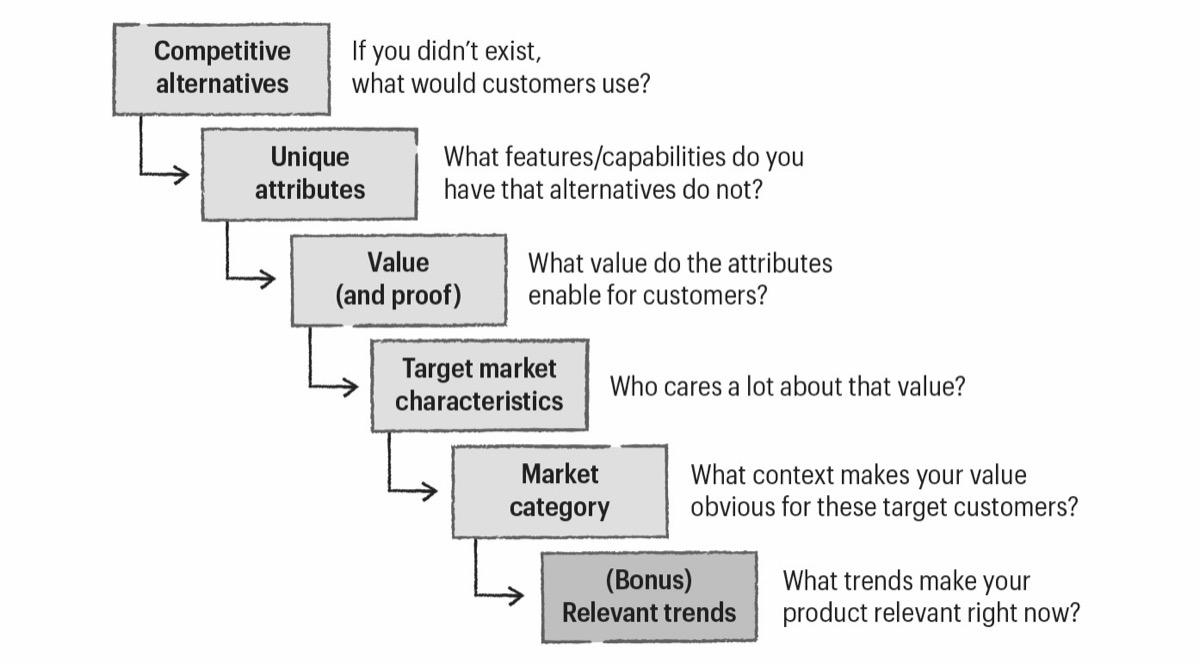
<aside class="callout_wR8p when_L_AZ" aria-label="When to use this page"><p class="label_r65P">When to use this page</p><div class="body_qzh2"><ul>
<li class="">Managers, consultants, product owners, and founders who must interpret or defend financial results without a CFA.</li>
<li class="">Building AI or digital business cases where “profit,” “ROI,” and “payback” get used loosely—pair with <a class="" href="https://sudip-ai-playbook.pages.dev/articles/financial-modelling-for-ai">Financial Modelling for AI</a>.</li>
<li class="">Coaching delivery leads on why a profitable month still burns cash, or why a “great” project ROI vanishes under scrutiny.</li>
<li class="">Pair with <a class="" href="https://sudip-ai-playbook.pages.dev/learning-map/07-commercial-financial-modelling">Commercial and Financial Modelling</a>, <a class="" href="https://sudip-ai-playbook.pages.dev/articles/model-finops-cost-engineering-roadmap">Model FinOps</a>, and <a class="" href="https://sudip-ai-playbook.pages.dev/articles/leadership-portfolio-performance-and-business-value">Portfolio performance and business value</a>.</li>
</ul></div></aside>
<p><img decoding="async" loading="lazy" alt="Financial Intelligence cover" src="https://sudip-ai-playbook.pages.dev/assets/images/cover-e675df412f21d28ad0ead1222575a42b.png" width="1200" height="543" class="img_ev3q"></p>
<p><em>Figure: cover of Berman, Case &amp; Knight, <em>Financial Intelligence</em> (educational illustration).</em></p>
<hr>
<h2 class="anchor anchorTargetStickyNavbar_Vzrq" id="0-why-this-book-still-matters-for-operators">0. Why this book still matters for operators<a href="https://sudip-ai-playbook.pages.dev/articles/financial-intelligence-managers-guide#0-why-this-book-still-matters-for-operators" class="hash-link" aria-label="Direct link to 0. Why this book still matters for operators" title="Direct link to 0. Why this book still matters for operators" translate="no">​</a></h2>
<p>Berman, Knight, and Case wrote for people who were never meant to be accountants—and who still get judged by accounting outcomes. The revised edition keeps the same thesis:</p>
<blockquote>
<p>Finance is both <strong>art</strong> and <strong>science</strong>. The science is the rules (GAAP/IFRS, double-entry, statement structure). The art is the <strong>estimates and assumptions</strong> that fill every material line.</p>
</blockquote>
<p>Without financial intelligence, managers:</p>
<ul>
<li class="">Celebrate revenue that may reverse.</li>
<li class="">Cut “costs” that are really investments.</li>
<li class="">Approve projects on ROI theatre.</li>
<li class="">Miss cash crises while the P&amp;L still looks fine.</li>
<li class="">Let finance own a monopoly on interpretation.</li>
</ul>
<p>With it, they ask better questions: <em>What estimate sits under this number? What would change the story? Where is the cash?</em></p>
<p>This guide follows the book’s arc: art of finance → income statement → balance sheet → cash → ratios → ROI → working capital → the financially intelligent company—with practitioner tables and checklists you can use in reviews, pursuits, and operating meetings.</p>
<hr>
<h2 class="anchor anchorTargetStickyNavbar_Vzrq" id="1-the-art-of-finance-assumptions-estimates-and-bias">1. The art of finance: assumptions, estimates, and bias<a href="https://sudip-ai-playbook.pages.dev/articles/financial-intelligence-managers-guide#1-the-art-of-finance-assumptions-estimates-and-bias" class="hash-link" aria-label="Direct link to 1. The art of finance: assumptions, estimates, and bias" title="Direct link to 1. The art of finance: assumptions, estimates, and bias" translate="no">​</a></h2>
<h3 class="anchor anchorTargetStickyNavbar_Vzrq" id="11-soft-numbers-hiding-in-hard-reports">1.1 Soft numbers hiding in hard reports<a href="https://sudip-ai-playbook.pages.dev/articles/financial-intelligence-managers-guide#11-soft-numbers-hiding-in-hard-reports" class="hash-link" aria-label="Direct link to 1.1 Soft numbers hiding in hard reports" title="Direct link to 1.1 Soft numbers hiding in hard reports" translate="no">​</a></h3>
<p>A financial statement looks precise: two decimals, neat columns, auditor signatures. Precision is not the same as objectivity. Material soft spots include:</p>
<table><thead><tr><th>Soft area</th><th>Typical judgment</th><th>Why it matters</th></tr></thead><tbody><tr><td><strong>Revenue recognition</strong></td><td>When is a sale “earned”? Multi-element contracts, licences, long-term projects</td><td>Pulls profit forward or pushes it back</td></tr><tr><td><strong>Allowance for doubtful accounts</strong></td><td>What % of receivables will never collect?</td><td>Expense today vs. overstated assets</td></tr><tr><td><strong>Inventory valuation / obsolescence</strong></td><td>FIFO vs. other methods; write-downs</td><td>Gross margin and asset strength</td></tr><tr><td><strong>Depreciation / amortisation lives</strong></td><td>Useful life and residual value</td><td>Timing of expense; asset book value</td></tr><tr><td><strong>Warranty / returns reserves</strong></td><td>Expected future claims</td><td>Can smooth or spike earnings</td></tr><tr><td><strong>Goodwill impairments</strong></td><td>Is the acquired business still worth the premium?</td><td>Big non-cash hits (or delayed ones)</td></tr><tr><td><strong>Provisions and contingencies</strong></td><td>Probability and amount of future outflow</td><td>Balance-sheet risk vs. P&amp;L surprise</td></tr></tbody></table>
<p><strong>Plain-language rule:</strong> if a human had to <em>guess a future</em>, that line is art. Treat it as a hypothesis with a confidence interval, not as a thermometer reading.</p>
<h3 class="anchor anchorTargetStickyNavbar_Vzrq" id="12-bias-is-not-always-fraud">1.2 Bias is not always fraud<a href="https://sudip-ai-playbook.pages.dev/articles/financial-intelligence-managers-guide#12-bias-is-not-always-fraud" class="hash-link" aria-label="Direct link to 1.2 Bias is not always fraud" title="Direct link to 1.2 Bias is not always fraud" translate="no">​</a></h3>
<p>Bias often looks like optimism under pressure:</p>
<ul>
<li class="">Stretching useful lives to protect current earnings.</li>
<li class="">Under-reserving for returns in a growth story.</li>
<li class="">Capitalising costs that competitors expense (or the reverse for “quality of earnings” theatre).</li>
<li class="">Channel stuffing that books revenue before real demand.</li>
<li class="">One-time “adjustments” that somehow recur every year.</li>
</ul>
<p>Financial intelligence does not require accusing colleagues of fraud. It requires asking: <strong>who benefits if this estimate tilts this way?</strong></p>
<h3 class="anchor anchorTargetStickyNavbar_Vzrq" id="13-the-three-statements-as-one-system">1.3 The three statements as one system<a href="https://sudip-ai-playbook.pages.dev/articles/financial-intelligence-managers-guide#13-the-three-statements-as-one-system" class="hash-link" aria-label="Direct link to 1.3 The three statements as one system" title="Direct link to 1.3 The three statements as one system" translate="no">​</a></h3>
<table><thead><tr><th>Statement</th><th>Question it answers</th><th>Time nature</th></tr></thead><tbody><tr><td><strong>Income statement (P&amp;L)</strong></td><td>Did we earn a profit over a period?</td><td>Flow over time (month/quarter/year)</td></tr><tr><td><strong>Balance sheet</strong></td><td>What do we own and owe at a moment?</td><td>Snapshot at a date</td></tr><tr><td><strong>Cash flow statement</strong></td><td>Where did cash come from and go?</td><td>Flow of cash (not accrual profit)</td></tr></tbody></table>
<p>They articulate. Net income feeds retained earnings on the balance sheet. Changes in balance-sheet working-capital accounts explain why cash ≠ profit. Capex and financing show up on cash flow even when the P&amp;L looks calm.</p>
<h3 class="anchor anchorTargetStickyNavbar_Vzrq" id="14-practitioner-checklist--art-of-finance">1.4 Practitioner checklist — art of finance<a href="https://sudip-ai-playbook.pages.dev/articles/financial-intelligence-managers-guide#14-practitioner-checklist--art-of-finance" class="hash-link" aria-label="Direct link to 1.4 Practitioner checklist — art of finance" title="Direct link to 1.4 Practitioner checklist — art of finance" translate="no">​</a></h3>
<ol>
<li class="">Before debating a number, name the <strong>estimate</strong> inside it.</li>
<li class="">Ask for the <strong>policy</strong> (revenue, capitalisation, depreciation) in one sentence.</li>
<li class="">Compare this period’s assumptions to last period’s—<strong>consistency</strong> matters as much as level.</li>
<li class="">Separate <strong>accounting profit</strong> from <strong>economic reality</strong> and from <strong>cash</strong>.</li>
<li class="">When someone says “the numbers don’t lie,” reply: “Numbers don’t lie; <strong>choices</strong> do.”</li>
</ol>
<hr>
<h2 class="anchor anchorTargetStickyNavbar_Vzrq" id="2-the-income-statement-profit-as-a-constructed-story">2. The income statement: profit as a constructed story<a href="https://sudip-ai-playbook.pages.dev/articles/financial-intelligence-managers-guide#2-the-income-statement-profit-as-a-constructed-story" class="hash-link" aria-label="Direct link to 2. The income statement: profit as a constructed story" title="Direct link to 2. The income statement: profit as a constructed story" translate="no">​</a></h2>
<h3 class="anchor anchorTargetStickyNavbar_Vzrq" id="21-the-spine-of-the-pl">2.1 The spine of the P&amp;L<a href="https://sudip-ai-playbook.pages.dev/articles/financial-intelligence-managers-guide#21-the-spine-of-the-pl" class="hash-link" aria-label="Direct link to 2.1 The spine of the P&amp;L" title="Direct link to 2.1 The spine of the P&amp;L" translate="no">​</a></h3>
<p>A simplified income statement:</p>
<div class="language-text codeBlockContainer_Ckt0 theme-code-block" style="--prism-color:#393A34;--prism-background-color:#f6f8fa"><div class="codeBlockContent_QJqH"><pre tabindex="0" class="prism-code language-text codeBlock_bY9V thin-scrollbar" style="color:#393A34;background-color:#f6f8fa"><code class="codeBlockLines_e6Vv"><div class="token-line" style="color:#393A34"><span class="token plain">Revenue (Sales)</span><br></div><div class="token-line" style="color:#393A34"><span class="token plain">− Cost of goods sold (COGS) / cost of services</span><br></div><div class="token-line" style="color:#393A34"><span class="token plain">= Gross profit</span><br></div><div class="token-line" style="color:#393A34"><span class="token plain">− Operating expenses (OpEx): SG&amp;A, R&amp;D, etc.</span><br></div><div class="token-line" style="color:#393A34"><span class="token plain">= Operating profit (EBIT / operating income)</span><br></div><div class="token-line" style="color:#393A34"><span class="token plain">± Other income/expense; interest</span><br></div><div class="token-line" style="color:#393A34"><span class="token plain">= Profit before tax</span><br></div><div class="token-line" style="color:#393A34"><span class="token plain">− Taxes</span><br></div><div class="token-line" style="color:#393A34"><span class="token plain">= Net income (the “bottom line”)</span><br></div></code></pre></div></div>
<p><strong>Plain language:</strong></p>
<ul>
<li class=""><strong>Revenue</strong> — what the company claims it earned from customers in the period under recognition rules.</li>
<li class=""><strong>COGS</strong> — direct costs of delivering what was sold (materials, direct labour, hosting tied to delivery, etc.).</li>
<li class=""><strong>Gross profit</strong> — leftover after direct delivery cost; first test of unit economics.</li>
<li class=""><strong>OpEx</strong> — costs of running the business (sales, admin, product, G&amp;A).</li>
<li class=""><strong>Operating profit</strong> — profit from core operations before financing structure and (often) before one-offs.</li>
<li class=""><strong>Net income</strong> — after interest and tax; belongs to equity holders in the residual sense.</li>
</ul>
<h3 class="anchor anchorTargetStickyNavbar_Vzrq" id="22-matching-and-accruals">2.2 Matching and accruals<a href="https://sudip-ai-playbook.pages.dev/articles/financial-intelligence-managers-guide#22-matching-and-accruals" class="hash-link" aria-label="Direct link to 2.2 Matching and accruals" title="Direct link to 2.2 Matching and accruals" translate="no">​</a></h3>
<p>Accrual accounting tries to <strong>match</strong> revenues with the costs that generated them—even if cash moved in a different period.</p>
<table><thead><tr><th>Event</th><th>Cash timing</th><th>Accrual treatment (typical)</th></tr></thead><tbody><tr><td>Sell on credit</td><td>Cash later</td><td>Revenue now; receivable on balance sheet</td></tr><tr><td>Prepay rent</td><td>Cash now</td><td>Expense over the periods covered (prepaid asset)</td></tr><tr><td>Buy inventory</td><td>Cash now</td><td>Asset until sold; then COGS</td></tr><tr><td>Use equipment</td><td>Cash earlier (capex)</td><td>Expense via depreciation over life</td></tr><tr><td>Accrue bonus</td><td>Cash later</td><td>Expense now; liability until paid</td></tr></tbody></table>
<p>This is why a “great” sales month can still starve cash (receivables swell) and why a “bad” P&amp;L month can still be cash-rich (customers prepaid).</p>
<h3 class="anchor anchorTargetStickyNavbar_Vzrq" id="23-gross-margin-and-operating-margin">2.3 Gross margin and operating margin<a href="https://sudip-ai-playbook.pages.dev/articles/financial-intelligence-managers-guide#23-gross-margin-and-operating-margin" class="hash-link" aria-label="Direct link to 2.3 Gross margin and operating margin" title="Direct link to 2.3 Gross margin and operating margin" translate="no">​</a></h3>
<span class="katex-display"><span class="katex"><span class="katex-mathml"><math xmlns="http://www.w3.org/1998/Math/MathML" display="block"><semantics><mrow><mtext>Gross&nbsp;margin</mtext><mo>=</mo><mfrac><mtext>Gross&nbsp;profit</mtext><mtext>Revenue</mtext></mfrac></mrow><annotation encoding="application/x-tex">\text{Gross margin} = \frac{\text{Gross profit}}{\text{Revenue}}
</annotation></semantics></math></span><span class="katex-html" aria-hidden="true"><span class="base"><span class="strut" style="height:0.8778em;vertical-align:-0.1944em"></span><span class="mord text"><span class="mord">Gross&nbsp;margin</span></span><span class="mspace" style="margin-right:0.2778em"></span><span class="mrel">=</span><span class="mspace" style="margin-right:0.2778em"></span></span><span class="base"><span class="strut" style="height:2.0574em;vertical-align:-0.686em"></span><span class="mord"><span class="mopen nulldelimiter"></span><span class="mfrac"><span class="vlist-t vlist-t2"><span class="vlist-r"><span class="vlist" style="height:1.3714em"><span style="top:-2.314em"><span class="pstrut" style="height:3em"></span><span class="mord"><span class="mord text"><span class="mord">Revenue</span></span></span></span><span style="top:-3.23em"><span class="pstrut" style="height:3em"></span><span class="frac-line" style="border-bottom-width:0.04em"></span></span><span style="top:-3.677em"><span class="pstrut" style="height:3em"></span><span class="mord"><span class="mord text"><span class="mord">Gross&nbsp;profit</span></span></span></span></span><span class="vlist-s">​</span></span><span class="vlist-r"><span class="vlist" style="height:0.686em"><span></span></span></span></span></span><span class="mclose nulldelimiter"></span></span></span></span></span></span>
<span class="katex-display"><span class="katex"><span class="katex-mathml"><math xmlns="http://www.w3.org/1998/Math/MathML" display="block"><semantics><mrow><mtext>Operating&nbsp;margin</mtext><mo>=</mo><mfrac><mtext>Operating&nbsp;profit</mtext><mtext>Revenue</mtext></mfrac></mrow><annotation encoding="application/x-tex">\text{Operating margin} = \frac{\text{Operating profit}}{\text{Revenue}}
</annotation></semantics></math></span><span class="katex-html" aria-hidden="true"><span class="base"><span class="strut" style="height:0.8778em;vertical-align:-0.1944em"></span><span class="mord text"><span class="mord">Operating&nbsp;margin</span></span><span class="mspace" style="margin-right:0.2778em"></span><span class="mrel">=</span><span class="mspace" style="margin-right:0.2778em"></span></span><span class="base"><span class="strut" style="height:2.0574em;vertical-align:-0.686em"></span><span class="mord"><span class="mopen nulldelimiter"></span><span class="mfrac"><span class="vlist-t vlist-t2"><span class="vlist-r"><span class="vlist" style="height:1.3714em"><span style="top:-2.314em"><span class="pstrut" style="height:3em"></span><span class="mord"><span class="mord text"><span class="mord">Revenue</span></span></span></span><span style="top:-3.23em"><span class="pstrut" style="height:3em"></span><span class="frac-line" style="border-bottom-width:0.04em"></span></span><span style="top:-3.677em"><span class="pstrut" style="height:3em"></span><span class="mord"><span class="mord text"><span class="mord">Operating&nbsp;profit</span></span></span></span></span><span class="vlist-s">​</span></span><span class="vlist-r"><span class="vlist" style="height:0.686em"><span></span></span></span></span></span><span class="mclose nulldelimiter"></span></span></span></span></span></span>
<p><strong>Plain language:</strong> gross margin asks “is the offer economically viable at the unit level?” Operating margin asks “after we pay to run the company, is the core business earning?”</p>
<table><thead><tr><th>Margin signal</th><th>Common reading</th><th>Questions to ask</th></tr></thead><tbody><tr><td>Gross margin falling</td><td>Pricing pressure, mix shift, cost inflation, recognition changes</td><td>Is COGS definition stable? Mix by product?</td></tr><tr><td>Gross up, operating down</td><td>OpEx ballooning (sales hire, R&amp;D, overhead)</td><td>Investment or waste? Payback path?</td></tr><tr><td>Operating up via “other”</td><td>One-offs, asset sales, accounting shifts</td><td>Recurring?</td></tr><tr><td>Net up while operating flat</td><td>Interest, tax, or below-the-line items</td><td>Financing games?</td></tr></tbody></table>
<h3 class="anchor anchorTargetStickyNavbar_Vzrq" id="24-depreciation-is-not-a-cash-ritual">2.4 Depreciation is not a cash ritual<a href="https://sudip-ai-playbook.pages.dev/articles/financial-intelligence-managers-guide#24-depreciation-is-not-a-cash-ritual" class="hash-link" aria-label="Direct link to 2.4 Depreciation is not a cash ritual" title="Direct link to 2.4 Depreciation is not a cash ritual" translate="no">​</a></h3>
<p>Depreciation allocates past capital spending across future periods. It reduces profit <strong>without</strong> reducing cash in the depreciation period. Cash left when you bought the asset (or when you finance it).</p>
<p>Managers who treat depreciation as “fake” and ignore replacement needs eventually face a <strong>capex cliff</strong>. Managers who treat every depreciation dollar as sacred cash sometimes under-invest. Financial intelligence holds both truths: non-cash expense <em>and</em> real economic wear.</p>
<h3 class="anchor anchorTargetStickyNavbar_Vzrq" id="25-practitioner-checklist--income-statement">2.5 Practitioner checklist — income statement<a href="https://sudip-ai-playbook.pages.dev/articles/financial-intelligence-managers-guide#25-practitioner-checklist--income-statement" class="hash-link" aria-label="Direct link to 2.5 Practitioner checklist — income statement" title="Direct link to 2.5 Practitioner checklist — income statement" translate="no">​</a></h3>
<ol>
<li class="">Start at <strong>revenue quality</strong>: recognition policy, returns, concentration, backlog vs. booked.</li>
<li class="">Inspect <strong>gross margin</strong> by product/segment before celebrating total profit.</li>
<li class="">Classify OpEx into <strong>run-the-business</strong> vs. <strong>change-the-business</strong>.</li>
<li class="">Ask which expenses were <strong>capitalised</strong> instead of expensed (and why).</li>
<li class="">Read footnotes / management discussion for <strong>non-GAAP</strong> adjustments—then decide if you agree.</li>
</ol>
<hr>
<h2 class="anchor anchorTargetStickyNavbar_Vzrq" id="3-the-balance-sheet-what-we-own-what-we-owe-whats-left">3. The balance sheet: what we own, what we owe, what’s left<a href="https://sudip-ai-playbook.pages.dev/articles/financial-intelligence-managers-guide#3-the-balance-sheet-what-we-own-what-we-owe-whats-left" class="hash-link" aria-label="Direct link to 3. The balance sheet: what we own, what we owe, what’s left" title="Direct link to 3. The balance sheet: what we own, what we owe, what’s left" translate="no">​</a></h2>
<h3 class="anchor anchorTargetStickyNavbar_Vzrq" id="31-the-fundamental-equation">3.1 The fundamental equation<a href="https://sudip-ai-playbook.pages.dev/articles/financial-intelligence-managers-guide#31-the-fundamental-equation" class="hash-link" aria-label="Direct link to 3.1 The fundamental equation" title="Direct link to 3.1 The fundamental equation" translate="no">​</a></h3>
<span class="katex-display"><span class="katex"><span class="katex-mathml"><math xmlns="http://www.w3.org/1998/Math/MathML" display="block"><semantics><mrow><mtext>Assets</mtext><mo>=</mo><mtext>Liabilities</mtext><mo>+</mo><mtext>Equity</mtext></mrow><annotation encoding="application/x-tex">\text{Assets} = \text{Liabilities} + \text{Equity}
</annotation></semantics></math></span><span class="katex-html" aria-hidden="true"><span class="base"><span class="strut" style="height:0.6833em"></span><span class="mord text"><span class="mord">Assets</span></span><span class="mspace" style="margin-right:0.2778em"></span><span class="mrel">=</span><span class="mspace" style="margin-right:0.2778em"></span></span><span class="base"><span class="strut" style="height:0.7778em;vertical-align:-0.0833em"></span><span class="mord text"><span class="mord">Liabilities</span></span><span class="mspace" style="margin-right:0.2222em"></span><span class="mbin">+</span><span class="mspace" style="margin-right:0.2222em"></span></span><span class="base"><span class="strut" style="height:0.8778em;vertical-align:-0.1944em"></span><span class="mord text"><span class="mord">Equity</span></span></span></span></span></span>
<p><strong>Plain language:</strong> everything the company controls that has future economic benefit is financed either by creditors (liabilities) or owners (equity).</p>
<table><thead><tr><th>Side</th><th>Examples</th><th>Manager intuition</th></tr></thead><tbody><tr><td><strong>Current assets</strong></td><td>Cash, receivables, inventory, short-term prepaids</td><td>Near-term operating fuel</td></tr><tr><td><strong>Non-current assets</strong></td><td>PP&amp;E, capitalised software, long-term investments, goodwill</td><td>Capacity and past bets</td></tr><tr><td><strong>Current liabilities</strong></td><td>Payables, accrued expenses, short-term debt, deferred revenue</td><td>Bills and obligations due soon</td></tr><tr><td><strong>Non-current liabilities</strong></td><td>Long-term debt, long lease liabilities, deferred tax</td><td>Structural financing</td></tr><tr><td><strong>Equity</strong></td><td>Capital contributed, retained earnings, other comprehensive income</td><td>Owners’ residual claim</td></tr></tbody></table>
<h3 class="anchor anchorTargetStickyNavbar_Vzrq" id="32-why-the-balance-sheet-feels-stale-but-isnt">3.2 Why the balance sheet feels “stale” but isn’t<a href="https://sudip-ai-playbook.pages.dev/articles/financial-intelligence-managers-guide#32-why-the-balance-sheet-feels-stale-but-isnt" class="hash-link" aria-label="Direct link to 3.2 Why the balance sheet feels “stale” but isn’t" title="Direct link to 3.2 Why the balance sheet feels “stale” but isn’t" translate="no">​</a></h3>
<p>Historical cost means many assets sit at <strong>old purchase prices</strong> minus depreciation—not at market value. That can understate (real estate bought decades ago) or overstate (obsolete inventory not yet written down).</p>
<p>Goodwill is especially soft: it is the premium paid in an acquisition over identifiable net assets. It is not “cash in a vault.” Impairment tests are estimate-heavy.</p>
<h3 class="anchor anchorTargetStickyNavbar_Vzrq" id="33-equity-is-not-cash-in-the-bank">3.3 Equity is not cash in the bank<a href="https://sudip-ai-playbook.pages.dev/articles/financial-intelligence-managers-guide#33-equity-is-not-cash-in-the-bank" class="hash-link" aria-label="Direct link to 3.3 Equity is not cash in the bank" title="Direct link to 3.3 Equity is not cash in the bank" translate="no">​</a></h3>
<p>Retained earnings are cumulative profits kept in the business—not a pile of spendable cash. Cash is only the cash line (and equivalents). Confusing equity with cash is a classic non-finance manager error.</p>
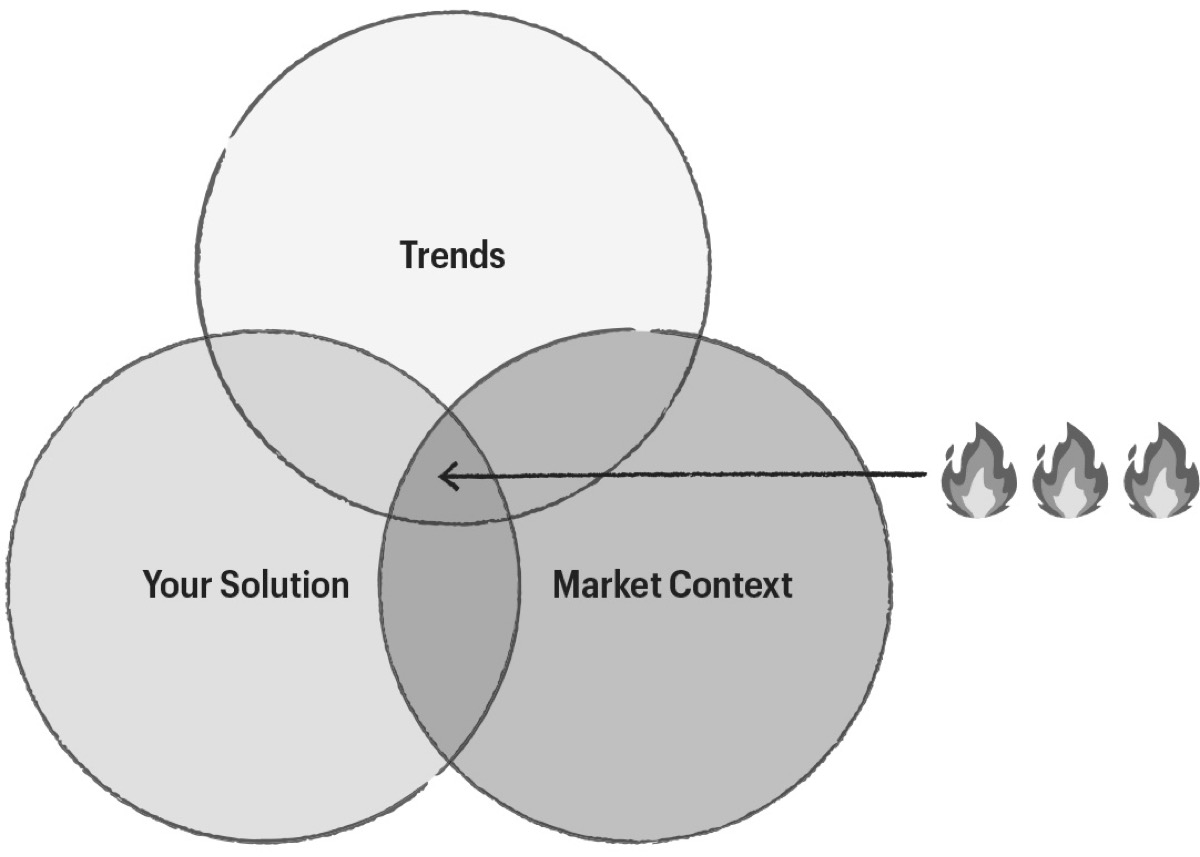
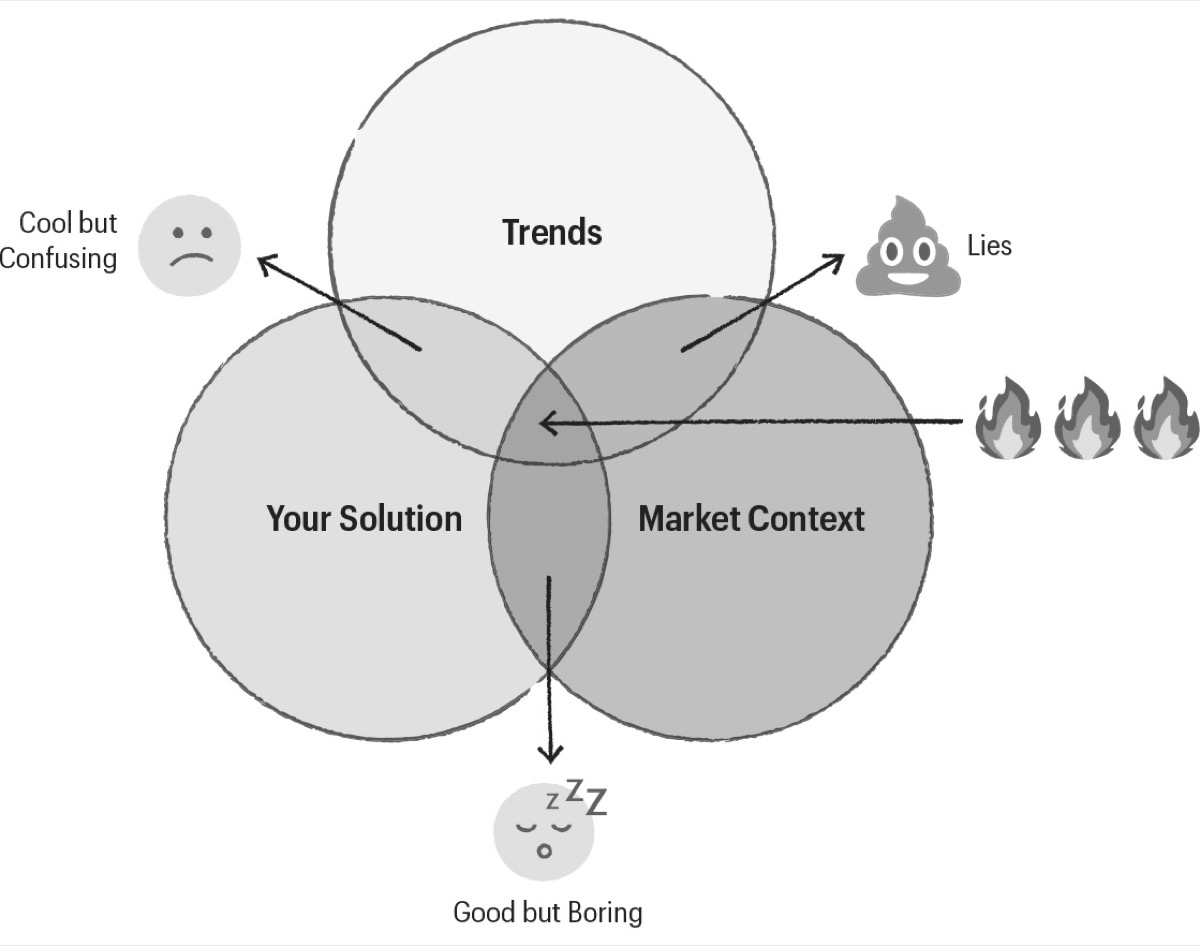
<h3 class="anchor anchorTargetStickyNavbar_Vzrq" id="34-liquidity-vs-solvency-preview-of-ratios">3.4 Liquidity vs. solvency (preview of ratios)<a href="https://sudip-ai-playbook.pages.dev/articles/financial-intelligence-managers-guide#34-liquidity-vs-solvency-preview-of-ratios" class="hash-link" aria-label="Direct link to 3.4 Liquidity vs. solvency (preview of ratios)" title="Direct link to 3.4 Liquidity vs. solvency (preview of ratios)" translate="no">​</a></h3>
<ul>
<li class=""><strong>Liquidity:</strong> can we meet near-term obligations? (current assets vs. current liabilities)</li>
<li class=""><strong>Solvency:</strong> can we meet long-term obligations? (debt vs. equity / assets; interest coverage)</li>
</ul>
<p>A company can be solvent on paper and illiquid in practice—or liquid this quarter while structurally over-levered.</p>
<h3 class="anchor anchorTargetStickyNavbar_Vzrq" id="35-practitioner-checklist--balance-sheet">3.5 Practitioner checklist — balance sheet<a href="https://sudip-ai-playbook.pages.dev/articles/financial-intelligence-managers-guide#35-practitioner-checklist--balance-sheet" class="hash-link" aria-label="Direct link to 3.5 Practitioner checklist — balance sheet" title="Direct link to 3.5 Practitioner checklist — balance sheet" translate="no">​</a></h3>
<ol>
<li class="">Scan <strong>cash + receivables + inventory − payables</strong> as a rough operating footprint.</li>
<li class="">Watch <strong>deferred revenue</strong>: liability that often foreshadows future recognised sales (and cash already collected).</li>
<li class="">Question <strong>goodwill and intangibles</strong> as a share of total assets.</li>
<li class="">Check <strong>debt maturity</strong> ladder—not only total debt.</li>
<li class="">Ask: if we had to <strong>mark soft assets to reality</strong>, what breaks?</li>
</ol>
<hr>
<h2 class="anchor anchorTargetStickyNavbar_Vzrq" id="4-cash-is-king-why-profit-is-not-cash">4. Cash is king: why profit is not cash<a href="https://sudip-ai-playbook.pages.dev/articles/financial-intelligence-managers-guide#4-cash-is-king-why-profit-is-not-cash" class="hash-link" aria-label="Direct link to 4. Cash is king: why profit is not cash" title="Direct link to 4. Cash is king: why profit is not cash" translate="no">​</a></h2>
<h3 class="anchor anchorTargetStickyNavbar_Vzrq" id="41-the-managers-most-expensive-confusion">4.1 The manager’s most expensive confusion<a href="https://sudip-ai-playbook.pages.dev/articles/financial-intelligence-managers-guide#41-the-managers-most-expensive-confusion" class="hash-link" aria-label="Direct link to 4.1 The manager’s most expensive confusion" title="Direct link to 4.1 The manager’s most expensive confusion" translate="no">​</a></h3>
<p>Profit is an <strong>accrual opinion</strong> about a period. Cash is what pays salaries, vendors, lenders, and tax authorities.</p>
<p>A company can show profit and run out of cash when:</p>
<ul>
<li class="">Customers pay slowly (receivables up).</li>
<li class="">Inventory builds faster than sales.</li>
<li class="">Large capex hits.</li>
<li class="">Debt principal is repaid (not an expense).</li>
<li class="">Taxes or deposits timing bites.</li>
</ul>
<p>A company can show a loss and still generate cash when:</p>
<ul>
<li class="">Depreciation is large relative to cash costs.</li>
<li class="">Working capital releases (collect receivables, sell inventory, stretch payables carefully).</li>
<li class="">Customers prepay.</li>
</ul>
<h3 class="anchor anchorTargetStickyNavbar_Vzrq" id="42-the-cash-flow-statement-in-three-buckets">4.2 The cash flow statement in three buckets<a href="https://sudip-ai-playbook.pages.dev/articles/financial-intelligence-managers-guide#42-the-cash-flow-statement-in-three-buckets" class="hash-link" aria-label="Direct link to 4.2 The cash flow statement in three buckets" title="Direct link to 4.2 The cash flow statement in three buckets" translate="no">​</a></h3>
<table><thead><tr><th>Section</th><th>Meaning</th><th>Typical contents</th></tr></thead><tbody><tr><td><strong>Operating</strong></td><td>Cash from core business</td><td>Net income ± non-cash items ± working-capital changes</td></tr><tr><td><strong>Investing</strong></td><td>Cash for long-term assets / investments</td><td>Capex, acquisitions, asset sales</td></tr><tr><td><strong>Financing</strong></td><td>Cash from/to capital providers</td><td>Debt draw/repay, equity issue, dividends, buybacks</td></tr></tbody></table>
<p><strong>Indirect method (most common for operating):</strong> start with net income, add back non-cash expenses (depreciation), then adjust for changes in working-capital accounts.</p>
<h3 class="anchor anchorTargetStickyNavbar_Vzrq" id="43-free-cash-flow-managers-working-definition">4.3 Free cash flow (manager’s working definition)<a href="https://sudip-ai-playbook.pages.dev/articles/financial-intelligence-managers-guide#43-free-cash-flow-managers-working-definition" class="hash-link" aria-label="Direct link to 4.3 Free cash flow (manager’s working definition)" title="Direct link to 4.3 Free cash flow (manager’s working definition)" translate="no">​</a></h3>
<p>A practical formulation many operators use:</p>
<span class="katex-display"><span class="katex"><span class="katex-mathml"><math xmlns="http://www.w3.org/1998/Math/MathML" display="block"><semantics><mrow><mtext>Free&nbsp;cash&nbsp;flow</mtext><mo>≈</mo><mtext>Cash&nbsp;from&nbsp;operations</mtext><mo>−</mo><mtext>Capital&nbsp;expenditures</mtext></mrow><annotation encoding="application/x-tex">\text{Free cash flow} \approx \text{Cash from operations} - \text{Capital expenditures}
</annotation></semantics></math></span><span class="katex-html" aria-hidden="true"><span class="base"><span class="strut" style="height:0.6944em"></span><span class="mord text"><span class="mord">Free&nbsp;cash&nbsp;flow</span></span><span class="mspace" style="margin-right:0.2778em"></span><span class="mrel">≈</span><span class="mspace" style="margin-right:0.2778em"></span></span><span class="base"><span class="strut" style="height:0.8889em;vertical-align:-0.1944em"></span><span class="mord text"><span class="mord">Cash&nbsp;from&nbsp;operations</span></span><span class="mspace" style="margin-right:0.2222em"></span><span class="mbin">−</span><span class="mspace" style="margin-right:0.2222em"></span></span><span class="base"><span class="strut" style="height:0.8889em;vertical-align:-0.1944em"></span><span class="mord text"><span class="mord">Capital&nbsp;expenditures</span></span></span></span></span></span>
<p><strong>Plain language:</strong> cash generated by the business after maintaining/expanding the asset base needed to keep going—before deciding how to pay financiers (exact definitions vary; be explicit in models).</p>
<p>For AI and digital products, “capex” may be light while <strong>operating cash burns</strong> on cloud, models, and people—so always map the definition to your cost shape. See <a class="" href="https://sudip-ai-playbook.pages.dev/articles/financial-modelling-for-ai">Financial Modelling for AI</a>.</p>
<h3 class="anchor anchorTargetStickyNavbar_Vzrq" id="44-profit--cash--worked-intuition-table">4.4 Profit ≠ cash — worked intuition table<a href="https://sudip-ai-playbook.pages.dev/articles/financial-intelligence-managers-guide#44-profit--cash--worked-intuition-table" class="hash-link" aria-label="Direct link to 4.4 Profit ≠ cash — worked intuition table" title="Direct link to 4.4 Profit ≠ cash — worked intuition table" translate="no">​</a></h3>
<table><thead><tr><th>Scenario</th><th>P&amp;L effect</th><th>Cash effect</th></tr></thead><tbody><tr><td>Credit sale</td><td>Revenue ↑</td><td>Cash unchanged until collection</td></tr><tr><td>Collect old receivable</td><td>None (already booked)</td><td>Cash ↑</td></tr><tr><td>Buy inventory with cash</td><td>None until sold</td><td>Cash ↓</td></tr><tr><td>Sell inventory</td><td>COGS ↑; revenue if sold</td><td>Cash ↑ if cash sale</td></tr><tr><td>Depreciate machine</td><td>Expense ↑</td><td>No cash move this period</td></tr><tr><td>Buy machine with cash</td><td>Usually none (balance sheet)</td><td>Cash ↓ (investing)</td></tr><tr><td>Borrow money</td><td>None (usually)</td><td>Cash ↑ (financing)</td></tr><tr><td>Repay loan principal</td><td>None</td><td>Cash ↓</td></tr><tr><td>Pay interest</td><td>Expense ↑</td><td>Cash ↓</td></tr></tbody></table>
<h3 class="anchor anchorTargetStickyNavbar_Vzrq" id="45-practitioner-checklist--cash">4.5 Practitioner checklist — cash<a href="https://sudip-ai-playbook.pages.dev/articles/financial-intelligence-managers-guide#45-practitioner-checklist--cash" class="hash-link" aria-label="Direct link to 4.5 Practitioner checklist — cash" title="Direct link to 4.5 Practitioner checklist — cash" translate="no">​</a></h3>
<ol>
<li class="">In every ops review, show <strong>cash</strong> next to <strong>profit</strong>—never profit alone.</li>
<li class="">Explain the bridge: profit → working capital → capex → financing.</li>
<li class="">Treat growing receivables + growing inventory as a <strong>cash tax on growth</strong>.</li>
<li class="">For projects, demand a <strong>cash timeline</strong>, not only an ROI %.</li>
<li class="">Never approve a plan that is “profitable in year 2” without a <strong>funding plan for year 1</strong>.</li>
</ol>
<hr>
<h2 class="anchor anchorTargetStickyNavbar_Vzrq" id="5-ratios-diagnostics-not-destiny">5. Ratios: diagnostics, not destiny<a href="https://sudip-ai-playbook.pages.dev/articles/financial-intelligence-managers-guide#5-ratios-diagnostics-not-destiny" class="hash-link" aria-label="Direct link to 5. Ratios: diagnostics, not destiny" title="Direct link to 5. Ratios: diagnostics, not destiny" translate="no">​</a></h2>
<h3 class="anchor anchorTargetStickyNavbar_Vzrq" id="51-why-ratios-exist">5.1 Why ratios exist<a href="https://sudip-ai-playbook.pages.dev/articles/financial-intelligence-managers-guide#51-why-ratios-exist" class="hash-link" aria-label="Direct link to 5.1 Why ratios exist" title="Direct link to 5.1 Why ratios exist" translate="no">​</a></h3>
<p>A raw profit of “$10 million” means nothing without scale, capital, and risk context. Ratios normalise. They also <strong>embed the same estimates</strong> as the statements—so garbage in, ratio out.</p>
<p>Use ratios to:</p>
<ul>
<li class="">Compare periods (trend).</li>
<li class="">Compare peers (benchmark).</li>
<li class="">Trigger questions (not automatic conclusions).</li>
</ul>
<h3 class="anchor anchorTargetStickyNavbar_Vzrq" id="52-profitability-ratios">5.2 Profitability ratios<a href="https://sudip-ai-playbook.pages.dev/articles/financial-intelligence-managers-guide#52-profitability-ratios" class="hash-link" aria-label="Direct link to 5.2 Profitability ratios" title="Direct link to 5.2 Profitability ratios" translate="no">​</a></h3>
<table><thead><tr><th>Ratio</th><th>Formula (plain)</th><th>Asks</th></tr></thead><tbody><tr><td><strong>Gross margin</strong></td><td>Gross profit ÷ Revenue</td><td>Unit economics strength</td></tr><tr><td><strong>Operating margin</strong></td><td>Operating profit ÷ Revenue</td><td>Core business efficiency</td></tr><tr><td><strong>Net margin</strong></td><td>Net income ÷ Revenue</td><td>Bottom-line yield on sales</td></tr><tr><td><strong>ROA</strong></td><td>Net income ÷ Average total assets</td><td>Profit per asset dollar</td></tr><tr><td><strong>ROE</strong></td><td>Net income ÷ Average equity</td><td>Profit per owner dollar</td></tr><tr><td><strong>ROIC</strong> (conceptual)</td><td>NOPAT ÷ Invested capital</td><td>Return on capital used in operations</td></tr></tbody></table>
<p><strong>Leverage caution on ROE:</strong> high debt can juice ROE while increasing risk. Always read ROE with leverage and interest coverage.</p>
<h3 class="anchor anchorTargetStickyNavbar_Vzrq" id="53-liquidity-ratios">5.3 Liquidity ratios<a href="https://sudip-ai-playbook.pages.dev/articles/financial-intelligence-managers-guide#53-liquidity-ratios" class="hash-link" aria-label="Direct link to 5.3 Liquidity ratios" title="Direct link to 5.3 Liquidity ratios" translate="no">​</a></h3>
<span class="katex-display"><span class="katex"><span class="katex-mathml"><math xmlns="http://www.w3.org/1998/Math/MathML" display="block"><semantics><mrow><mtext>Current&nbsp;ratio</mtext><mo>=</mo><mfrac><mtext>Current&nbsp;assets</mtext><mtext>Current&nbsp;liabilities</mtext></mfrac></mrow><annotation encoding="application/x-tex">\text{Current ratio} = \frac{\text{Current assets}}{\text{Current liabilities}}
</annotation></semantics></math></span><span class="katex-html" aria-hidden="true"><span class="base"><span class="strut" style="height:0.6833em"></span><span class="mord text"><span class="mord">Current&nbsp;ratio</span></span><span class="mspace" style="margin-right:0.2778em"></span><span class="mrel">=</span><span class="mspace" style="margin-right:0.2778em"></span></span><span class="base"><span class="strut" style="height:2.0463em;vertical-align:-0.686em"></span><span class="mord"><span class="mopen nulldelimiter"></span><span class="mfrac"><span class="vlist-t vlist-t2"><span class="vlist-r"><span class="vlist" style="height:1.3603em"><span style="top:-2.314em"><span class="pstrut" style="height:3em"></span><span class="mord"><span class="mord text"><span class="mord">Current&nbsp;liabilities</span></span></span></span><span style="top:-3.23em"><span class="pstrut" style="height:3em"></span><span class="frac-line" style="border-bottom-width:0.04em"></span></span><span style="top:-3.677em"><span class="pstrut" style="height:3em"></span><span class="mord"><span class="mord text"><span class="mord">Current&nbsp;assets</span></span></span></span></span><span class="vlist-s">​</span></span><span class="vlist-r"><span class="vlist" style="height:0.686em"><span></span></span></span></span></span><span class="mclose nulldelimiter"></span></span></span></span></span></span>
<span class="katex-display"><span class="katex"><span class="katex-mathml"><math xmlns="http://www.w3.org/1998/Math/MathML" display="block"><semantics><mrow><mtext>Quick&nbsp;ratio</mtext><mo>=</mo><mfrac><mtext>Cash&nbsp;+&nbsp;Receivables&nbsp;(+&nbsp;marketable&nbsp;securities)</mtext><mtext>Current&nbsp;liabilities</mtext></mfrac></mrow><annotation encoding="application/x-tex">\text{Quick ratio} = \frac{\text{Cash + Receivables (+ marketable securities)}}{\text{Current liabilities}}
</annotation></semantics></math></span><span class="katex-html" aria-hidden="true"><span class="base"><span class="strut" style="height:0.8889em;vertical-align:-0.1944em"></span><span class="mord text"><span class="mord">Quick&nbsp;ratio</span></span><span class="mspace" style="margin-right:0.2778em"></span><span class="mrel">=</span><span class="mspace" style="margin-right:0.2778em"></span></span><span class="base"><span class="strut" style="height:2.113em;vertical-align:-0.686em"></span><span class="mord"><span class="mopen nulldelimiter"></span><span class="mfrac"><span class="vlist-t vlist-t2"><span class="vlist-r"><span class="vlist" style="height:1.427em"><span style="top:-2.314em"><span class="pstrut" style="height:3em"></span><span class="mord"><span class="mord text"><span class="mord">Current&nbsp;liabilities</span></span></span></span><span style="top:-3.23em"><span class="pstrut" style="height:3em"></span><span class="frac-line" style="border-bottom-width:0.04em"></span></span><span style="top:-3.677em"><span class="pstrut" style="height:3em"></span><span class="mord"><span class="mord text"><span class="mord">Cash&nbsp;+&nbsp;Receivables&nbsp;(+&nbsp;marketable&nbsp;securities)</span></span></span></span></span><span class="vlist-s">​</span></span><span class="vlist-r"><span class="vlist" style="height:0.686em"><span></span></span></span></span></span><span class="mclose nulldelimiter"></span></span></span></span></span></span>
<p><strong>Plain language:</strong> current ratio includes inventory; quick ratio asks whether you can pay near-term bills without relying on selling stock.</p>
<table><thead><tr><th>Pattern</th><th>Possible story</th></tr></thead><tbody><tr><td>Current ratio rising via inventory</td><td>Liquidity illusion; stock may be stale</td></tr><tr><td>Quick ratio falling while current stable</td><td>Inventory dependence increasing</td></tr><tr><td>Both falling in growth</td><td>Working-capital strain—fund it deliberately</td></tr></tbody></table>
<h3 class="anchor anchorTargetStickyNavbar_Vzrq" id="54-leverage-and-coverage">5.4 Leverage and coverage<a href="https://sudip-ai-playbook.pages.dev/articles/financial-intelligence-managers-guide#54-leverage-and-coverage" class="hash-link" aria-label="Direct link to 5.4 Leverage and coverage" title="Direct link to 5.4 Leverage and coverage" translate="no">​</a></h3>
<span class="katex-display"><span class="katex"><span class="katex-mathml"><math xmlns="http://www.w3.org/1998/Math/MathML" display="block"><semantics><mrow><mtext>Debt-to-equity</mtext><mo>=</mo><mfrac><mtext>Total&nbsp;debt</mtext><mtext>Equity</mtext></mfrac></mrow><annotation encoding="application/x-tex">\text{Debt-to-equity} = \frac{\text{Total debt}}{\text{Equity}}
</annotation></semantics></math></span><span class="katex-html" aria-hidden="true"><span class="base"><span class="strut" style="height:0.8889em;vertical-align:-0.1944em"></span><span class="mord text"><span class="mord">Debt-to-equity</span></span><span class="mspace" style="margin-right:0.2778em"></span><span class="mrel">=</span><span class="mspace" style="margin-right:0.2778em"></span></span><span class="base"><span class="strut" style="height:2.2519em;vertical-align:-0.8804em"></span><span class="mord"><span class="mopen nulldelimiter"></span><span class="mfrac"><span class="vlist-t vlist-t2"><span class="vlist-r"><span class="vlist" style="height:1.3714em"><span style="top:-2.314em"><span class="pstrut" style="height:3em"></span><span class="mord"><span class="mord text"><span class="mord">Equity</span></span></span></span><span style="top:-3.23em"><span class="pstrut" style="height:3em"></span><span class="frac-line" style="border-bottom-width:0.04em"></span></span><span style="top:-3.677em"><span class="pstrut" style="height:3em"></span><span class="mord"><span class="mord text"><span class="mord">Total&nbsp;debt</span></span></span></span></span><span class="vlist-s">​</span></span><span class="vlist-r"><span class="vlist" style="height:0.8804em"><span></span></span></span></span></span><span class="mclose nulldelimiter"></span></span></span></span></span></span>
<span class="katex-display"><span class="katex"><span class="katex-mathml"><math xmlns="http://www.w3.org/1998/Math/MathML" display="block"><semantics><mrow><mtext>Interest&nbsp;coverage</mtext><mo>=</mo><mfrac><mtext>EBIT&nbsp;(or&nbsp;EBITDA)</mtext><mtext>Interest&nbsp;expense</mtext></mfrac></mrow><annotation encoding="application/x-tex">\text{Interest coverage} = \frac{\text{EBIT (or EBITDA)}}{\text{Interest expense}}
</annotation></semantics></math></span><span class="katex-html" aria-hidden="true"><span class="base"><span class="strut" style="height:0.8778em;vertical-align:-0.1944em"></span><span class="mord text"><span class="mord">Interest&nbsp;coverage</span></span><span class="mspace" style="margin-right:0.2778em"></span><span class="mrel">=</span><span class="mspace" style="margin-right:0.2778em"></span></span><span class="base"><span class="strut" style="height:2.3074em;vertical-align:-0.8804em"></span><span class="mord"><span class="mopen nulldelimiter"></span><span class="mfrac"><span class="vlist-t vlist-t2"><span class="vlist-r"><span class="vlist" style="height:1.427em"><span style="top:-2.314em"><span class="pstrut" style="height:3em"></span><span class="mord"><span class="mord text"><span class="mord">Interest&nbsp;expense</span></span></span></span><span style="top:-3.23em"><span class="pstrut" style="height:3em"></span><span class="frac-line" style="border-bottom-width:0.04em"></span></span><span style="top:-3.677em"><span class="pstrut" style="height:3em"></span><span class="mord"><span class="mord text"><span class="mord">EBIT&nbsp;(or&nbsp;EBITDA)</span></span></span></span></span><span class="vlist-s">​</span></span><span class="vlist-r"><span class="vlist" style="height:0.8804em"><span></span></span></span></span></span><span class="mclose nulldelimiter"></span></span></span></span></span></span>
<p><strong>Plain language:</strong> how much of the capital structure is borrowed, and how many times operating profit could pay interest.</p>
<h3 class="anchor anchorTargetStickyNavbar_Vzrq" id="55-efficiency--activity-ratios">5.5 Efficiency / activity ratios<a href="https://sudip-ai-playbook.pages.dev/articles/financial-intelligence-managers-guide#55-efficiency--activity-ratios" class="hash-link" aria-label="Direct link to 5.5 Efficiency / activity ratios" title="Direct link to 5.5 Efficiency / activity ratios" translate="no">​</a></h3>
<span class="katex-display"><span class="katex"><span class="katex-mathml"><math xmlns="http://www.w3.org/1998/Math/MathML" display="block"><semantics><mrow><mtext>Receivables&nbsp;days&nbsp;(DSO)</mtext><mo>≈</mo><mfrac><mtext>Receivables</mtext><mrow><mtext>Revenue</mtext><mi mathvariant="normal">/</mi><mn>365</mn></mrow></mfrac></mrow><annotation encoding="application/x-tex">\text{Receivables days (DSO)} \approx \frac{\text{Receivables}}{\text{Revenue}/365}
</annotation></semantics></math></span><span class="katex-html" aria-hidden="true"><span class="base"><span class="strut" style="height:1em;vertical-align:-0.25em"></span><span class="mord text"><span class="mord">Receivables&nbsp;days&nbsp;(DSO)</span></span><span class="mspace" style="margin-right:0.2778em"></span><span class="mrel">≈</span><span class="mspace" style="margin-right:0.2778em"></span></span><span class="base"><span class="strut" style="height:2.3074em;vertical-align:-0.936em"></span><span class="mord"><span class="mopen nulldelimiter"></span><span class="mfrac"><span class="vlist-t vlist-t2"><span class="vlist-r"><span class="vlist" style="height:1.3714em"><span style="top:-2.314em"><span class="pstrut" style="height:3em"></span><span class="mord"><span class="mord text"><span class="mord">Revenue</span></span><span class="mord">/365</span></span></span><span style="top:-3.23em"><span class="pstrut" style="height:3em"></span><span class="frac-line" style="border-bottom-width:0.04em"></span></span><span style="top:-3.677em"><span class="pstrut" style="height:3em"></span><span class="mord"><span class="mord text"><span class="mord">Receivables</span></span></span></span></span><span class="vlist-s">​</span></span><span class="vlist-r"><span class="vlist" style="height:0.936em"><span></span></span></span></span></span><span class="mclose nulldelimiter"></span></span></span></span></span></span>
<span class="katex-display"><span class="katex"><span class="katex-mathml"><math xmlns="http://www.w3.org/1998/Math/MathML" display="block"><semantics><mrow><mtext>Inventory&nbsp;days&nbsp;(DIO)</mtext><mo>≈</mo><mfrac><mtext>Inventory</mtext><mrow><mtext>COGS</mtext><mi mathvariant="normal">/</mi><mn>365</mn></mrow></mfrac></mrow><annotation encoding="application/x-tex">\text{Inventory days (DIO)} \approx \frac{\text{Inventory}}{\text{COGS}/365}
</annotation></semantics></math></span><span class="katex-html" aria-hidden="true"><span class="base"><span class="strut" style="height:1em;vertical-align:-0.25em"></span><span class="mord text"><span class="mord">Inventory&nbsp;days&nbsp;(DIO)</span></span><span class="mspace" style="margin-right:0.2778em"></span><span class="mrel">≈</span><span class="mspace" style="margin-right:0.2778em"></span></span><span class="base"><span class="strut" style="height:2.2963em;vertical-align:-0.936em"></span><span class="mord"><span class="mopen nulldelimiter"></span><span class="mfrac"><span class="vlist-t vlist-t2"><span class="vlist-r"><span class="vlist" style="height:1.3603em"><span style="top:-2.314em"><span class="pstrut" style="height:3em"></span><span class="mord"><span class="mord text"><span class="mord">COGS</span></span><span class="mord">/365</span></span></span><span style="top:-3.23em"><span class="pstrut" style="height:3em"></span><span class="frac-line" style="border-bottom-width:0.04em"></span></span><span style="top:-3.677em"><span class="pstrut" style="height:3em"></span><span class="mord"><span class="mord text"><span class="mord">Inventory</span></span></span></span></span><span class="vlist-s">​</span></span><span class="vlist-r"><span class="vlist" style="height:0.936em"><span></span></span></span></span></span><span class="mclose nulldelimiter"></span></span></span></span></span></span>
<span class="katex-display"><span class="katex"><span class="katex-mathml"><math xmlns="http://www.w3.org/1998/Math/MathML" display="block"><semantics><mrow><mtext>Payables&nbsp;days&nbsp;(DPO)</mtext><mo>≈</mo><mfrac><mtext>Payables</mtext><mrow><mtext>COGS</mtext><mi mathvariant="normal">/</mi><mn>365</mn></mrow></mfrac></mrow><annotation encoding="application/x-tex">\text{Payables days (DPO)} \approx \frac{\text{Payables}}{\text{COGS}/365}
</annotation></semantics></math></span><span class="katex-html" aria-hidden="true"><span class="base"><span class="strut" style="height:1em;vertical-align:-0.25em"></span><span class="mord text"><span class="mord">Payables&nbsp;days&nbsp;(DPO)</span></span><span class="mspace" style="margin-right:0.2778em"></span><span class="mrel">≈</span><span class="mspace" style="margin-right:0.2778em"></span></span><span class="base"><span class="strut" style="height:2.3074em;vertical-align:-0.936em"></span><span class="mord"><span class="mopen nulldelimiter"></span><span class="mfrac"><span class="vlist-t vlist-t2"><span class="vlist-r"><span class="vlist" style="height:1.3714em"><span style="top:-2.314em"><span class="pstrut" style="height:3em"></span><span class="mord"><span class="mord text"><span class="mord">COGS</span></span><span class="mord">/365</span></span></span><span style="top:-3.23em"><span class="pstrut" style="height:3em"></span><span class="frac-line" style="border-bottom-width:0.04em"></span></span><span style="top:-3.677em"><span class="pstrut" style="height:3em"></span><span class="mord"><span class="mord text"><span class="mord">Payables</span></span></span></span></span><span class="vlist-s">​</span></span><span class="vlist-r"><span class="vlist" style="height:0.936em"><span></span></span></span></span></span><span class="mclose nulldelimiter"></span></span></span></span></span></span>
<p>(Exact denominators vary by firm practice; stay consistent.)</p>
<p>These feed the cash conversion cycle in Section 7.</p>
<h3 class="anchor anchorTargetStickyNavbar_Vzrq" id="56-practitioner-checklist--ratios">5.6 Practitioner checklist — ratios<a href="https://sudip-ai-playbook.pages.dev/articles/financial-intelligence-managers-guide#56-practitioner-checklist--ratios" class="hash-link" aria-label="Direct link to 5.6 Practitioner checklist — ratios" title="Direct link to 5.6 Practitioner checklist — ratios" translate="no">​</a></h3>
<ol>
<li class="">Never cite a ratio without <strong>trend + peer + definition</strong>.</li>
<li class="">Decompose margin moves into <strong>price, volume, mix, cost</strong>.</li>
<li class="">Read ROE with <strong>leverage</strong>; read ROA/ROIC for operating truth.</li>
<li class="">Pair liquidity ratios with the <strong>cash flow statement</strong>.</li>
<li class="">If a ratio “improves” via estimate change alone, label it <strong>cosmetic</strong>.</li>
</ol>
<hr>
<h2 class="anchor anchorTargetStickyNavbar_Vzrq" id="6-roi-and-investment-decisions-methods-that-disagree">6. ROI and investment decisions: methods that disagree<a href="https://sudip-ai-playbook.pages.dev/articles/financial-intelligence-managers-guide#6-roi-and-investment-decisions-methods-that-disagree" class="hash-link" aria-label="Direct link to 6. ROI and investment decisions: methods that disagree" title="Direct link to 6. ROI and investment decisions: methods that disagree" translate="no">​</a></h2>
<h3 class="anchor anchorTargetStickyNavbar_Vzrq" id="61-what-managers-mean-by-roi-and-why-finance-winces">6.1 What managers mean by “ROI” (and why finance winces)<a href="https://sudip-ai-playbook.pages.dev/articles/financial-intelligence-managers-guide#61-what-managers-mean-by-roi-and-why-finance-winces" class="hash-link" aria-label="Direct link to 6.1 What managers mean by “ROI” (and why finance winces)" title="Direct link to 6.1 What managers mean by “ROI” (and why finance winces)" translate="no">​</a></h3>
<p>In hallway language, ROI often means:</p>
<span class="katex-display"><span class="katex"><span class="katex-mathml"><math xmlns="http://www.w3.org/1998/Math/MathML" display="block"><semantics><mrow><mtext>ROI&nbsp;%</mtext><mo>=</mo><mfrac><mrow><mtext>Gain&nbsp;from&nbsp;investment</mtext><mo>−</mo><mtext>Cost&nbsp;of&nbsp;investment</mtext></mrow><mtext>Cost&nbsp;of&nbsp;investment</mtext></mfrac></mrow><annotation encoding="application/x-tex">\text{ROI \%} = \frac{\text{Gain from investment} - \text{Cost of investment}}{\text{Cost of investment}}
</annotation></semantics></math></span><span class="katex-html" aria-hidden="true"><span class="base"><span class="strut" style="height:0.8056em;vertical-align:-0.0556em"></span><span class="mord text"><span class="mord">ROI&nbsp;%</span></span><span class="mspace" style="margin-right:0.2778em"></span><span class="mrel">=</span><span class="mspace" style="margin-right:0.2778em"></span></span><span class="base"><span class="strut" style="height:2.0574em;vertical-align:-0.686em"></span><span class="mord"><span class="mopen nulldelimiter"></span><span class="mfrac"><span class="vlist-t vlist-t2"><span class="vlist-r"><span class="vlist" style="height:1.3714em"><span style="top:-2.314em"><span class="pstrut" style="height:3em"></span><span class="mord"><span class="mord text"><span class="mord">Cost&nbsp;of&nbsp;investment</span></span></span></span><span style="top:-3.23em"><span class="pstrut" style="height:3em"></span><span class="frac-line" style="border-bottom-width:0.04em"></span></span><span style="top:-3.677em"><span class="pstrut" style="height:3em"></span><span class="mord"><span class="mord text"><span class="mord">Gain&nbsp;from&nbsp;investment</span></span><span class="mspace" style="margin-right:0.2222em"></span><span class="mbin">−</span><span class="mspace" style="margin-right:0.2222em"></span><span class="mord text"><span class="mord">Cost&nbsp;of&nbsp;investment</span></span></span></span></span><span class="vlist-s">​</span></span><span class="vlist-r"><span class="vlist" style="height:0.686em"><span></span></span></span></span></span><span class="mclose nulldelimiter"></span></span></span></span></span></span>
<p>Problems: which gain (profit? cash? annual? lifetime)? which cost (initial only? fully loaded)? over what time? with what risk?</p>
<p>Financial intelligence replaces slogan ROI with explicit methods.</p>
<h3 class="anchor anchorTargetStickyNavbar_Vzrq" id="62-payback-period">6.2 Payback period<a href="https://sudip-ai-playbook.pages.dev/articles/financial-intelligence-managers-guide#62-payback-period" class="hash-link" aria-label="Direct link to 6.2 Payback period" title="Direct link to 6.2 Payback period" translate="no">​</a></h3>
<p><strong>Question:</strong> how long until cumulative cash inflows recover the initial outflow?</p>
<table><thead><tr><th>Pros</th><th>Cons</th></tr></thead><tbody><tr><td>Simple; cash-focused; good risk screen</td><td>Ignores cash after payback; ignores time value unless discounted</td></tr></tbody></table>
<p>Use as a <strong>hurdle filter</strong>, not as the sole ranking tool for long-lived assets.</p>
<h3 class="anchor anchorTargetStickyNavbar_Vzrq" id="63-npv-net-present-value">6.3 NPV (net present value)<a href="https://sudip-ai-playbook.pages.dev/articles/financial-intelligence-managers-guide#63-npv-net-present-value" class="hash-link" aria-label="Direct link to 6.3 NPV (net present value)" title="Direct link to 6.3 NPV (net present value)" translate="no">​</a></h3>
<span class="katex-display"><span class="katex"><span class="katex-mathml"><math xmlns="http://www.w3.org/1998/Math/MathML" display="block"><semantics><mrow><mtext>NPV</mtext><mo>=</mo><munderover><mo>∑</mo><mrow><mi>t</mi><mo>=</mo><mn>0</mn></mrow><mi>N</mi></munderover><mfrac><msub><mtext>Cash&nbsp;flow</mtext><mi>t</mi></msub><mrow><mo stretchy="false">(</mo><mn>1</mn><mo>+</mo><mi>r</mi><msup><mo stretchy="false">)</mo><mi>t</mi></msup></mrow></mfrac></mrow><annotation encoding="application/x-tex">\text{NPV} = \sum_{t=0}^{N} \frac{\text{Cash flow}_t}{(1+r)^t}
</annotation></semantics></math></span><span class="katex-html" aria-hidden="true"><span class="base"><span class="strut" style="height:0.6833em"></span><span class="mord text"><span class="mord">NPV</span></span><span class="mspace" style="margin-right:0.2778em"></span><span class="mrel">=</span><span class="mspace" style="margin-right:0.2778em"></span></span><span class="base"><span class="strut" style="height:3.0954em;vertical-align:-1.2671em"></span><span class="mop op-limits"><span class="vlist-t vlist-t2"><span class="vlist-r"><span class="vlist" style="height:1.8283em"><span style="top:-1.8829em;margin-left:0em"><span class="pstrut" style="height:3.05em"></span><span class="sizing reset-size6 size3 mtight"><span class="mord mtight"><span class="mord mathnormal mtight">t</span><span class="mrel mtight">=</span><span class="mord mtight">0</span></span></span></span><span style="top:-3.05em"><span class="pstrut" style="height:3.05em"></span><span><span class="mop op-symbol large-op">∑</span></span></span><span style="top:-4.3em;margin-left:0em"><span class="pstrut" style="height:3.05em"></span><span class="sizing reset-size6 size3 mtight"><span class="mord mtight"><span class="mord mathnormal mtight" style="margin-right:0.109em">N</span></span></span></span></span><span class="vlist-s">​</span></span><span class="vlist-r"><span class="vlist" style="height:1.2671em"><span></span></span></span></span></span><span class="mspace" style="margin-right:0.1667em"></span><span class="mord"><span class="mopen nulldelimiter"></span><span class="mfrac"><span class="vlist-t vlist-t2"><span class="vlist-r"><span class="vlist" style="height:1.3714em"><span style="top:-2.314em"><span class="pstrut" style="height:3em"></span><span class="mord"><span class="mopen">(</span><span class="mord">1</span><span class="mspace" style="margin-right:0.2222em"></span><span class="mbin">+</span><span class="mspace" style="margin-right:0.2222em"></span><span class="mord mathnormal" style="margin-right:0.0278em">r</span><span class="mclose"><span class="mclose">)</span><span class="msupsub"><span class="vlist-t"><span class="vlist-r"><span class="vlist" style="height:0.7196em"><span style="top:-2.989em;margin-right:0.05em"><span class="pstrut" style="height:2.7em"></span><span class="sizing reset-size6 size3 mtight"><span class="mord mathnormal mtight">t</span></span></span></span></span></span></span></span></span></span><span style="top:-3.23em"><span class="pstrut" style="height:3em"></span><span class="frac-line" style="border-bottom-width:0.04em"></span></span><span style="top:-3.677em"><span class="pstrut" style="height:3em"></span><span class="mord"><span class="mord"><span class="mord text"><span class="mord">Cash&nbsp;flow</span></span><span class="msupsub"><span class="vlist-t vlist-t2"><span class="vlist-r"><span class="vlist" style="height:0.2806em"><span style="top:-2.55em;margin-right:0.05em"><span class="pstrut" style="height:2.7em"></span><span class="sizing reset-size6 size3 mtight"><span class="mord mathnormal mtight">t</span></span></span></span><span class="vlist-s">​</span></span><span class="vlist-r"><span class="vlist" style="height:0.15em"><span></span></span></span></span></span></span></span></span></span><span class="vlist-s">​</span></span><span class="vlist-r"><span class="vlist" style="height:0.936em"><span></span></span></span></span></span><span class="mclose nulldelimiter"></span></span></span></span></span></span>
<p><strong>Plain language:</strong> discount future cash flows at a rate (r) that reflects risk and capital cost; sum them; subtract (or include) initial investment. Positive NPV at the right (r) creates value.</p>
<table><thead><tr><th>Choice</th><th>Effect if you get it wrong</th></tr></thead><tbody><tr><td>Discount rate too low</td><td>Approve value-destroying projects</td></tr><tr><td>Discount rate too high</td><td>Reject good projects</td></tr><tr><td>Cash flows too optimistic</td><td>NPV theatre</td></tr><tr><td>Terminal value dominant</td><td>Tiny assumption changes swing decision</td></tr></tbody></table>
<h3 class="anchor anchorTargetStickyNavbar_Vzrq" id="64-irr-internal-rate-of-return">6.4 IRR (internal rate of return)<a href="https://sudip-ai-playbook.pages.dev/articles/financial-intelligence-managers-guide#64-irr-internal-rate-of-return" class="hash-link" aria-label="Direct link to 6.4 IRR (internal rate of return)" title="Direct link to 6.4 IRR (internal rate of return)" translate="no">​</a></h3>
<p>IRR is the discount rate that makes NPV = 0. Compare IRR to a hurdle rate.</p>
<p><strong>Caveats:</strong> multiple IRRs with sign-flipping cash flows; scale blindness (small project, huge IRR); mutually exclusive projects can rank differently under NPV vs. IRR—<strong>prefer NPV for ranking</strong> when capital is the constraint story you care about.</p>
<h3 class="anchor anchorTargetStickyNavbar_Vzrq" id="65-accounting-rate-of-return--roi-on-book">6.5 Accounting rate of return / ROI on book<a href="https://sudip-ai-playbook.pages.dev/articles/financial-intelligence-managers-guide#65-accounting-rate-of-return--roi-on-book" class="hash-link" aria-label="Direct link to 6.5 Accounting rate of return / ROI on book" title="Direct link to 6.5 Accounting rate of return / ROI on book" translate="no">​</a></h3>
<p>Some organisations use average accounting profit ÷ book investment. It ties to how the P&amp;L will “look,” which can matter politically—but it can diverge sharply from cash NPV.</p>
<h3 class="anchor anchorTargetStickyNavbar_Vzrq" id="66-method-comparison-table">6.6 Method comparison table<a href="https://sudip-ai-playbook.pages.dev/articles/financial-intelligence-managers-guide#66-method-comparison-table" class="hash-link" aria-label="Direct link to 6.6 Method comparison table" title="Direct link to 6.6 Method comparison table" translate="no">​</a></h3>
<table><thead><tr><th>Method</th><th>Primary lens</th><th>Best use</th><th>Main trap</th></tr></thead><tbody><tr><td><strong>Payback</strong></td><td>Speed of cash recovery</td><td>Risk screen, liquidity-aware cultures</td><td>Ignores later value</td></tr><tr><td><strong>NPV</strong></td><td>Value created in money today</td><td>Primary go/no-go and ranking</td><td>Garbage cash flows / wrong (r)</td></tr><tr><td><strong>IRR</strong></td><td>Yield %</td><td>Communicate return vs. hurdle</td><td>Ranking &amp; reinvestment assumptions</td></tr><tr><td><strong>Accounting ROI</strong></td><td>P&amp;L optics</td><td>Incentive alignment discussions</td><td>Not cash; estimate-sensitive</td></tr><tr><td><strong>Hallway ROI</strong></td><td>Rhetoric</td><td>None without definition</td><td>False precision</td></tr></tbody></table>
<h3 class="anchor anchorTargetStickyNavbar_Vzrq" id="67-practitioner-checklist--roi-conversations">6.7 Practitioner checklist — ROI conversations<a href="https://sudip-ai-playbook.pages.dev/articles/financial-intelligence-managers-guide#67-practitioner-checklist--roi-conversations" class="hash-link" aria-label="Direct link to 6.7 Practitioner checklist — ROI conversations" title="Direct link to 6.7 Practitioner checklist — ROI conversations" translate="no">​</a></h3>
<ol>
<li class="">Force a <strong>definition card</strong>: metric, cash vs. profit, time horizon, discount rate, sensitivity.</li>
<li class="">Show <strong>base / upside / downside</strong> cash flows—not a single heroic case.</li>
<li class="">Separate <strong>investment decision</strong> (NPV) from <strong>financing decision</strong> (how we fund it).</li>
<li class="">For AI programmes, tie benefits to <strong>observable operating drivers</strong> (containment, hours, error rates)—see <a class="" href="https://sudip-ai-playbook.pages.dev/articles/financial-modelling-for-ai">Financial Modelling for AI</a>.</li>
<li class="">If ROI improved only by stretching asset life or capitalising cost, call the bias.</li>
</ol>
<hr>
<h2 class="anchor anchorTargetStickyNavbar_Vzrq" id="7-working-capital-and-the-cash-conversion-cycle">7. Working capital and the cash conversion cycle<a href="https://sudip-ai-playbook.pages.dev/articles/financial-intelligence-managers-guide#7-working-capital-and-the-cash-conversion-cycle" class="hash-link" aria-label="Direct link to 7. Working capital and the cash conversion cycle" title="Direct link to 7. Working capital and the cash conversion cycle" translate="no">​</a></h2>
<h3 class="anchor anchorTargetStickyNavbar_Vzrq" id="71-working-capital-defined">7.1 Working capital defined<a href="https://sudip-ai-playbook.pages.dev/articles/financial-intelligence-managers-guide#71-working-capital-defined" class="hash-link" aria-label="Direct link to 7.1 Working capital defined" title="Direct link to 7.1 Working capital defined" translate="no">​</a></h3>
<span class="katex-display"><span class="katex"><span class="katex-mathml"><math xmlns="http://www.w3.org/1998/Math/MathML" display="block"><semantics><mrow><mtext>Working&nbsp;capital</mtext><mo>=</mo><mtext>Current&nbsp;assets</mtext><mo>−</mo><mtext>Current&nbsp;liabilities</mtext></mrow><annotation encoding="application/x-tex">\text{Working capital} = \text{Current assets} - \text{Current liabilities}
</annotation></semantics></math></span><span class="katex-html" aria-hidden="true"><span class="base"><span class="strut" style="height:0.8889em;vertical-align:-0.1944em"></span><span class="mord text"><span class="mord">Working&nbsp;capital</span></span><span class="mspace" style="margin-right:0.2778em"></span><span class="mrel">=</span><span class="mspace" style="margin-right:0.2778em"></span></span><span class="base"><span class="strut" style="height:0.7667em;vertical-align:-0.0833em"></span><span class="mord text"><span class="mord">Current&nbsp;assets</span></span><span class="mspace" style="margin-right:0.2222em"></span><span class="mbin">−</span><span class="mspace" style="margin-right:0.2222em"></span></span><span class="base"><span class="strut" style="height:0.6944em"></span><span class="mord text"><span class="mord">Current&nbsp;liabilities</span></span></span></span></span></span>
<p>A tighter operating view often focuses on:</p>
<span class="katex-display"><span class="katex"><span class="katex-mathml"><math xmlns="http://www.w3.org/1998/Math/MathML" display="block"><semantics><mrow><mtext>Operating&nbsp;working&nbsp;capital</mtext><mo>≈</mo><mtext>Receivables</mtext><mo>+</mo><mtext>Inventory</mtext><mo>−</mo><mtext>Payables</mtext></mrow><annotation encoding="application/x-tex">\text{Operating working capital} \approx \text{Receivables} + \text{Inventory} - \text{Payables}
</annotation></semantics></math></span><span class="katex-html" aria-hidden="true"><span class="base"><span class="strut" style="height:0.8889em;vertical-align:-0.1944em"></span><span class="mord text"><span class="mord">Operating&nbsp;working&nbsp;capital</span></span><span class="mspace" style="margin-right:0.2778em"></span><span class="mrel">≈</span><span class="mspace" style="margin-right:0.2778em"></span></span><span class="base"><span class="strut" style="height:0.7778em;vertical-align:-0.0833em"></span><span class="mord text"><span class="mord">Receivables</span></span><span class="mspace" style="margin-right:0.2222em"></span><span class="mbin">+</span><span class="mspace" style="margin-right:0.2222em"></span></span><span class="base"><span class="strut" style="height:0.8778em;vertical-align:-0.1944em"></span><span class="mord text"><span class="mord">Inventory</span></span><span class="mspace" style="margin-right:0.2222em"></span><span class="mbin">−</span><span class="mspace" style="margin-right:0.2222em"></span></span><span class="base"><span class="strut" style="height:0.8889em;vertical-align:-0.1944em"></span><span class="mord text"><span class="mord">Payables</span></span></span></span></span></span>
<p>(plus/− deferred revenue and other operating items as relevant).</p>
<p><strong>Plain language:</strong> working capital is the cash <strong>tied up</strong> in the operating cycle—money waiting in customer invoices and stock, partly offset by what you still owe suppliers.</p>
<h3 class="anchor anchorTargetStickyNavbar_Vzrq" id="72-cash-conversion-cycle-ccc">7.2 Cash conversion cycle (CCC)<a href="https://sudip-ai-playbook.pages.dev/articles/financial-intelligence-managers-guide#72-cash-conversion-cycle-ccc" class="hash-link" aria-label="Direct link to 7.2 Cash conversion cycle (CCC)" title="Direct link to 7.2 Cash conversion cycle (CCC)" translate="no">​</a></h3>
<span class="katex-display"><span class="katex"><span class="katex-mathml"><math xmlns="http://www.w3.org/1998/Math/MathML" display="block"><semantics><mrow><mtext>CCC</mtext><mo>=</mo><mtext>DIO</mtext><mo>+</mo><mtext>DSO</mtext><mo>−</mo><mtext>DPO</mtext></mrow><annotation encoding="application/x-tex">\text{CCC} = \text{DIO} + \text{DSO} - \text{DPO}
</annotation></semantics></math></span><span class="katex-html" aria-hidden="true"><span class="base"><span class="strut" style="height:0.6833em"></span><span class="mord text"><span class="mord">CCC</span></span><span class="mspace" style="margin-right:0.2778em"></span><span class="mrel">=</span><span class="mspace" style="margin-right:0.2778em"></span></span><span class="base"><span class="strut" style="height:0.7667em;vertical-align:-0.0833em"></span><span class="mord text"><span class="mord">DIO</span></span><span class="mspace" style="margin-right:0.2222em"></span><span class="mbin">+</span><span class="mspace" style="margin-right:0.2222em"></span></span><span class="base"><span class="strut" style="height:0.7667em;vertical-align:-0.0833em"></span><span class="mord text"><span class="mord">DSO</span></span><span class="mspace" style="margin-right:0.2222em"></span><span class="mbin">−</span><span class="mspace" style="margin-right:0.2222em"></span></span><span class="base"><span class="strut" style="height:0.6833em"></span><span class="mord text"><span class="mord">DPO</span></span></span></span></span></span>
<p><strong>Plain language:</strong></p>
<ol>
<li class=""><strong>DIO</strong> — days inventory sits before becoming a sale/COGS.</li>
<li class=""><strong>DSO</strong> — days to collect after the sale.</li>
<li class=""><strong>DPO</strong> — days you take to pay suppliers.</li>
<li class=""><strong>CCC</strong> — net days your cash is stuck in the cycle.</li>
</ol>
<table><thead><tr><th>CCC move</th><th>Typical meaning</th><th>Healthy vs. reckless</th></tr></thead><tbody><tr><td>DSO down</td><td>Faster collections</td><td>Healthy if service quality holds</td></tr><tr><td>DIO down</td><td>Leaner inventory</td><td>Healthy if stockouts don’t destroy sales</td></tr><tr><td>DPO up</td><td>Slower payment</td><td>Can be smart <em>or</em> supplier-abusive / costly</td></tr><tr><td>CCC down</td><td>Less cash trapped per day of operations</td><td>Usually good if sustainable</td></tr></tbody></table>
<h3 class="anchor anchorTargetStickyNavbar_Vzrq" id="73-growth-consumes-cash">7.3 Growth consumes cash<a href="https://sudip-ai-playbook.pages.dev/articles/financial-intelligence-managers-guide#73-growth-consumes-cash" class="hash-link" aria-label="Direct link to 7.3 Growth consumes cash" title="Direct link to 7.3 Growth consumes cash" translate="no">​</a></h3>
<p>Even profitable growth increases receivables and inventory. If CCC is 60 days and revenue jumps, you may need a <strong>cash injection</strong> simply to fund the cycle. This is why hypergrowth companies with “great margins” still raise capital.</p>
<h3 class="anchor anchorTargetStickyNavbar_Vzrq" id="74-manager-levers-by-function">7.4 Manager levers by function<a href="https://sudip-ai-playbook.pages.dev/articles/financial-intelligence-managers-guide#74-manager-levers-by-function" class="hash-link" aria-label="Direct link to 7.4 Manager levers by function" title="Direct link to 7.4 Manager levers by function" translate="no">​</a></h3>
<table><thead><tr><th>Function</th><th>Working-capital levers</th></tr></thead><tbody><tr><td><strong>Sales</strong></td><td>Credit terms, discount for early pay, pipeline quality (avoid fake bookings)</td></tr><tr><td><strong>Delivery / ops</strong></td><td>Cycle time, inventory accuracy, scrap, release-to-bill speed</td></tr><tr><td><strong>Procurement</strong></td><td>Payment terms, consignment, vendor-managed inventory</td></tr><tr><td><strong>Finance</strong></td><td>Billing discipline, collections process, dispute resolution</td></tr><tr><td><strong>Product / AI ops</strong></td><td>Usage-to-invoice latency; cloud commit vs. on-demand cash shape</td></tr></tbody></table>
<h3 class="anchor anchorTargetStickyNavbar_Vzrq" id="75-practitioner-checklist--working-capital">7.5 Practitioner checklist — working capital<a href="https://sudip-ai-playbook.pages.dev/articles/financial-intelligence-managers-guide#75-practitioner-checklist--working-capital" class="hash-link" aria-label="Direct link to 7.5 Practitioner checklist — working capital" title="Direct link to 7.5 Practitioner checklist — working capital" translate="no">​</a></h3>
<ol>
<li class="">Report <strong>CCC components</strong> monthly for any cash-sensitive business.</li>
<li class="">Tie sales incentives to <strong>collectible</strong> revenue, not only booked revenue.</li>
<li class="">Before a growth push, model <strong>incremental working capital</strong>.</li>
<li class="">Treat deferred revenue carefully: cash-positive now, delivery obligation later.</li>
<li class="">Never “improve” CCC only by starving suppliers if that raises price, risk, or quality loss.</li>
</ol>
<hr>
<h2 class="anchor anchorTargetStickyNavbar_Vzrq" id="8-building-a-financially-intelligent-company">8. Building a financially intelligent company<a href="https://sudip-ai-playbook.pages.dev/articles/financial-intelligence-managers-guide#8-building-a-financially-intelligent-company" class="hash-link" aria-label="Direct link to 8. Building a financially intelligent company" title="Direct link to 8. Building a financially intelligent company" translate="no">​</a></h2>
<h3 class="anchor anchorTargetStickyNavbar_Vzrq" id="81-literacy-is-a-management-system-not-a-course">8.1 Literacy is a management system, not a course<a href="https://sudip-ai-playbook.pages.dev/articles/financial-intelligence-managers-guide#81-literacy-is-a-management-system-not-a-course" class="hash-link" aria-label="Direct link to 8.1 Literacy is a management system, not a course" title="Direct link to 8.1 Literacy is a management system, not a course" translate="no">​</a></h3>
<p>A financially intelligent company:</p>
<ul>
<li class="">Teaches managers the <strong>three statements</strong> and the profit≠cash bridge.</li>
<li class="">Makes assumptions <strong>visible</strong> in forecasts and close packs.</li>
<li class="">Uses ratios as <strong>questions</strong>, not scoreboard violence.</li>
<li class="">Aligns incentives with <strong>cash and economic profit</strong>, not only accrual cosmetics.</li>
<li class="">Gives non-finance leaders permission to <strong>challenge estimates</strong> respectfully.</li>
</ul>
<h3 class="anchor anchorTargetStickyNavbar_Vzrq" id="82-meeting-design-that-spreads-intelligence">8.2 Meeting design that spreads intelligence<a href="https://sudip-ai-playbook.pages.dev/articles/financial-intelligence-managers-guide#82-meeting-design-that-spreads-intelligence" class="hash-link" aria-label="Direct link to 8.2 Meeting design that spreads intelligence" title="Direct link to 8.2 Meeting design that spreads intelligence" translate="no">​</a></h3>
<table><thead><tr><th>Forum</th><th>Finance-intelligent habit</th></tr></thead><tbody><tr><td>Monthly ops review</td><td>Profit, cash, CCC, one soft-estimate callout</td></tr><tr><td>Project gate</td><td>NPV/cash timeline + sensitivity; explicit benefit owners</td></tr><tr><td>Pricing review</td><td>Gross margin by offer; working-capital impact of terms</td></tr><tr><td>Forecast call</td><td>Assumption register (volume, price, hire, churn, recognition)</td></tr><tr><td>Board pack</td><td>Bridge from EBITDA/profit to free cash flow</td></tr></tbody></table>
<h3 class="anchor anchorTargetStickyNavbar_Vzrq" id="83-red-flags-of-a-financially-unintelligent-culture">8.3 Red flags of a financially <em>unintelligent</em> culture<a href="https://sudip-ai-playbook.pages.dev/articles/financial-intelligence-managers-guide#83-red-flags-of-a-financially-unintelligent-culture" class="hash-link" aria-label="Direct link to 83-red-flags-of-a-financially-unintelligent-culture" title="Direct link to 83-red-flags-of-a-financially-unintelligent-culture" translate="no">​</a></h3>
<ul>
<li class="">Nobody outside finance can explain deferred revenue.</li>
<li class="">“EBITDA always” without cash or capex context.</li>
<li class="">ROI slides with no cash flows attached.</li>
<li class="">Bonuses on revenue that ignore collectibility.</li>
<li class="">Surprise impairments and “one-time” items every year.</li>
<li class="">Growth celebrated while the revolver quietly maxes out.</li>
</ul>
<h3 class="anchor anchorTargetStickyNavbar_Vzrq" id="84-for-consultants-and-ai-solution-teams">8.4 For consultants and AI solution teams<a href="https://sudip-ai-playbook.pages.dev/articles/financial-intelligence-managers-guide#84-for-consultants-and-ai-solution-teams" class="hash-link" aria-label="Direct link to 8.4 For consultants and AI solution teams" title="Direct link to 8.4 For consultants and AI solution teams" translate="no">​</a></h3>
<p>Your client’s CFO hears “ROI” ten times a week. Differentiate by:</p>
<ol>
<li class="">Showing the <strong>assumption tree</strong>.</li>
<li class="">Separating <strong>P&amp;L benefit</strong>, <strong>cash timing</strong>, and <strong>balance-sheet</strong> effects (e.g., capitalised build vs. opex run).</li>
<li class="">Mapping FinOps quantities (tokens, GPU hours) to <strong>outcome unit economics</strong>—<a class="" href="https://sudip-ai-playbook.pages.dev/articles/model-finops-cost-engineering-roadmap">Model FinOps</a>.</li>
<li class="">Stressing <strong>working capital and adoption lag</strong> in digital programmes.</li>
<li class="">Leaving behind a one-page <strong>financial glossary</strong> for the operating team.</li>
</ol>
<h3 class="anchor anchorTargetStickyNavbar_Vzrq" id="85-practitioner-checklist--organisational-habits">8.5 Practitioner checklist — organisational habits<a href="https://sudip-ai-playbook.pages.dev/articles/financial-intelligence-managers-guide#85-practitioner-checklist--organisational-habits" class="hash-link" aria-label="Direct link to 8.5 Practitioner checklist — organisational habits" title="Direct link to 8.5 Practitioner checklist — organisational habits" translate="no">​</a></h3>
<ol>
<li class="">Run a 90-minute <strong>financial intelligence workshop</strong> for every new manager cohort.</li>
<li class="">Require an <strong>assumption register</strong> on every material forecast.</li>
<li class="">Put <strong>cash</strong> on the same slide as <strong>profit</strong> in all operating reviews.</li>
<li class="">Audit incentive metrics for <strong>accrual gaming</strong> potential.</li>
<li class="">Celebrate teams that <strong>find bias early</strong>, not only teams that hit a number.</li>
</ol>
<hr>
<h2 class="anchor anchorTargetStickyNavbar_Vzrq" id="9-integrated-practitioner-map">9. Integrated practitioner map<a href="https://sudip-ai-playbook.pages.dev/articles/financial-intelligence-managers-guide#9-integrated-practitioner-map" class="hash-link" aria-label="Direct link to 9. Integrated practitioner map" title="Direct link to 9. Integrated practitioner map" translate="no">​</a></h2>
<table><thead><tr><th>Book theme</th><th>Core idea</th><th>Default question</th></tr></thead><tbody><tr><td><strong>Art of finance</strong></td><td>Estimates and bias shape “facts”</td><td>What judgment sits under this line?</td></tr><tr><td><strong>Income statement</strong></td><td>Profit is matched accruals</td><td>Is revenue quality real? Are margins clean?</td></tr><tr><td><strong>Balance sheet</strong></td><td>Snapshot of financing and assets</td><td>What is soft? What is due soon?</td></tr><tr><td><strong>Cash</strong></td><td>Profit ≠ cash</td><td>Where did the cash go?</td></tr><tr><td><strong>Ratios</strong></td><td>Normalised diagnostics</td><td>Trend, peer, definition?</td></tr><tr><td><strong>ROI</strong></td><td>Competing methods</td><td>NPV cash story or % theatre?</td></tr><tr><td><strong>Working capital</strong></td><td>Operations trap or release cash</td><td>What is our CCC and why?</td></tr><tr><td><strong>Intelligent company</strong></td><td>Shared literacy</td><td>Who can challenge the estimate?</td></tr></tbody></table>
<h3 class="anchor anchorTargetStickyNavbar_Vzrq" id="91-one-page-close--review-pack-recommended">9.1 One-page close / review pack (recommended)<a href="https://sudip-ai-playbook.pages.dev/articles/financial-intelligence-managers-guide#91-one-page-close--review-pack-recommended" class="hash-link" aria-label="Direct link to 9.1 One-page close / review pack (recommended)" title="Direct link to 9.1 One-page close / review pack (recommended)" translate="no">​</a></h3>
<ol>
<li class="">Revenue and gross margin bridge (price/volume/mix/cost).</li>
<li class="">Operating profit bridge.</li>
<li class="">Cash bridge (profit → WC → capex → financing).</li>
<li class="">CCC waterfalls (DSO/DIO/DPO).</li>
<li class="">Top three estimate sensitivities.</li>
<li class="">Decision asks (hire, price, invest, cut, fund).</li>
</ol>
<hr>
<h2 class="anchor anchorTargetStickyNavbar_Vzrq" id="10-closing-from-intimidation-to-inquiry">10. Closing: from intimidation to inquiry<a href="https://sudip-ai-playbook.pages.dev/articles/financial-intelligence-managers-guide#10-closing-from-intimidation-to-inquiry" class="hash-link" aria-label="Direct link to 10. Closing: from intimidation to inquiry" title="Direct link to 10. Closing: from intimidation to inquiry" translate="no">​</a></h2>
<p><em>Financial Intelligence</em> does not try to turn every manager into an accountant. It tries to end the <strong>intimidation asymmetry</strong>—the sense that finance is a priesthood and everyone else is a passenger.</p>
<p>Once you internalise that statements are <strong>rule-bound stories filled with estimates</strong>, you gain a permanent advantage:</p>
<ul>
<li class="">You know why profit can rise while cash falls.</li>
<li class="">You know which ratios answer which questions.</li>
<li class="">You know when “ROI” is a decision tool and when it is a sales word.</li>
<li class="">You know that working capital is strategy expressed as timing.</li>
<li class="">You know that the highest-leverage cultural move is teaching others to ask the same questions.</li>
</ul>
<p>That is financial intelligence: not memorising debits and credits, but <strong>seeing the art, checking the bias, and following the cash</strong>.</p>
<aside class="callout_wR8p takeaways_MUJn" aria-label="Key takeaways"><p class="label_r65P">Key takeaways</p><div class="body_qzh2"><ul>
<li class="">Finance mixes science (rules) and art (estimates); bias often looks like optimism under pressure.</li>
<li class="">Income statement profit depends on recognition and matching; balance sheet equity is not cash.</li>
<li class="">Profit ≠ cash—working capital, depreciation, capex, and financing create the bridge.</li>
<li class="">Ratios diagnose; NPV/cash timelines decide; hallway ROI without definitions misleads.</li>
<li class="">CCC (DIO + DSO − DPO) turns operations into cash timing; growth consumes working capital.</li>
<li class="">A financially intelligent company makes assumptions visible and teaches inquiry beyond the finance team.</li>
</ul></div></aside>
<aside class="callout_wR8p next_DGRY" aria-label="What to do next"><p class="label_r65P">What to do next</p><div class="body_qzh2"><ol>
<li class="">Take last month’s results and write a one-page <strong>profit-to-cash bridge</strong> with three named estimates.</li>
<li class="">Compute your team’s or client’s <strong>DSO / DIO / DPO / CCC</strong> and identify one lever each.</li>
<li class="">Rewrite one project “ROI” slide as <strong>cash flows + NPV + sensitivities</strong>.</li>
<li class="">Deepen AI-specific modelling with <a class="" href="https://sudip-ai-playbook.pages.dev/articles/financial-modelling-for-ai">Financial Modelling for AI</a> and <a class="" href="https://sudip-ai-playbook.pages.dev/articles/model-finops-cost-engineering-roadmap">Model FinOps</a>.</li>
<li class="">Connect portfolio trade-offs with <a class="" href="https://sudip-ai-playbook.pages.dev/articles/leadership-portfolio-performance-and-business-value">Portfolio performance and business value</a>.</li>
</ol></div></aside>]]></content>
        <author>
            <name>Sudip</name>
        </author>
        <category label="Business Administration" term="Business Administration"/>
        <category label="Business" term="Business"/>
        <category label="FinOps" term="FinOps"/>
        <category label="Consulting" term="Consulting"/>
        <category label="Playbook" term="Playbook"/>
    </entry>
    <entry>
        <title type="html"><![CDATA[Good Strategy Bad Strategy — Rumelt’s Kernel, Power Sources, and Strategist Thinking]]></title>
        <id>https://sudip-ai-playbook.pages.dev/articles/good-strategy-bad-strategy-rumelt</id>
        <link href="https://sudip-ai-playbook.pages.dev/articles/good-strategy-bad-strategy-rumelt"/>
        <updated>2026-07-30T00:00:00.000Z</updated>
        <summary type="html"><![CDATA[An extremely detailed practitioner synthesis of Richard Rumelt’s Good Strategy Bad Strategy—the kernel (diagnosis, guiding policy, coherent actions), hallmarks of bad strategy, sources of power, and how to think like a strategist with Nvidia, Cisco, Apple, and Walmart lenses.]]></summary>
        <content type="html"><![CDATA[<p>Most “strategies” are not strategies. They are <strong>budgets with adjectives</strong>, vision posters, goal lists, or motivational fluff that never names the hard challenge—or the coordinated actions that would overcome it. Rumelt’s lasting gift is a ruthless filter: <strong>good strategy is a coherent response to a diagnosed difficulty</strong>, not ambition dressed as planning.</p>
<!-- -->
<blockquote>
<p><strong>Source note:</strong> This article is an original practitioner synthesis of themes from Richard P. Rumelt’s <em>Good Strategy Bad Strategy: The Difference and Why It Matters</em>. It is not a reprint of the book. Support the original work if strategy design, corporate renewal, competitive positioning, or consulting diagnosis matters in your role.</p>
</blockquote>
<aside class="callout_wR8p exec_mFZL" aria-label="Executive summary"><p class="label_r65P">Executive summary</p><div class="body_qzh2"><p>Rumelt’s core claim: <strong>good strategy</strong> has a <strong>kernel</strong>—a clear <strong>diagnosis</strong> of the critical challenge, a <strong>guiding policy</strong> that channels action, and a set of <strong>coherent actions</strong> that implement the policy. <strong>Bad strategy</strong> is marked by fluff, failure to face the challenge, a “dog’s dinner” of goals, and blue-sky objectives disconnected from means. Strategy’s <strong>sources of power</strong> include leverage, proximate objectives, chain-link systems, design, focus, growth discipline, advantage, dynamics, and the fight against organisational inertia and entropy. Thinking like a strategist means doing the hard intellectual work of <strong>choice under constraint</strong>—not listing everything you wish were true.</p></div></aside>
<aside class="callout_wR8p when_L_AZ" aria-label="When to use this page"><p class="label_r65P">When to use this page</p><div class="body_qzh2"><ul>
<li class="">Board and ELT strategy offsites where “strategy” has become a synonym for “priorities list.”</li>
<li class="">Consulting diagnoses: turn sprawling client wish lists into a kernel with trade-offs.</li>
<li class="">Product, GTM, and transformation programmes that need focus, proximate objectives, and coherent actions.</li>
<li class="">Competitive analysis when advantage is eroding or industry structure is shifting.</li>
<li class="">Pair with <a class="" href="https://sudip-ai-playbook.pages.dev/articles/ai-consulting-strategy-frameworks-roadmap">AI Consulting Strategy Frameworks Roadmap</a>, <a class="" href="https://sudip-ai-playbook.pages.dev/articles/business-vision-mission-and-culture">Business Vision Mission and Culture</a>, and <a class="" href="https://sudip-ai-playbook.pages.dev/articles/from-ai-experimentation-to-enterprise-advantage">From AI Experimentation to Enterprise Advantage</a>.</li>
</ul></div></aside>
<p><img decoding="async" loading="lazy" alt="Good Strategy Bad Strategy cover" src="https://sudip-ai-playbook.pages.dev/assets/images/cover-d693e5745f6063a4253dd9df7800d9f1.png" width="927" height="1200" class="img_ev3q"></p>
<p><em>Figure: cover of Richard Rumelt’s <em>Good Strategy Bad Strategy</em> (educational illustration).</em></p>
<hr>
<h2 class="anchor anchorTargetStickyNavbar_Vzrq" id="0-why-this-book-still-matters">0. Why this book still matters<a href="https://sudip-ai-playbook.pages.dev/articles/good-strategy-bad-strategy-rumelt#0-why-this-book-still-matters" class="hash-link" aria-label="Direct link to 0. Why this book still matters" title="Direct link to 0. Why this book still matters" translate="no">​</a></h2>
<p>Strategy literature is crowded with frameworks, 2×2 matrices, and slogans. Rumelt cuts through that noise with a simple, uncomfortable question:</p>
<blockquote>
<p>Does this document actually <strong>face the challenge</strong>—and does it commit scarce resources to a <strong>coherent set of actions</strong> that can change the situation?</p>
</blockquote>
<p>If the answer is no, you do not have a strategy. You have theatre.</p>
<p>Rumelt writes as both theorist and practitioner: UCLA strategy professor, long-time adviser to corporations and governments, observer of successes that look obvious only in hindsight (Apple’s return; Walmart’s logistics machine; Cisco’s acquisition discipline in its growth years) and of failures that looked like “strategy” on slides.</p>
<p>His project is not to invent a new buzzword. It is to restore the word <strong>strategy</strong> to its original meaning: <strong>the intelligent application of strength against weakness, opportunity against obstacle, or design against complexity</strong>—always under scarcity of attention, capital, and organisational energy.</p>
<p>That framing travels cleanly into consulting, product leadership, public-sector reform, and AI transformation. The tools change; the kernel logic does not.</p>
<hr>
<h2 class="anchor anchorTargetStickyNavbar_Vzrq" id="1-part-i--what-strategy-is-and-is-not">1. Part I — What strategy is (and is not)<a href="https://sudip-ai-playbook.pages.dev/articles/good-strategy-bad-strategy-rumelt#1-part-i--what-strategy-is-and-is-not" class="hash-link" aria-label="Direct link to 1. Part I — What strategy is (and is not)" title="Direct link to 1. Part I — What strategy is (and is not)" translate="no">​</a></h2>
<h3 class="anchor anchorTargetStickyNavbar_Vzrq" id="11-strategy-is-not-goal-setting">1.1 Strategy is not goal-setting<a href="https://sudip-ai-playbook.pages.dev/articles/good-strategy-bad-strategy-rumelt#11-strategy-is-not-goal-setting" class="hash-link" aria-label="Direct link to 1.1 Strategy is not goal-setting" title="Direct link to 1.1 Strategy is not goal-setting" translate="no">​</a></h3>
<p>A goal says <em>where you hope to arrive</em>. A strategy says <em>how you will overcome the obstacle that stands in the way</em>.</p>
<table><thead><tr><th>Artefact</th><th>Typical content</th><th>Strategic value</th></tr></thead><tbody><tr><td>Vision statement</td><td>Inspiring future state</td><td>Motivational; not strategy</td></tr><tr><td>Mission statement</td><td>Purpose / identity</td><td>Orientation; not strategy</td></tr><tr><td>OKRs / KPI packs</td><td>Metrics and targets</td><td>Control system; not strategy</td></tr><tr><td>Budget</td><td>Resource allocation by line</td><td>Finance; may <em>implement</em> strategy</td></tr><tr><td><strong>Strategy</strong></td><td>Diagnosis + policy + coherent actions</td><td>Choice under constraint</td></tr></tbody></table>
<p>Confusing goals with strategy is the most common executive error Rumelt attacks. “Grow 20%,” “become number one,” or “delight customers” are <strong>ambitions</strong>. Without a diagnosis of <em>why growth is blocked</em> and a policy for <em>which obstacles you will attack first</em>, they are wishes.</p>
<h3 class="anchor anchorTargetStickyNavbar_Vzrq" id="12-the-kernel-of-good-strategy">1.2 The kernel of good strategy<a href="https://sudip-ai-playbook.pages.dev/articles/good-strategy-bad-strategy-rumelt#12-the-kernel-of-good-strategy" class="hash-link" aria-label="Direct link to 1.2 The kernel of good strategy" title="Direct link to 1.2 The kernel of good strategy" translate="no">​</a></h3>
<p>Every good strategy—military, corporate, political, or personal—has a <strong>kernel</strong> with three elements:</p>
<ol>
<li class=""><strong>Diagnosis</strong> — What is going on here? What is the critical challenge?</li>
<li class=""><strong>Guiding policy</strong> — What overall approach will we take to deal with the challenge?</li>
<li class=""><strong>Coherent actions</strong> — What coordinated steps implement the policy?</li>
</ol>
<p>Remove any element and the “strategy” collapses into slogans, laundry lists, or disconnected projects.</p>
<!-- -->
<p><strong>Diagnosis</strong> is not a data dump. It is a <em>simplification</em> that names the pivotal factors—the few things that really matter. Good diagnosis is often uncomfortable because it identifies a problem the organisation would rather not admit (eroding advantage, channel conflict, capability gap, regulatory cliff, cultural inertia).</p>
<p><strong>Guiding policy</strong> is not a goal. It is an approach—a channel for action that rules some paths out. “Compete on cost through logistics density” is a policy. “Be the best” is not.</p>
<p><strong>Coherent actions</strong> are not a brainstorm wall. They are mutually reinforcing steps. If action A undermines action B, you do not yet have coherence—you have a dog’s dinner with project codes.</p>
<h3 class="anchor anchorTargetStickyNavbar_Vzrq" id="13-discovery-vs-design">1.3 Discovery vs design<a href="https://sudip-ai-playbook.pages.dev/articles/good-strategy-bad-strategy-rumelt#13-discovery-vs-design" class="hash-link" aria-label="Direct link to 1.3 Discovery vs design" title="Direct link to 1.3 Discovery vs design" translate="no">​</a></h3>
<p>Some strategies are <strong>discovered</strong> through experimentation and selective amplification of what works. Others are <strong>designed</strong> as integrated systems before full evidence exists. Rumelt respects both—but insists that even discovery eventually requires a kernel: you must diagnose <em>what you learned</em>, choose a policy about <em>what to scale</em>, and align actions so the organisation does not chase every experiment forever.</p>
<h3 class="anchor anchorTargetStickyNavbar_Vzrq" id="14-strategy-and-the-hard-work-of-choice">1.4 Strategy and the hard work of choice<a href="https://sudip-ai-playbook.pages.dev/articles/good-strategy-bad-strategy-rumelt#14-strategy-and-the-hard-work-of-choice" class="hash-link" aria-label="Direct link to 1.4 Strategy and the hard work of choice" title="Direct link to 1.4 Strategy and the hard work of choice" translate="no">​</a></h3>
<p>Strategy is choice. Choice means saying no. Organisations hate saying no because every “no” creates a constituency of losers. Bad strategy flourishes when leaders refuse to create losers—so they endorse every initiative and call the resulting pile a “strategic portfolio.”</p>
<p>Practitioner test:</p>
<ol>
<li class="">Can you name the <strong>one or two challenges</strong> that, if resolved, would unlock disproportionate progress?</li>
<li class="">Can you state a <strong>policy</strong> that would be wrong for a competitor in a different situation?</li>
<li class="">Can you list <strong>actions that reinforce each other</strong>—and name what you will <em>stop</em>?</li>
</ol>
<p>If any answer is vague, you are not done.</p>
<hr>
<h2 class="anchor anchorTargetStickyNavbar_Vzrq" id="2-hallmarks-of-bad-strategy">2. Hallmarks of bad strategy<a href="https://sudip-ai-playbook.pages.dev/articles/good-strategy-bad-strategy-rumelt#2-hallmarks-of-bad-strategy" class="hash-link" aria-label="Direct link to 2. Hallmarks of bad strategy" title="Direct link to 2. Hallmarks of bad strategy" translate="no">​</a></h2>
<p>Rumelt’s taxonomy of bad strategy is diagnostic gold for consultants and boards. Learn to spot these patterns early.</p>
<h3 class="anchor anchorTargetStickyNavbar_Vzrq" id="21-fluff">2.1 Fluff<a href="https://sudip-ai-playbook.pages.dev/articles/good-strategy-bad-strategy-rumelt#21-fluff" class="hash-link" aria-label="Direct link to 2.1 Fluff" title="Direct link to 2.1 Fluff" translate="no">​</a></h3>
<p><strong>Fluff</strong> is restatement of the obvious dressed in buzzwords, designed to create the <em>illusion</em> of high-level thinking.</p>
<p>Classic pattern: “Our strategy is customer-centric digital transformation leveraging synergies across the ecosystem to deliver world-class experiences.”</p>
<p>Strip the adjectives: “We will try to please customers using computers and cooperation.” That is not a strategy. It is a weather report.</p>
<table><thead><tr><th>Fluff signal</th><th>What it usually hides</th></tr></thead><tbody><tr><td>Nested abstractions (“leverage platforms to unlock value”)</td><td>No diagnosis</td></tr><tr><td>Synonym chains (“innovative / leading / world-class”)</td><td>No choice</td></tr><tr><td>Passive voice about hard trade-offs</td><td>Political avoidance</td></tr><tr><td>Diagrams with no verbs</td><td>Decoration without decisions</td></tr></tbody></table>
<p><strong>Defence:</strong> Force rewrite in plain nouns and verbs. If the rewrite becomes banal, the original was fluff.</p>
<h3 class="anchor anchorTargetStickyNavbar_Vzrq" id="22-failure-to-face-the-challenge">2.2 Failure to face the challenge<a href="https://sudip-ai-playbook.pages.dev/articles/good-strategy-bad-strategy-rumelt#22-failure-to-face-the-challenge" class="hash-link" aria-label="Direct link to 2.2 Failure to face the challenge" title="Direct link to 2.2 Failure to face the challenge" translate="no">​</a></h3>
<p>Bad strategy skips or soft-pedals the hard part. It jumps to aspirations because facing the challenge would require admitting weakness, conflict, or a need for painful change.</p>
<p>Examples of challenges people avoid:</p>
<ul>
<li class="">The product is no longer differentiated and price is collapsing.</li>
<li class="">The sales model cannot cover the cost of complex enterprise deals.</li>
<li class="">The organisation’s incentives reward local optimisation and punish cooperation.</li>
<li class="">A platform shift (cloud, mobile, AI) is making the current advantage obsolete.</li>
</ul>
<p>A strategy that does not name the challenge cannot organise energy against it. It becomes a pep talk.</p>
<h3 class="anchor anchorTargetStickyNavbar_Vzrq" id="23-mistaking-goals-for-strategy">2.3 Mistaking goals for strategy<a href="https://sudip-ai-playbook.pages.dev/articles/good-strategy-bad-strategy-rumelt#23-mistaking-goals-for-strategy" class="hash-link" aria-label="Direct link to 2.3 Mistaking goals for strategy" title="Direct link to 2.3 Mistaking goals for strategy" translate="no">​</a></h3>
<p>“We will grow revenue 15% and improve NPS” is a <strong>performance contract</strong>, not a strategy. Goals without a kernel leave the organisation with metrics and no method.</p>
<p>Worse: organisations pile <strong>goal upon goal</strong>—international expansion <em>and</em> margin expansion <em>and</em> new platforms <em>and</em> M&amp;A <em>and</em> culture change—without sequencing or resource logic. Rumelt’s phrase for this is memorable: a <strong>dog’s dinner</strong> of objectives.</p>
<h3 class="anchor anchorTargetStickyNavbar_Vzrq" id="24-bad-strategic-objectives-blue-sky">2.4 Bad strategic objectives (“blue-sky”)<a href="https://sudip-ai-playbook.pages.dev/articles/good-strategy-bad-strategy-rumelt#24-bad-strategic-objectives-blue-sky" class="hash-link" aria-label="Direct link to 2.4 Bad strategic objectives (“blue-sky”)" title="Direct link to 2.4 Bad strategic objectives (“blue-sky”)" translate="no">​</a></h3>
<p>Blue-sky objectives are aspirations disconnected from any plausible path. “Become the industry leader in AI within 18 months” with no diagnosis of data assets, talent, distribution, or competitive response is fantasy.</p>
<p>Good strategic objectives are <strong>proximate</strong>—close enough to be achievable with current resources and learning—and they create stepping stones toward larger aims. More on proximate objectives in Part II.</p>
<h3 class="anchor anchorTargetStickyNavbar_Vzrq" id="25-template-bad-vs-good-in-one-glance">2.5 Template: bad vs good in one glance<a href="https://sudip-ai-playbook.pages.dev/articles/good-strategy-bad-strategy-rumelt#25-template-bad-vs-good-in-one-glance" class="hash-link" aria-label="Direct link to 2.5 Template: bad vs good in one glance" title="Direct link to 2.5 Template: bad vs good in one glance" translate="no">​</a></h3>
<table><thead><tr><th>Dimension</th><th>Bad strategy</th><th>Good strategy</th></tr></thead><tbody><tr><td>Challenge</td><td>Avoided or generic</td><td>Named and prioritised</td></tr><tr><td>Diagnosis</td><td>Data lake / SWOT laundry list</td><td>Simplified critical factors</td></tr><tr><td>Policy</td><td>“Be the best / grow / innovate”</td><td>Approach that channels choice</td></tr><tr><td>Actions</td><td>Initiative catalogue</td><td>Mutually reinforcing set</td></tr><tr><td>Language</td><td>Fluff and buzz</td><td>Plain and falsifiable</td></tr><tr><td>Trade-offs</td><td>Implicit or denied</td><td>Explicit and owned</td></tr></tbody></table>
<h3 class="anchor anchorTargetStickyNavbar_Vzrq" id="26-checklist-audit-a-strategy-deck-in-20-minutes">2.6 Checklist: audit a strategy deck in 20 minutes<a href="https://sudip-ai-playbook.pages.dev/articles/good-strategy-bad-strategy-rumelt#26-checklist-audit-a-strategy-deck-in-20-minutes" class="hash-link" aria-label="Direct link to 2.6 Checklist: audit a strategy deck in 20 minutes" title="Direct link to 2.6 Checklist: audit a strategy deck in 20 minutes" translate="no">​</a></h3>
<ol>
<li class="">Highlight every sentence that is <strong>ambition or metric</strong> rather than diagnosis/policy/action.</li>
<li class="">Circle the <strong>challenge</strong>. If you cannot find one sentence that would hurt if true, suspect avoidance.</li>
<li class="">Underline the <strong>guiding policy</strong>. If several conflicting policies appear, you have a dog’s dinner.</li>
<li class="">Map actions to policy. Orphans (actions with no policy parent) are politics or habit.</li>
<li class="">Ask: what did we <strong>stop</strong>? Silence is a red flag.</li>
<li class="">Rewrite the kernel on one page. If you cannot, the deck is not strategy yet.</li>
</ol>
<hr>
<h2 class="anchor anchorTargetStickyNavbar_Vzrq" id="3-digging-deeper-into-the-kernel">3. Digging deeper into the kernel<a href="https://sudip-ai-playbook.pages.dev/articles/good-strategy-bad-strategy-rumelt#3-digging-deeper-into-the-kernel" class="hash-link" aria-label="Direct link to 3. Digging deeper into the kernel" title="Direct link to 3. Digging deeper into the kernel" translate="no">​</a></h2>
<h3 class="anchor anchorTargetStickyNavbar_Vzrq" id="31-diagnosis-as-insight-not-inventory">3.1 Diagnosis as insight, not inventory<a href="https://sudip-ai-playbook.pages.dev/articles/good-strategy-bad-strategy-rumelt#31-diagnosis-as-insight-not-inventory" class="hash-link" aria-label="Direct link to 3.1 Diagnosis as insight, not inventory" title="Direct link to 3.1 Diagnosis as insight, not inventory" translate="no">​</a></h3>
<p>A useful diagnosis compresses complexity into a <strong>story about the situation</strong> that makes action obvious.</p>
<p>Military analogy: a commander does not list every enemy unit and terrain feature as equals. The diagnosis might be: “They are strong frontally but their supply line through the gorge is thin—and weather will close the pass in ten days.” That diagnosis implies policy (strike the supply line soon) and actions (recon, interdiction, timing).</p>
<p>Business analogy: “Our growth stalled because mid-market buyers cannot absorb our implementation complexity, while enterprise buyers demand deeper industry content we do not have.” That diagnosis implies policies you would never invent from a generic “grow faster” goal.</p>
<p><strong>Tools that help diagnosis (without becoming ritual):</strong></p>
<ul>
<li class="">Problem / opportunity trees with <em>one</em> critical path marked.</li>
<li class="">Where-to-play / how-to-win only <em>after</em> the challenge is named.</li>
<li class="">Customer jobs and failure modes, not vanity personas.</li>
<li class="">Competitive response scenarios (what happens if we succeed?).</li>
</ul>
<h3 class="anchor anchorTargetStickyNavbar_Vzrq" id="32-guiding-policy-as-a-constraint-system">3.2 Guiding policy as a constraint system<a href="https://sudip-ai-playbook.pages.dev/articles/good-strategy-bad-strategy-rumelt#32-guiding-policy-as-a-constraint-system" class="hash-link" aria-label="Direct link to 3.2 Guiding policy as a constraint system" title="Direct link to 3.2 Guiding policy as a constraint system" translate="no">​</a></h3>
<p>A guiding policy creates <strong>leverage</strong> by concentrating resources and forbidding distractions. It should answer:</p>
<ul>
<li class="">What kinds of opportunities will we pursue?</li>
<li class="">What kinds will we ignore—even if attractive?</li>
<li class="">Which capabilities will we build as the spine of advantage?</li>
<li class="">Which risks will we deliberately accept?</li>
</ul>
<p>Policy is often expressed as a short set of principles with teeth. Soft principles (“we value excellence”) are culture wallpaper. Hard principles (“we will not custom-build one-off integrations for deals under £X”) change behaviour.</p>
<h3 class="anchor anchorTargetStickyNavbar_Vzrq" id="33-coherent-actions-as-system-design">3.3 Coherent actions as system design<a href="https://sudip-ai-playbook.pages.dev/articles/good-strategy-bad-strategy-rumelt#33-coherent-actions-as-system-design" class="hash-link" aria-label="Direct link to 3.3 Coherent actions as system design" title="Direct link to 3.3 Coherent actions as system design" translate="no">​</a></h3>
<p>Coherence means actions <strong>fit</strong>. Fit can be:</p>
<ul>
<li class=""><strong>Simple consistency</strong> — not working at cross purposes.</li>
<li class=""><strong>Reinforcement</strong> — each action makes others more effective.</li>
<li class=""><strong>Optimization of effort</strong> — scarce skills applied where they create compounding returns.</li>
</ul>
<p>Example of incoherence: a firm announces a “premium brand” policy while flooding discount channels, cutting service headcount, and paying sales only on volume. The actions fight the policy—and each other.</p>
<p>Example of coherence: a low-cost retailer invests in logistics density, private-label scale, ruthless SKU discipline, and store formats that reduce cost-to-serve—<em>all</em> reinforcing cost leadership.</p>
<h3 class="anchor anchorTargetStickyNavbar_Vzrq" id="34-practitioner-worksheet-build-a-kernel">3.4 Practitioner worksheet: build a kernel<a href="https://sudip-ai-playbook.pages.dev/articles/good-strategy-bad-strategy-rumelt#34-practitioner-worksheet-build-a-kernel" class="hash-link" aria-label="Direct link to 3.4 Practitioner worksheet: build a kernel" title="Direct link to 3.4 Practitioner worksheet: build a kernel" translate="no">​</a></h3>
<table><thead><tr><th>Kernel element</th><th>Prompt</th><th>Draft (fill in)</th></tr></thead><tbody><tr><td>Challenge</td><td>What difficulty, if unresolved, makes success unlikely?</td><td></td></tr><tr><td>Diagnosis</td><td>What are the 2–4 pivotal factors?</td><td></td></tr><tr><td>Guiding policy</td><td>What approach channels effort and excludes alternatives?</td><td></td></tr><tr><td>Coherent actions</td><td>What 5–9 mutually reinforcing moves implement the policy?</td><td></td></tr><tr><td>Stops</td><td>What initiatives, segments, or habits will we end?</td><td></td></tr><tr><td>Proximate objective</td><td>What near win makes the next win possible?</td><td></td></tr></tbody></table>
<p>Use this worksheet in consulting kickoffs. Force the client leadership team to fill it <em>before</em> PowerPoint art.</p>
<hr>
<h2 class="anchor anchorTargetStickyNavbar_Vzrq" id="4-part-ii--sources-of-power">4. Part II — Sources of power<a href="https://sudip-ai-playbook.pages.dev/articles/good-strategy-bad-strategy-rumelt#4-part-ii--sources-of-power" class="hash-link" aria-label="Direct link to 4. Part II — Sources of power" title="Direct link to 4. Part II — Sources of power" translate="no">​</a></h2>
<p>Good strategy draws power from identifiable sources. Rumelt’s catalogue is not a menu to tick; it is a set of lenses for finding advantage.</p>
<h3 class="anchor anchorTargetStickyNavbar_Vzrq" id="41-leverage">4.1 Leverage<a href="https://sudip-ai-playbook.pages.dev/articles/good-strategy-bad-strategy-rumelt#41-leverage" class="hash-link" aria-label="Direct link to 4.1 Leverage" title="Direct link to 4.1 Leverage" translate="no">​</a></h3>
<p><strong>Leverage</strong> means a concentrated application of force or insight that produces a disproportionately large effect. In strategy, leverage often comes from:</p>
<ul>
<li class="">Identifying a <strong>pivot point</strong> where a small shift changes the whole system.</li>
<li class="">Using asymmetry (your strength vs their weakness).</li>
<li class="">Timing (acting when thresholds, standards, or customer habits are in flux).</li>
</ul>
<p>Consultant application: do not propose “ten equally important workstreams.” Find the pivot—data quality that unlocks automation; a channel partner that unlocks distribution; a regulatory approval that unlocks a market.</p>
<h3 class="anchor anchorTargetStickyNavbar_Vzrq" id="42-proximate-objectives">4.2 Proximate objectives<a href="https://sudip-ai-playbook.pages.dev/articles/good-strategy-bad-strategy-rumelt#42-proximate-objectives" class="hash-link" aria-label="Direct link to 4.2 Proximate objectives" title="Direct link to 4.2 Proximate objectives" translate="no">​</a></h3>
<p>A <strong>proximate objective</strong> is close enough that the organisation can reasonably expect to hit it—and hitting it creates energy, learning, and position for the next objective.</p>
<p>Distant “moonshots” without proximate stepping stones demoralise and invite fluff. Proximate objectives:</p>
<ul>
<li class="">Are concrete and time-bounded.</li>
<li class="">Are within (or just beyond) current capability with stretch.</li>
<li class="">Reveal information that improves the next diagnosis.</li>
</ul>
<p>Historical pattern Rumelt emphasises: leaders who win big often win a sequence of <em>nearby</em> contests that compound.</p>
<table><thead><tr><th>Distant ambition</th><th>Better proximate objective</th></tr></thead><tbody><tr><td>“Dominate European market”</td><td>Win three named cities with a repeatable playbook</td></tr><tr><td>“Become AI-first enterprise”</td><td>Ship one production use case with measured ROI and reusable platform components</td></tr><tr><td>“Transform culture”</td><td>Change one incentive system that currently punishes collaboration</td></tr></tbody></table>
<h3 class="anchor anchorTargetStickyNavbar_Vzrq" id="43-chain-link-systems">4.3 Chain-link systems<a href="https://sudip-ai-playbook.pages.dev/articles/good-strategy-bad-strategy-rumelt#43-chain-link-systems" class="hash-link" aria-label="Direct link to 4.3 Chain-link systems" title="Direct link to 4.3 Chain-link systems" translate="no">​</a></h3>
<p>In a <strong>chain-link system</strong>, performance is limited by the weakest link. Investing in already-strong links yields little until the weak link is fixed.</p>
<p>Implications:</p>
<ul>
<li class="">Quality programmes fail if one bottleneck process remains broken.</li>
<li class="">Customer experience scores stall if a single handoff destroys trust.</li>
<li class="">AI systems underperform if retrieval quality, evaluation, or escalation paths are the weak link—no matter how good the model is.</li>
</ul>
<p>Strategy under chain-link logic is often <strong>unbalanced investment</strong>: pour resources into the limiting constraint, even if other areas look “underfunded” relative to peer benchmarks.</p>
<h3 class="anchor anchorTargetStickyNavbar_Vzrq" id="44-using-design">4.4 Using design<a href="https://sudip-ai-playbook.pages.dev/articles/good-strategy-bad-strategy-rumelt#44-using-design" class="hash-link" aria-label="Direct link to 4.4 Using design" title="Direct link to 4.4 Using design" translate="no">​</a></h3>
<p>Strategy as <strong>design</strong> means crafting a configuration of activities that fit together—like an architect designs a building, not like a painter lists colours they like.</p>
<p>Design thinking in Rumelt’s sense is closer to systems engineering than sticky-note ideation:</p>
<ul>
<li class="">Specify the challenge and constraints.</li>
<li class="">Generate alternative configurations.</li>
<li class="">Select a configuration with internal logic.</li>
<li class="">Build the organisation and processes that hold the design together.</li>
</ul>
<p>Apple’s product, retail, and software ecosystem (in its strong periods) is often cited as design coherence: hardware, OS, services, and stores reinforcing a premium, controlled experience. The design is the strategy—not a separate “innovation theatre” layer.</p>
<h3 class="anchor anchorTargetStickyNavbar_Vzrq" id="45-focus">4.5 Focus<a href="https://sudip-ai-playbook.pages.dev/articles/good-strategy-bad-strategy-rumelt#45-focus" class="hash-link" aria-label="Direct link to 4.5 Focus" title="Direct link to 4.5 Focus" translate="no">​</a></h3>
<p><strong>Focus</strong> is the deliberate limitation of scope to increase power. Without focus, resources dilute; with focus, learning and brand meaning compound.</p>
<p>Focus is politically costly. Every abandoned segment has advocates. That is why organisations prefer unfocused “portfolios” that look balanced and feel fair—and why focused competitors often win.</p>
<p>Checklist for focus:</p>
<ol>
<li class="">What is the <strong>primary</strong> customer / use case / theatre we will win?</li>
<li class="">What adjacent opportunities will we <strong>defer</strong> for 12–24 months?</li>
<li class="">Which metrics will we <strong>stop</strong> reporting so they stop driving distraction?</li>
<li class="">Who has authority to kill non-focus work?</li>
</ol>
<h3 class="anchor anchorTargetStickyNavbar_Vzrq" id="46-growth">4.6 Growth<a href="https://sudip-ai-playbook.pages.dev/articles/good-strategy-bad-strategy-rumelt#46-growth" class="hash-link" aria-label="Direct link to 4.6 Growth" title="Direct link to 4.6 Growth" translate="no">​</a></h3>
<p>Growth is not a strategy. Growth is often a <em>result</em> of advantage—or a <em>destroyer</em> of advantage when pursued blindly.</p>
<p>Rumelt’s warning: treating growth as an imperative leads to overexpansion, acquisition indigestion, and cultural dilution. Healthy growth follows a logic:</p>
<ul>
<li class="">Advantage creates opportunity.</li>
<li class="">Opportunity is harvested in ways that <strong>preserve</strong> the advantage system.</li>
<li class="">Scale is added only where the chain links can hold.</li>
</ul>
<p>Cisco’s historic acquisition machine worked when acquisitions were proximate to a clear networking platform thesis and integration discipline existed. When growth became the goal itself, coherence frayed.</p>
<h3 class="anchor anchorTargetStickyNavbar_Vzrq" id="47-advantage">4.7 Advantage<a href="https://sudip-ai-playbook.pages.dev/articles/good-strategy-bad-strategy-rumelt#47-advantage" class="hash-link" aria-label="Direct link to 4.7 Advantage" title="Direct link to 4.7 Advantage" translate="no">​</a></h3>
<p>Advantage is the ability to create more value (or capture more of it) than rivals in a relevant arena. Sources include proprietary technology, scale economies, brand, switching costs, network effects, privileged access, and organisational capability.</p>
<p>Critical Rumeltian nuance: <strong>advantage decays</strong>. Rivals imitate; technology shifts; customers learn. Strategy must include renewal—not only exploitation.</p>
<table><thead><tr><th>Advantage type</th><th>Typical decay path</th><th>Renewal move</th></tr></thead><tbody><tr><td>Cost / scale</td><td>Competitors match density</td><td>New process tech; format innovation</td></tr><tr><td>Product features</td><td>Fast follower copy</td><td>Ecosystem lock-in; speed of learning</td></tr><tr><td>Brand</td><td>Meaning dilutes with overstretch</td><td>Protect positioning; quality discipline</td></tr><tr><td>Relationships</td><td>Key people leave; channel conflict</td><td>Institutionalise account systems</td></tr><tr><td>Data / AI</td><td>Commoditising models</td><td>Proprietary workflows + evaluation + distribution</td></tr></tbody></table>
<h3 class="anchor anchorTargetStickyNavbar_Vzrq" id="48-dynamics">4.8 Dynamics<a href="https://sudip-ai-playbook.pages.dev/articles/good-strategy-bad-strategy-rumelt#48-dynamics" class="hash-link" aria-label="Direct link to 4.8 Dynamics" title="Direct link to 4.8 Dynamics" translate="no">​</a></h3>
<p>Industries move. Standards flip. Complements shift value. A static SWOT snapshot is not enough; strategists need a sense of <strong>dynamics</strong>—how the game is changing and where to place bets on the transition.</p>
<p>Questions that surface dynamics:</p>
<ul>
<li class="">What is becoming cheaper / faster / more modular?</li>
<li class="">Which bottlenecks are moving upstream or downstream?</li>
<li class="">Where are customer habits unlocked by a new interface?</li>
<li class="">Which incumbents are trapped by their own success metrics?</li>
</ul>
<p>Nvidia’s long arc—from niche graphics to accelerated computing platform—illustrates dynamics: diagnosing that parallel compute would matter far beyond games, then aligning chips, software (CUDA), developer ecosystem, and go-to-market around that diagnosis over years—not quarters.</p>
<h3 class="anchor anchorTargetStickyNavbar_Vzrq" id="49-inertia-and-entropy">4.9 Inertia and entropy<a href="https://sudip-ai-playbook.pages.dev/articles/good-strategy-bad-strategy-rumelt#49-inertia-and-entropy" class="hash-link" aria-label="Direct link to 4.9 Inertia and entropy" title="Direct link to 4.9 Inertia and entropy" translate="no">​</a></h3>
<p>Even good strategies die from <strong>inertia</strong> (organisations keep doing what made them successful) and <strong>entropy</strong> (systems drift into disorder without constant energy).</p>
<p>Inertia shows up as:</p>
<ul>
<li class="">Processes that once fit the market and now fight it.</li>
<li class="">Metrics that optimise yesterday’s business.</li>
<li class="">Talent systems that promote guardians of the old model.</li>
</ul>
<p>Entropy shows up as:</p>
<ul>
<li class="">Proliferating exceptions and SKUs.</li>
<li class="">Unclear ownership.</li>
<li class="">Strategy documents that nobody updates or uses.</li>
</ul>
<p>Leaders must budget energy for <strong>maintenance of coherence</strong>—simplification, pruning, re-diagnosis—not only for new initiatives.</p>
<h3 class="anchor anchorTargetStickyNavbar_Vzrq" id="410-sources-of-power-map-for-practitioners">4.10 Sources-of-power map for practitioners<a href="https://sudip-ai-playbook.pages.dev/articles/good-strategy-bad-strategy-rumelt#410-sources-of-power-map-for-practitioners" class="hash-link" aria-label="Direct link to 4.10 Sources-of-power map for practitioners" title="Direct link to 4.10 Sources-of-power map for practitioners" translate="no">​</a></h3>
<table><thead><tr><th>Source of power</th><th>Question to ask</th><th>Consulting artefact</th></tr></thead><tbody><tr><td>Leverage</td><td>Where does a small shift change the system?</td><td>Pivot-point memo</td></tr><tr><td>Proximate objectives</td><td>What near win unlocks the next?</td><td>90-day outcome charter</td></tr><tr><td>Chain-link</td><td>What is the weakest link today?</td><td>Constraint kanban</td></tr><tr><td>Design</td><td>Do activities reinforce a configuration?</td><td>Activity-system map</td></tr><tr><td>Focus</td><td>What will we refuse?</td><td>Stop-doing list</td></tr><tr><td>Growth</td><td>Does growth preserve advantage?</td><td>Expansion fitness test</td></tr><tr><td>Advantage</td><td>Why us, sustainably?</td><td>Advantage decay review</td></tr><tr><td>Dynamics</td><td>How is the game changing?</td><td>Transition scenarios</td></tr><tr><td>Inertia / entropy</td><td>What must we unlearn / prune?</td><td>Simplification backlog</td></tr></tbody></table>
<hr>
<h2 class="anchor anchorTargetStickyNavbar_Vzrq" id="5-company-lenses--nvidia-cisco-apple-walmart">5. Company lenses — Nvidia, Cisco, Apple, Walmart<a href="https://sudip-ai-playbook.pages.dev/articles/good-strategy-bad-strategy-rumelt#5-company-lenses--nvidia-cisco-apple-walmart" class="hash-link" aria-label="Direct link to 5. Company lenses — Nvidia, Cisco, Apple, Walmart" title="Direct link to 5. Company lenses — Nvidia, Cisco, Apple, Walmart" translate="no">​</a></h2>
<p>These examples are <strong>teaching lenses</strong>, not hagiography. Firms succeed and stumble across eras; the point is the kernel and power sources visible in their strong periods.</p>
<h3 class="anchor anchorTargetStickyNavbar_Vzrq" id="51-nvidia--diagnosis-of-a-platform-shift">5.1 Nvidia — diagnosis of a platform shift<a href="https://sudip-ai-playbook.pages.dev/articles/good-strategy-bad-strategy-rumelt#51-nvidia--diagnosis-of-a-platform-shift" class="hash-link" aria-label="Direct link to 5.1 Nvidia — diagnosis of a platform shift" title="Direct link to 5.1 Nvidia — diagnosis of a platform shift" translate="no">​</a></h3>
<p><strong>Challenge (simplified):</strong> Graphics acceleration was a niche; the broader opportunity was general-purpose parallel computing as workloads outgrew traditional CPU scaling.</p>
<p><strong>Diagnosis elements often emphasised in Rumelt-style readings of Nvidia:</strong></p>
<ul>
<li class="">Workloads (graphics, then scientific, then AI) map to massive parallelism.</li>
<li class="">Software and developer tools are as strategic as silicon.</li>
<li class="">Ecosystem lock-in (CUDA and partners) compounds advantage.</li>
</ul>
<p><strong>Guiding policy (illustrative):</strong> Invest persistently in accelerated computing as a platform—chips + software + developer gravity—rather than treat GPUs as commodity add-ons.</p>
<p><strong>Coherent actions (illustrative):</strong> Long R&amp;D cycles; CUDA investment; domain expansions; partnerships with cloud and research; willingness to endure periods when the market thesis looked early.</p>
<p><strong>Practitioner takeaway:</strong> Dynamics + design + focus beat quarterly feature chasing. Proximate objectives (win developers in a domain) stacked toward a larger platform position.</p>
<h3 class="anchor anchorTargetStickyNavbar_Vzrq" id="52-cisco--growth-with-and-without-a-kernel">5.2 Cisco — growth with (and without) a kernel<a href="https://sudip-ai-playbook.pages.dev/articles/good-strategy-bad-strategy-rumelt#52-cisco--growth-with-and-without-a-kernel" class="hash-link" aria-label="Direct link to 5.2 Cisco — growth with (and without) a kernel" title="Direct link to 5.2 Cisco — growth with (and without) a kernel" translate="no">​</a></h3>
<p>In its high-coherence growth years, Cisco’s approach to acquisitions looked like a <strong>policy</strong>: buy complementary networking technologies and integrate them into a broader architecture customers trusted for end-to-end solutions.</p>
<p>When acquisition volume and ambition outran integration capacity, chain-link limits appeared: culture, product overlap, and sales complexity became weak links. Growth as imperative collided with design as discipline.</p>
<p><strong>Practitioner takeaway:</strong> M&amp;A is not a strategy. M&amp;A can be a <em>coherent action</em> inside a policy—or a dog’s dinner that destroys focus.</p>
<h3 class="anchor anchorTargetStickyNavbar_Vzrq" id="53-apple--design-and-focus-after-crisis">5.3 Apple — design and focus after crisis<a href="https://sudip-ai-playbook.pages.dev/articles/good-strategy-bad-strategy-rumelt#53-apple--design-and-focus-after-crisis" class="hash-link" aria-label="Direct link to 5.3 Apple — design and focus after crisis" title="Direct link to 5.3 Apple — design and focus after crisis" translate="no">​</a></h3>
<p>Apple’s late-1990s / early-2000s renewal is a classic Rumelt teaching case: drastic simplification of product lines, focus on a few products done with extreme design coherence, control of the customer experience, and later an ecosystem that reinforced switching costs and brand meaning.</p>
<p><strong>Diagnosis (simplified):</strong> Complexity and lack of focus were killing the company; the challenge was survival through clarity, not “more innovation theatre.”</p>
<p><strong>Guiding policy:</strong> Fewer products, deeper integration, premium experience, tight control of hardware–software interface.</p>
<p><strong>Coherent actions:</strong> Product line cuts; industrial design emphasis; retail as experience channel; later services layered onto the installed base.</p>
<p><strong>Practitioner takeaway:</strong> Focus feels like loss until coherence restores power. Entropy reduction <em>is</em> strategy work.</p>
<h3 class="anchor anchorTargetStickyNavbar_Vzrq" id="54-walmart--advantage-through-activity-systems">5.4 Walmart — advantage through activity systems<a href="https://sudip-ai-playbook.pages.dev/articles/good-strategy-bad-strategy-rumelt#54-walmart--advantage-through-activity-systems" class="hash-link" aria-label="Direct link to 5.4 Walmart — advantage through activity systems" title="Direct link to 5.4 Walmart — advantage through activity systems" translate="no">​</a></h3>
<p>Walmart’s historic advantage was not a slogan about “everyday low prices.” It was a <strong>designed system</strong>: store density, logistics, information systems, supplier power, and culture of cost discipline reinforcing each other.</p>
<p>Competitors who copied prices without copying the system failed the chain-link and design tests. Advantage lived in the configuration.</p>
<p><strong>Practitioner takeaway:</strong> Benchmarking isolated practices (“we need their logistics tech”) without the full activity system yields cargo-cult strategy.</p>
<h3 class="anchor anchorTargetStickyNavbar_Vzrq" id="55-cross-company-comparison-table">5.5 Cross-company comparison table<a href="https://sudip-ai-playbook.pages.dev/articles/good-strategy-bad-strategy-rumelt#55-cross-company-comparison-table" class="hash-link" aria-label="Direct link to 5.5 Cross-company comparison table" title="Direct link to 5.5 Cross-company comparison table" translate="no">​</a></h3>
<table><thead><tr><th>Company lens</th><th>Dominant power sources</th><th>Bad-strategy risk if imitated shallowly</th></tr></thead><tbody><tr><td>Nvidia</td><td>Dynamics, design, focus, advantage</td><td>“Invest in AI chips” fluff without ecosystem policy</td></tr><tr><td>Cisco</td><td>Growth-as-action, leverage via platform</td><td>Acquisition dog’s dinner without integration chain links</td></tr><tr><td>Apple</td><td>Focus, design, advantage renewal</td><td>Premium branding fluff without product coherence</td></tr><tr><td>Walmart</td><td>Chain-link ops, design, cost advantage</td><td>Price cuts without logistics/info system fit</td></tr></tbody></table>
<hr>
<h2 class="anchor anchorTargetStickyNavbar_Vzrq" id="6-part-iii--thinking-like-a-strategist">6. Part III — Thinking like a strategist<a href="https://sudip-ai-playbook.pages.dev/articles/good-strategy-bad-strategy-rumelt#6-part-iii--thinking-like-a-strategist" class="hash-link" aria-label="Direct link to 6. Part III — Thinking like a strategist" title="Direct link to 6. Part III — Thinking like a strategist" translate="no">​</a></h2>
<h3 class="anchor anchorTargetStickyNavbar_Vzrq" id="61-the-strategists-intellectual-work">6.1 The strategist’s intellectual work<a href="https://sudip-ai-playbook.pages.dev/articles/good-strategy-bad-strategy-rumelt#61-the-strategists-intellectual-work" class="hash-link" aria-label="Direct link to 6.1 The strategist’s intellectual work" title="Direct link to 6.1 The strategist’s intellectual work" translate="no">​</a></h3>
<p>Rumelt insists strategy is hard mental labour:</p>
<ul>
<li class="">Holding conflicting facts without premature resolution.</li>
<li class="">Generating alternatives, not falling in love with the first plan.</li>
<li class="">Using analogies carefully (they illuminate <em>and</em> mislead).</li>
<li class="">Seeking insight that reframes the challenge.</li>
</ul>
<p>Tools help; they do not replace judgement. A filled template can still be bad strategy if the diagnosis is wrong.</p>
<h3 class="anchor anchorTargetStickyNavbar_Vzrq" id="62-scientific-mindset-without-scientism">6.2 Scientific mindset without scientism<a href="https://sudip-ai-playbook.pages.dev/articles/good-strategy-bad-strategy-rumelt#62-scientific-mindset-without-scientism" class="hash-link" aria-label="Direct link to 6.2 Scientific mindset without scientism" title="Direct link to 6.2 Scientific mindset without scientism" translate="no">​</a></h3>
<p>Treat strategy hypotheses as <strong>testable</strong>. Proximate objectives create experiments. Metrics should detect whether the diagnosis was roughly right—not only whether activity occurred.</p>
<p>But do not wait for perfect data. Strategy under uncertainty requires judgement calls with incomplete information—then rapid update when reality answers.</p>
<h3 class="anchor anchorTargetStickyNavbar_Vzrq" id="63-create-destroy-create">6.3 Create-Destroy-Create<a href="https://sudip-ai-playbook.pages.dev/articles/good-strategy-bad-strategy-rumelt#63-create-destroy-create" class="hash-link" aria-label="Direct link to 6.3 Create-Destroy-Create" title="Direct link to 6.3 Create-Destroy-Create" translate="no">​</a></h3>
<p>A practical thinking loop:</p>
<ol>
<li class=""><strong>Create</strong> a candidate diagnosis and policy.</li>
<li class=""><strong>Destroy</strong> it with criticism, rival hypotheses, and pre-mortems.</li>
<li class=""><strong>Create</strong> a stronger version (or a different one).</li>
</ol>
<p>Organisations that skip the destroy step ship fluff. Organisations that only destroy never commit.</p>
<h3 class="anchor anchorTargetStickyNavbar_Vzrq" id="64-independent-thinking-vs-group-fluff">6.4 Independent thinking vs group fluff<a href="https://sudip-ai-playbook.pages.dev/articles/good-strategy-bad-strategy-rumelt#64-independent-thinking-vs-group-fluff" class="hash-link" aria-label="Direct link to 6.4 Independent thinking vs group fluff" title="Direct link to 6.4 Independent thinking vs group fluff" translate="no">​</a></h3>
<p>Committees are good at compromise and bad at insight. Rumelt’s counsel: protect space for individual strategic thought, then use groups to pressure-test and commit—not to invent by averaging.</p>
<p>Consulting implication: do not facilitate a workshop into a dog’s dinner. Bring a sharp draft kernel and let the room improve or reject it.</p>
<h3 class="anchor anchorTargetStickyNavbar_Vzrq" id="65-ask-better-questions">6.5 Ask better questions<a href="https://sudip-ai-playbook.pages.dev/articles/good-strategy-bad-strategy-rumelt#65-ask-better-questions" class="hash-link" aria-label="Direct link to 6.5 Ask better questions" title="Direct link to 6.5 Ask better questions" translate="no">​</a></h3>
<table><thead><tr><th>Weak question</th><th>Stronger strategist question</th></tr></thead><tbody><tr><td>What are our goals for next year?</td><td>What challenge makes goal attainment hard?</td></tr><tr><td>How do we grow?</td><td>Where is leverage given our real strengths?</td></tr><tr><td>What are best practices?</td><td>What configuration fits <em>our</em> constraints?</td></tr><tr><td>How do we catch up?</td><td>Is catching up the right game—or a new game?</td></tr><tr><td>What initiatives should we fund?</td><td>Which actions cohere with one policy?</td></tr></tbody></table>
<h3 class="anchor anchorTargetStickyNavbar_Vzrq" id="66-ethics-and-honesty-in-diagnosis">6.6 Ethics and honesty in diagnosis<a href="https://sudip-ai-playbook.pages.dev/articles/good-strategy-bad-strategy-rumelt#66-ethics-and-honesty-in-diagnosis" class="hash-link" aria-label="Direct link to 6.6 Ethics and honesty in diagnosis" title="Direct link to 6.6 Ethics and honesty in diagnosis" translate="no">​</a></h3>
<p>Bad strategy often begins as <strong>political strategy</strong>: hide the problem, protect factions, avoid blame. Good strategy requires enough psychological safety (or CEO courage) to tell the truth about the challenge.</p>
<p>As a consultant or internal strategist, your comparative advantage is often <strong>permissioned honesty</strong>—saying what insiders cannot.</p>
<hr>
<h2 class="anchor anchorTargetStickyNavbar_Vzrq" id="7-applying-rumelt-in-consulting-and-transformation">7. Applying Rumelt in consulting and transformation<a href="https://sudip-ai-playbook.pages.dev/articles/good-strategy-bad-strategy-rumelt#7-applying-rumelt-in-consulting-and-transformation" class="hash-link" aria-label="Direct link to 7. Applying Rumelt in consulting and transformation" title="Direct link to 7. Applying Rumelt in consulting and transformation" translate="no">​</a></h2>
<h3 class="anchor anchorTargetStickyNavbar_Vzrq" id="71-typical-engagement-anti-patterns">7.1 Typical engagement anti-patterns<a href="https://sudip-ai-playbook.pages.dev/articles/good-strategy-bad-strategy-rumelt#71-typical-engagement-anti-patterns" class="hash-link" aria-label="Direct link to 7.1 Typical engagement anti-patterns" title="Direct link to 7.1 Typical engagement anti-patterns" translate="no">​</a></h3>
<table><thead><tr><th>Client request</th><th>Bad response</th><th>Rumelt-aligned response</th></tr></thead><tbody><tr><td>“Build us a strategy”</td><td>80-page framework collage</td><td>One-page kernel + evidence appendix</td></tr><tr><td>“Align leadership”</td><td>Workshop that averages wishes</td><td>Force trade-offs; name stops</td></tr><tr><td>“AI strategy”</td><td>Vendor feature map</td><td>Diagnosis of workflow constraints + policy for build/buy/partner + coherent platform actions</td></tr><tr><td>“Growth strategy”</td><td>TAM slides</td><td>Advantage test + proximate market wins</td></tr><tr><td>“Operating model”</td><td>Org chart churn</td><td>Actions that implement a guiding policy</td></tr></tbody></table>
<h3 class="anchor anchorTargetStickyNavbar_Vzrq" id="72-ai--digital-programmes-through-the-kernel">7.2 AI / digital programmes through the kernel<a href="https://sudip-ai-playbook.pages.dev/articles/good-strategy-bad-strategy-rumelt#72-ai--digital-programmes-through-the-kernel" class="hash-link" aria-label="Direct link to 7.2 AI / digital programmes through the kernel" title="Direct link to 7.2 AI / digital programmes through the kernel" translate="no">​</a></h3>
<p><strong>Challenge examples:</strong></p>
<ul>
<li class="">Pilot sprawl with no production path.</li>
<li class="">Data foundations too weak for reliable automation.</li>
<li class="">Business units refuse shared platforms.</li>
<li class="">Risk and compliance gatekeepers are late, not designed in.</li>
</ul>
<p><strong>Guiding policy examples:</strong></p>
<ul>
<li class="">“Platform once, configure many—no duplicate model stacks per BU.”</li>
<li class="">“Only fund use cases with measurable process owners and evaluation harnesses.”</li>
<li class="">“Human-in-the-loop for high-stakes decisions until error budgets are proven.”</li>
</ul>
<p><strong>Coherent actions examples:</strong></p>
<ul>
<li class="">Kill zombie pilots.</li>
<li class="">Stand up shared evaluation and observability.</li>
<li class="">Train a small cadre of solution engineers.</li>
<li class="">Tie funding to proximate outcome reviews every 90 days.</li>
</ul>
<h3 class="anchor anchorTargetStickyNavbar_Vzrq" id="73-board-one-pager-template">7.3 Board one-pager template<a href="https://sudip-ai-playbook.pages.dev/articles/good-strategy-bad-strategy-rumelt#73-board-one-pager-template" class="hash-link" aria-label="Direct link to 7.3 Board one-pager template" title="Direct link to 7.3 Board one-pager template" translate="no">​</a></h3>
<div class="language-text codeBlockContainer_Ckt0 theme-code-block" style="--prism-color:#393A34;--prism-background-color:#f6f8fa"><div class="codeBlockContent_QJqH"><pre tabindex="0" class="prism-code language-text codeBlock_bY9V thin-scrollbar" style="color:#393A34;background-color:#f6f8fa"><code class="codeBlockLines_e6Vv"><div class="token-line" style="color:#393A34"><span class="token plain">Title: Strategy kernel — [Business / Programme]</span><br></div><div class="token-line" style="color:#393A34"><span class="token plain">Date / Owner:</span><br></div><div class="token-line" style="color:#393A34"><span class="token plain" style="display:inline-block"></span><br></div><div class="token-line" style="color:#393A34"><span class="token plain">1. Challenge (3–5 lines, uncomfortable if true)</span><br></div><div class="token-line" style="color:#393A34"><span class="token plain">2. Diagnosis (bullets: pivotal factors only)</span><br></div><div class="token-line" style="color:#393A34"><span class="token plain">3. Guiding policy (one paragraph + 3–5 principles with teeth)</span><br></div><div class="token-line" style="color:#393A34"><span class="token plain">4. Coherent actions (5–9 moves; owners; dates)</span><br></div><div class="token-line" style="color:#393A34"><span class="token plain">5. Explicit stops (bullet list)</span><br></div><div class="token-line" style="color:#393A34"><span class="token plain">6. Proximate objective (next 90 days)</span><br></div><div class="token-line" style="color:#393A34"><span class="token plain">7. Risks / rival responses</span><br></div><div class="token-line" style="color:#393A34"><span class="token plain">8. What would falsify this diagnosis?</span><br></div></code></pre></div></div>
<h3 class="anchor anchorTargetStickyNavbar_Vzrq" id="74-facilitation-checklist">7.4 Facilitation checklist<a href="https://sudip-ai-playbook.pages.dev/articles/good-strategy-bad-strategy-rumelt#74-facilitation-checklist" class="hash-link" aria-label="Direct link to 7.4 Facilitation checklist" title="Direct link to 7.4 Facilitation checklist" translate="no">​</a></h3>
<ol>
<li class="">Ban fluff words for the first hour; plain language only.</li>
<li class="">Separate <strong>ambition</strong> sticky notes from <strong>diagnosis</strong> sticky notes physically.</li>
<li class="">Require at least two rival diagnoses before choosing.</li>
<li class="">Vote on stops as hard as on starts.</li>
<li class="">Assign a “destroyer” role to attack coherence.</li>
<li class="">End with owners on actions—or admit you do not yet have a strategy.</li>
</ol>
<hr>
<h2 class="anchor anchorTargetStickyNavbar_Vzrq" id="8-tables-for-daily-use">8. Tables for daily use<a href="https://sudip-ai-playbook.pages.dev/articles/good-strategy-bad-strategy-rumelt#8-tables-for-daily-use" class="hash-link" aria-label="Direct link to 8. Tables for daily use" title="Direct link to 8. Tables for daily use" translate="no">​</a></h2>
<h3 class="anchor anchorTargetStickyNavbar_Vzrq" id="81-strategy-quality-scorecard">8.1 Strategy quality scorecard<a href="https://sudip-ai-playbook.pages.dev/articles/good-strategy-bad-strategy-rumelt#81-strategy-quality-scorecard" class="hash-link" aria-label="Direct link to 8.1 Strategy quality scorecard" title="Direct link to 8.1 Strategy quality scorecard" translate="no">​</a></h3>
<p>Score each 0–2 (0 = absent, 1 = weak, 2 = strong). Total /16.</p>
<table><thead><tr><th>Criterion</th><th>0</th><th>1</th><th>2</th></tr></thead><tbody><tr><td>Challenge named</td><td>Missing</td><td>Vague</td><td>Specific and consequential</td></tr><tr><td>Diagnosis simplifies</td><td>Laundry list</td><td>Partial</td><td>Pivotal factors clear</td></tr><tr><td>Guiding policy channels</td><td>Goals only</td><td>Soft principles</td><td>Hard approach + exclusions</td></tr><tr><td>Actions coherent</td><td>Initiative pile</td><td>Partial fit</td><td>Reinforcing system</td></tr><tr><td>Proximate objective</td><td>Blue-sky only</td><td>Distant milestones</td><td>Near, winnable step</td></tr><tr><td>Stops explicit</td><td>None</td><td>Implied</td><td>Named and owned</td></tr><tr><td>Advantage logic</td><td>Unclear</td><td>Generic</td><td>Specific and decay-aware</td></tr><tr><td>Update mechanism</td><td>Static PDF</td><td>Annual ritual</td><td>Triggered re-diagnosis</td></tr></tbody></table>
<p>Interpret: under 8 = bad strategy theatre; 8–11 = partial; 12+ = usable kernel with work remaining on execution quality.</p>
<h3 class="anchor anchorTargetStickyNavbar_Vzrq" id="82-bad-strategy-pattern-library">8.2 Bad-strategy pattern library<a href="https://sudip-ai-playbook.pages.dev/articles/good-strategy-bad-strategy-rumelt#82-bad-strategy-pattern-library" class="hash-link" aria-label="Direct link to 8.2 Bad-strategy pattern library" title="Direct link to 8.2 Bad-strategy pattern library" translate="no">​</a></h3>
<table><thead><tr><th>Pattern</th><th>Symptoms</th><th>First remedy</th></tr></thead><tbody><tr><td>Fluff</td><td>Buzzword density; no verbs</td><td>Plain-language rewrite</td></tr><tr><td>Avoidance</td><td>No painful truths</td><td>Pre-mortem: “We failed because…”</td></tr><tr><td>Dog’s dinner</td><td>20+ priorities</td><td>Force rank to 3; kill the rest</td></tr><tr><td>Blue-sky</td><td>No path from here to there</td><td>Insert proximate objective</td></tr><tr><td>Metrics masquerading as strategy</td><td>KPI walls</td><td>Ask “how” until actions appear</td></tr><tr><td>Copycat</td><td>Competitor feature mirror</td><td>Rebuild activity-system design</td></tr><tr><td>Growth worship</td><td>Revenue before coherence</td><td>Advantage preservation test</td></tr></tbody></table>
<h3 class="anchor anchorTargetStickyNavbar_Vzrq" id="83-personal-strategy-career--practice-mini-kernel">8.3 Personal strategy (career / practice) mini-kernel<a href="https://sudip-ai-playbook.pages.dev/articles/good-strategy-bad-strategy-rumelt#83-personal-strategy-career--practice-mini-kernel" class="hash-link" aria-label="Direct link to 8.3 Personal strategy (career / practice) mini-kernel" title="Direct link to 8.3 Personal strategy (career / practice) mini-kernel" translate="no">​</a></h3>
<p>Rumelt’s logic scales to individuals:</p>
<table><thead><tr><th>Element</th><th>Example for an AI consultant</th></tr></thead><tbody><tr><td>Challenge</td><td>Buyers cannot tell serious delivery from demo theatre</td></tr><tr><td>Diagnosis</td><td>Trust is gated by production proof + commercial clarity</td></tr><tr><td>Policy</td><td>Publish deep case methods; refuse pure slideware pursuits</td></tr><tr><td>Actions</td><td>Two public deep-dives/quarter; reference architecture; partner with delivery leads</td></tr><tr><td>Stop</td><td>Random thought-leadership scatter; unpaid endless pitches</td></tr></tbody></table>
<hr>
<h2 class="anchor anchorTargetStickyNavbar_Vzrq" id="9-common-objections-and-replies">9. Common objections and replies<a href="https://sudip-ai-playbook.pages.dev/articles/good-strategy-bad-strategy-rumelt#9-common-objections-and-replies" class="hash-link" aria-label="Direct link to 9. Common objections and replies" title="Direct link to 9. Common objections and replies" translate="no">​</a></h2>
<table><thead><tr><th>Objection</th><th>Reply</th></tr></thead><tbody><tr><td>“We need stretch goals to inspire.”</td><td>Inspiration is fine; call it inspiration. Do not call it strategy without a kernel.</td></tr><tr><td>“The world is too uncertain for strategy.”</td><td>Uncertainty raises the value of proximate objectives and rapid re-diagnosis—not of fluff.</td></tr><tr><td>“Focus means missing opportunities.”</td><td>Unfocus means missing <em>execution</em>. Opportunity cost is real either way; choose consciously.</td></tr><tr><td>“Our board wants a full plan.”</td><td>Give them a kernel plus appendices. Thickness is not quality.</td></tr><tr><td>“We already have OKRs.”</td><td>OKRs manage performance; they do not replace diagnosis and policy.</td></tr></tbody></table>
<hr>
<h2 class="anchor anchorTargetStickyNavbar_Vzrq" id="10-integration-with-adjacent-playbook-themes">10. Integration with adjacent playbook themes<a href="https://sudip-ai-playbook.pages.dev/articles/good-strategy-bad-strategy-rumelt#10-integration-with-adjacent-playbook-themes" class="hash-link" aria-label="Direct link to 10. Integration with adjacent playbook themes" title="Direct link to 10. Integration with adjacent playbook themes" translate="no">​</a></h2>
<table><thead><tr><th>Theme</th><th>How Rumelt sharpens it</th></tr></thead><tbody><tr><td>Vision / mission</td><td>Purpose orients; strategy chooses means against a challenge</td></tr><tr><td>OKRs / KPIs</td><td>Metrics track; kernel decides</td></tr><tr><td>Transformation</td><td>Without stops and coherence, transformation is initiative entropy</td></tr><tr><td>Competitive strategy</td><td>Advantage and dynamics beat static positioning slides</td></tr><tr><td>Leadership</td><td>Leaders create focus and tell hard truths; managers run actions</td></tr></tbody></table>
<hr>
<h2 class="anchor anchorTargetStickyNavbar_Vzrq" id="11-closing-synthesis">11. Closing synthesis<a href="https://sudip-ai-playbook.pages.dev/articles/good-strategy-bad-strategy-rumelt#11-closing-synthesis" class="hash-link" aria-label="Direct link to 11. Closing synthesis" title="Direct link to 11. Closing synthesis" translate="no">​</a></h2>
<p>Rumelt’s book endures because it restores seriousness. In a world of cascading frameworks and AI-generated strategy prose, the scarce skill is still <strong>insightful diagnosis</strong> joined to <strong>policy with teeth</strong> and <strong>actions that fit</strong>.</p>
<p>Good strategy is not a thicker deck. It is a clearer choice.</p>
<p>Bad strategy is not merely ineffective. It <strong>consumes the organisation’s ability to choose</strong>—by teaching people that documents need not face reality.</p>
<p>If you lead, advise, or build: practise the kernel until it becomes muscle memory. Name the challenge. Choose an approach. Align the moves. Stop the rest. Seek leverage. Prefer proximate wins. Design systems, do not collect initiatives. Watch advantage decay. Fight inertia and entropy with simplification as hard as you chase growth.</p>
<p>That is the work. Everything else is fluff.</p>
<hr>
<h2 class="anchor anchorTargetStickyNavbar_Vzrq" id="12-practitioner-closing-checklist">12. Practitioner closing checklist<a href="https://sudip-ai-playbook.pages.dev/articles/good-strategy-bad-strategy-rumelt#12-practitioner-closing-checklist" class="hash-link" aria-label="Direct link to 12. Practitioner closing checklist" title="Direct link to 12. Practitioner closing checklist" translate="no">​</a></h2>
<p>Before you call a document “the strategy,” confirm:</p>
<ol>
<li class="">A reader outside your team can state the <strong>challenge</strong> in one sentence.</li>
<li class="">The <strong>diagnosis</strong> would change if key facts changed (it is falsifiable).</li>
<li class="">The <strong>guiding policy</strong> excludes attractive alternatives.</li>
<li class="">Actions <strong>reinforce</strong> rather than compete for the same scarce skill without priority.</li>
<li class="">At least one <strong>proximate objective</strong> can be hit soon enough to teach you.</li>
<li class=""><strong>Stops</strong> are written, owned, and visible.</li>
<li class="">You can explain <strong>advantage</strong> without using the word “synergy.”</li>
<li class="">You have a trigger for <strong>re-diagnosis</strong> (market shift, failed proximate objective, new constraint).</li>
<li class="">Language is <strong>plain</strong>—a smart new hire gets it in ten minutes.</li>
<li class="">You would still defend this kernel if bonuses were on the line <em>and</em> politics were against you.</li>
</ol>
<aside class="callout_wR8p takeaways_MUJn" aria-label="Key takeaways"><p class="label_r65P">Key takeaways</p><div class="body_qzh2"><ul>
<li class="">Good strategy has a kernel: diagnosis, guiding policy, coherent actions.</li>
<li class="">Bad strategy shows up as fluff, avoided challenges, goal piles, and blue-sky objectives.</li>
<li class="">Power comes from leverage, proximate objectives, chain-links, design, focus, disciplined growth, advantage, dynamics, and anti-inertia work.</li>
<li class="">Company legends (Nvidia, Cisco, Apple, Walmart) teach configuration and focus—not slogans to copy.</li>
<li class="">Thinking like a strategist means creating, destroying, and recommitting to insight under constraint.</li>
</ul></div></aside>
<aside class="callout_wR8p next_DGRY" aria-label="What to do next"><p class="label_r65P">What to do next</p><div class="body_qzh2"><ol>
<li class="">Take your current strategy deck and extract a one-page kernel; discard anything that does not serve it.</li>
<li class="">Run the 20-minute bad-strategy audit with a sceptical colleague as “destroyer.”</li>
<li class="">Convert one blue-sky goal into a proximate objective with an owner and a falsification test.</li>
<li class="">Map one value stream as a chain-link system and fund the weakest link first.</li>
<li class="">Apply the same lens to an AI or transformation programme using <a class="" href="https://sudip-ai-playbook.pages.dev/articles/ai-consulting-strategy-frameworks-roadmap">AI Consulting Strategy Frameworks Roadmap</a> and <a class="" href="https://sudip-ai-playbook.pages.dev/articles/from-ai-experimentation-to-enterprise-advantage">From AI Experimentation to Enterprise Advantage</a>.</li>
</ol></div></aside>]]></content>
        <author>
            <name>Sudip</name>
        </author>
        <category label="Business Administration" term="Business Administration"/>
        <category label="Business" term="Business"/>
        <category label="Leadership" term="Leadership"/>
        <category label="Consulting" term="Consulting"/>
        <category label="Playbook" term="Playbook"/>
    </entry>
</feed>