7 Powers: The Foundations of Business Strategy — A Complete Practitioner Guide
Most strategy decks describe what a company will do. Almost none explain why rivals will fail to copy it profitably. Hamilton Helmer’s 7 Powers framework answers that harder question: durable value creation requires Power—a configuration where you earn superior returns and competitors cannot arbitrage those returns away. Strategy, in this lexicon, is not a mission statement. It is the disciplined hunt for Benefit × Barrier.
Source note: This article is an original practitioner synthesis of themes from Hamilton Helmer’s 7 Powers: The Foundations of Business Strategy (foreword by Reed Hastings). It is not a reprint of the book. Support the original work if competitive strategy, investment diligence, product moats, or consulting diagnosis matters in your role.
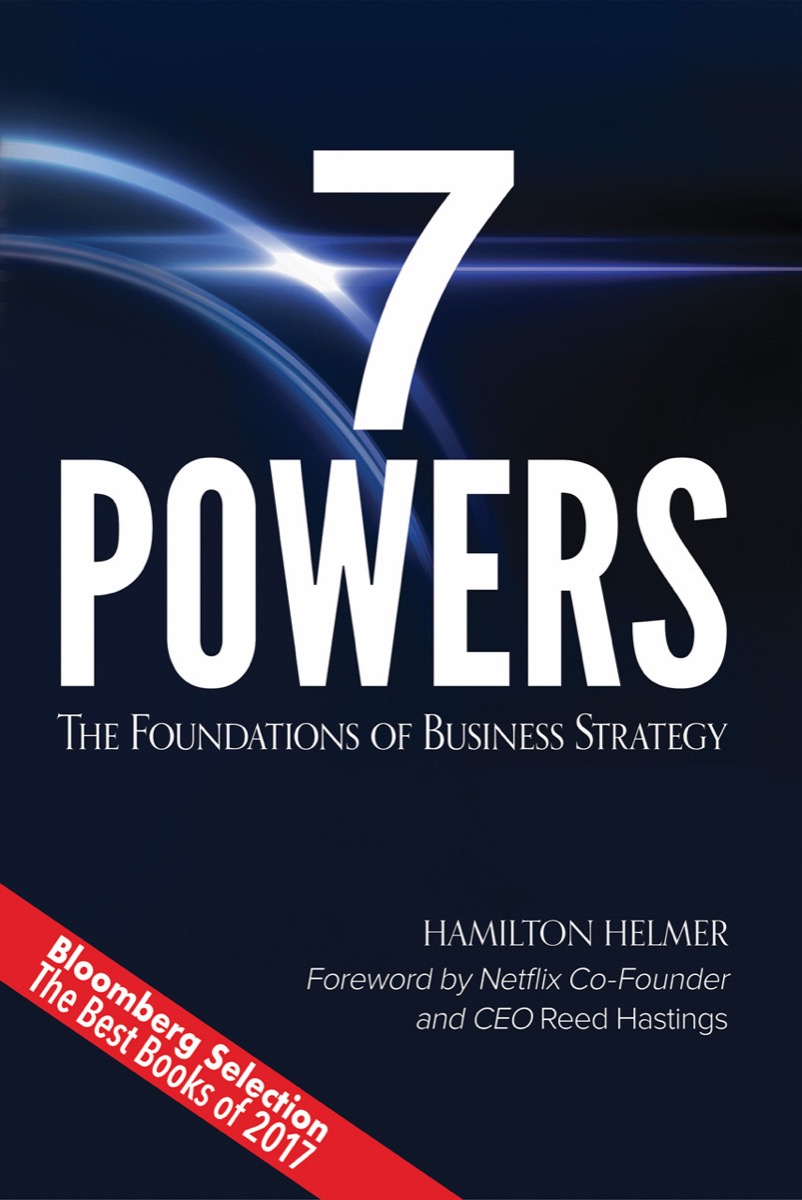
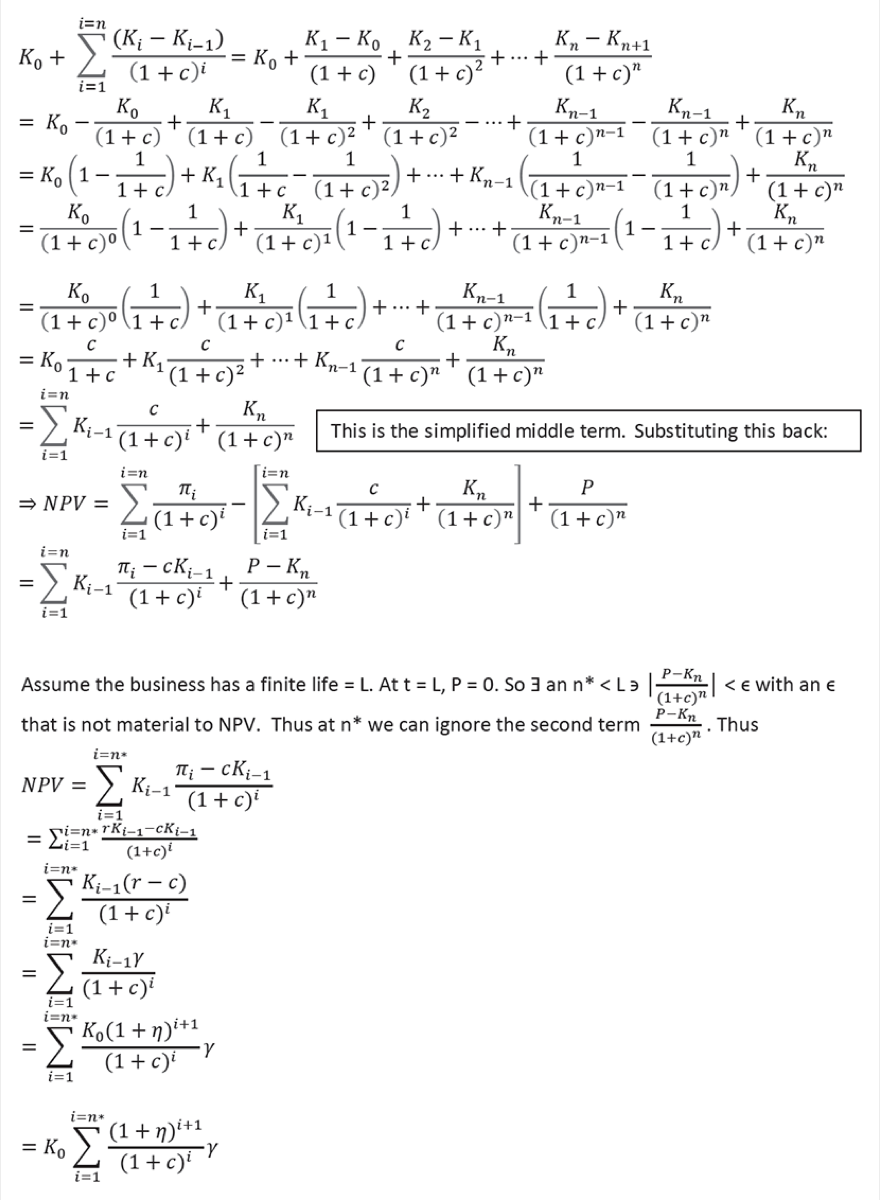
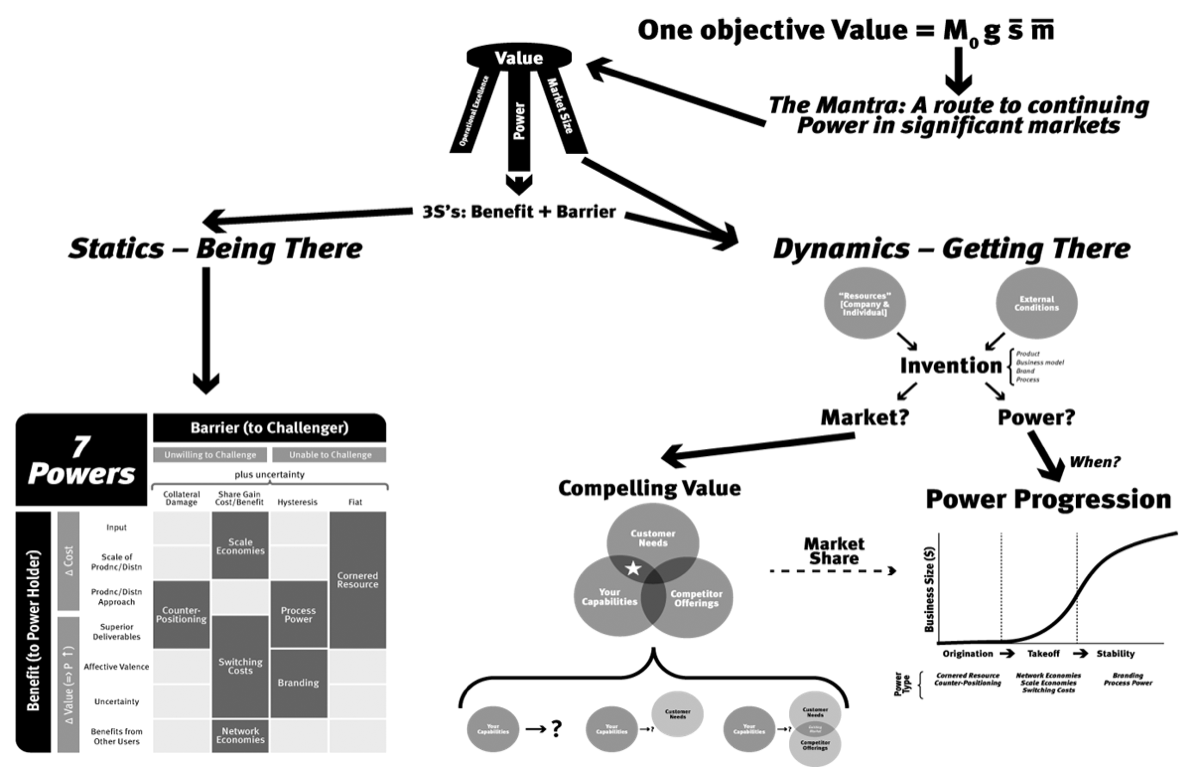
Figure: educational illustrations from Hamilton Helmer’s 7 Powers EPUB — Power requires Benefit and Barrier.

0. Why this book still matters
Strategy writing is crowded with slogans: “differentiate,” “focus,” “disrupt,” “blue ocean,” “platform.” Helmer’s contribution is not another slogan. It is a closed, testable vocabulary for the single outcome that matters to equity value over time: persistent differential returns.
Reed Hastings’s foreword matters for practitioners because Netflix is one of the book’s running laboratories. Streaming, DVD-by-mail, content spend, and international expansion are not treated as lore—they are dissected as sequences of Power creation, Power failure, and Power progression. If you advise technology companies, build products, or invest, Helmer gives you a shared language that survives the next buzzword cycle.
Three commitments organise the whole work:
- Power is the object of strategy. Without Power, even “great products” and “great cultures” get competed away.
- Power has two necessary dimensions. Benefit (you are better off) and Barrier (others cannot match you without unacceptable cost or self-harm).
- Timing is not optional. Some Powers can only be acquired in specific windows. Strategy Statics without Strategy Dynamics is a museum of moats, not a playbook.
If your current strategy narrative cannot name a Power, a Benefit mechanism, and a Barrier mechanism in one paragraph, you do not yet have a strategy—you have a plan.
1. Introduction: strategy, Power, and the two halves of the book
1.1 What Helmer means by strategy
In everyday business speech, “strategy” means almost anything important: a five-year plan, a rebrand, a cost cut, a geographic expansion. Helmer narrows the term ruthlessly.
Strategy = the intellectual discipline of finding a route to Power, then sustaining it.
Power = the set of conditions that create persistent differential returns—returns above the competitive cost of capital that do not get competed away quickly.
This definition excludes many admirable activities:
| Activity | Valuable? | Strategy (Helmer)? |
|---|---|---|
| Improve NPS by 10 points | Often yes | Only if it creates or strengthens Power |
| Cut unit costs via lean | Often yes | Me-too unless Barrier protects the advantage |
| Enter a new country | Sometimes | Only if it advances a Power path |
| Hire a famous CMO | Maybe | Branding Power is rare; spend is not Power |
| Ship a better model | Yes for customers | Benefit without Barrier = temporary |
The practical test: if a well-funded, competent rival can copy your move and restore competitive parity within a planning horizon, you improved operations—you did not create Power.
1.2 Power = Benefit × Barrier
Helmer’s equation is multiplicative for a reason. If either factor is zero, Power is zero.
Benefit — relative to the competitive alternative, you enjoy:
- Higher willingness to pay (WTP), and/or
- Lower cost, and/or
- Preferable risk / option profile that capital markets or customers value.
Barrier — for a potential competitor, matching your Benefit requires:
- Accepting materially worse economics (margin destruction, stranded assets, channel conflict), and/or
- Facing structural impossibility (exclusive rights, unique history, non-replicable process density).
Diagnostic questions that force honesty:
- Benefit: Compared with the next-best alternative, where do we earn more—price, cost, or both—and by how much?
- Barrier: What stops a capable rival from matching that Benefit within 24–36 months?
- Arithmetic: If the Barrier is “we’ll just execute better,” that is not a Barrier. That is hope.
1.3 Strategy Statics vs Strategy Dynamics
The book splits into two complementary maps:
| Lens | Question answered | Content |
|---|---|---|
| Strategy Statics (Part I) | What kinds of Power exist? | Seven Power types with Benefit and Barrier mechanisms |
| Strategy Dynamics (Part II) | When and how is Power created? | Path to Power; Power Progression across company stages |
Statics without Dynamics produces “moat theatre”: slides that list network effects and brand without asking whether the firm is still in a window where those Powers can be built. Dynamics without Statics produces “timing theatre”: stories about first-mover advantage with no mechanism that survives contact with capital.
1.4 Me-too strategies vs Power strategies
Me-too strategies chase parity or incremental operational gain. Everyone can—and eventually will—do them. They matter for survival and for funding the journey toward Power, but they do not constitute Power.
Power strategies change the competitive equilibrium so that even competent rivals rationally choose not to match you—or cannot.
| Me-too | Power | |
|---|---|---|
| Intent | Catch up / improve | Create persistent differential returns |
| Copiable? | Yes, by design | No, without Barrier pain |
| Typical language | “Best practice,” “benchmark,” “excellence” | Benefit × Barrier narrative |
| Capital market view | Necessary hygiene | Source of multiple |
A consulting failure mode: celebrating a Me-too programme (cloud migration, agile transformation, GenAI pilot factory) as if it were a Power strategy. Clients need both—but they must not confuse them.
1.5 How to read the seven Powers (map for practitioners)
| # | Power | Benefit (sketch) | Barrier (sketch) | Classic flavour |
|---|---|---|---|---|
| 1 | Scale Economies | Lower unit cost at larger volume | Rival must take share at ruinous price/cost | Intel fabs, Netflix streaming scale |
| 2 | Network Economies | Value rises with users | Rival starts with empty network | Credit cards, marketplaces, some social |
| 3 | Counter-Positioning | Superior business model | Incumbent damages own model if it copies | Netflix vs Blockbuster; some fintech |
| 4 | Switching Costs | Sticky revenue / pricing power | Rival must subsidise customer pain | Enterprise software, data platforms |
| 5 | Branding | Higher WTP / preference from identity | Decades of consistent attribution | Luxury, some consumer icons |
| 6 | Cornered Resource | Preferential access | Legal / historical exclusivity | Patents, unique talent, rights |
| 7 | Process Power | Embedded organisation advantage | Slow, opaque, hard to reverse-engineer | Toyota production system style |
The rest of Part I unpacks each row until you can diagnose them in diligence and in product design.
2. Part I — Strategy Statics: the seven Powers
Strategy Statics assumes a firm already operates in a competitive setting and asks: what durable configurations produce Power? Each chapter below follows the same practitioner template: definition → Benefit → Barrier → examples → failure modes → diagnostic checklist for consulting and AI product work.
3. Chapter 1 — Scale Economies
3.1 Definition
Scale Economies Power exists when unit costs decline as volume rises and a potential rival cannot reach comparable volume without accepting returns that destroy the attractiveness of the attack.
This is not “we are big.” Bigness without a cost curve that matters strategically is just size. Scale Economies Power requires that incremental scale improves relative cost position in a way that is hard for a smaller rival to match.
3.2 Benefit mechanism
Typical Benefit paths:
- Fixed-cost dilution: R&D, content libraries, fab depreciation, model training, brand campaigns, compliance platforms spread over more units.
- Purchasing power: Volume discounts that smaller players cannot access.
- Learning + utilisation: Higher utilisation of specialised assets (fabs, data centres, fulfilment nodes).
In Helmer’s framing, the Benefit shows up as structurally lower cost (or the ability to price more aggressively while remaining profitable) relative to subscale competitors.
3.3 Barrier mechanism
The Barrier is economic, not mystical. A rival who wants your unit cost must grow volume. Growing volume against an incumbent who already enjoys lower unit cost typically requires:
- Pricing below economic cost for a long period, and/or
- Accepting prolonged losses that capital markets may refuse to fund once the incumbent can retaliate.
The incumbent’s rational response—temporary price pressure, capacity expansion, or both—makes the attacker’s path even worse. That anticipated pain is the Barrier.
3.4 Classic examples (synthesis)
- Semiconductor manufacturing: Leading-edge fabs impose enormous fixed costs. Volume leaders can amortise process R&D and equipment in ways followers cannot without heroic capital and share gains.
- Streaming content libraries: A large subscriber base dilutes the cost of a hit title; a small entrant paying similar content prices faces worse unit economics.
- Cloud hyperscalers: Capex and specialised engineering spread across enormous utilisation; niche clouds often survive only in differentiated niches, not as full-stack Me-too rivals.
3.5 When Scale Economies fail or are misclaimed
| Failure mode | What it looks like | Why it is not Power |
|---|---|---|
| Scale without cost slope | Big company, same unit costs as small rivals | Size ≠ Scale Economies |
| Contestable fixed costs | Cloud tooling collapses fixed-cost advantage | Barrier evaporates |
| Niche fragmentation | Market splits into many verticals | No shared volume to dilute fixed costs |
| Regulatory unbundling | Forced open access to the scaled asset | Benefit may persist briefly; Barrier dies |
3.6 Practitioner checklist — Scale Economies
- Draw the unit cost vs volume curve for you and for the #2 player. If you cannot, you do not understand the Benefit.
- Identify the fixed or semi-fixed cost buckets that actually dilute (content, training, compliance, fab, brand).
- Ask: can a well-funded rival buy scale with capital alone, or does customer acquisition math break first?
- For AI products: is model training / eval / safety / retrieval infrastructure a shared fixed cost that dilutes with seats—or is every customer a custom project (no Scale Economies)?
- Consulting red flag: “We’ll win on scale” without a share path that is financeable under incumbent retaliation.
4. Chapter 2 — Network Economies
4.1 Definition
Network Economies Power exists when the value of a product or service to each user increases as more users (or complementary nodes) join and a rival cannot easily assemble a comparable network.
Helmer’s Network Economies cover classic two-sided and same-side network effects, but the Power claim always requires both Benefit and Barrier—not merely “we have users.”
4.2 Benefit mechanism
- Same-side: More users → more value (communication, social, liquidity of listings).
- Cross-side: More buyers attract sellers (and vice versa); more developers attract users.
- Data / density complements: More interactions improve matching, fraud detection, recommendations—raising WTP or lowering cost-to-serve.
The Benefit is higher value (or lower effective price for the same utility) relative to a thinner network.
4.3 Barrier mechanism
A new network starts empty. Even with a better feature set, early users face a coordination problem: why join the empty side? Overcoming that usually requires:
- Expensive subsidies,
- Multi-homing that dilutes exclusivity,
- Or a narrow beachhead that may never expand.
The Barrier is the cold-start + coordination + installed-base problem facing imitators—especially when multi-homing is costly or norms lock attention.
4.4 Classic examples (synthesis)
- Payment networks: Merchants and cardholders reinforce each other; a new network needs both sides simultaneously.
- Marketplaces: Liquidity begets liquidity; thin markets die.
- Communication platforms: Value tracks the people you need to reach; migration requires social coordination.
- Some B2B data networks: Shared industry utilities where participation raises data quality for all members.
4.5 When Network Economies fail or are overstated
| Failure mode | Signal | Implication |
|---|---|---|
| Easy multi-homing | Users keep 3 apps with no pain | Barrier weak |
| Feature, not network | Value is the tool, not the graph | Claim Scale or Branding instead |
| Protocol / open standard | Interoperability commoditises the network | Power may shift to Cornered Resource or Process |
| Artificial “community” | Slack channel ≠ network Effect | Benefit illusion |
| AI wrapper on public models | No proprietary interaction graph | Network claim usually false |
4.6 Practitioner checklist — Network Economies
- Specify the nodes and edges: who connects to whom, and what gets more valuable with density?
- Measure multi-homing cost. If near zero, Network Economies Power is fragile.
- Map the cold-start plan: beachhead density before broad expansion (Helmer aligns with “start narrow” instincts).
- For AI products: do interactions create a closed-loop advantage (better matching, lower risk, higher WTP) that outsiders cannot buy from a foundation-model API?
- Consulting red flag: pitch decks that say “network effects” because users invite teammates—without retention, density metrics, or multi-homing analysis.
5. Chapter 3 — Counter-Positioning
5.1 Definition
Counter-Positioning Power arises when a newcomer adopts a superior business model that the incumbent cannot copy without damaging its existing business.
This is one of Helmer’s most useful consulting lenses. It explains why incumbents appear “stupid” while acting rationally—and why disruptors sometimes win without being operationally superior on every dimension.
5.2 Benefit mechanism
The challenger’s model delivers a better value proposition and/or cost structure for a growing customer set: lower prices, different packaging, digital distribution, asset-light delivery, algorithmic underwriting, self-serve onboarding, and so on.
The Benefit is enjoyed by the challenger relative to the status-quo offering.
5.3 Barrier mechanism
The Barrier is incumbent self-harm. If the incumbent copies the new model, it:
- Cannibalises high-margin legacy revenue,
- Angers channel partners,
- Strands assets,
- Confuses brand positioning,
- Or triggers organisational antibodies (sales comp, KPIs, culture).
Because the expected NPV of copying looks worse than managing decline (for a while), the incumbent delays. That delay is the Barrier window in which the challenger scales.
5.4 Classic examples (synthesis)
- Netflix vs Blockbuster (DVD era narrative): Subscription + no late fees vs store retail economics and late-fee profit pools. Copying meant attacking Blockbuster’s own cash engine and store footprint.
- Digital attackers vs branch-heavy banks: Fee and experience models that punish dense physical networks if fully mirrored overnight.
- Direct-to-consumer vs dealer/channel models: Incumbents protecting partner ecosystems hesitate to go direct.
- Cloud software vs on-prem license giants: Recurring revenue and different sales motions threaten booked backlog and partner stacks.
5.5 When Counter-Positioning fails
| Failure mode | Description |
|---|---|
| Incumbent can copy cheaply | No self-harm → Barrier collapses; race becomes Me-too execution |
| Challenger model not actually superior | “Different” ≠ “better economics” |
| Regulatory equaliser | Rules force both sides onto the same model |
| Capital asymmetry | Incumbent subsidises transition longer than challenger can endure |
| Premature celebration | Early growth mistaken for Power before scale or other Powers lock in |
Counter-Positioning is often a bridge Power: it buys time to build Scale Economies, Network Economies, Switching Costs, or Branding. Treat it as permanent at your peril.
5.6 Practitioner checklist — Counter-Positioning
- Write the incumbent’s P&L and channel map. Where would copying hurt most?
- Estimate the cannibalisation NPV the incumbent faces. If small, you do not have Counter-Positioning.
- Ask: is the challenger’s edge a model, or merely a feature the incumbent can ship in a quarter?
- For AI products: does your delivery model (usage-based, embedded, workflow-native, outcome-priced) force the incumbent to blow up license, SI, or seat economics?
- Consulting use: explain “why they won’t respond” without resorting to “they’re dinosaurs.” Rational Barrier > cultural insult.
6. Chapter 4 — Switching Costs
6.1 Definition
Switching Costs Power exists when customers face material costs—financial, procedural, relational, or risk-based—to change vendors, enabling the incumbent to earn superior returns that a rival cannot easily arbitrage.
6.2 Benefit mechanism
- Ability to sustain price without equivalent churn,
- Higher lifetime value and lower CAC payback pressure,
- More room to cross-sell adjacent modules,
- Better forecasting and investment confidence.
The Benefit accrues to the firm with the embedded customer relationship.
6.3 Barrier mechanism
A rival who wants those customers must compensate them for switching pain: migration discounts, parallel-run costs, retraining, data conversion, integration rewrites, compliance re-certification, political risk inside the buyer organisation. That subsidy destroys the rival’s returns—often enough that the attack is not mounted.
6.4 Types of switching costs (practitioner taxonomy)
| Type | Examples | Strength notes |
|---|---|---|
| Financial | Contract break fees, prepaid unused | Visible; negotiable |
| Procedural | Retraining, reconfiguration | Often underestimated |
| Operational | Integrations, data pipelines, SSO, entitlements | High in enterprise |
| Risk / career | “Nobody gets fired for…” | Powerful in regulated industries |
| Relational | Trust, success team knowledge | Soft but durable |
| Data gravity | History, fine-tunes, eval sets, feedback loops | Critical in AI products |
6.5 Classic examples (synthesis)
- Enterprise software platforms with deep workflow embedding.
- Banks and brokers where account movement is painful.
- Industrial equipment ecosystems with spare parts and training.
- Design tools / creative suites where files, plugins, and muscle memory lock users.
- MLOps / feature stores / prompt + eval platforms once production traffic and governance attach.
6.6 When Switching Costs fail or backfire
| Failure mode | Risk |
|---|---|
| Lock-in without value | Customers resent you; regulation or revolt follows |
| Easy export / open standards | Barrier thins |
| Best-of-breed unbundling | Suites lose module by module |
| Consumer zero-friction markets | Switching Costs near zero; do not claim this Power |
| Fake “stickiness” | High churn despite integrations → Benefit missing |
Ethical and commercial note: durable Switching Costs Power usually pairs with ongoing Benefit (product gets better, risk falls). Pure hostage-taking is fragile strategy and bad consulting advice.
6.7 Practitioner checklist — Switching Costs
- Interview lost deals and churned logos: what was the real switching cost in hours, dollars, and risk?
- Separate contractual lock-in from structural lock-in. Only the latter is strategic Power.
- For AI: inventory artefacts that create gravity—datasets, eval harnesses, feedback labels, connectors, policy packs, agent memory, fine-tunes.
- Ask whether a rival can pay customers to move and still make money. If yes, Barrier is weak.
- Consulting red flag: “high NRR” attributed to Switching Costs when the real driver is still product Benefit that competitors will match.
7. Chapter 5 — Branding
7.1 Definition
Branding Power exists when affective associations—identity, meaning, trust, status—raise willingness to pay or preference in a way rivals cannot quickly replicate through spend alone.
Helmer is careful: not every logo is Branding Power. Most “brand investment” is Me-too marketing.
7.2 Benefit mechanism
- Higher price realisation for comparable functional attributes,
- Lower CAC via organic preference and trust,
- Resilience in crises when customers give the benefit of the doubt,
- Pull-through across categories under the same identity.
7.3 Barrier mechanism
True Branding Barriers are built through long-duration, consistent, attributed experience. A rival writing a large advertising cheque does not buy decades of meaning. The Barrier is time, coherence, and the irreversibility of lived associations—not the media budget.
7.4 Classic examples (synthesis)
- Certain luxury houses where the mark itself carries status utility.
- Iconic consumer brands where taste, identity, and ritual dominate functional comparison.
- Rare B2B trust brands in domains where buying risk is existential (though B2B Branding Power is rarer than slides claim).
Netflix-related discussions in Helmer’s orbit often treat brand as a supporting asset rather than the primary Power—useful for acquisition and preference, but not a substitute for Scale, Counter-Positioning windows, or content economics.
7.5 When Branding claims fail
| Failure mode | Reality check |
|---|---|
| Logo redesign as strategy | Cosmetics ≠ Power |
| Performance marketing confused with brand | Paid demand is rent, not Barrier |
| Category is purely functional / RFQ | Brand premium collapses to zero |
| Inconsistent delivery | Associations turn negative faster than positive |
| Startup “brand” decks | Usually aspiration; Power comes later if at all |
7.6 Practitioner checklist — Branding
- Can you demonstrate a price premium or preference share unexplained by features and distribution?
- How many years of consistent attributed experience underpin the association?
- If a rival spent 2× your marketing budget for 3 years, would the gap close? If yes, Barrier is weak.
- For AI products: is trust a Branding claim (“safe enterprise AI”) or a Cornered Resource / Process claim (evals, certifications, operational history)?
- Consulting red flag: brand as residual explanation when the team cannot articulate any other Power.
8. Chapter 6 — Cornered Resource
8.1 Definition
Cornered Resource Power exists when a firm has preferential access to a valuable resource that competitors cannot obtain on comparable terms—because of law, history, unique personal relationships, or genuine scarcity.
8.2 Benefit mechanism
The resource enables lower cost, higher WTP, unique products, or blocked rivalry: patents, mineral rights, exclusive content licenses, spectrum, unique datasets under exclusive contract, one-of-a-kind talent collectives, regulatory licenses, and similar.
8.3 Barrier mechanism
The Barrier is exclusivity itself. Rivals are legally or structurally barred—or must pay prices that wipe out returns. Unlike Scale Economies, the Barrier is not “it would hurt to get big”; it is “you cannot get this.”
8.4 Classic examples (synthesis)
- Patent cliffs and patent thickets in pharma and deep tech (with expiry risk).
- Exclusive sports or entertainment rights for a time window.
- Unique talent (rarely durable as a sole Power—people leave—but can be decisive in windows).
- Regulatory licenses that cap entrants.
- Proprietary datasets under exclusive partnership (not scraped commons).
8.5 When Cornered Resource fails
| Failure mode | Why Power dies |
|---|---|
| Expiry / non-renewal | Rights and patents end |
| Invent-around | Competitors design past the patent |
| Talent departure | Resource walks out |
| Public data / open models | “Our data” was never exclusive |
| Antitrust remedies | Forced sharing |
| Overpayment for the resource | Benefit destroyed by acquisition price |
8.6 Practitioner checklist — Cornered Resource
- Name the resource precisely (contract clause, patent family, license ID)—not “our data” or “our people.”
- State the term and contestability: when does exclusivity end, and who else can bid?
- Separate capability (can be hired) from cornered resource (cannot be matched on terms).
- For AI: is the dataset, eval corpus, or partner feed contractually exclusive, or merely currently unused by rivals?
- Consulting red flag: treating a generic ML team as Cornered Resource. That is usually Me-too hiring.
9. Chapter 7 — Process Power
9.1 Definition
Process Power exists when an organisation’s embedded processes—routines, culture-operationalised, tacit know-how density—yield persistent Benefit that rivals cannot copy quickly because the system is complex, historically accumulated, and socially embedded.
9.2 Benefit mechanism
- Lower defect rates, faster cycle times, superior yield,
- Better risk management,
- Higher customer outcomes per unit cost,
- Continuous improvement that compounds.
Toyota-style production systems are the canonical teaching case in strategy literature for process-embedded advantage; Helmer places Process Power in the same family: advantage lives in the organisation’s operating system, not in a single tool.
9.3 Barrier mechanism
You cannot download a process. Rivals may copy visible artefacts (kanban boards, OKR templates, “AI centres of excellence”) without copying the tacit web: supplier relationships, andon discipline, promotion criteria, shop-floor problem solving, psychological safety for stopping the line, decades of kaizen.
The Barrier is time + complexity + social embedding. Consulting decks that transplant process labels rarely transplant Process Power.
9.4 Classic examples (synthesis)
- High-reliability manufacturing systems with decades of refinement.
- Certain operationally obsessive service firms where playbooks are lived, not laminated.
- Rare product organisations where discovery, delivery, and quality gates form a compounding system competitors keep mis-copying.
9.5 When Process Power is overclaimed
| Failure mode | Reality |
|---|---|
| New “operating model” slides | Labels without years of embedding |
| Tooling = process | Jira is not Process Power |
| Key-person dependence | If one VP leaving breaks it, Barrier is weak |
| Industry with fast process diffusion | Benchmarks travel; advantage thins |
| AI automation of the secret sauce | If codifiable, it may become Me-too software |
9.6 Practitioner checklist — Process Power
- Identify outcomes that remain superior after controlling for scale, brand, and resources.
- Ask how long a serious rival would need to approximate the system—not the slogans.
- Test codifiability: if a vendor can sell your process as SaaS next year, it is not Process Power.
- For AI consulting: distinguish client Process Power (their underwriting craft) from your delivery methodology (usually Me-too unless uniquely embedded).
- Red flag: “our culture is our moat” without operational metrics that survive executive turnover.
10. Part I synthesis — using the seven Powers as a diagnostic panel
10.1 The dual-test card
For any claimed moat, fill this card:
| Field | Prompt |
|---|---|
| Claimed Power | Which of the seven? |
| Benefit mechanism | Cost, WTP, or risk—how much? |
| Barrier mechanism | Why won’t a capable rival match it? |
| Evidence | Metrics, history, contracts, cost curves |
| Stage fit | Is this Power even creatable at our stage? (see Part II) |
| Failure mode | What would falsify the claim in 12 months? |
If the team cannot complete the card, stop saying “moat.”
10.2 Combinations and sequencing
Real companies often stack Powers:
- Counter-Positioning buys time → Scale Economies lock cost → Switching Costs secure accounts → Branding compounds preference.
- Network Economies may interact with Scale (liquidity plus fixed-cost dilution).
- Cornered Resource (exclusive content) may feed Scale Economies (amortisation over subscribers).
Helmer’s discipline is still to name each mechanism separately. Blended mush (“our ecosystem moat”) hides which Barrier is doing the work.
10.3 AI / digital product quick map
| Claim you hear | Likely Power (if real) | Often actually… |
|---|---|---|
| “We have more users” | Network or Scale | Vanity metric |
| “Our model is better” | Temporary Benefit | Me-too R&D |
| “Workflow embedded” | Switching Costs | Maybe |
| “Proprietary data” | Cornered Resource | Public / non-exclusive data |
| “Incumbent can’t copy our pricing” | Counter-Positioning | Feature parity incoming |
| “Trusted brand in AI safety” | Branding / Process | Marketing claim |
| “Our MLOps is unique” | Process Power | Tooling fashion |
11. Part II — Strategy Dynamics: when Power is created
Strategy Statics catalogues types of Power. Strategy Dynamics answers when a firm can acquire them. This is where Helmer becomes indispensable for founders and consultants advising early-stage or transforming businesses.
12. Chapter 8 — The Path to Power
12.1 The problem Dynamics solves
If you only know the seven Powers, you might ask a Series A startup to “build Branding Power” or a pre-product team to “achieve Scale Economies.” Those are category errors. Power creation is path-dependent and stage-dependent.
Chapter 8 develops the Path to Power: the causal sequence by which a business moves from nothing to a configuration that can support Power.
12.2 Invent → Compelling Value → Power
A useful practitioner rendering of Helmer’s dynamics (aligned to the book’s arc):
- Invent — Create something meaningfully new: a product, a model, a channel configuration, a resource position. Invention alone is not Power; it is the ticket to the game.
- Compelling Value — Deliver a value proposition so strong that customers adopt even without Power (often despite risk). This stage funds learning, density, and share.
- Power — Translate adoption and position into Benefit × Barrier so differential returns persist.
Many failures occur by skipping Compelling Value (technology looking for a job) or by never graduating from Compelling Value to Power (growth without Barrier—eventually competed away).
12.3 Me-too vs Power on the path
On the path:
- Me-too operational work keeps you alive (reliability, support, cost discipline).
- Power work changes what rivals can do to you.
Both are required. Confusing them produces two errors:
| Error | Symptom | Fix |
|---|---|---|
| Power cosplay | Moat slides before product-market fit | Return to Compelling Value |
| Eternal Me-too | Scaling “best practices” with no Barrier plan | Explicit Power thesis + stage check |
12.4 Industry economics still bind
Even elegant Paths to Power fail if industry structure makes persistent differential returns unreachable (pure commodity with open entry and no differentiation lever). Helmer’s framework does not repeal industrial organisation—it disciplines where you look for levers inside it.
Questions for diligence:
- Is this industry historically capable of Power, or only of cyclical rents?
- Which of the seven Powers have ever existed here?
- Are we inventing a new Power path or copying a dead one?
12.5 Practitioner checklist — Path to Power
- Locate the company on Invent / Compelling Value / Power. Do not skip labels to flatter the founder.
- List the next Power that is stage-feasible—not the Power that sounds prestigious.
- Ensure Compelling Value is evidenced by retention and willingness to pay, not only acquisition campaigns.
- For AI products: Invent might be a novel workflow agent; Compelling Value is measured in task success and switching from status quo; Power might be Switching Costs + data Cornered Resource + Scale on shared eval/infra.
- Consulting deliverable: a one-page Path to Power with falsifiers, not a 40-page SWOT.
13. Chapter 9 — The Power Progression
13.1 Definition
The Power Progression is Helmer’s map of which Powers tend to become available at which phases of a business’s development. Not every Power can be built at every time. Strategy is partly the art of recognising the open window.
13.2 Stage logic (practitioner synthesis)
While companies differ, a robust consulting pattern—consistent with Helmer’s progression thinking—looks like this:
| Stage | Typical situation | Powers often in play | Powers often premature |
|---|---|---|---|
| Origination / Invent | New offer, few customers | Cornered Resource (IP, unique insight), early Counter-Positioning design | Scale, Branding, deep Process |
| Takeoff / Compelling Value | Rapid adoption begins | Counter-Positioning, early Network beachheads, Switching Costs design | Full Scale Economies, durable Branding |
| Stability / Scale | Share and density exist | Scale Economies, Network Economies, Switching Costs | Hoping Counter-Positioning alone still protects |
| Mature compounding | Long history | Branding, Process Power, reinforced Scale/Network | New Counter-Positioning against yourself (self-disruption hard) |
The exact sequencing in Helmer rewards careful reading; the practitioner rule is simpler: match the Power thesis to the phase, or waste capital.
13.3 Windows open and close
Examples of window logic:
- Counter-Positioning is most potent when the incumbent’s legacy P&L is still large and sacred. Once the legacy shrinks or leadership commits to self-cannibalisation, the Barrier thins.
- Network Economies often require reaching critical density in a beachhead during takeoff; waiting until a category is multi-homed and saturated makes cold-start brutal.
- Branding and Process Power usually demand duration. You cannot schedule them in a single annual operating plan and declare victory.
- Scale Economies require a path to material relative volume. In a permanently fragmented market, the window may never open.
13.4 Netflix as a progression laboratory (synthesis)
Without reprinting Helmer’s case narrative, the practitioner lessons from Netflix-like arcs are:
- Different Powers dominate different eras (distribution model advantage vs scale of content amortisation vs product habit/switching).
- Yesterday’s Power can weaken when technology or competitor incentives change—Dynamics never end.
- Leadership must retire Power stories that are no longer true; hanging onto a dead Counter-Positioning story while Scale is the real game creates strategic blindness.
- Content spend and global expansion are not strategy by themselves—they are instruments that may strengthen Scale Economies if subscriber volume and utilisation cooperate.
13.5 Power Progression for AI product companies
| Phase | Healthy focus | Unhealthy obsession |
|---|---|---|
| Invent | Novel workflow + eval truth | “Foundation model moat” slides |
| Compelling Value | Habit, retention, paid conversion | Vanity demo metrics |
| Early Power | Switching Costs (artefacts), Counter-Positioning vs SI/license models | Premature brand campaigns |
| Scale Power | Shared infra cost dilution, data network density if real | Buying users that do not densify |
| Mature | Trust/process in regulated delivery, brand earned by years | Claiming Process Power after one reorg |
13.6 Practitioner checklist — Power Progression
- Name your current phase in one word: Invent, Takeoff, Scale, or Mature.
- Pick at most two Powers you can still build from here. Kill the rest of the slide.
- Identify one Power that is closing—and what you must finish before it closes.
- Ask capital allocators: are we funding phase-appropriate Power, or nostalgia?
- Consulting workshop exercise: timeline on the wall—company history on one axis, claimed Powers on the other—mark when Barrier evidence appeared. Gaps reveal storytelling.
14. Integrating Statics and Dynamics in real work
14.1 The strategy narrative template
Use this paragraph structure in board papers and pursuit docs:
We are in [phase]. Our Compelling Value is [customer outcome + evidence]. We are building [Power 1] via Benefit [mechanism] and Barrier [mechanism], and sequencing [Power 2] as [condition] is reached. Me-too programmes [list] fund the journey but are not our Power thesis. Falsifiers: [metrics / rival moves].
If the paragraph cannot be written, the strategy is not ready.
14.2 Diligence questions (investor / M&A / build-vs-buy)
- Which of the seven Powers is operative today—not in the vision deck?
- What is the Barrier evidence (not Benefit evidence)?
- Where is the company on the Power Progression, and which windows are open?
- What Me-too improvements are being mislabelled as moats?
- If a hyperscaler or incumbent copied the product in 18 months, what still protects returns?
14.3 Consulting engagement modes
| Engagement ask | Helmer-shaped deliverable |
|---|---|
| “Help us with strategy” | Power thesis + phase map + falsifiers |
| “Prioritise AI use cases” | Filter by strategic Power contribution, not novelty |
| “Competitive response” | Counter-Positioning / Barrier analysis of incumbent incentives |
| “Pricing” | Link to Switching Costs and Branding reality, not hope |
| “Operating model” | Process Power only if multi-year embedding is in scope; else call it Me-too hygiene |
14.4 Common anti-patterns (field guide)
| Anti-pattern | Correction |
|---|---|
| Moat laundry list (all seven claimed) | Rank by evidence; drop fiction |
| Benefit-only stories | Demand Barrier |
| Barrier-only stories (“hard to copy”) | Demand Benefit magnitude |
| Stage mismatch | Apply Power Progression |
| Strategy = OKRs | OKRs manage execution; Power defines destination |
| “AI is our strategy” | AI is capability; Power is the strategy object |
15. Worked mini-cases (synthetic, for practice)
15.1 B2B AI assistant embedded in claims workflow
- Phase: Takeoff after Compelling Value in one line of business.
- Plausible Powers: Switching Costs (integrations, case history, eval harnesses); possible Counter-Positioning vs incumbent suite pricing; later Scale Economies on shared model ops.
- Weak claims: Branding, Network Economies (unless cross-insurer data network is real and exclusive).
- Falsifier: Customers export configs + prompts easily; churn rises when a cheaper model wrapper appears.
15.2 Consumer social app with chat AI features
- Phase: Invent / early Takeoff.
- Plausible Powers: Network Economies if density and multi-homing pain are real; otherwise none yet.
- Weak claims: Scale Economies before relative volume; Branding in year one.
- Falsifier: Users multi-home freely; AI feature is a Me-too sticker.
15.3 Incumbent bank responding to fintech
- Question: Is fintech Counter-Positioned?
- Analysis: Map fee income, branch depreciation, compliance cost allocation. If copying the fintech UX destroys economics or channels, Counter-Positioning Barrier exists—for now.
- Bank’s Power path: May rely on Switching Costs + Cornered Resource (license, deposit franchise) + Branding, while funding Me-too digital upgrades.
- Falsifier: Leadership fully self-cannibalises with a separate digitally native unit that removes self-harm—Barrier shrinks.
16. Practitioner map: Power → Benefit → Barrier → diagnostics
| Power | Benefit (short) | Barrier (short) | One diagnostic question |
|---|---|---|---|
| Scale Economies | Lower unit cost at volume | Rival must buy share at ruinous economics | What is unit cost at our volume vs #2? |
| Network Economies | Value rises with density | Cold-start / coordination / multi-homing | What breaks if half the nodes leave? |
| Counter-Positioning | Superior model for customers | Incumbent self-harm if copying | What P&L line does copying destroy? |
| Switching Costs | Sticky monetisation | Rival must subsidise migration pain | What does a switch cost in hours and risk? |
| Branding | Preference / WTP from meaning | Time-consistent attributed associations | What premium remains after feature parity? |
| Cornered Resource | Exclusive input advantage | Others cannot obtain on like terms | Exact right, patent, or contract? |
| Process Power | Embedded operational superiority | Slow social copying of tacit systems | How many years to imitate outcomes? |
17. Closing checklist for strategy work
If you are shaping strategy (founder, PM, consultant, investor):
- Define strategy as a route to Power, not a list of initiatives.
- Write Benefit × Barrier explicitly; kill Benefit-only stories.
- Separate Me-too programmes from Power programmes in the budget.
- Locate the firm on Invent → Compelling Value → Power and on the Power Progression.
- Prefer two evidenced Powers over seven claimed ones.
- Set falsifiers so the organisation can retire dead Power narratives.
- Revisit Dynamics when technology or incumbent incentives change—Statics are not immortal.
If you are reviewing someone else’s strategy deck:
- Highlight every use of “moat,” “differentiation,” and “network effects.”
- Demand a Barrier mechanism for each.
- Ask which Power is phase-impossible—and strike it.
- Check whether AI/technology claims are Capabilities or Powers.
- Reward intellectual honesty when the answer is “we do not have Power yet; here is the path.”
Helmer’s enduring gift is a shared, rigorous language for the hardest strategic question: not “what will we do?” but “why will differential returns persist?” Mastery means seeing Benefit and Barrier, knowing which of the seven you are truly playing, and respecting the Progression so you do not try to build a cathedral in a season that only allows foundations.
Discussion
Comments
Share feedback or questions about this page. No account required.
Loading comments…